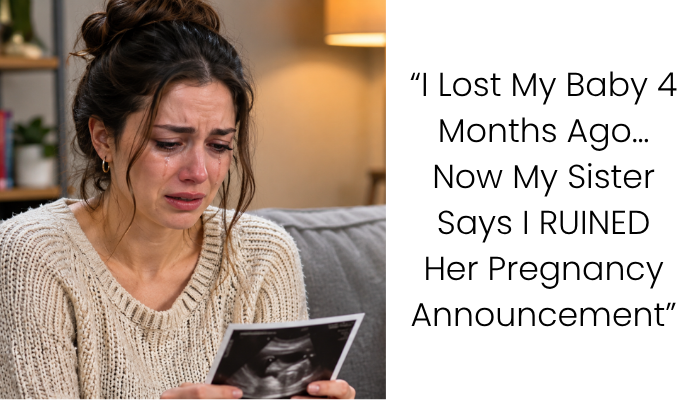
AITA for Ruining My Sister’s Pregnancy Announcement After Losing My Baby?
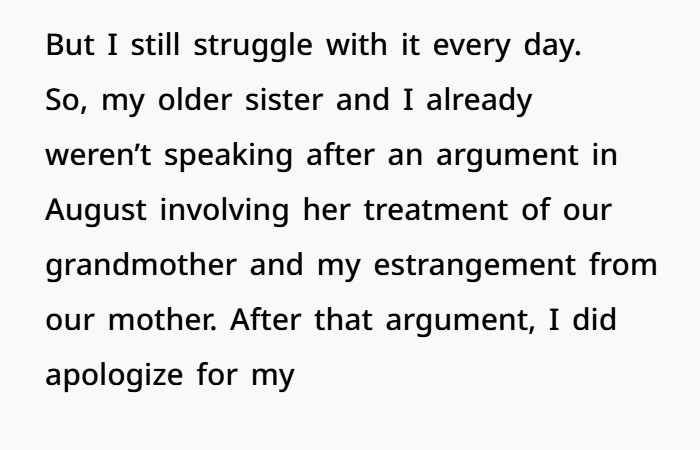
A 24-year-old woman was going through a very difficult time after losing her first baby just four months earlier. She and her husband had spent a year trying to start a family. Sadly, doctors found that their unborn son had a serious heart condition, and she had to deliver him at 27 weeks. The loss was very painful, and she was still trying to deal with her feelings. She mostly kept her sadness to herself because she did not want people to feel uncomfortable around her. Her older sister knew what had happened, but the two already had problems in their relationship because of an earlier family argument.
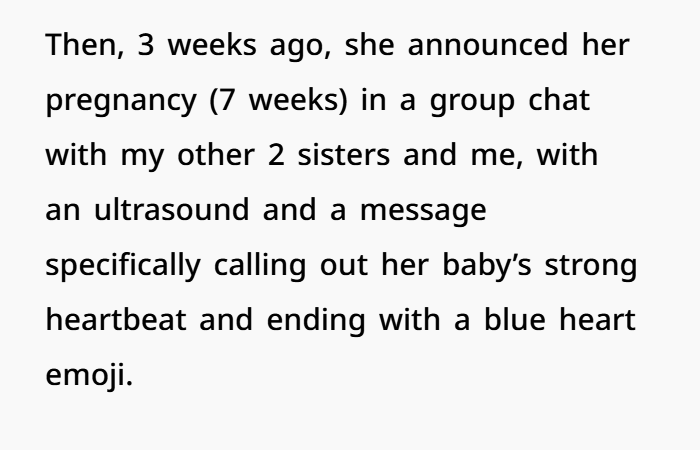
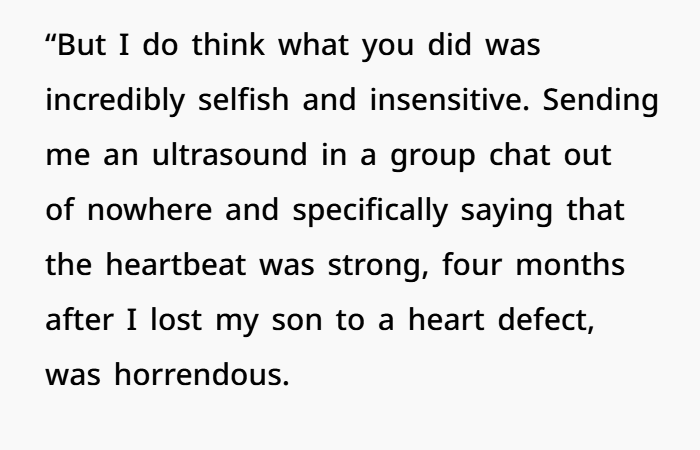
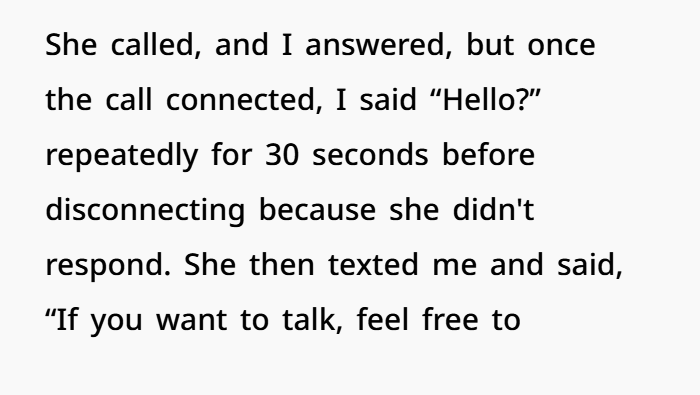
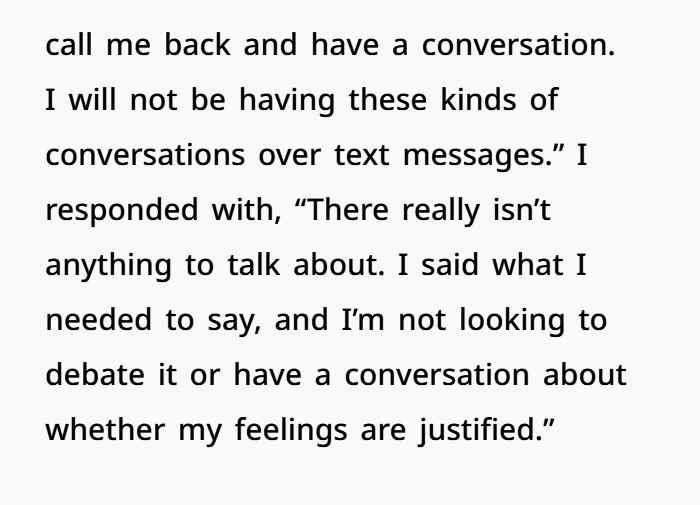
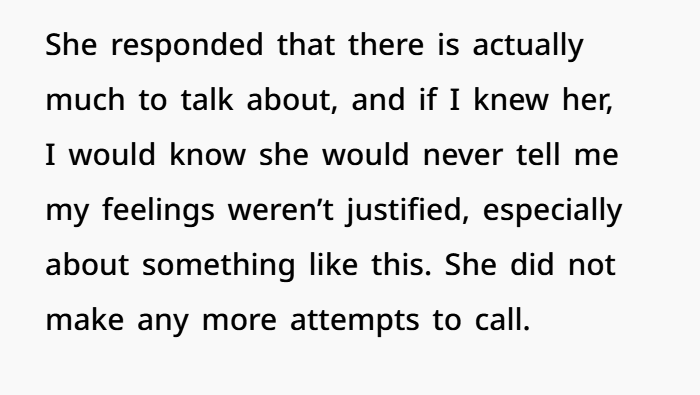
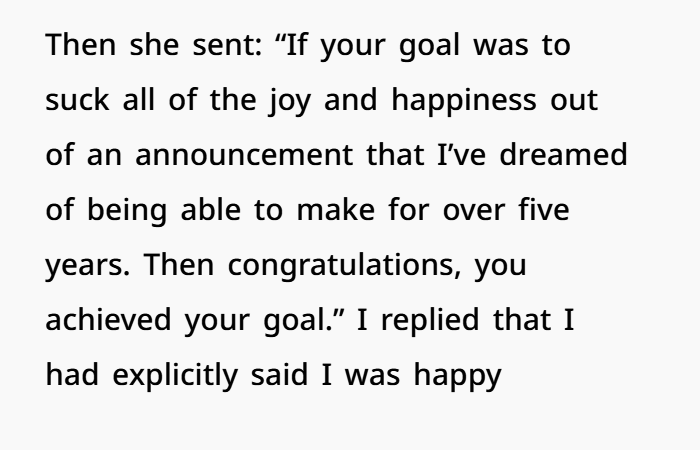
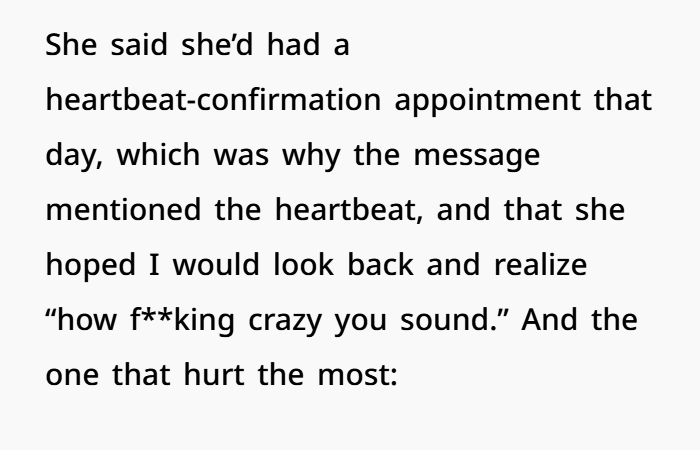
Things became harder when her older sister shared some happy pregnancy news in a group chat with their other sisters. She was seven weeks pregnant and sent an ultrasound picture with a message about her baby’s strong heartbeat. She also added a blue heart emoji. For the younger woman, those words brought back painful memories of losing her son because of his heart condition. She became so upset at work that she had a panic attack and called her husband for emotional support. Her husband then sent a private message to her sister. He congratulated her and politely asked if she could avoid sharing heartbeat details in future pregnancy updates. However, the older sister became angry and said he had spoiled her happy moment.
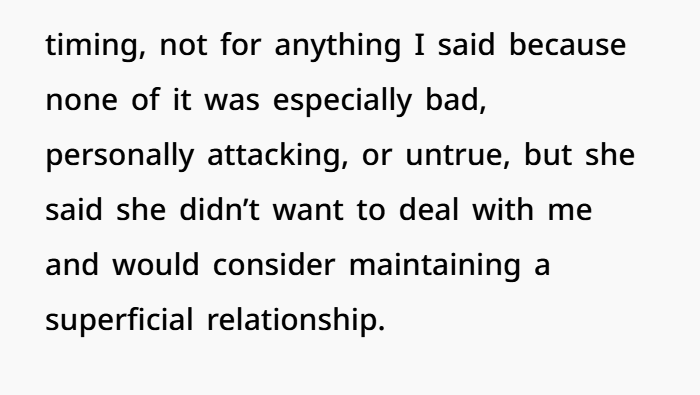
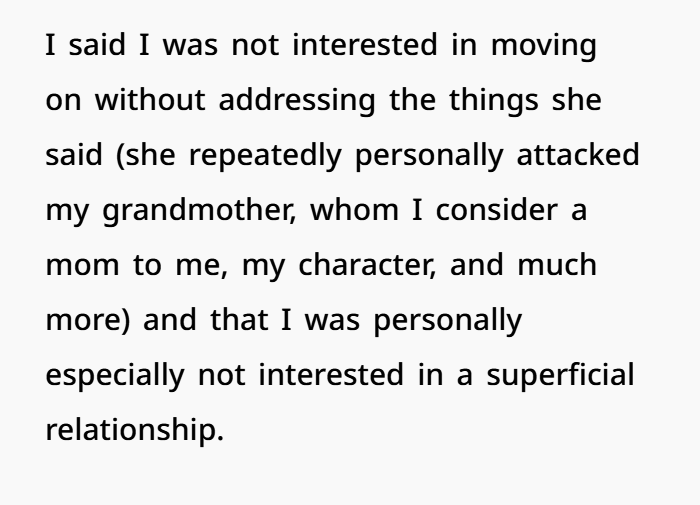
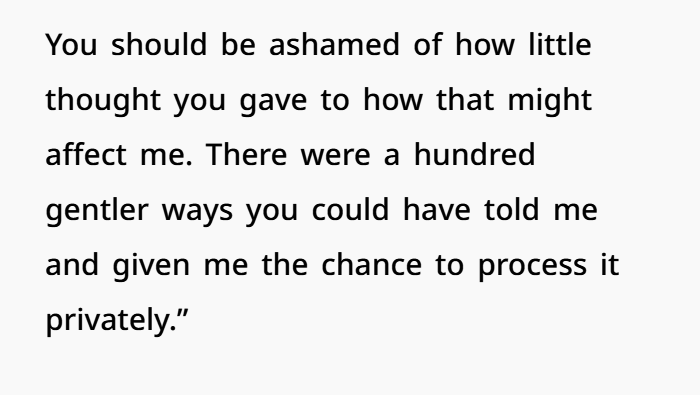
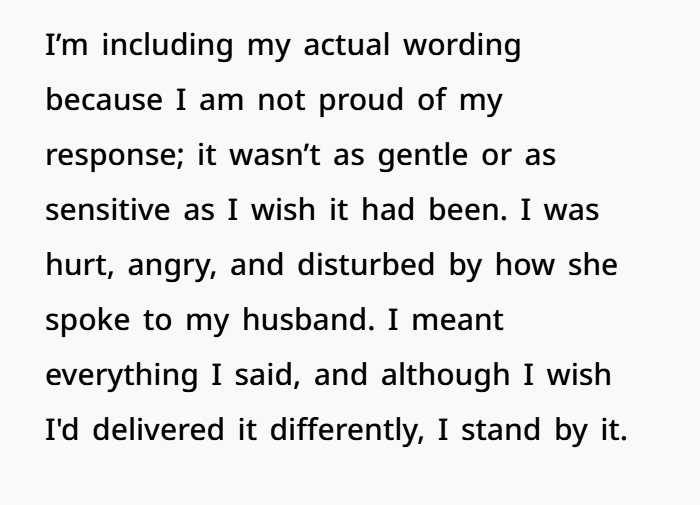
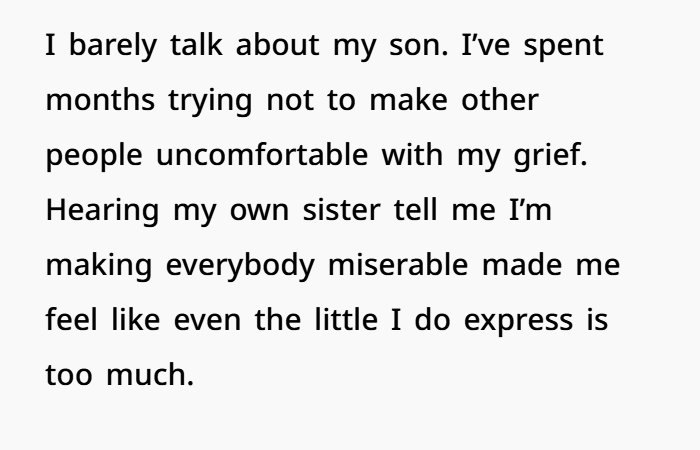
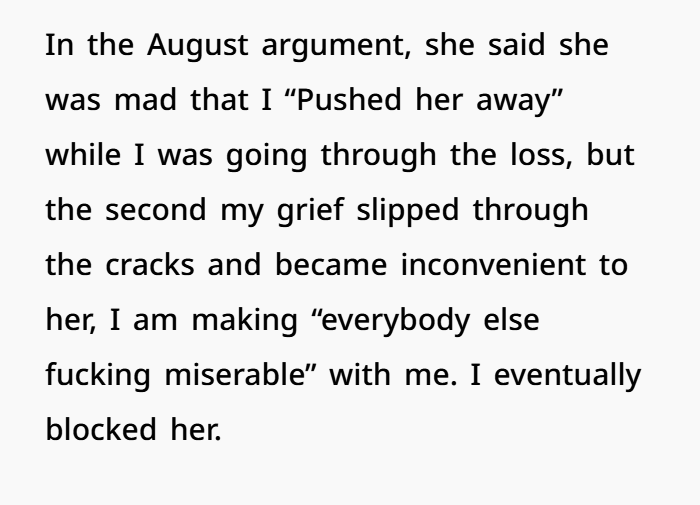
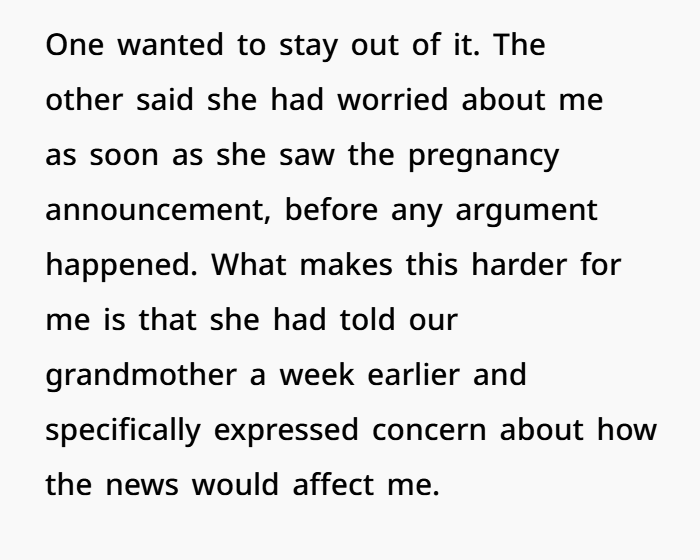
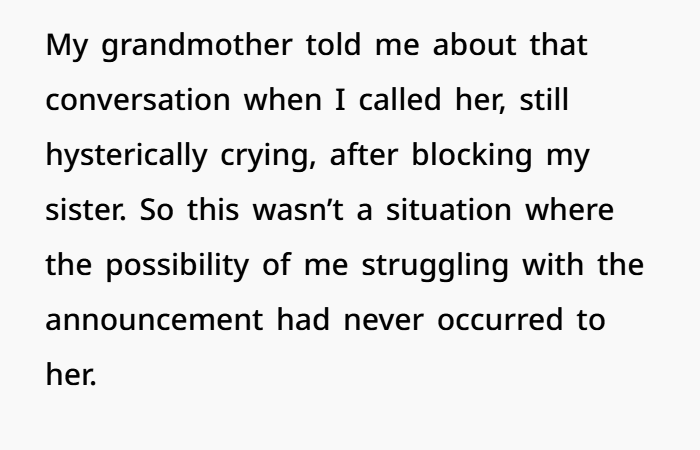
The younger woman later tried to explain that she was happy about the pregnancy but felt hurt by the way the news had been shared. She believed her sister could have told her privately first, giving her time to prepare emotionally. Instead, their conversation turned into a serious family disagreement. Her older sister said some very hurtful things about her loss and accused her of making everyone else unhappy. What made the situation even worse was learning that her sister had already spoken to their grandmother about how the pregnancy announcement might affect her. This made the younger woman feel that her feelings had been ignored.
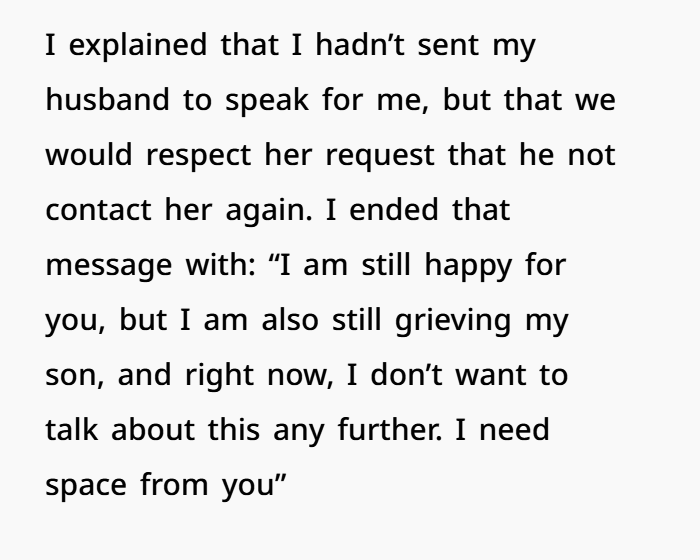
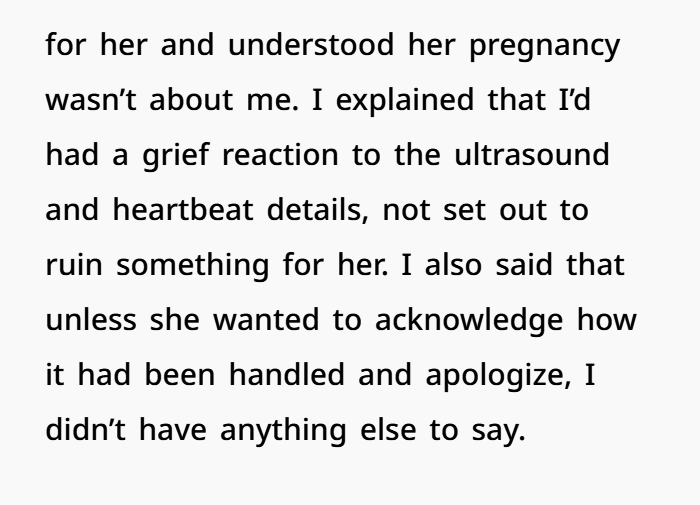
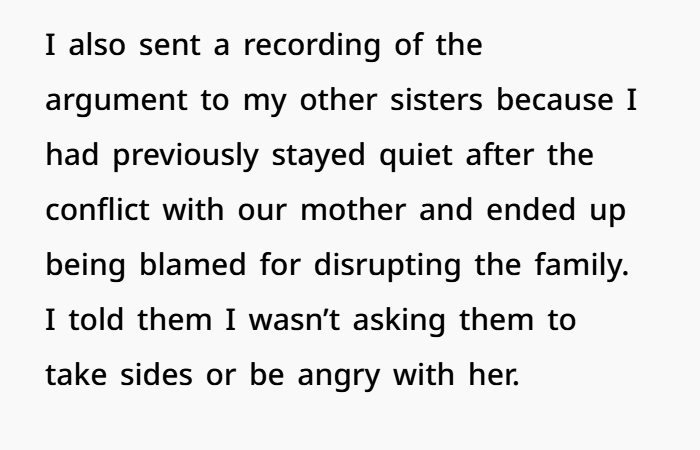
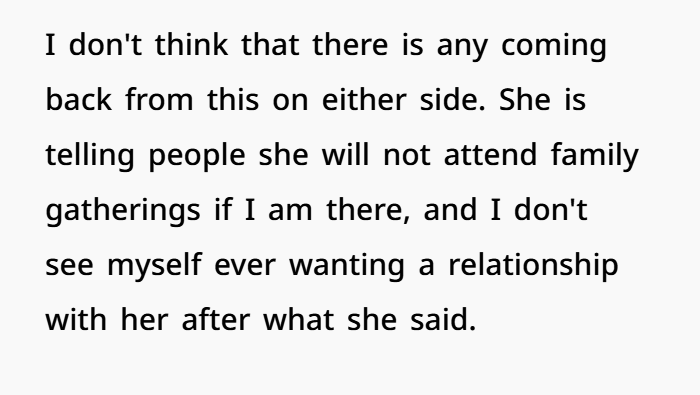
In the end, the younger woman decided to block her sister because the argument had become too painful. She also shared a recording of their conversation with their other siblings so they could understand what had happened. Now, her older sister reportedly does not want to attend family gatherings when she is there. The situation shows how difficult family relationships can become when grief and happy news happen at the same time. Pregnancy care, maternal health, and emotional support are important during such personal experiences. Family counseling may also help people communicate when emotions are running high. The younger woman is now wondering whether sharing her feeling


When a Pregnancy Announcement Brings Happiness and Heartbreak to the Same Family
A pregnancy announcement is usually a happy moment for a family. Everyone gets excited about the new baby, and parents look forward to sharing their good news with the people they love.
But sometimes, happy news can bring back painful memories for someone else.
That is what happened between two sisters after a family pregnancy announcement.
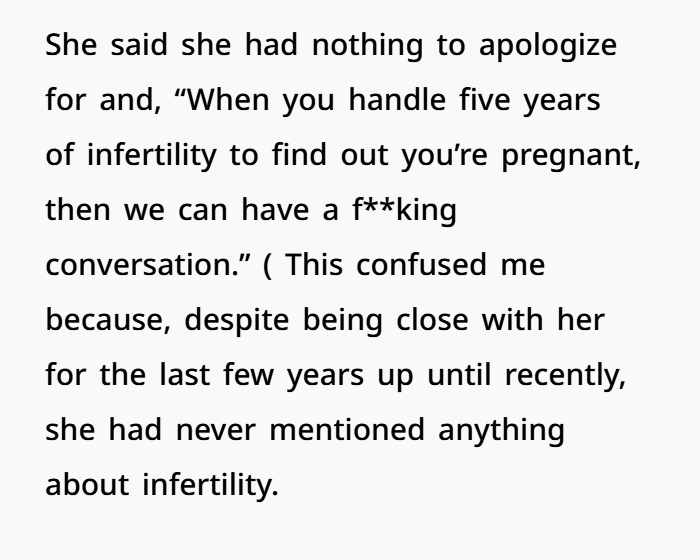
The older sister was excited to share that she was expecting a baby after five years of fertility struggles. However, her younger sister was still grieving the loss of her baby boy, who had passed away just four months earlier because of a heart condition.
When the older sister mentioned her baby’s strong heartbeat, it brought back painful memories for the younger sister.
What should have been a happy family gathering soon turned into an emotional disagreement.
The situation shows how complicated family relationships, pregnancy loss, and emotional well-being can become when happiness and grief happen at the same time.
Why Pregnancy Announcements Can Be Painful After Losing a Baby
For parents who have experienced pregnancy or infant loss, certain moments can bring back difficult memories.
A baby shower, pregnancy announcement, or even a conversation about newborns may remind them of the child they lost.
This does not mean they are unhappy for someone else.
They may truly want to celebrate another person’s good news while still feeling sadness about their own experience.
In this story, the younger sister had lost her son only four months before the announcement.
Her grief was still very recent.
Hearing about a healthy heartbeat was especially difficult because her baby had died from a heart condition.
The announcement may have reminded her of everything she had been through.
Grief can affect people in different ways. Some may cry, others may become quiet, and some may experience strong feelings of fear or anxiety.
These reactions are not always something a person can control.
Grief Does Not Follow a Set Timeline
Losing a baby can have a lasting emotional impact on parents and families.
A 2020 study published in the American Journal of Obstetrics and Gynecology found that women who experienced miscarriage or ectopic pregnancy had increased levels of anxiety, depression, and post-traumatic stress symptoms.
Although that research focused on specific types of pregnancy loss, it helps show how deeply these experiences can affect maternal mental health.
Grief does not disappear after a few weeks or months.
Someone may feel better for a while and then suddenly become upset when something reminds them of their loss.
For the younger sister, four months may not have been enough time to feel comfortable hearing certain details about another pregnancy.
Her reported panic attack did not necessarily mean she was jealous of her sister.
It may simply have been an overwhelming emotional response to a painful memory.
Support from loved ones, understanding, and access to grief counseling services can be helpful for families dealing with this kind of loss.
The Older Sister Had Her Own Reasons to Celebrate
The older sister also had an emotional journey.
According to the story, she had struggled with infertility for five years.
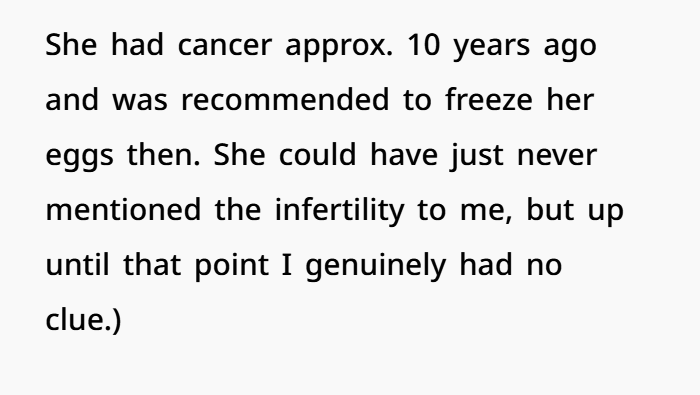
She also had a history of cancer, which had caused concerns about her ability to become pregnant.
After everything she had experienced, hearing that her baby had a strong heartbeat was likely a very special moment.
She wanted to share that happiness with her family.
And there was nothing wrong with being excited.
People who have experienced fertility challenges may find pregnancy milestones especially meaningful.
For some families, fertility treatment, reproductive health care, and pregnancy planning can involve years of uncertainty.
The older sister had every reason to feel grateful and hopeful about her pregnancy.
However, celebrating a happy moment and being thoughtful about another person’s grief do not have to be separate things.
Both can happen together.
Could the Announcement Have Been Handled Differently?
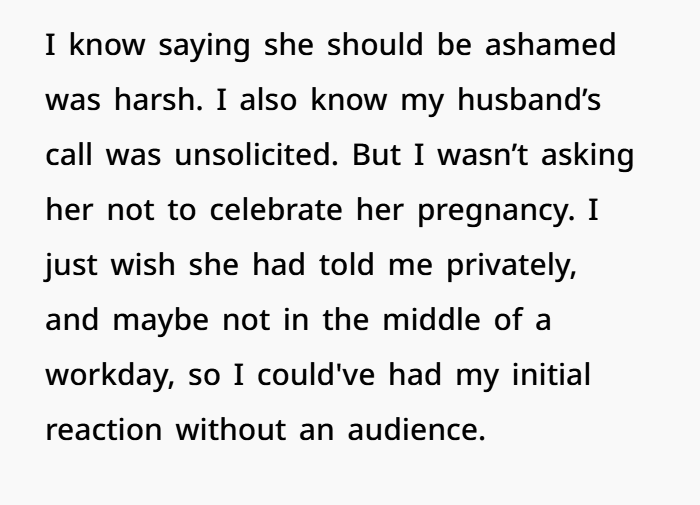
The younger sister was not asking her sibling to hide the pregnancy.
She was upset about how the news was shared.
A private phone call or personal message before the family gathering might have helped.
It would have given her time to process the news without feeling pressure to react in front of everyone.
She could have been happy for her sister while also taking care of her own emotions.
According to the original account, the older sister had already spoken with their grandmother about how the announcement might affect her grieving sibling.
This suggests she knew the news could be difficult for her younger sister to hear.
It does not mean she wanted to hurt her.
Still, a little extra care might have prevented the disagreement.
Sometimes, healthy family communication is not just about what we say. It is also about when and how we say it.
When Hurt Feelings Turn Into a Family Argument
After the announcement, the disagreement became more personal.
The younger sister reportedly told her older sister that she should feel ashamed of how she handled the situation.
Those words were harsh and may have made the older sister feel attacked.
The younger sister’s husband also stepped into the disagreement, even though she had not asked him to.
His involvement may have added more tension.
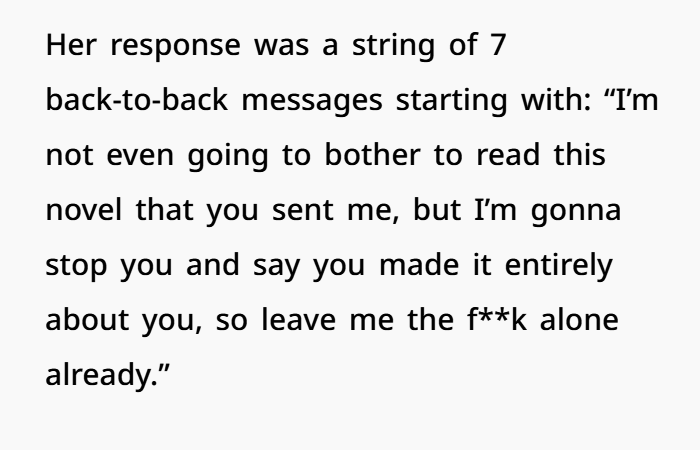
However, the older sister’s reported response was also hurtful.
She accused her younger sister of making everyone miserable because of her grief.
For someone who had recently lost a child, those words could be especially painful.
There is a big difference between telling someone that their behavior hurt you and making negative comments about their character.
Relationship researcher John Gottman has discussed how personal criticism and contempt can damage close relationships.
Although much of his work focuses on couples, the same general communication concerns can appear in family disagreements.
Both sisters were upset, but the conversation became more damaging when it moved away from the announcement and toward personal accusations.
Why Family Support Matters During Grief
When someone loses a baby, family support can make a meaningful difference.
Parents may need time, understanding, and a safe place to talk about their feelings.
They may also need space from certain conversations or events.
That does not mean every family celebration must stop.
It simply means loved ones can try to be more thoughtful about sensitive situations.
For example, someone planning a pregnancy announcement could privately inform a grieving family member before sharing the news with a large group.
This gives the person a chance to prepare emotionally.
Families can also avoid pressuring someone to attend baby showers or other events if they are not ready.
Professional mental health counseling, bereavement support groups, and family therapy services may provide additional support when grief begins affecting everyday relationships.
There is no single right way to grieve, and different family members may need different kinds of support.
Was Blocking Her Sister a Reasonable Boundary?
After the argument, the younger sister decided to block her older sister.
For some people, blocking a family member may seem extreme.
However, taking a break from communication can sometimes help when conversations become too upsetting.
A boundary does not always mean ending a relationship forever.
It may simply mean needing time to calm down, process emotions, and decide what to do next.
In this situation, the younger sister may have felt that continuing the conversation would only cause more pain.
The older sister also reportedly said she would not attend family gatherings where her younger sibling was present.
That decision could make future family events more complicated.
Other relatives may feel caught between the two sisters.
This is one reason family conflict resolution can be difficult when several people become involved.
How Family Disagreements Can Affect Everyone
Family arguments rarely affect only the two people involved.
In this case, other sisters and relatives also had feelings about what happened.
One sister decided not to get involved.
Another reportedly admitted that she had immediately worried about the grieving mother when the pregnancy was announced.
Now, family members may feel uncomfortable planning gatherings or deciding how to support both sisters.
Family systems theory, associated with psychiatrist Murray Bowen, looks at how tension between two relatives can affect the wider family.
Sometimes, other relatives become involved as messengers or feel pressured to choose sides.
This can make the original disagreement even harder to resolve.
Instead of asking everyone to take sides, it may be more helpful to give both sisters time and space.
If they eventually want to rebuild their relationship, a calm conversation or support from a qualified family counselor could help.
Can Someone Feel Happy and Sad at the Same Time?
One of the most important lessons from this story is that people can experience two very different emotions at once.
The younger sister could love her sibling and feel happy about the pregnancy.
At the same time, she could feel heartbroken when reminded of her own baby.
Those feelings do not cancel each other out.
The older sister could also feel proud and excited about becoming a mother while recognizing that her announcement might be painful for someone else.
Neither woman had to give up her feelings to make room for the other.
The real challenge was finding a way to respect both experiences.
A little understanding might have helped them avoid words they could later regret.
The Real Issue Wasn’t the Pregnancy Announcement
At the center of this story were two sisters going through very different life experiences.
One was celebrating a pregnancy after years of uncertainty.
The other was still learning how to live with the loss of her child.
Both were carrying strong emotions.
The younger sister’s choice of words may have made the disagreement worse. Her husband’s involvement may also have added pressure.
But her grief reaction was not necessarily an attempt to ruin the announcement.
Likewise, the older sister had a right to celebrate her pregnancy, but her reported comments about her sibling’s grief were deeply unkind.
A family should be able to celebrate good news without expecting someone who is grieving to hide every painful feeling.
Happiness and grief can exist in the same family, even at the same moment.
Sometimes, the most meaningful way to support someone is not to find the perfect words, but to recognize what they are going through.
The question this story leaves behind is simple: Can families make room for one person’s happiness while still showing compassion for another person’s heartbreak?
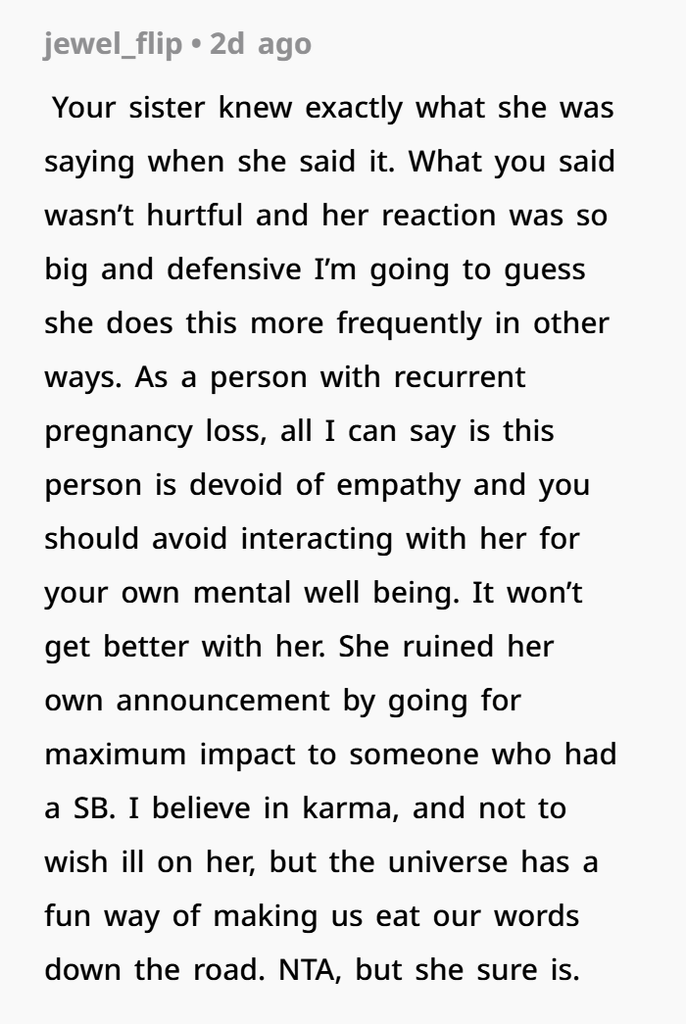
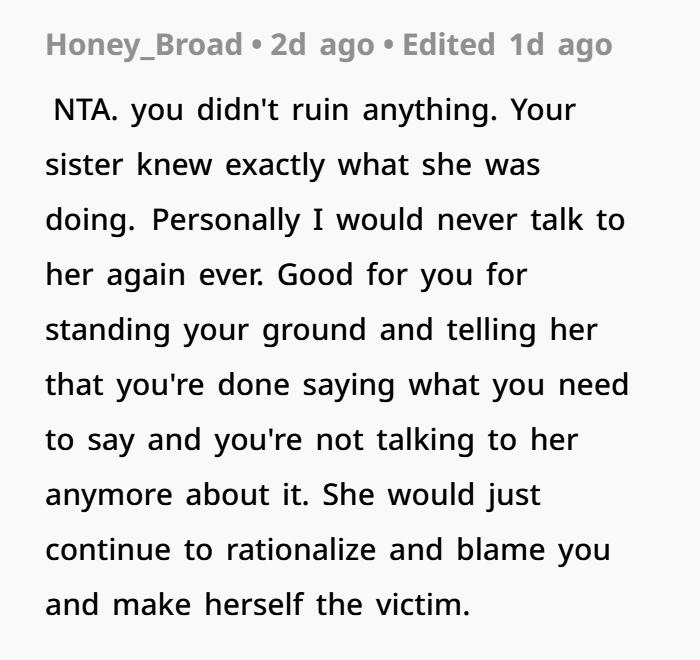
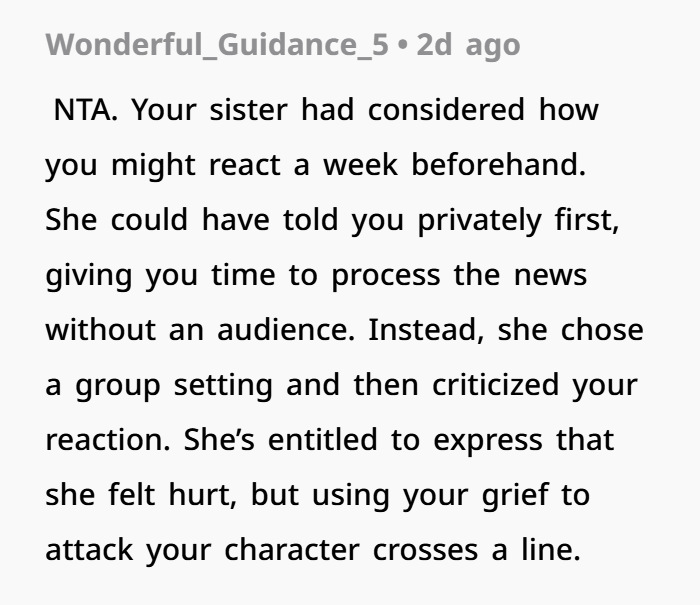
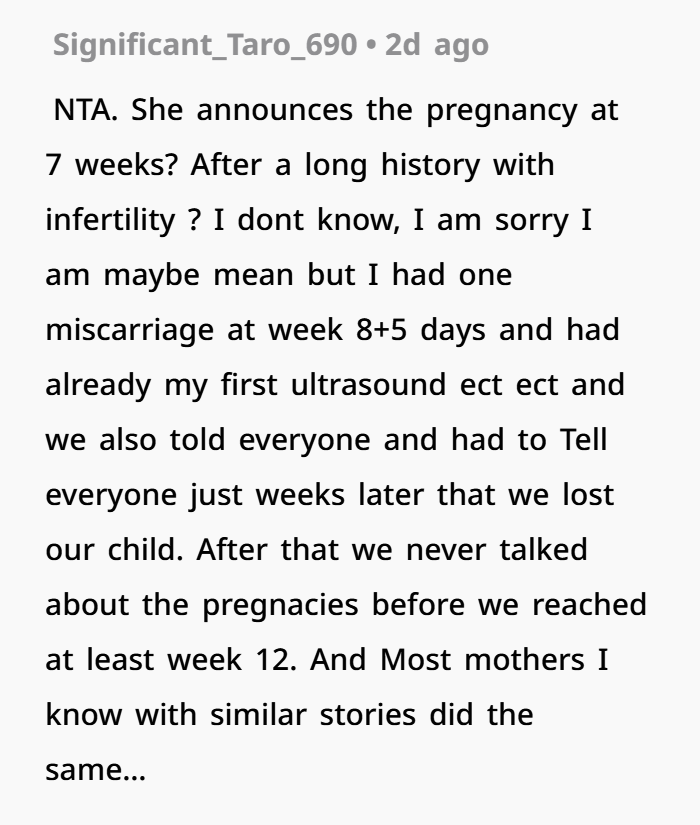
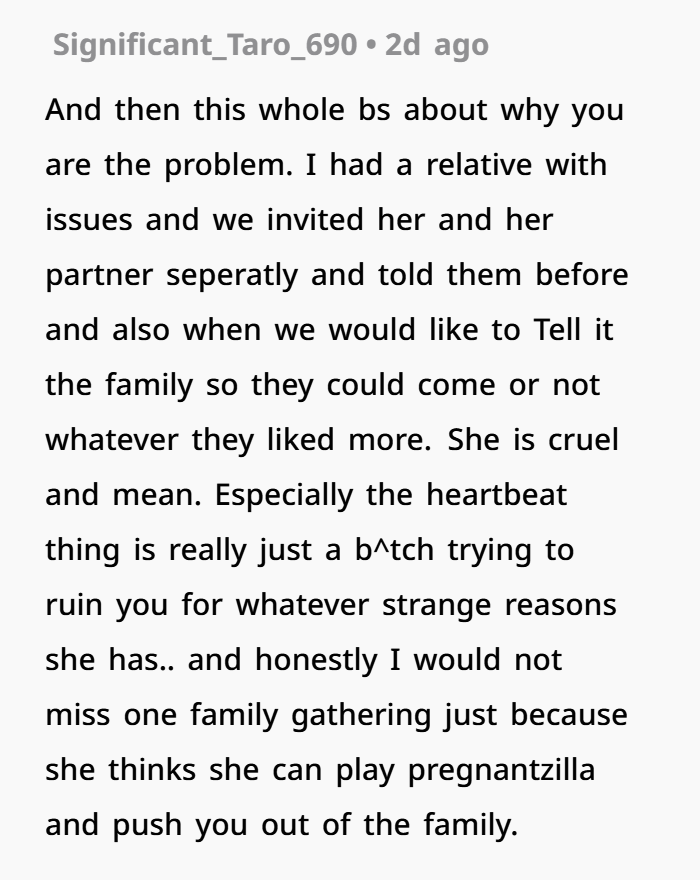
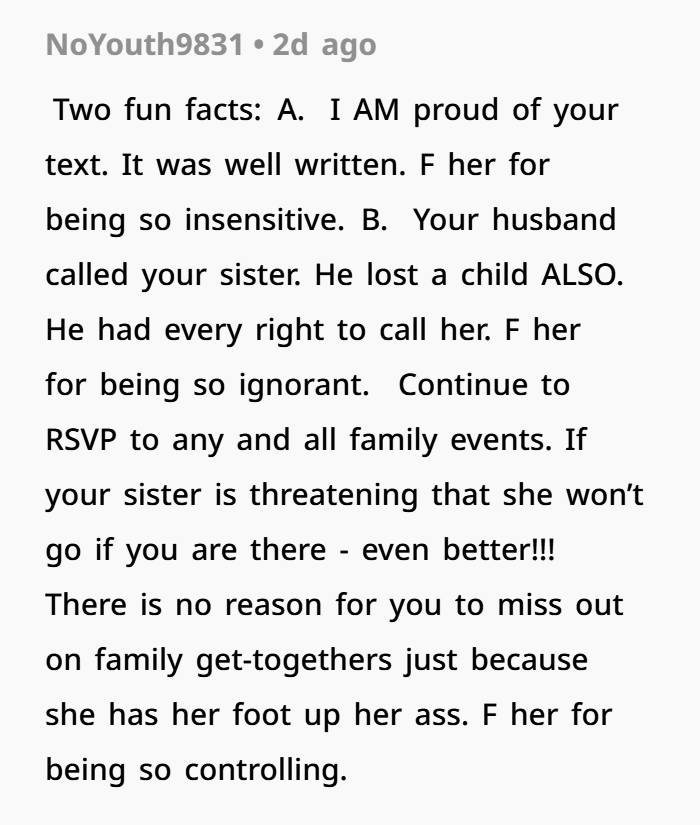
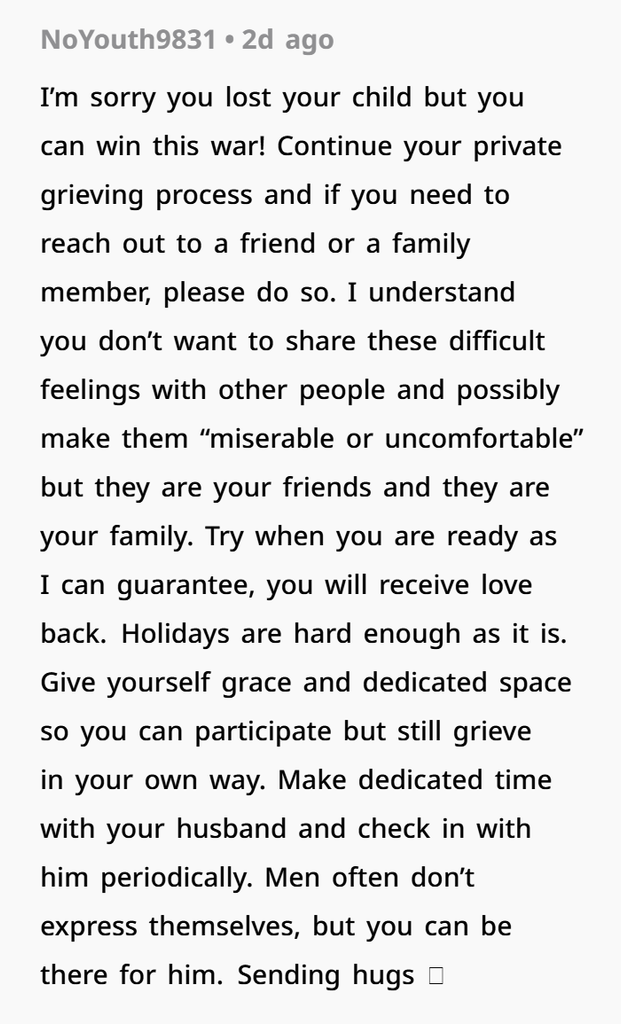
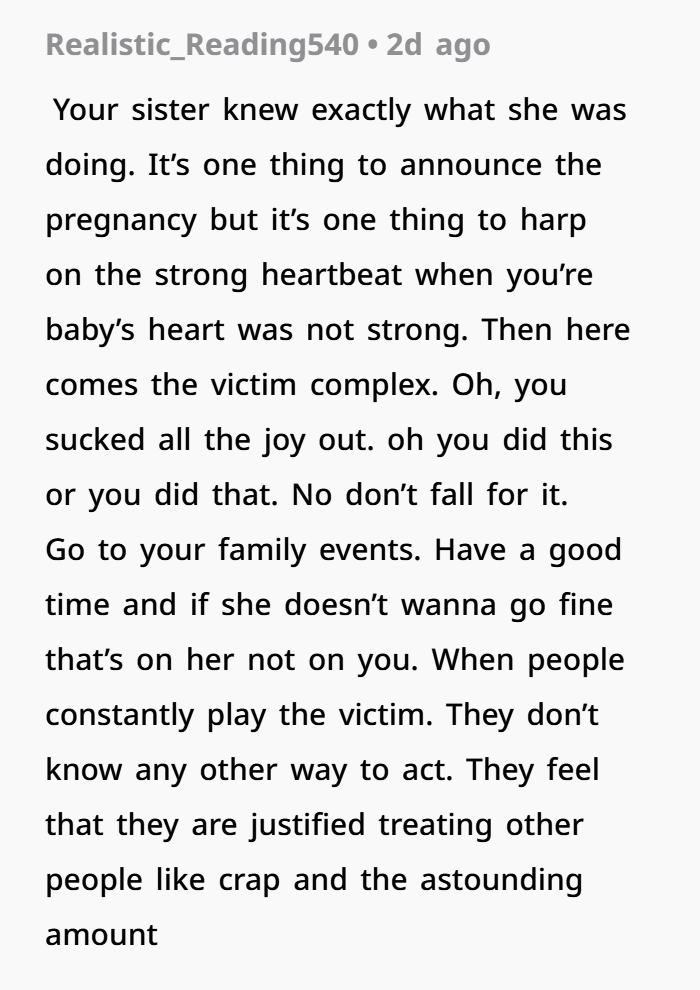
Comments From The Community