AITA for Demanding $800 After My Coworker Sold the NFL Tickets He Won From Me?
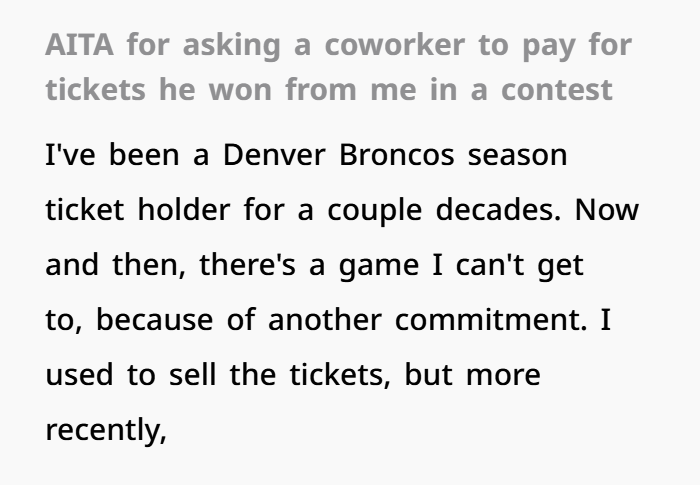
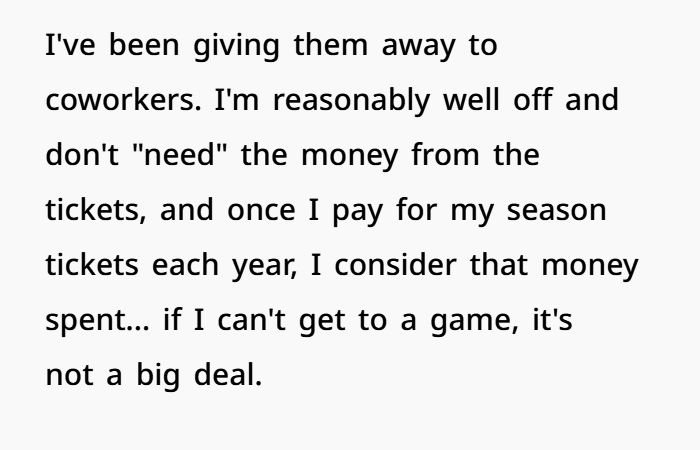
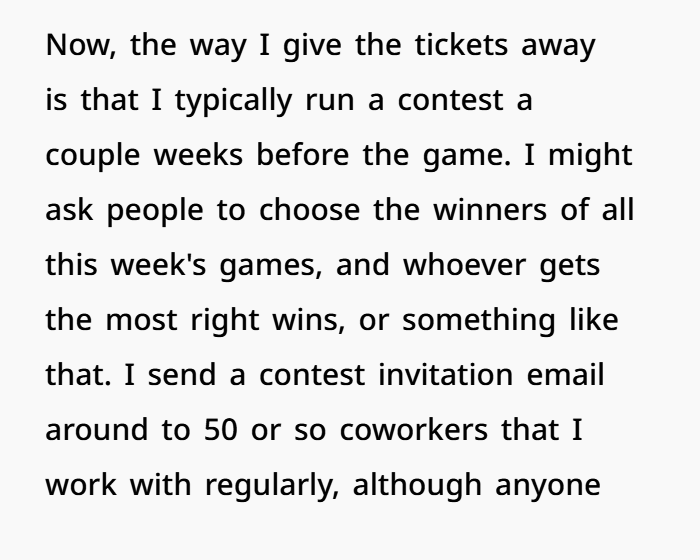
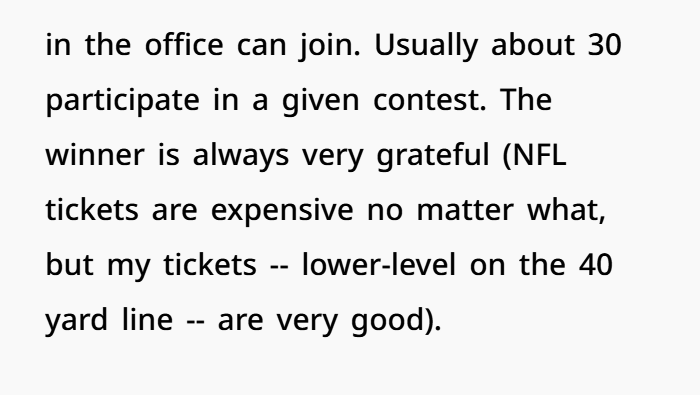
A man who owns Denver Broncos season tickets is upset after finding out that his coworker sold tickets he had won in a friendly office contest. The man has owned premium NFL tickets for many years, with great seats near the 40-yard line. Whenever he cannot attend a game, he gives his tickets to coworkers instead of selling them. He usually holds a small prediction contest with about 30 people, and the winner gets two free tickets. His only rule is that the winner must attend the game and cannot sell the tickets to make money. He enjoys giving others a chance to watch an NFL game without paying expensive ticket prices.
One weekend, the man had to attend a family wedding and could not watch the Denver Broncos play the Kansas City Chiefs. He decided to give away his tickets through another office contest. A coworker named Joe won, and the man sent him the tickets online. After the game, he sent Joe a message asking if he enjoyed it. Joe replied that he had a great time and thanked him. But the next day, another coworker told the man that Joe had actually spent the weekend in Las Vegas with his girlfriend. The man was confused because Joe had made it sound like he attended the football game.
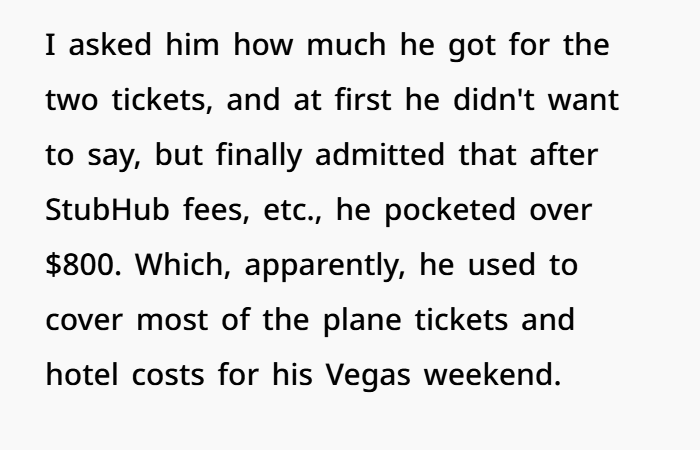
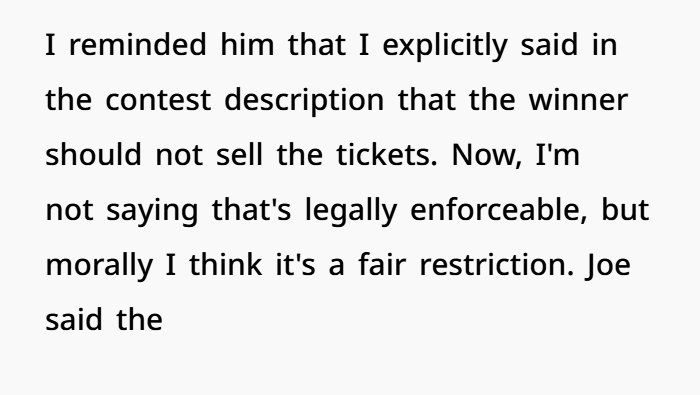
When the man asked Joe what happened, Joe admitted that he had sold both tickets on StubHub for more than $800 after fees. He used the money to help pay for his Las Vegas trip. The man was upset because he had clearly explained that the tickets were not meant for resale. He asked Joe to give him the money from the ticket sales. However, Joe refused and said that once he won the tickets, they belonged to him. He believed he had the right to sell them, just like anyone else selling their own sports tickets online.
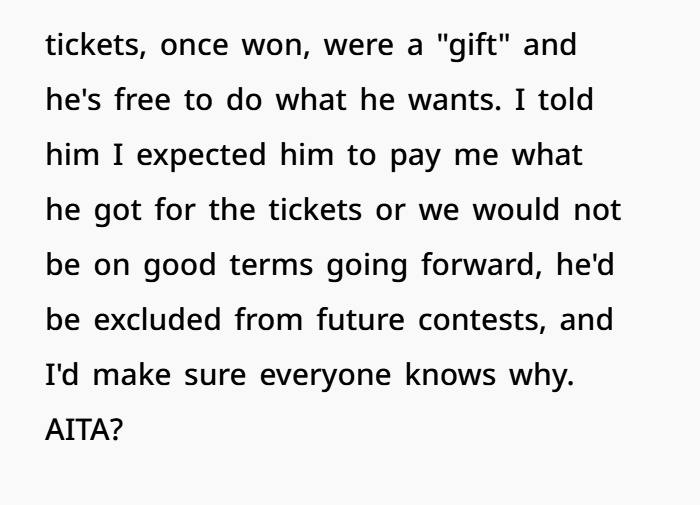
The disagreement soon became a problem at work. The man told Joe that if he did not return the money, he would no longer be invited to future contests. He also said their working relationship would change and that he would tell other coworkers what happened. Joe still believed he had done nothing wrong. Now the man is wondering whether he went too far by asking for the money back. The situation has raised questions about workplace trust, gift rules, and the difference between winning something and respecting the person who gave it. Do you think Joe should return the $800, or was he free to sell the tickets after winning them?

Man Gives Away Free NFL Tickets, Then Finds Out the Winner Sold Them for $800
Giving someone free NFL tickets sounds like a nice thing to do. But what happens when the person who wins those tickets decides to sell them instead?
That is exactly what happened in a workplace disagreement involving two coworkers.
A man who owns NFL season tickets often gives away seats when he cannot attend a game. Instead of letting the tickets go to waste, he holds small contests so his coworkers have a chance to enjoy a game for free.
There is just one rule. The tickets are meant to be used, not sold.
One coworker, Joe, entered the contest and won. But instead of going to the game, he sold the tickets for $800.
When the man found out, he was upset. He asked Joe to give him the money and threatened to tell their coworkers what happened.
Now the big question is: Was Joe wrong for selling a prize he won fairly, or did the man go too far by demanding the money?
Why the Man Gives Away His NFL Tickets
NFL season tickets can be expensive, especially when the seats are in a popular section of the stadium.
Many football fans would love to attend a live game, but ticket prices can make that difficult.
The man in this story wanted to give his coworkers a chance to enjoy something special.
Whenever he could not attend a game, he organized a small contest at work.
The winner received the tickets for free.
He was not trying to make money from the giveaway. He simply wanted another football fan to have a good time.
But he made one thing clear before people entered.
Anyone planning to resell the tickets should not participate.
For him, the purpose was simple. He wanted someone to enjoy the game, not turn his generosity into a way to earn money.
That is why Joe’s decision upset him so much.
The Coworker Won the Tickets but Never Went to the Game
Joe entered the contest and won the tickets.
As far as the organizer knew, everything had gone as planned.
He expected Joe to attend the game and enjoy the experience.
But that was not what happened.
Joe decided to sell the tickets and received $800.
The organizer later contacted Joe about the game. Joe’s first response gave the impression that he had attended.
When the organizer asked more questions, Joe admitted that he had sold the tickets.
This made the situation even more uncomfortable.
The organizer was not only upset about the resale. He also felt that Joe had not been upfront about what happened.
From his point of view, he had trusted Joe to respect the purpose of the contest.
Joe, however, believed he had done nothing wrong because he had won the tickets fairly.
Can Someone Legally Resell Tickets They Won?
This is where the situation becomes a little more complicated.
In the United States, ticket resale rules can vary depending on the state, event, and ticketing platform.
Some tickets also come with special terms about transfers and resale.
Colorado generally allows ticket resale, although consumer protection rules and other restrictions may apply.
The NFL and individual teams may also have ticket policies that affect how tickets can be transferred or sold.
But there is another question here.
Can someone who gives away a prize decide what the winner is allowed to do with it?
The answer depends on the rules of the contest and whether those rules created an enforceable agreement.
In this case, the organizer told people not to enter if they planned to sell the tickets.
That made his wishes clear.
However, a personal request does not always create a legally binding contract.
Once the tickets were transferred to Joe, the organizer may not have had a legal right to demand the resale money.
That does not automatically mean Joe made a thoughtful decision.
It simply means that what feels unfair and what is legally enforceable are not always the same thing.
Anyone dealing with a similar dispute should review the applicable ticket terms and local laws before making legal demands.
Why Selling the Tickets Felt Like a Betrayal
The organizer was not expecting money when he gave away the tickets.
He had already paid for his NFL season tickets and wanted someone else to enjoy the game.
For him, the giveaway was about kindness.
Joe’s decision to sell the tickets changed the meaning of that gift.
Instead of enjoying the experience, Joe turned the prize into $800.
That may explain why the organizer felt taken advantage of.
Research on gift-giving suggests that gifts often carry emotional meaning beyond their financial value.
People give gifts to show appreciation, build relationships, or make someone happy.
When the receiver ignores the reason behind the gift, the giver may feel disappointed.
In this situation, the organizer had a clear expectation.
He wanted the winner to attend the game.
Joe knew that before entering.
This is why the disagreement is not just about NFL ticket prices or resale profits.
It is also about trust between coworkers.
Does Winning a Prize Mean You Can Do Anything With It?
Joe’s argument is easy to understand.
He entered the contest, followed the process, and won.
From his point of view, the tickets became his property.
He believed he could decide whether to attend the game or sell them.
Some people may agree with him.
After all, when someone receives a gift without enforceable restrictions, they usually have freedom over how to use it.
But others may see the situation differently.
The organizer had already explained that the contest was for people who wanted to attend the game.
Joe could have chosen not to enter.
Instead, he accepted the prize and sold it.
This creates an important difference between having the right to do something and making a considerate choice.
Joe may have believed he owned the tickets, but he also knew what the organizer wanted.
That is why many people would understand the organizer’s disappointment.
Was Asking for the $800 Fair?
After learning what happened, the organizer asked Joe to give him the $800 from the ticket sale.
This is where the disagreement becomes more difficult.
On one hand, Joe made money by doing something the organizer had specifically asked people not to do.
The organizer may feel that Joe should not benefit from ignoring the contest’s purpose.
But there is another side to consider.
The organizer had already decided to give away the tickets for free.
He was not planning to sell them himself.
Asking for the full $800 after the contest changes the situation from a free giveaway into a disagreement over money.
Some people may feel Joe should return the money as a matter of fairness.
Others may believe the organizer is asking for something he was never promised.
There is also a difference between asking someone to apologize and demanding financial compensation.
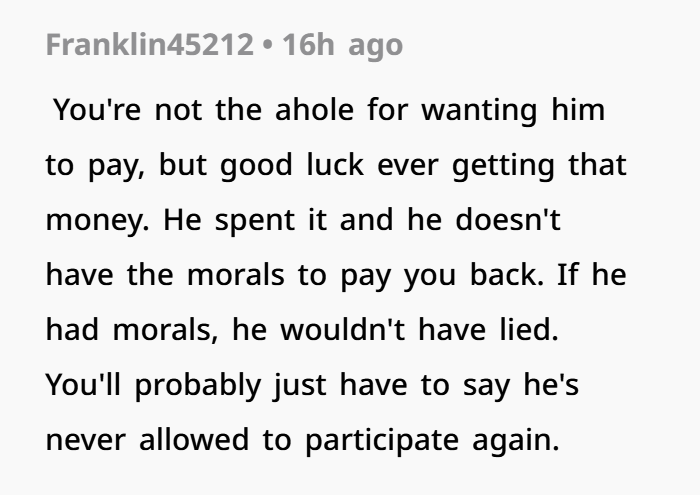
Without a clear and enforceable agreement, the organizer may have difficulty showing that Joe legally owes him the resale amount.
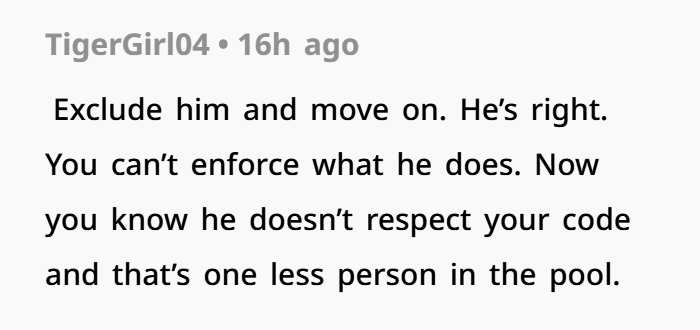
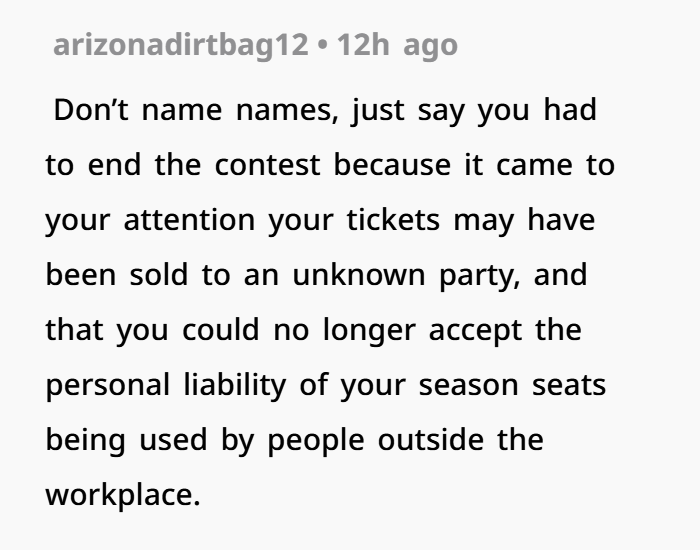
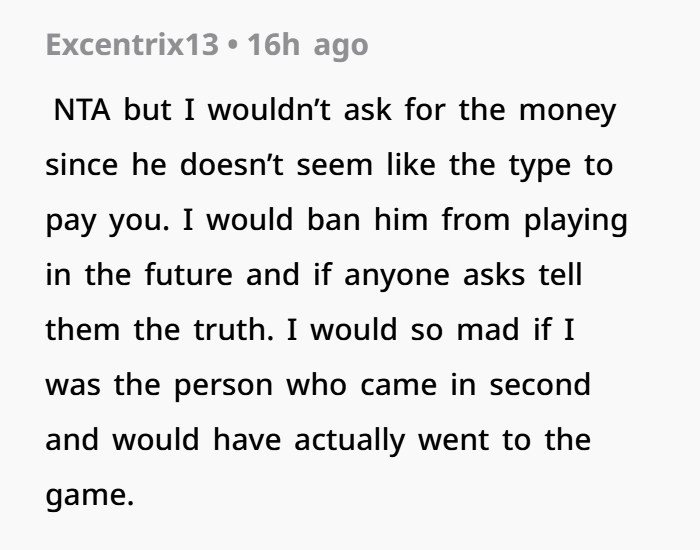
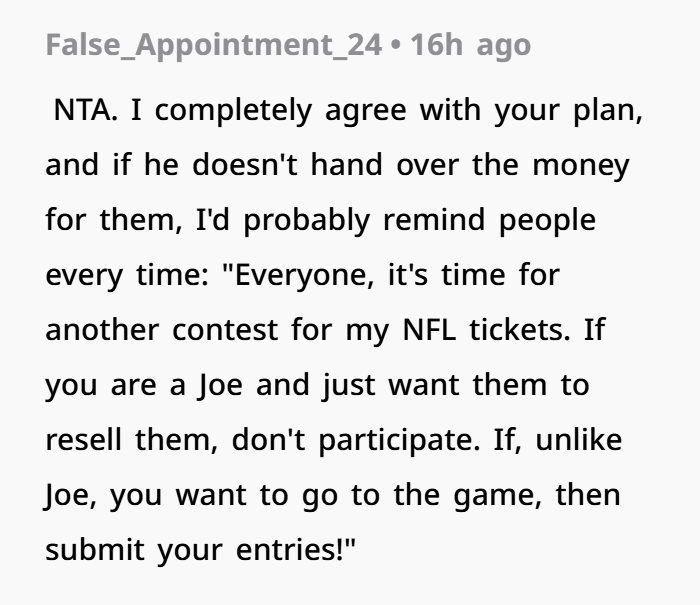
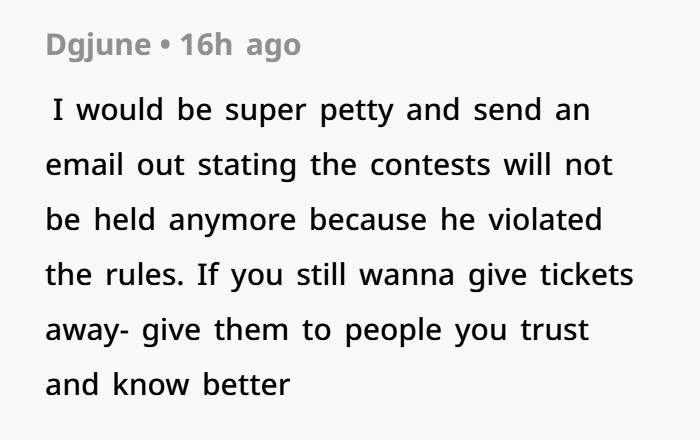
A simpler response might be to stop allowing Joe to enter future contests.
That would protect the organizer’s generosity without creating a bigger financial dispute.
Why Bringing the Disagreement Into the Workplace Could Make Things Worse
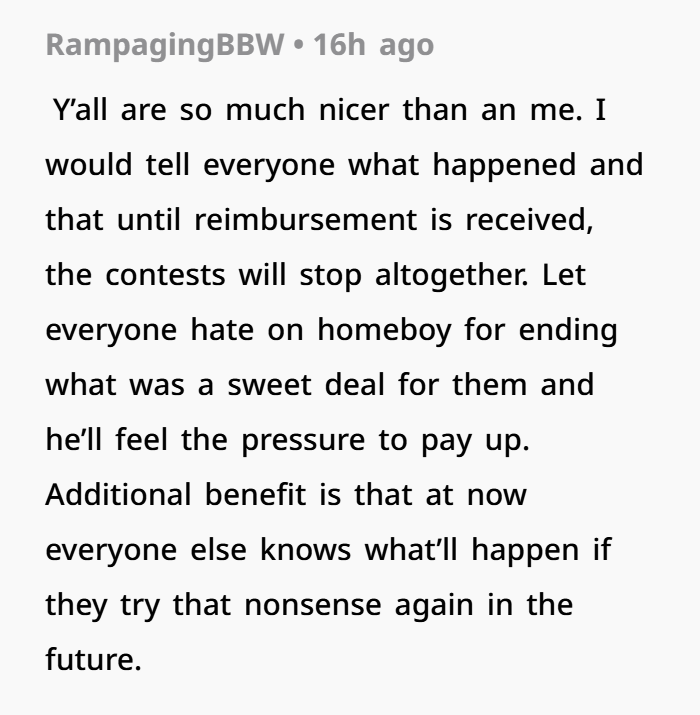
The organizer also threatened to tell everyone at work what Joe had done.
He wanted his coworkers to know that Joe had sold tickets that were meant to be enjoyed.
It is understandable that he felt disappointed.
But workplace disagreements can quickly become uncomfortable when personal problems are shared with other employees.
Even a small disagreement can affect professional relationships.
Coworkers may feel pressured to take sides.
A private issue can turn into ongoing tension at work.
There may also be concerns about workplace conduct if someone repeatedly uses public embarrassment to pressure another employee.
Not every workplace disagreement involves unlawful harassment or retaliation. Those legal terms have specific meanings.
Still, keeping personal disputes respectful is usually a better choice.
The organizer has every right to decide who can enter his future giveaways.
He can also explain his contest rules more clearly.
But threatening Joe’s reputation to recover money may create more problems than it solves.
How Clear Contest Rules Could Prevent Similar Problems
This situation shows why even friendly workplace contests need clear rules.
When valuable prizes are involved, people may have different ideas about what is allowed.
One person may see free NFL tickets as a special experience.
Another may see them as something valuable that can be sold.
Clear rules can help avoid confusion.
For future giveaways, the organizer could explain that tickets are intended for personal use.
He could also ask winners to return the tickets if they cannot attend.
That would give another coworker a chance to enjoy the game.
A simple set of contest rules might include:
- Winners should plan to attend the game.
- Tickets should not be resold under the contest rules.
- Anyone who cannot attend should contact the organizer.
- Tickets may be offered to another participant if the winner cannot use them.
- People who break the contest rules may not be invited to future giveaways.
Written rules can help everyone understand the organizer’s expectations.
However, written rules do not automatically guarantee legal enforceability.
For valuable giveaways, it may also be worth checking ticket transfer policies and any workplace rules about employee contests.
Why NFL Tickets Can Create Money Disagreements
Professional football tickets can have significant resale value.
Prices depend on the teams, stadium, seat location, and demand for a particular game.
For popular matchups, some fans may be willing to pay much more than the original ticket price.
That can make ticket resale attractive.
In this case, Joe received $800 for tickets he had won for free.
For many people, that is a meaningful amount of money.
But the financial value of the tickets is also what made the organizer’s gift generous.
He could have tried to sell the tickets himself.
Instead, he wanted a coworker to enjoy the experience.
This is why the situation feels different from an ordinary ticket resale.
The organizer gave up the chance to earn money because he wanted to do something kind.
Joe then used that opportunity to make money for himself.
Whether that was acceptable depends partly on how people view gifts, ownership, and personal responsibility.
Should Joe Be Allowed to Enter Future Giveaways?
Even if Joe does not legally owe the organizer $800, the organizer can still change how he runs future contests.
He does not have to keep giving Joe chances to win.
That may be the simplest way to handle the situation.
If Joe ignored the stated purpose of the giveaway, the organizer may reasonably decide not to include him again.
This would be a direct response to what happened.
It would also avoid turning the disagreement into a larger workplace problem.
The organizer could continue giving tickets to coworkers who genuinely want to attend games.
That would allow him to keep doing something generous without repeating the same experience.
Joe would still keep the money unless he voluntarily returned it or a valid legal obligation required repayment.
But he might lose the opportunity to participate in future giveaways.
For some people, that would be a fair outcome.
What This Story Says About Gifts and Expectations
This disagreement raises a question that applies to many situations.
When you give someone something valuable, should you still have a say in how they use it?
There is no simple answer.
An unrestricted gift usually gives the receiver freedom to decide what to do with it.
But when someone clearly explains the purpose of a gift before it is accepted, ignoring that purpose can damage trust.
The organizer believed he was giving someone a memorable experience.
Joe believed he had won something valuable that he could sell.
Both viewed the same prize differently.
The problem became worse because Joe knew the organizer did not want the tickets resold.
It became even more uncomfortable when Joe did not immediately explain what he had done.
A more open conversation might have prevented some of the frustration.
Final Thoughts: Who Was Wrong in This NFL Ticket Dispute?
This story is not really about whether $800 is a lot of money.
It is about what happens when someone accepts a generous gift but ignores the reason it was given.
Joe won the NFL tickets fairly, but he knew the organizer wanted the winner to attend the game.
Selling them went against that expectation.
At the same time, the organizer’s response may have gone too far.
Demanding all the resale money and threatening to tell coworkers could turn a disappointing experience into a bigger conflict.
A more reasonable solution may be to exclude Joe from future giveaways and make the contest rules clearer.
That would allow the organizer to continue helping other football fans without adding unnecessary workplace tension.
Joe may have had the right to sell the tickets, but that does not mean his decision was considerate. And the organizer may have had a good reason to be upset without having the right to demand $800.
What do you think? Should Joe return the money because he ignored the rules, or should the organizer accept what happened and never give him tickets again?
Comments From The Community