
Husband Tells Exhausted Mom, “I’m Not Your Maid,” After Leaving Their Sick Baby’s Laundry on the Floor for a Week
A 35-year-old mother is feeling exhausted and disappointed after a painful argument with her 41-year-old husband over household chores. The couple has an 11-month-old daughter, and the mother says she is struggling to manage childcare, part-time work, breastfeeding, and keeping their home clean.
The argument started after their baby became sick and vomited during the night. Her husband promised to wash the dirty bedding and clothes, but a week later, everything was still sitting on the floor.
When she asked why he had not done the laundry, his response left her upset.
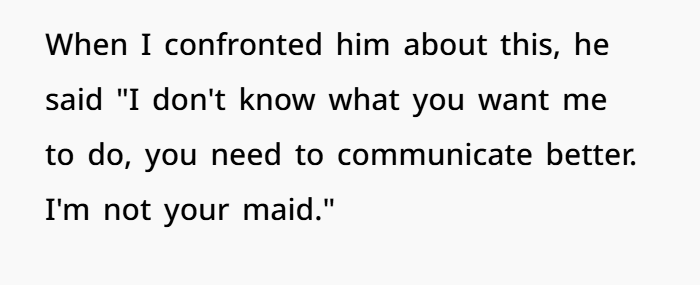
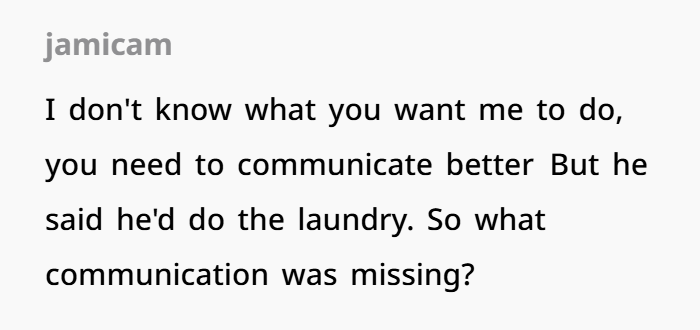
“I don’t know what you want me to do, you need to communicate better. I’m not your maid.”
Sadly, this was not the first time he had promised to handle a household task and failed to follow through. The mother says dirty dishes had also piled up for a week, even though her husband had offered to wash them while she dealt with a painful skin condition on her hand.
Now, nearly a year after giving birth, she feels overwhelmed by the unequal division of household responsibilities. She worries about the example their marriage might set for their daughter.


A Difficult Night With Their 11-Month-Old Daughter
The trouble began during an already stressful night.
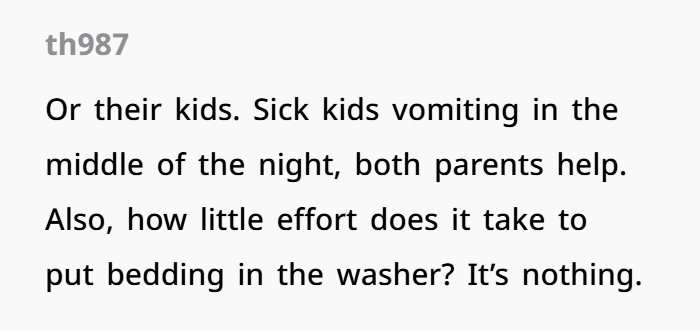
The couple’s 11-month-old daughter had been feeling unwell. In the middle of the night, she suddenly vomited, leaving her bedding and clothes covered in the mess.
The mother, who breastfeeds and co-sleeps with her baby, was in the room when it happened. Her husband was somewhere else in the house.
She had to remove the dirty sheets and change both her daughter’s clothes and her own. It was the kind of exhausting situation many parents face when caring for a sick baby.
Her husband was worried about their daughter and stepped in to help. He also offered to take care of the laundry.
At the time, that promise likely felt like one less thing the mother needed to worry about.
But the laundry never got done.
A Week Later, the Dirty Bedding Was Still on the Floor
Several days after the incident, the mother went into a part of the house the family rarely used.
What she found was upsetting.
The dirty sheets and clothes from the night her daughter had been sick were still lying on the floor. An entire week had passed, and nothing had been washed.
What made the situation more frustrating was that she had already reminded her husband several times.
Each time, he had told her he would take care of it.
She believed him and assumed the job was finished.
When she finally asked him why the laundry was still there, the conversation quickly turned into an argument.
Instead of explaining why he had not completed the task, her husband told her she needed to communicate better.
Then came the comment that hurt her most.
“I’m not your maid.”
For the mother, the issue was no longer just about dirty laundry. It was about having to remind her husband to complete something he had already agreed to do.
This kind of responsibility is often called the mental load of household work. It includes remembering what needs to be done, planning tasks, checking whether they are finished, and making sure nothing gets forgotten.
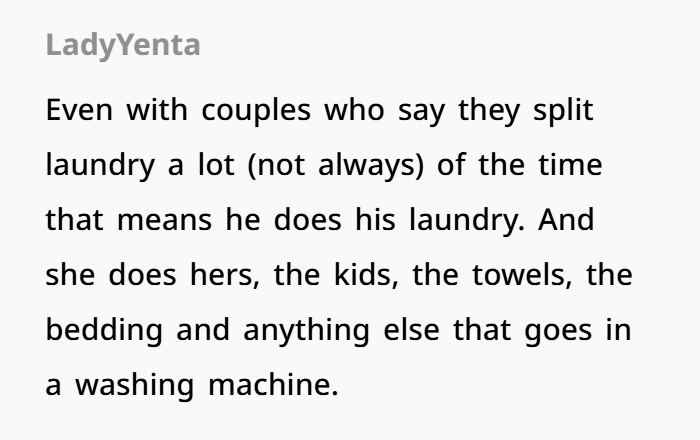
Even when two people share physical chores, one person may still carry most of the responsibility for managing the home.
She Works Three Days a Week and Cares for Their Baby on the Other Two
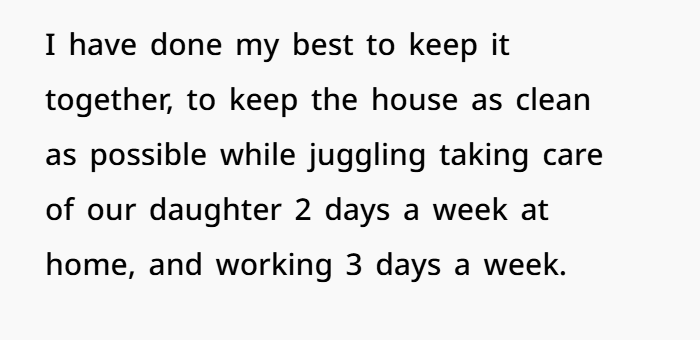
The mother explained that she has been trying her best to keep everything together since having her daughter.
She works three days a week and stays home caring for the baby two days a week.
On top of that, she breastfeeds, handles childcare, and tries to keep the house as clean as possible.
She is not saying her husband never helps. In fact, she acknowledged that he was concerned about their sick daughter and helped during the difficult night.
Her frustration comes from what happens afterward.
When he promises to handle something, she wants to trust that it will get done without having to keep asking.
That is where the couple seems to be struggling.
Research from the Pew Research Center on parenting and household responsibilities shows that mothers and fathers often experience parenting responsibilities differently. Mothers are more likely to report taking on certain caregiving and scheduling duties.
The mother’s story reflects a problem that can happen when one partner becomes the person responsible for noticing, remembering, and following up on everyday tasks.
The Dirty Dishes Became Another Breaking Point
The laundry was not the only problem.
The mother also described a separate disagreement involving dirty dishes.
She has dyshidrotic eczema on one hand, a skin condition that can cause itchy blisters and discomfort.
According to the National Eczema Association, dyshidrotic eczema commonly affects the hands and feet. Exposure to certain irritants can make symptoms worse.
Because she was trying to let her hand heal, her husband told her not to worry about washing the dishes.
He said he would handle them.
But once again, the work was left undone.
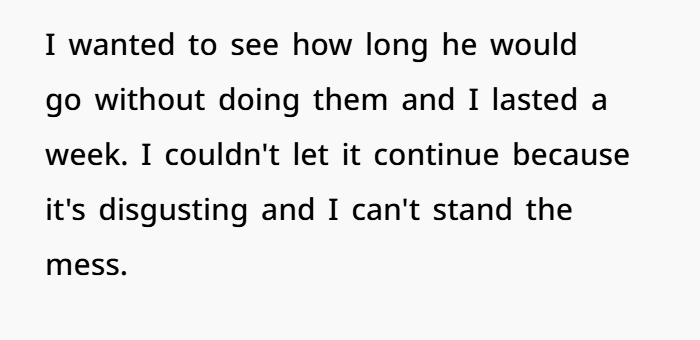
This time, the mother decided to wait and see how long it would take him to wash the dishes without another reminder.
She managed to wait an entire week.
Eventually, she could not stand looking at the mess any longer.
The dirty dishes had piled up, and she felt the kitchen had become too unpleasant to ignore.
So, despite trying to protect her hand, she reached her limit.
The situation left her facing a frustrating choice: keep waiting for her husband to do what he promised, or step in and deal with the mess herself.
The Real Problem Goes Beyond Cleaning
At first glance, this might sound like an ordinary argument about laundry and dishes.
But the mother’s frustration appears to run much deeper.
She is not asking her husband to clean up after her while she does nothing. She is asking him to take responsibility for chores he has already agreed to handle.
There is a difference between helping someone with their responsibilities and sharing responsibility for a home.
In a marriage, household chores are not automatically one person’s job.
Both partners live in the home. Both benefit from having clean clothes, washed dishes, and a safe, comfortable place for their child.
The issue becomes especially difficult when one person must repeatedly ask the other to complete basic tasks.
Research published in the journal Sex Roles has examined how cognitive household labor and family well-being are connected.
This work helps explain why managing household responsibilities can feel exhausting, even when the tasks themselves seem small.
For this mother, the dirty bedding may have been one more reminder that she cannot fully depend on her husband’s promises.
And that feeling can be difficult to live with.
Research Shows Many Mothers Face the Same Struggle
The disagreement between this couple is not unusual.
A June 2026 Pew Research Center study found that mothers often handle more childcare and household chores, even when both parents work full-time.
Among couples with two full-time working parents, 52% said mothers did more of the daily parenting tasks. Another 43% said mothers handled more household chores.
The research also found something interesting.
Fathers were more likely than mothers to believe household responsibilities were divided equally.
That difference matters in this story.
The husband reportedly believes he already does enough, while his wife feels she is carrying too much of the work.
Both may see their daily contributions differently. But that does not change the fact that the laundry and dishes were left undone after he promised to handle them.
A 2019 study published in the American Sociological Review, titled The Cognitive Dimension of Household Labor, looked at 35 couples.
Researchers found that managing a household involves more than doing chores. It also means noticing problems, planning solutions, making decisions, and checking that tasks are completed.
Women in the study handled more of this behind-the-scenes work, especially noticing what needed attention and following up afterward.
For a parent already balancing work and childcare, those extra responsibilities can add up quickly.
Her Skin Condition Makes the Situation Even More Frustrating
There is another reason the dishwashing disagreement stands out.
The mother is dealing with a real health concern.
Dyshidrotic eczema can make ordinary household activities uncomfortable. The American Academy of Dermatology explains that water, detergents, and household cleaning products can irritate the skin and trigger flare-ups.
Even washing dishes can make symptoms worse for some people.
Her husband seemed to understand this when he offered to take over the task.
Unfortunately, his promise did not lead to action.
The mother was left watching the dishes pile up while trying to protect her hand.
This is why the situation feels bigger than a disagreement over cleaning.
She needs practical support, especially when her health makes certain chores harder.
How Can the Couple Address Their Unequal Household Responsibilities?
The mother wants to know how to communicate her frustration without having another argument.
One possible starting point would be a calm conversation about how much work each person actually handles.
Instead of focusing only on the dirty sheets or dishes, the couple could look at their full weekly routine.
That includes paid work, childcare, nighttime parenting, laundry, cooking, cleaning, and other household responsibilities.
They could then agree on which tasks each person will manage from beginning to end.
For example, if the husband agrees to do the laundry, that responsibility would include washing, drying, and putting everything away without repeated reminders.
The same approach could work for dishes and other regular chores.
A shared household schedule might also help. But it would only make a difference if both partners took responsibility for following it.
The goal would not be to turn their marriage into a strict cleaning schedule.
It would be to make sure neither person feels responsible for managing everything alone.
If conversations keep ending in blame or frustration, marriage counseling or couples therapy could offer another way to discuss the problem.
A counselor may help both partners explain what they need, understand each other’s concerns, and agree on a fairer division of responsibilities.
Still, any real improvement would depend on both people being willing to make changes.
Her Biggest Worry Is What Her Daughter Will Learn
The most emotional part of the mother’s story is not the dirty laundry or the dishes.
It is her concern about her daughter.
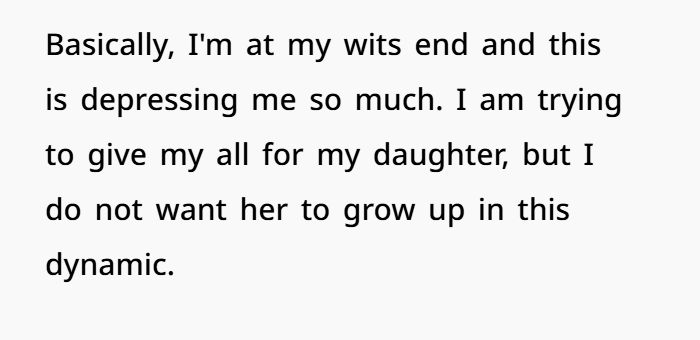
She says she is trying to give her baby everything she can, but she does not want her growing up around the same household dynamic.
That fear has clearly been weighing on her.
At just 11 months old, her daughter is still very young. But the mother is already thinking about the kind of family life she wants her child to experience.
She wants her daughter to grow up seeing both parents share responsibilities and support each other.
She also wants to feel that she has a partner she can rely on.
The mother admitted that the situation has left her feeling deeply unhappy and emotionally drained.
She has tried to keep the house clean, care for her baby, manage her job, and give her husband opportunities to follow through on his promises.
Yet she still feels that too much responsibility falls on her shoulders.
The husband’s comment about not being her maid appears to have made that feeling even worse.
From her point of view, she was not asking him to serve her. She was asking him to do his share of the work.
And that is the question at the heart of this marriage problem.
See the comments to know what people said



For this exhausted mother, the problem was never just about dirty laundry or a sink full of dishes. It was about feeling alone while trying to care for her baby, manage her job, and keep the house running.
Her husband may believe he is doing his fair share, but his unfinished promises have left her feeling frustrated and disappointed. She does not want to keep reminding him about chores he already agreed to do.
What she really needs is a partner who takes responsibility without being asked again and again. A fair division of household chores, better communication, and a little more understanding could help them rebuild that trust.
Of course, no marriage is perfect, especially during the exhausting first year of raising a baby. But sharing responsibilities should not mean one person does the work while the other waits for instructions.
The mother’s biggest concern is her daughter. She wants her little girl to grow up in a home where both parents respect each other and work as a team.
And perhaps that is what makes this story so relatable. Sometimes, the smallest household chores reveal much bigger problems in a relationship.