

How AI Agents Are Changing the Way People Complete Everyday Tasks
Planning a weekend trip can involve checking flights, comparing hotels, organizing activities, and keeping track of reservations. Even something as ordinary as scheduling a meeting can mean switching between emails, calendars, and messaging apps.
AI agents are beginning to change how people handle these small but time-consuming responsibilities. Instead of simply answering questions, these systems can take steps toward completing tasks, sometimes working across several applications with limited supervision.
That difference is making AI more useful beyond writing messages or searching for information.
From organizing daily schedules to researching purchases, AI agents are finding practical roles in personal and professional routines. Understanding what they can do, where they still struggle, and how to use them safely can help people decide which tasks are worth handing over.

What Are AI Agents and How Do They Work?
AI agent is a software system designed to pursue a goal by deciding what steps to take by using available tools to carry them out.
A traditional chatbot generally responds to individual requests. Ask it to suggest a weekly meal plan, and it may produce a list of recipes. An AI agent with suitable tools could potentially go further by checking ingredients, preparing a shopping list, and organizing an online grocery cart.
The distinction is between providing information and taking action.
Most AI agents rely on three connected capabilities: understanding instructions, planning a sequence of actions, and interacting with applications or information sources.
For example, someone might ask an agent to organize a business trip within a particular budget. The agent could research transportation, compare accommodation options, and prepare an itinerary. Depending on its permissions, it might also help complete reservations.
Not every agent can perform every action. Some can only research and organize information, while others can interact with websites, files, or connected accounts.
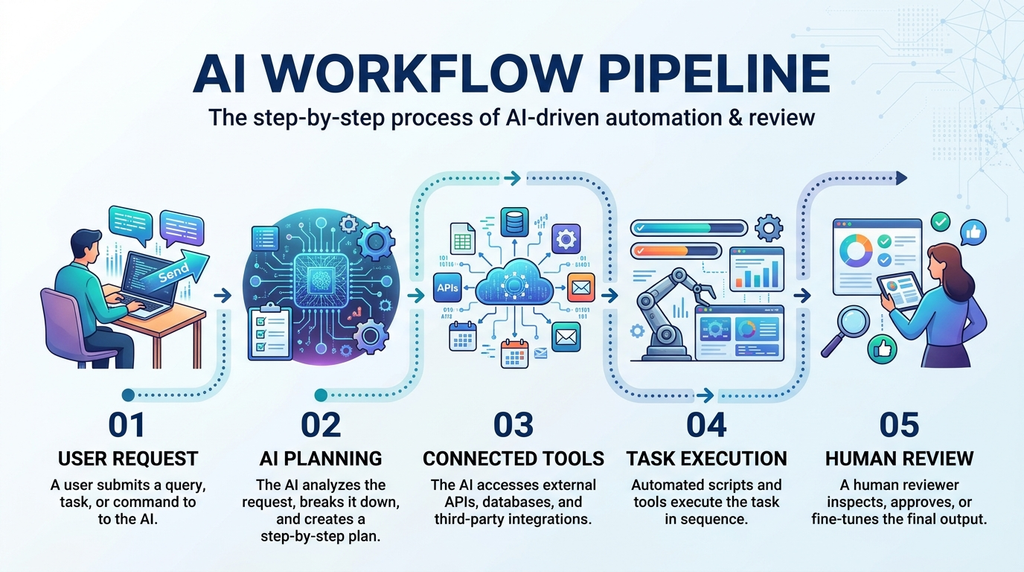
How AI Agents Are Changing Everyday Tasks
The most noticeable benefits appear in activities that involve repeated steps, scattered information, or several digital services.
Managing Emails and Daily Schedules
Email and calendar management can consume considerable attention, particularly when someone balances work meetings, family commitments, and personal appointments.
With appropriate access, an AI agent can help identify important messages, draft replies, summarize conversations, and prepare a daily schedule.
Imagine returning from a holiday to a crowded inbox. Rather than reading every message individually, a person could ask an agent to identify urgent requests, summarize discussions, and prepare responses for approval.
The person still makes the important decisions, but spends less effort finding the information needed to make them.
Shopping and Comparing Products
Online shopping often involves visiting several websites, comparing specifications, checking delivery details, and reviewing prices.
AI agents can assist by gathering relevant information and narrowing the options according to specific requirements.
Someone shopping for a laptop might provide a budget, preferred screen size, and expected usage. An agent could compare suitable models and explain which trade-offs matter most.
However, product availability, prices, and seller policies can change. Buyers should verify those details before making a purchase.
Travel Planning and Reservations
Travel planning is particularly suited to agent-assisted workflows because it involves multiple related decisions.
An AI agent can help compare destinations, research accommodation, organize sightseeing options, and create an itinerary based on travel dates and preferences.
For example, a family planning a five-day vacation could request a schedule that balances attractions, relaxation, and child-friendly activities.
Some agents may also interact with booking websites. Availability and payment capabilities vary, so reservations should always be confirmed directly.
Household Organization
AI agents can also help coordinate ordinary household responsibilities.
They might organize recurring shopping lists, prepare weekly meal plans, track maintenance reminders, or structure a family calendar.
A shared schedule containing school events, appointments, and household commitments could become easier to manage when an assistant helps identify conflicts and prepare reminders.
These tasks may seem small individually, but coordinating them takes attention that could be spent elsewhere.

AI Agents Are Also Changing How People Work
The shift is not limited to personal tasks. AI agents can help professionals manage repetitive activities that interrupt more demanding work.
A freelancer might use an agent to organize project files, prepare meeting summaries, or research information before a client discussion.
A small business owner could use one to classify customer inquiries, organize incoming orders, or prepare draft responses.
Students and researchers may benefit from assistance with organizing study schedules, locating relevant resources, and comparing information across documents.
These examples don’t mean agents can independently perform every responsibility reliably. They are most useful when the task has a clear objective and its results can be checked.
The potential advantage is less time spent moving information between tools and more attention available for decisions requiring human judgment.
What Makes AI Agents Different From Traditional Automation?
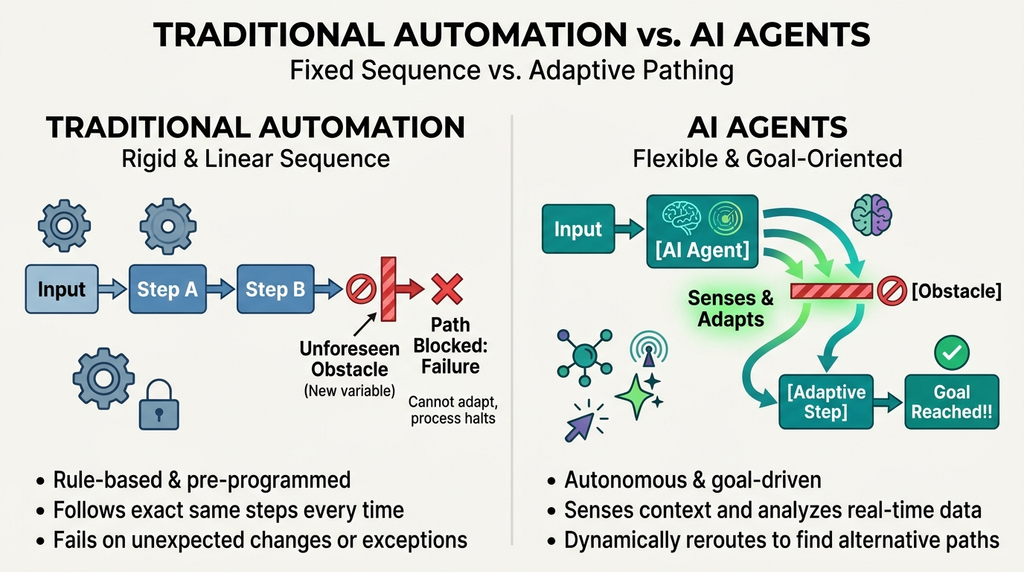
Traditional automation usually follows predefined instructions. For example, a calendar application might send a reminder exactly 30 minutes before an appointment.
An AI agent can interpret a broader request and decide which actions may be needed.
Consider the instruction, “Help me prepare for tomorrow’s meetings.”
A conventional automation might simply display scheduled appointments. An agent with authorized access could review meeting descriptions, locate related documents, summarize previous discussions, and prepare an agenda.
This flexibility makes agents useful for tasks that don’t always follow the same pattern.
However, flexibility also creates opportunities for mistakes. An agent may misunderstand an instruction, choose an unsuitable tool, or overlook information that a person would recognize as important.
For predictable, repetitive processes, ordinary automation may still be simpler and more reliable.
The Risks and Limitations of Using AI Agents
Giving software permission to complete tasks introduces responsibilities that don’t arise when it merely answers questions.
Privacy is one major consideration. An agent connected to email, cloud storage, or other personal accounts may encounter sensitive information. Users should understand what permissions they are granting and avoid unnecessary access.
Accuracy is another concern. Agents can misunderstand instructions, summarize documents incorrectly, or select unsuitable options.
Security threats also matter. A malicious webpage or document might contain instructions designed to manipulate an agent into taking an unintended action. This is known as prompt injection.
Financial transactions, medical decisions, legal matters, and account security require particularly careful human involvement.
AI agents are useful assistants, but their ability to take action shouldn’t be confused with guaranteed accuracy or independent judgment.
How to Start Using AI Agents for Everyday Tasks
The easiest way to begin is with a manageable activity that has a clear result and limited consequences.
These practices can help:
- Choose a specific task. Start with organizing notes, preparing an itinerary, or comparing products rather than assigning an entire workflow.
- Provide clear instructions. Include preferences, deadlines, budgets, and restrictions.
- Limit permissions. Connect only the accounts and information necessary for the task.
- Review important actions. Check messages, purchases, bookings, and changes before approving them.
- Evaluate the results. Decide whether the agent actually saved time and produced useful work.
For example, asking an agent to “find three suitable hotels near a conference venue within my budget” gives it a clearer objective than simply requesting help with travel.
Starting with research and organization also makes it easier to understand an agent’s strengths before allowing it to modify accounts or complete transactions.

Final Thoughts
AI agents are changing everyday productivity by helping people move from asking for information to getting practical work done.
Their greatest value may come from reducing the effort required to coordinate small activities across different applications. Planning a trip, organizing an inbox, or preparing for meetings can involve fewer manual steps when a capable agent assists.
Still, successful use depends on clear instructions, suitable permissions, and careful review.
The best starting point isn’t handing over every responsibility. It’s identifying one repetitive task, testing whether an agent handles it reliably, and gradually expanding its role where the benefits are clear.