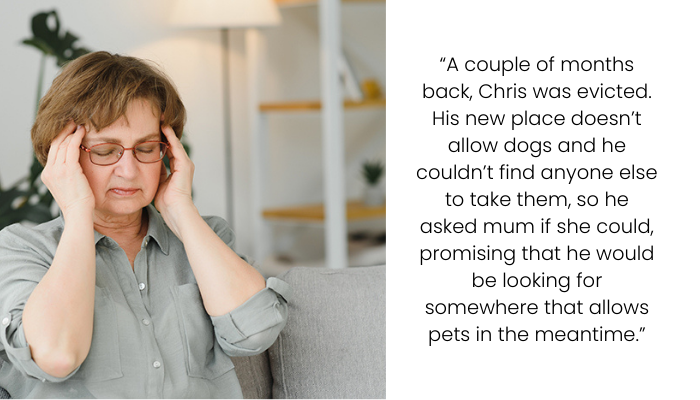
I Left My Mum Hanging After Years of Helping… Over a Dog?
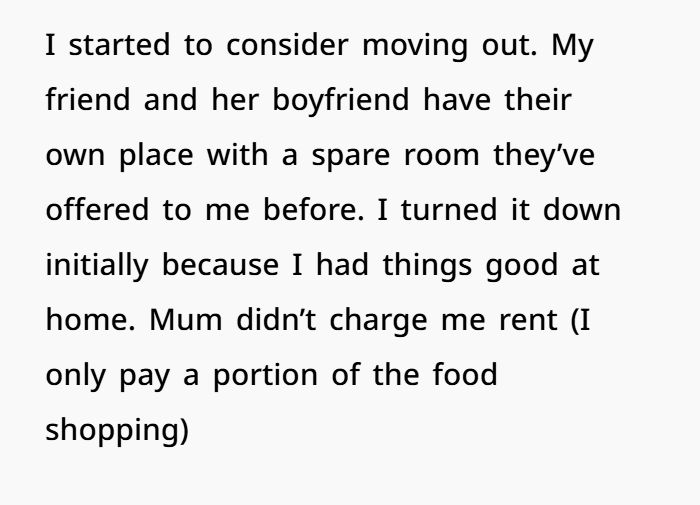
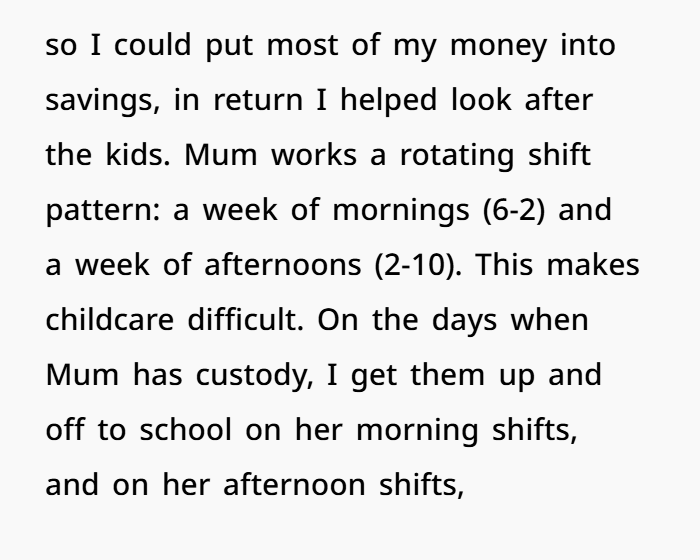
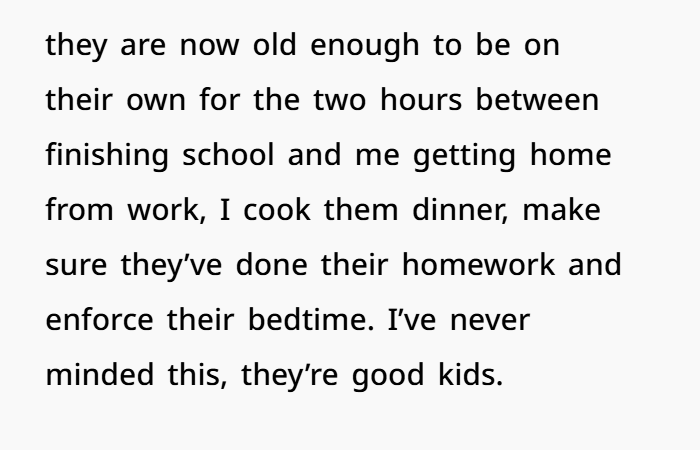
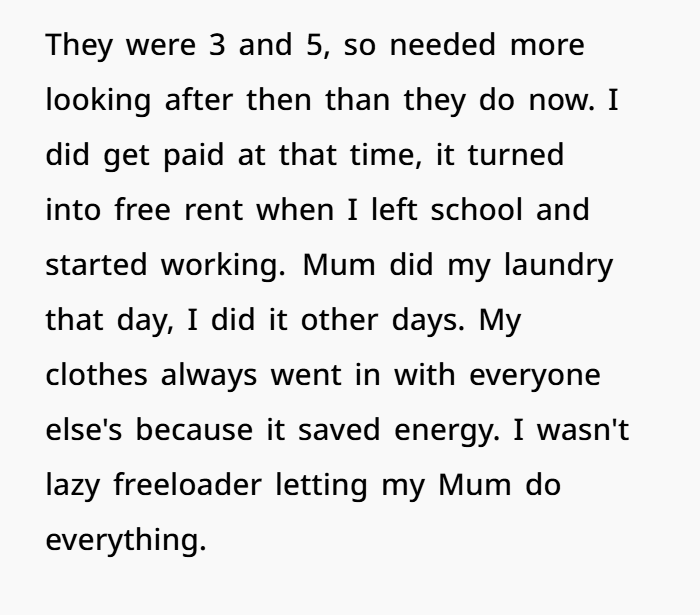
A 23-year-old woman shared a difficult family situation about living at home with her mother and younger half-siblings. For several years, she stayed in the house without paying rent, but she helped a lot with daily family responsibilities. She supported the children by helping them get ready for school, making sure homework was done, and being part of their daily routine. In return, she was able to save money and live in a stable home environment.
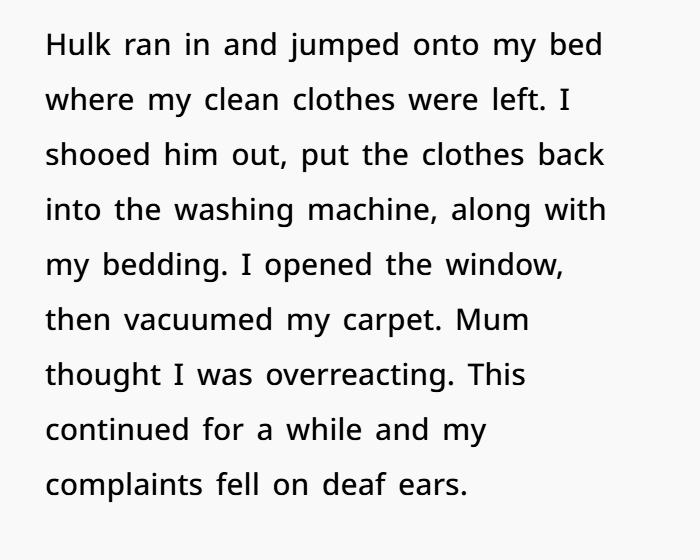
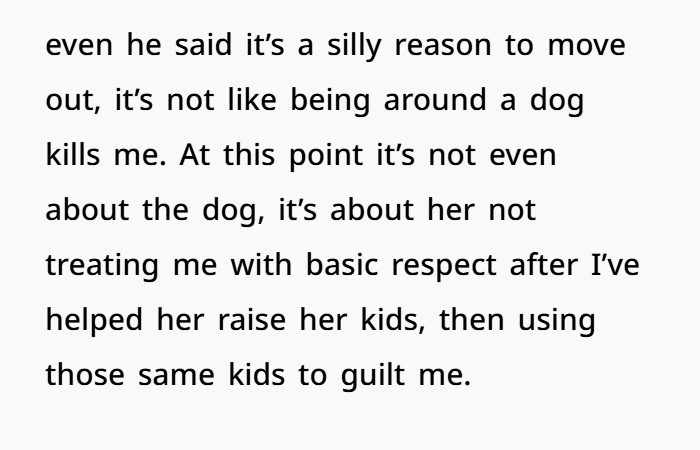
Later, her mother brought a dog into the house without asking her first. This became a problem because the woman has dog allergies. While her allergies are not life-threatening, they still cause her a lot of discomfort. She tried to set simple rules, such as keeping the dog out of her room and respecting her space, but these boundaries were not followed.
Over time, the situation became more stressful. The dog kept entering her room, and her concerns were ignored by both her mother and the children. She felt that her personal space and health needs were not being respected, even after she clearly explained her limits.
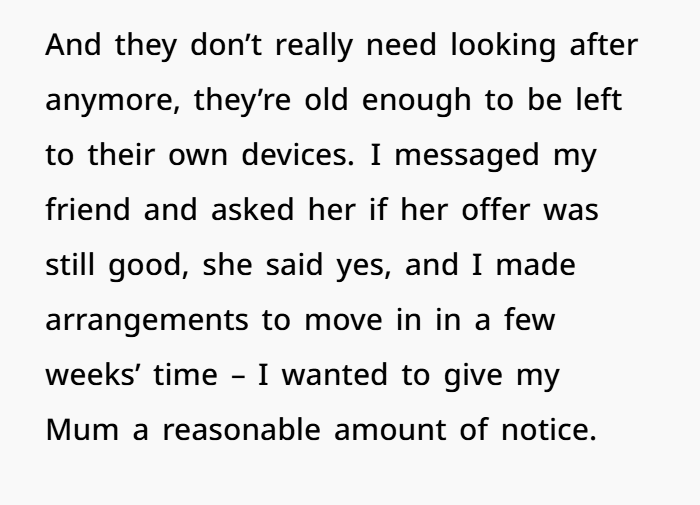
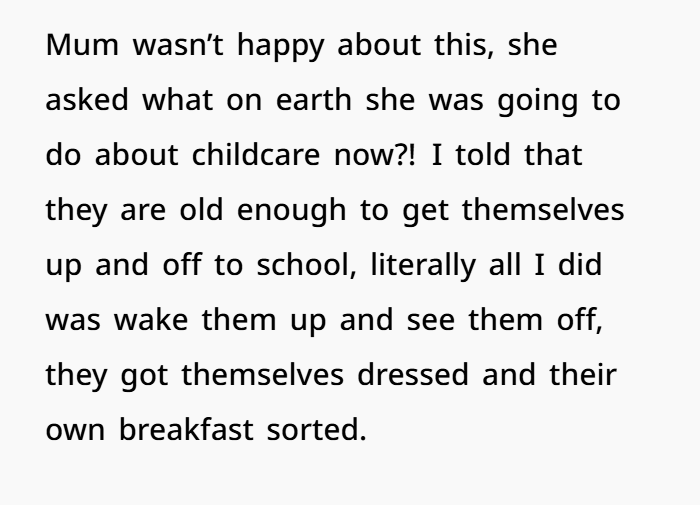
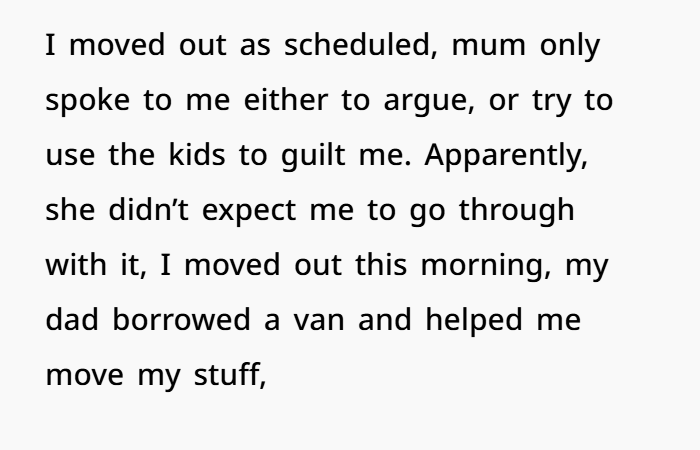
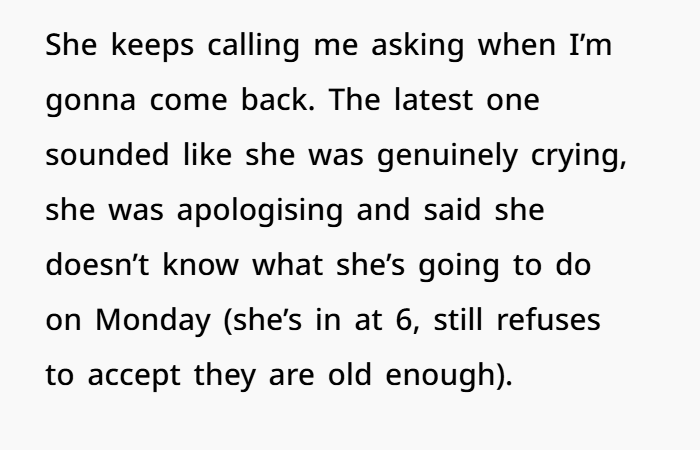
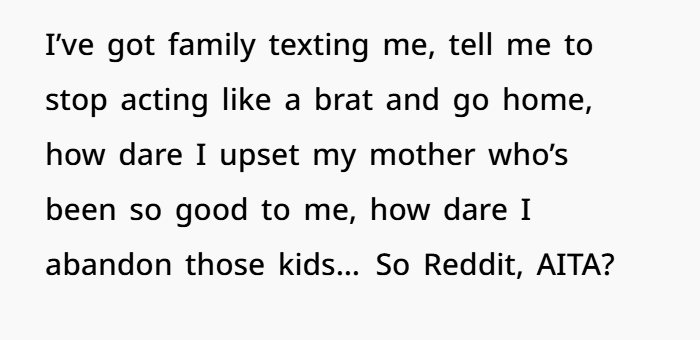
After repeated issues, she decided to move out. This caused conflict in the family, and her mother accused her of being selfish and abandoning her younger siblings. Now there is tension and disagreement about responsibility, family support, and personal boundaries in shared living situations.
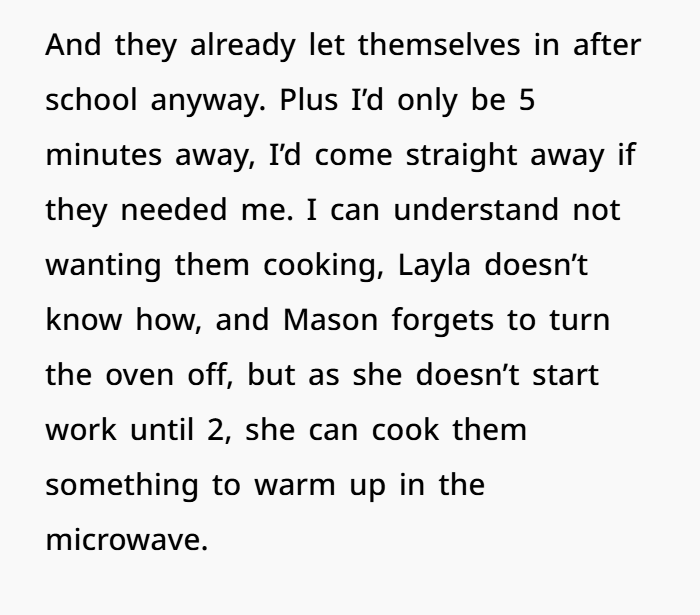
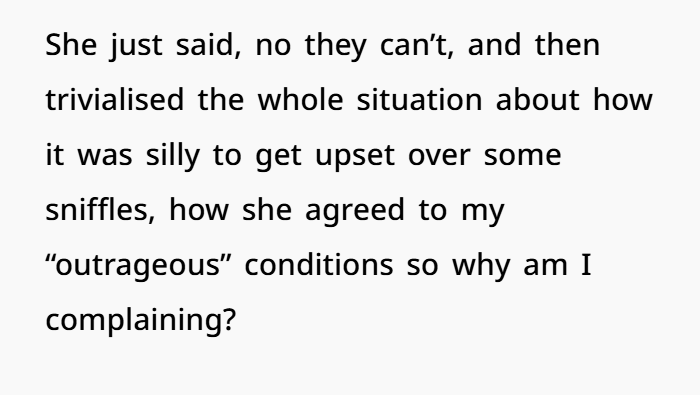
But her mother started guilt-tripping her, saying she couldn’t find anyone to help her with childcare





Family Conflict, Burnout, and Boundaries: What This Situation Really Is About
This situation is not just about a dog. It is really about family stress, emotional burnout, and lack of boundaries in a shared home.
A pet with allergies just became the final issue in a much bigger problem.
🏠 “Free Rent” Is Not Always Free
Many people think living with family rent-free means no responsibility. But that is not always true.
In this case, the daughter was not just living in the home. She was also helping a lot with:
- childcare
- cooking
- daily support for younger siblings
This kind of work has real value. In the UK, childcare services like babysitters or nannies can cost around £10–£15 per hour.
Even a small amount of weekly help can add up to hundreds of pounds each month.
So this was not “nothing in return.” It was a form of family caregiving and unpaid labor.
😓 Family Caregiver Burnout Is Real
Helping family is normal. But doing too much for too long can lead to caregiver burnout.
This means:
- feeling tired all the time
- feeling unappreciated
- losing personal space
- feeling like your life is only about helping others
In this situation, the daughter was also helping raise her younger siblings for years.
Over time, this can make a person feel more like a parent than a sibling or child in the home.
That emotional shift can be very stressful.
🐶 Pet Allergies and Shared Living Problems
The dog in the home made things worse.
Pet allergies in shared housing can cause:
- constant sneezing
- itchy eyes
- tiredness
- discomfort at home
Even if it is not life-threatening, it still affects daily life and work.
The request was simple:
- keep the dog out of her room
- keep it out of the kitchen and bathroom
These are normal house rules in shared living spaces. But they were not respected.
This made her feel like her comfort and health were not important.
⚖️ Family Expectations vs Personal Boundaries
In many families, there is pressure to always help and never complain.
But healthy relationships need boundaries.
It is okay to:
- love your family
- be grateful for support
- still ask for respect and space
When boundaries are ignored, it can turn into toxic family expectations.
Guilt-tripping someone by saying “you should do this because we are family” can feel like emotional pressure instead of support.
👩👧 Single Parenting and Family Pressure
The mother in this situation is also under stress. Being a single parent with a busy schedule is not easy.
She likely depended on her daughter for help with childcare and home support.
But even then, parenting is still the parent’s responsibility. Older children can help, but they should not be forced into a permanent caregiving role.
This is where family caregiver burnout often happens in real life.
🚪 Moving Out Is Not Abandonment
When the daughter decided to leave, some people saw it as selfish.
But moving out as an adult is normal.
It is often seen as:
- independence
- personal growth
- starting a new life
If she had moved out for university or a job, it would likely be accepted. But because she left after setting boundaries, it was judged more harshly.
This shows a common issue in adult child moving out conflict situations.
🤝 Could Things Have Been Handled Better?
Maybe both sides could have communicated more clearly.
But the key issue is:
- her boundaries were ignored
- her help was taken for granted
- her comfort was not respected
She did try to explain her concerns. When nothing changed, she made the decision to leave.
That is not selfish. That is self-protection and emotional well-being.
❤️ Final Thoughts
This situation is really about family boundaries, caregiver burnout, and respect in shared homes.
Helping family is kind. But being expected to sacrifice your health, comfort, and personal life is not fair.
It is possible to love your family and still choose yourself.
Leaving a situation where you feel ignored or overwhelmed is not wrong. It is part of building a healthier and more independent life.
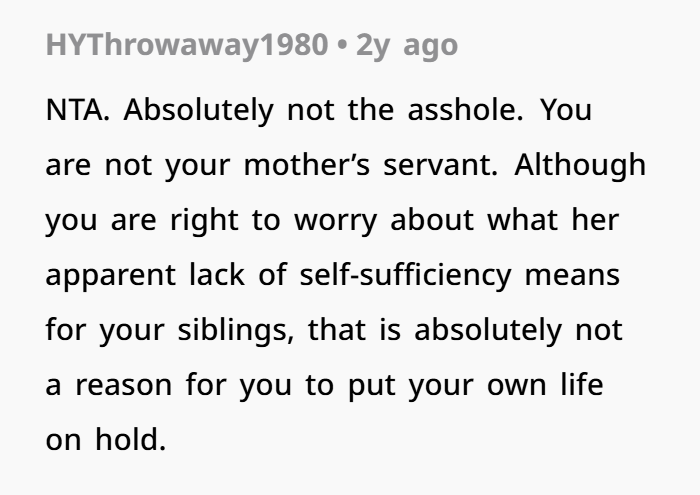
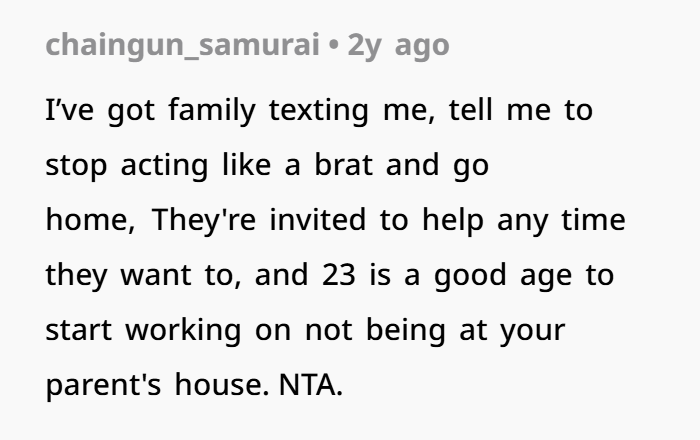
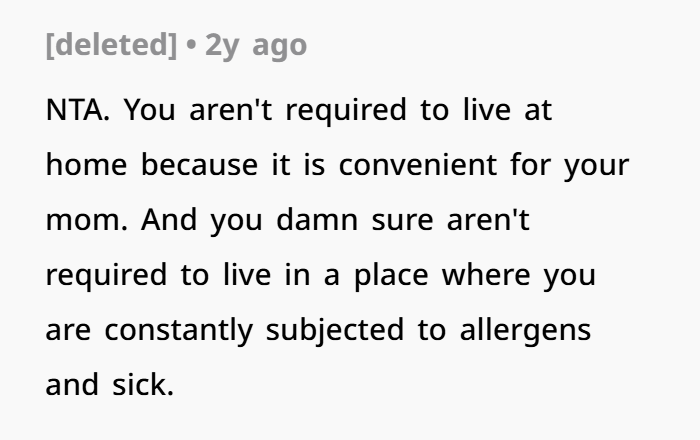
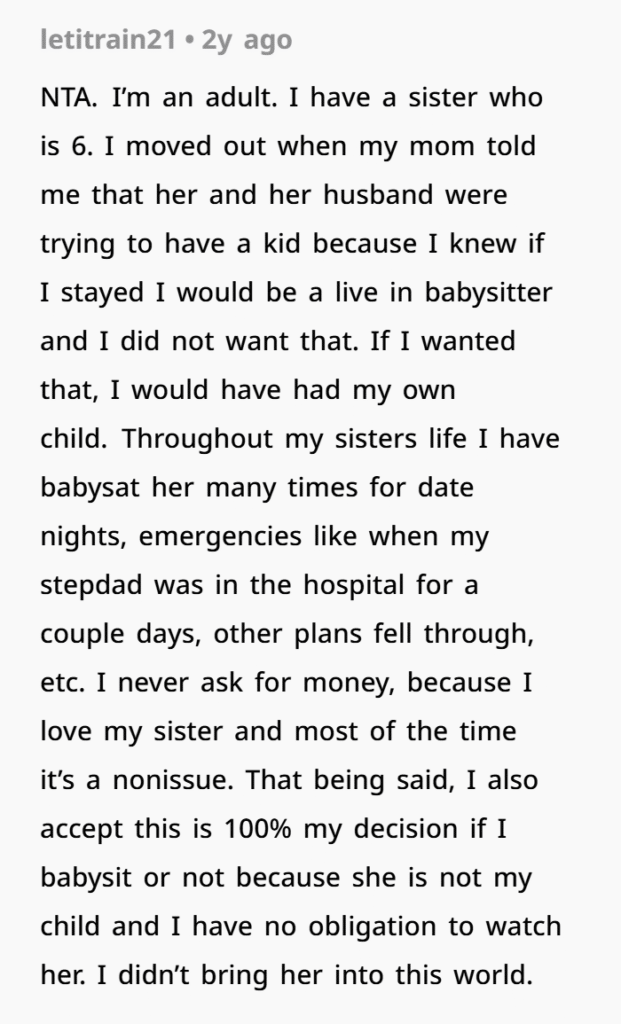
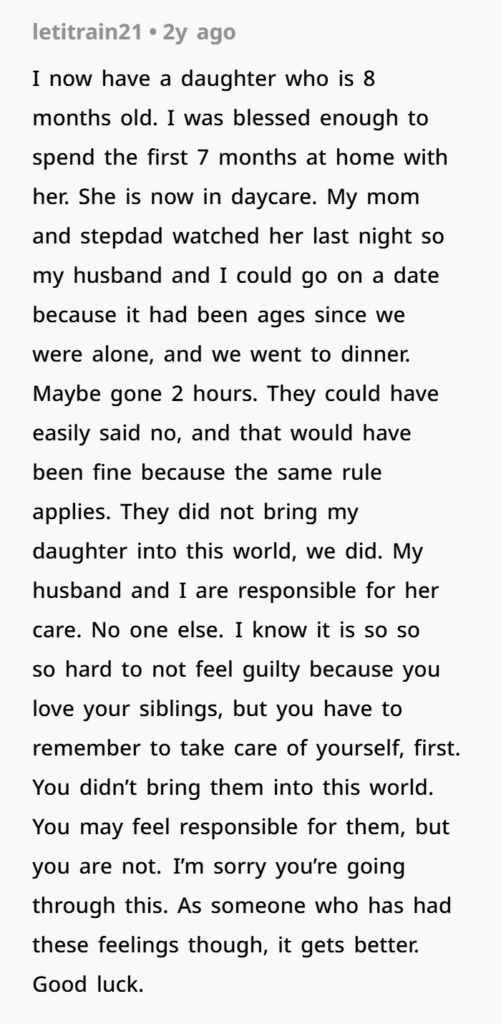
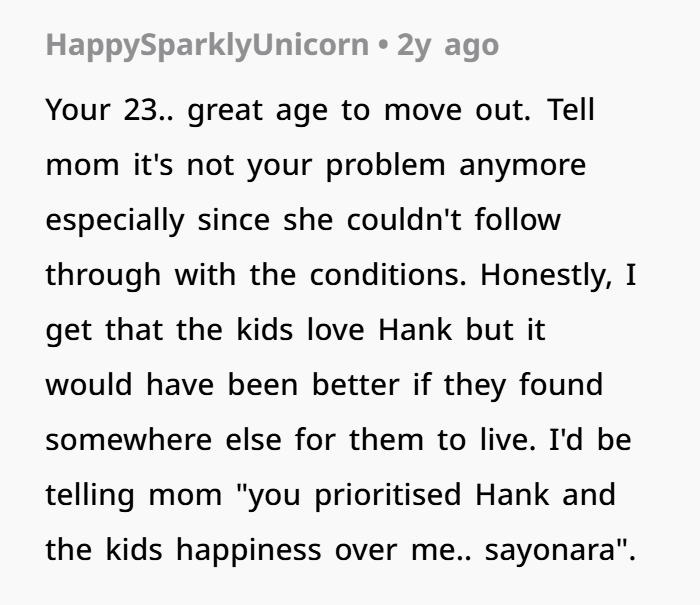
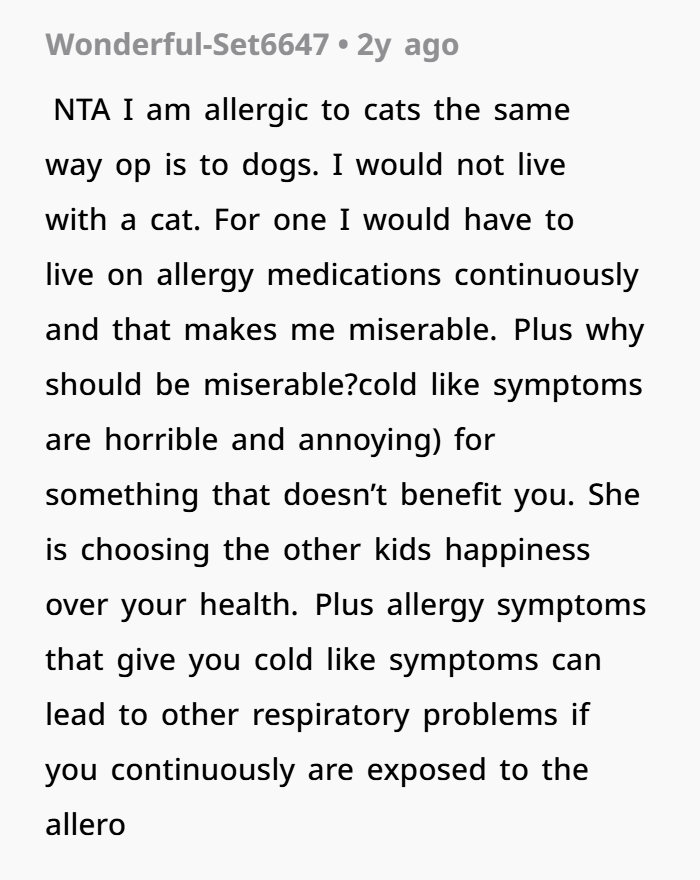
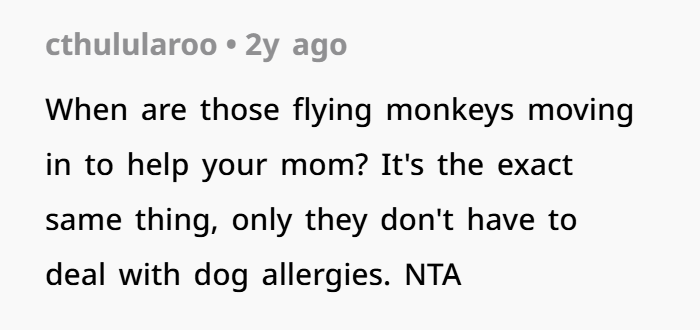
Commenters urged the young woman not to give in to the shaming and guilt-tripping: “You have the right to move out”