Trampoline Drama Escalates When Neighbors Involve the Law Instead of Talking
HOA rules are designed to help communities stay attractive, protect home values, and create a consistent neighborhood look. Many homeowners appreciate these guidelines, but some believe certain rules can sometimes feel too controlling.
A homeowner decided to place a trampoline in his backyard for his three young children. The goal was simple: give his sons a fun outdoor activity area while making better use of their own property.
The HOA board viewed the trampoline as a problem and considered it against the neighborhood’s appearance standards. Their decision led to a disagreement that became much larger than a simple backyard change.
Stories like this show why communication between homeowners and HOA leaders is important. Communities work best when rules are reasonable, homeowners feel respected, and everyone works together to create a positive living environment.

Homeowner Takes Action After HOA Dispute Over Backyard Trampoline
A backyard trampoline caused a disagreement between a homeowner and his homeowners association (HOA). What started as a small neighborhood issue eventually led to a major change in the community’s leadership.
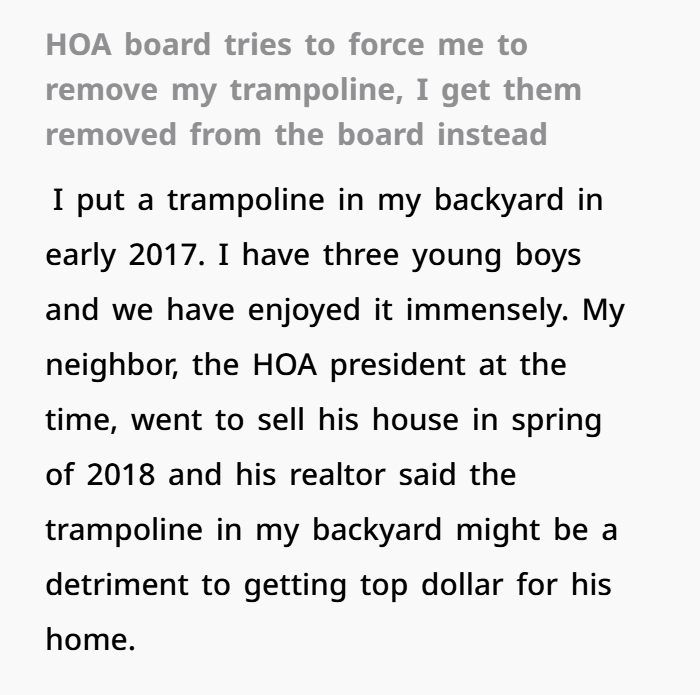
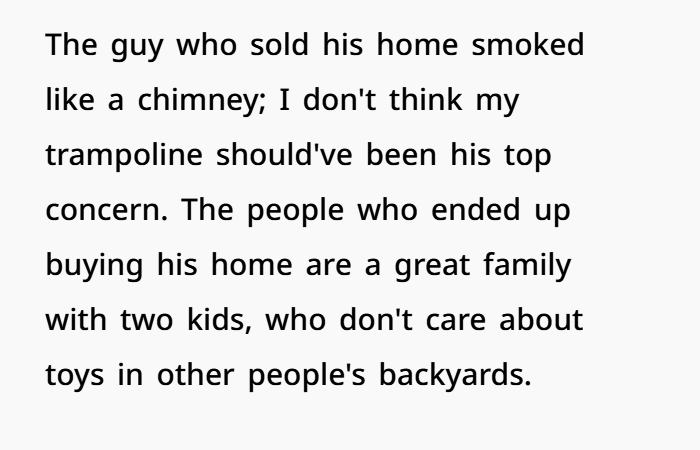
The homeowner had bought a trampoline for his three young sons. It was placed in their backyard, and for more than a year, nobody raised any concerns about it.
The family enjoyed having a safe outdoor space where their children could play. Everything seemed normal until a neighbor decided to sell his home.
A Simple Backyard Item Becomes an HOA Problem
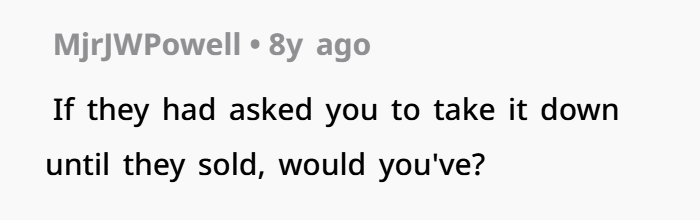
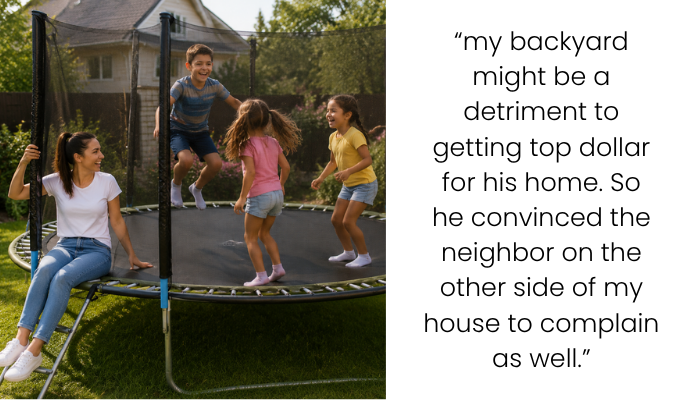
The neighbor, who was also the HOA president, was preparing to sell his property. The homeowner said the neighbor’s real estate agent suggested that the trampoline could affect the home’s appeal to buyers.
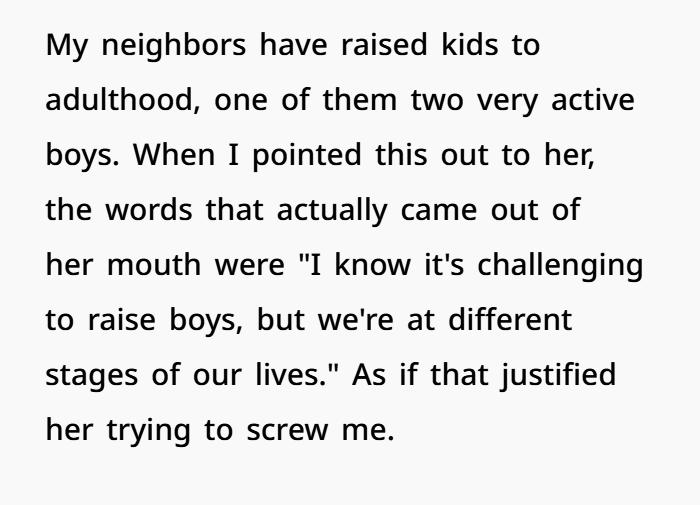
Instead of discussing the concern directly, the issue was taken to the HOA board. Another neighbor also complained, and the trampoline suddenly became a community rule matter.
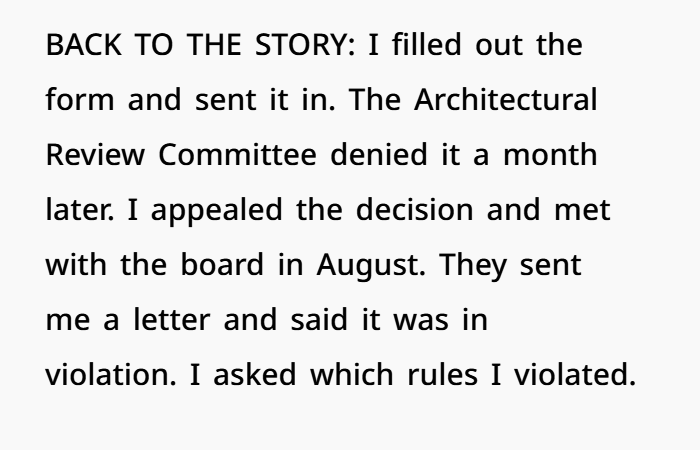
The homeowner was asked to complete official paperwork and request approval from the HOA. He followed the process and submitted his request.
However, the HOA denied his request to keep the trampoline.
The homeowner was told that a letter would be sent explaining why the request was rejected.
Concerns About HOA Communication
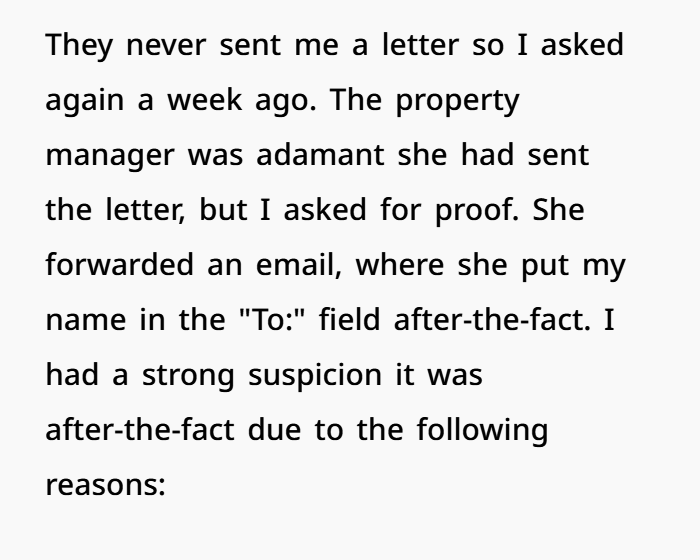
After several days, the homeowner still had not received the explanation letter.
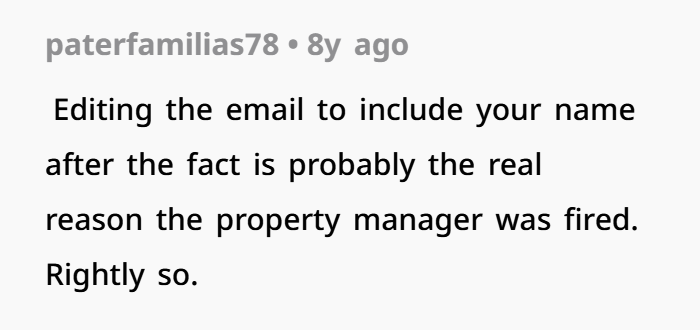
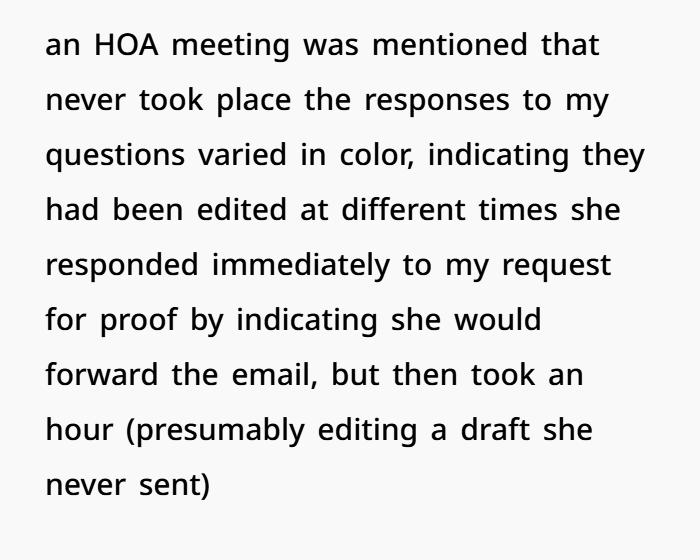
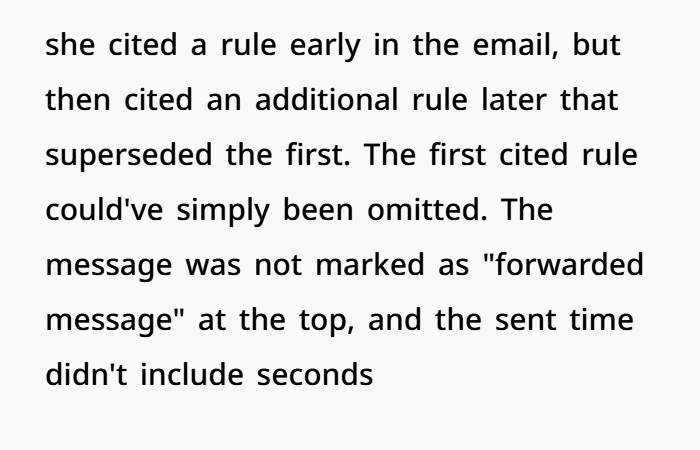
He contacted the property manager and asked for an update. The property manager said the letter had already been sent and shared an email as proof.
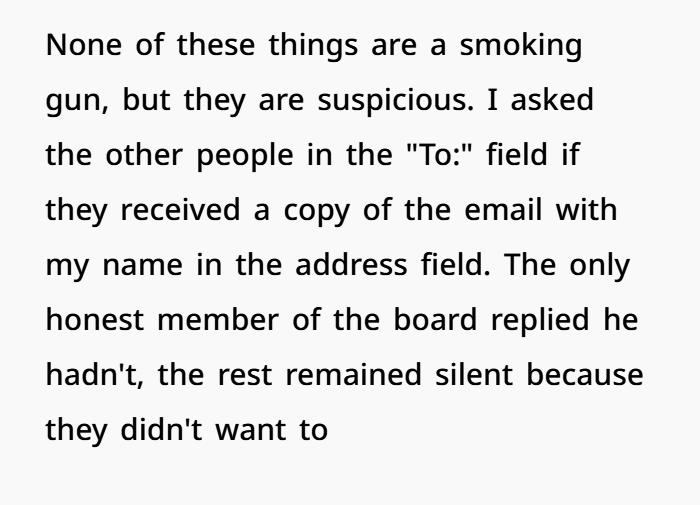
However, the homeowner noticed some details in the email that seemed unusual. He believed some information did not match the actual HOA process and questioned whether the communication was accurate.
He shared his concerns with board members. One board member later agreed that the situation needed further review.
For many homeowners, honest communication from an HOA board and property management company is very important. Residents want to understand the rules, decisions, and financial choices that affect their homes.
Residents Decide to Make a Change
Instead of trying to remove the HOA completely, the homeowner decided to become more involved.
The annual HOA election was approaching, and several board positions were available.
The homeowner talked with other residents about their experiences. He learned that some neighbors also had concerns about how the HOA was being managed.
He decided to run for the HOA board with three other homeowners from the neighborhood.
Together, they spoke with residents, listened to their concerns, and encouraged more homeowners to participate in the election.
A New Board Brings New Leadership
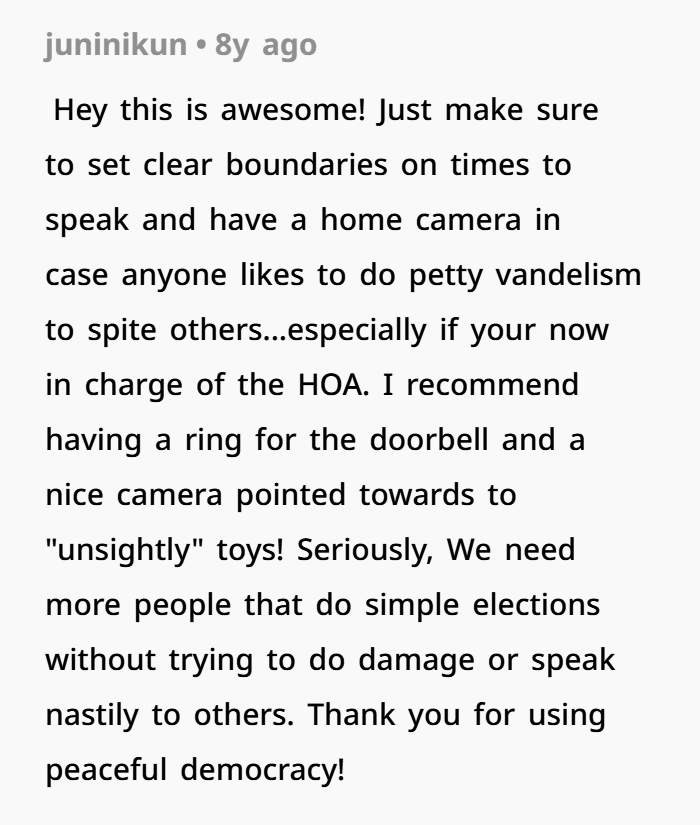
During the HOA election, the homeowner and his three neighbors won the open board positions.
Their victory gave them a majority on the HOA board. This allowed them to make decisions about the future management of the community.
One of their first actions was replacing the property management company. They wanted a team that would focus on better communication, transparency, and stronger service for residents.
The trampoline remained in the backyard, and the family continued enjoying their outdoor area.
The Importance of Good HOA Management
Homeowners associations are common in many residential communities across the United States. Millions of families live in HOA neighborhoods and pay monthly or yearly HOA fees.
These fees often help cover important services such as:
- Community landscaping
- Shared area maintenance
- Neighborhood amenities
- Repairs and improvements
- Property management services
A well-run HOA can help maintain property values and create a better living environment.
However, homeowners usually expect their HOA to provide:
- Fair enforcement of community rules
- Clear communication
- Responsible financial management
- Equal treatment of residents
- Professional customer service
When residents feel their concerns are not being addressed, they can take positive steps. They can attend HOA meetings, vote in elections, join committees, or become board members themselves.
Can You Get Rid of an HOA?
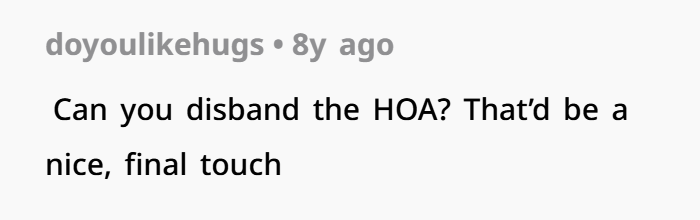
Some homeowners wonder if it is possible to remove an HOA from their community.
In many cases, dissolving an HOA is possible, but it can be a complicated process. Most communities require approval from a large percentage of homeowners, and there may be legal and financial requirements.
Because removing an HOA can be difficult, many residents choose another option: improving the HOA from within.
Changing board members, improving communication, and hiring better property management services can help create a healthier community.
Homeowners Have a Voice
This story shows that homeowners can make a difference when they become involved.
An HOA exists to support the community, and active residents can help make sure it operates fairly.
By learning HOA rules, attending meetings, and participating in elections, homeowners can have a stronger voice in decisions that affect their homes.
For this family, the biggest success was not only keeping the backyard trampoline. It was showing that neighbors working together can create positive change in their community.
Readers’ Comments Speak Out