
Coworkers Doubt Cancer Survivor’s Illness, But She Proves Them Wrong
Workplace gossip is something many people experience. Sometimes it may seem harmless, but rumors can become hurtful when they involve someone’s personal life, health, or private information. A respectful workplace should always focus on kindness, understanding, and support.
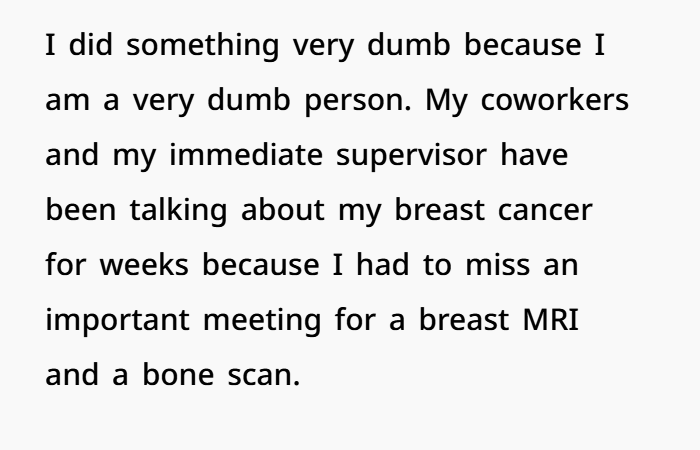
One breast cancer survivor faced a difficult situation when some coworkers began questioning her health journey. She noticed people were talking about her behind her back and spreading doubts about her medical experience.
After hearing these comments for several weeks, she decided she needed to address the situation. She chose to take action and respond in a way that showed the importance of respect and compassion in the workplace.
Her story received attention online because many people could relate to workplace challenges involving rumors, trust, and employee relationships. It also highlighted the importance of workplace respect, employee well-being, and creating a supportive work environment.

Woman Returns to Work After Breast Cancer Surgery and Faces Hurtful Rumors
A woman’s journey back to work after breast cancer surgery became much harder because of unfair comments from some coworkers.
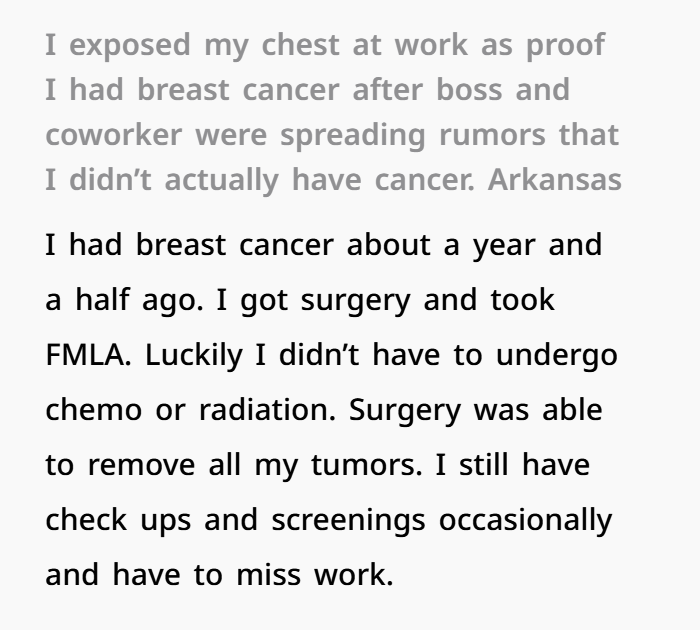
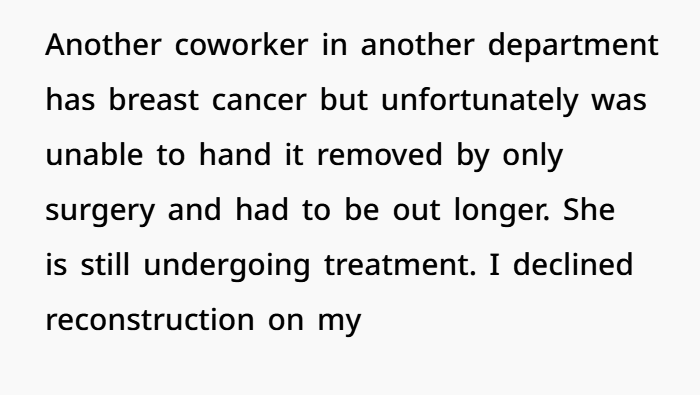
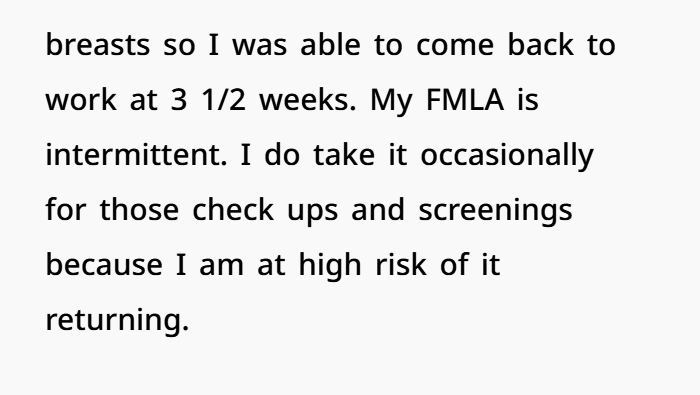
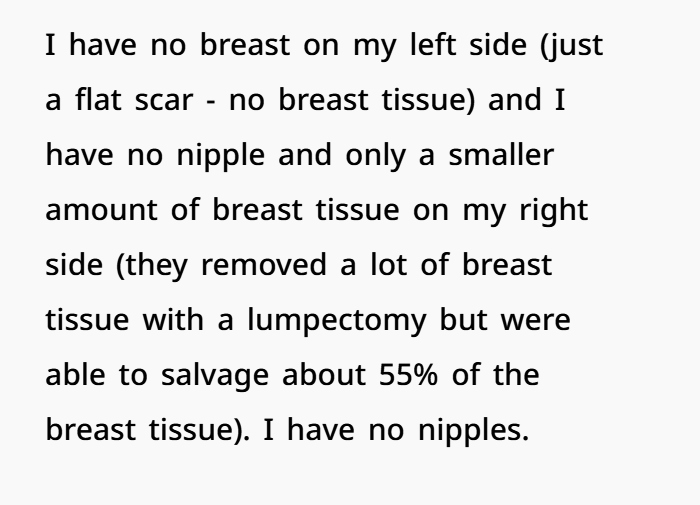
The 31-year-old woman from Arkansas was diagnosed with breast cancer and had surgery to remove tumors. After her treatment, she decided to return to work just three and a half weeks later.
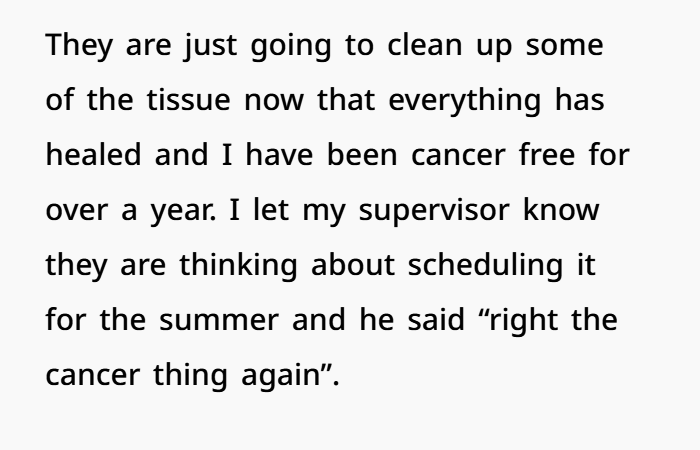
She chose not to have breast reconstruction surgery. Even though her body had changed after surgery, she was ready to return to her job and continue her daily life.
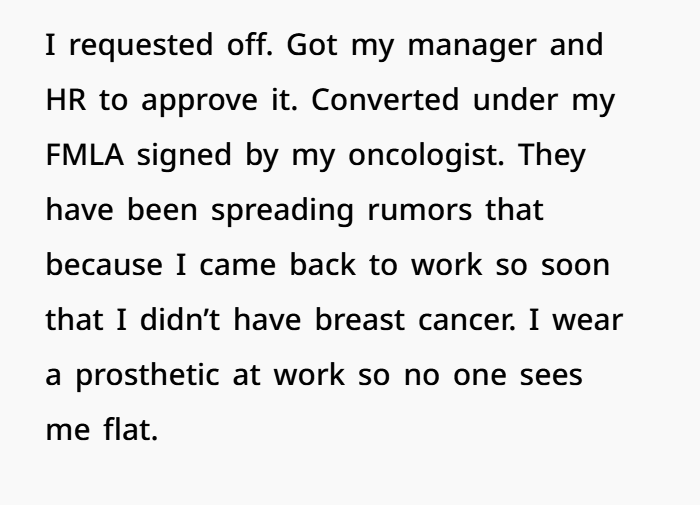
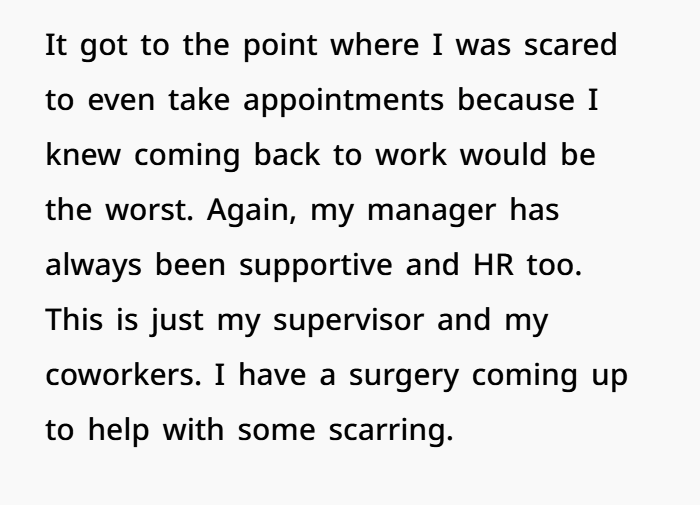
Her manager and HR team supported her during this difficult time.
Unfortunately, some coworkers reacted differently.
Coworkers Made Assumptions About Her Cancer
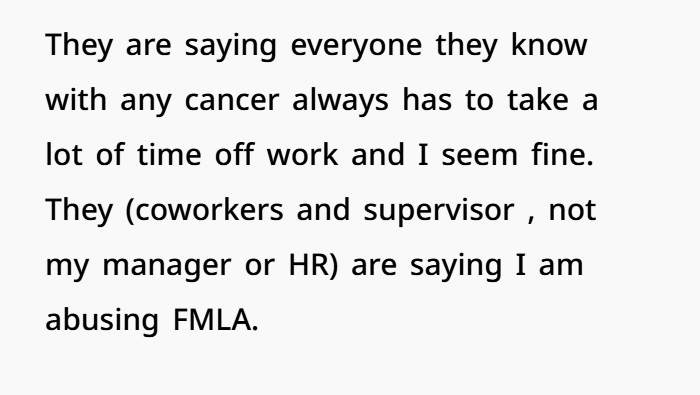
Because she returned to work quickly and did not look seriously ill, some coworkers started questioning her health.
They assumed that because she appeared fine, her cancer diagnosis might not be real.
Rumors began spreading that she was pretending to be sick, using medical leave incorrectly, and should not receive a future pay increase.
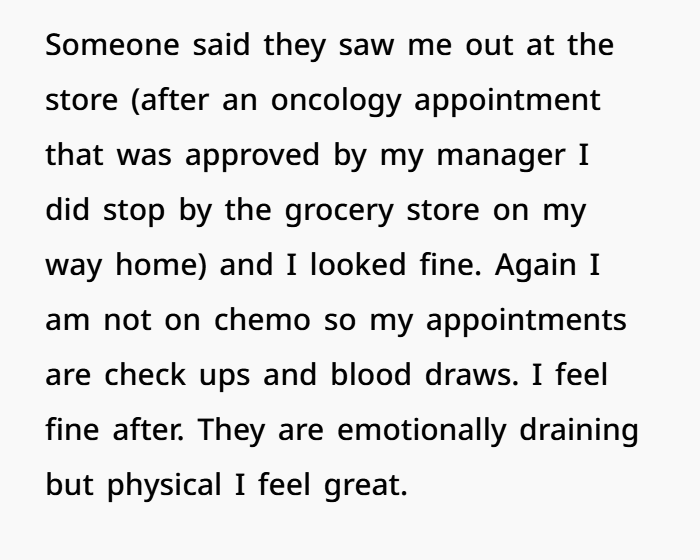
One coworker even believed seeing her at a grocery store after a medical appointment was a reason to doubt her illness.
However, people recovering from cancer can still do normal daily activities. Going shopping does not mean someone is not dealing with a serious medical condition.
The Situation Became Too Much
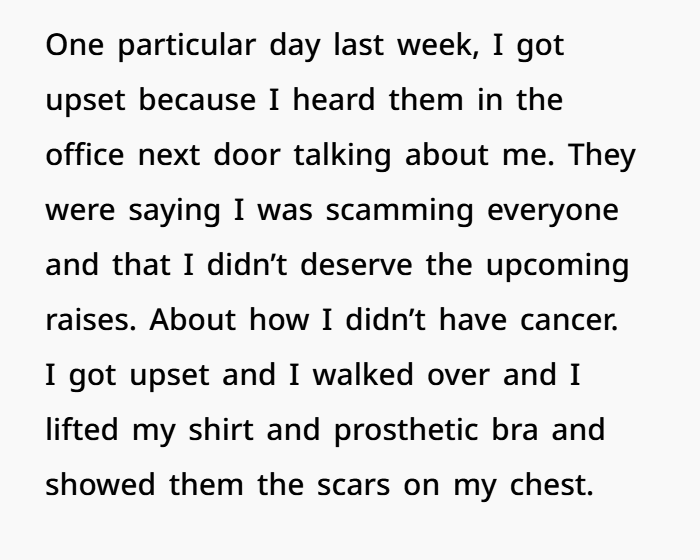
The problem became worse when the woman overheard coworkers talking about her.
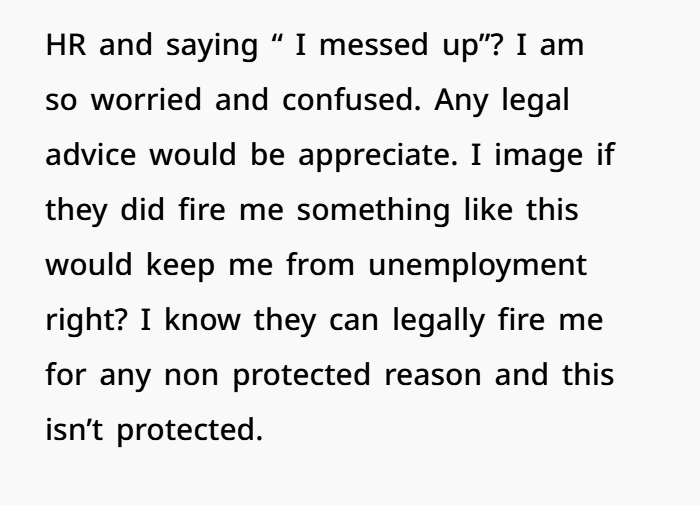
They were accusing her of lying about her cancer diagnosis and saying she did not deserve workplace benefits.
After hearing these comments, she decided to confront them.
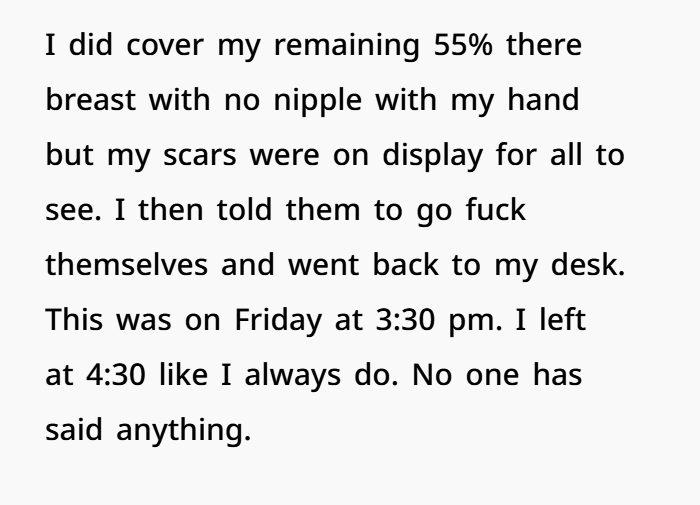
She showed the scars from her surgery and explained that their assumptions were wrong. She wanted them to understand the pain caused by their words.
After the conversation, she returned to her desk.
At that moment, she felt relieved because she had finally defended herself.
She Later Worried About Her Job
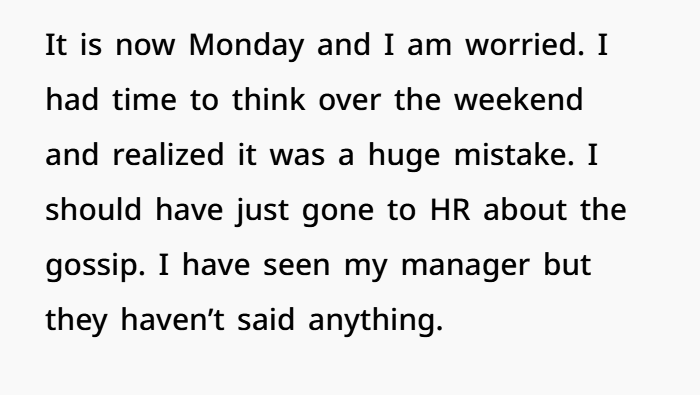
When Monday arrived, her feelings changed.
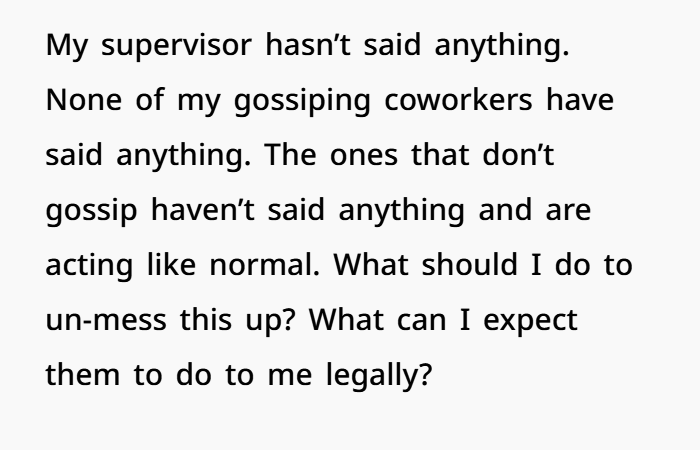
After the emotions of the moment had passed, she started worrying about what could happen next.
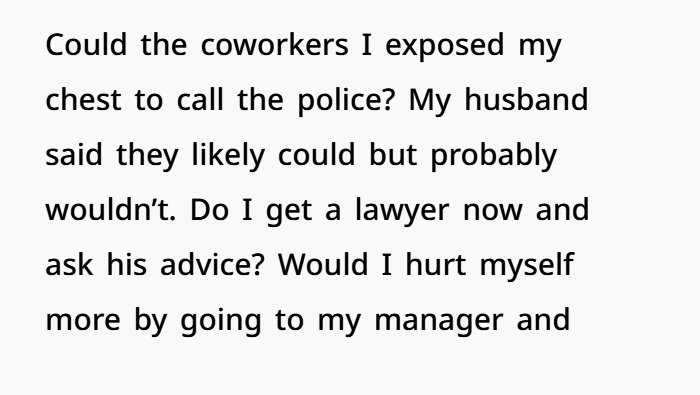
She wondered if her reaction could cause problems at work or affect her job.
She shared her experience online and asked others for advice.
Many people supported her and said that employees should not judge someone’s health based only on appearance.
Cancer Recovery Looks Different for Everyone
One important thing to understand is that every cancer experience is different.
Some people need a long time away from work during treatment. Others may return sooner depending on their medical situation and recovery process.
A person can look healthy while still dealing with:
- Follow-up appointments
- Recovery after surgery
- Emotional challenges
- Ongoing medical care
Breast cancer treatment plans are different for every patient. Some people may only need surgery, while others may need additional treatments such as chemotherapy or radiation.
A person’s appearance does not show the full picture of their health.
Creating a Supportive Workplace
Returning to work after cancer treatment can be a major step.
Employees recovering from serious illnesses need support, respect, and understanding from their workplace.
Companies can help by:
- Respecting employee privacy
- Following medical leave policies
- Providing reasonable workplace accommodations
- Preventing health-related discrimination
A supportive workplace can help employees feel comfortable while continuing their careers after illness.
Understanding Employee Rights
In the United States, laws such as the Americans with Disabilities Act (ADA) and the Family and Medical Leave Act (FMLA) provide protections for many employees dealing with serious health conditions.
These laws help ensure employees receive fair treatment and protection during medical challenges.
Employers and coworkers should avoid making decisions based on guesses or personal opinions about someone’s health.
Why Kindness Matters at Work
This story is a reminder that people often hide struggles others cannot see.
Someone may appear healthy while managing recovery, medical appointments, or emotional stress.
Instead of spreading rumors, coworkers can choose understanding and respect.
For this woman, returning to work after breast cancer surgery was already a brave decision. Having to defend her illness made the experience even more difficult.
What The Comments Reveal
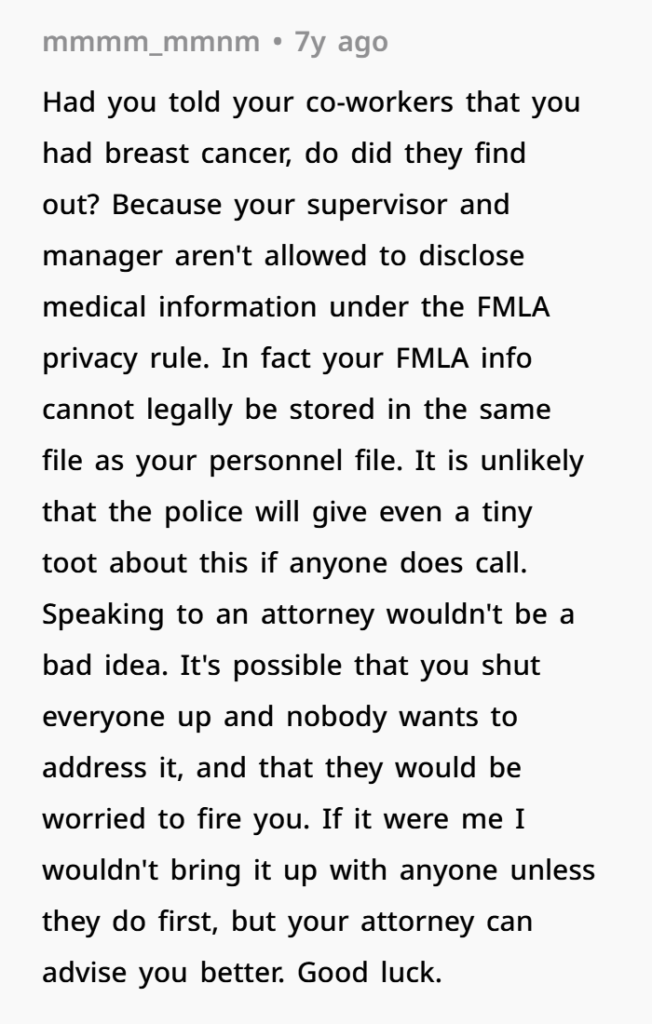
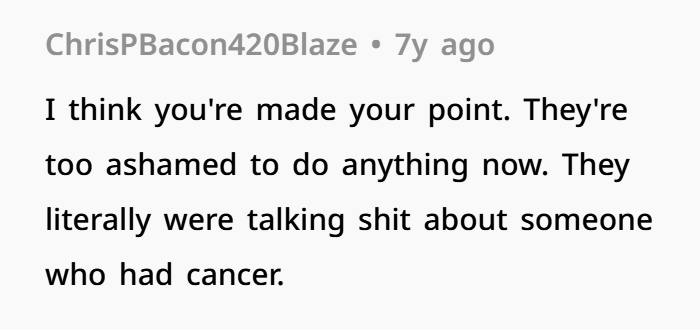
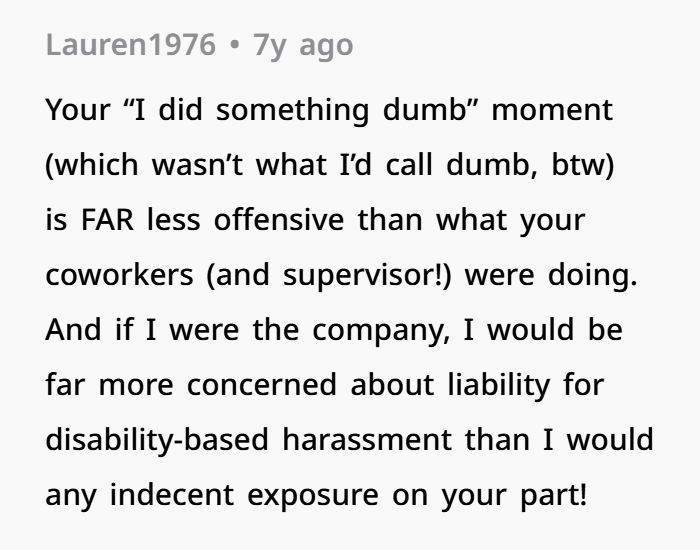
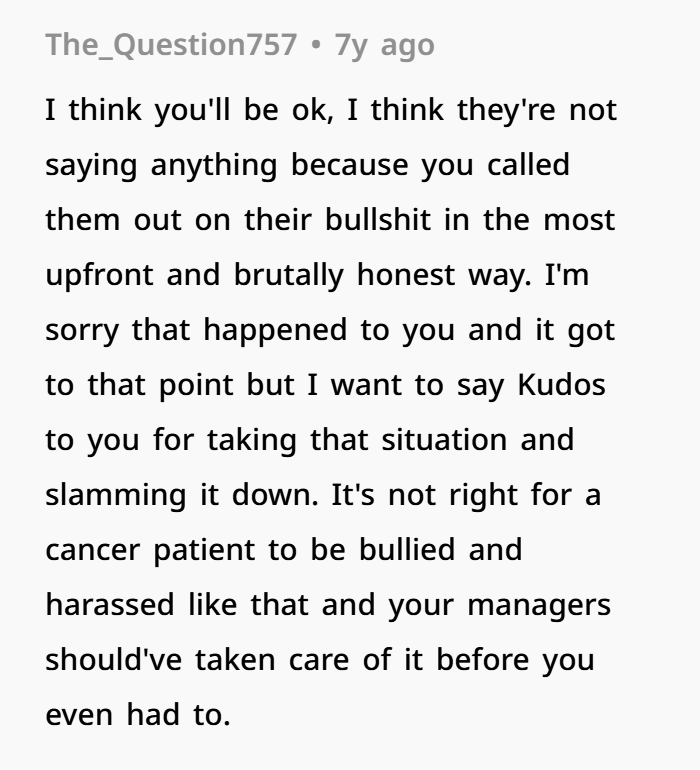

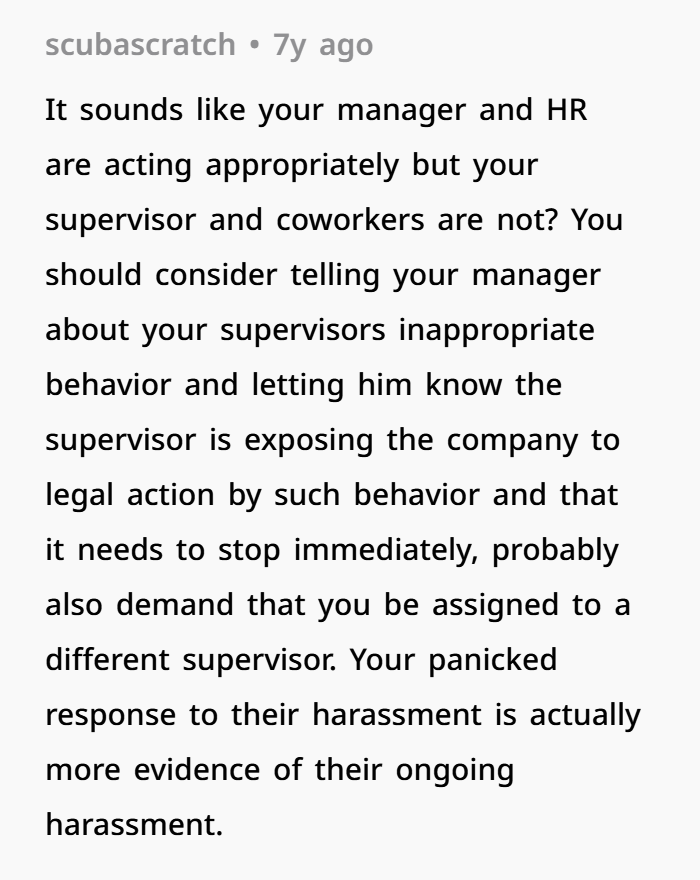
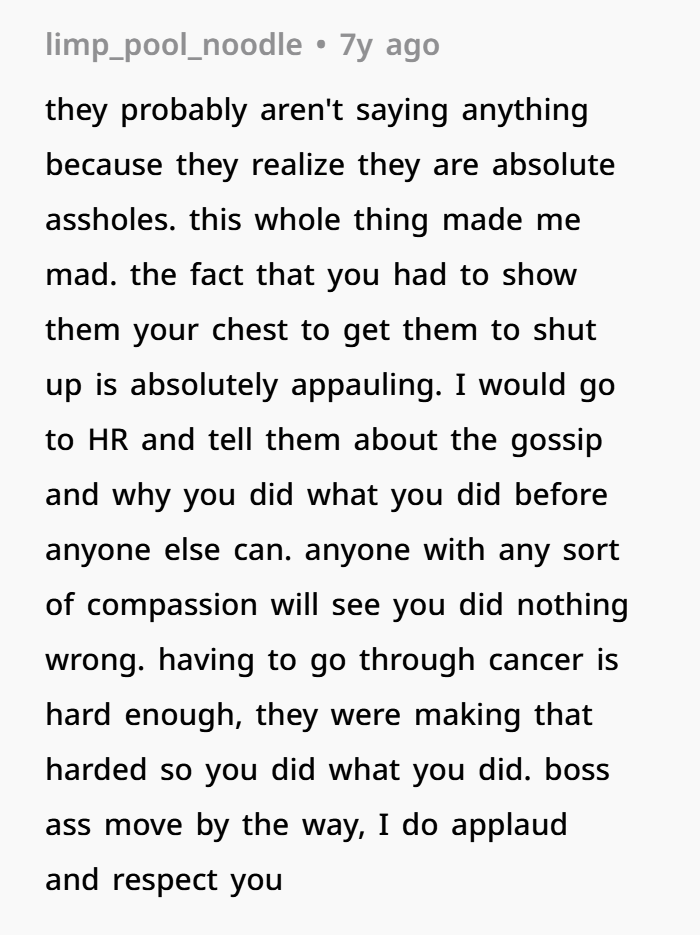
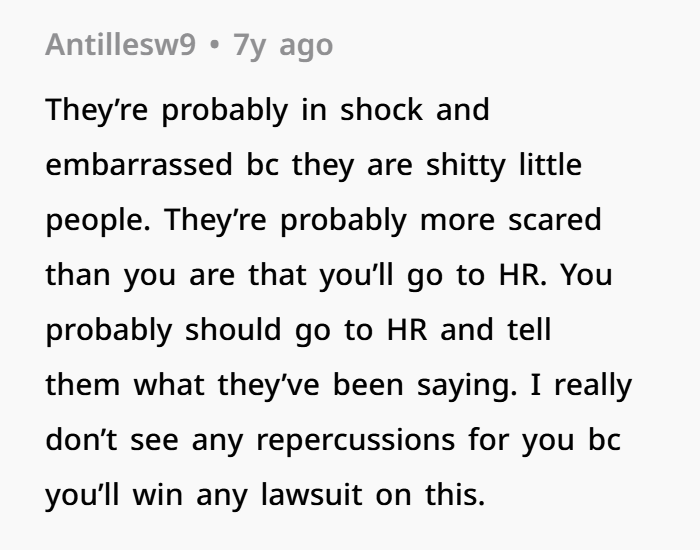
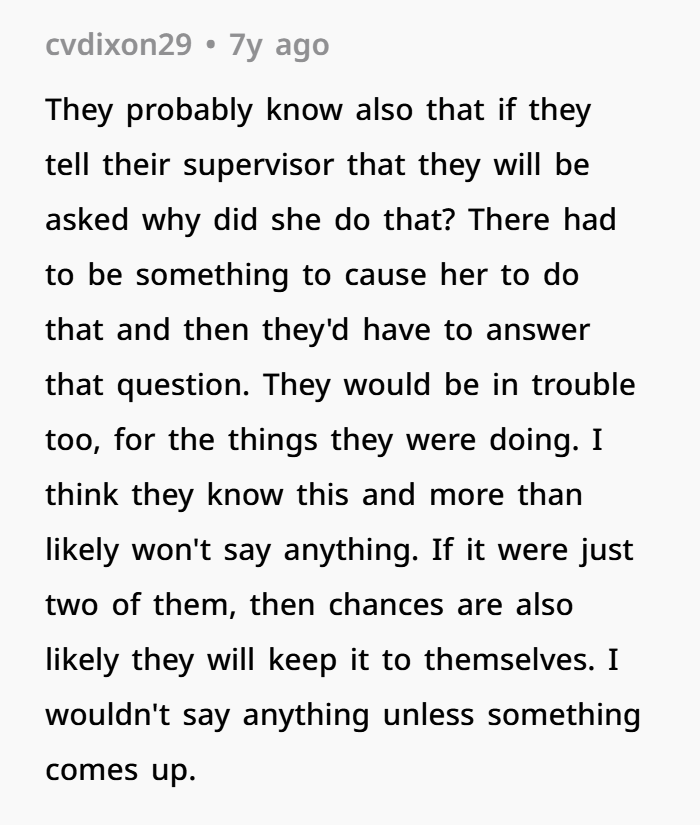
This workplace situation shows why compassion and respect are important.
The woman did not choose her health challenge, but she chose to continue working and moving forward.
A fair workplace should focus on an employee’s work, not assumptions about their personal health.
Supporting employees during difficult times helps create a healthier and more positive work environment.
What do you think? How can workplaces better support employees returning after serious illnesses?