
Groom Calls Off Wedding After Fiancée Is Caught With His Cousin the Night Before the Ceremony
A 20-year-old man called off his wedding after learning that his 17-year-old fiancée had allegedly been intimate with his 21-year-old cousin during a family celebration the night before the ceremony.
The situation was especially painful because the fiancée had previously dated the cousin before beginning her four-year relationship with the groom. Although tension once existed between the two men, they had recently repaired their family relationship and appeared to be on better terms.
The alleged betrayal was discovered when the cousin’s girlfriend entered a downstairs room during the night and reportedly found the pair together. The groom was informed the following morning, leaving him devastated just hours before he expected to get married.
Although the wedding was immediately canceled, several relatives—including the former fiancée’s family and the couple’s great-grandmother—began encouraging him to forgive her and continue with the marriage. He now feels trapped between his continuing love for her and the realization that the trust supporting their relationship may have been permanently damaged.


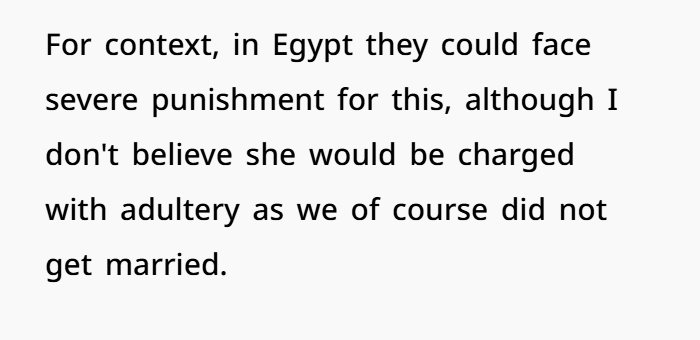
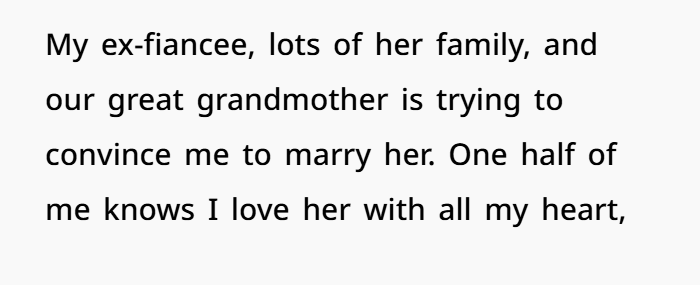

This situation is more complicated than an ordinary case of relationship infidelity. The groom believes he was betrayed by both his future wife and a close relative. That creates two separate emotional wounds: the loss of trust in a romantic partner and the breakdown of trust within the extended family.
The timing also makes the experience particularly severe. Instead of discovering the alleged affair during a normal stage of dating, he learned about it immediately before the wedding. A day that was supposed to represent commitment and security became connected to humiliation, grief, and uncertainty.
His description of spending weeks crying and repeatedly thinking about what happened suggests that he is still processing the shock. Intense distress after a sudden betrayal can affect sleep, concentration, appetite, work, and everyday decision-making. This does not automatically mean that someone has a clinical trauma disorder, but persistent emotional symptoms can justify speaking with a licensed mental health professional.
For that reason, making a permanent marriage decision while under pressure from relatives would be unwise. Postponing or canceling a wedding is not the same as making an irreversible decision about the entire relationship. It gives the injured partner time to think without the financial, cultural, and emotional pressure surrounding a wedding ceremony.
Can Trust Be Rebuilt After Infidelity?
Some relationships survive infidelity, but love by itself is rarely enough to repair the damage. Reconciliation normally requires complete honesty, personal accountability, consistent behavioral changes, and a genuine willingness from both partners to participate in couples counseling.
The Gottman Institute describes affair recovery through three broad stages: atonement, attunement, and attachment. In practical terms, the partner responsible for the betrayal must first accept responsibility without excuses. The couple must then understand what happened, address the resulting emotional damage, and gradually create a more secure relationship.
However, reconciliation is an option—not an obligation. The groom does not owe anyone a marriage simply because wedding arrangements were completed or because relatives want to avoid embarrassment. If he already believes he will constantly question his partner’s honesty, marriage could deepen the conflict instead of resolving it.
Professional relationship counseling may help him decide whether reconciliation is realistic, but therapy should not be used to pressure him into forgiving or marrying quickly. Individual counseling may be more appropriate at first because it would allow him to process the betrayal privately and identify what he truly wants.
Family Pressure Is Not a Substitute for Consent
The relatives urging him to proceed may be motivated by cultural expectations, concern about family reputation, or fear of long-term conflict. Nevertheless, those concerns do not outweigh the groom’s right to decide whether he feels emotionally safe entering a marriage.
Forgiving someone is also different from restoring a relationship. A person may eventually release anger for the sake of personal peace while still deciding that the relationship should end. Similarly, accepting an apology does not automatically restore trust or create an obligation to continue with a wedding.
Before reconsidering marriage, several questions would need honest answers:
- Has the former fiancée accepted full responsibility without blaming circumstances or family tension?
- Has all contact with the cousin ended?
- Was this an isolated incident, or were there earlier undisclosed interactions?
- Is the groom considering reconciliation because he wants it, or because his family is pressuring him?
- Could he realistically rebuild trust without monitoring, resentment, or repeated accusations?
- Are both people willing to attend qualified premarital or marriage counseling?
If the answers remain unclear, there is no responsible reason to set another wedding date.
The Ages Create a Serious Legal and Safeguarding Issue
The ages mentioned in the account require particular caution. The former fiancée is reportedly 17, while the cousin is 21. The legal implications may depend on where the incident occurred, the applicable age-of-consent rules, the individuals’ exact ages, and whether the encounter was genuinely consensual.
The groom should not rely on relatives or online comments for legal guidance. If he believes a crime, coercion, or exploitation may have occurred, he should speak privately with a qualified family law attorney or local safeguarding professional before contacting police or sharing allegations publicly. UNICEF Egypt provides broader information about child-protection concerns, but only a licensed local lawyer can offer advice about this specific case.
It would also be inappropriate to use the threat of criminal punishment as leverage to force an apology or influence the marriage decision. The emotional question—whether the relationship can continue—and the legal question—whether an offense occurred—should be evaluated separately.
A Decision That Should Not Be Rushed
The groom’s belief that he may never find another person like his former fiancée is understandable after a four-year relationship. Still, fear of being alone is not a safe foundation for marriage. At 20, he has time to recover, develop healthier boundaries, and eventually build another meaningful relationship if he chooses to leave.
If reconciliation is ever considered, it should happen slowly and without a scheduled wedding hanging over the couple. Full accountability, clear boundaries with the cousin, individual therapy, and professional premarital counseling would be reasonable starting points. Even then, the groom remains free to decide that too much trust has been lost.
Calling off the ceremony protected him from entering a legal and emotional commitment while in shock. Whatever he decides later, the choice should belong to him—not to relatives worried about appearances or family reputation.
See the comments to know what people said

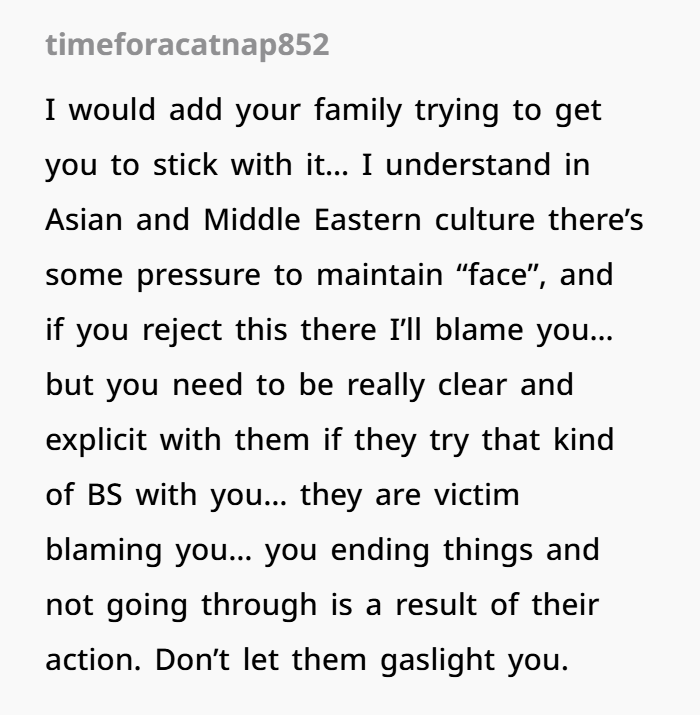
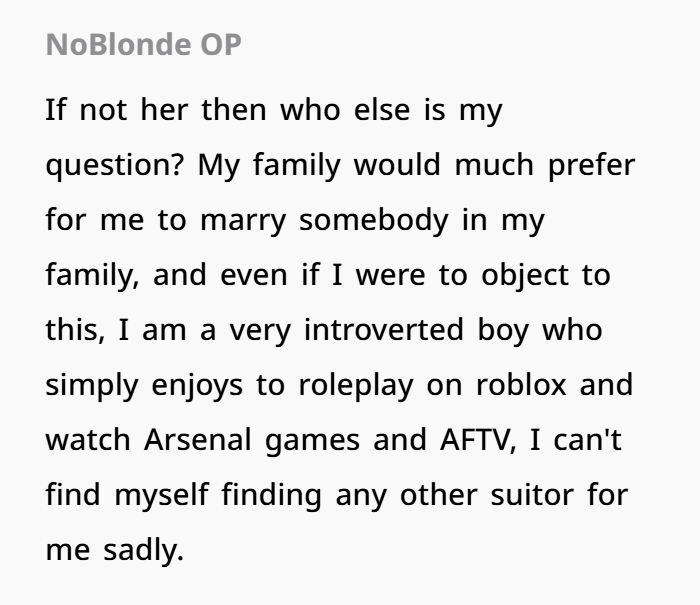

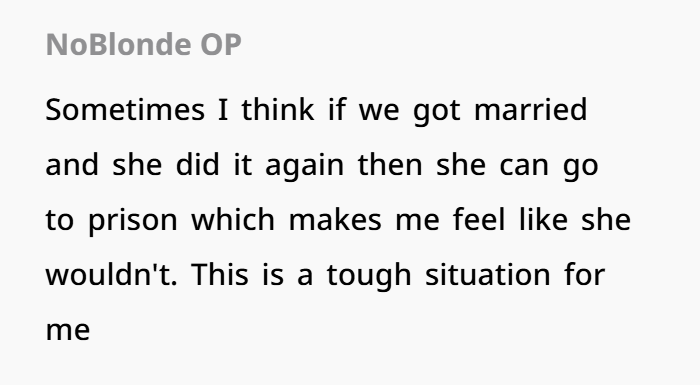
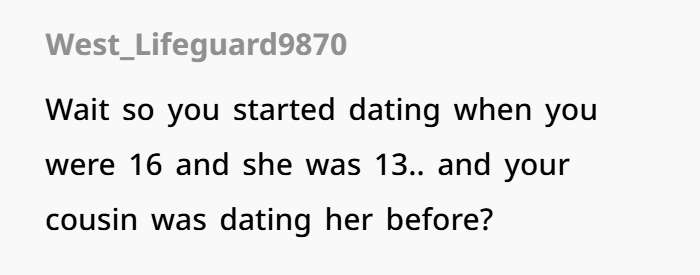

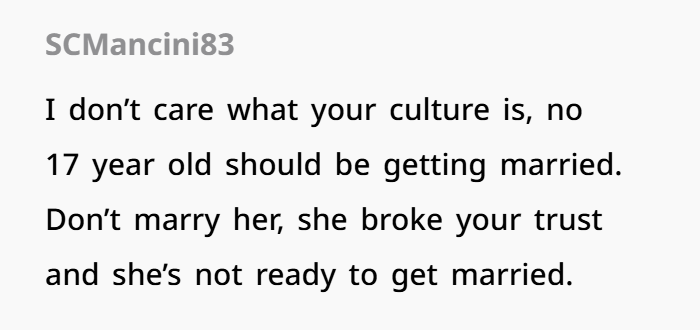
The groom is facing an extremely painful decision after being betrayed by both his fiancée and his cousin. Calling off the wedding was a reasonable step because marriage should never begin with broken trust, family pressure, and unanswered questions.
Although he may still love his former fiancée, love alone cannot rebuild a damaged relationship. Trust can sometimes return through honesty, accountability, firm boundaries, and professional relationship counseling, but only when both partners genuinely want to do the work. Forgiveness also does not mean that he must marry her.
Because a minor and an adult are involved, any possible legal action should be discussed privately with a qualified local attorney. Ultimately, the groom should take as much time as he needs and make his decision without pressure from either family. His emotional well-being and future security matter more than preserving wedding plans or protecting the family’s reputation.