
I Gave Birth 5 Months Ago, and My Husband Is Already Complaining to His Mom That I Haven’t Lost the Baby Weight
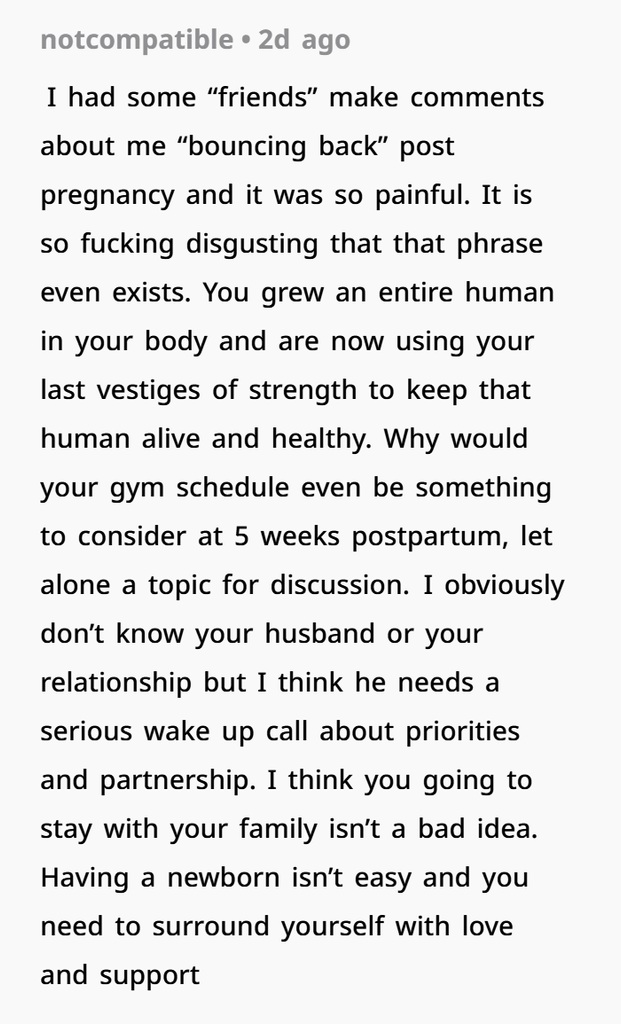
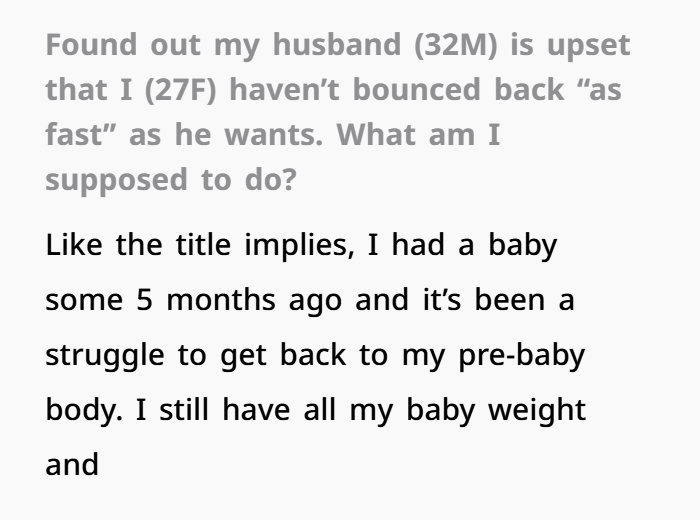
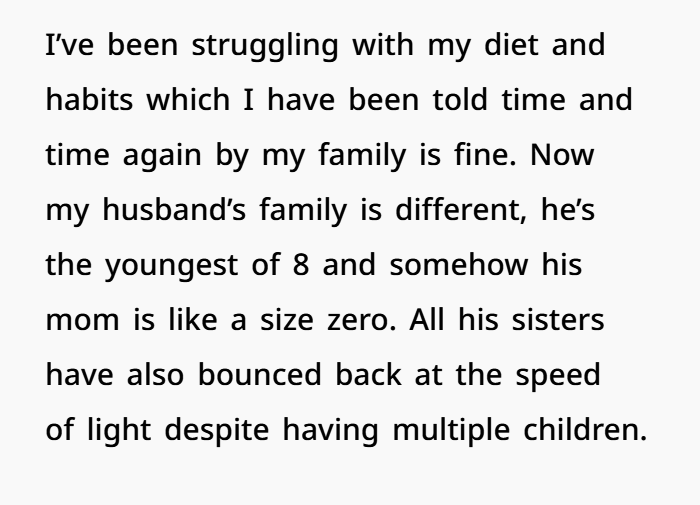
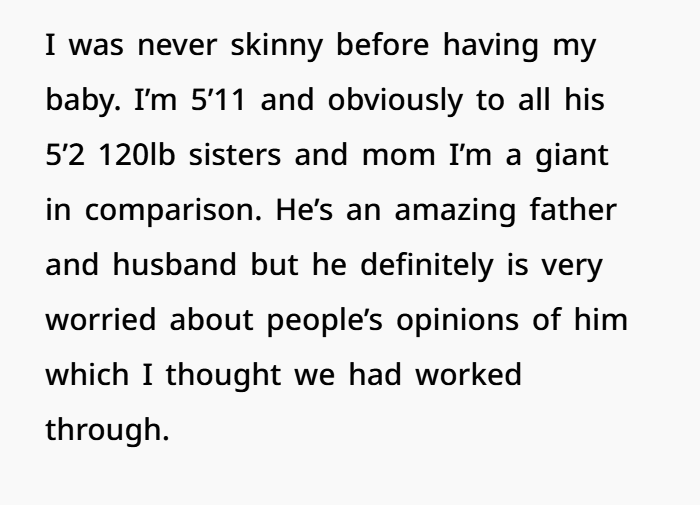
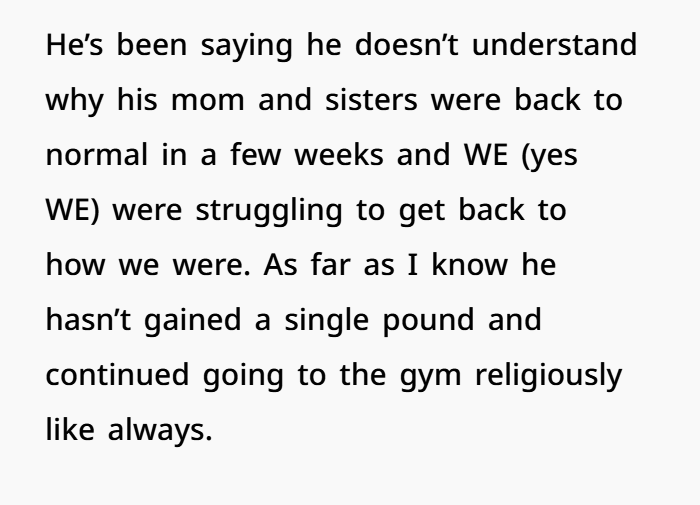
A 27-year-old woman is going through a difficult time just five months after having her first baby. Like many new mothers, she is still adjusting to changes in her body, eating habits, and daily routine. Her own family tells her that postpartum recovery takes time and that she should not feel pressured to look the way she did before pregnancy. However, her husband’s family seems to think differently. His mother and sisters are much shorter and smaller than her, and they reportedly returned to their usual weight soon after having children. The woman is 5’11” and has always had a different body type. Still, she never thought her family would compare her to them.
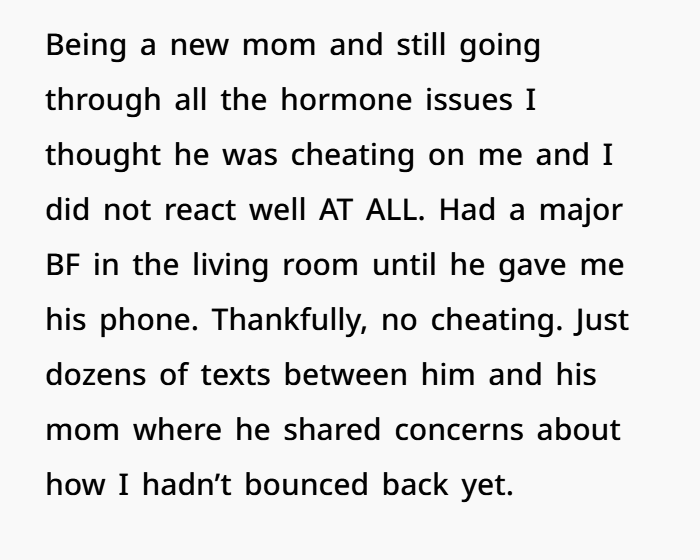
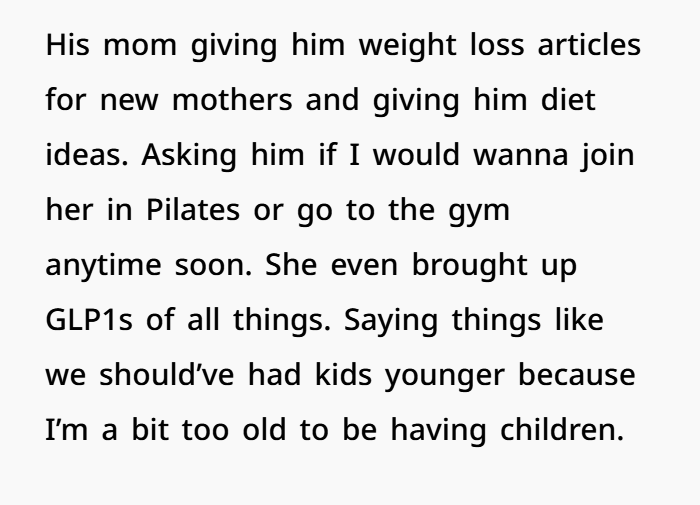
Her 32-year-old husband has always been helpful with their baby. He takes care of nighttime feedings, changes diapers, and shares parenting duties. She believed they had a happy marriage based on trust and honest communication. But recently, he started hiding his phone, which made her worry that something was wrong. When she finally asked him about it, he showed her his messages. She discovered that he had been talking to his mother about her weight and appearance. His mother had sent him weight-loss advice, diet plans, fitness tips, and information about weight-management medications. He also wondered if his wife would look like she did before pregnancy by the time they went on their family vacation to Costa Rica.
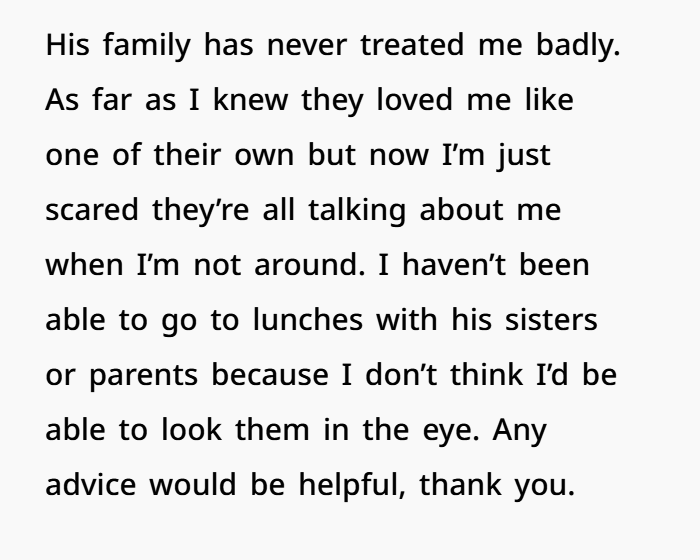
Reading those messages deeply hurt her. She had been doing her best to care for their baby while managing her own postpartum health and recovery. Instead of supporting her, her husband had been privately comparing her body to other women in his family. His comments about her appearance made her feel embarrassed and disappointed. She also began to worry about attending family gatherings because she no longer felt comfortable around her in-laws. What upset her most was knowing that her husband had shared personal details about her body without speaking to her first.
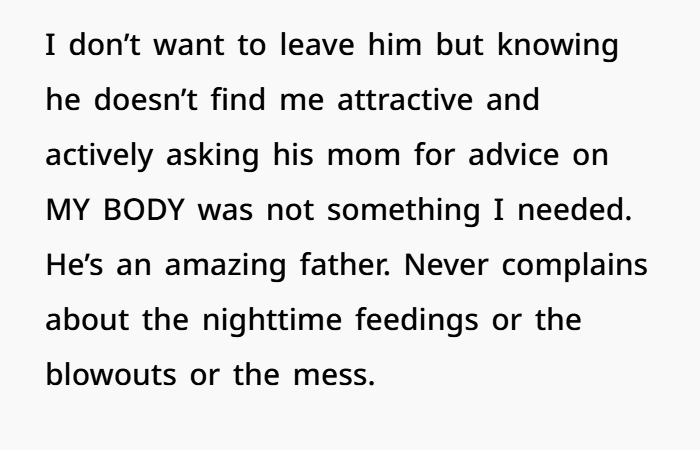
Now she is unsure what to do about her marriage. She still loves her husband and knows he is a caring father, but her trust in him has changed. She has thought about staying with her own family for a while so she can have some space. At the same time, she worries that telling them the truth could create more family problems. She knows that healthy communication and emotional support are important in marriage, especially after welcoming a baby. Marriage counseling might help them work through their feelings, but she is not sure she is ready. She shared her story on Reddit to ask whether her feelings are reasonable or if she is making too much of the situation.






What Medical Research Says About Postpartum Recovery and Body Shaming
Having a baby changes a woman’s life in many ways. Her body needs time to heal, her daily routine changes, and she may be getting very little sleep.
But in this story, a woman was reportedly facing pressure to lose weight just five months after giving birth.
What made the situation more upsetting was that the comments came from her own husband and mother-in-law.
Instead of feeling supported, she discovered that they had been privately discussing her weight and appearance.
This raises an important question: How long does it really take to recover after having a baby, and how can hurtful comments affect a new mother’s emotional health?
Postpartum Recovery Takes More Than Six Weeks
Many people think a woman’s body should return to normal within a few weeks of childbirth.
But medical experts explain that recovery takes much longer.
According to the American College of Obstetricians and Gynecologists (ACOG), postpartum care involves more than a single checkup after delivery.
A new mother may still be dealing with physical changes, hormonal shifts, tiredness, and emotional stress for months.
Some women recover faster than others, and that is normal.
At five months postpartum, the woman in this story was still adjusting to life after childbirth.
Expecting her body to look exactly the way it did before pregnancy was not a fair way to measure her health or recovery.
Postpartum healthcare should focus on the mother’s overall well-being, not just the number on a scale.
How Long Does It Take to Lose Pregnancy Weight?
There is no single timeline that works for every woman.
MedlinePlus, a health information service from the U.S. National Library of Medicine, explains that returning toward pre-pregnancy weight may take around six to twelve months.
Some women may take longer, while others may not return to their previous weight.
And that does not automatically mean something is wrong.
Pregnancy affects the body in many ways. Muscles, hormones, body shape, and energy levels can all change.
A woman may also be breastfeeding, recovering from surgery, or caring for a baby who wakes up several times during the night.
All these things can affect her daily routine.
Rather than rushing into a strict diet, new mothers can benefit from discussing postpartum nutrition, physical recovery, and healthy weight management with their healthcare provider.
The goal should be good health, not meeting someone else’s expectations.
Why Comparing Women’s Bodies Is Unfair
In this story, the husband reportedly compared his wife’s body with those of his mother and sisters.
He seemed to believe that because other women in his family had lost weight quickly, his wife should be able to do the same.
But every woman’s body is different.
The Centers for Disease Control and Prevention (CDC) explains that weight can be affected by several factors, including sleep, stress, hormones, age, and medical conditions.
Genetics and lifestyle can also make a difference.
Two women can have similar pregnancies and still have completely different recovery experiences.
That is why comparing one woman’s postpartum body to another’s is not helpful.
A new mother needs support while her body heals.
She should not feel that she has to compete with other women in the family.
Are Weight Loss Medications Safe After Pregnancy?
Another part of the story involved the mother-in-law reportedly suggesting weight loss medication.
She mentioned GLP-1 medications, which are sometimes prescribed for certain medical conditions, including type 2 diabetes and weight management.
These medications can be helpful for some patients when prescribed appropriately.
However, they are not suitable for everyone.
For women who have recently given birth, there may be additional health questions to consider.
This is especially important during breastfeeding because safety information differs between medications, and research is still developing.
A qualified healthcare professional can review a woman’s medical history, current health, and treatment options before recommending any medication.
Prescription weight management treatments should be based on medical needs, not pressure from family members.
A woman should never feel that she needs medication simply to meet someone else’s beauty standards.
How Body Shaming Can Affect a New Mother’s Mental Health
The months after childbirth can be physically and emotionally demanding.
New mothers may be dealing with interrupted sleep, new responsibilities, and major changes in their daily lives.
During this time, support from a partner can make a meaningful difference.
In this story, the woman believed her husband and mother-in-law were supportive.
Finding out that they had been discussing her appearance behind her back reportedly left her feeling hurt.
Comments about weight can affect a person’s confidence, especially when they come from someone close.
Repeated criticism may also create stress and make someone feel uncomfortable in their own home.
Postpartum mental health care is an important part of recovery.
If a new mother is experiencing ongoing sadness, anxiety, or emotional distress, speaking with a licensed mental health professional may help.
Emotional well-being deserves just as much attention as physical health.
Why a Husband’s Support Matters After Childbirth
A supportive partner can make life easier during the postpartum period.
Helping with nighttime feedings, changing diapers, preparing meals, and sharing household responsibilities can reduce some of the pressure on a new mother.
According to the woman’s account, her husband was involved in caring for their baby.
He helped with nighttime responsibilities and appeared to be a caring father.
Those are positive qualities.
However, being a good parent does not mean someone cannot make mistakes in their marriage.
A person can be helpful with childcare while still saying or doing things that hurt their partner.
In this situation, the issue was not simply that the husband noticed changes in his wife’s appearance.
It was that he reportedly discussed those changes with his mother in a way that made his wife feel judged.
Healthy marriage communication requires honesty, kindness, and respect.
Sensitive concerns are usually better discussed directly and privately rather than shared with relatives.
When In-Laws Become Too Involved in a Marriage
Family members can be a wonderful source of help after a baby arrives.
Grandparents may offer childcare, prepare meals, or give new parents a chance to rest.
But problems can arise when relatives become involved in private matters between spouses.
In this story, the mother-in-law reportedly supported her son’s concerns about his wife’s weight.
She also suggested ways the woman could change her appearance.
Her offer to babysit might have been helpful on its own.
However, connecting that offer to the woman’s need to lose weight made it feel less supportive.
This is where healthy family boundaries become important.
A couple can appreciate help from relatives while still keeping certain conversations private.
Marriage counseling and family counseling may help couples who struggle with these boundaries.
It is also worth remembering that the messages described in this story involved the husband and his mother.
There is no clear evidence that every other family member shared their opinions.
Can a Marriage Recover After Hurtful Comments?
Finding out that a partner has been criticizing you can damage trust.
But it does not always mean the relationship cannot improve.
The first step is usually an honest conversation.
In this case, the woman may want to explain how the messages affected her and why she felt betrayed.
Her husband would also need to listen without dismissing her feelings.
A meaningful apology should include an understanding of what went wrong and a willingness to behave differently.
The couple may also need to agree on boundaries about discussing private matters with relatives.
For some couples, professional marriage counseling or couples therapy can provide a comfortable place to work through difficult conversations.
A licensed relationship counselor may help both partners improve communication and rebuild trust.
However, counseling only helps when both people are willing to participate and make changes.
The woman should not have to change her body to earn basic respect in her marriage.
What New Mothers Really Need During Recovery
After having a baby, a woman’s needs may look very different from what they were before pregnancy.
She may need more rest, help with household tasks, nutritious meals, or time to attend medical appointments.
She may also need reassurance that she is doing a good job.
Instead of focusing on how quickly a new mother loses weight, family members can support her in practical ways.
Offering to watch the baby so she can sleep, helping with dinner, or simply asking how she feels can make a difference.
Access to postpartum care, women’s healthcare services, and mental health support can also help mothers manage the changes that come with childbirth.
The most helpful support is the kind that respects what the mother actually needs.
Final Thoughts
This story shows how painful it can be when a new mother feels judged by the people she trusts most.
At just five months postpartum, the woman was still adjusting to the physical and emotional changes that come with having a baby.
Instead of feeling pressure to return to her previous appearance, she deserved patience, kindness, and understanding.
Medical research makes it clear that postpartum recovery is different for every woman.
There is no perfect body shape or exact deadline for returning to a previous weight.
The bigger issue in this story is not how much weight the woman has lost.
It is whether her husband can understand why his comments were hurtful and take steps to rebuild her trust.
A healthy marriage should make both partners feel respected, supported, and valued, especially during major life changes.
And after childbirth, a woman’s health and happiness should matter far more than how quickly her body changes.
See The Comments Below