
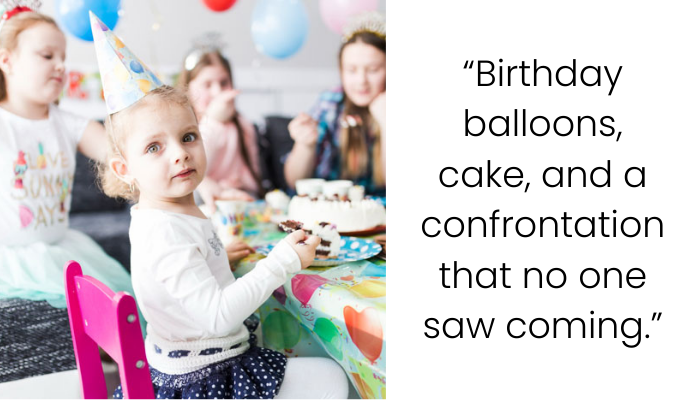
AITA for Calling Out a Cousin’s Toxic Behavior at a Kid’s Birthday Party?
A 31-year-old woman attended her child’s 3-year-old birthday party, which was held at her partner’s grandmother’s home. The gathering was mostly family from her partner’s side, and she was still getting to know many of them. What should have been a happy birthday celebration turned uncomfortable because of a serious incident during the party.
During the event, her partner’s cousin made a disrespectful comment toward his own wife in front of everyone. He insulted her and called her names after getting frustrated with their child. The comment was harsh, and instead of stopping it, most people stayed quiet or laughed, while the wife looked upset and embarrassed.
The woman could not ignore what happened. She spoke up calmly and told the cousin that his behavior was not acceptable. She also reminded him that he has a daughter and that the way he treats his wife can influence what his child learns about relationships. She asked him to apologize or leave the party, and he chose to apologize.
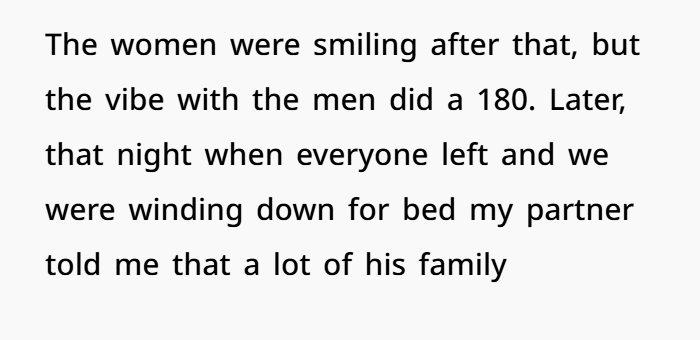
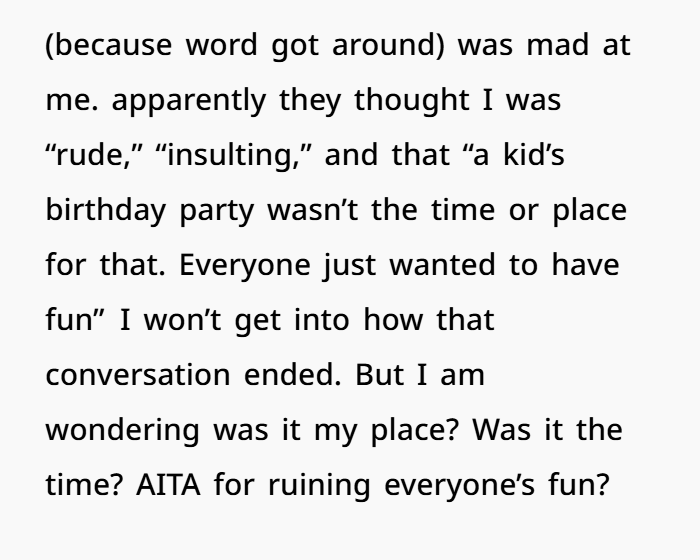
Afterwards, some of the women seemed thankful, but other family members, especially the men, were unhappy with her for speaking up. Later, her partner told her that the family felt she was rude and chose the wrong moment to intervene. Now she is wondering if she did the right thing or if she crossed a line during a family birthday celebration and parenting-focused family event.
The author hosted her child’s 3rd birthday at her partner’s grandmother’s house, where most guests were his family
Let’s break this down because this kind of situation happens more often than people think, especially during family gatherings where things look normal on the outside but tension is hidden underneath.
✅ “Wrong Time and Place” — Or Just an Excuse?
People often say “this is not the right time or place” when they feel uncomfortable. But the real question is: when is the right time to speak up about disrespect or verbal abuse?
Saying something at a birthday party may feel awkward, but so was the original comment. The husband chose to insult his wife in front of others. So it is fair to question why the reaction is being judged more than the behavior itself.
Staying quiet does not fix the problem. It only allows it to continue.
🧠 Verbal Abuse Is Not a Joke
Calling someone “stupid” or “incompetent” in public is not funny or harmless. It is a form of verbal abuse in relationships.
According to organizations that study domestic abuse and emotional health, name-calling and public humiliation can deeply hurt a person’s self-esteem. Even if said as a “joke,” it still causes emotional damage.
This kind of behavior can also affect children. Research in child psychology shows that kids who see disrespect between parents may grow up thinking this behavior is normal in relationships.
So speaking up was not just about the wife — it was also about setting an example for the children watching.
📣 Why Speaking Up Feels “Wrong” to Some People
When someone speaks up in a family conflict, it often makes others uncomfortable. Instead of focusing on the harmful behavior, people may label the person who spoke up as “rude” or “dramatic.”
This happens in many families with long-term patterns. People get used to “keeping peace,” even if something is wrong.
In family psychology, this is sometimes called a “family system pattern,” where people avoid conflict to keep things stable. But that stability can also hide unhealthy behavior.
So when OP spoke up, it disrupted that pattern, which made others react strongly.
👶 Children Learn From What They See
The event was a child’s birthday party. Even if the children did not fully understand the words, they still notice tone, body language, and emotions.
When adults laugh at insults, children may learn that disrespect is normal.
But when someone speaks up and says it is not okay, that also becomes an important lesson.
This is why experts in parenting and family behavior say children learn more from actions than words.
💬 Was OP Rude or Wrong?
Speaking up in the moment may not always sound perfect. It can feel uncomfortable for everyone involved.
But the main issue is not tone — it is behavior.
If attention shifts from the insult to the person who called it out, it can hide the real problem. Many people, especially women in family and relationship situations, are often expected to stay quiet to avoid conflict.
In this case, speaking up showed that respect matters, even in uncomfortable moments.
🧠 Why the Family Reacted Badly
The strong reaction from others may come from discomfort. OP’s words forced them to notice something they had been ignoring.
In psychology, this is similar to the bystander effect, where people avoid stepping in because others are present.
When someone finally speaks up, it can make others feel guilty or exposed, which leads to anger or defensiveness.
But silence does not mean approval is harmless — it can also support bad behavior without meaning to.
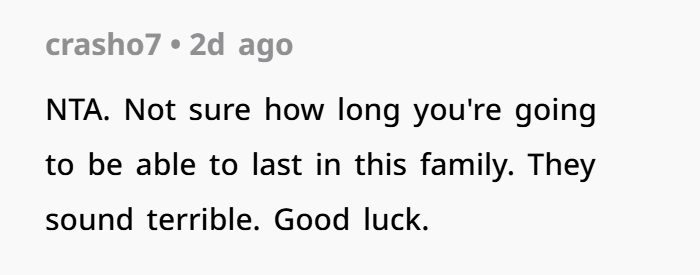
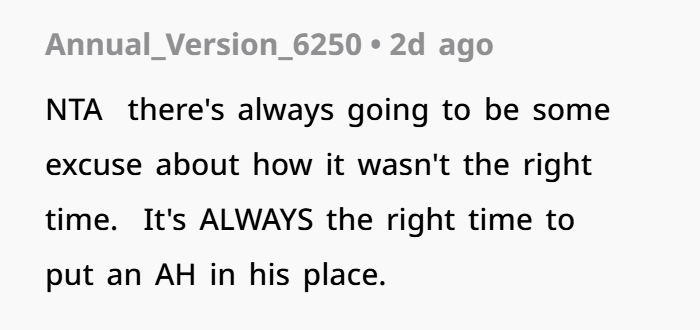
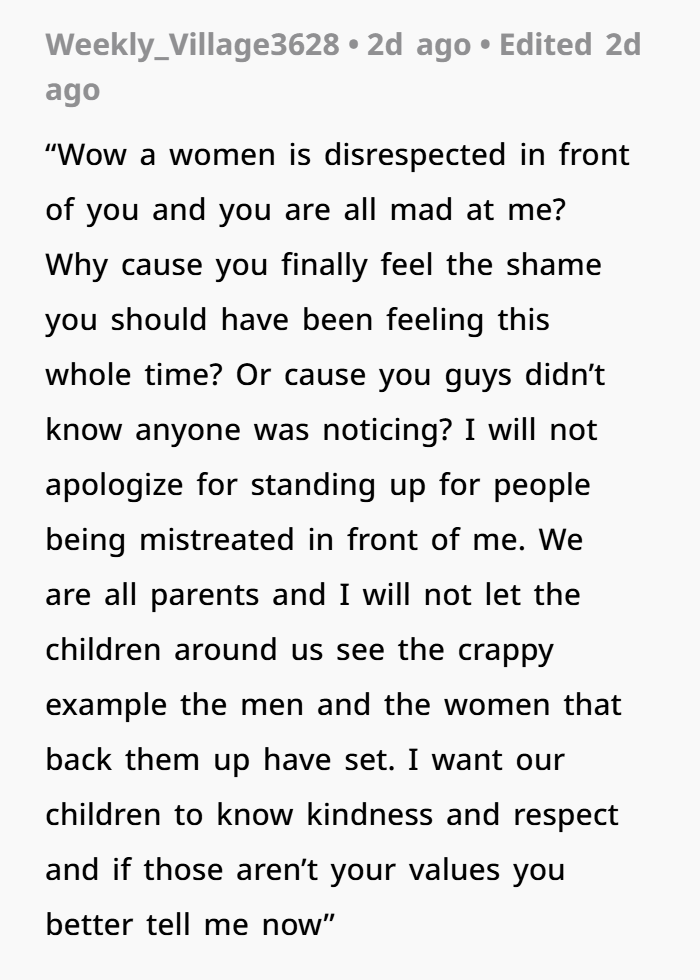
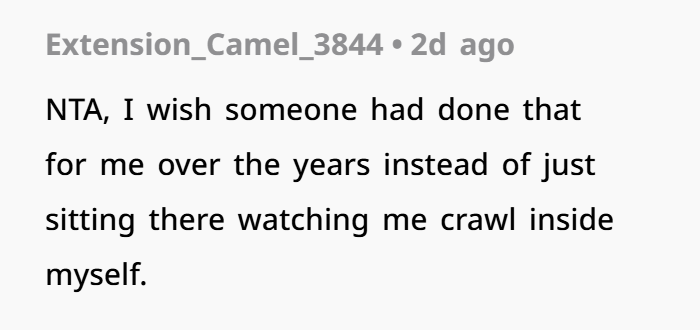
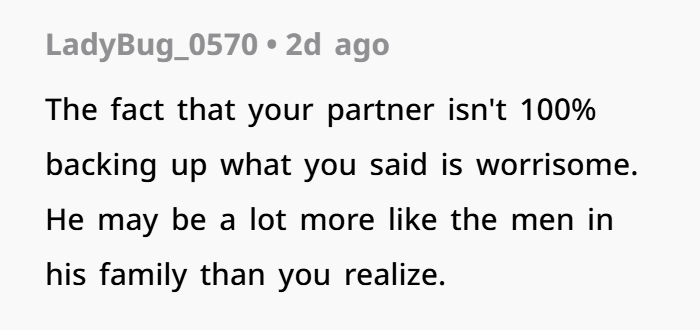
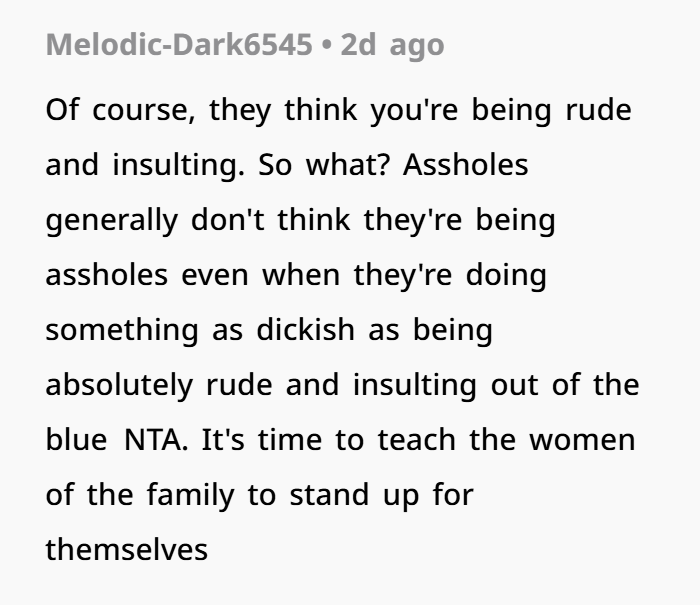
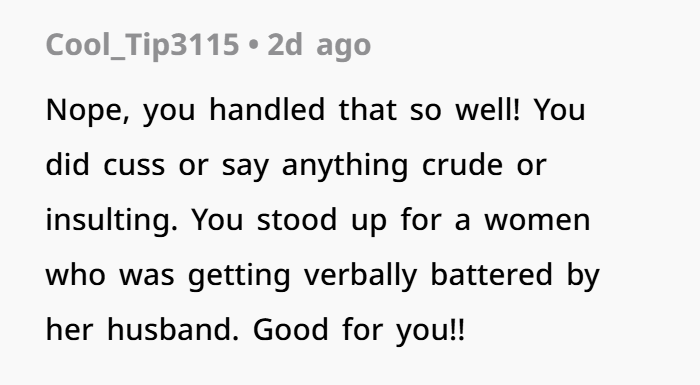
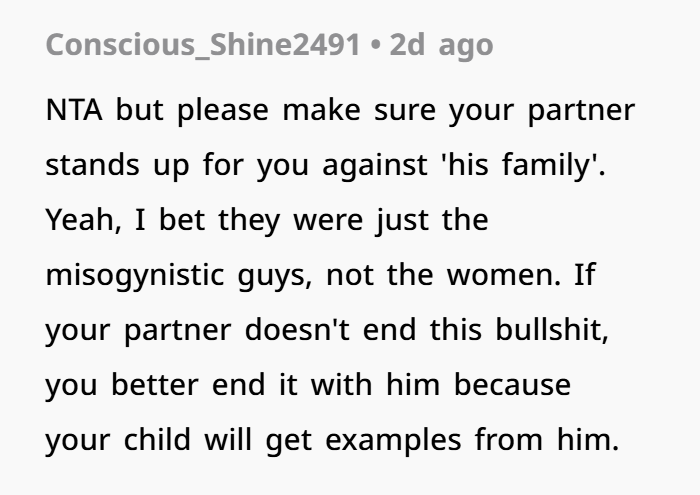
Netizens applauded the author standing up for the wife of the cousin amidst a seemingly misogynistic family
In the end, this situation is not just about one comment at a party. It is about respect in marriage, emotional safety in families, and healthy communication.
Calling out disrespect is never easy, and it may upset people in the moment. But it also sends a clear message that verbal abuse and humiliation should not be accepted — even in a family setting.
So while the moment may have been uncomfortable, the intention was to protect respect and stop a harmful pattern from continuing.