
I told my sister the truth about her cheating husband and now my family hates me
A person shared a difficult family situation involving their sister’s marriage. They overheard their sister’s husband having a private and romantic phone conversation with another woman. It was clear to them that it was not an innocent talk, but something that crossed the line of trust in a marriage.
After thinking about it for a few days, they decided to tell their sister the truth. They felt it was important to be honest, even though they knew it could cause problems. Once the sister confronted her husband, the situation quickly escalated, and the marriage ended shortly after.
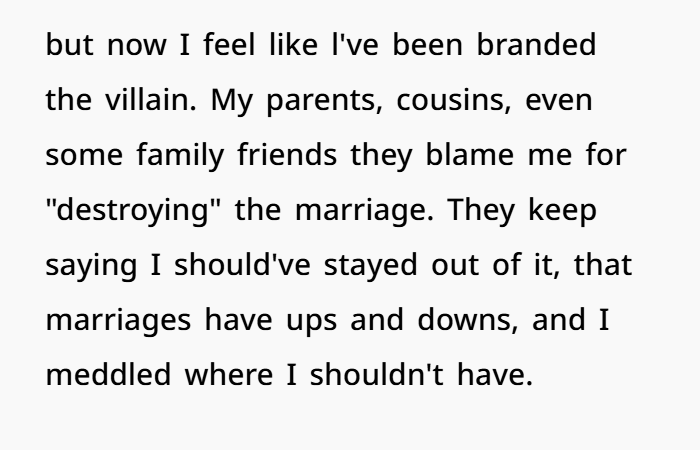
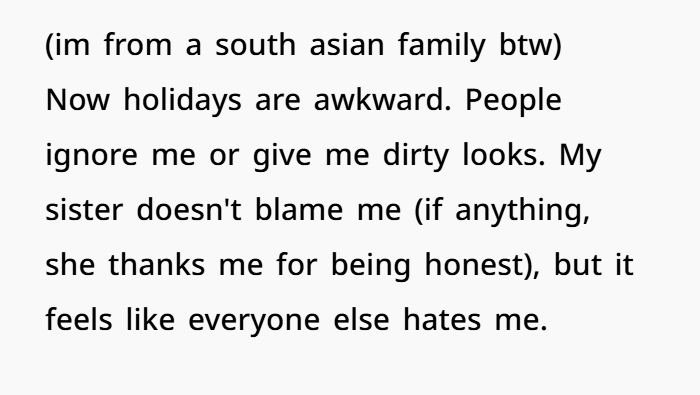
However, the decision caused a strong reaction from the rest of the family. Many relatives, including parents and cousins, blamed the person for breaking up the marriage. They said it was wrong to interfere and accused them of causing unnecessary conflict. The sister, on the other hand, was thankful for being told the truth and did not blame them.
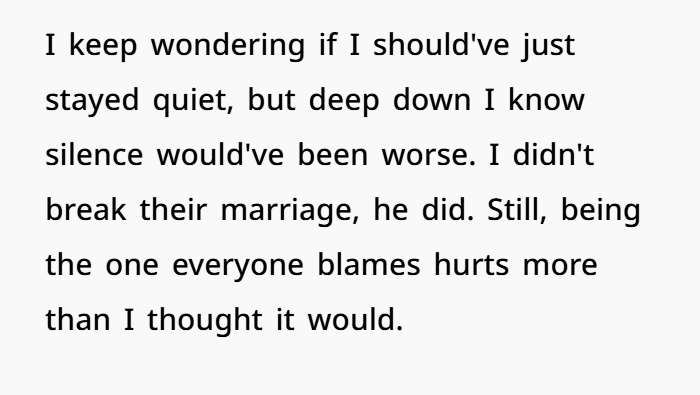
Now the person feels isolated and hurt by how the family has reacted. In many families, especially in cultures where marriage stability and family reputation are highly valued, situations like this can become even more sensitive. The person is left wondering whether staying silent would have avoided conflict, even though they believed they were doing the right thing by exposing infidelity and supporting honesty in relationships.
But instead of blaming the man, the rest of the family accused her of ruining the marriage
1. The “shoot the messenger” effect
There is a common human behavior where people get angry at the person who shares bad news, instead of the person who caused the problem. This is often called “shooting the messenger.”
In this situation, your family may feel angry at you because you told the truth about your sister’s marriage problems. It is often easier for people to blame the person who speaks up than to accept painful facts, like betrayal or cheating.
2. Family culture and South Asian expectations
In many South Asian families, marriage is seen as a family matter, not just between two people. Divorce is often viewed as shameful, especially for women, and families may try hard to protect their reputation.
Because of this, speaking openly about problems like infidelity or divorce can be seen as breaking family silence. Your family may feel you exposed something they wanted to keep private. Their reaction is more about family image and cultural pressure than about you personally.
3. Your responsibility to your sister
Your main loyalty is to your sister. In this case, you told her the truth about her husband’s actions.
If you were in her place, you would likely want to know the truth too. Many relationship studies show that hiding infidelity can make emotional pain worse when the truth comes out later from other people.
By telling her, you gave her the chance to understand her situation clearly and make her own decision in her marriage.
4. The cost of staying silent
If you had stayed quiet, there could have been bigger problems later.
Your sister might have found out the truth later and felt betrayed by both her husband and her family for not telling her. That can cause deep emotional damage in family relationships and trust.
Or she might never have found out, which could have meant she stayed in a broken marriage without knowing the truth. Either way, silence could have created long-term pain.
5. Why your family may be angry
It is important to understand that you did not cause the divorce. The husband’s cheating caused the problem.
Sometimes families focus on “saving the marriage” instead of facing the truth. When you spoke up, it may have felt like you disrupted peace or exposed a private issue.
In reality, your actions gave your sister information and choice. The anger from your family is more about protecting image and avoiding shame than about what is right or wrong.
6. Similar real-life situations
Many people have shared similar experiences where they told the truth about cheating in a marriage. Often, the person who speaks up is blamed first, while the cheater is defended or ignored.
Over time, when emotions calm down, families often realize the truth-teller was not the problem. In many cases, the person who cheated is later seen as the real cause of the breakup.
This pattern is very common in family conflict and relationship trust issues.
7. Why this situation feels painful
Even when you know you did the right thing, it can still hurt when family members turn against you.
Humans naturally want acceptance from their family. When that support feels lost, it can cause emotional stress and loneliness.
However, being blamed does not always mean you did something wrong. Sometimes it means you chose honesty in a difficult situation.
8. Moving forward
Try to focus on your sister’s well-being and the truth you shared with her. She is the person who matters most in this situation.
If needed, you can say something simple like: you are sorry for the pain this caused, but you do not regret telling the truth.
Keep supportive family relationships where possible, but avoid getting pulled into blame or conflict.
With time, emotions often calm down, and people start to understand what really happened.
Final thoughts
You did not destroy the marriage. The cheating caused the damage.
Speaking up may have caused short-term conflict, but it also gave your sister honesty, clarity, and the chance to make her own choices. In the long run, truth is often better than silence, even when it is difficult.
Readers reassured the author that she did the right thing
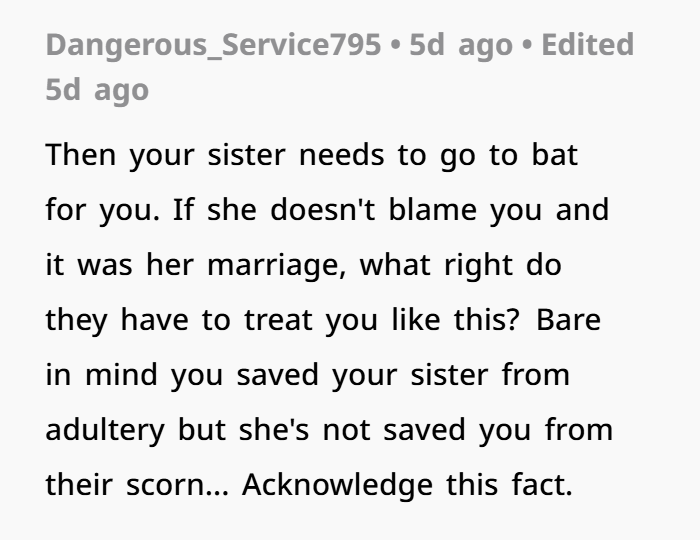
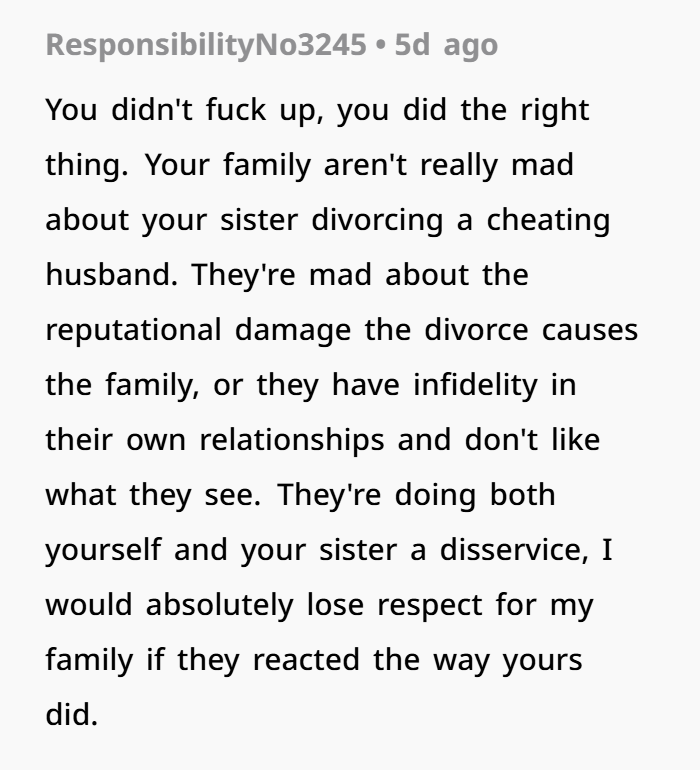



NTA. You didn’t destroy the marriage — you exposed the destruction that was already there. Your sister’s husband wrecked it, not you. Your family blaming you is unfair, but it’s also a reflection of cultural shame and their need for someone to scapegoat.
When the history of this is written, your sister will remember you as the one person who stood by her when it mattered. That’s worth more than the approval of relatives who would rather protect appearances than protect her.