Entitled Mom Brings Kids To Adults-Only Spa, Loses It When Staff Say “No Entry”
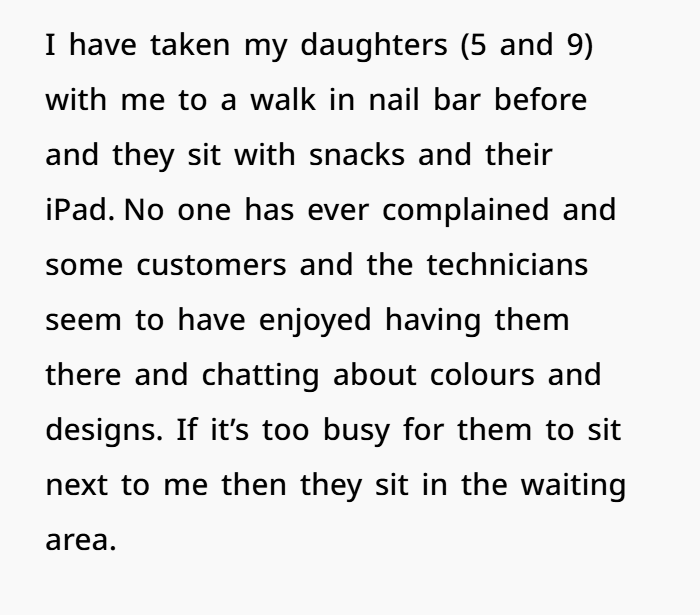
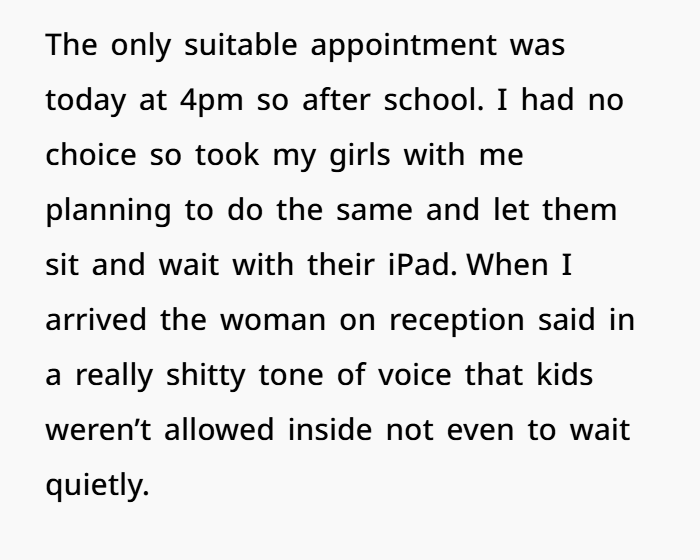
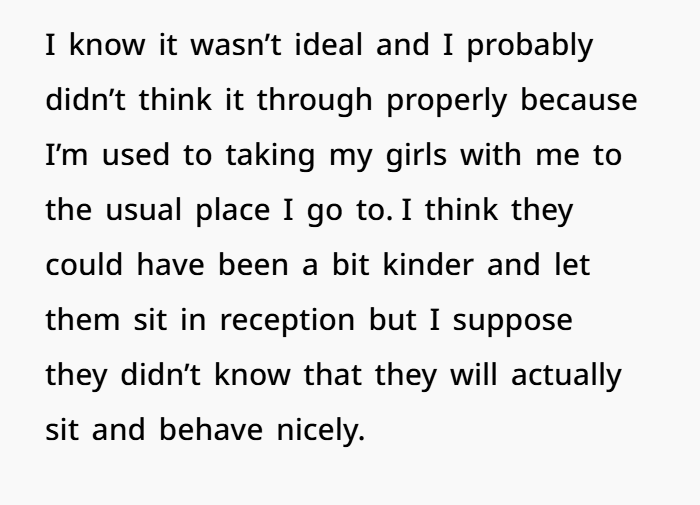
A mother had a spa voucher and booked the only appointment time available after school. Since she had taken her two daughters with her on previous occasions, she planned to bring them along again. Her daughters, ages 5 and 9, were expected to sit quietly and use their tablets while she received a short beauty treatment.
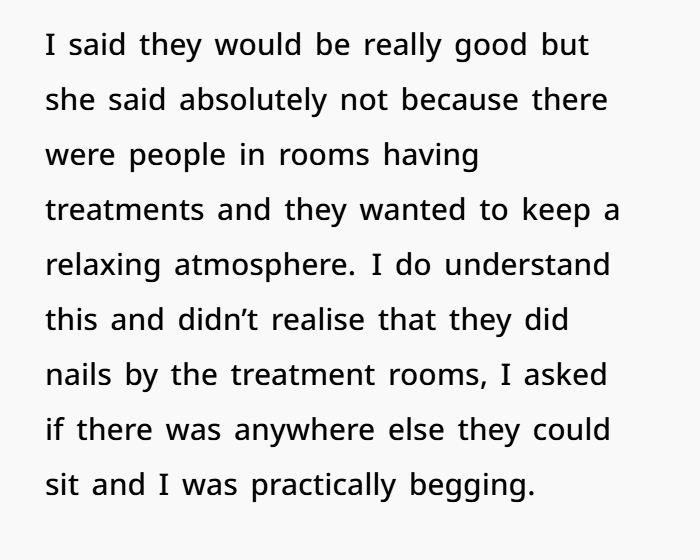
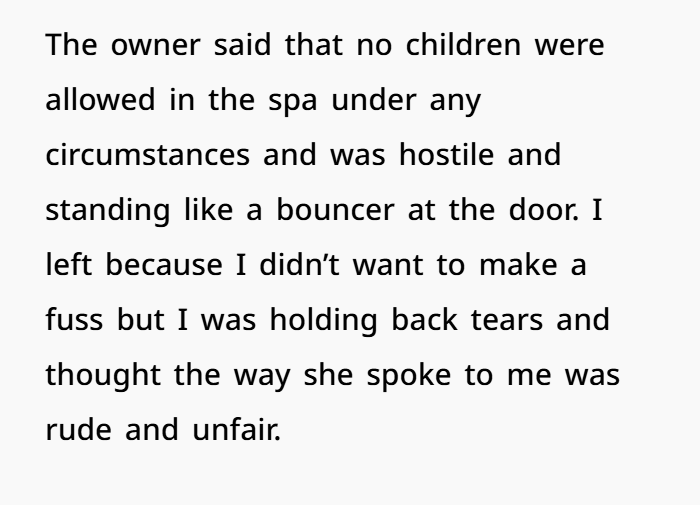
When they arrived at the spa, the receptionist informed her that children were not allowed inside the facility. The mother was surprised because she had not expected this rule to be strictly enforced. She explained the situation, hoping there might be a simple solution, but the staff made it clear that children could not remain in the waiting area or anywhere else in the spa.
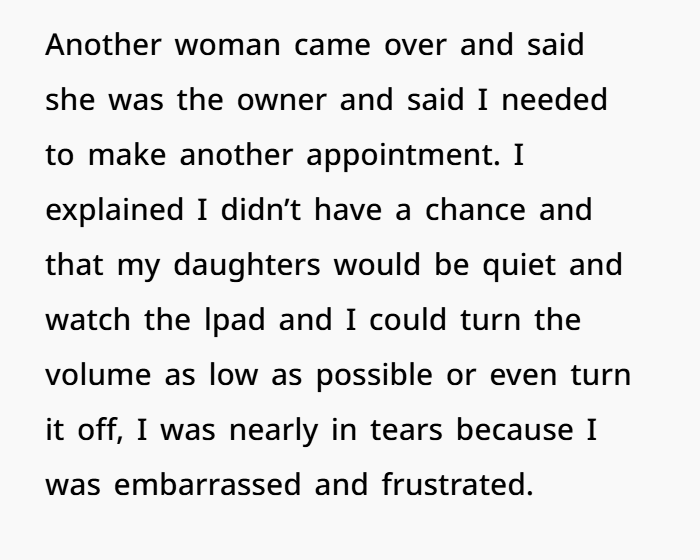
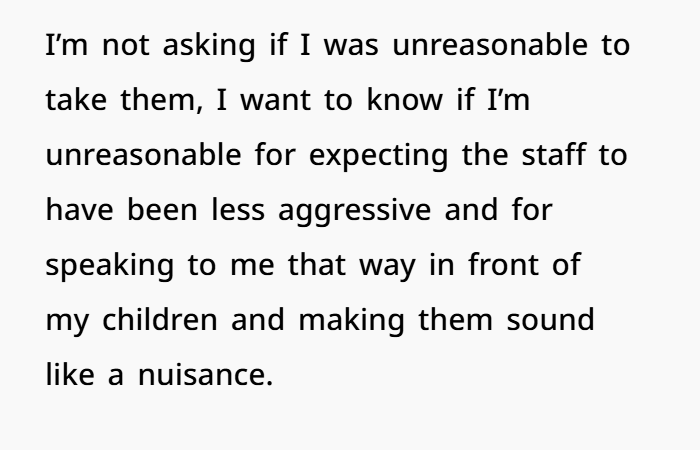
The conversation became uncomfortable when the owner repeated the policy and refused to make an exception. The mother felt embarrassed because the discussion happened in front of her children. Although she understood that businesses have rules, she was disappointed by what she felt was an unfriendly response and a lack of customer service.
After leaving, she began questioning whether her expectations had been reasonable. The experience sparked discussion about customer service, family lifestyle challenges, parenting responsibilities, wellness services, business policies, and consumer experience. Many people agree that companies have the right to set rules, but they also believe that clear communication and respectful treatment can make difficult situations easier for everyone involved.
The poster shared that she had decided to get her nails done at a hotel spa, and brought her daughters along as the appointment was just after their school time
Situations like this are often about more than a spa visit. They involve customer service, parenting challenges, communication, and expectations. There are valid points on both sides, which is why these situations can feel so frustrating.
Let’s break it down.
1. Rules and Understanding Can Sometimes Clash
Businesses have the right to create rules for their customers. A spa may decide not to allow children because it wants to provide a quiet and relaxing experience for guests. That is a reasonable business decision.
At the same time, great customer service is about more than enforcing rules. It is also about treating people with kindness and respect. When customers make an honest mistake, a polite explanation can make a big difference.
This situation highlights the balance between business policies and customer experience.
2. Were Your Expectations Reasonable?
You mentioned that your children have behaved well during similar visits in the past. Because of those experiences, it makes sense that you believed they could sit quietly while you attended your appointment.
You were not asking for special treatment inside the spa area. You simply asked whether they could wait in the reception area. That is a reasonable question.
It is also reasonable to expect staff members to communicate politely, especially in front of children. Even when a business cannot accommodate a request, respectful communication should always be part of good customer service.
3. Why the Staff’s Tone Matters
A large part of the frustration seems to come from how the situation was handled rather than the rule itself.
There is a big difference between saying, “I’m sorry, but our policy does not allow children,” and saying it in a cold or dismissive way.
In the hospitality industry, communication skills matter. Customers are more likely to understand and accept a policy when it is explained with kindness and professionalism.
Being turned away can already feel uncomfortable. If the conversation feels unfriendly, the experience can become even more upsetting.
4. Parenting Challenges Are Real
Many parents have busy schedules and limited childcare options. Finding time for self-care can be difficult.
You may have been trying to fit an appointment into a busy day while balancing family responsibilities. That is something many parents can relate to.
You also tried to find a solution by suggesting that your children wait quietly. That shows you were thinking about both your needs and the spa’s environment.
This was not a situation where you ignored other people. Instead, it appears you were trying to find a practical compromise.
5. Was Bringing Your Children Unreasonable?
The answer depends on whether the spa clearly communicated its policy beforehand.
If the no-children policy was clearly listed on the website, appointment confirmation, or booking information, then bringing children may have gone against an existing rule.
However, if the policy was not clearly explained and you had previous experiences where children were allowed in similar businesses, it was reasonable to think it might be acceptable.
Many nail salons and beauty businesses allow children in waiting areas, so your assumption was not unusual.
6. Expecting Respectful Service Is Fair
One thing is very clear: expecting polite treatment is not unreasonable.
Businesses can say no to requests. They can enforce policies. But they should do so respectfully.
Good customer experience is built on professionalism, empathy, and clear communication. Customers should never feel embarrassed or dismissed when asking a question.
Even when a request cannot be approved, a respectful explanation can leave a positive impression.
7. Different People Will See It Differently
Some people may believe that childcare should have been arranged before the appointment. Others may feel that the spa was simply following its policy.
At the same time, many people would understand why you thought bringing your children would be acceptable, especially if they are usually well-behaved and no clear policy had been communicated.
Because expectations around children in beauty and wellness businesses vary, it is easy to see how misunderstandings can happen.
8. How the Situation Could Have Been Handled Better
There are several ways this experience could have been improved.
The staff could have politely explained the policy and shown understanding of your situation.
If possible, they could have suggested another appointment time or explained the rules more clearly.
A simple apology for the inconvenience would also have helped.
For future appointments, it may be helpful to check the business’s child policy in advance. This can prevent confusion and make planning easier.
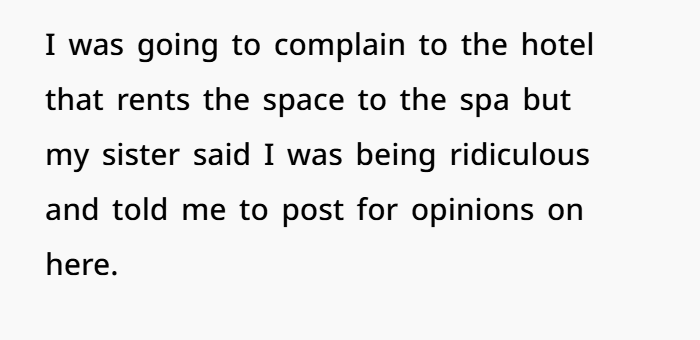
If you still feel uncomfortable about how the interaction was handled, you could also send a calm and professional message to management sharing your feedback about the customer service experience.
9. Final Thoughts
Looking at the full situation, it does not seem that your intentions were unreasonable. You were trying to balance parenting responsibilities with a personal wellness appointment, and you attempted to find a solution that would work for everyone.
The main issue appears to be how the situation was communicated. Businesses have every right to enforce their policies, but they should do so with professionalism and courtesy.
Good customer service is not only about rules. It is also about making people feel respected and understood. A polite conversation could have made this experience much easier for everyone involved.
While the appointment may not have worked out as planned, expecting kindness, clear communication, and respectful treatment is completely reasonable.
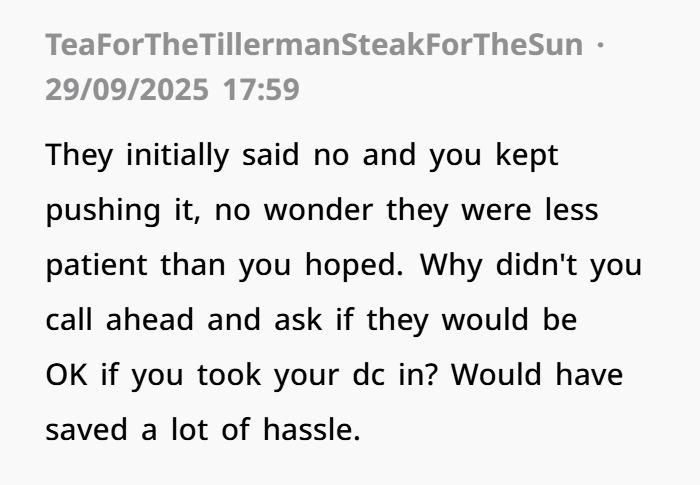
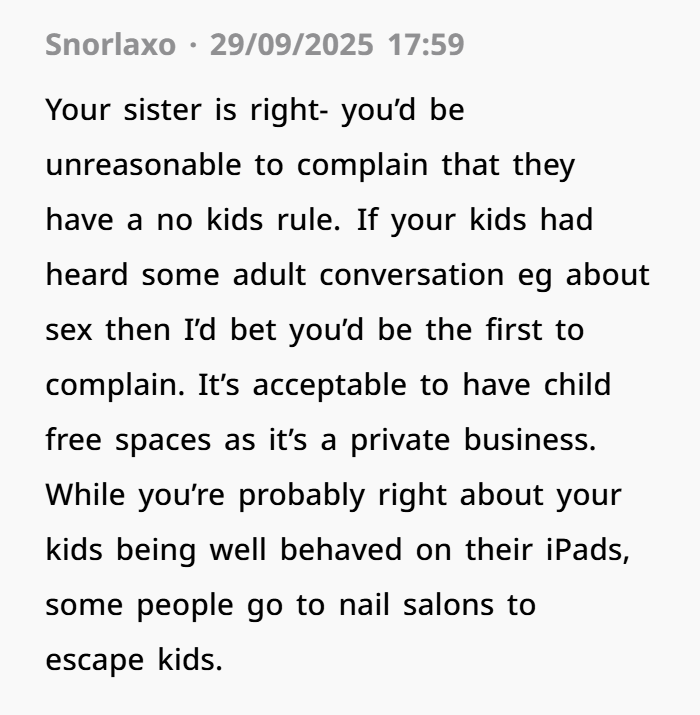
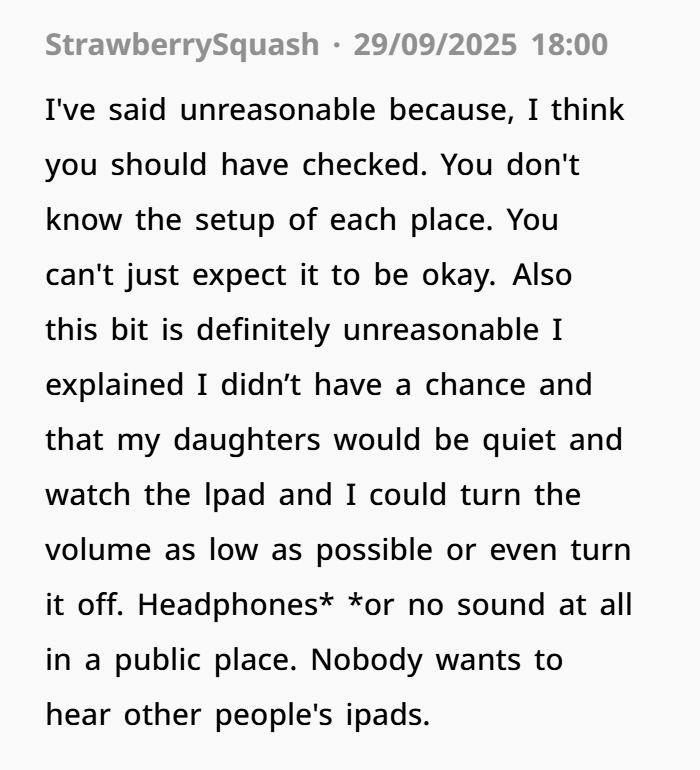
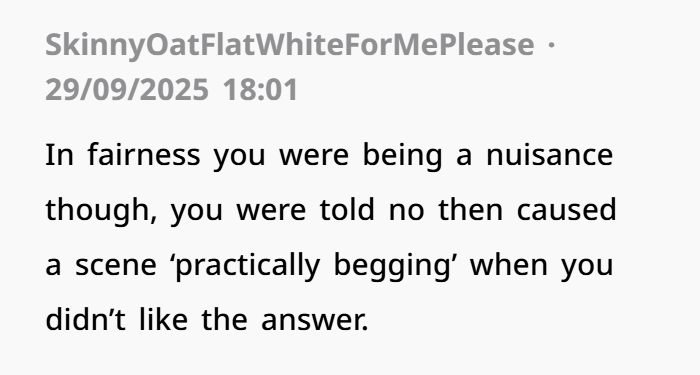
Most people felt that the woman had overreacted to the situation and should have checked if her kids would be allowed at the spa