

My boss invited me on a fully paid vacation — should I go?
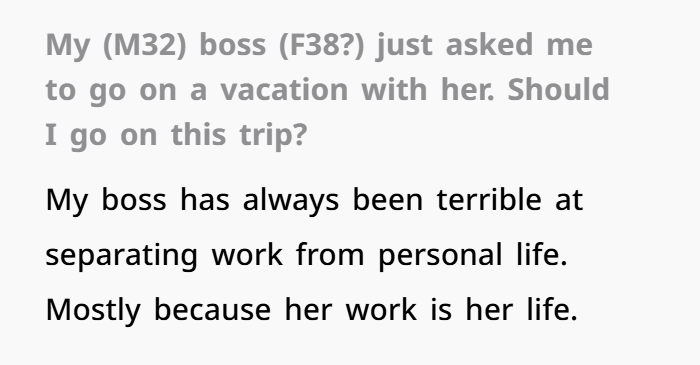
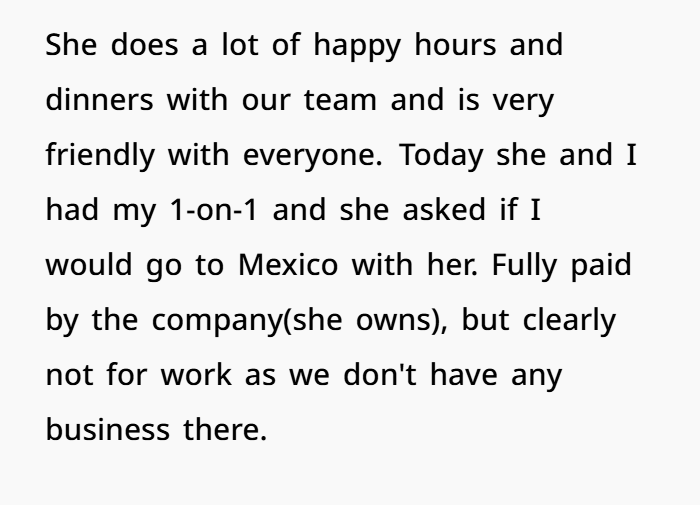
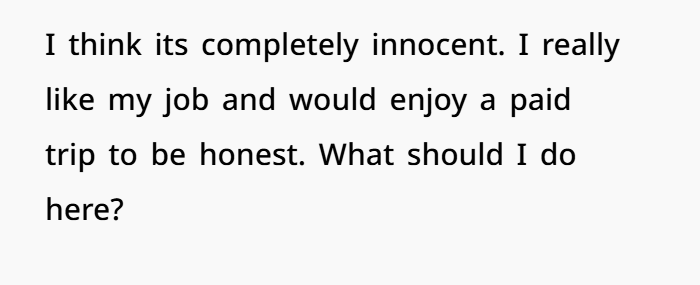
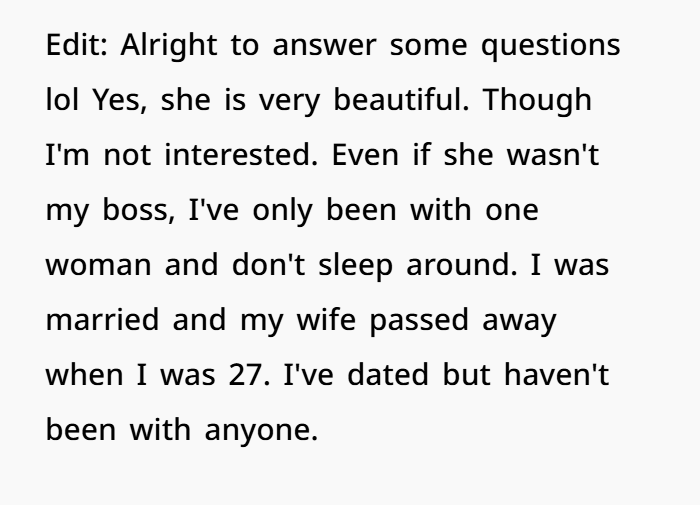
A 32-year-old man shared a work situation involving his boss, a 38-year-old woman. She is known for mixing work and social life by often organizing happy hours, dinners, and casual team outings with her employees. He says the work environment is generally friendly and he enjoys his job.
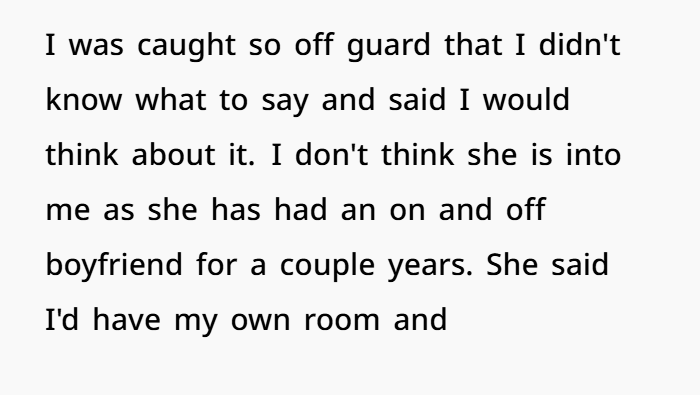
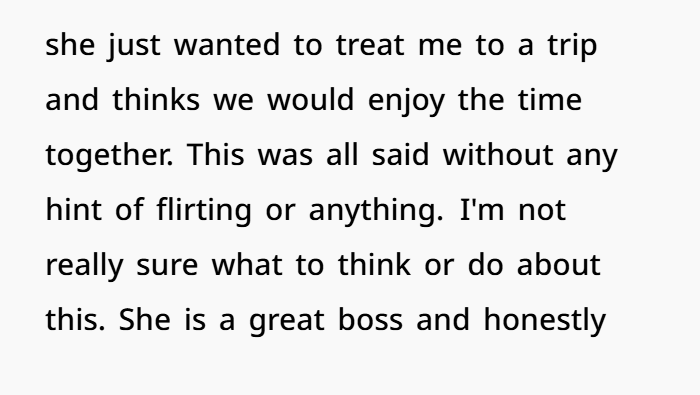
Recently, during a one-on-one meeting, his boss surprised him by offering him an all-expenses-paid trip to Mexico. She explained that it was not a business trip and not romantic in nature. According to her, she simply thought it would be a fun getaway and a chance to relax. She also made it clear that they would have separate rooms during the trip.
The man felt caught off guard and told her he needed time to think about it. While he appreciates his job and gets along well with his boss, he is unsure if accepting the offer is the right choice. He is concerned about workplace boundaries, professional ethics, and how a work-related vacation could affect office dynamics. Situations like this often raise questions about employee boundaries, corporate culture, and maintaining a healthy work-life balance.
The poster shared that his boss is bad at separating her work life from her personal life and that she has always been very friendly with everyone
Should You Go on a Trip With Your Boss? A Simple Guide
This situation is about a boss inviting an employee on a vacation. At first, it may sound fun and exciting, but in workplace culture and career growth, it can also create problems. Let’s break it down in very simple words.
1. There is a power difference
Your boss has control over your job. She can affect your salary, promotion, workload, and future career.
Because of this, going on a personal vacation with a boss is not the same as going with a friend.
Even if the trip is friendly, it can still feel uncomfortable because of the work relationship and office hierarchy.
This is important in workplace ethics and professional boundaries.
2. How others may see it
Even if nothing wrong is happening, other people at work may think something is going on.
Coworkers might assume favoritism or special treatment. This can lead to office gossip, workplace rumors, and trust issues in the team.
In many jobs, perception matters as much as reality when it comes to reputation and career growth.
3. Risk of awkward situations
There are a few things that could go wrong:
- The trip feels uncomfortable because of work pressure
- Coworkers start treating you differently
- The boss expects more personal closeness later
- Work relationships become awkward after the trip
Even if everything goes fine, the situation can still feel complicated later at the office.
This is why HR policies often discourage mixing vacations with direct managers.
4. Legal and workplace safety concerns
In some workplaces, especially small companies or startups, there is no HR department to protect you.
This can make things more risky if something goes wrong.
Workplace boundaries are important for employee safety, professional conduct, and career protection.
Even if the intention is harmless, power imbalance can create stress or pressure.
5. Possible outcomes
Best case:
You go on the trip, everything stays professional, and you have a normal vacation experience.
Medium case:
Nothing bad happens, but coworkers start gossiping and things feel uncomfortable at work.
Worst case:
Things become awkward between you and your boss, or your work environment becomes stressful.
This is why thinking ahead is important in workplace decision making.
6. Your personal situation matters
If you have already been through emotional challenges or loss in life, you may want peace and stability instead of complicated situations.
A workplace vacation with your boss can sometimes bring emotional stress or confusion, even if nothing inappropriate happens.
Protecting your mental health and emotional well-being is important.
7. Safer alternatives
If you want to keep things professional, you can choose safer options like:
- A group trip with the whole team
- A company outing or team building event
- A polite decline with appreciation
- Suggesting a normal office lunch or team dinner instead
These options help maintain good workplace relationships without crossing boundaries.
8. Simple decision guide
Ask yourself one question:
“If this becomes awkward later, will I regret going?”
If the answer is yes, then it may be better to say no.
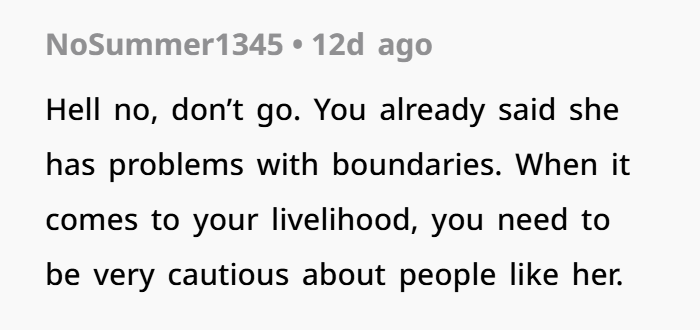
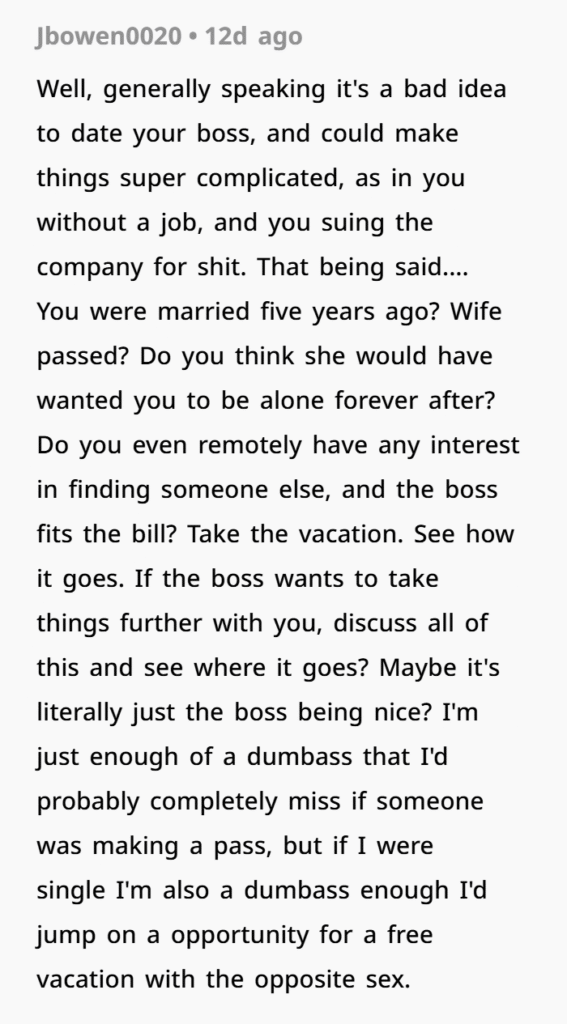
Netizens were divided, with some feeling that it would be a bad idea to go, and others thinking there would be no harm in his accepting the offer



Final thoughts
A free vacation with a boss may sound like a great opportunity, but in real workplace situations, it can affect professional reputation, office politics, and career growth.
It is not about blaming anyone. It is about keeping clear workplace boundaries, avoiding workplace gossip, and protecting your job stability.
Sometimes the safest choice in career development is not the most exciting one, but the one that keeps your work life simple and stress-free.