
Cousin Keeps Using Toxic Uncle as a Prank, But Gets Upset When the Joke Turns on Her
People often say that laughter is the best medicine. That can be true, especially when a joke makes everyone smile.
But some jokes go too far. A simple prank can quickly turn into something that leaves a person scared, stressed, or upset. That is when you see the difference between a funny moment and a prank that hurts someone’s feelings.
That is what happened in this story. The Original Poster (OP) had been dealing with the same prank for years. It targeted something that was very personal and emotional for them.
After putting up with it for a long time, OP finally decided it was time to respond. One day, they chose to turn the situation around and give the prankster a taste of their own medicine.

The cousin got upset after the revenge prank, which started a bigger conversation about personal boundaries, feelings, and when a joke stops being funny.
The OP shared that their cousin had a habit of playing the same prank for years. She would pretend that their uncle was coming to pick them up for family events.
At first, it may have sounded like a small joke. But for the OP, it was not funny at all. They explained that the uncle had a history of yelling, insulting people, and making hurtful comments about their weight. Because of those experiences, the OP had chosen to stay away from him.
One day, the cousin told the OP that their uncle was coming to pick them up for their birthday. The OP believed it was real and became extremely upset.
They started crying, walked around the house in panic, and had trouble catching their breath. After some time, they found out it was only a prank.
Instead of saying sorry, the cousin laughed and asked if the OP felt better now that they knew it was not true.
The OP could not forget that moment. They started planning a way to get back at their cousin.
They knew their cousin had a strong fear of clowns, so they asked a tall friend to help. The friend agreed to wear a scary clown costume for the prank.
The OP invited their cousin to what sounded like a simple birthday dinner. They even used a free restaurant coupon to make it seem real.
During the drive, they took their cousin to a quiet road where they had set up an old-looking vehicle near an abandoned barn. When the cousin got out to check what was happening, the OP quietly left the area.
A few moments later, the friend came running out of the barn wearing the clown costume and started chasing the cousin.
The cousin screamed and tried to run away. After realizing she could not get away, she fell to her knees and started crying.
Soon after, the friend revealed that it was all just a planned prank.
The OP came back and laughed with the friend. They then asked their cousin the same question she had asked before: if she felt better now that she knew it was not real.
This time, the cousin became furious. She said the prank was too scary and could have caused serious problems because of how afraid she was.
The OP argued that the cousin’s own prank had caused the same kind of fear and panic. The situation turned into a debate about respect, empathy, and knowing when a joke has gone too far.
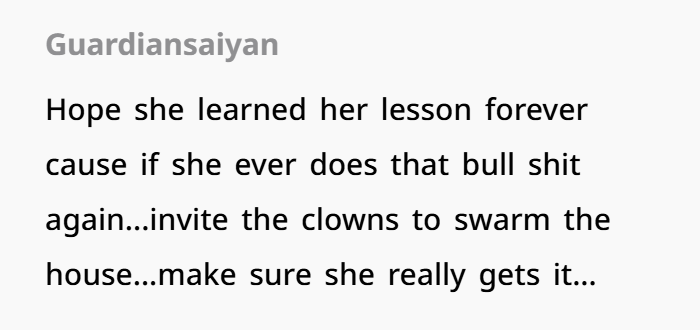
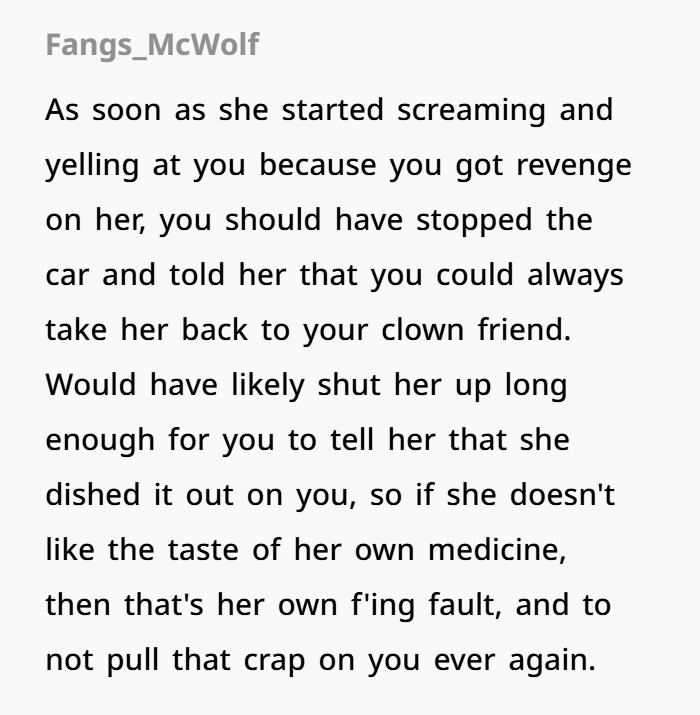
See the comments to know what people said
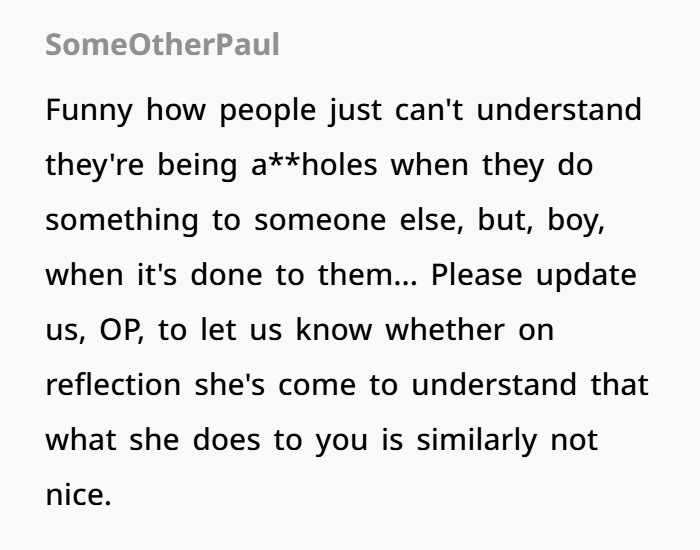
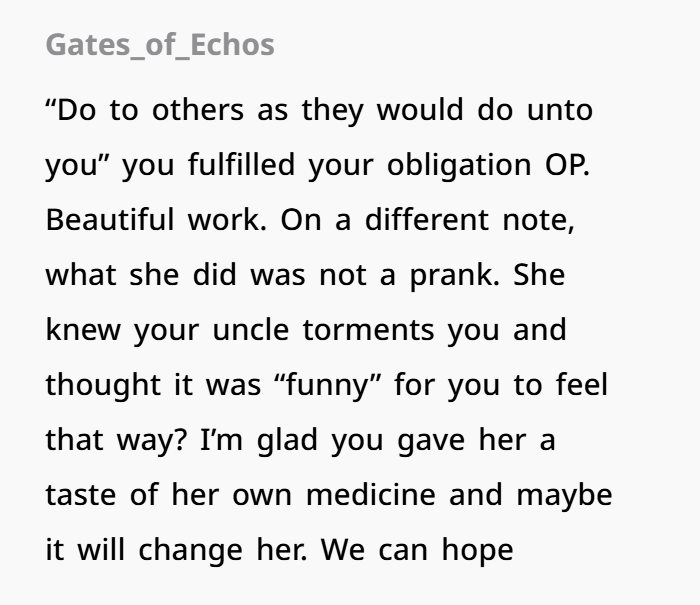
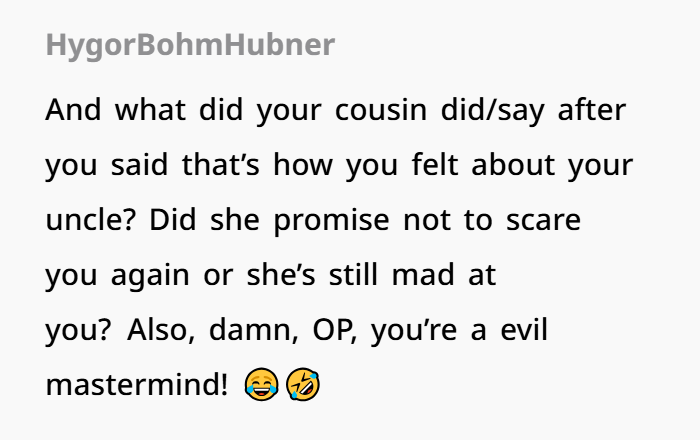
In the end, the story shows that not every prank is harmless. A joke may seem funny to one person, but it can feel very different to someone who has real fears or painful memories connected to it.
The OP and the cousin both learned that understanding someone’s feelings matters. While revenge might feel satisfying for a moment, the best jokes are the ones where everyone can laugh without feeling scared, hurt, or embarrassed.