
AITA for Not Attending My Ex-Husband’s Funeral After His Death by Suicide?
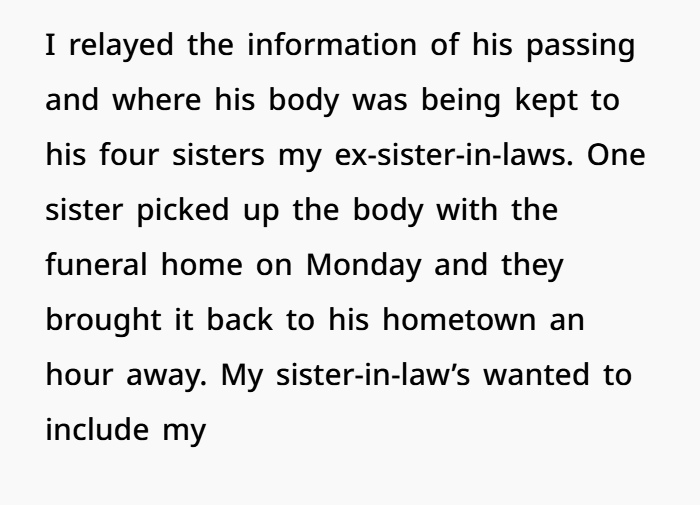
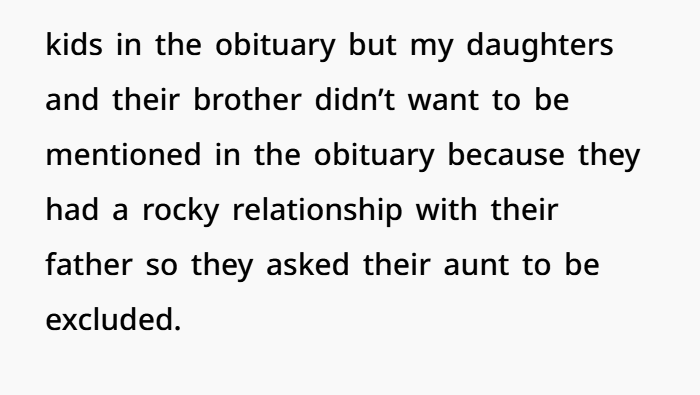
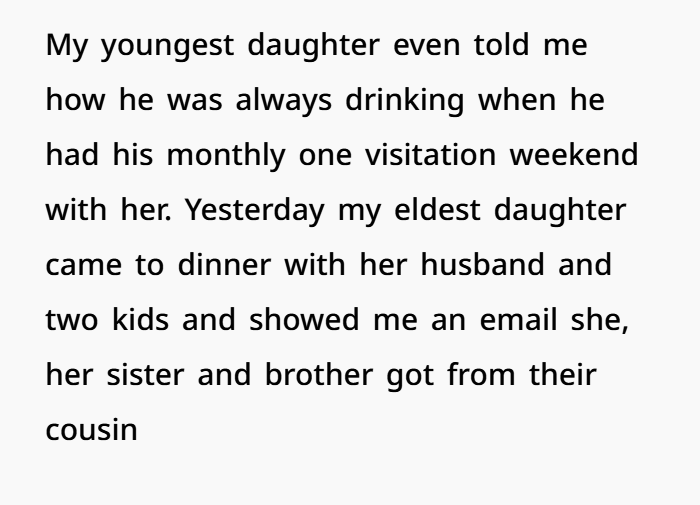
A woman is facing criticism from her former husband’s family after deciding not to attend his funeral. After his death, she was contacted by the police because she was one of the closest people available to help. She helped inform his sisters and supported the family with the arrangements. However, her three adult children decided not to be included in their father’s obituary because they had a difficult relationship with him.
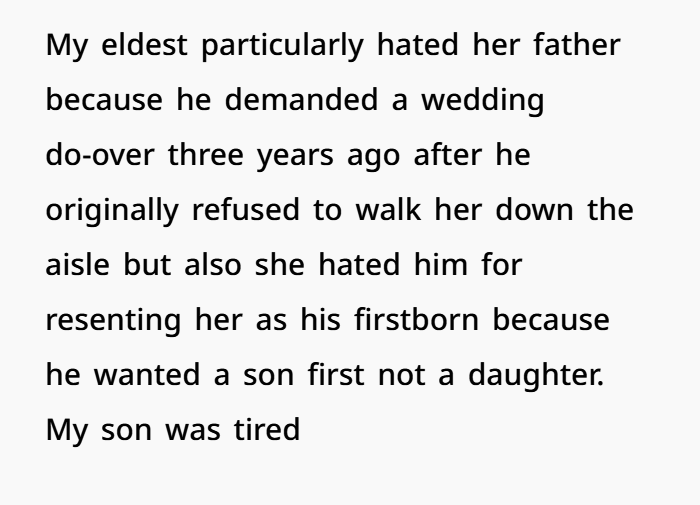
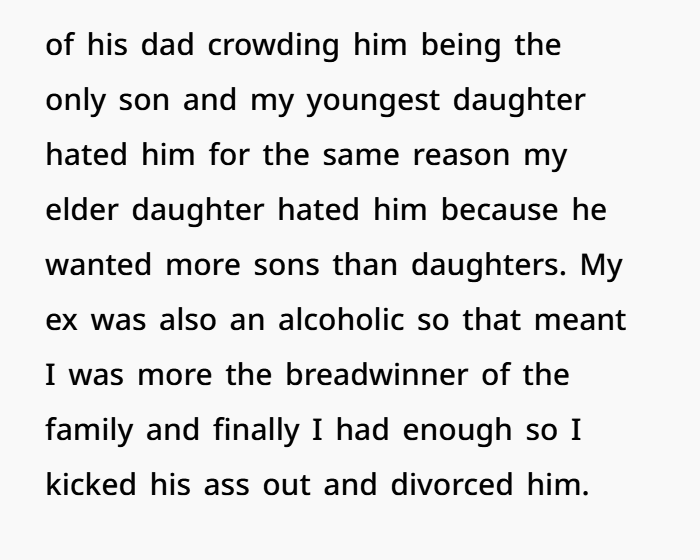
The woman explains that her children’s choice came from years of emotional pain. Her oldest daughter felt hurt by her father’s expectations and past actions, including problems connected to her wedding. Her son also had a challenging relationship with his father, and her youngest daughter carried her own feelings about family issues.
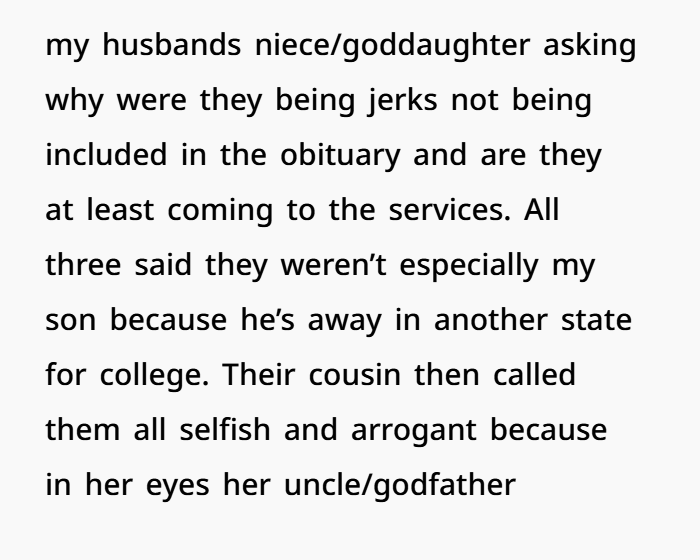
The woman says her former husband also struggled with alcohol problems, and she eventually ended the marriage after taking on many of the family responsibilities. After his passing, a cousin criticized the children for not being mentioned in the obituary and questioned whether they would attend the funeral.
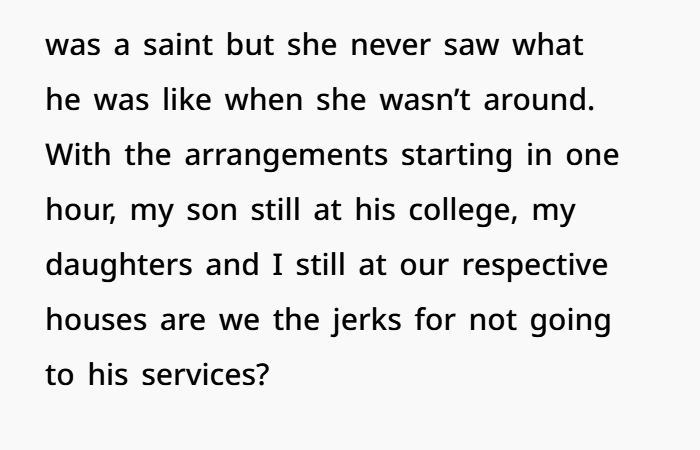
The cousin remembered him as a kind person, but the children felt she only knew part of the story. The woman is now wondering if choosing not to attend the funeral is disrespectful or if she and her children have the right to protect their emotional well-being during a difficult time.
Grief, Estrangement, and the Complicated Reality of Funerals
Funerals are often seen as a time to say goodbye and find closure. However, when family relationships are difficult, a funeral can bring many different emotions instead of simple sadness.
When someone passes away after years of family problems or distance, people may not all feel the same way. Some people may want to attend the funeral to find peace or honor the person. Others may choose not to attend because they need to protect their emotional well-being.
There is no single correct way to deal with loss. Everyone experiences grief in their own way.
Why Family Conflicts Can Affect Grief
When a relationship was complicated before someone passed away, grief can become more difficult.
People may not only miss the person who died. They may also grieve the relationship they had or the relationship they hoped they could have had.
They may think about:
- Happy memories
- Difficult experiences
- Unspoken feelings
- Things that were never resolved
These emotions can make the grieving process more complicated.
Different People Can Remember the Same Person Differently
Families often have different views of the same person.
For example, relatives such as cousins, siblings, or friends may remember someone as kind and caring. However, children or former partners may have experienced a different side of that person.
Both experiences can be true.
People can behave differently in different relationships. Someone may show one side of themselves to extended family while showing another side to those closest to them.
Death Does Not Always Fix Past Problems
When someone dies, family members may reflect on the past. However, death does not automatically remove old hurt or repair broken relationships.
Some people may still carry painful memories or unresolved feelings.
For this reason, some family members may choose private ways to grieve instead of joining large gatherings or public memorial events.
Choosing a private way to remember someone does not mean a person does not care. It may simply be the way they feel most comfortable handling their emotions.
How Difficult Loss Can Affect Families
Some losses bring many complicated emotions. Family members may experience sadness, confusion, anger, guilt, or questions about what happened.
People often cope with grief differently.
Some may want to talk about their feelings and share memories. Others may need quiet time and personal space.
Both approaches can be part of a normal grieving process.
Why Obituaries and Memorial Choices Can Become Sensitive
Funeral decisions, including obituary wording, can sometimes create disagreements.
Some family members may feel that including certain names or relationships is a way to honor family connections.
Others may feel that an obituary should reflect the relationship they personally experienced.
Family relationships are not always simple. A biological connection does not always show the full emotional story between people.
Understanding Different Family Experiences
Conflicts often happen when people assume their own experience represents the entire truth.
A cousin, sibling, child, or friend may each have a different connection with the person who passed away.
Each person may remember different moments and experiences.
Showing understanding toward different perspectives can help families handle difficult situations with more compassion.
Honoring Someone While Respecting Others
Remembering someone who has passed away is a personal choice.
Some people find comfort in attending funerals, sharing stories, and joining memorial services. Others may prefer private reflection or spending time with a smaller group of loved ones.
Both choices can be meaningful.
Honoring someone’s life does not mean ignoring the feelings of people who are still living.
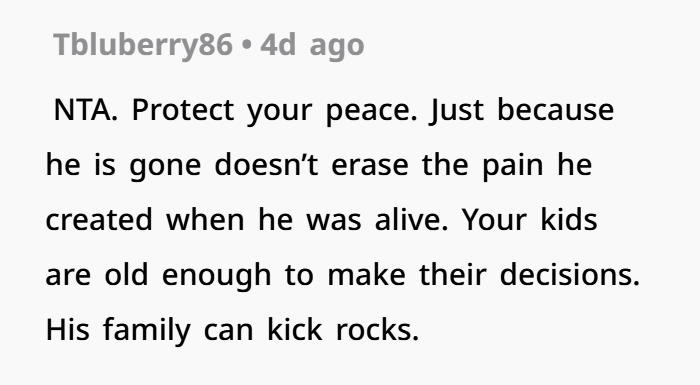
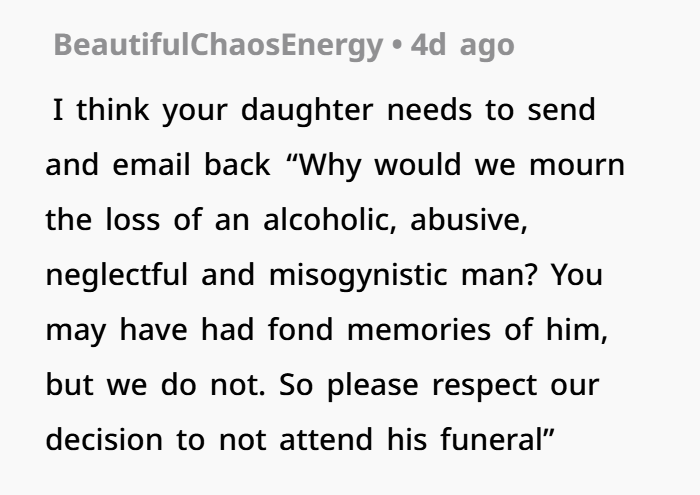
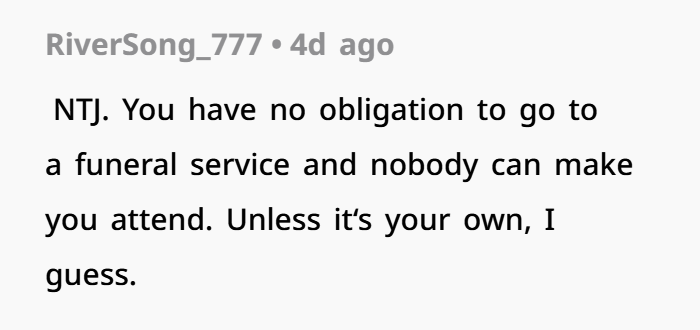
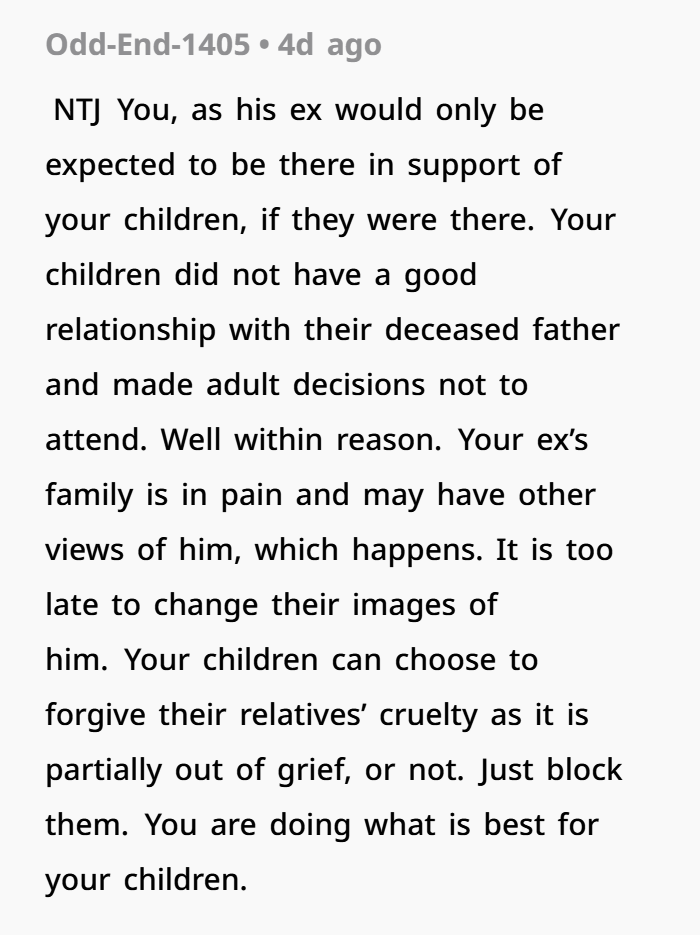
Readers’ Comments Speak Out
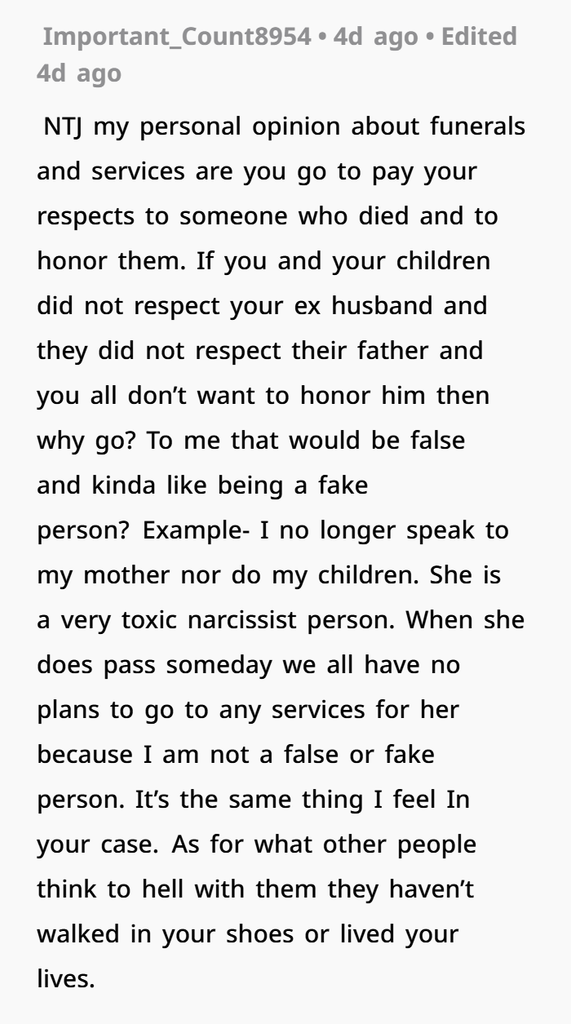

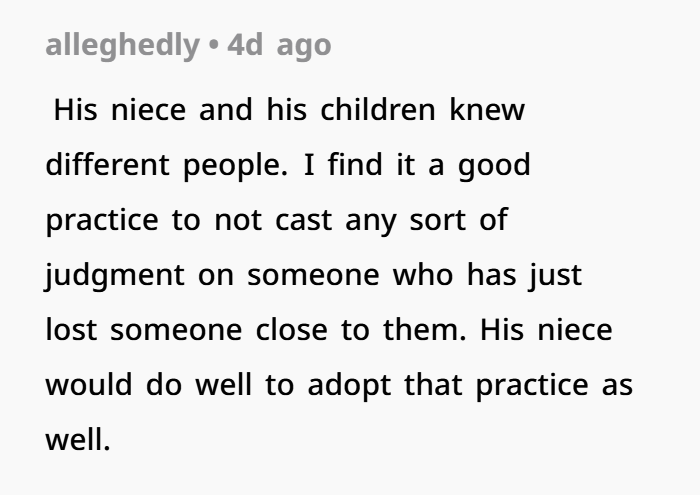
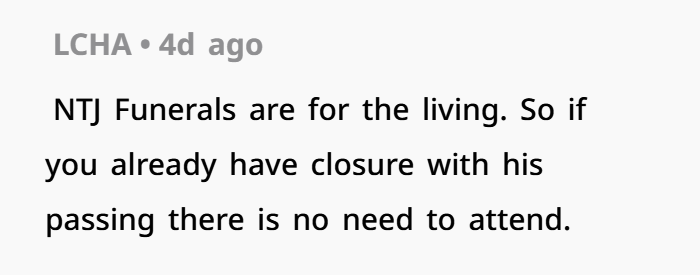
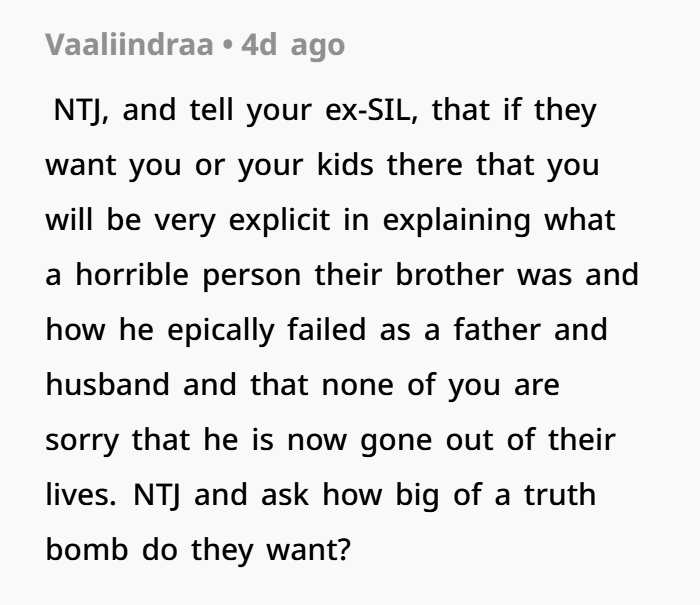

Funerals are public events, but grief is personal.
Every person has their own memories, emotions, and reasons for choosing how they want to mourn.
The most important things during times of loss are kindness, understanding, and respect.
Families can remember someone who has passed away while also accepting that everyone’s grief journey may look different.