I Shared One Dinner With My Landlord… Now They Want Every Meal
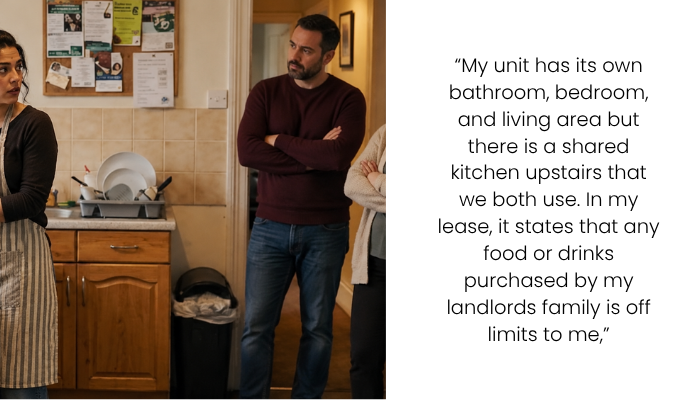
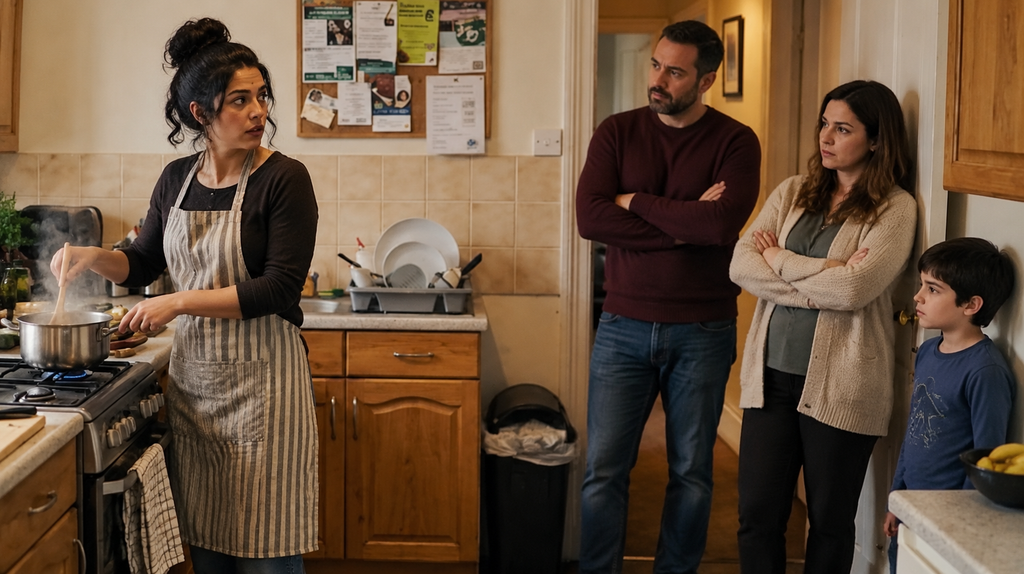
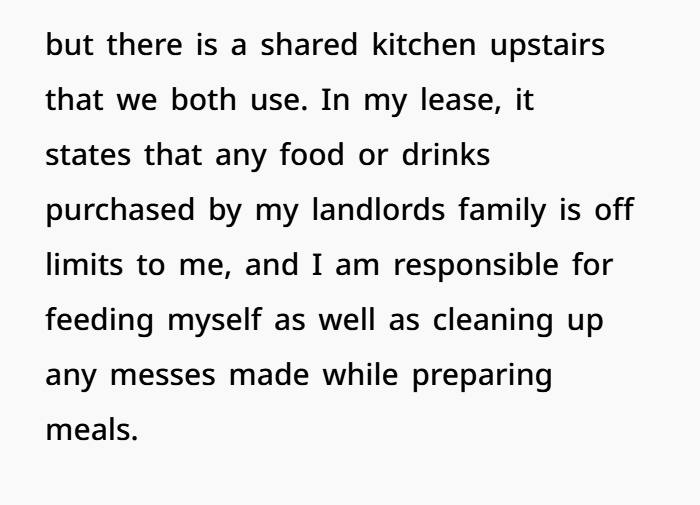
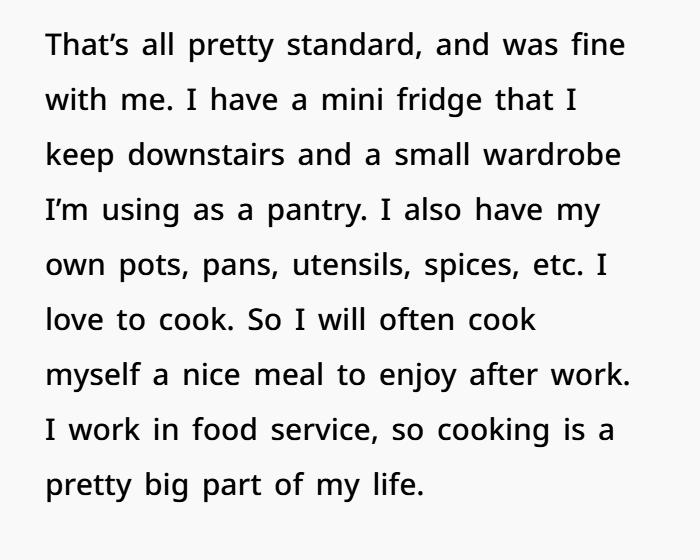
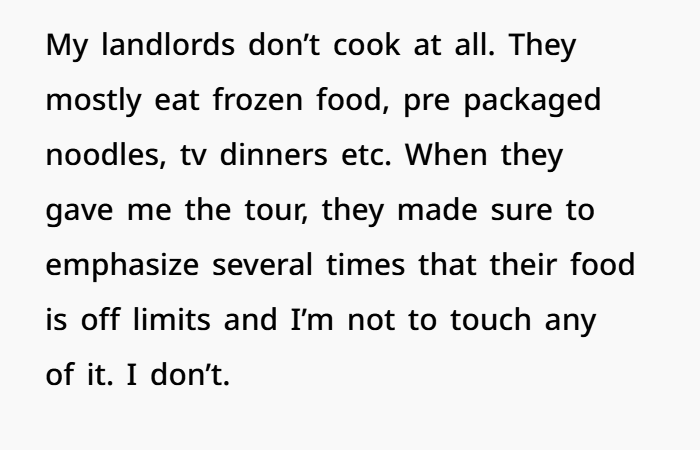
A 31-year-old woman moved into a renovated basement apartment owned by a family of three. The rental agreement seemed simple because she had her own private space but shared the kitchen area with her landlords. The lease clearly explained that everyone was responsible for buying and preparing their own food. Since she enjoys cooking and works in the food industry, she often made homemade meals using her own groceries, kitchen tools, and supplies.
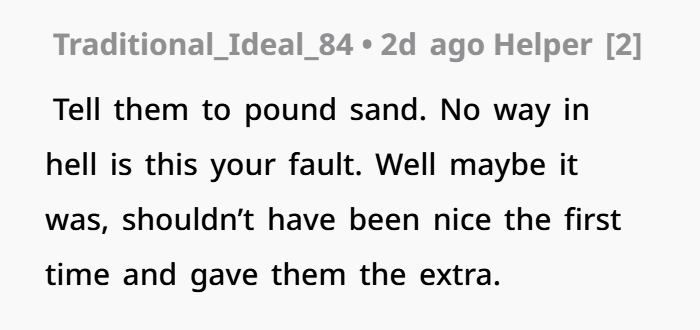
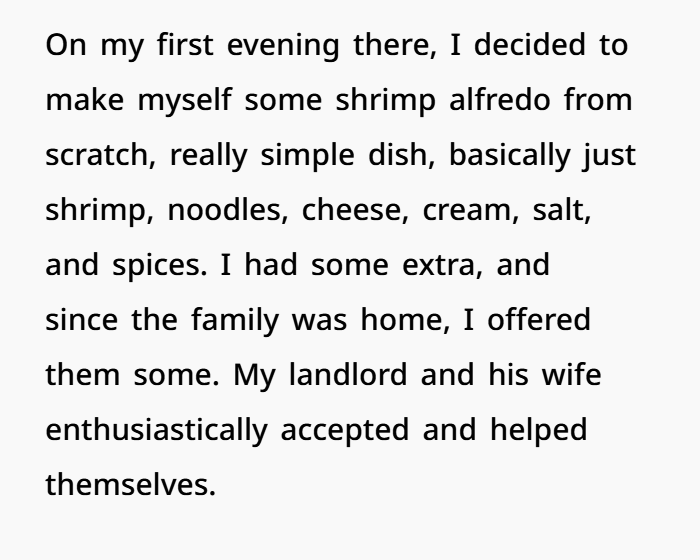
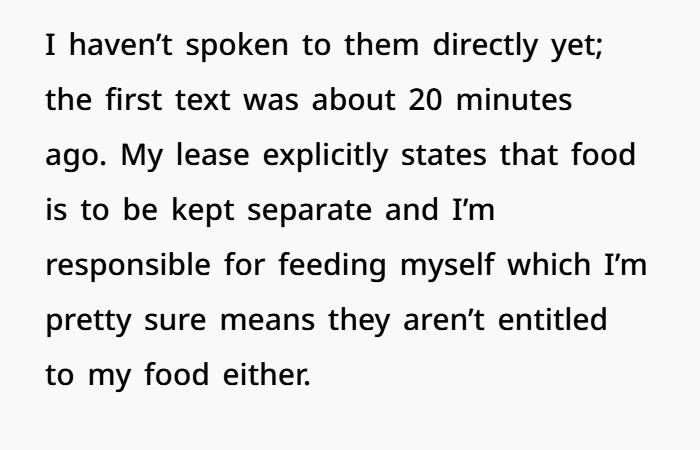
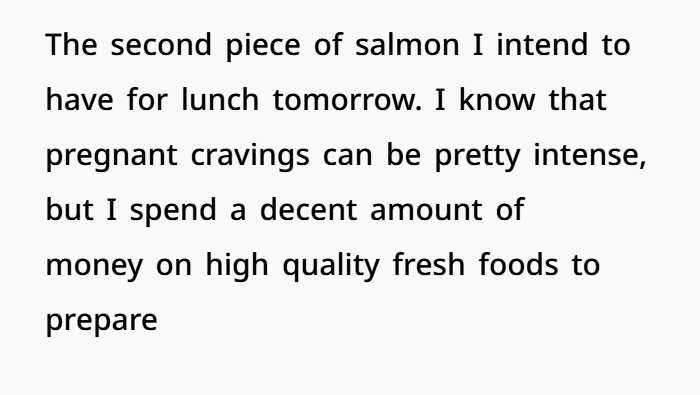
The issue started on her first night when she made shrimp Alfredo and offered some to her landlords. She had extra food and shared it because she enjoys cooking for others. However, she later felt that this kind gesture changed their expectations. A few days after that, she cooked salmon with cilantro lime rice only for herself. She was surprised when her landlord sent an upset message saying she should have shared the meal because his pregnant wife wanted some.
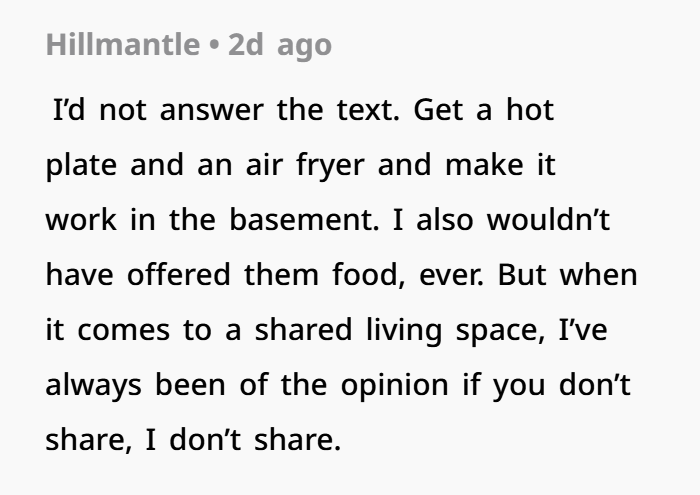
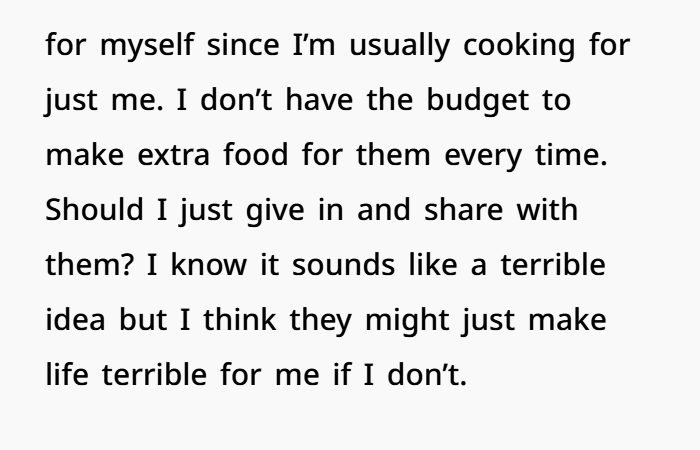
The woman felt that her landlord was being unfair because sharing food was her personal choice, not something she agreed to provide regularly. She explained that the lease did not include shared meals and that her budget only covered her own groceries. She believed that a kind offer should not become an obligation, especially when feeding another household could become expensive.
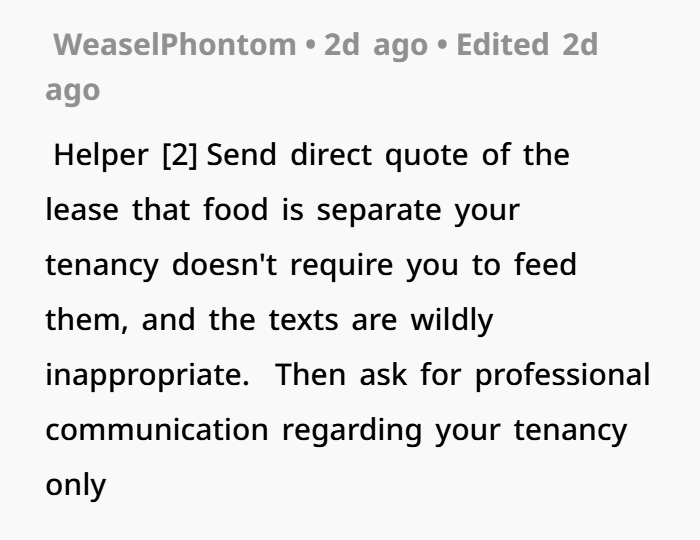
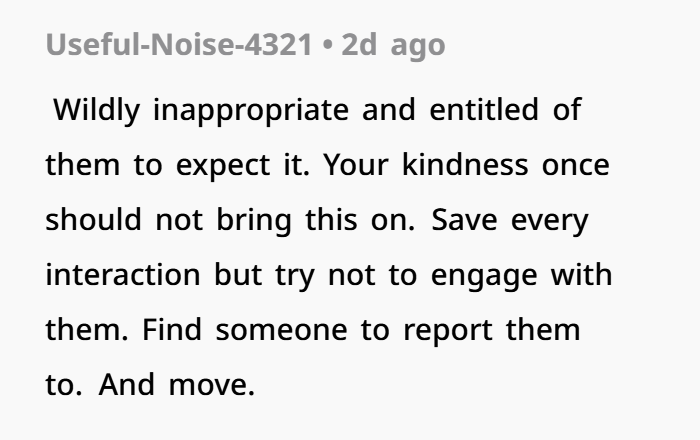
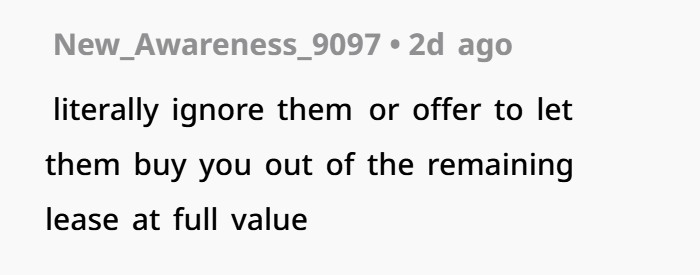
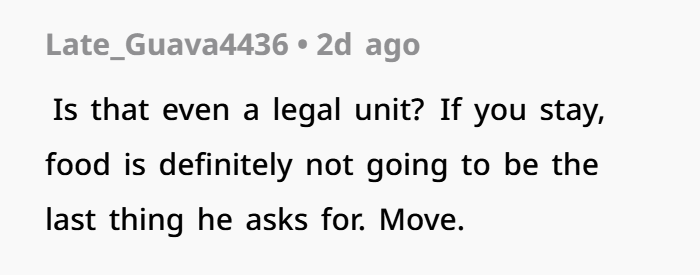
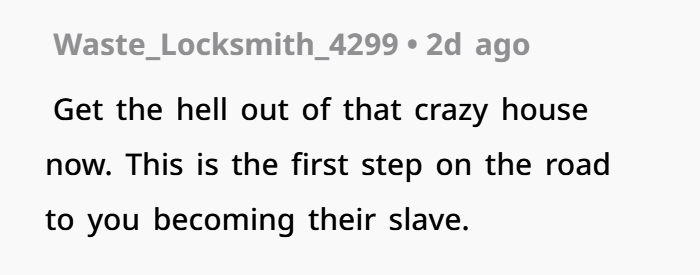
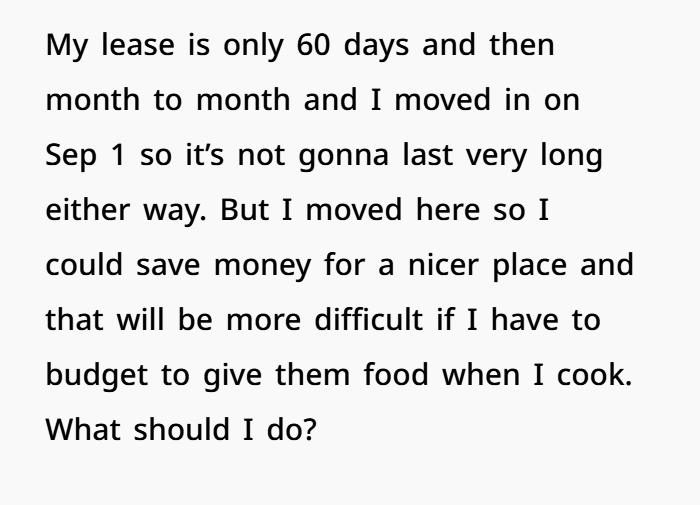
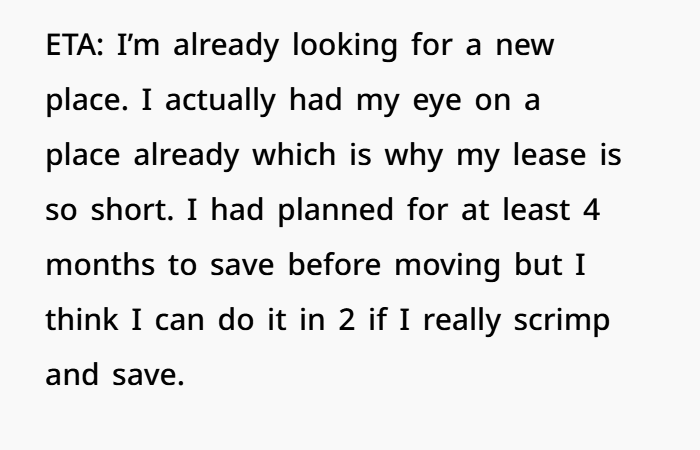
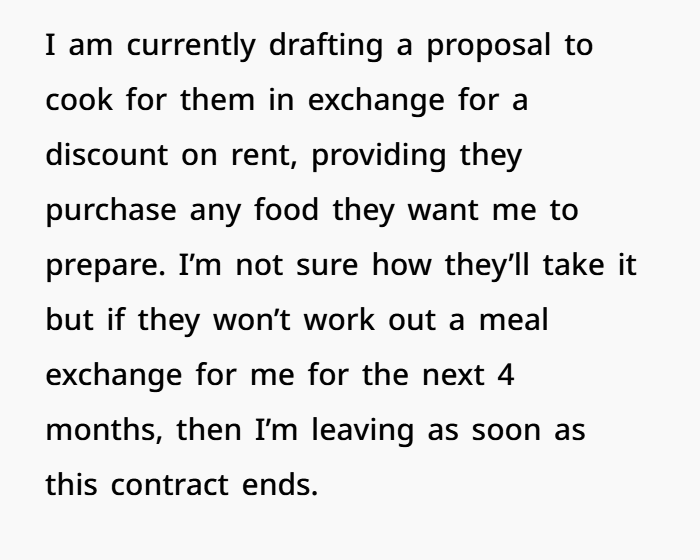
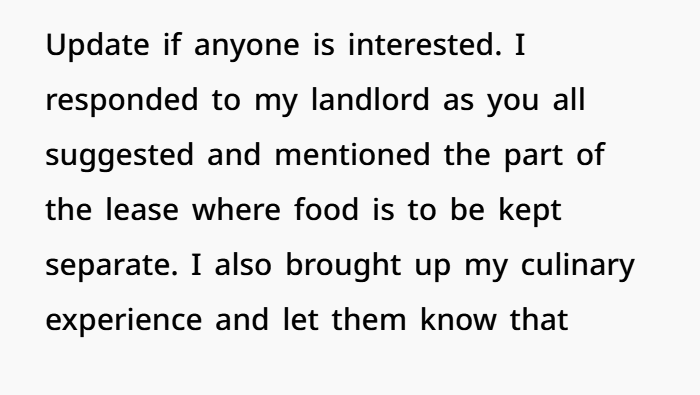
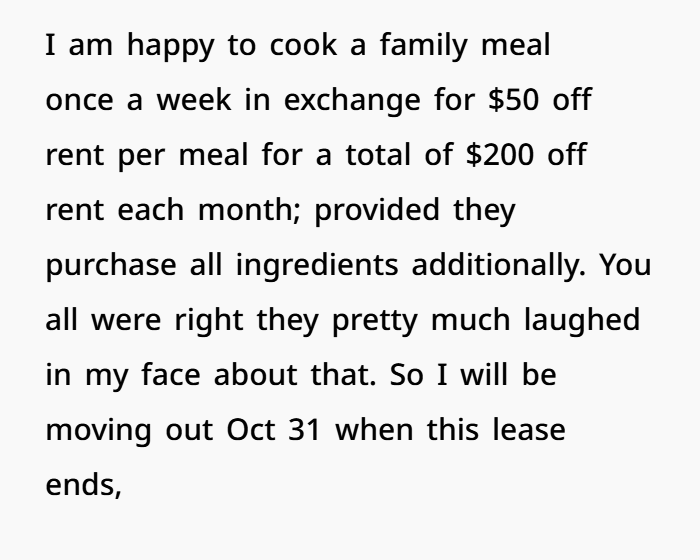
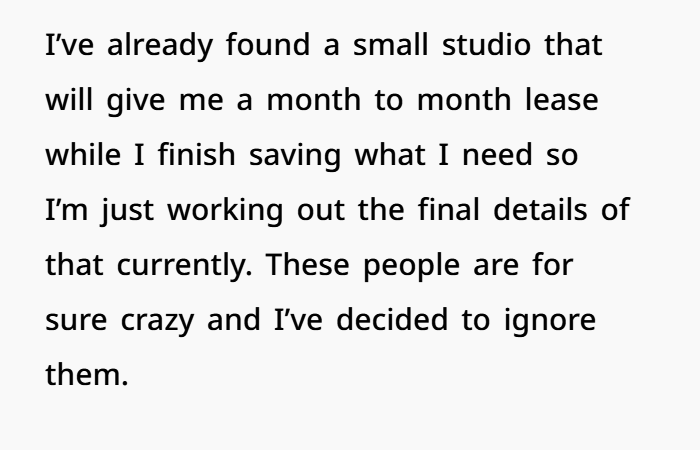
She considered creating a paid cooking arrangement where she would prepare meals in exchange for lower rent, but the landlords did not agree. After realizing they still expected her to share food, she decided moving out was the best choice. The situation shows why clear rental agreements, healthy boundaries, and respectful communication are important between tenants and landlords.
When Hospitality Turns Into an Unfair Expectation
Sharing food with others is a kind and thoughtful thing to do.
Many people cook for friends, family, roommates, or neighbors because it helps create a good relationship. A homemade meal can make people feel welcome.
But sometimes a kind gesture can become a problem when someone starts expecting it instead of appreciating it.
The main issue in this situation is the difference between a gift and an obligation.
A gift is something a person freely chooses to give.
An obligation is something a person feels forced to provide.
Sharing food, time, or personal skills should always be a choice.
Renting a Home Does Not Mean Owing Extra Favors
The landlord’s argument seems to be that because the tenant was allowed to rent the basement unit, she should do more for the household by cooking meals.
However, renting a home is a business agreement.
The tenant pays rent in exchange for housing. The rental agreement explains the responsibilities of both the landlord and the tenant.
Unless extra duties are clearly written in the agreement, a landlord should not expect a tenant to provide unpaid work, such as cooking meals.
A good landlord-tenant relationship depends on respect, communication, and clear boundaries.
Shared Spaces Can Make Boundaries Confusing
Living in the same house can sometimes create misunderstandings.
A shared kitchen is a common example.
When someone cooks in a shared kitchen, other people can see the ingredients, smell the food, and know what is being prepared.
This can sometimes make people feel like they should have access to the food.
But sharing a kitchen does not mean everything inside it belongs to everyone.
A person’s groceries, meals, and cooking supplies are still their personal property.
Using a common area does not remove someone’s right to their own belongings.
Personal Food and Belongings Should Be Respected
The tenant purchased the ingredients, prepared the meal, and planned to eat the food herself.
The meal belonged to her.
Sharing food can be a wonderful way to show kindness, but it should happen because someone wants to share.
It should not happen because another person expects it.
Respecting personal property is important in any living situation, whether it involves landlords, roommates, or family members.
Everyone should feel comfortable knowing that their belongings are respected.
Pregnancy Does Not Create an Automatic Right to Someone Else’s Food
The landlord mentioned that his wife was pregnant.
Many people understand that pregnancy can be a special and emotional time. It is natural to want to support someone who is expecting a baby.
However, pregnancy does not mean someone else must provide their food, time, or work.
The tenant prepared the meal for herself.
Wanting to share a meal is kind.
Expecting someone to give away part of their food is a different situation.
Kindness should come from choice, not pressure.
Cooking Requires Time and Effort
Cooking may be something a person enjoys, but it is still work.
Making a meal often requires:
- Planning
- Grocery shopping
- Preparing ingredients
- Cooking time
- Cleaning afterward
Skills have value.
A person who enjoys cooking, baking, gardening, or another hobby still has the right to decide when they want to use that skill for others.
Enjoying something does not mean someone has to provide it for free.
A Clear Agreement Can Prevent Problems
The tenant tried to create a fair solution.
She offered to prepare regular meals for the family in exchange for a lower rent amount, while asking the landlords to pay for the ingredients.
This would have created a clear agreement.
Everyone would understand what they were giving and receiving.
Clear agreements are helpful because they prevent misunderstandings.
A friendly favor and a paid arrangement are two different things.
How Small Favors Can Become Bigger Expectations
Many conflicts in shared housing begin with something small.
Someone does something nice once, and others begin expecting it again.
The first shared meal may have been a simple act of kindness.
But when that kindness becomes something people feel entitled to receive, the relationship can become uncomfortable.
This is why setting healthy boundaries is important.
Good boundaries help people maintain positive relationships while also protecting their own time and resources.
Respect Is Important in Shared Housing
The decision to move out was likely not only about one meal.
The bigger issue was whether the tenant felt respected in her own home.
A healthy living arrangement requires:
- Respect for personal belongings
- Clear communication
- Fair expectations
- Understanding of boundaries
People can be helpful and friendly without giving up their independence.
Being generous is a wonderful quality.
But generosity should always be voluntary.
A respectful landlord-tenant relationship is built on fairness, trust, and understanding. Everyone deserves to feel comfortable in their home and respected for their time, money, and personal choices.
See The Comments Below