

Man Refuses to Donate Kidney After Learning Family Hid Brother-in-Law’s Alcoholism
Organ donation is one of the kindest things a person can do. But it is also a serious medical decision that cannot be undone.
That is why hospitals have a careful organ donation and transplant screening process. Before someone becomes a living kidney donor, the medical team checks their health, explains the possible risks, and makes sure they understand the decision. The donor must also agree freely, without pressure from anyone.
One man faced this decision when his brother-in-law needed a kidney transplant. He quickly said yes and was ready to help.
But during the donor screening process, a transplant coordinator asked him an unexpected question.
It seemed like a simple question at first. But later that night, he talked about it with his wife. That conversation made him look at the kidney donation decision in a completely different way.
Suddenly, something that had felt simple became much more complicated.


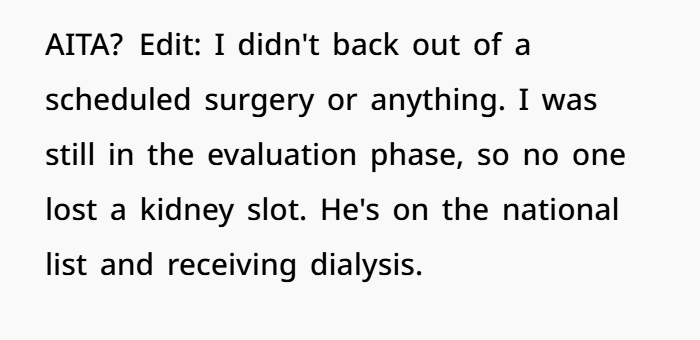
His Family Turned Against Him After He Refused to Donate a Kidney
A man agreed to donate a kidney to his brother-in-law without much hesitation. But after learning that his family had hidden important information from him, he changed his mind.
His decision left the family furious. They accused him of turning his back on someone who badly needed help.
But he refused to change his decision.
He Said Yes Right Away
It started when his brother-in-law collapsed and was rushed to the hospital with end-stage kidney failure.
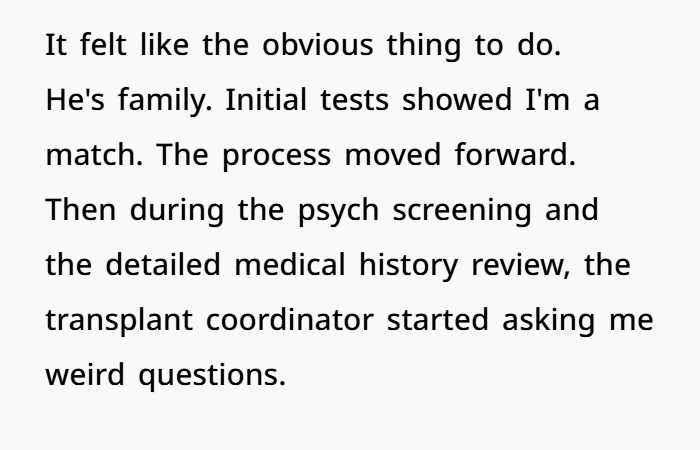
The man was O+ and in fairly good health. His family quickly looked to him as a possible living kidney donor.
He agreed before anyone had to ask twice.
He went through medical testing and learned that he was a match. The kidney transplant process moved forward, and he believed he understood what he was agreeing to.
Then came the psychological screening.
One Question Changed Everything
During the screening, a transplant coordinator asked him something unexpected.
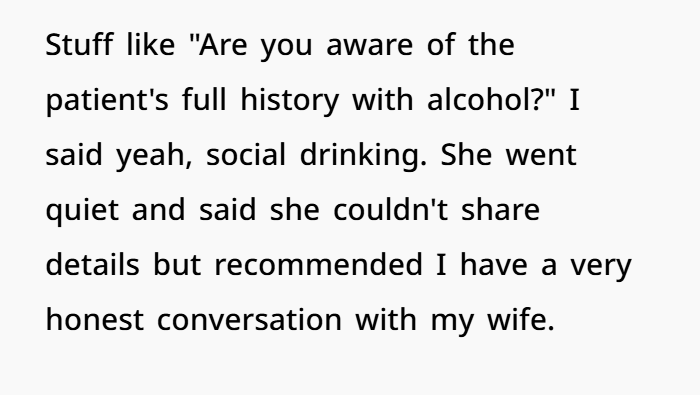
Did he know the full history of his brother-in-law’s alcohol use?
He thought he did. As far as he knew, his brother-in-law was only a social drinker who had a couple of beers now and then.
The coordinator could not share private medical details. Instead, she suggested that he have a very honest conversation with his wife.
That was when things started to feel wrong.
His Wife Finally Told Him the Truth
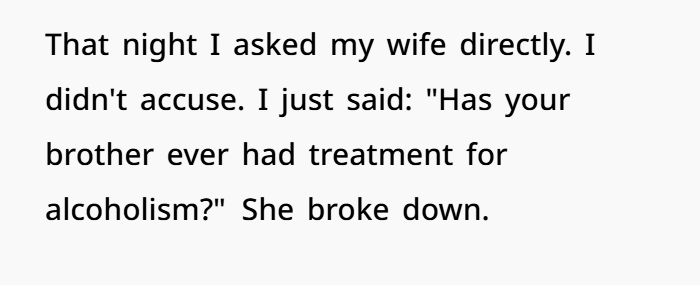
That night, he asked his wife directly if her brother had ever received treatment for alcohol dependence.
She broke down and told him the full story.
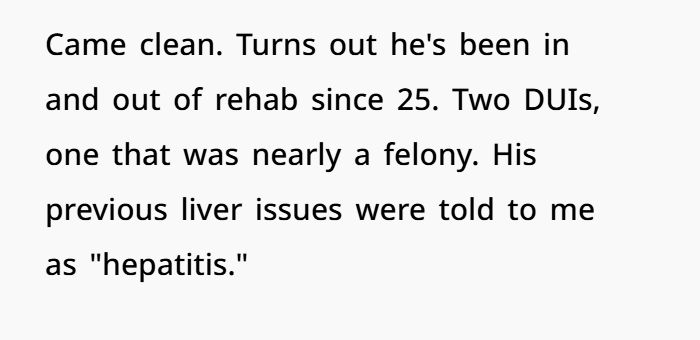
According to the narrator, her brother had been in and out of rehab since age 25. He had also received two DUIs, including one that nearly became a felony case.
There had also been earlier liver problems. Those issues had previously been explained to him as hepatitis.
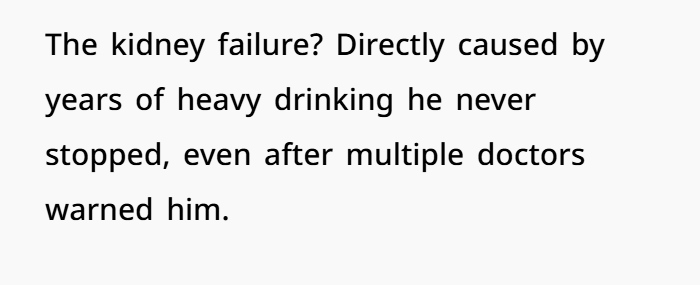
He then learned that his brother-in-law’s kidney failure had been linked to years of heavy drinking, which had continued despite medical warnings.
But that was not the only painful discovery.
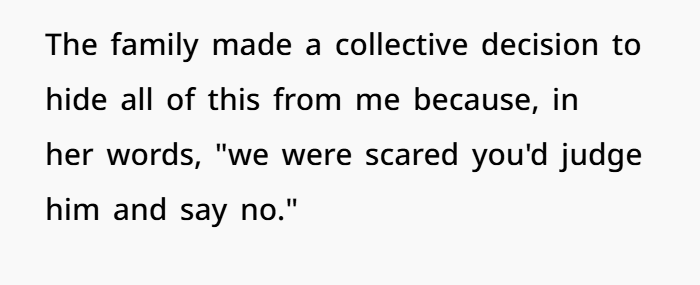
His family had apparently agreed to keep this history from him because they worried he might refuse to donate his kidney if he knew everything.
He Changed His Mind About Kidney Donation
The man spent two weeks thinking about what he had learned.
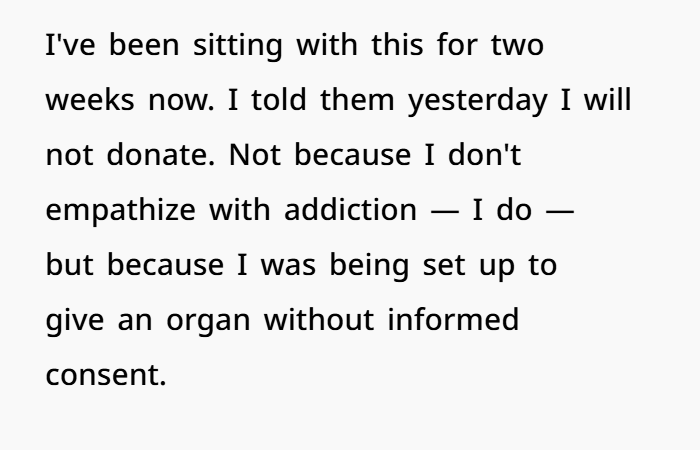
Then he told the family he would no longer be a kidney donor.
His decision was not about having no sympathy for alcohol dependence. What upset him was the fact that he had agreed to a major medical procedure without knowing information the family believed could affect his choice.
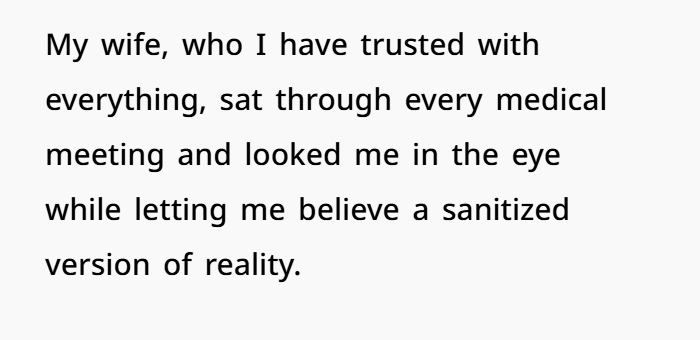
His wife had attended the medical appointments with him. She had watched him move through the living donor process while keeping the truth from him.
That damaged his trust deeply.
He told her that he might have agreed to the kidney donation even if he had known the full story from day one.
But he never got that chance.
In his view, the family had made the decision for him by choosing what he was allowed to know.
Now he is standing by his choice. Still, when he looks at his three-year-old daughter, he wonders if he made the right decision or if he is being too harsh.
His Brother-in-Law May Still Have Other Options
Not having this living donor does not necessarily mean there are no other paths to a kidney transplant.
More than 90,000 people are on the kidney transplant waiting list in the United States. Waiting for a kidney from a deceased donor can take several years, with timing affected by factors such as blood type, location, and medical circumstances.
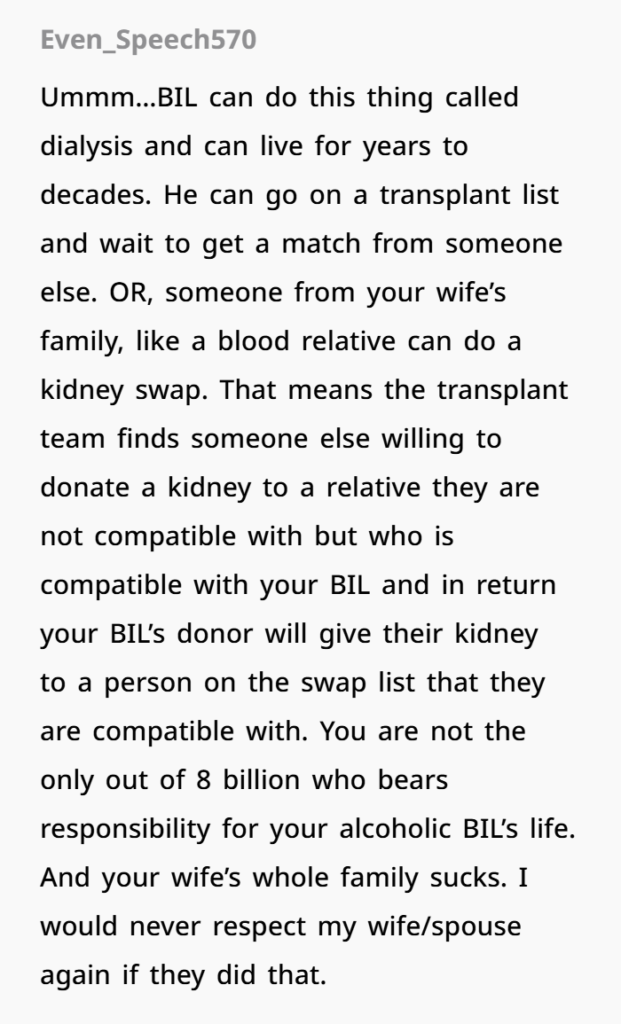
Dialysis may also help some patients manage kidney failure while they wait for a transplant, depending on their medical situation.
Another possible path discussed was a paired kidney exchange, also known as a kidney swap.
This can happen when someone wants to donate a kidney to a loved one but is not medically compatible with them. That donor may be matched with another patient, while another donor provides a compatible kidney to the original patient.
In some programs, several donor and recipient pairs can be connected through this system.
If another relative is willing and medically able to become a living kidney donor, the transplant team could explain whether paired donation or another option is available.
Living Kidney Donation Must Be a Free Choice
There is another important part of the organ donation process.
A potential donor should be able to make the decision freely and understand the medical risks and other information needed for informed consent. A transplant team can also speak privately with a potential donor about concerns, including pressure from family members.
That privacy matters because donating a kidney is a major personal and medical decision.
For this man, the biggest issue became trust.
He believes his family hid information because they feared the truth could change his answer. Even though he might have donated anyway, he feels the decision should always have been his to make.
Now his family believes he should reconsider, while he believes the broken trust changed everything.
Do you think he was right to stand his ground after learning the truth, or should he reconsider his decision? Share your thoughts in the comments.
See the comments to know what people said
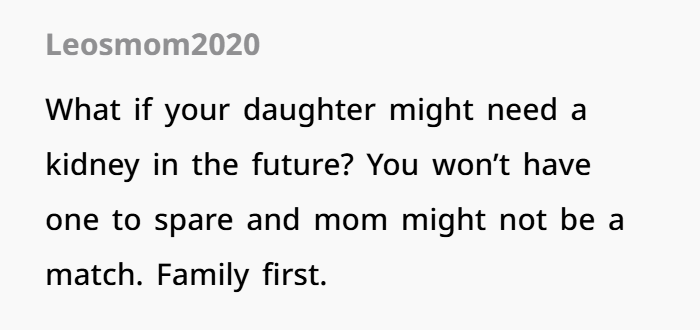
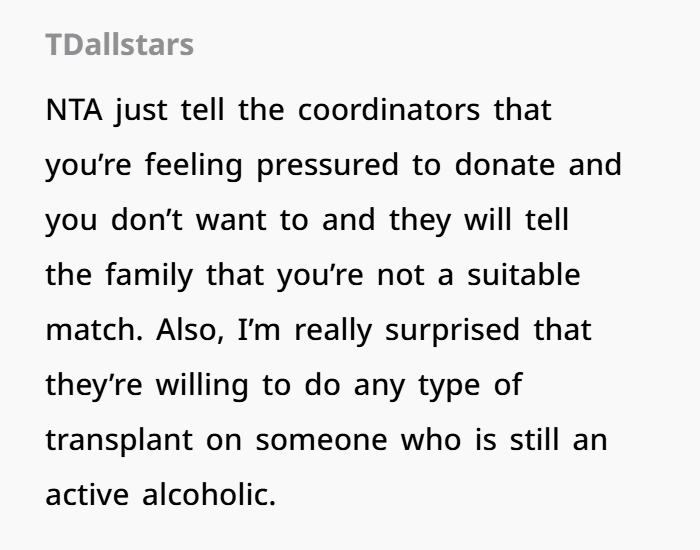
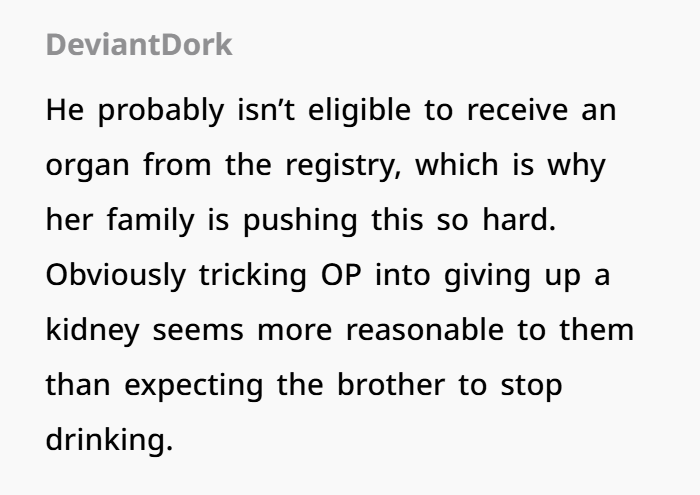
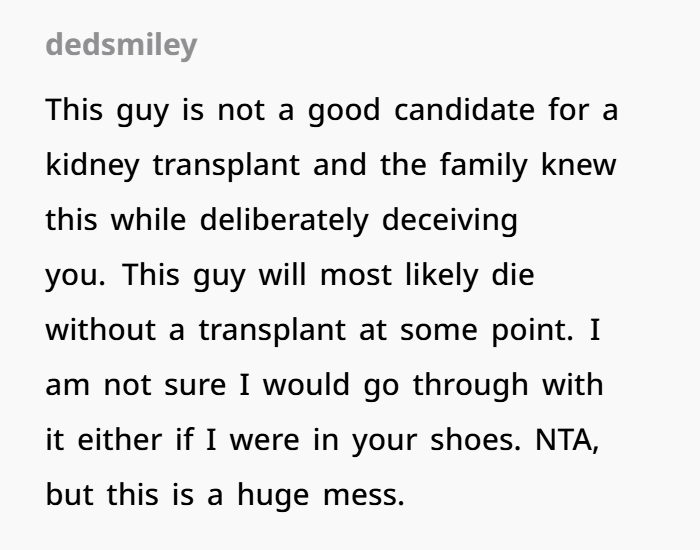
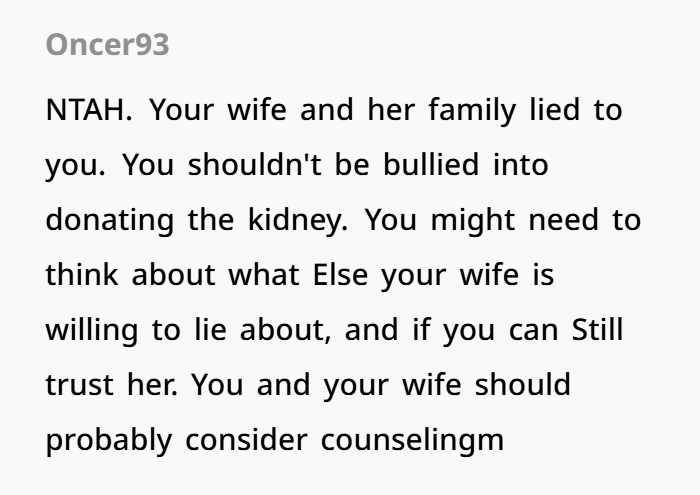
In the end, this story is about more than kidney donation. It is also about trust, honesty, and the right to make your own medical decisions.
The man was willing to help his brother-in-law, but learning that his family had hidden important information changed everything for him. He may still care deeply about his brother-in-law, but donating a kidney is a serious and personal choice.
His decision may be painful for the family, but it shows why informed consent matters so much in living organ donation. No matter how difficult the situation becomes, a donor should be able to make that choice freely and with the information needed to understand the decision.