AITA for Accidentally Convincing My Coworker’s Husband She Was Having an Affair?
I am a 29-year-old man who enjoys making music as a hobby. Recently, I was working on a tropical-style love song called “The Spark.” When I record songs, my singing voice can sometimes sound softer or more feminine than people expect. One day at work, I was humming part of the chorus, and my coworker Sarah, who is 34, became curious and asked if she could hear the full recording. Thinking it was no big deal, I sent her the demo version of the song.
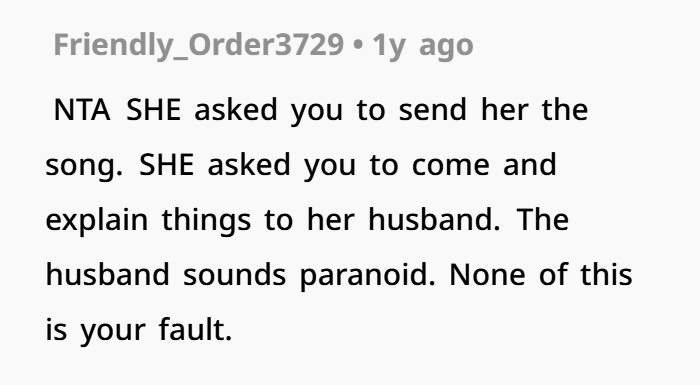
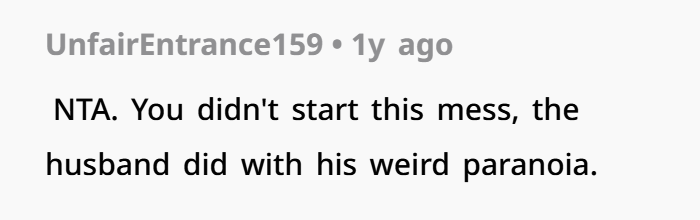
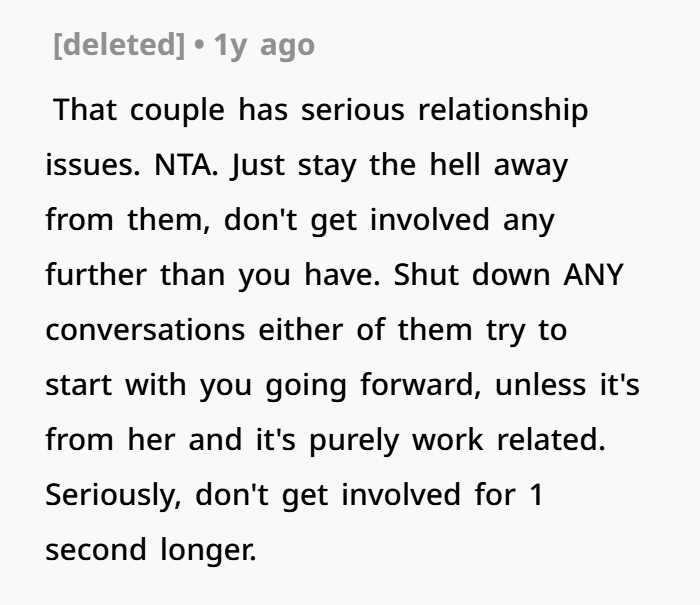
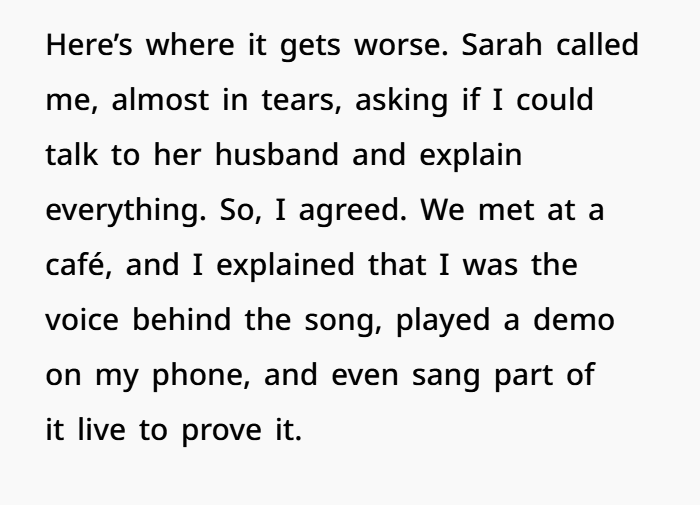
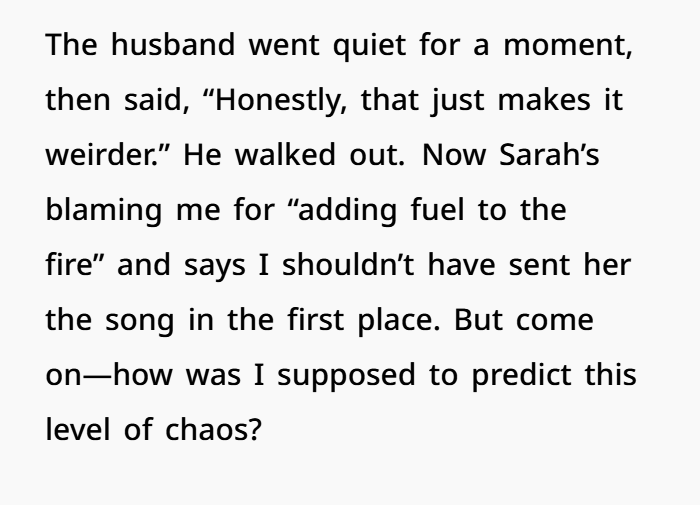
Later, Sarah played the song at home, and her husband overheard the lyrics. Because the chorus sounded personal and romantic, he assumed another woman was singing and became suspicious. He did not believe that it was actually my voice on the recording and started worrying that there might be something inappropriate going on. Wanting to clear up the misunderstanding, Sarah asked me to speak with him. I met him at a local café and explained that I was the singer. I even demonstrated my singing voice to show that the recording was mine. Unfortunately, instead of resolving the situation, he said the explanation made the whole thing feel even stranger and left the conversation upset. Now Sarah feels frustrated and believes my song played a role in creating problems in her marriage, even though I never intended for the music recording to cause any conflict. The situation has unexpectedly become a lesson about workplace friendships, communication, relationship trust, and how misunderstandings can sometimes grow from completely innocent situations.


This situation is a great example of how a small and innocent moment can turn into a much bigger misunderstanding. You shared a music recording with a coworker because she was interested in your hobby. There was no flirting, no hidden intention, and no attempt to create problems. You simply shared a song you had been working on. However, music can be very emotional, and people often connect deeply with romantic lyrics. Because your voice sounded different than expected and the song had a love theme, it was easy for someone hearing it without context to make incorrect assumptions.
A big part of the issue comes down to how people react when they feel worried about their relationships. Sarah’s husband heard a romantic song and immediately believed it might have a personal meaning. Instead of focusing on the facts, he focused on how the song made him feel. Relationship experts often explain that when people feel insecure or concerned, they may interpret innocent situations as something more serious. This does not necessarily mean anyone did anything wrong. It simply shows how emotions can sometimes affect judgment.
The misunderstanding became more complicated because communication started breaking down. Sarah tried to explain that you were the singer, but her husband struggled to accept that explanation. Once someone becomes convinced that a problem exists, it can be difficult for them to see other possibilities. Even clear evidence may not immediately change their mind. This is why many relationship counselors emphasize the importance of trust, communication, and avoiding assumptions before reaching conclusions.
It is also important to look at your intentions. You did not create the song for Sarah, and you did not send it with romantic motives. You were sharing a creative project with a coworker who asked to hear it. In workplace friendships, people often discuss hobbies, creative interests, and personal projects. Sharing music, artwork, or other creative work is very common. Based on the information provided, your actions appear completely reasonable and professional.
The café meeting highlights just how unusual the situation became. Most people never expect to sit down with a coworker’s spouse to prove they are the person singing on a song recording. Even though the situation was awkward, you agreed to help because you wanted to clear up the misunderstanding. That shows patience and a willingness to solve the problem. Unfortunately, not every misunderstanding is resolved immediately, especially when strong emotions are involved.
The story also shows how workplace relationships can sometimes be misunderstood by people outside the office. Friendships between coworkers are normal, especially when people spend many hours working together. However, outsiders may not always see those relationships the same way. A simple conversation, text message, or shared project can sometimes be viewed differently when someone lacks the full context.
Technology may have also played a role. Digital communication can easily create confusion because people only see part of the story. A song shared through a phone or computer does not include all the background information that would normally explain the situation. Without context, listeners often fill in the gaps with their own assumptions. This is one reason why misunderstandings can spread quickly through text messages, social media, emails, and digital content.
One positive thing is that you tried to help resolve the conflict instead of avoiding it. Many people would have stepped away and refused to get involved. Instead, you made an effort to explain the truth and provide reassurance. Conflict resolution experts often say that clear communication and honesty are the best ways to handle misunderstandings, even if the results are not immediate.
The situation also highlights how important expectations can be. Sarah likely believed that once her husband learned the truth, the issue would disappear. Unfortunately, people do not always react logically when emotions are involved. Sometimes concerns about trust, relationships, and communication take time to work through, even after the facts are clear.
Another interesting part of this story is the power of music itself. Songs are designed to create emotion and connection. Romantic lyrics, meaningful melodies, and personal performances can feel very real to listeners. What was simply a creative music project for you may have felt much more personal to someone hearing it without understanding the background.
Looking at the situation as a whole, it is difficult to place responsibility on you. You shared a music demo, answered questions honestly, and even went out of your way to help clear up confusion. The larger conflict appears to have come from misunderstandings, emotional reactions, and assumptions rather than anything you intentionally did.
In the end, this story serves as a reminder that even innocent actions can sometimes lead to unexpected complications. Workplace communication, relationship trust, conflict resolution, and emotional intelligence all play a role in how situations like this unfold. While the experience may have been uncomfortable, it also shows the importance of honesty, patience, and clear communication when misunderstandings arise. Sometimes a simple song is just a song, even if other people accidentally turn it into something much bigger.
See The Comments Below