Wife Wants Me to Quit After I Rejected a Coworker’s Affair — But I Refused
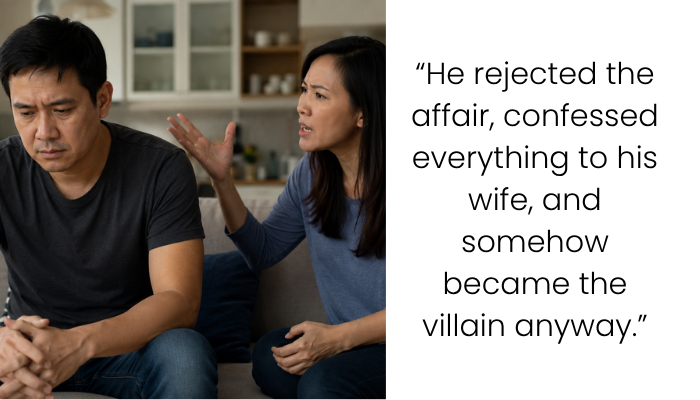
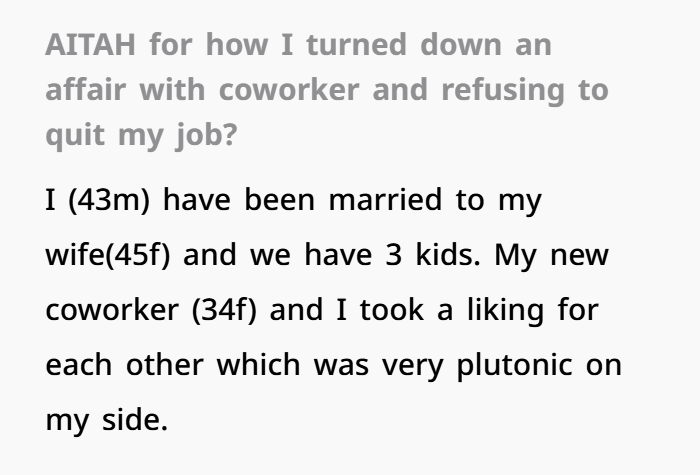
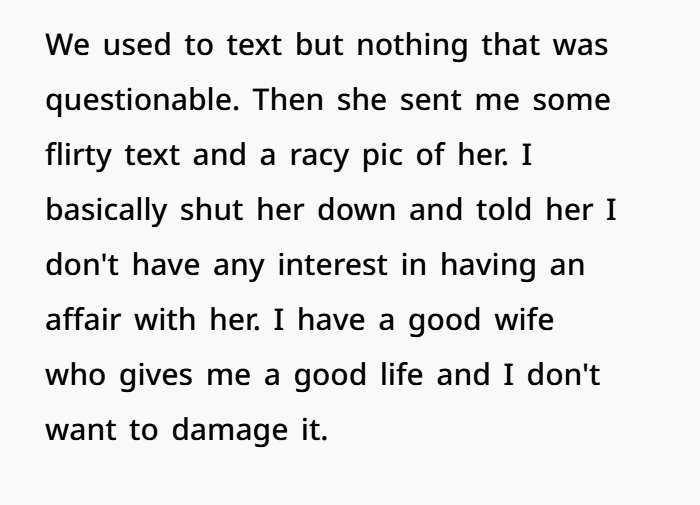
Sometimes the biggest marriage problems are not about something that actually happened. They are about something that almost happened. A 43-year-old husband and father of three found himself in this situation after becoming friends with a new coworker. According to him, the friendship was completely professional and harmless. They exchanged messages regularly, but things changed when the coworker suddenly sent flirty texts and a personal photo. Instead of encouraging the behavior, he immediately stopped it. He made it clear that he was committed to his marriage and family life and had no interest in risking his relationship, future, or financial stability for a workplace situation.
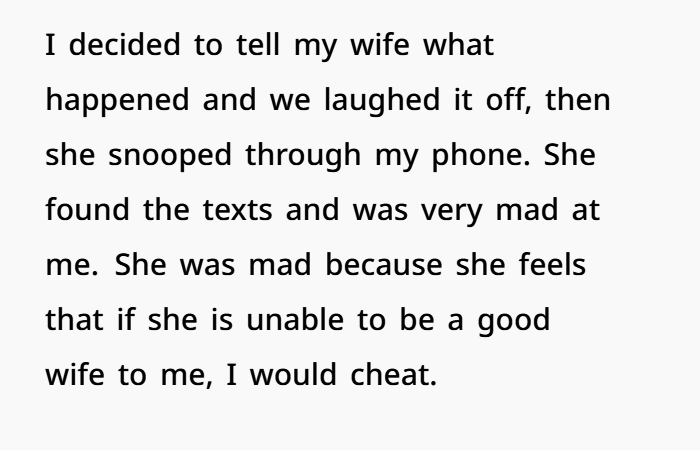
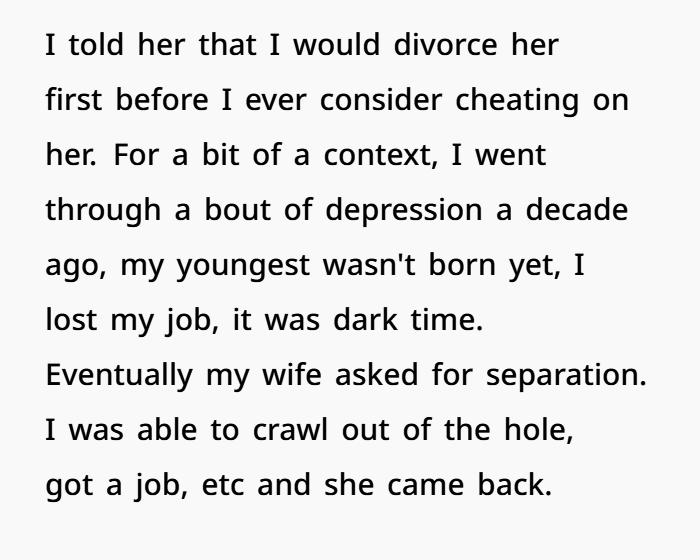
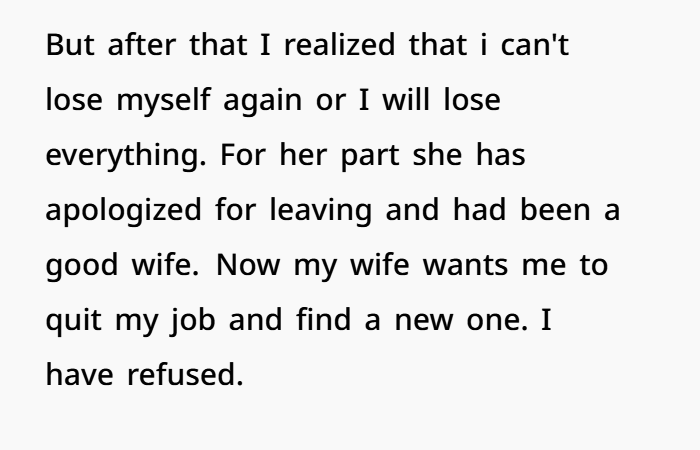
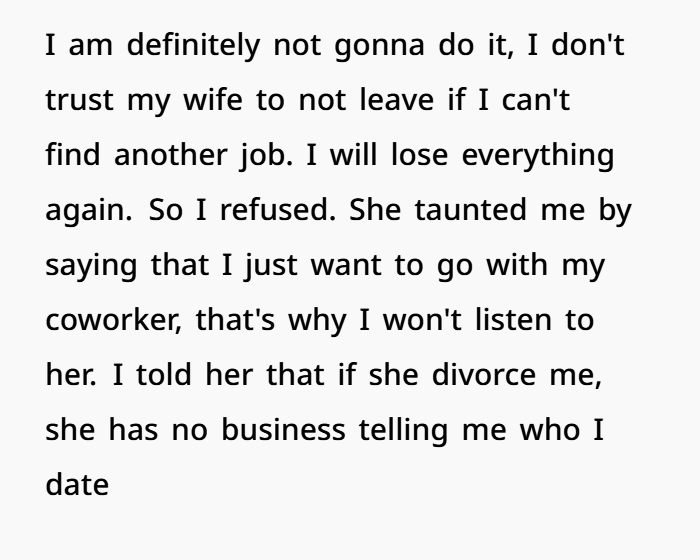
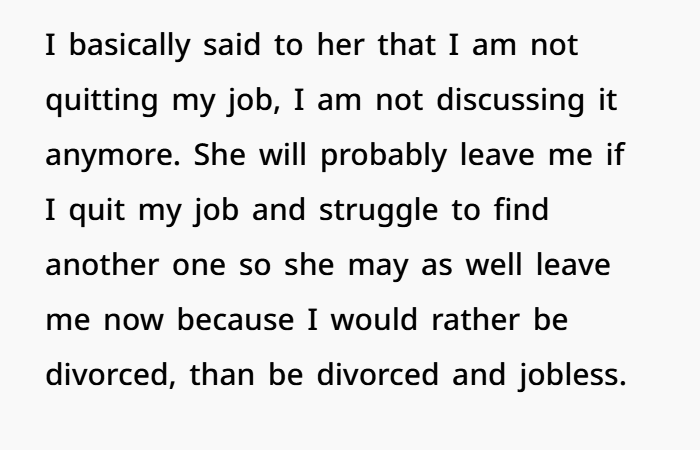
Because he believed honesty is important in a healthy relationship, he told his wife everything. He expected the conversation to build trust, but it quickly turned into a serious disagreement. His wife checked his phone, became upset, and eventually asked him to quit his job. For him, however, the issue is connected to much deeper concerns. Years earlier, he struggled with depression and unemployment, and during that difficult time his wife asked for a separation. Even though they later repaired their marriage and moved forward together, the experience left a lasting impact. Today, he does not want to leave a stable job because he values career security, family finances, and long-term financial planning. As a result, the couple is now facing a difficult situation where trust issues, marriage challenges, mental health, emotional healing, and financial security are all coming together at the same time.

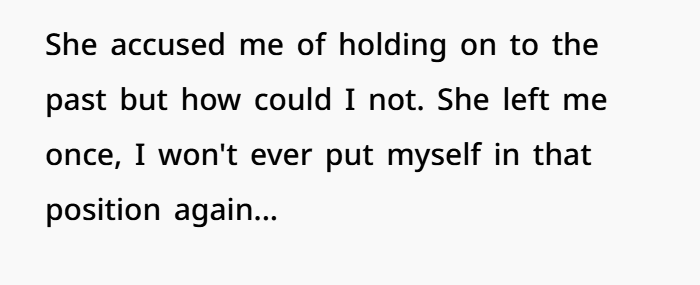
This story is no longer really about a coworker. The coworker simply brought attention to problems that may have been sitting in the marriage for years.
At first, the situation seems simple. A married man received attention from another woman at work. He immediately rejected it and told his wife about it. Many people would think that should have solved the problem.
But it didn’t.
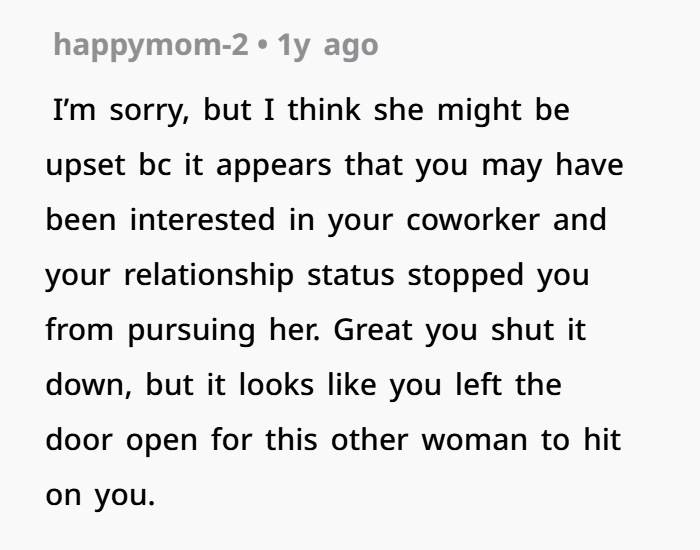
The reason this situation became such a major relationship issue is because the husband and wife see it in very different ways.
From the husband’s point of view, he did the right thing. He stopped the inappropriate behavior right away. He did not hide the messages, and he chose to be honest with his wife. His actions showed that he wanted to protect his marriage and maintain trust in the relationship.
From the wife’s point of view, however, the situation may feel different.
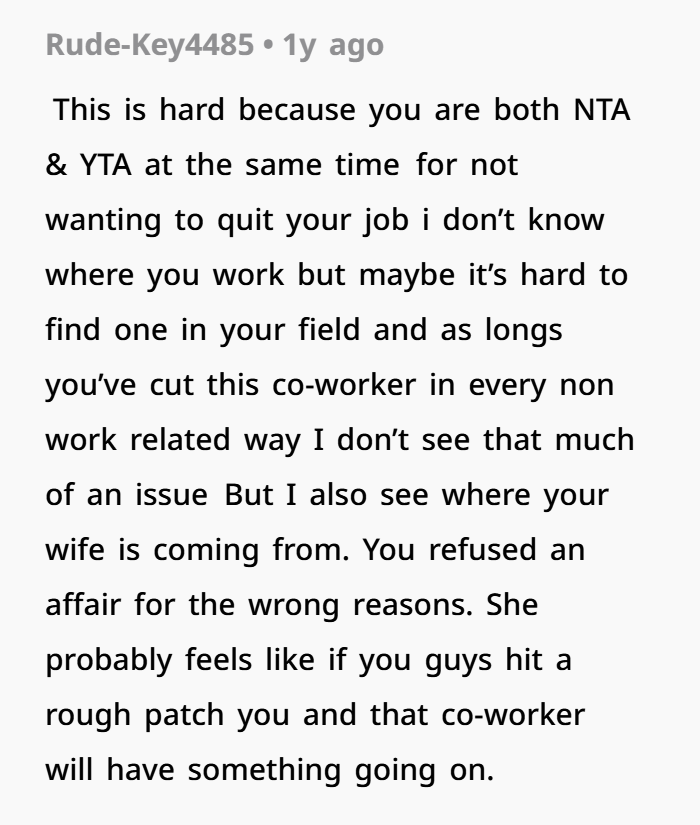
She may not be focused on what happened. Instead, she may be worried about what could have happened. The fact that another woman felt comfortable sending personal messages may have created concerns about workplace boundaries and emotional connection.
Even though her husband rejected the attention, she may still feel hurt, worried, or insecure.
This is often how trust issues develop in relationships. Sometimes people react more to fear and uncertainty than to the actual facts of a situation.
The couple’s history also plays a major role in the conflict.
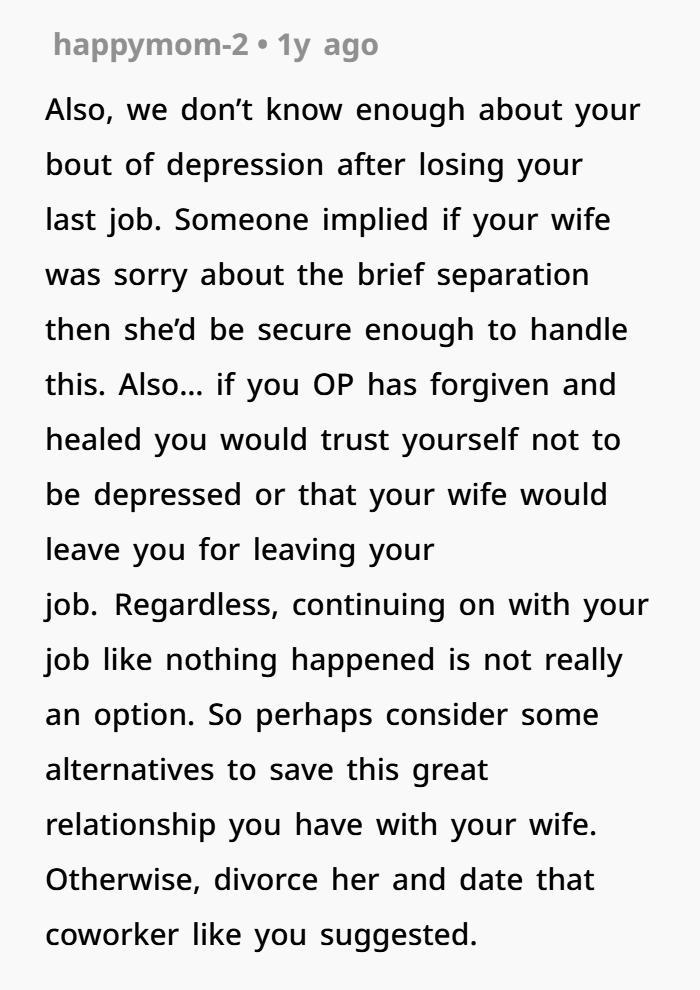
Several years ago, the husband went through a difficult period that included depression and unemployment. Challenges involving mental health and financial stress can place significant pressure on any marriage. During times of job loss and financial uncertainty, many couples experience increased anxiety, communication problems, and relationship struggles.
During that difficult chapter, the wife asked for a separation.
Although they eventually worked through their problems and rebuilt their marriage, experiences like that can leave lasting emotional scars.
The wife may believe that period is behind them and that they successfully moved forward together.
The husband may see things differently.
For him, losing his job was connected to losing stability, confidence, and security in his personal life. Because of that experience, career security and financial stability may now feel extremely important to him.
That is why his wife’s request to leave his current job feels so serious.
She may see a workplace concern.
He may see the possibility of returning to one of the most difficult periods of his life.
Both feelings are real, even though they come from different experiences.
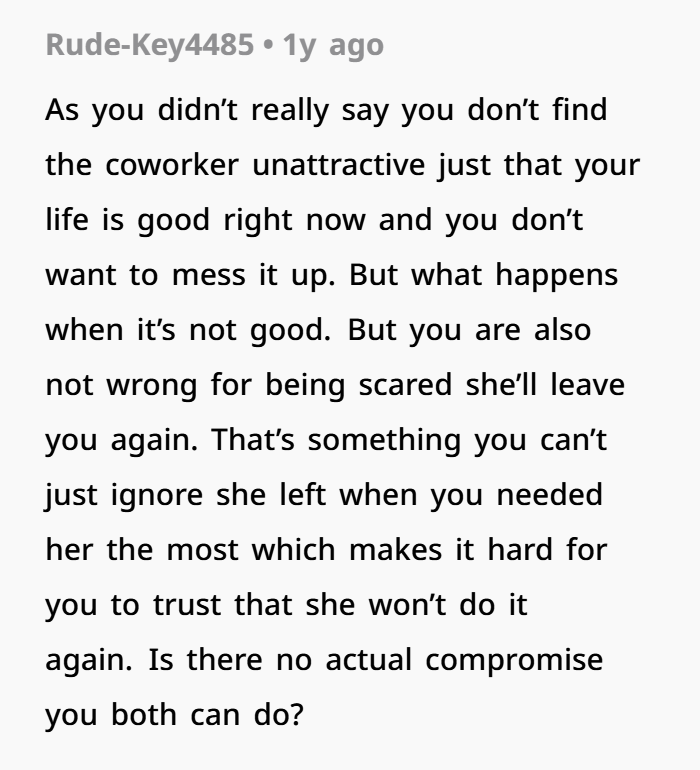
One thing that stands out is that both partners seem to be struggling with trust right now.
The wife may worry that continued contact with the coworker could create future problems.
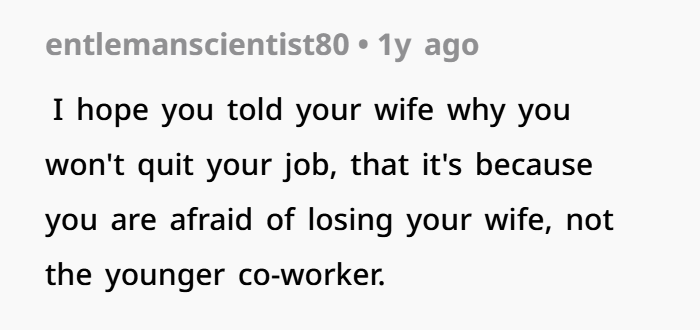
The husband may worry that losing his job could once again affect the stability of his marriage.
When trust becomes fragile, people often react to their fears instead of focusing only on the current situation.
That appears to be happening here.
The wife’s request for him to quit may come from a desire to protect the relationship. In some situations, couples agree to create stronger workplace boundaries after uncomfortable situations arise.
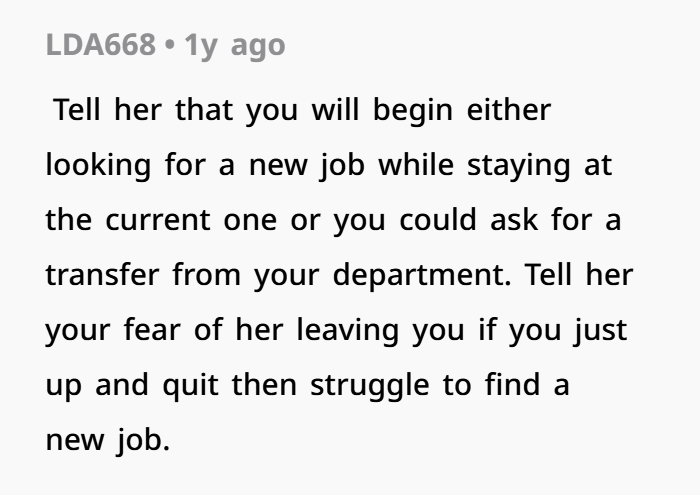
At the same time, the husband’s concerns about employment are understandable. A stable career provides income, benefits, and support for family finances. Finding a new job can take time, especially for someone supporting a family and planning for long-term financial goals.
His reaction suggests that past experiences are still affecting how he views the situation today.
This conflict may not really be about a coworker at all.
Instead, it may be about unresolved feelings from the past, trust in the relationship, financial security, and emotional healing.
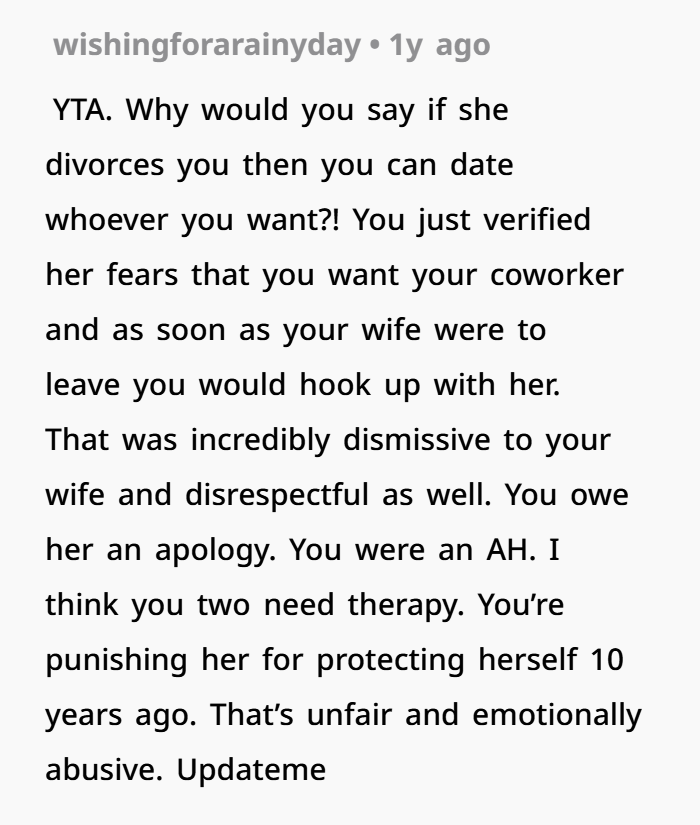
The most helpful solution is likely not an ultimatum or a rushed career decision. It may require open communication, marriage counseling, and honest discussions about the fears both partners are carrying.
The key questions are simple but important.
Can the wife trust that her husband was honest and committed to the marriage?
Can the husband trust that his relationship will remain strong during future challenges and periods of uncertainty?
Until those concerns are fully addressed, similar disagreements may continue to appear.
The coworker may no longer be part of the story in the future, but the deeper issues will remain if they are not discussed.
That is why this situation feels much bigger than a workplace misunderstanding. It is really about trust in relationships, emotional recovery, financial stability, marriage challenges, mental health, and the ongoing work required to build a strong and lasting partnership.
The Comments Are In