
Teenager Embarrasses Stepmom by Revealing Dad’s Alleged Affair to a Neighbor — Was She Wrong?
A 16-year-old girl found herself at the center of a painful family argument after telling a neighbor how her father and stepmother’s relationship allegedly began.
The teenager said her parents divorced when she was seven, while her mother was receiving chemotherapy for stage 3 breast cancer. According to her account, her father had an affair during that difficult period with one of her mother’s coworkers.
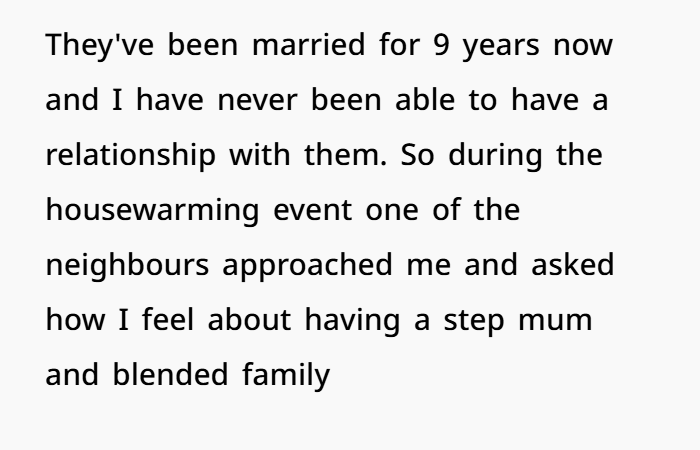
Years later, the teenager still does not see her father, stepmother, and their children as part of the same family unit. Those feelings came pouring out during her father’s housewarming party. When a neighbor asked how she felt about having a stepmother and living in a blended family, the girl gave a direct answer. She said she did not consider them family because of the alleged affair.
Her stepmother was reportedly humiliated. Her father became furious and told his daughter that she was “so hard to love” and bitter. Now the family is discussing whether the teenager should continue spending weekends at her father’s home under their existing child custody arrangement.
At first glance, this sounds like an argument about something said at a party.
It really isn’t.
The housewarming argument appears to be the latest chapter in a family conflict that started nearly a decade earlier.
According to the teenager, her mother was battling stage 3 breast cancer when her father became involved with another woman. What made the situation even more painful was that the woman was not a stranger.
She was reportedly one of the mother’s coworkers.
The teenager remembered her mother working at a small business where the staff felt almost like family. Coworkers would visit the home and bring goodie bags for the children. Her future stepmother was allegedly one of those people.
For a seven-year-old child, that kind of family breakdown can be difficult to understand.
Research also helps explain why those memories may still carry so much emotion years later. The American Psychological Association’s information on divorce and child custody says parental divorce can affect the emotional and social adjustment of children and teenagers.
The father and mother reportedly tried to repair their marriage after the alleged affair. According to the teenager, however, her father continued seeing the woman who later became his wife.
Her father and stepmother have now been married for nine years.
Time, though, has not repaired the teenager’s relationship with them.
Why the Blended Family Never Really Blended
Building a healthy blended family is not as simple as getting married and expecting everyone to move forward.
Children can carry anger, sadness, confusion, and loyalty conflicts into a new family structure. Those emotions may be even stronger when a child connects the new marriage with the painful end of the old one.
The Child Mind Institute’s guidance for blended families says stepparents should give children room to grieve and should approach the relationship with acceptance and empathy. It also warns that a child may initially reject a parent’s new partner.
That seems especially relevant here.
The teenager said she has never managed to build a real relationship with her father and stepmother. She also described her stepmother as someone who likes to impress people with her lifestyle and sometimes comes across as condescending.
Still, because of the family’s custody arrangements, she spends some weekends at her father’s home.
That brought her to the housewarming party.
Then a Neighbor Asked a Very Personal Question
The teenager had not planned to expose the family history at the party.
According to her story, a neighbor approached her and asked what it was like having a stepmother and being part of a blended family.
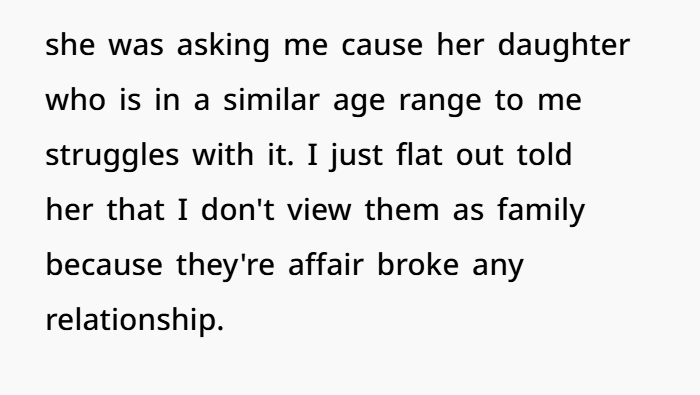
There was a reason behind the question. The neighbor apparently had a daughter around the same age who was struggling with a similar family situation.
The teenager answered directly.
She said she did not see her father’s new household as her family because the alleged affair had destroyed any chance of that relationship.
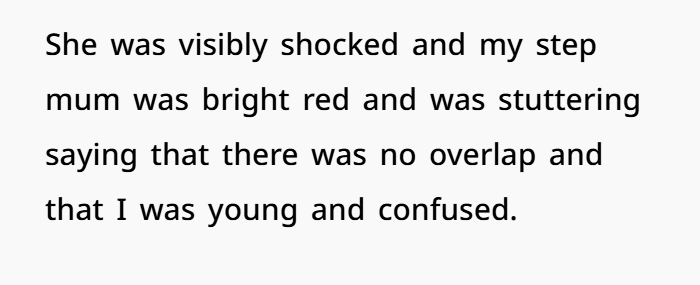
The neighbor was visibly shocked.
Her stepmother was reportedly bright red and quickly denied that there had been any overlap between the two relationships. She also suggested the teenager had been too young at the time and was confused about what happened.
The situation became even worse from there.
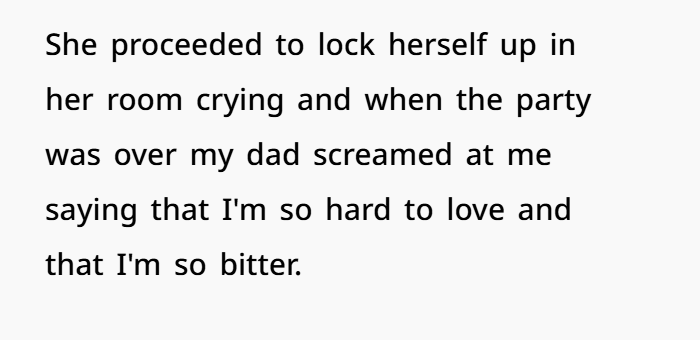
The stepmother reportedly went to her bedroom and cried. After the guests left, the teenager said her father screamed at her.
Then he said something that appears to have hurt far more than the argument itself.
He reportedly told his 16-year-old daughter that she was “so hard to love.”
That Comment Changes the Conversation
There is a fair argument that revealing painful family history at a housewarming party was not the best way to handle the situation.
The information was deeply personal. The stepmother was embarrassed in front of a neighbor, and the disclosure could easily create gossip in a close-knit neighborhood.
At the same time, the teenager did not describe herself as walking around the party announcing the alleged affair to everyone. A neighbor asked about her personal experience with her blended family, and she answered from her own point of view.
That distinction matters.
She can reasonably be criticized for sharing sensitive information. But asking a teenager how she feels about her family and then expecting only a comfortable answer is difficult too.
The adults also carry a much greater responsibility for managing the conflict.
The American Academy of Pediatrics’ HealthyChildren guidance on helping children after divorce says children tend to be more resilient when there is less conflict between their parents. It also says parents should remain sensitive to their children’s needs even while dealing with the stress of separation and family change.
Similarly, the Child Mind Institute’s advice for divorced families stresses that children should be kept out of ongoing conflict between adults.
Telling a child that she is “hard to love” does the opposite of creating that emotional security.
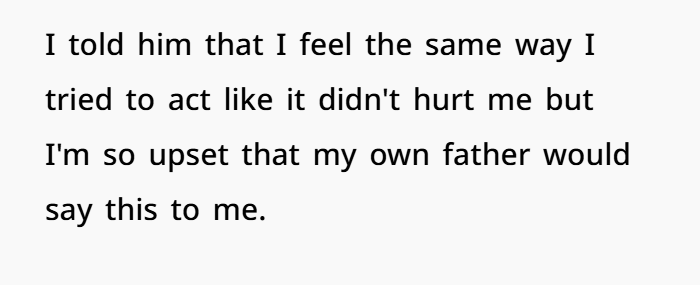
The teenager admitted that she tried to pretend the comment did not hurt.
Unfortunately, it did.
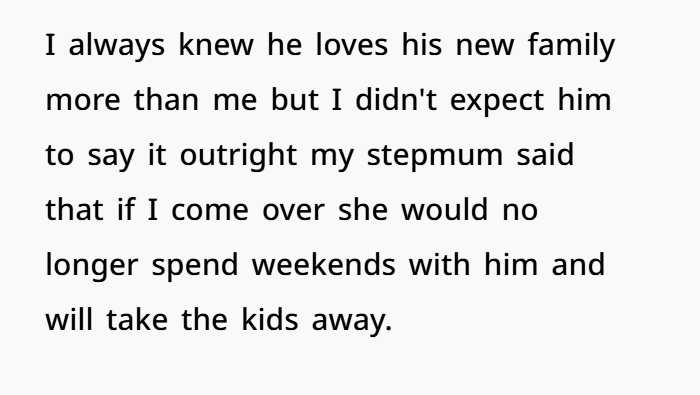
She said she had already believed her father loved his new family more than her. Hearing those words apparently made that fear feel much more real.
Now the Custody Arrangement Could Change
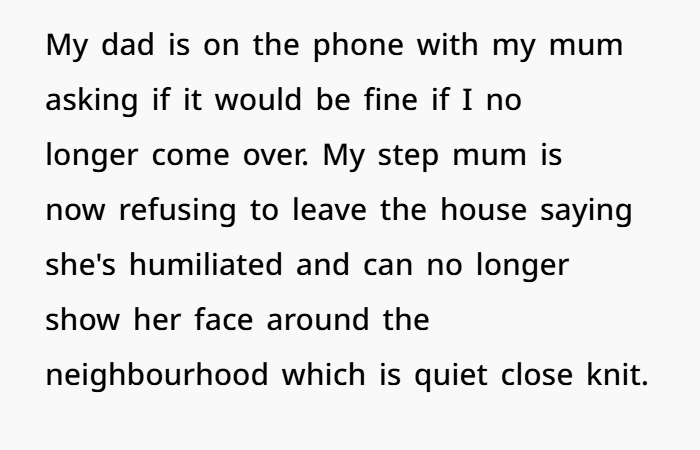
After the argument, the stepmother reportedly said she would no longer stay in the home with her children during the teenager’s weekend visits.
The father then contacted the teenager’s mother to ask whether she could stop coming over.
That creates a much bigger issue than embarrassment at a neighborhood party.
This is now about the father-daughter relationship, parenting responsibilities, and possibly changes to an existing child custody arrangement.
Professional guidance generally puts the child’s emotional needs at the center of these decisions. The American Psychological Association’s guidance on healthier divorce says parents should try to keep conflict away from children because ongoing parental conflict can increase the risk of psychological and social difficulties.
The Child Mind Institute also recommends listening to children’s feelings, maintaining stability, and avoiding unnecessary conflict between parents.
That does not mean the teenager handled everything perfectly.
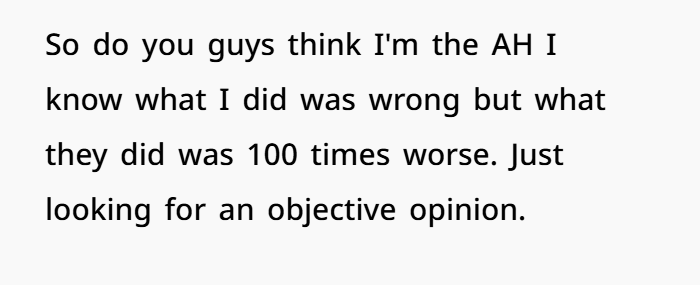
Sharing the alleged affair with a neighbor was likely to embarrass her stepmother, especially in a close community. A calmer private conversation would have caused less damage.
But there is also a major difference between a 16-year-old making a poor choice while talking about years of hurt and adults responding by questioning whether she should remain welcome in her father’s home.
The housewarming party may have triggered the argument, but it did not create the resentment.
Those feelings had been sitting there for years.
And unless the adults address that history, changing the weekend custody schedule may remove the immediate conflict without fixing the relationship underneath it.
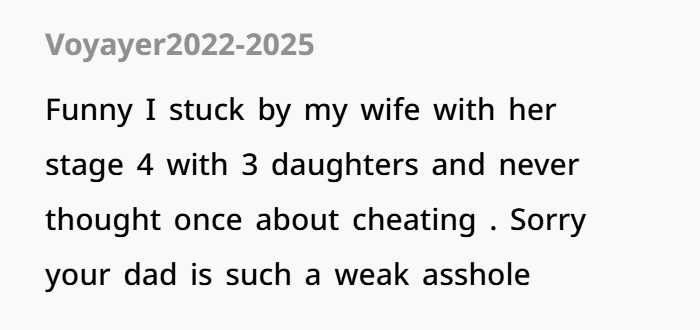
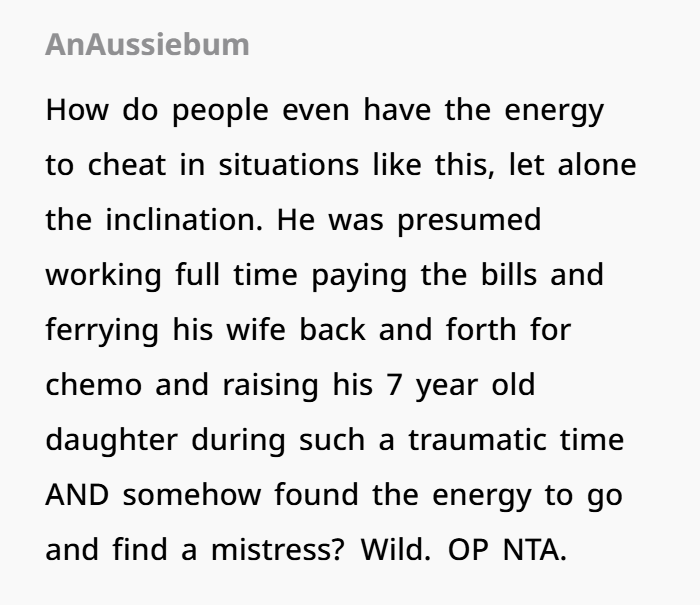
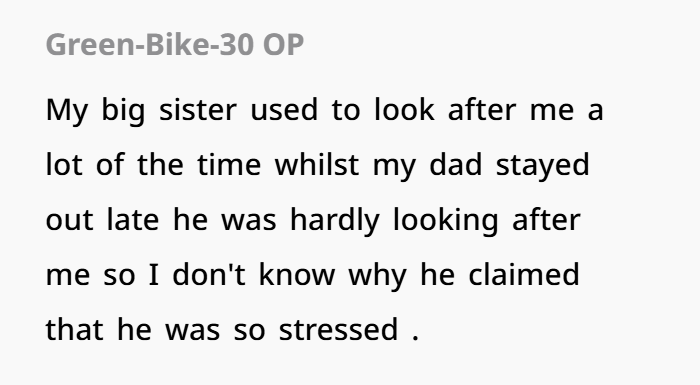
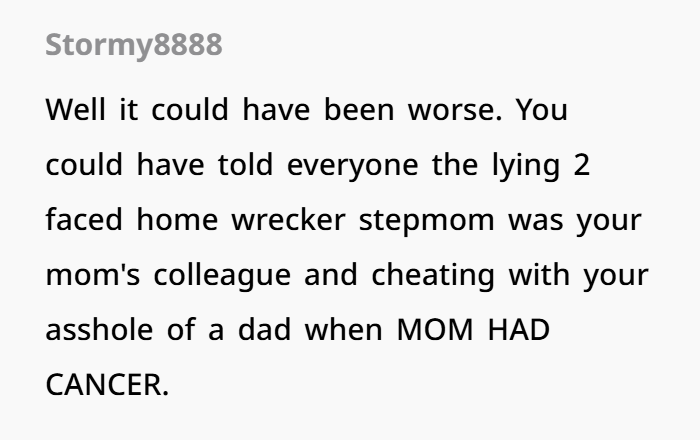
See the comments to know what people said
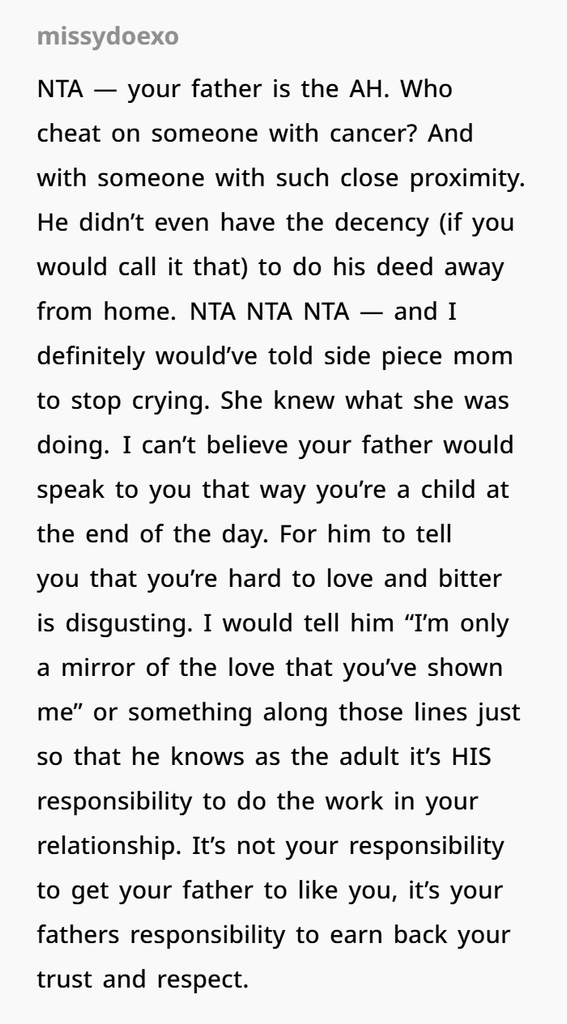
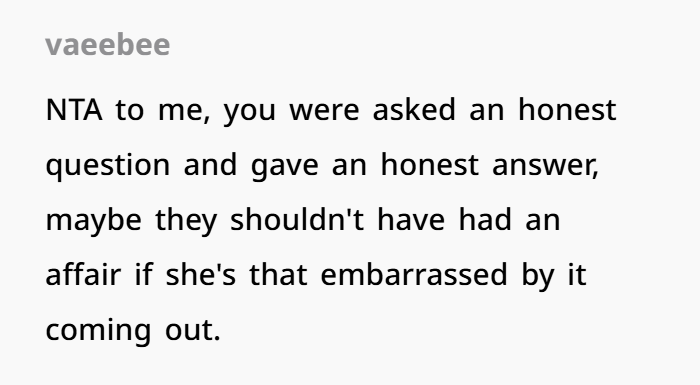
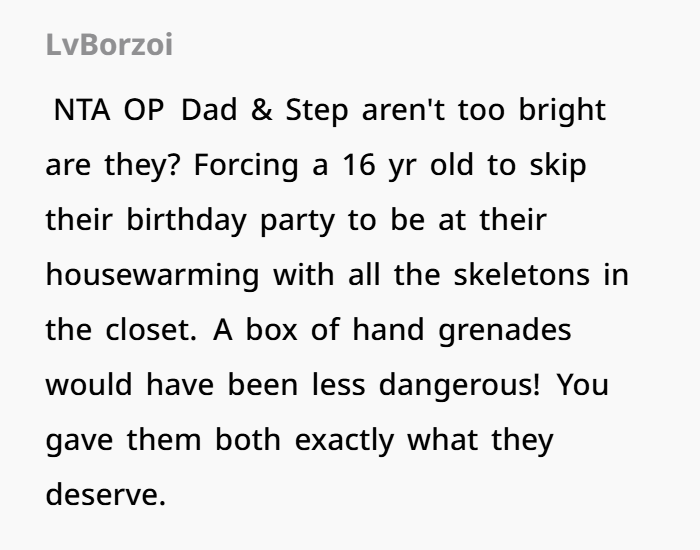
She could have handled the moment better. Talking about an alleged affair in front of a neighbor was always going to create embarrassment, especially in a close-knit community. Keeping that painful family history private would probably have prevented the housewarming party from falling apart.
But that does not make her feelings wrong.
She was only seven when her parents’ marriage broke down while her mother was going through cancer treatment. Years later, she is clearly still carrying anger and hurt from what happened. Being asked about her blended family brought those feelings straight back to the surface.
The adults’ reaction is also hard to ignore. A father telling his 16-year-old daughter that she is “hard to love” is deeply hurtful. The possibility of ending her weekend visits instead of dealing with the family conflict could make that rejection feel even worse.
In the end, this seems less like a story about a teenager embarrassing her stepmother and more like a family that never truly dealt with its past.
The teenager may owe an apology for sharing private information at the party. But the adults have something much bigger to work on: rebuilding trust, listening to her feelings, and finding a healthier way to handle their damaged father-daughter relationship.
Nine years of hurt was never going to disappear just because everyone stopped talking about it.