I Warned My Wife Our Son Wouldn’t Pay the Car Loan. I Was Right.
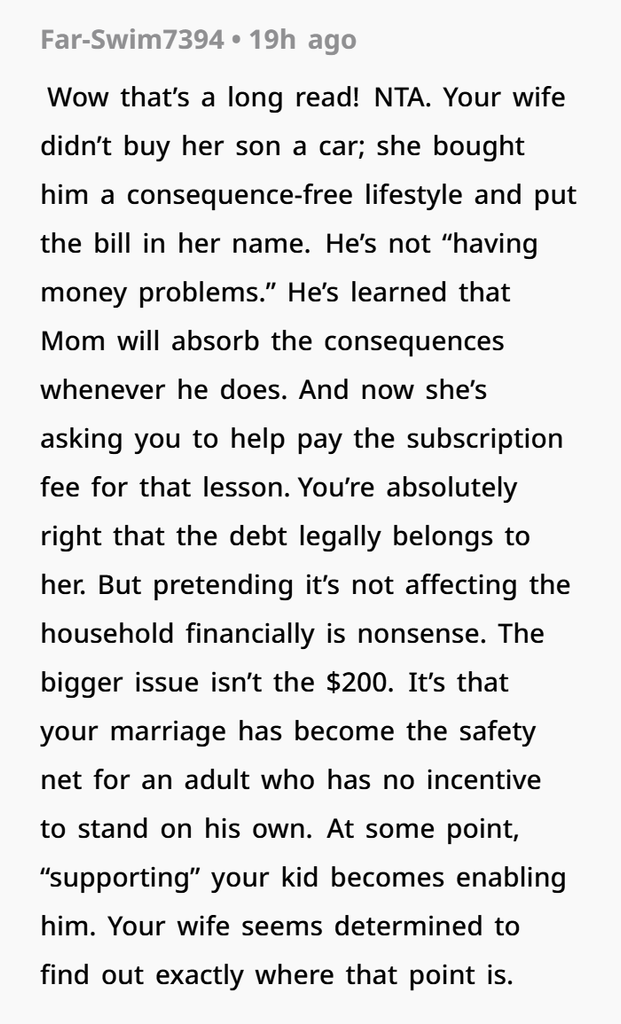
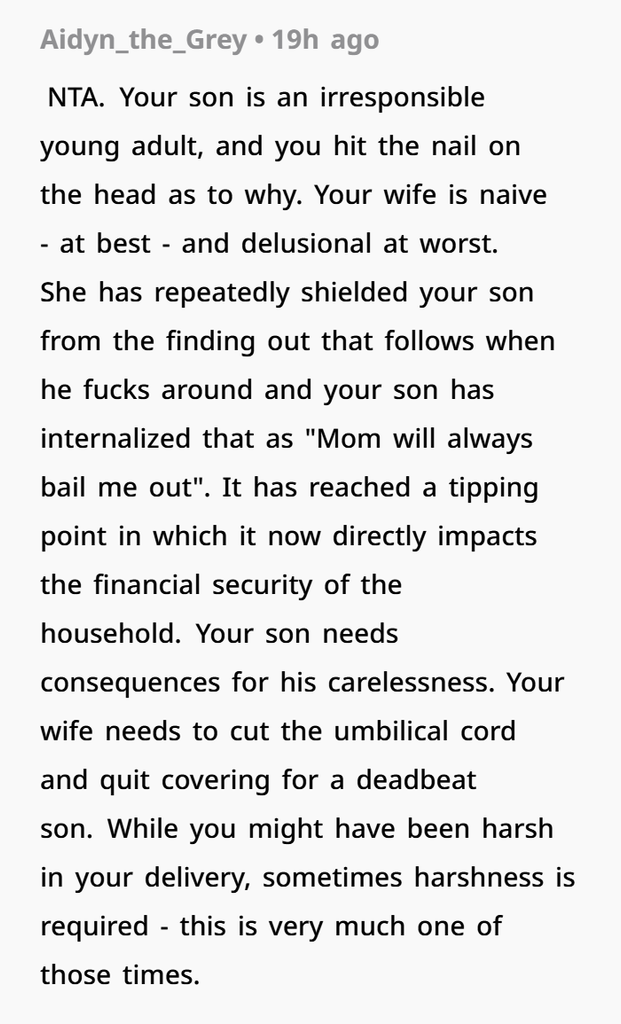
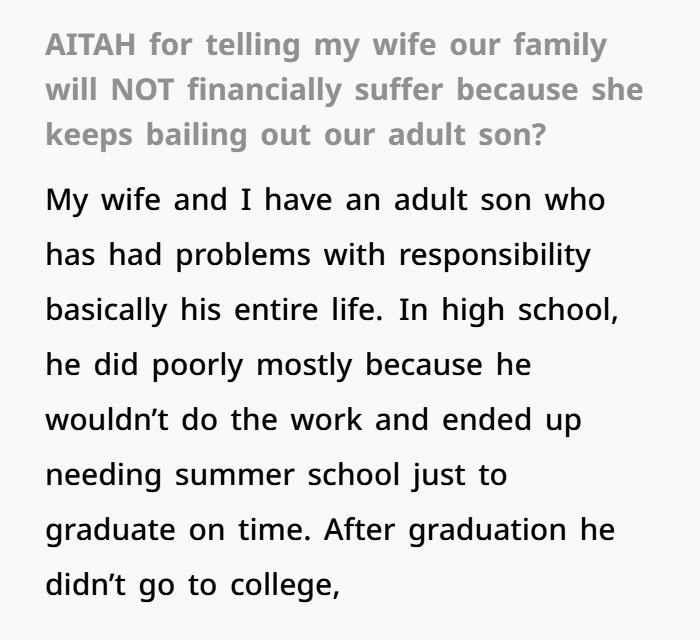
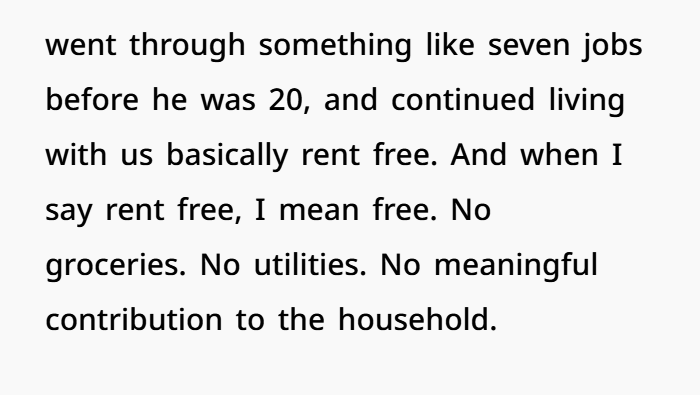
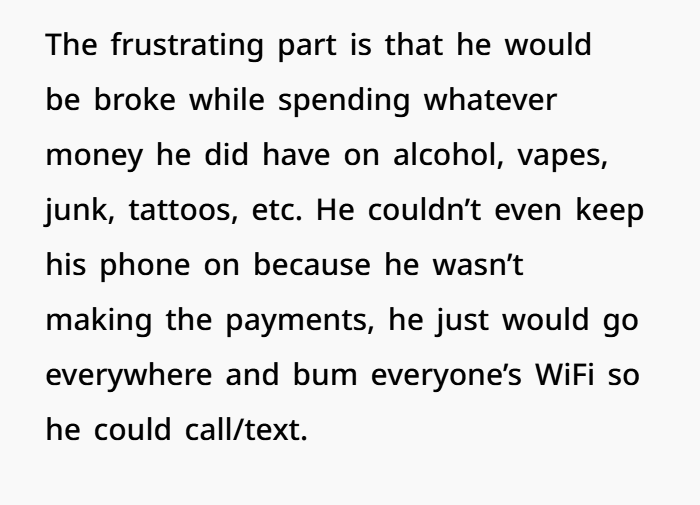
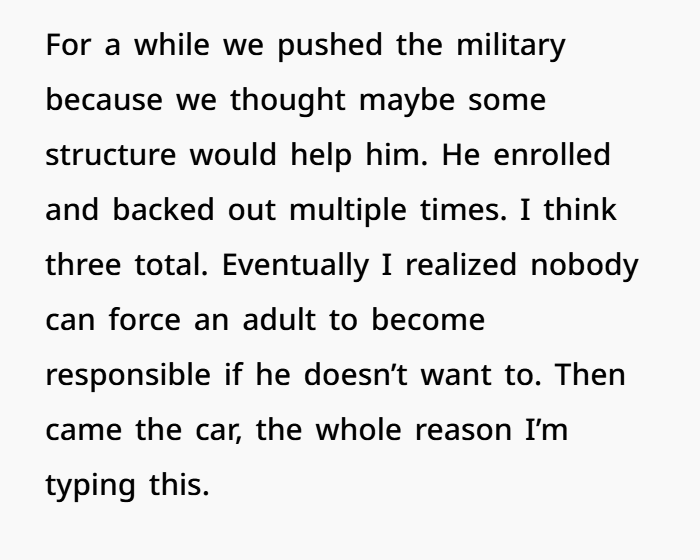
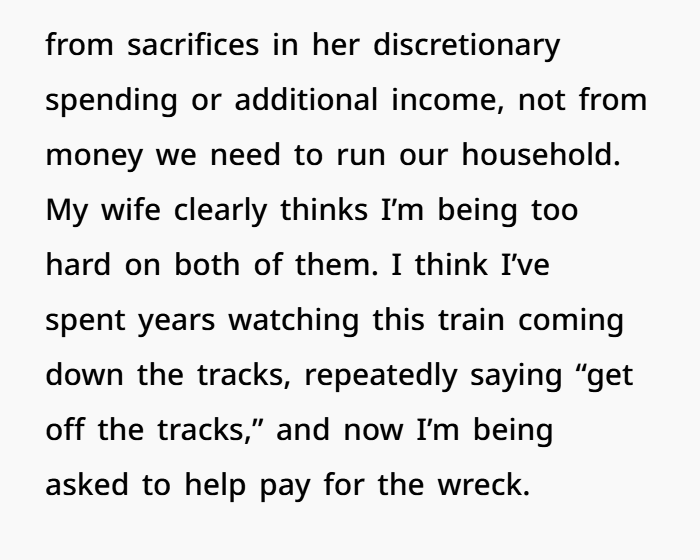
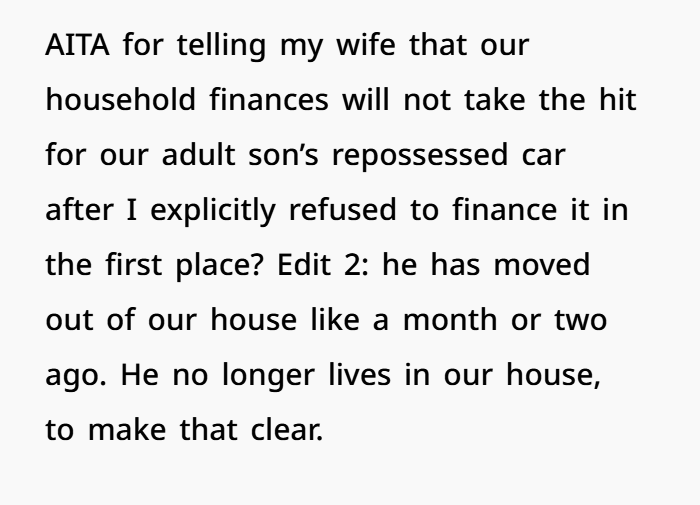
This story is about a married couple who disagree about how to support their adult son. Their 21-year-old son has struggled with managing basic responsibilities, including school, work, money, and personal decisions. Over the years, he has changed jobs often, spent money without planning, and depended on his parents for financial help and a place to live.
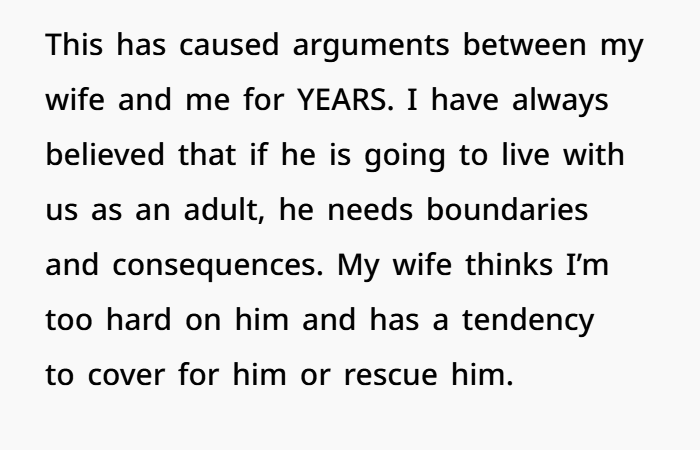
The father believes their son needs to learn responsibility by facing the results of his choices. He feels that setting boundaries and teaching financial responsibility will help their son become more independent. However, the mother often steps in to help and protect him from difficult situations.
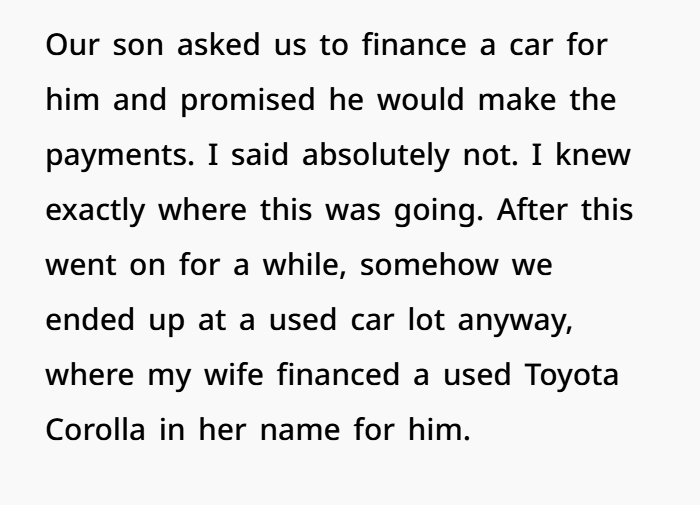
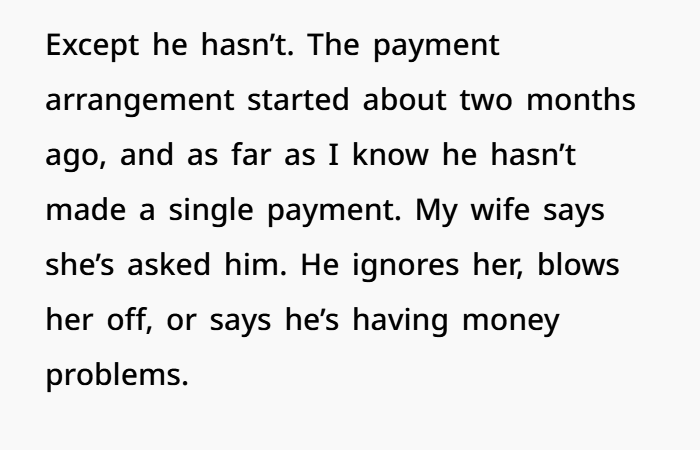
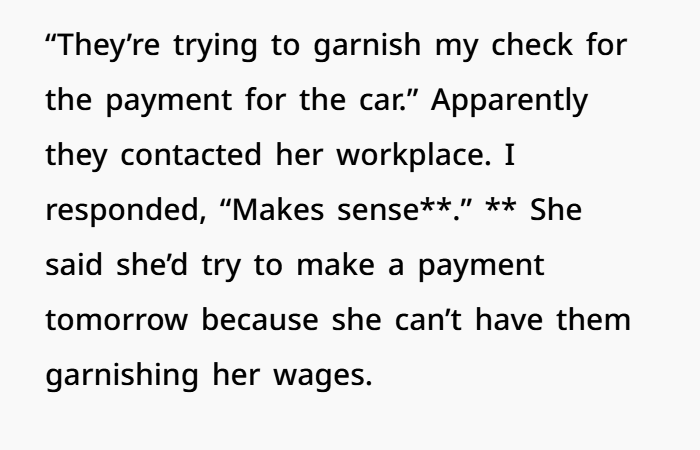
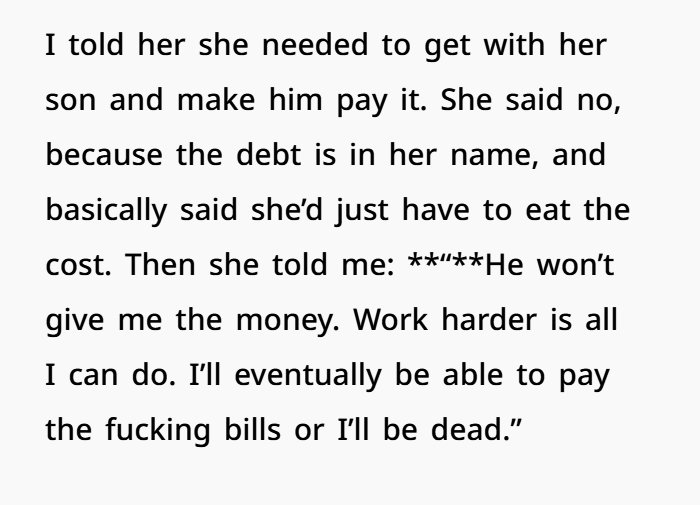
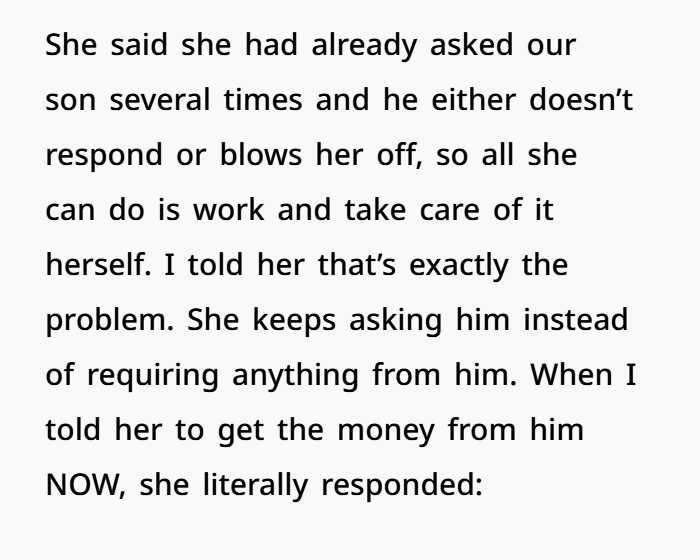
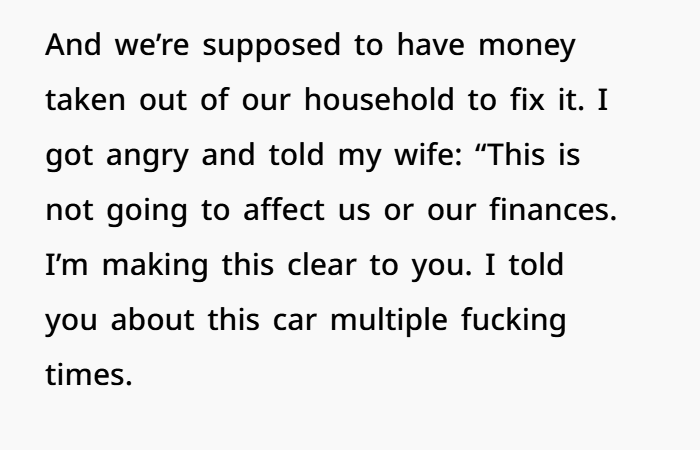
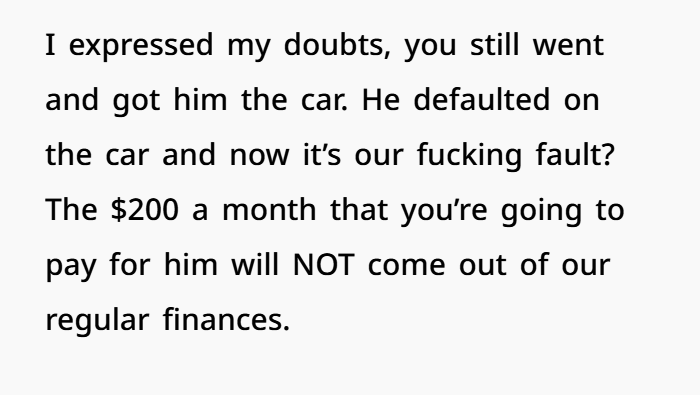
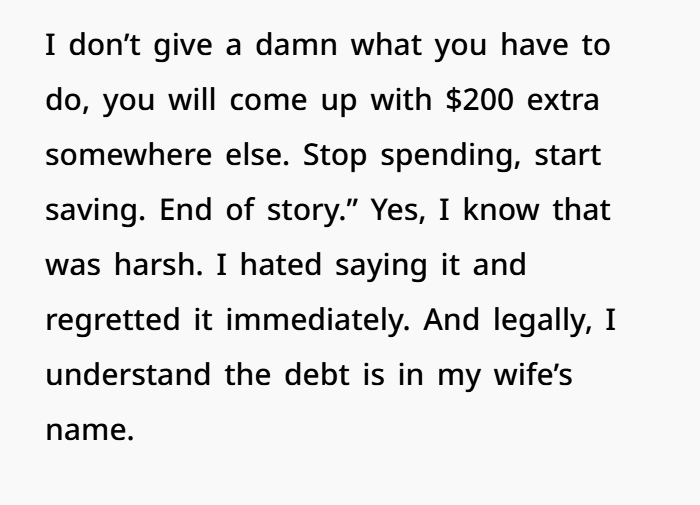
The biggest disagreement happens when their son asks his mother to help him get a used car loan. Even though the father does not agree, she signs the loan. Later, their son stops making payments, and the car is taken back. The remaining debt becomes the mother’s responsibility, creating more financial stress for the family.
This story highlights important topics like family relationships, financial planning, and parenting adult children. It raises the question of how parents can provide support while also encouraging independence, accountability, and better money habits.





Helping Adult Children: Learning the Balance Between Support and Boundaries
Many parents find it hard to watch their adult children struggle.
A parent’s natural reaction is often to help, protect, and solve problems. This comes from love and concern. However, there is a difference between helping someone and protecting them from every consequence of their choices.
This family situation is an example of something called parental enabling.
Parental enabling happens when a parent repeatedly steps in to fix problems for an adult child. The parent may have good intentions, but too much rescue can make it harder for the adult child to learn responsibility.
Why Parents Sometimes Enable Adult Children
Most parents do not enable their children because they want to create problems.
It often happens because of:
- Love for their child
- Fear that their child will fail
- Guilt about saying no
- A desire to prevent pain
A parent may think:
“If I help this one more time, things will get better.”
But when the same problems happen again and again, constant help can become a pattern.
The adult child may start depending on the parent instead of learning how to handle challenges independently.
The Difference Between Helping and Rescuing
Helping someone and rescuing someone are not the same thing.
Healthy support helps a person improve while keeping them responsible for their own choices.
Examples of support include:
- Helping create a budget
- Sharing job search resources
- Helping make a realistic financial plan
- Offering advice during difficult times
Rescuing means removing the consequences of repeated choices.
Examples may include:
- Paying the same debts many times
- Taking responsibility for another adult’s bills
- Fixing financial problems when the person refuses to change
Support can help someone become stronger. Rescuing can sometimes keep unhealthy habits going.
The Problem With Taking on a Car Loan for an Adult Child
A reliable vehicle can be important for work and daily life.
However, agreeing to a car loan or becoming a co-signer for someone with a history of financial struggles can create risks.
When a person co-signs a loan, they are not just offering emotional support. They are also accepting legal and financial responsibility.
If the borrower stops making payments, the co-signer may have to pay the debt.
This is why many financial advisors recommend being careful before co-signing loans for family members.
A lender looks at the official loan agreement. Promises from family members do not remove the responsibility connected to the debt.
How One Person’s Financial Decision Can Affect a Marriage
Money decisions often affect more than one person, especially in a marriage.
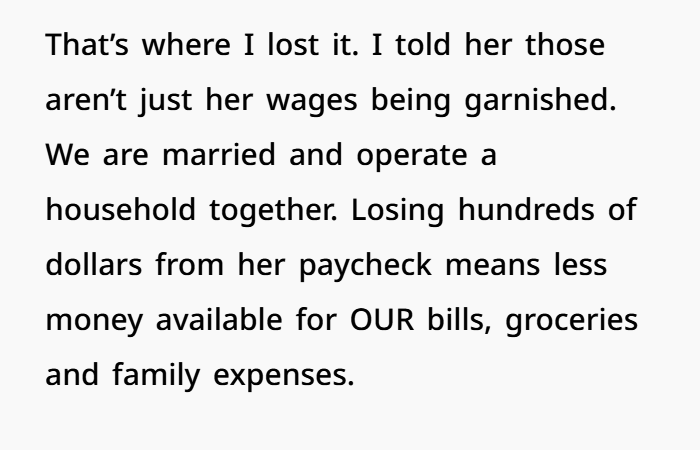
Even if only one spouse agrees to a loan, the entire household may feel the impact.
Financial decisions can affect:
- Monthly expenses
- Household savings
- Future financial goals
- Emergency funds
- Retirement planning
This is why many couples believe major financial decisions should be discussed together.
The disagreement is often not only about money. It can also be about trust, teamwork, and feeling respected by your partner.
When Parents Disagree About Helping Their Child
Many couples have different ideas about parenting adult children.
One parent may think:
“My child needs help and support.”
The other parent may think:
“My child needs to learn from this experience.”
Neither person is necessarily trying to hurt the child.
The problem happens when parents cannot agree on boundaries.
Over time, one spouse may feel like they are always being too strict, while the other may feel like they are always cleaning up problems.
A strong marriage requires both partners to discuss important decisions and create a shared approach.
Why Resentment Can Grow Over Time
In many family conflicts, the biggest issue is not the money itself.
A spouse may feel frustrated because:
- They warned about the risks
- Their concerns were ignored
- The same problems keep happening
- They feel responsible for decisions they did not support
The frustration may come from feeling unheard.
At the same time, the parent who wants to help may feel that refusing support means abandoning their child.
Both feelings can be real.
Parents Must Learn to Adjust When Children Become Adults
One of the hardest parts of parenting is accepting that adult children must make their own choices.
Parents naturally want to protect their children from mistakes and hardship.
However, adulthood requires learning important skills like:
- Managing money
- Making responsible decisions
- Solving problems
- Accepting consequences
Allowing an adult child to face consequences does not mean a parent does not love them.
Sometimes experiencing consequences is what helps a person grow.
Creating Healthy Financial Boundaries
Families often need clear rules when money is involved.
Healthy boundaries may include:
- Avoiding repeated loans
- Not taking financial responsibility for another adult
- Offering guidance instead of unlimited financial help
- Creating limits around future assistance
- Discussing money decisions with your spouse
Boundaries are not about punishment.
They are about protecting relationships and encouraging responsibility.
Finding a Balance Between Love and Responsibility
The real issue in situations like this is not only about a car or a monthly payment.
It is about finding the right balance between helping a loved one and allowing them to become independent.
Parents can love their adult children while still expecting responsibility.
A healthy approach includes:
- Compassion for difficult situations
- Clear financial boundaries
- Open communication
- Shared decisions between spouses
Helping an adult child does not mean carrying every problem for them.
Sometimes the greatest support a parent can provide is encouragement, guidance, and the space for their child to learn from life experiences.
What The Internet Thinks