

What Is Neuromorphic Computing and How Does It Work?
Your brain runs on about 20 watts of power, roughly the same as a dim light bulb. With that small amount of energy, it recognizes faces, understands speech, and makes decisions in real time. A typical computer needs far more power to do a fraction of that work, and still struggles with tasks your brain handles without thinking.
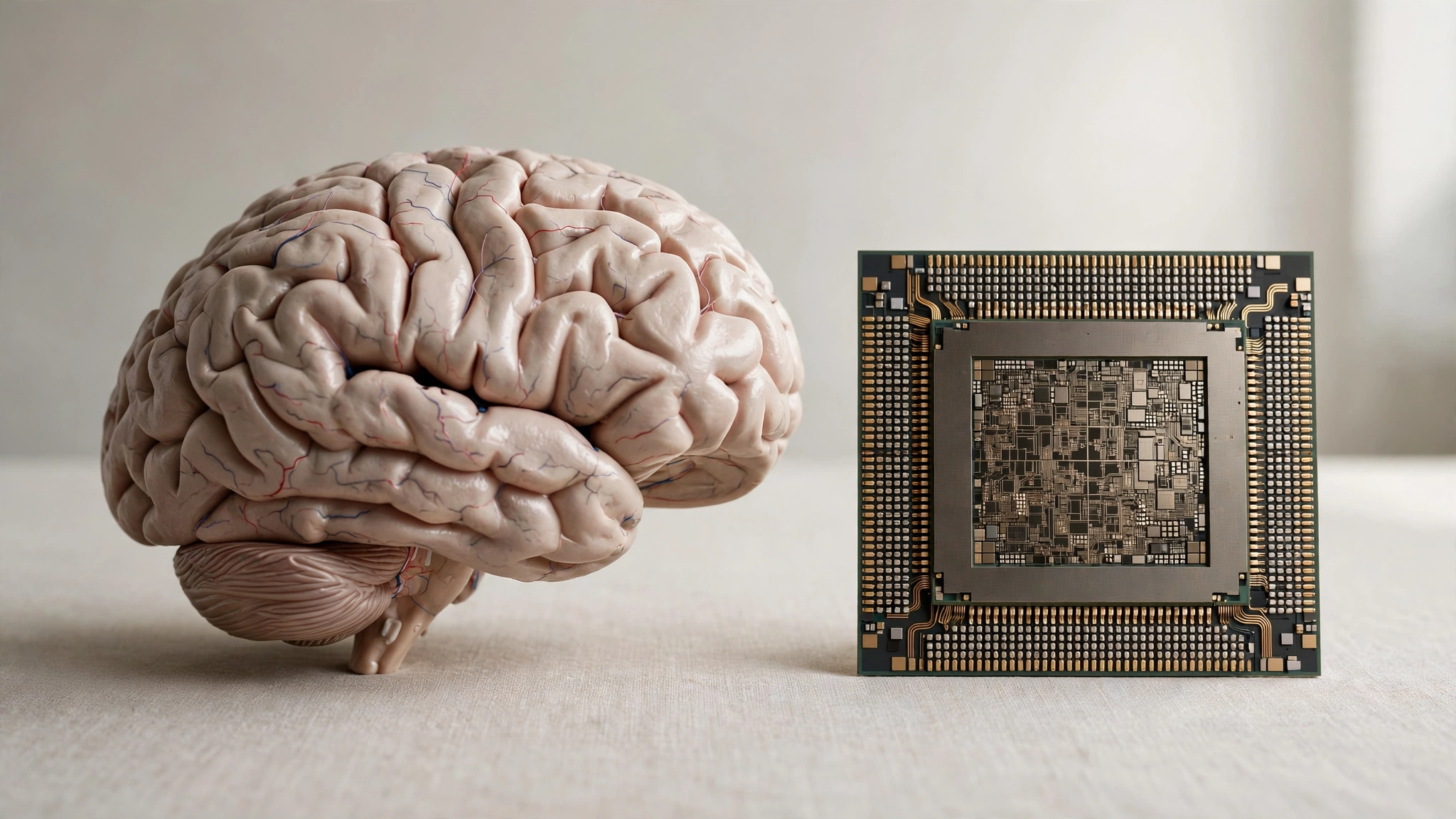
That gap is what neuromorphic computing tries to close. Instead of building faster versions of the same old processor, researchers are designing chips that copy the structure of the brain itself. These chips use networks of artificial neurons and synapses, and they process information in short bursts called spikes, much like real neurons do.
Scientists have studied brain-like computing for decades, but it has recently moved from university labs into real products. Intel, IBM, and smaller companies now build neuromorphic chips for robots, sensors, and devices that need to think on very little power. Here is how it works and where it is already being used.

How the Brain Inspired a New Kind of Chip
The human brain contains about 86 billion neurons, connected by trillions of tiny junctions called synapses. A neuron collects signals from its neighbors, and when the combined input passes a certain level, it fires a brief electrical pulse to the next neuron.
That design is very different from the computers on our desks. Almost every computer built since the 1940s follows the von Neumann architecture, named after mathematician John von Neumann. Here the processor and memory sit in separate places, and data must travel back and forth between them along a narrow channel, so the processor spends much of its time waiting.
Engineers call this the von Neumann bottleneck, and it has grown worse as AI workloads have grown. Modern AI models move huge amounts of data, and shuttling it between memory and processor burns a large share of the total energy. A faster processor does not fix it, because the bottleneck is the movement of data, not the speed of the calculation.
The brain has no such bottleneck. Memory and processing happen in the same place, inside the network of neurons and synapses. Billions of neurons work at the same time, each handling a small piece of the job. Neuromorphic computing takes this as its blueprint: massive parallelism, memory built into the processor, and communication through short pulses instead of a constant stream of data.
That approach also changes how a chip uses power. A traditional processor draws power continuously while it runs, but a neuromorphic chip only spends energy when a neuron fires, and most neurons stay quiet most of the time.
How Neuromorphic Chips Actually Work
At the heart of a neuromorphic chip is the spiking neural network. Unlike the neural networks in most of today’s AI software, which pass numbers in a steady flow, a spiking network communicates with spikes. Each artificial neuron adds up the signals it receives, and when the total crosses a threshold, it fires a spike to the neurons connected to it, then resets and starts adding again.
The power of the idea comes from timing. Because a spike is a brief event, the exact moment it arrives carries information. It also means the chip is event-driven: nothing happens until an event arrives, so a sensor that sees no change sends no spikes and the chip sits nearly idle.
The synapses in these chips store the strength of each connection, much like real synapses store memories. In some designs the weights sit in digital memory next to the neuron circuits; in others, researchers use materials whose electrical resistance changes with use, so the memory is held in the material itself. Either way, no separate memory chip is needed.
Learning in a spiking network often follows a rule called spike-timing-dependent plasticity. In plain terms, if one neuron fires just before another, the connection between them gets stronger; if it fires just after, the connection weakens. Over time, the network tunes itself to the patterns in its input.
Building these chips is not easy. Spiking networks need different software tools from ordinary deep learning, and training them is still harder than training a conventional neural network. Most teams either train a normal network first and convert it to spikes, or train directly on the chip with simpler rules. Neither method is as polished as mainstream AI tools.

Neuromorphic Computing vs Traditional Computing
The easiest way to understand the difference is to compare the two designs side by side. Neither is better at everything; they are built for different jobs, as the table shows.
| Feature | Traditional (von Neumann) Computing | Neuromorphic Computing |
|---|---|---|
| Processing style | Sequential, clock-driven | Parallel, driven by events |
| Memory | Separate from the processor | Built into the network |
| Signals | Continuous stream of binary values | Short spikes, only when a neuron fires |
| Power use | High, even when idle | Very low when idle |
| Best at | Precise math, databases, general software | Pattern recognition, sensing, real-time response |
| Weakness | Data movement between memory and processor | Harder to program and train |
A traditional processor is a generalist. It can run any program, handle exact arithmetic, and manage large databases with precision. That flexibility is why it runs the modern world, from phones to data centers, but it pays for it with energy, because every operation requires fetching data from memory and sending results back.
A neuromorphic chip is a specialist. It is not built to run a spreadsheet or render a video, but to notice patterns in sensor data, decide what matters, and act quickly on a tiny amount of power. That makes it a strong fit for a camera that watches for motion all day, or a robot that must react to touch in real time.
In practice, the two are likely to work together. A neuromorphic chip can sit beside a regular processor, handling the sensing and pattern work while the traditional chip handles exact calculation, and several research groups are already testing this kind of hybrid system.
The Chips and Research Leading the Way
IBM fired the starting gun in 2014 with TrueNorth, a chip containing one million programmable neurons and 256 million synapses. It used only a fraction of the power of a conventional processor running similar work, and showed that a brain-inspired chip could be built at real scale. It was a research chip, not a product, but it proved the concept.
Intel entered the field with Loihi in 2017 and followed it with Loihi 2 in 2021. Loihi 2 can hold up to a million neurons per chip, supports more flexible learning rules than its predecessor, and is available to researchers through Intel’s neuromorphic research community. Teams have used it to recognize smells and control robotic arms.
IBM returned to the field in October 2023 with NorthPole, a chip designed to run neural networks far more efficiently than a conventional graphics processor. In tests published in the journal Science, it ran image recognition tasks using much less energy than leading graphics chips, while keeping accuracy in the same range. Unlike TrueNorth, it runs the kinds of neural networks already used in industry.
Smaller companies are pushing the technology toward products. BrainChip sells the Akida processor, a commercial neuromorphic chip aimed at edge devices such as smart cameras and sensors. Akida learns on the device itself, so a sensor can adapt to new patterns without sending data to the cloud. The SpiNNaker project at the University of Manchester built a machine with a million processor cores for modelling spiking networks at large scale.
The chips are still mostly used by researchers, but each new design brings the technology closer to everyday devices.
Where Neuromorphic Computing Is Being Used Today
The most natural home for neuromorphic computing is at the edge, where devices must sense and react without a constant connection to the cloud. A security camera watching a doorway all day is a good example: most of the time nothing happens, so a traditional processor wastes energy analyzing empty frames, while a neuromorphic sensor only reacts when something changes.
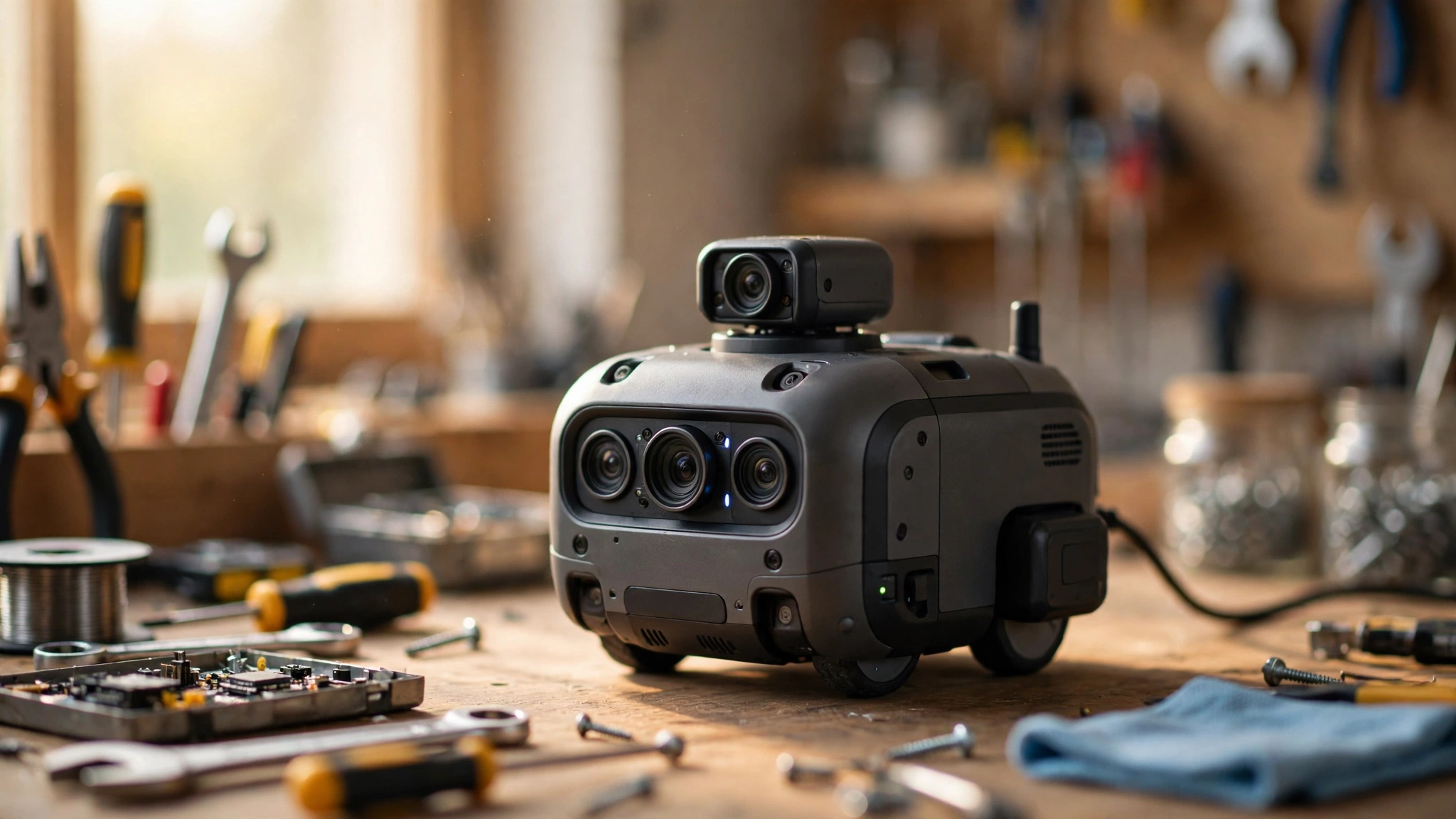
Robots are another strong fit. A robot that picks up objects needs to combine vision, touch, and movement in real time while running on battery power. Neuromorphic chips process sensor data as it arrives, so a robot can react to a slipping object before it falls. This connects with the progress in machines that understand the world through several senses at once, as covered in our look at how multimodal AI is making machines better at understanding the real world.
Drones and autonomous vehicles face similar pressures. They carry cameras, lidar, and other sensors that produce a flood of data, and must make decisions in fractions of a second. A neuromorphic chip can filter that stream at the sensor, passing on only the events that matter, which saves both power and time.
Always-on devices are a quieter use case. Smart speakers, hearing aids, and wearables must listen or watch continuously without draining a battery in hours. A neuromorphic chip can run a wake-word detector or a gesture recognizer all day on a tiny amount of power, waking the main processor only when needed. This fits the wider shift toward small language models and other AI that runs directly on devices instead of in distant data centers.
Brain researchers also use large neuromorphic systems to simulate neural circuits.
Practical Tips for Following Neuromorphic Computing
Neuromorphic computing is moving fast, but it is still a specialist field. A little background makes it much easier to follow.
- Start with the basics of neural networks. A rough understanding of artificial neurons and synapses makes every article clearer.
- Follow the research labs, not just the headlines. Intel’s neuromorphic research community, IBM Research, and groups such as the SpiNNaker team publish reliable updates.
- Look for real benchmarks. When a company announces a new chip, check for measured power use and accuracy on a known task, not just one impressive number.
- Try the tools yourself. Intel and others offer research access and simulators for running small spiking networks without buying hardware.
- Connect it to edge AI. Much of the value of neuromorphic chips shows up in devices, so reading about on-device processing gives useful context for where the technology is heading.

Common Mistakes and Considerations
Like any promising technology, neuromorphic computing attracts bold claims. A clear view of its limits will help you judge new announcements.
- Expecting it to replace your laptop. Neuromorphic chips are specialists for sensing and pattern work, not general-purpose processors.
- Believing every power claim at face value. Energy savings depend on the task, the network size, and how the comparison was measured.
- Confusing a research demo with a product. Many impressive results come from lab prototypes that are not for sale.
- Ignoring the software gap. Spiking networks are harder to train than conventional ones, and the tools are still maturing, so hardware progress alone does not make the technology easy to use.
- Assuming the brain comparison is literal. Neuromorphic chips copy useful principles from biology, not the full complexity of a living nervous system.
Final Thoughts
Neuromorphic computing is still young, but it is no longer just an idea in a research paper. Real chips from Intel, IBM, and smaller companies are already sensing, recognizing, and reacting in robots, cameras, and scientific instruments, using a fraction of the power a traditional processor would need. The technology will not replace ordinary computers, and its software still needs work, but its core idea is sound: when a device must watch, listen, and respond all day on a small battery, a chip that works a little like a brain makes sense.