AITA for Inviting My Dad’s Newly Discovered Half-Sister to My Wedding When My Own Cousins Weren’t Invited to the Ceremony?
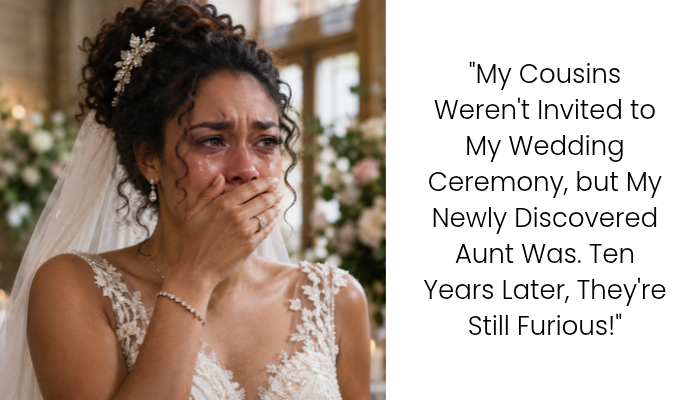
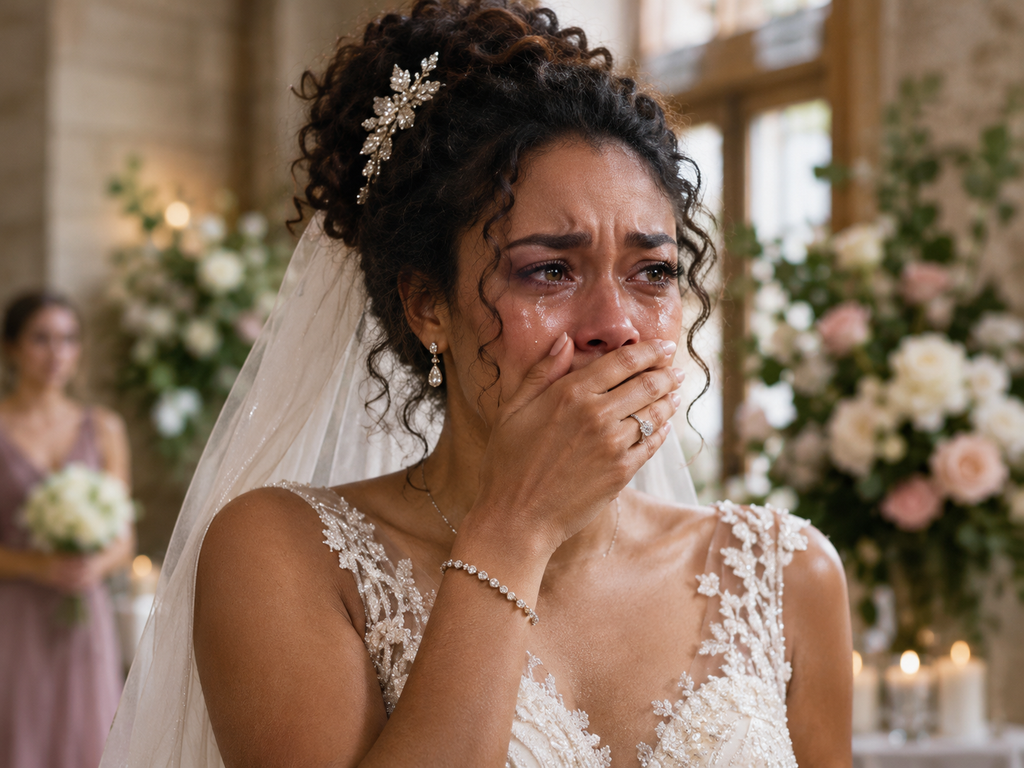
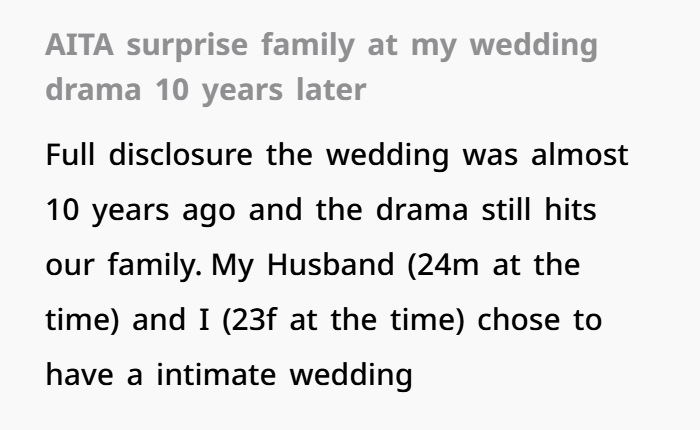
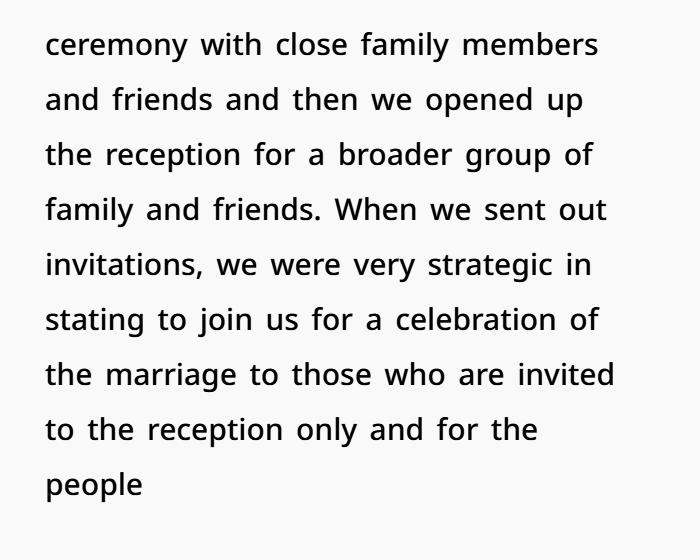
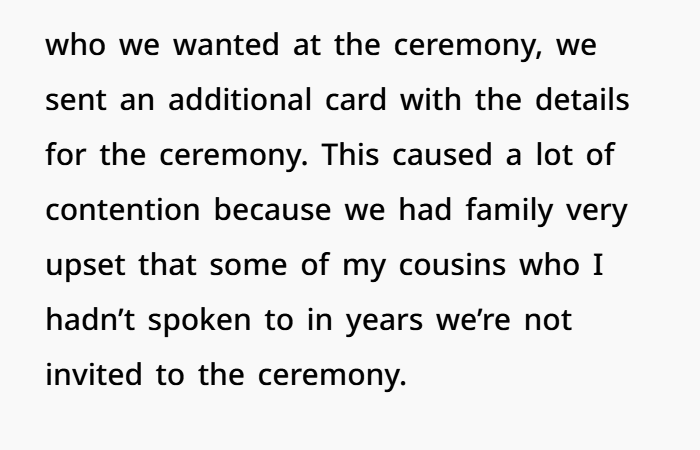
A woman recently shared a family story about her wedding, which took place almost ten years ago. She and her husband wanted a small and private wedding ceremony followed by a larger reception. They decided to invite only close family members and friends to the ceremony, while other relatives could join them at the reception. Some cousins were unhappy with this decision because they were not invited to the private ceremony. However, both sets of parents supported the couple and respected their wedding plans. After some family discussions, the wedding preparations continued without any major problems.
Everything seemed settled until two weeks before the wedding. A woman contacted the bride’s family after researching her family history. She believed that she might be the daughter of the bride’s paternal grandfather. After looking into the details, the family discovered that she was actually the bride’s father’s half-sister. She was born from a relationship her grandfather had outside his marriage. The newly discovered relative wanted to meet her family, so the bride’s parents asked if she could attend the wedding. The bride agreed and welcomed her to the celebration.
The new aunt arrived with her family and quickly became close to everyone. She even offered to help with the wedding preparations before attending the private ceremony and returning for the reception. However, some of the bride’s paternal relatives were unhappy about this arrangement. They believed it was unfair to allow the newly discovered aunt to attend the ceremony when some cousins had not received the same invitation. They also questioned whether she should be treated as a full member of the family.
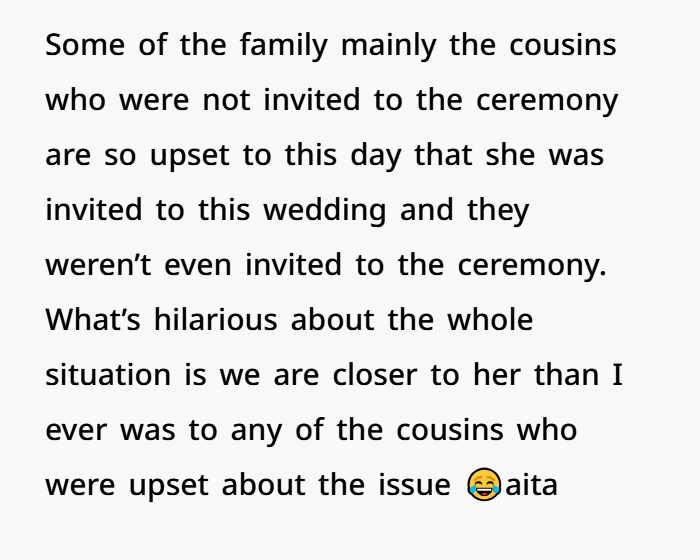
Almost ten years later, the disagreement has still not completely disappeared. Some cousins continue to feel upset about the wedding guest list, even though the bride has built a close relationship with her aunt. She explains that she feels more connected to this newly discovered relative than to cousins she rarely spent time with. Looking back, she believes she had the right to choose who attended her wedding ceremony. Her story shows how wedding planning, family traditions, and personal relationships can sometimes create unexpected disagreements.
Family Acceptance and Wedding Guest Lists: Who Gets to Be Part of the Celebration?
Family relationships are not always simple. Sometimes, unexpected news can bring new people into our lives and change the way we think about family.
This is exactly what happened in this story.
A bride discovered that her father had a half-sister he had never known about. When the family learned about this new relative, the bride decided to welcome her into the family and include her in the wedding celebration.
However, some cousins were unhappy with this decision.
The situation raises an interesting question: Does being family depend only on shared DNA, or do love, acceptance, and personal connections matter too?
1. Does Being Family Mean Sharing the Same DNA?
Family relationships can begin in many different ways.
Some people grow up together and share many childhood memories. Others meet later in life and slowly build a close connection.
In this story, the newly discovered woman was the bride’s father’s half-sister. This means they shared one biological parent.
Her existence came as a surprise because the family had not known about her for many years.
Today, DNA testing and family history research make it easier for people to discover relatives they never knew existed. Some people find half-siblings, cousins, or other family members through genetic testing.
Organizations such as the International Society of Genetic Genealogy provide information about DNA testing and family tree research.
However, finding out that someone is related to you does not automatically create a close relationship.
Trust, communication, kindness, and spending time together are what help people build meaningful family connections.
The bride and her family decided to welcome this new relative instead of judging her because of her father’s past decisions.
That was an important choice.
A person should not be blamed for the circumstances of their birth. Every child deserves respect and acceptance, regardless of their parents’ choices.
2. Why Were the Cousins Upset About the Wedding Guest List?
The cousins also had a reason to feel disappointed.
The couple had planned a small wedding ceremony with only close family members and friends. Other relatives were invited to attend the reception instead.
When the bride invited her newly discovered aunt to the wedding celebrations, some cousins felt that the rules had changed.
From their point of view, they had been left out while someone who had only recently entered the family was welcomed.
It is understandable that they might have felt confused or hurt.
However, wedding planning is a personal decision. Every couple has different ideas about their special day.
Some couples prefer a small wedding with a limited guest list, while others invite a large number of relatives and friends.
There are many reasons for keeping a wedding guest list small, including budget, venue size, personal comfort, and family preferences.
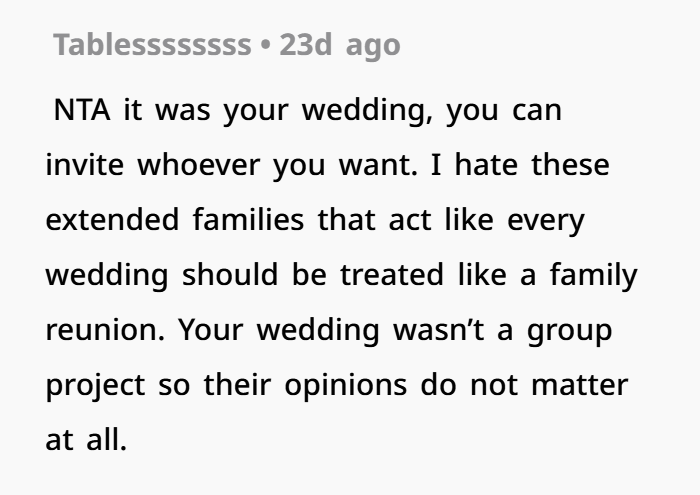
The bride and groom have the right to decide who they want at their ceremony.
Being invited to the wedding reception does not always mean someone will also be invited to the ceremony.
The bride may have wanted to include her newly discovered aunt because this was a special opportunity for them to meet and build a family connection.
3. Why Should Someone Be Judged Because of Their Birth?
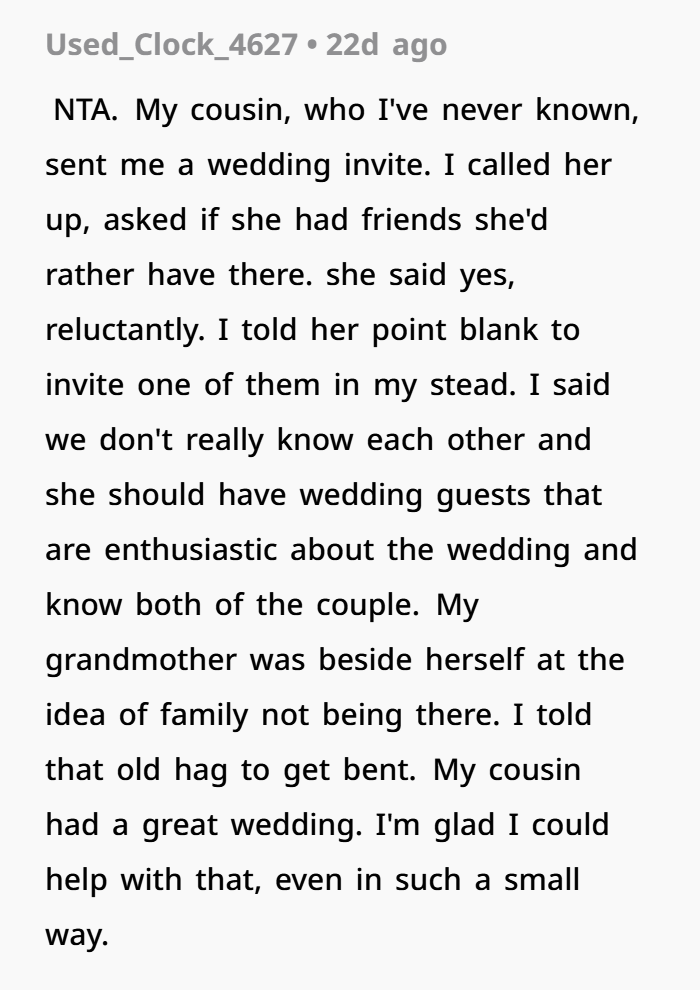
One of the saddest parts of this story is that some family members questioned whether the newly discovered woman should be accepted because her parents were not married.
In the past, children born outside marriage were sometimes treated differently by society.
They could face unfair judgment and exclusion because of circumstances they had no control over.
Thankfully, attitudes have changed in many parts of the world.
The United Nations Convention on the Rights of the Child supports the principle that children should not face discrimination because of their birth or their parents’ circumstances.
The idea is simple: Children are not responsible for the choices their parents make.
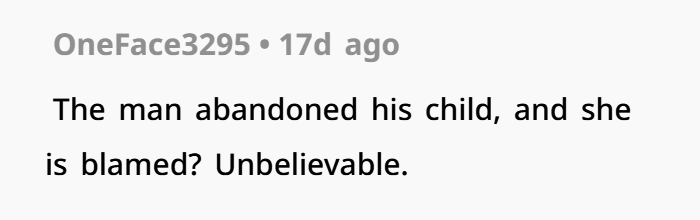
In this situation, the grandfather was responsible for his own actions. His daughter should not have to carry the blame for something that happened before she was born.
Her family background does not make her less deserving of love, respect, or a place in the family.
The bride’s decision to welcome her aunt showed that family acceptance should not depend on old social labels.
4. How Family Traditions Can Create Wedding Disagreements
Weddings are special events, but they can also bring family disagreements.
Many families have their own traditions and expectations about wedding invitations.
Some believe every close relative should attend the ceremony. Others understand that a couple may want a small and private celebration.
Problems can happen when family members have different expectations.
For example:
- Some relatives may expect an invitation to every wedding event.
- Others may believe the couple should have complete control over the guest list.
- Some families prefer traditional wedding celebrations.
- Others want to make their own choices.
- A few relatives may feel hurt when someone else receives a special invitation.
Family relationships can become difficult when people see these decisions as a sign of love or rejection.
Family systems theory, developed by psychiatrist Murray Bowen, explains how relationships and emotions within a family can affect one another.
This helps explain why a disagreement involving one family member can sometimes create tension among several relatives.
The best approach is to respect the couple’s wedding plans while allowing family members to express their feelings calmly.
5. Why Are the Cousins Still Upset After So Many Years?
One surprising detail is that the wedding took place almost ten years ago, but some cousins are still unhappy.
This suggests that the disagreement may have become bigger than the original wedding invitation.
Sometimes, people hold on to old family disagreements because they feel their feelings were ignored.
The cousins may still believe they were treated unfairly. The bride, on the other hand, may feel that she made a reasonable decision by welcoming a new family member.
Over time, these different views can become difficult to change.
There is also something interesting about how the relationships developed.
The newly discovered aunt eventually became closer to the bride than some of the cousins who had complained about being left out.
This shows that family relationships are not always based on how long people have known each other.
A close relationship takes time, effort, understanding, and mutual respect.
Sometimes, people who meet later in life become an important part of our lives.
6. Family Acceptance Matters More Than Old Labels
Every family has its own history.
Sometimes, unexpected discoveries bring happiness. Other times, they create confusion and difficult conversations.
But a person’s background should not decide whether they deserve to be accepted.
The newly discovered aunt did not choose the circumstances of her birth. She was simply someone who wanted the chance to know her biological family.
The bride chose to give her that opportunity.
That does not mean the cousins were wrong to feel disappointed. Their feelings can be understood, too.
However, the couple’s wedding guest list was their decision.
Family members may have different opinions, but they should still respect one another’s choices.
Final Thoughts
This story reminds us that family is about more than shared DNA.
Biological relationships can introduce us to new people, but love, kindness, trust, and shared experiences help turn those connections into meaningful relationships.
The bride wanted to welcome someone who had recently become part of her family history. She should not have to feel guilty for making that choice.
Her cousins were allowed to feel disappointed, but that did not mean they could decide who deserved an invitation.
Sometimes, the people we meet unexpectedly become some of the closest people in our lives. Family connections can grow at any age, and everyone deserves the chance to build those relationships with respect and kindness.
See The Comments Below