
I Refused to Clean the Bed He Slept on the Floor. Am I the Monster?
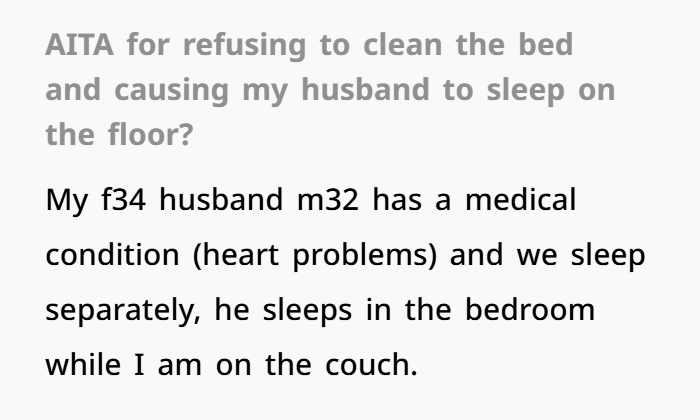
A 34-year-old woman is taking care of her husband, who has a serious heart condition. Over time, her role in the home has changed a lot. She is now doing most of the caregiving, housework, and emotional support on top of being a wife.
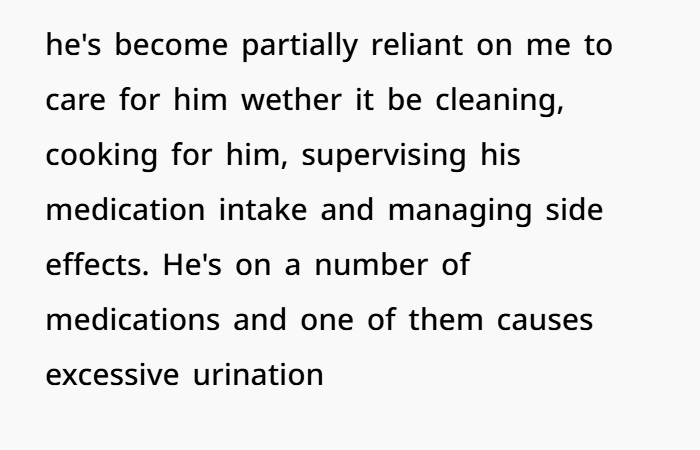
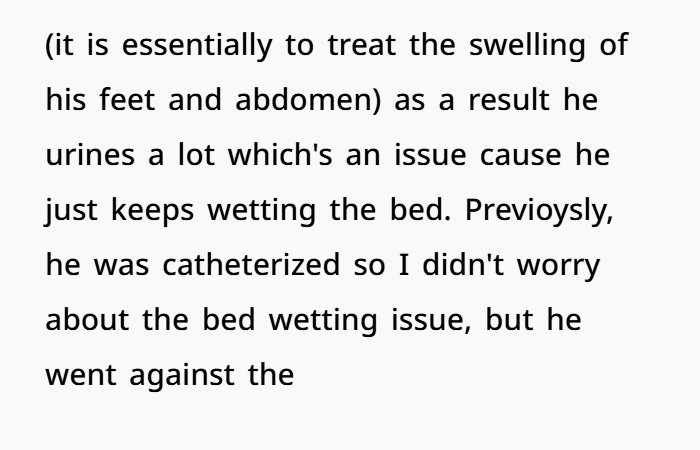
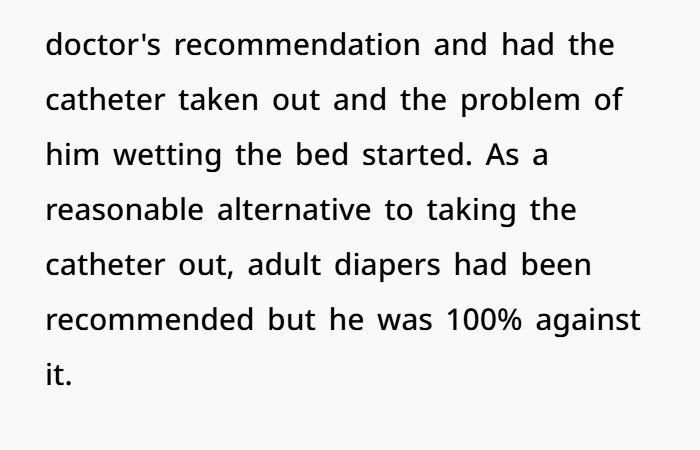
One of his medications causes frequent urination, which has led to repeated bedwetting at night. At one point, he had a catheter, and the situation was easier to manage. However, he chose to remove it, even though doctors advised against it. Since then, the bedwetting has continued.
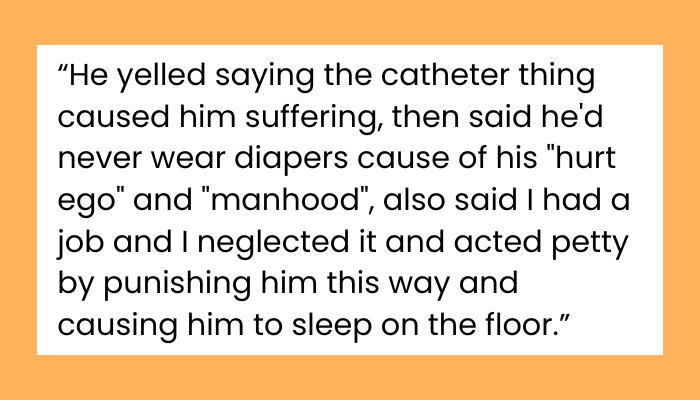
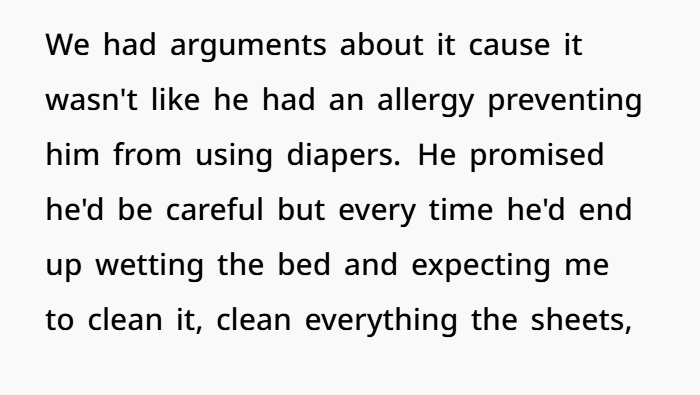
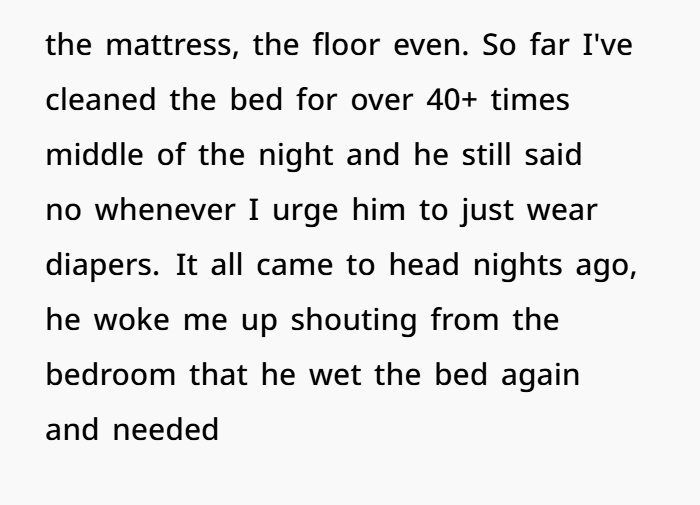
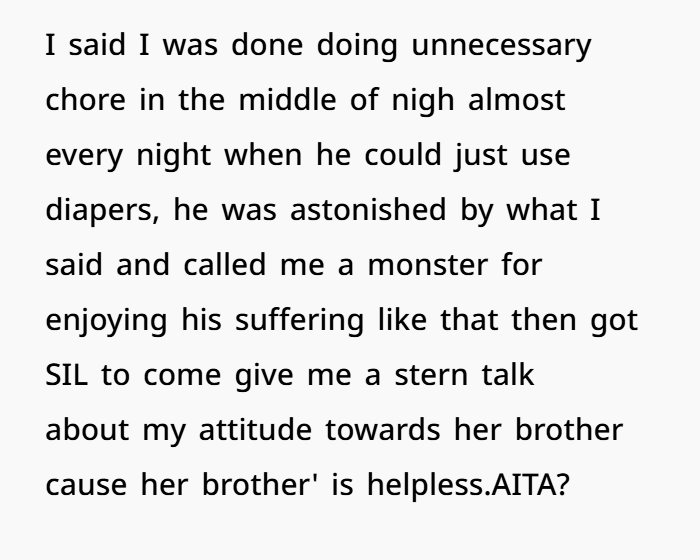
Doctors also suggested using adult diapers to make things easier, but he refused because he feels it affects his pride and masculinity. Instead, he expects his wife to wake up at night and clean everything each time it happens, including the bed, sheets, and floor. This has happened many times, and she is becoming physically and emotionally exhausted.
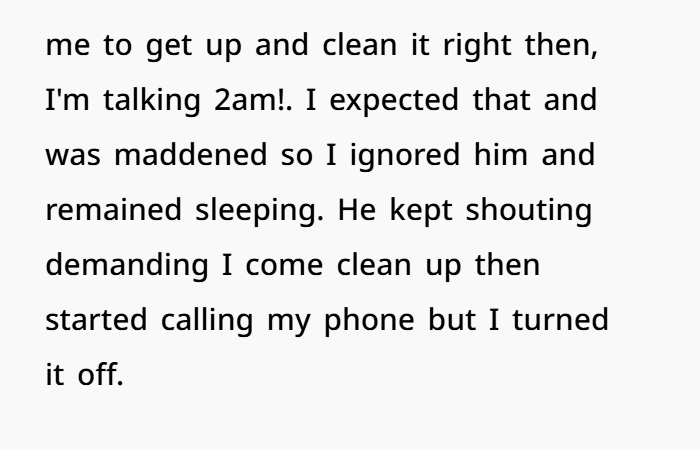
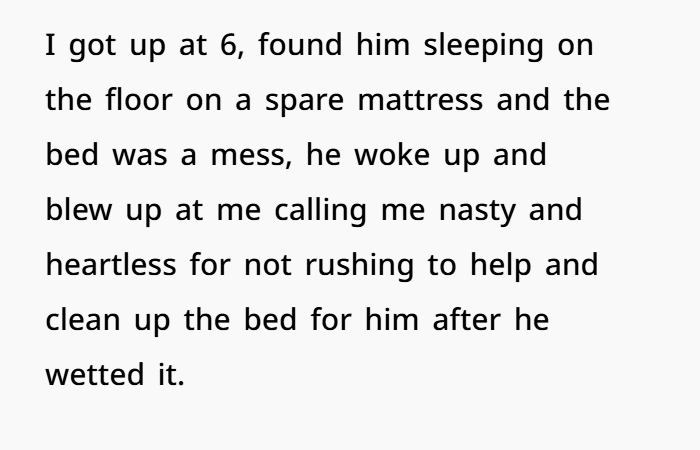
On one recent night, she decided not to get up when he called for help. He had to sleep on a spare mattress and later told her she was being cold and uncaring. After that, his sister also got involved and criticized the wife for not doing enough to help him.
Now the woman is feeling overwhelmed and confused. She is asking if she was wrong for finally refusing to keep cleaning up every night and setting a boundary, even though her husband is dealing with a serious medical condition and ongoing health challenges.
The author’s husband, who had heart problems, relied on her for cooking, cleaning, medication supervision, and other daily care


Let’s be honest — when a partner becomes seriously ill, the other partner often ends up doing almost everything. Cooking, cleaning, caregiving, emotional support, and managing daily care can quickly turn into a full-time responsibility. When this continues for a long time, and there is no support or respect, it can become overwhelming. This is not just about one incident. It is about caregiver burnout, relationship stress, and long-term emotional strain in marriage.
1. Caregiver burnout is real and very common
Caregiver burnout is a serious issue that affects many people who care for sick spouses, elderly family members, or disabled loved ones. According to the Cleveland Clinic, caregiver burnout is physical, emotional, and mental exhaustion caused by long-term care responsibilities.
People experiencing caregiver burnout often feel:
- Constant tiredness, even after sleep
- Emotional stress and frustration
- Feeling unappreciated or ignored
- Guilt when they try to set boundaries
In this situation, OP is doing night clean-ups, losing sleep, and handling repeated care tasks. This level of exhaustion is not normal short-term stress. It is long-term caregiver fatigue.
2. Ignoring medical advice makes things harder
In this case, the husband removed his catheter against medical advice and refused other solutions like adult diapers. These options are usually suggested by doctors to make care easier and more hygienic.
This is not just a personal choice. It directly increases the workload on the caregiver. Instead of using simple medical solutions, he is relying on his partner to clean up constantly.
Using medical support tools like adult diapers, waterproof bedding, or catheter care is not shameful. It is part of responsible health care management. Refusing them while expecting full cleanup support creates unnecessary stress in a caregiving relationship.
3. Emotional labor turning into unfair responsibility
Helping a sick partner is part of marriage, but there is a limit when one person carries all the work.
OP is not a professional caregiver. She is a spouse. But she is doing repeated night cleaning, laundry, and physical care without rest. Over time, this becomes emotional labor overload.
In healthy relationships, caregiving responsibilities should be shared or supported with medical help or outside care services. When one partner refuses solutions and expects the other to handle everything, it can start to feel like caregiver exploitation.
This is not about one bad night. It is about a repeated pattern that has become unmanageable.
4. Family involvement and emotional pressure
Another issue is when family members get involved in the conflict. The husband’s sister joining the situation can make things worse instead of better.
In relationship psychology, this is sometimes called triangulation. It happens when outside family members are brought in to pressure one partner or make them feel guilty.
Instead of helping solve the caregiving stress, it increases emotional pressure on OP and makes her feel blamed for setting limits.
5. Setting boundaries is not being cruel
It is important to understand that setting boundaries in caregiving is healthy. Saying “I cannot keep waking up every night to clean” is not being mean. It is basic self-care.
Healthy marriage relationships should include:
- Shared responsibility
- Respect for physical and emotional limits
- Willingness to use medical support tools
- Honest communication about caregiver stress
OP is not refusing to help. She is asking for a realistic and sustainable caregiving routine. The husband’s choices are what created the current situation, not her boundary.
6. Practical solutions that could help
There are simple ways to reduce stress in situations like this, especially in home caregiving and long-term illness care:
- Waterproof mattress protectors to reduce damage and cleanup
- Absorbent bed pads for easier night care
- Medical follow-ups to explore better treatment options
- Scheduled bathroom routines or bladder management plans
- Professional home health care or caregiver support services
These solutions are common in elder care and home caregiving support because they reduce burnout and improve hygiene.
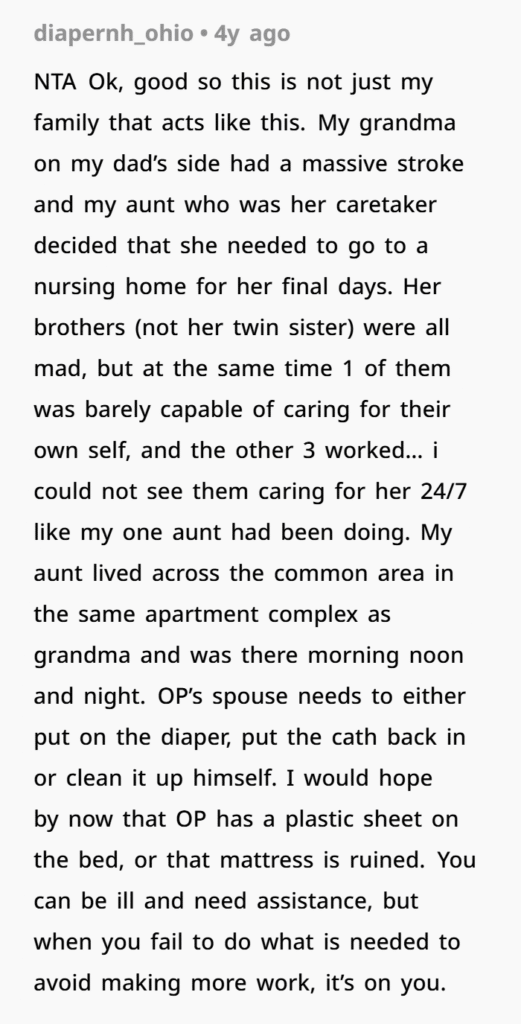
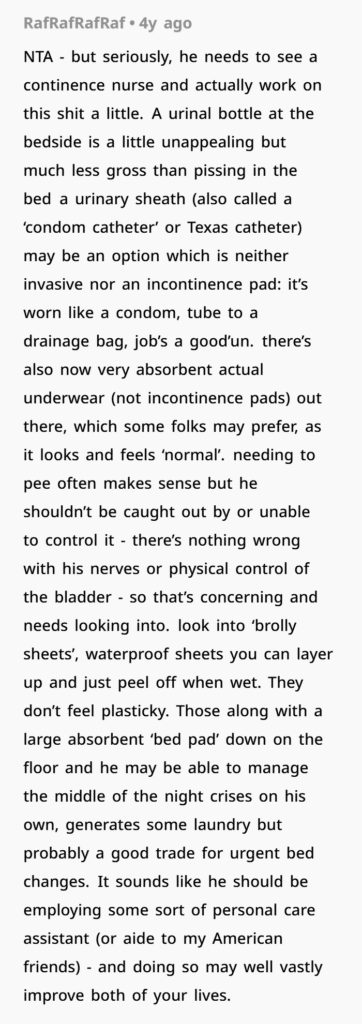
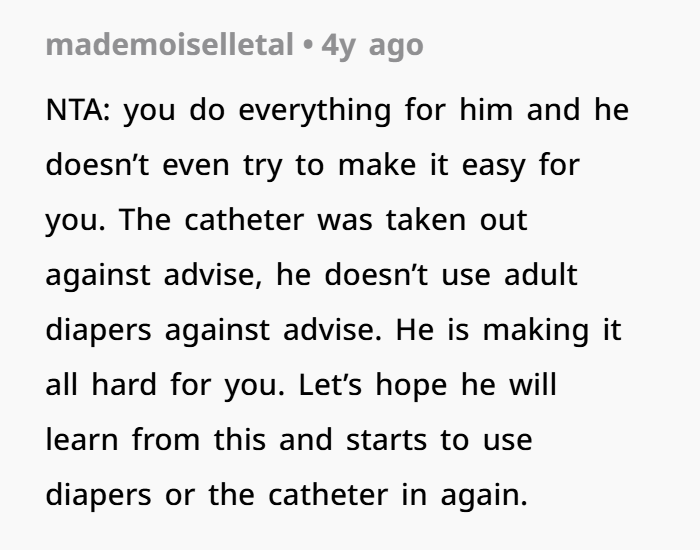
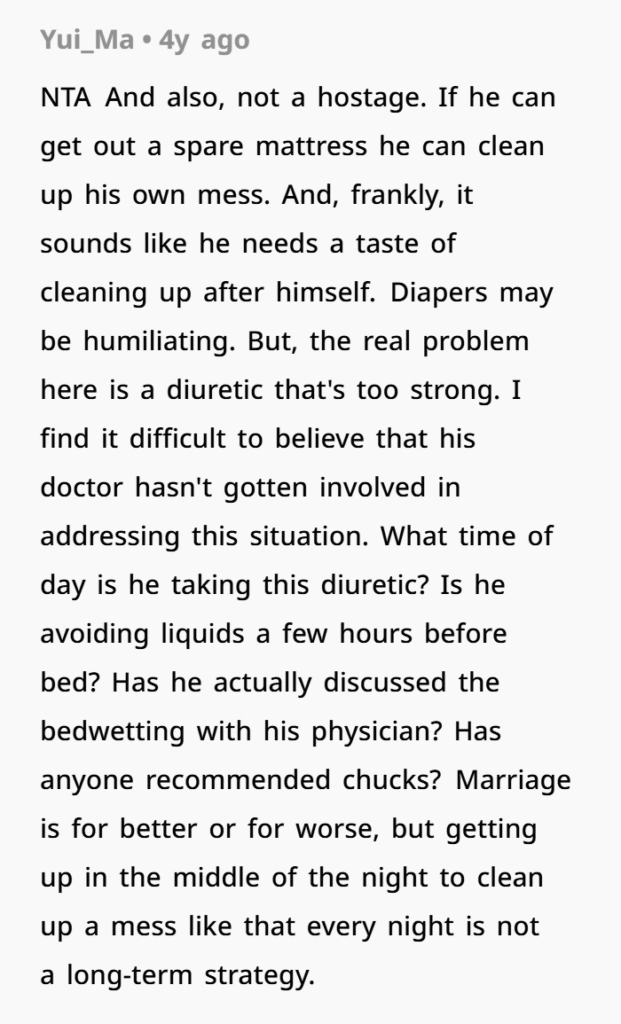
Netizens sided with the author, emphasizing that her husband’s refusal to use adult diapers or manage his own bedwetting was unfair and exhausting


In the end, OP is dealing with serious caregiver burnout and emotional exhaustion in marriage. She has already done a lot to support her partner. But care must go both ways. When one person refuses medical solutions and the other is left doing all the work, the situation becomes unfair and unsustainable.
Setting boundaries here is not wrong. It is necessary for mental health, relationship balance, and long-term caregiver well-being.