AITA for refusing to give my brother a kidney — even though I was born to save him?
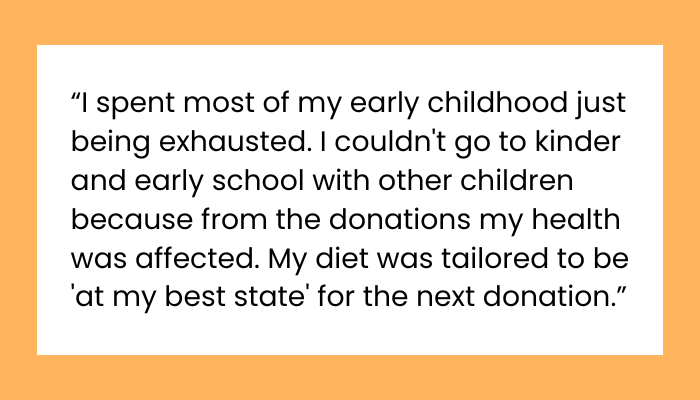
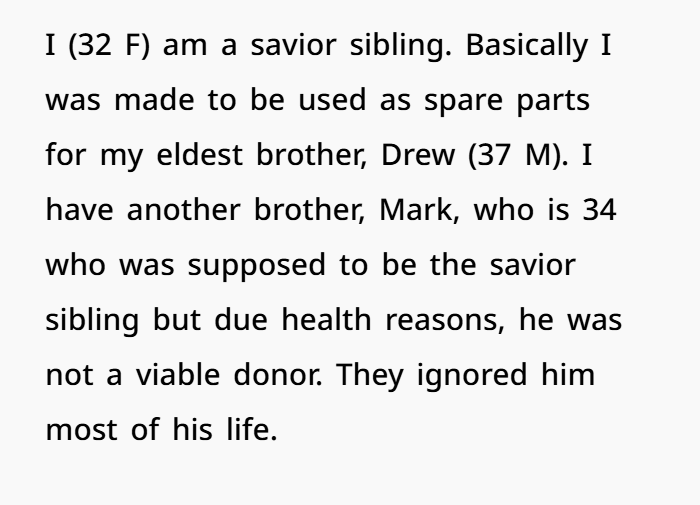
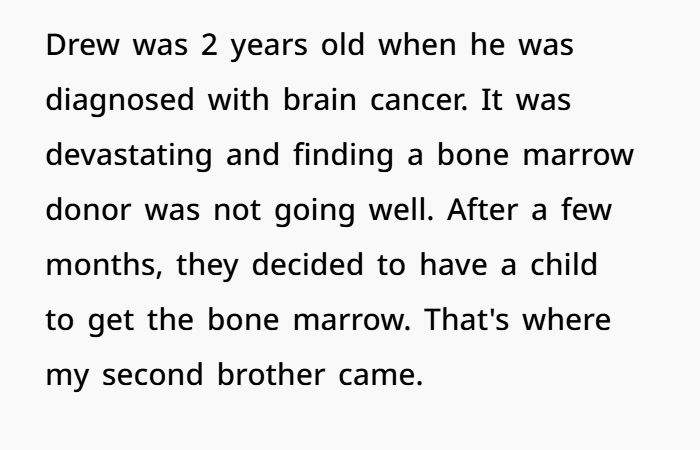
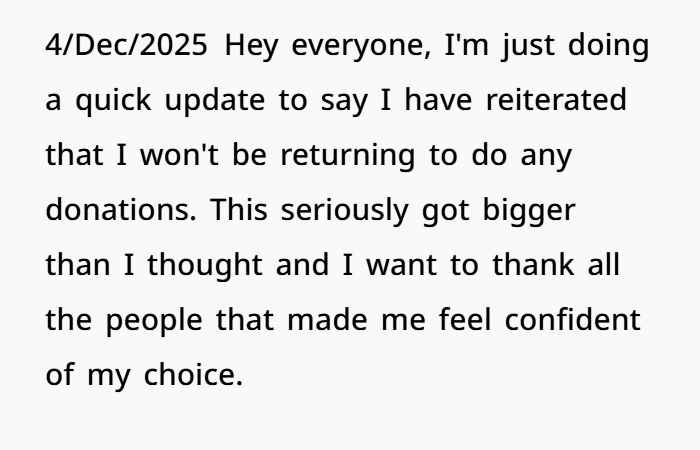
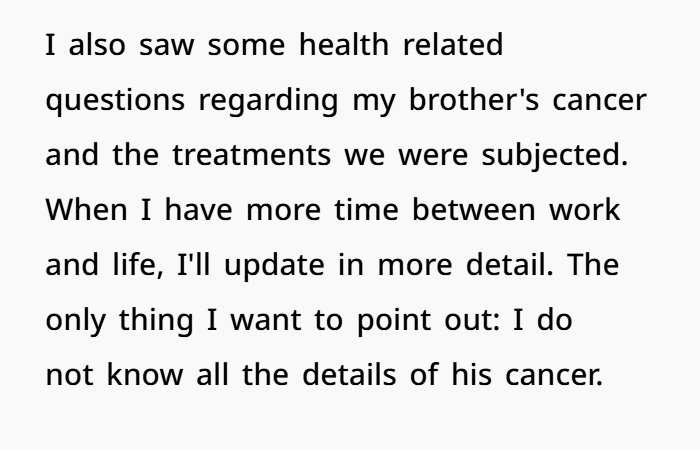
A person shared a very emotional family situation about growing up as a “savior sibling.” When their older brother had cancer, they were born partly to help save his life. As a child, they donated things like umbilical cord blood and bone marrow to support his treatment. Their early life was strongly shaped by this responsibility instead of a normal childhood.
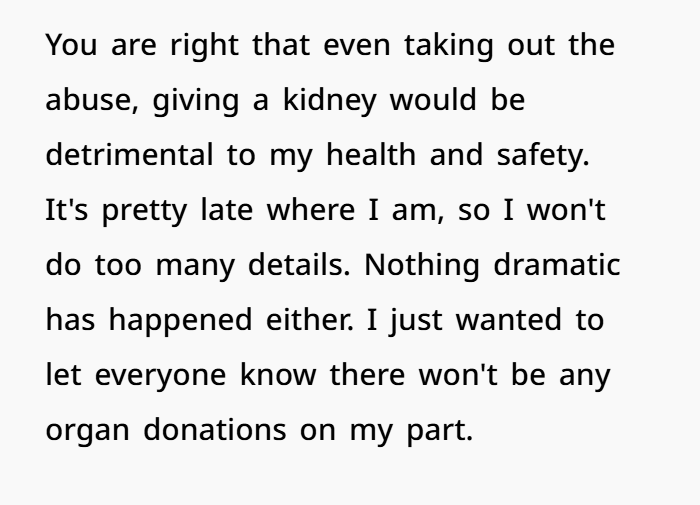
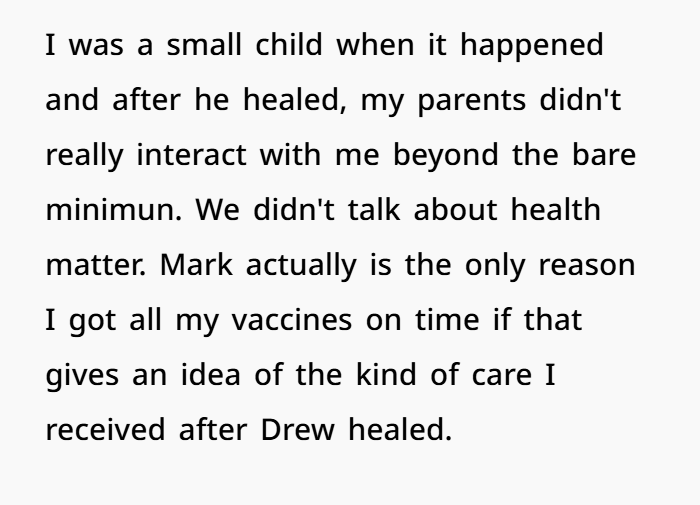
After the brother recovered, the family situation did not improve. According to the story, the brother became difficult and abusive, and most of the family’s attention and resources went to him. The person sharing the story felt ignored and treated unfairly, along with another sibling. Over time, they chose to move away and build an independent life focused on their own health and emotional well-being.
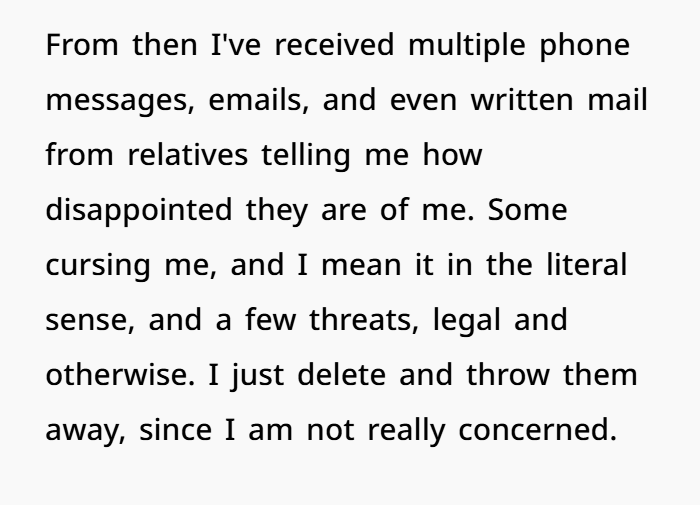
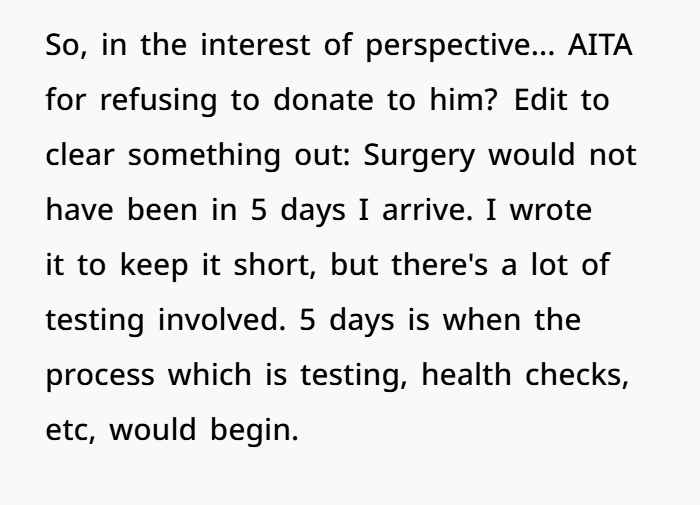
Years later, the older brother developed kidney failure and needed a kidney transplant. The parents then asked the person to donate one of their kidneys, treating it like an obligation because of what happened in the past. However, they refused because of the risks and impact on their own health.
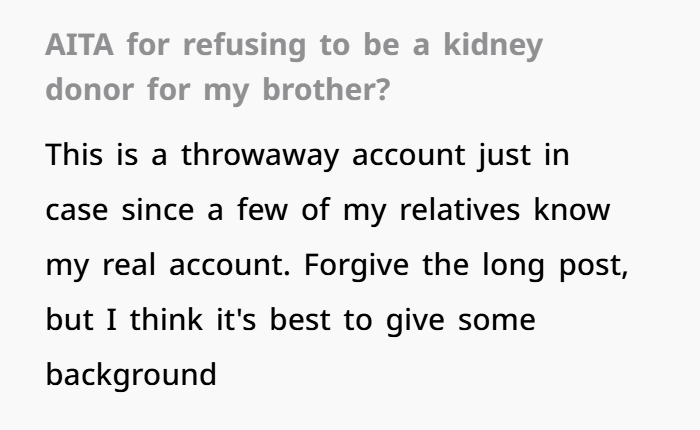
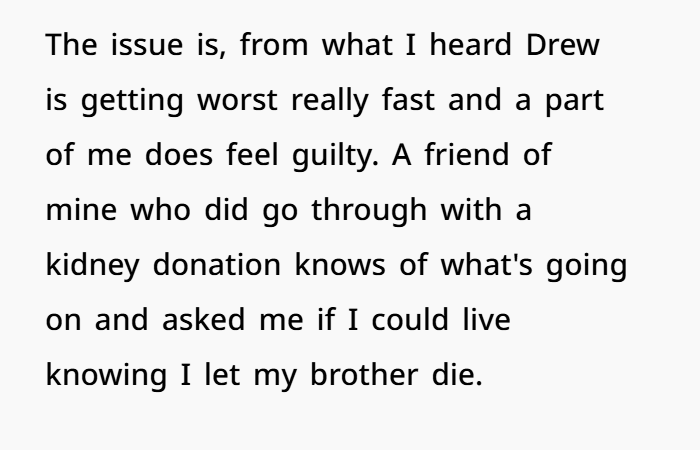
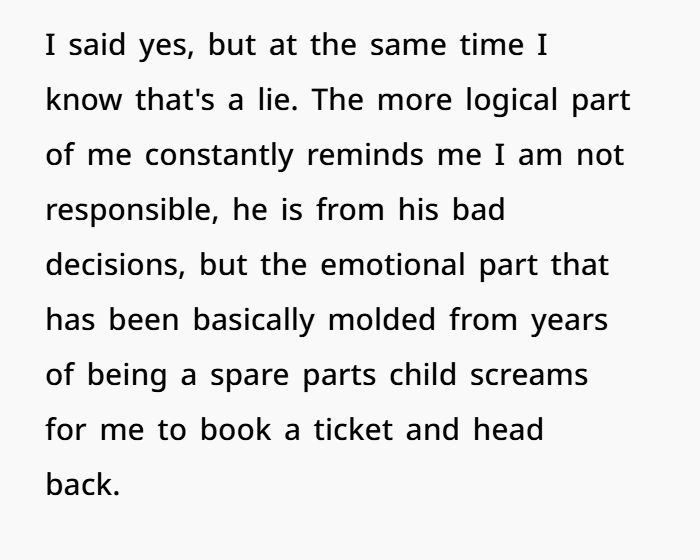
This decision created strong conflict in the family. The parents continued to pressure them with guilt and emotional stress, while they struggled with mixed feelings. On one hand, there is emotional guilt about their brother’s condition, but on the other hand, there is a clear need to protect personal health, boundaries, and long-term well-being.
The author of the post is now 32 years old and she has two elder brothers, 34 and 37 years old, but she only maintains relationships with the middle bro

🧠 This Situation Is Hard, But Your “No” Makes Sense
What you are going through is very difficult. But from a moral and ethical point of view, your decision to say no is valid. Let’s understand it in simple terms.
🧠 Autonomy & Consent — The Most Important Rule in Organ Donation
Deciding to donate an organ, like a kidney, is a very personal choice. In a living kidney donation, the most important rule is free and clear consent.
This means:
- No pressure
- No guilt
- No emotional forcing
- No family control
Ethical medical guidelines say a person must choose to donate only if they truly want to. It should never feel like an order or a demand.
In your case, it does not sound like a free choice. It sounds like pressure and emotional expectation. That is not real consent.
❤️ Trauma, Past Experiences, and Emotional Pain
Your situation is not simple because of your past.
You were treated like someone expected to sacrifice for others. This can leave emotional trauma and long-term stress.
Now, being asked to donate a kidney may bring back those painful feelings. It can feel like:
- your needs don’t matter
- your body is not fully your own
- you are expected to sacrifice again
Medical experts agree that psychological health and family pressure must be considered before any living organ donation.
If a decision causes emotional harm, it becomes much harder to justify.
⚠️ Risk and Responsibility in Kidney Donation
A living kidney donation is a major surgery.
Even though many people recover well, it still has:
- medical risks
- recovery time
- long-term health considerations
The donor does not get any medical benefit. Only the recipient benefits.
That is why doctors always say the donor must agree freely and without pressure.
If someone feels forced, the donation is no longer fully ethical or safe emotionally.
🧍♀️ You Are Not Fully Responsible for His Life
It is normal for family members to feel emotional pressure in situations like this. Some people may try to make you feel guilty.
But in reality:
- You are not the only person responsible for his health
- His past choices also matter
- You are not required to use your body to fix his life
Even if the situation is serious, the final decision cannot be forced on you.
You are allowed to protect your own body and mental health.
💔 Emotional Self-Care and Healthy Boundaries
Saying no does not mean you are a bad person.
It means you are setting healthy personal boundaries.
Ethical medical advice also supports this. Organ donation should never happen in a situation filled with:
- guilt
- pressure
- emotional stress
- family manipulation
You have built your own life and independence. Protecting that is not selfish. It is self-care.
🧠 Why This Decision Feels So Emotionally Heavy
Even when you understand things logically, emotions can still feel strong.
That is because:
- The situation may be life or death
- Family pressure can create guilt
- Love and history can confuse feelings
- Others may judge your decision
So even if you are right to say no, it can still feel emotionally difficult.
That is completely normal.
💬 Final Thoughts — You Are Not Wrong for Saying No
From an ethical, medical, and emotional point of view, you have the right to refuse a kidney donation.
Your body belongs to you.
You are not required to go through major surgery due to family pressure or guilt.
Choosing your own health, safety, and peace of mind is not wrong. It is a form of healthy boundary setting and self-protection.
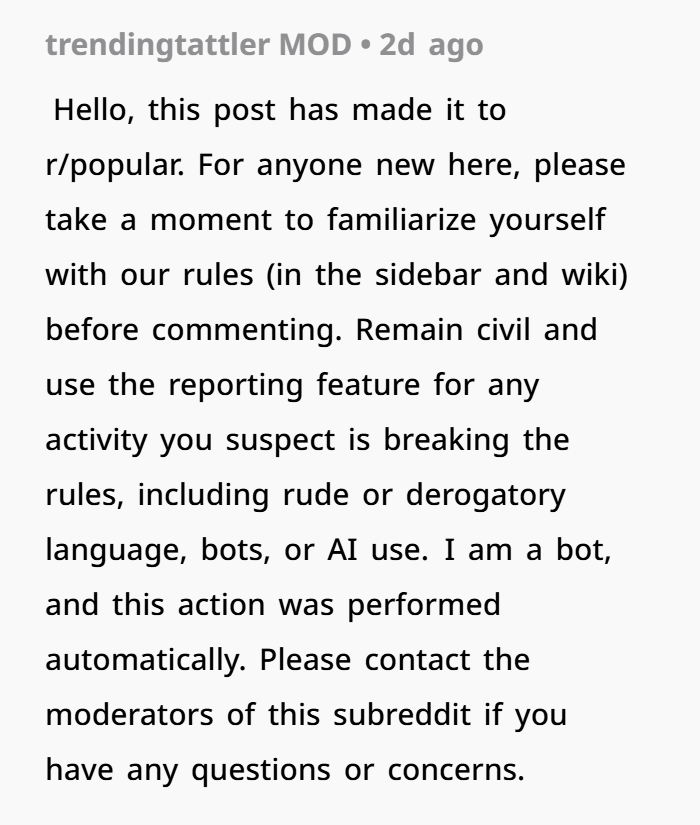
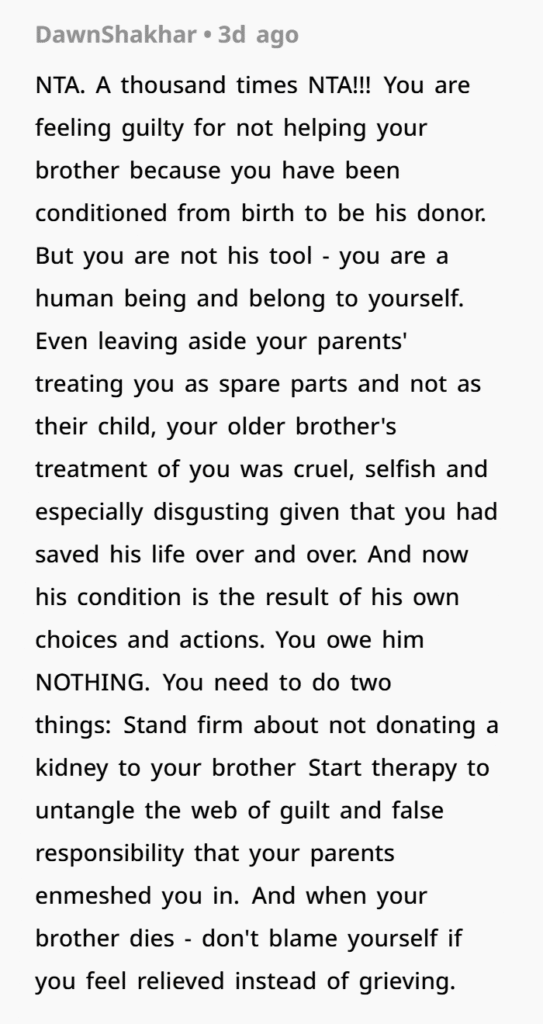
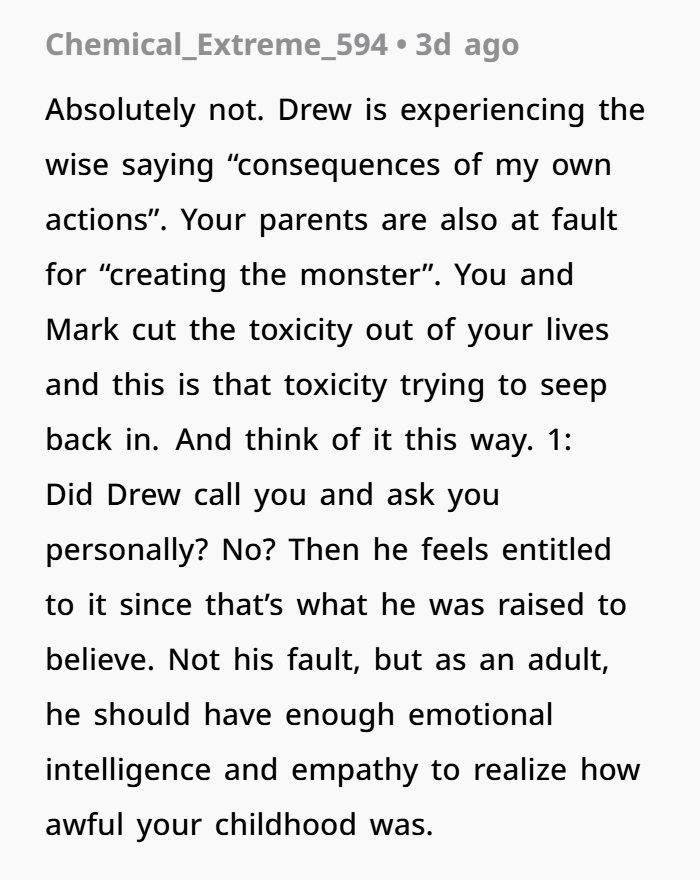
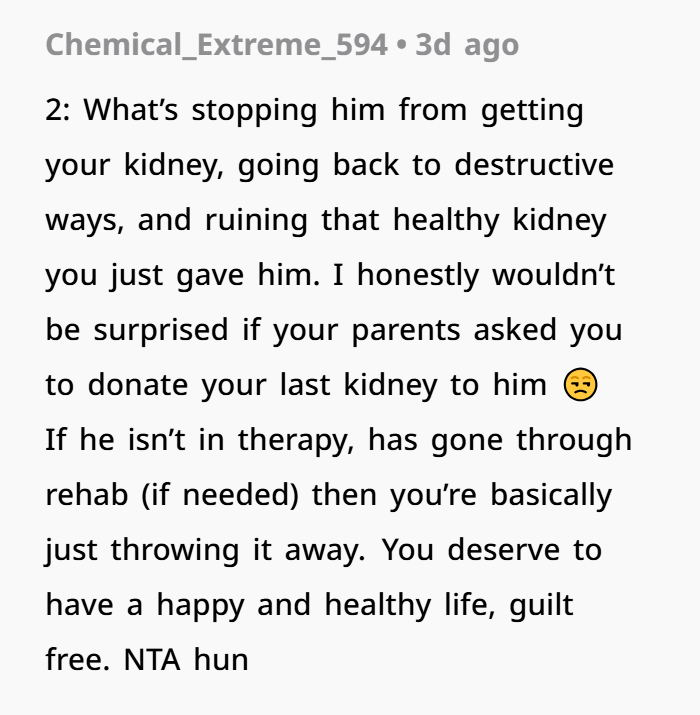
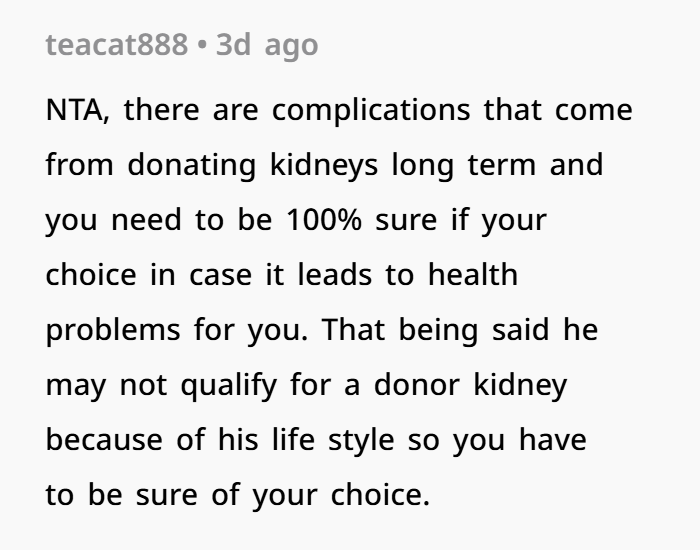
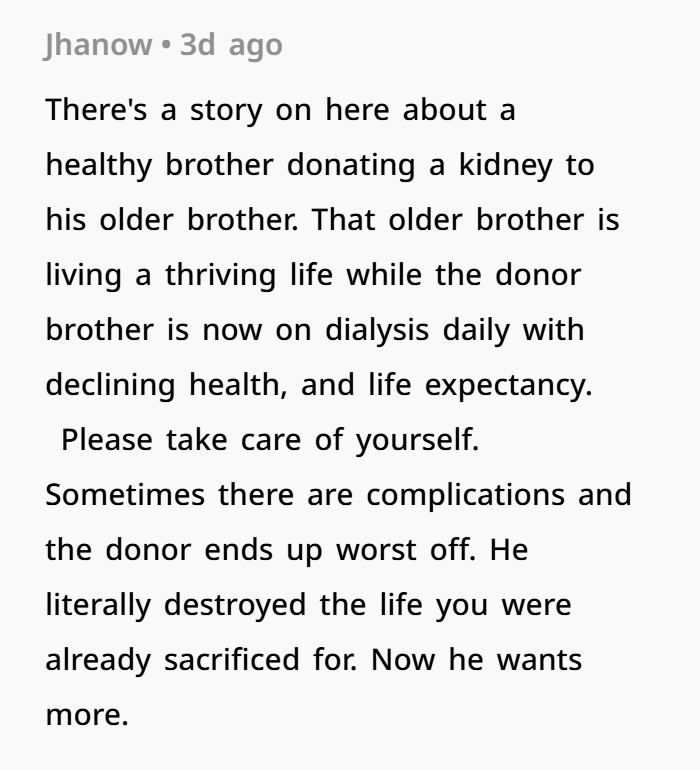
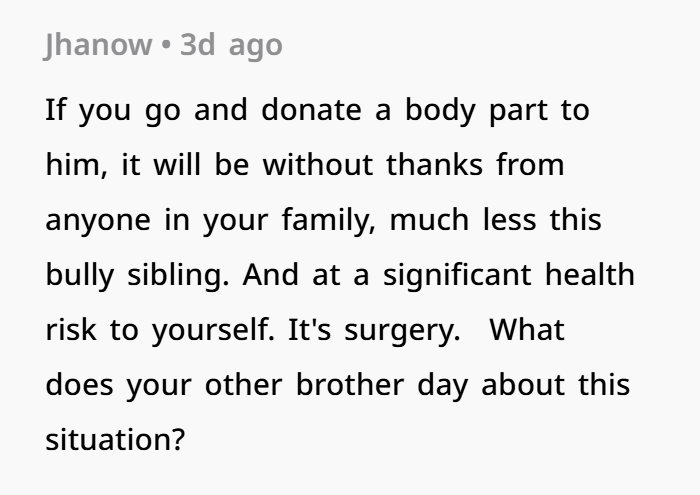
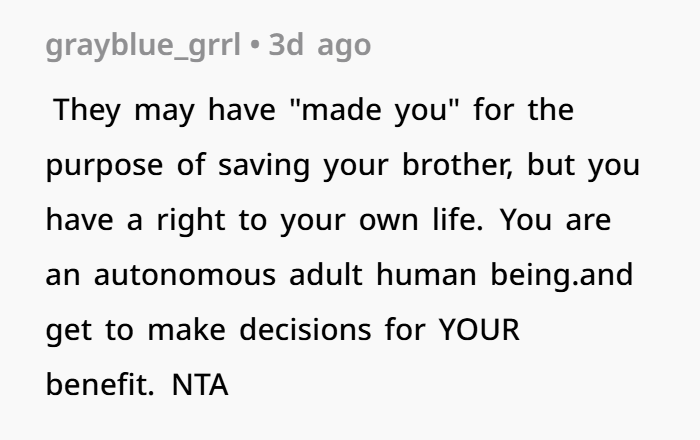
Most people in the comments claimed that the author did a right thing, and that she actually owes nothing to no one