
Woman Shocked After Her Mother Refuses to Give Gifts to Her Children, Claiming They Have Enough
In this story, a woman shares her frustration after her family decided not to give her children Christmas presents, despite her kids’ excitement and the family’s usual tradition of exchanging gifts. She explains how this decision hurt her children, especially when her son was on the verge of tears. Her mother defended the choice, saying her kids were already spoiled and didn’t need any more gifts. The woman’s response to this situation led to a series of arguments with her family, leaving her questioning if she overreacted.
Was her response too extreme, or did her mom cross a line? Let’s dive into the situation to understand both sides of the conflict.
One woman, who married into a wealthy family, showed up with her husband and their two kids at her family’s Christmas Eve celebration
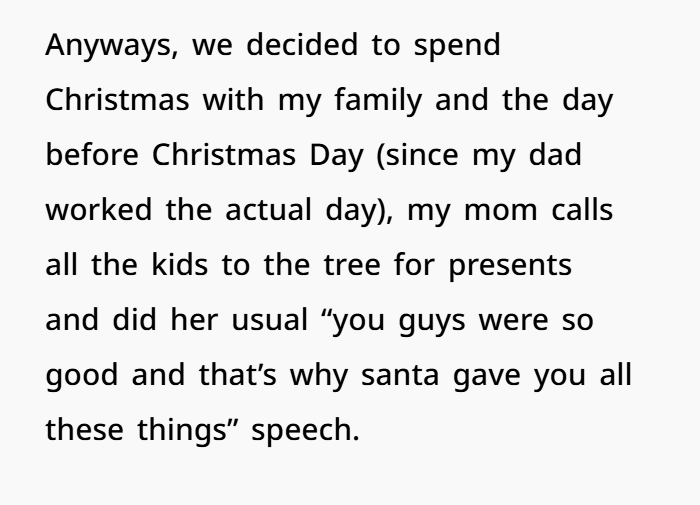
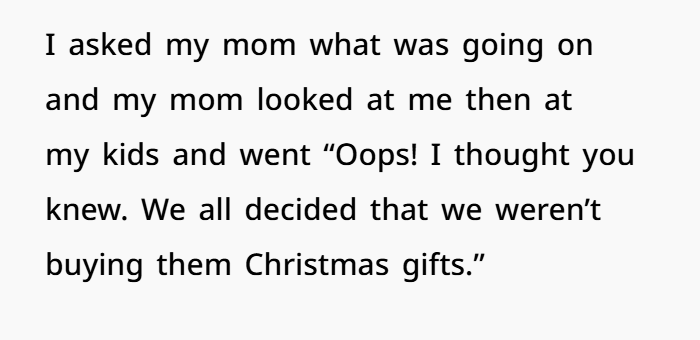
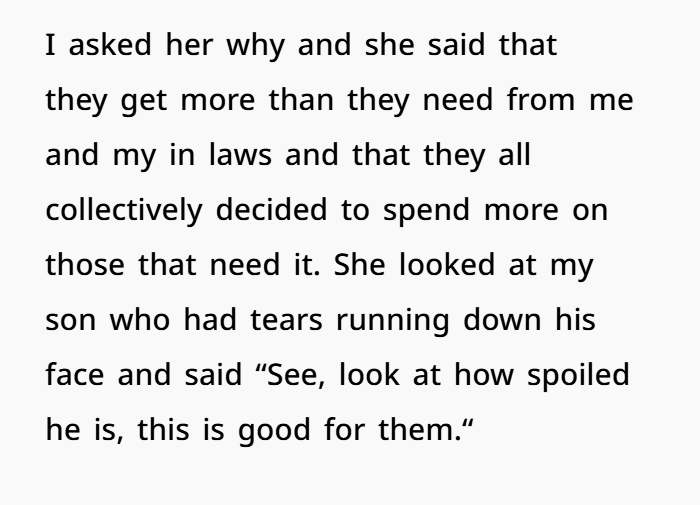
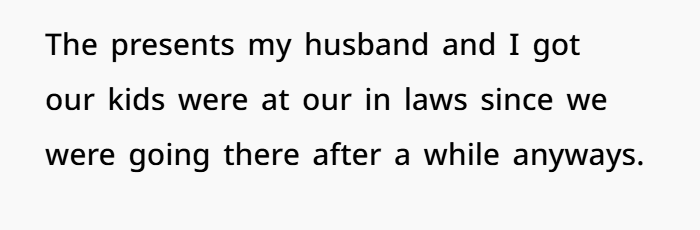
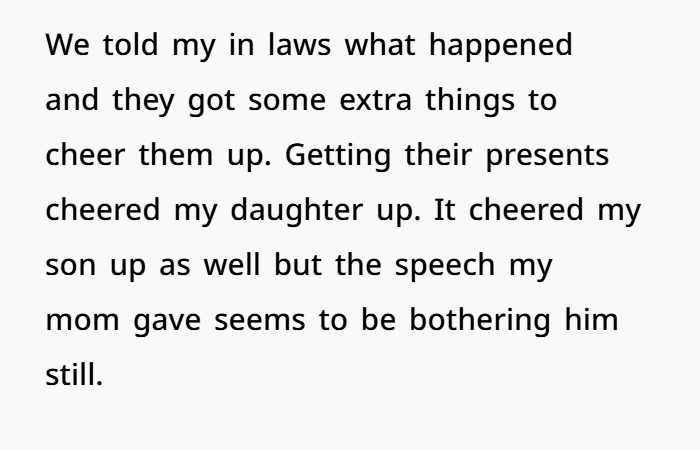
Sometimes, family dynamics around the holidays can get tricky, especially when different expectations collide. In this situation, the woman married into a wealthy family and her children have everything they could ever want, but they aren’t spoiled, she claims. With the holiday season in full swing, her family chose to not give her kids Christmas presents, reasoning that they had plenty already from her and her in-laws, and they wanted to focus on gifts for those “in need.” While the idea may have been intended to teach a lesson about generosity, it instead left the kids feeling left out and hurt.
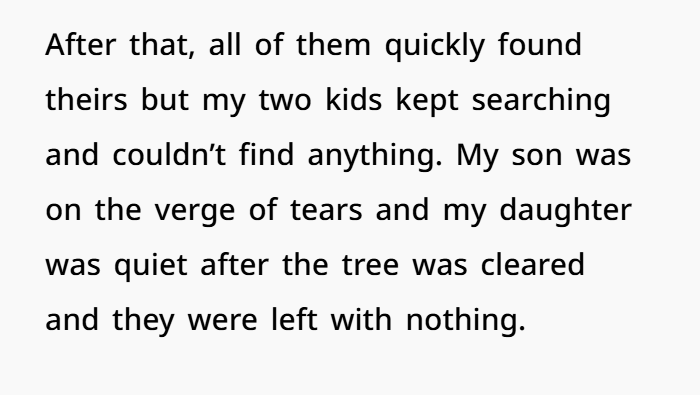
The biggest issue here seems to be the communication breakdown. The woman’s mom didn’t inform her ahead of time about this decision, leaving her completely unprepared. When the children eagerly searched under the tree only to find nothing, it was a blow to their spirits, especially for her son, who was visibly upset. The mother’s response to the situation wasn’t what anyone would expect: instead of comforting the children or apologizing for the misunderstanding, she doubled down on the idea that her kids were spoiled, and this would be a good lesson for them. This was further compounded by a tone-deaf comment about her son not being a “good kid” for crying, which only added fuel to the fire.
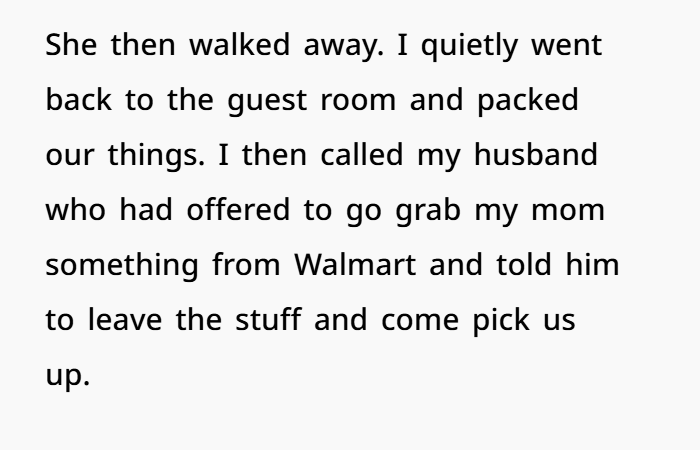
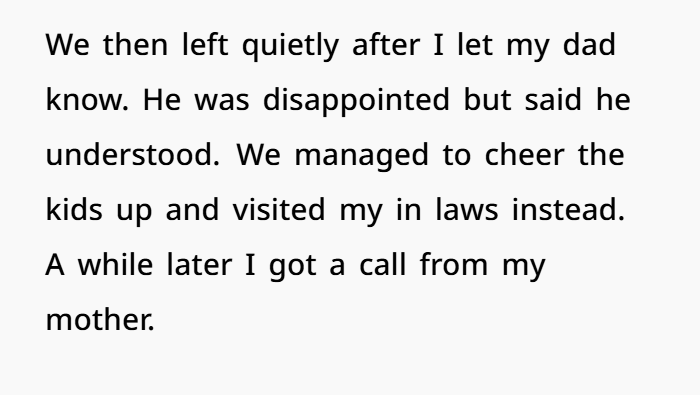
The woman, understandably, felt her children had been treated unfairly, especially in front of the other relatives. The fact that her mom didn’t consider the emotional impact this would have on her children—and worse, made them feel guilty for being upset—left her feeling betrayed. Her decision to leave with her kids was, in her view, a necessary step to protect her family’s feelings, even if it meant disappointing her parents. Her subsequent conversation with her mom only deepened the rift, with accusations of entitlement being thrown around. It’s a classic case of different values clashing—what one person sees as a valuable life lesson, the other sees as an insensitive snub.
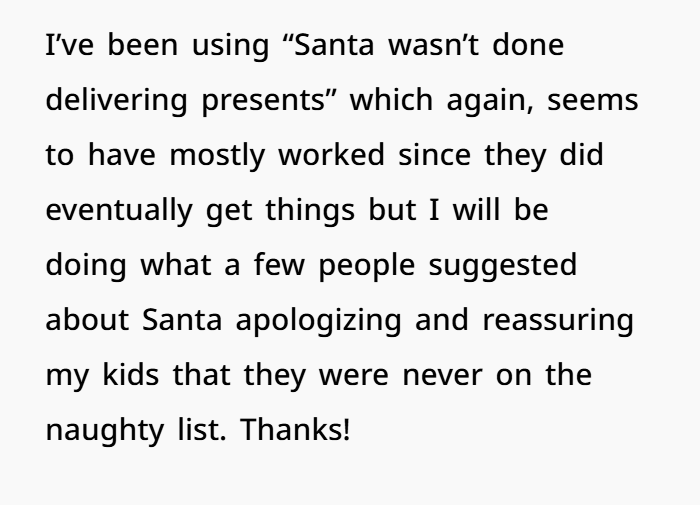
When the woman reached out to her in-laws to share what had happened, they immediately jumped in to cheer up the kids, showing them the love and care her family failed to provide in that moment. She also reassured her kids that Santa wasn’t done delivering presents, a sweet way of mitigating the hurt caused by the experience. As she reflects on the incident, it’s clear that while her intentions were to teach her children humility and appreciation, her mom’s delivery was misguided. The emotional fallout from this Christmas will likely linger for a while, especially given the harsh words exchanged.
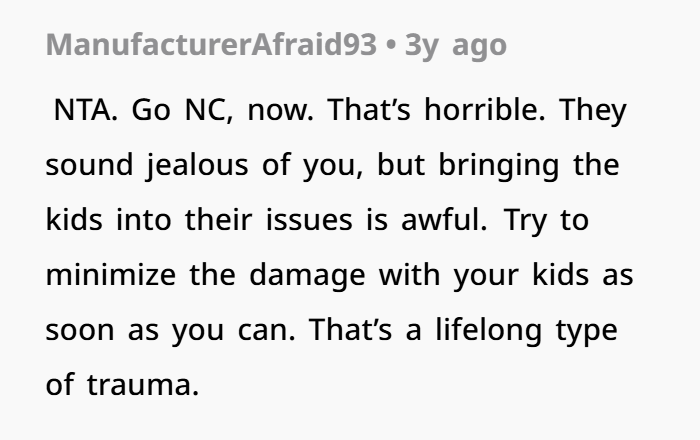
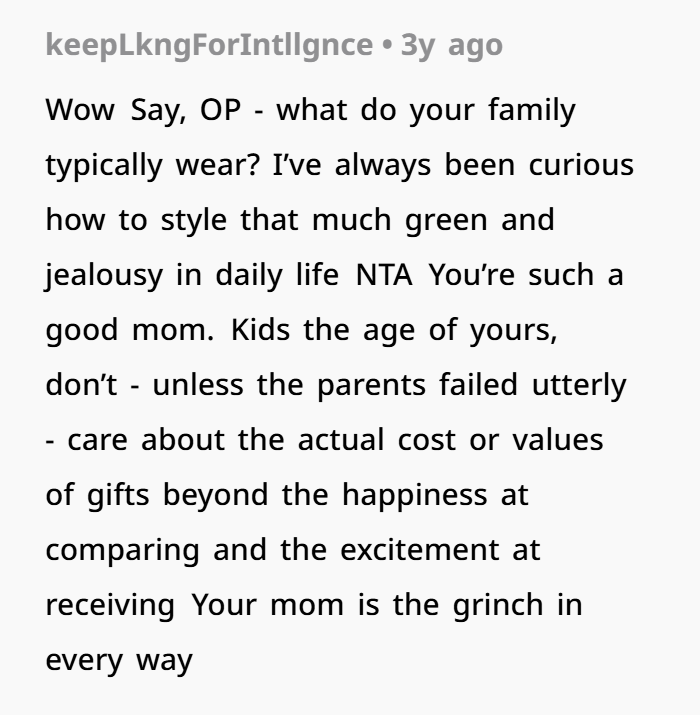
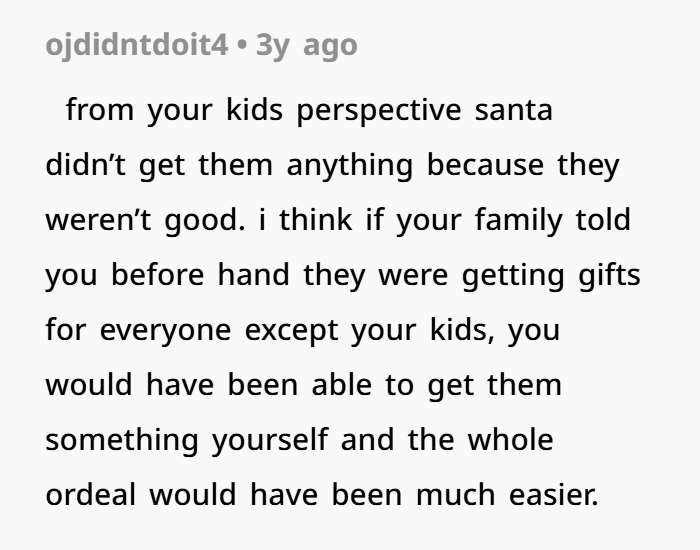
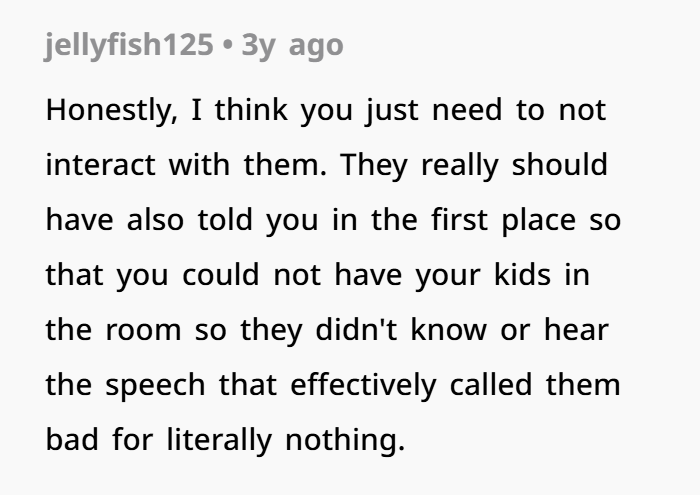
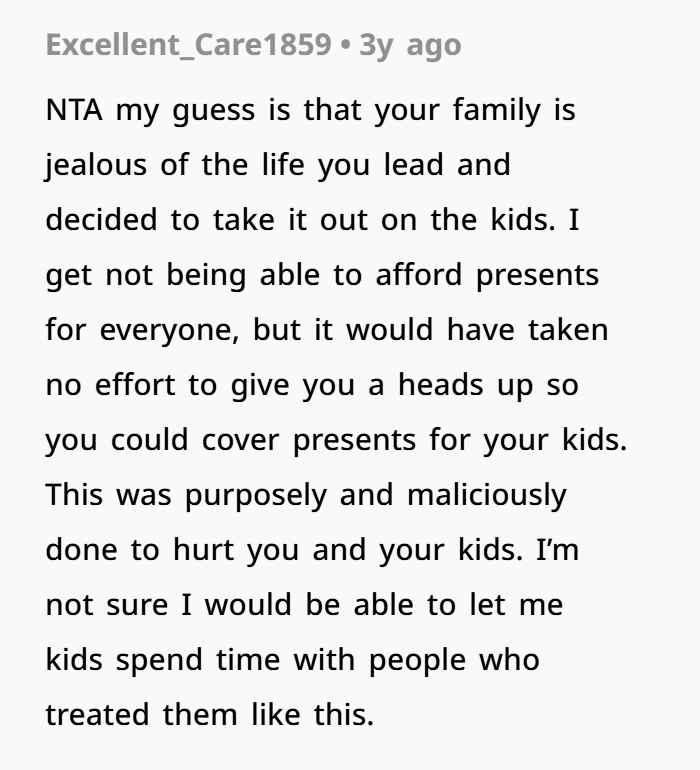
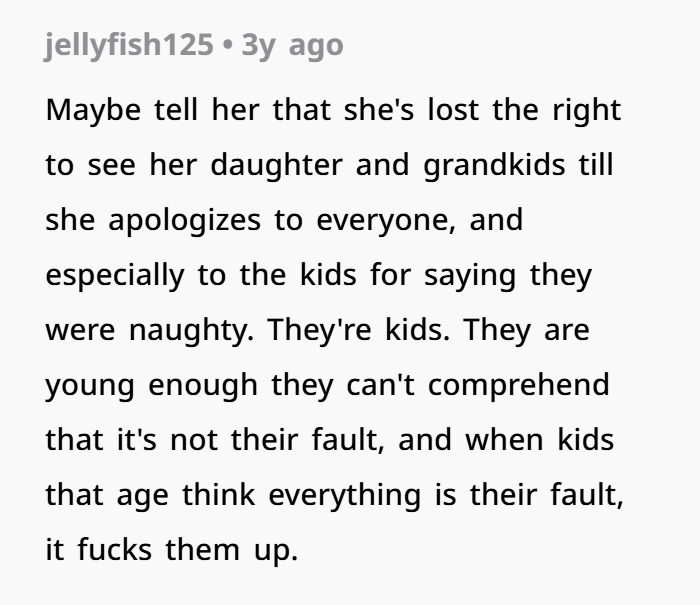
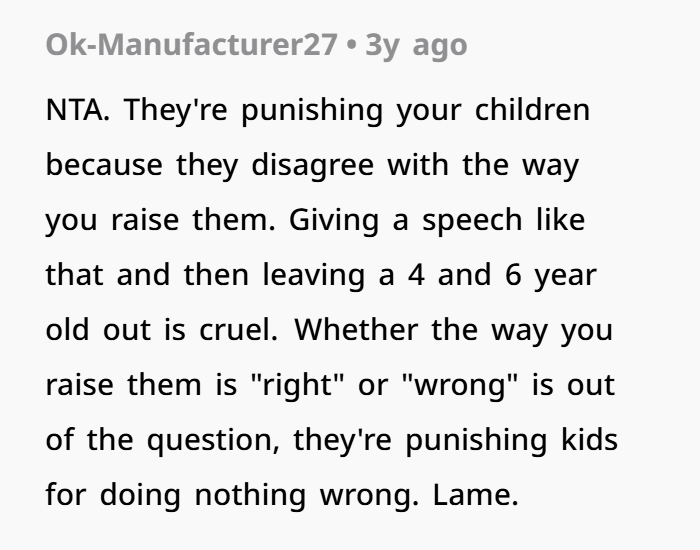
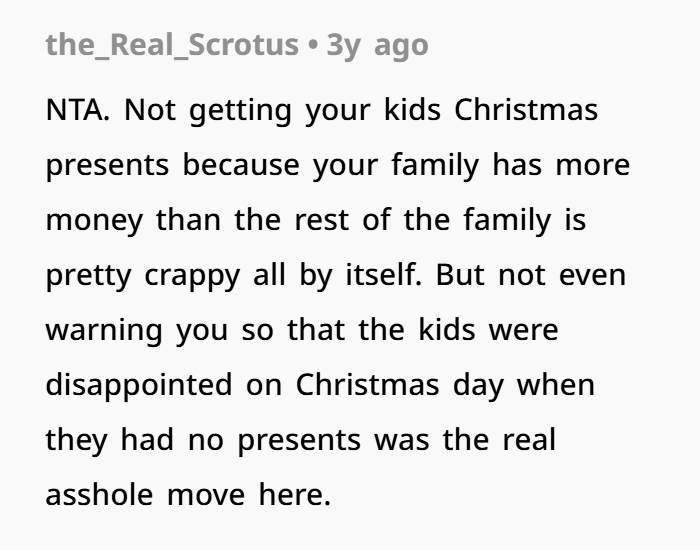
In the comments, readers seemed to agree that the bewildered mom was not the jerk in the situation and urged her to go no-contact with her cruel family
At the heart of this story is a disagreement about expectations, communication, and understanding. The woman’s frustration seems valid—her children were treated differently, and no one bothered to prepare her for the change in tradition. While her mom had her reasons, it’s hard not to feel for the kids who were left in an awkward and uncomfortable position. The holiday season is about love, joy, and togetherness, not just gift-giving. This situation was unfortunate for all involved, and it’s a reminder that sometimes, thoughtful communication and understanding can make a huge difference in avoiding family drama.
So, was she in the wrong? Maybe her reaction was strong, but it’s hard not to sympathize with someone who felt their kids were unfairly treated. It wasn’t just about the gifts—it was about feeling valued and understood within the family. And in this case, the woman’s frustration with her family’s actions is understandable. After all, Christmas is a time to be considerate of each other’s feelings, especially when kids are involved.