
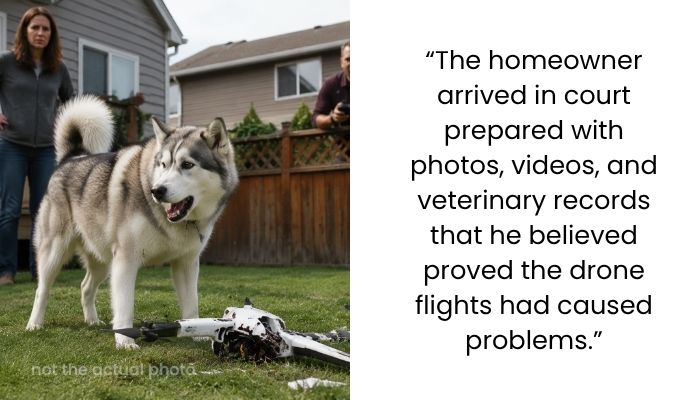
Neighbor’s Drone Harassment Case Backfires After Dog Destroys Drone
A homeowner’s dispute with his neighbor over a drone ended up becoming a legal battle that the drone owner likely did not expect.
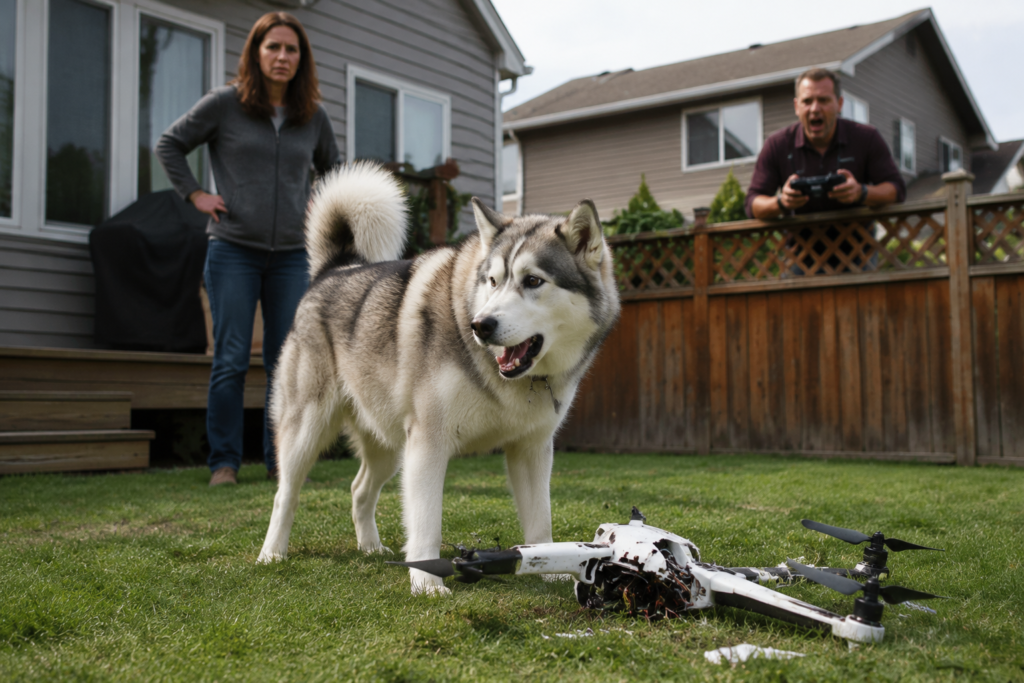
According to the homeowner’s account, the neighbor repeatedly flew a drone into his fenced backyard and used it to bother his large dog. After months of complaints, the dog eventually caught the drone during one of its low flights and damaged it badly.
The neighbor then took the homeowner to small claims court, asking for money to cover the damaged drone and other costs.
However, the homeowner claimed he had evidence showing the drone flights were not accidental, including videos, photos, and veterinary bills related to his dog’s stress and injuries.
Neighbor’s Drone Dispute Turns Into Unexpected Court Battle
Drones have become a popular hobby for many people, but flying them around other people’s homes can quickly create serious conflicts.
In this case, a homeowner said his neighbor bought a drone and began flying it in ways that made several people uncomfortable. According to his story, the neighbor hovered near houses, flew close to windows, and even used the drone to follow cars on the road.
The biggest problem started when the drone began entering the homeowner’s fenced backyard.
The homeowner said the drone repeatedly flew above his dog, dropping low toward the animal’s head before pulling away and repeating the same action. The dog, a large 70-pound Malamute, became frightened by the noise and movement.
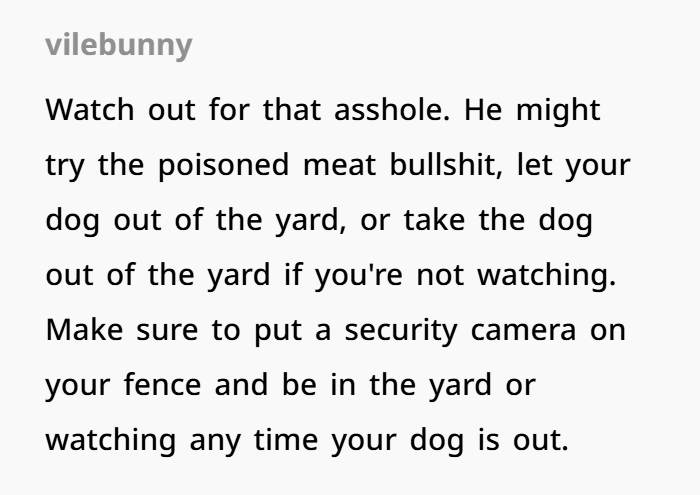
The homeowner worried that the drone could crash into his dog and cause an injury.
Repeated Complaints Did Not Stop the Drone Flights
The homeowner said he approached his neighbor several times and asked him to stop flying the drone over his yard.
Instead of listening, the neighbor allegedly dismissed the complaints and continued the flights.
After the problem continued, the homeowner contacted police. However, according to the account, officers had limited options and only asked the neighbor to avoid flying over the property.
Drone complaints can be complicated because laws often depend on where the drone is flown, how it is operated, and whether it creates a safety or privacy issue. The Federal Aviation Administration (FAA) drone rules include requirements for safe operation, registration, and flight restrictions.
The Moment the Drone Was Destroyed
The situation reached a breaking point in December.
The homeowner said his dog eventually reacted when the drone made another low dive toward him. The dog managed to catch the drone, leaving it badly damaged with broken plastic parts and exposed wires.
The drone owner was reportedly furious.
He went to the homeowner’s house angry and made threats, according to the story. About a week later, the homeowner received a small claims court notice.
Drone Owner Filed a Lawsuit Over the Damage
The neighbor reportedly demanded around $900 for the destroyed drone.
He also requested another $300, claiming he was denied access to retrieve the drone after it landed in the homeowner’s yard.
The homeowner believed the lawsuit was unfair. He argued that the drone owner had repeatedly entered his private property area and caused stress for his dog.
Small claims court is often used for disputes involving smaller amounts of money, such as property damage claims or personal disagreements. Rules vary by location, but these cases usually depend heavily on evidence presented by both sides. General information about small claims procedures can be found through resources like USA.gov’s small claims court guide.
Evidence Changed the Direction of the Case
Before going to court, the homeowner gathered records that he believed supported his side.
He reportedly collected photos showing his backyard layout, videos of previous drone flights, and veterinary records showing expenses related to his dog.
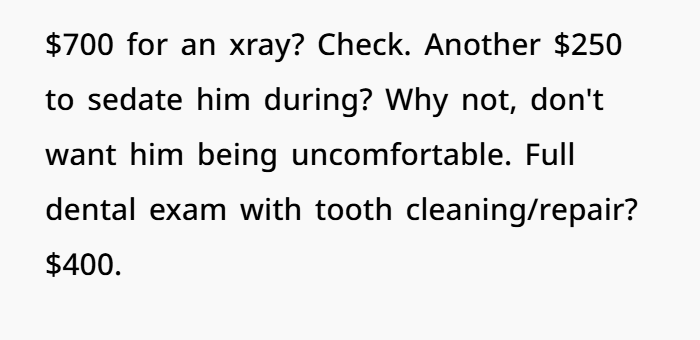
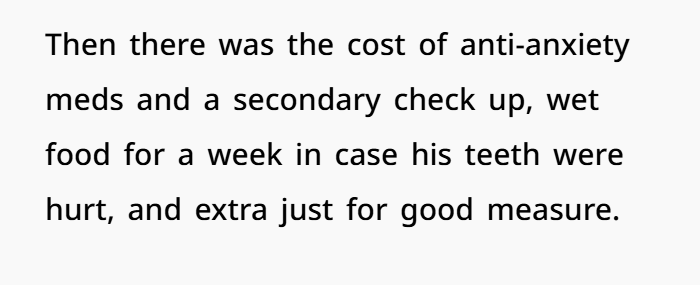
The bills included costs such as:
- X-rays
- Sedation during veterinary treatment
- Dental examination and repairs
- Anxiety medication
- Follow-up visits
- Special food while recovering
The homeowner argued that his dog was not trained to attack the drone. Instead, he claimed the animal reacted naturally after being repeatedly disturbed.
Court Dispute Became a Bigger Problem for the Drone Owner
According to the homeowner’s account, the judge rejected the neighbor’s claim that the dog had been intentionally trained to attack the drone.
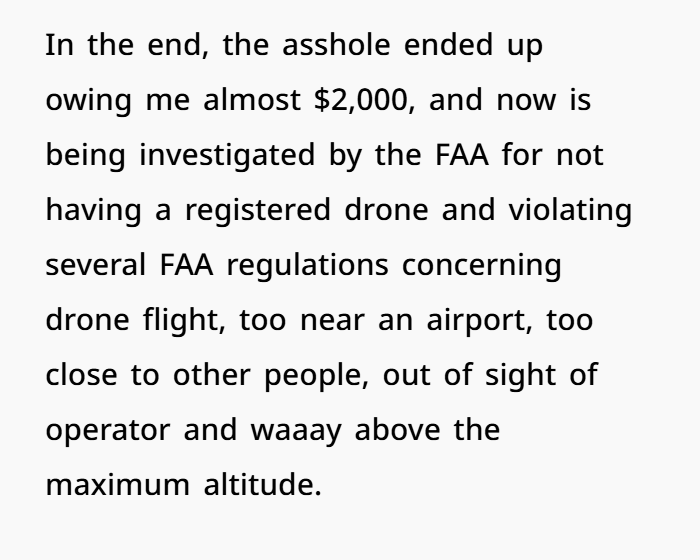
The homeowner said the final result went in his favor and that the neighbor ended up owing him close to $2,000 after his own claims failed.
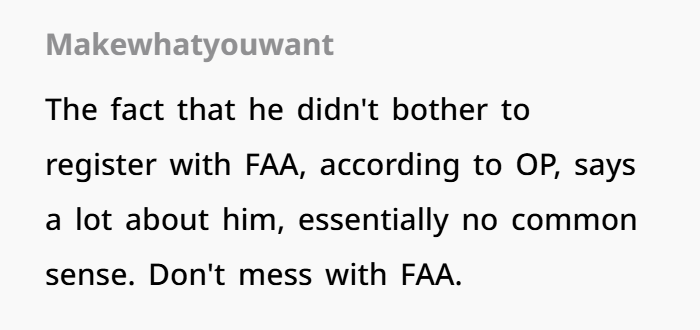
The story also claims the drone operator faced possible FAA attention because of alleged violations involving drone registration, unsafe flying, distance from people, and altitude limits.
Drone operators in the United States must follow FAA safety requirements, including rules about registration and responsible operation. The FAA provides updated information about drone regulations through its official Unmanned Aircraft Systems website.
A Reminder About Responsible Drone Use
This unusual neighbor dispute shows how quickly a hobby can turn into a serious property conflict when boundaries are ignored.
Drones can be useful tools for photography, business, and recreation, but responsible flying matters. Respecting privacy, avoiding unsafe flights, and following local and federal rules can help prevent expensive disputes.
For this homeowner, the biggest concern was never the drone itself. It was protecting a longtime companion who had been part of his life for years.
The case serves as a reminder that technology and personal property can easily collide when people ignore simple requests from their neighbors.
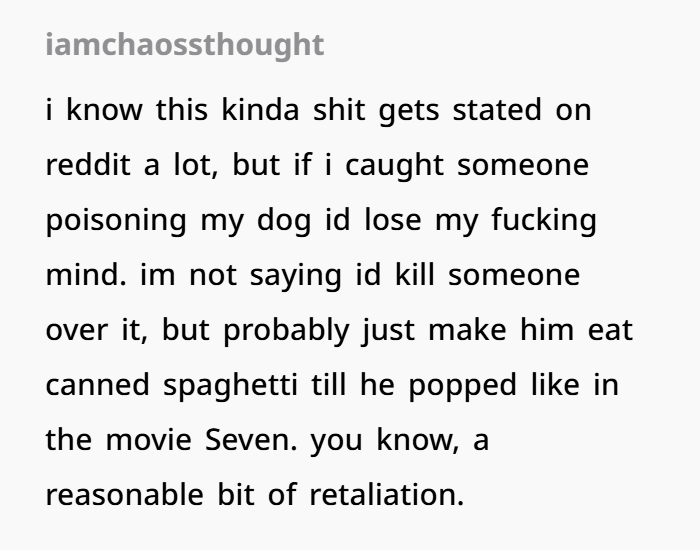
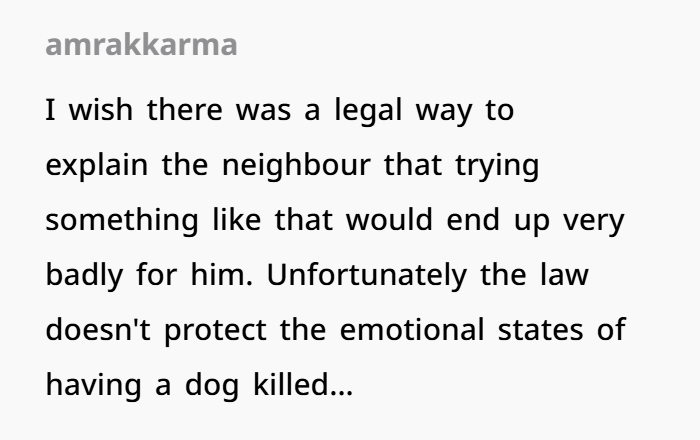
See the comments to know what people said
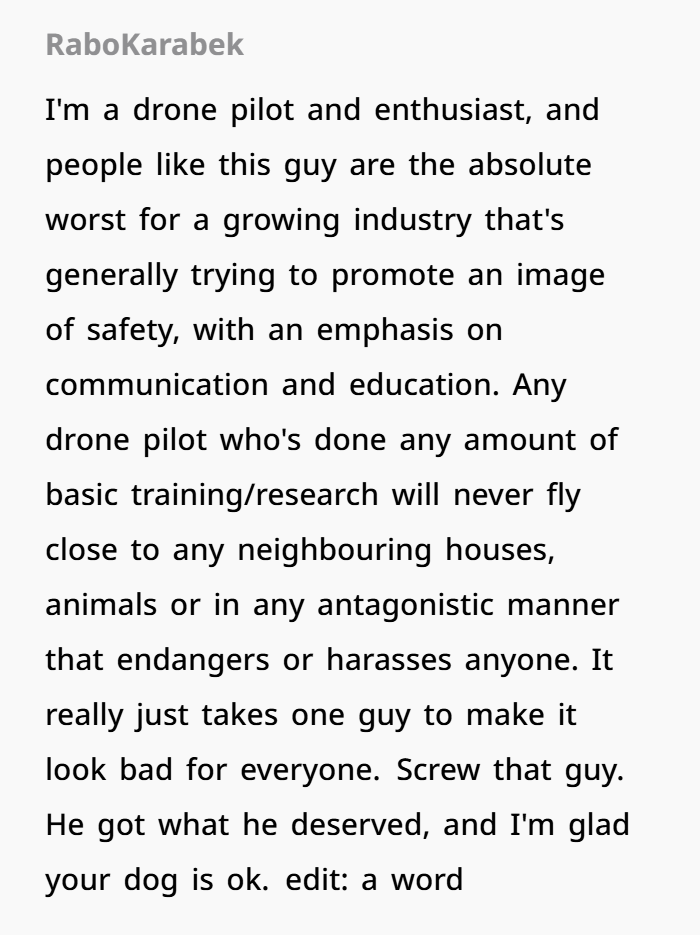
This neighbor dispute shows how a simple hobby can become a serious problem when someone ignores other people’s boundaries. Flying a drone can be fun, but using it in a way that scares animals, bothers neighbors, or creates safety concerns can quickly lead to conflict.
According to the homeowner’s story, the lawsuit that was meant to recover money for a damaged drone ended up bringing more attention to the neighbor’s own actions. The evidence collected, including videos, photos, and veterinary records, became a key part of his defense.
The situation is also a reminder that responsible drone use matters. Following FAA rules, respecting private property, and listening when someone raises concerns can prevent costly arguments and legal trouble.
In the end, the dispute was not really just about a broken drone. It was about respect, responsibility, and knowing when a hobby starts affecting the people and pets living nearby.