6-Year-Old Gets 2-Week Suspension After Declining a Snake Activity at School
Everyone handles fear in their own way. Some people stay calm, while others may feel overwhelmed and want to move away from the situation.
For young children, scary moments can feel even more difficult. They often need patience, support, and reassurance when facing something that frightens them.
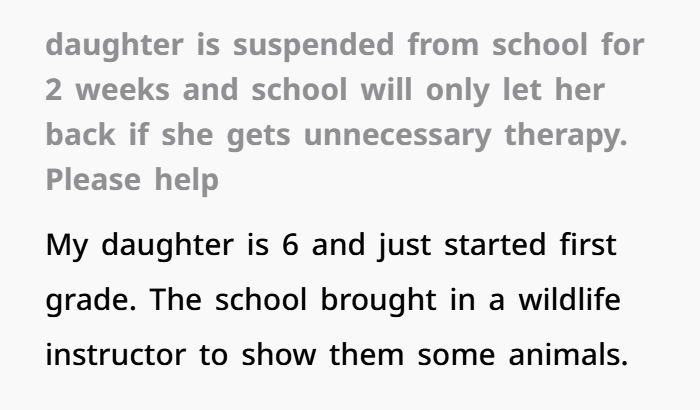
One mother became upset after her first-grade child was suspended from school for running away from a snake. The child reacted out of fear and tried to get away from the situation.
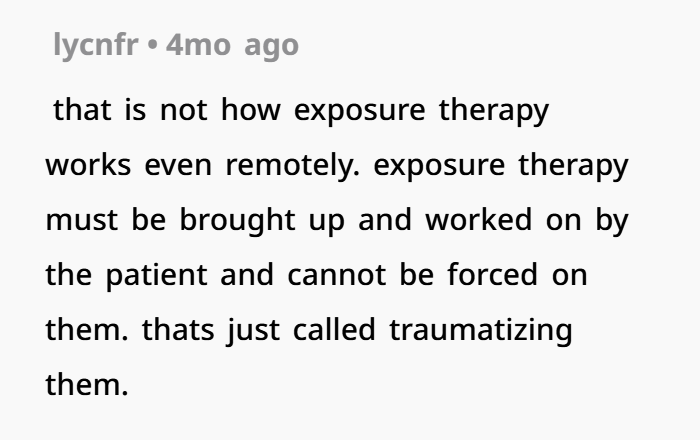
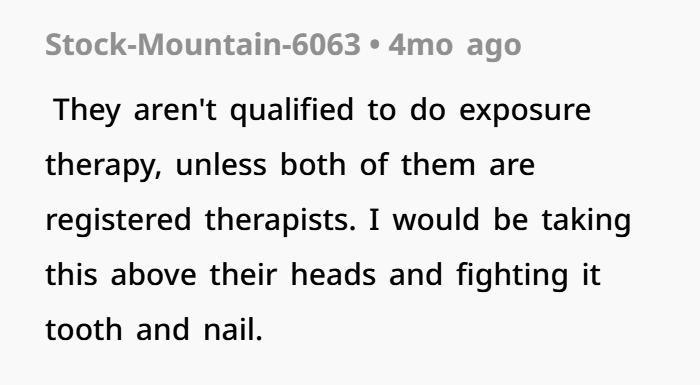
When the mother asked the school about the decision, staff explained that they wanted the child to face her fear as part of an approach they described as exposure therapy.
The situation started a conversation among parents about child safety, school decisions, and the importance of helping children manage fears in a supportive way.

Mom Speaks Up After Daughter’s School Suspension Over Classroom Fear
Every parent wants their child to feel safe and supported at school. Teachers help children learn new skills, explore new ideas, and become more confident. However, when a child feels uncomfortable or scared, it is important for schools and parents to work together.
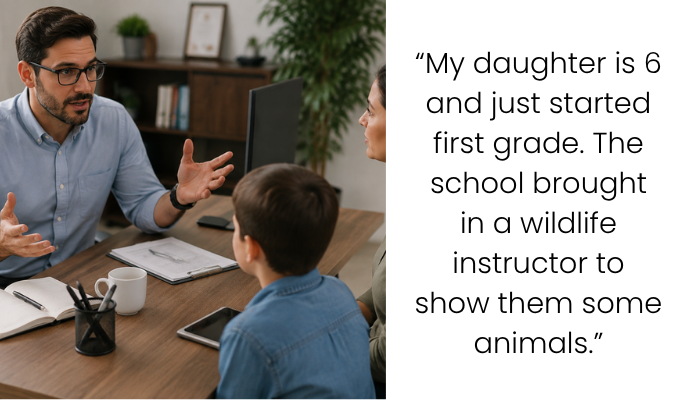
One mother recently shared a situation involving her first-grade daughter and a classroom activity with a wildlife instructor. The experience led to concerns about student safety, communication between parents and teachers, and how schools should handle children’s fears.
A Classroom Animal Activity Created Fear for a Student
The first-grade class had a special visit from a wildlife instructor who brought different animals for students to learn about.
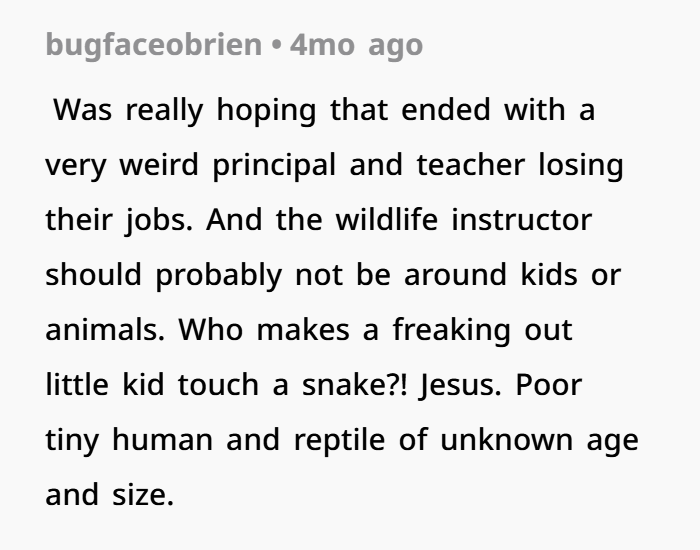
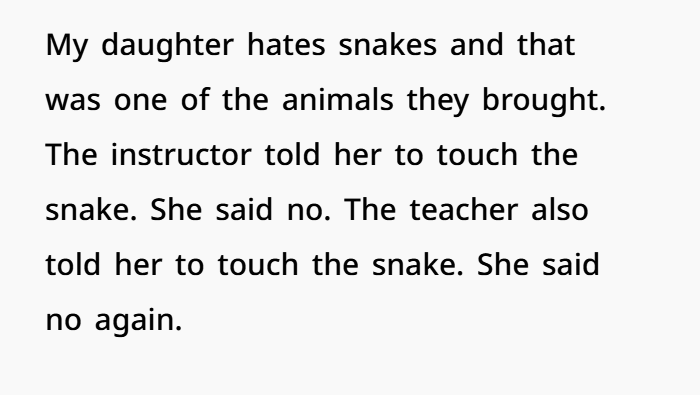
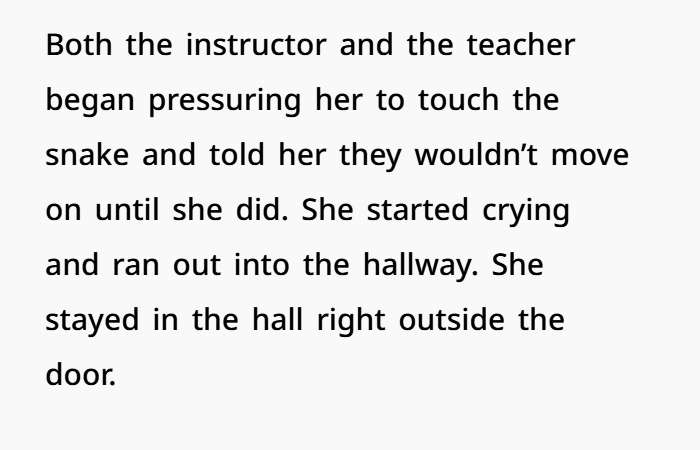
During the activity, the instructor and teacher encouraged the young girl to touch a snake. The child was very afraid and did not feel comfortable getting close to the animal.
According to the mother, her daughter continued to feel pressured even after showing signs of fear. The child eventually became overwhelmed and left the classroom area.
For young children, new experiences can be exciting, but they can also feel scary. Teachers need to create a learning environment where students feel safe and respected.
Why Communication Between Schools and Parents Matters
Classroom activities involving animals require careful planning. Schools should consider student safety and make sure parents are aware of activities that may involve possible concerns, such as allergies, medical needs, or strong fears.
Teachers often want to help children become more confident and try new things. However, experts explain that helping a child face a fear should be done slowly and with support from parents.
A child’s emotional comfort is an important part of their overall learning experience.
The School’s Response Created More Concerns
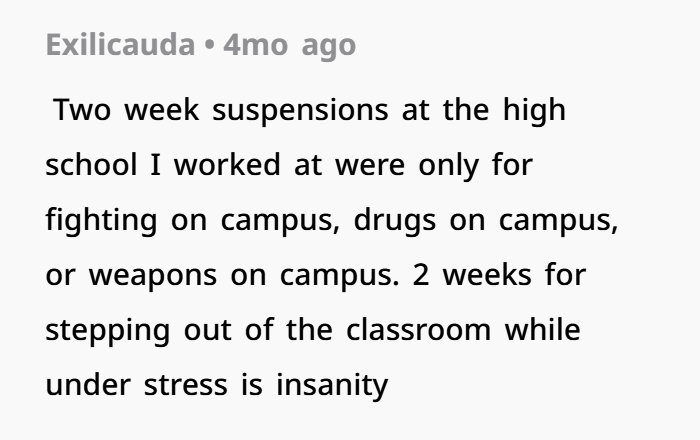
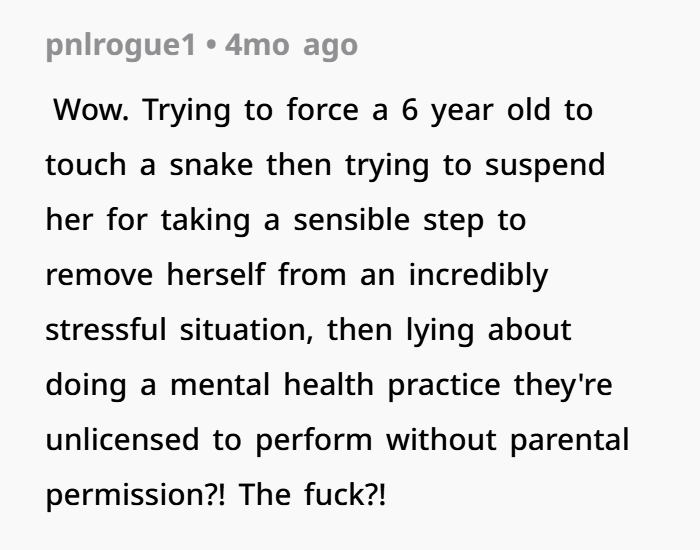
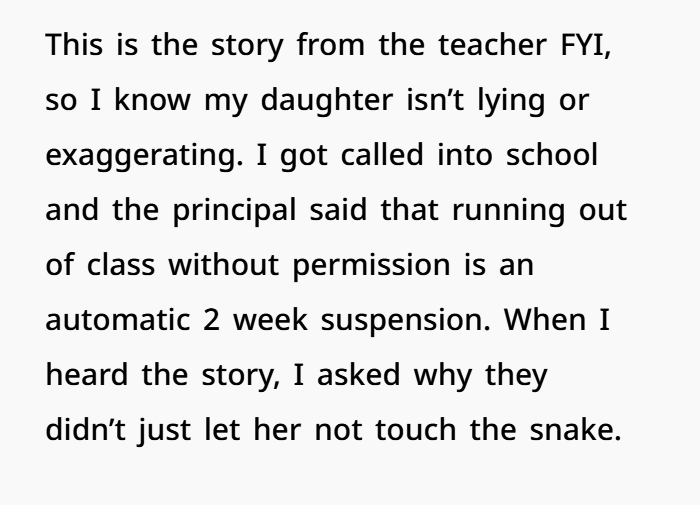
After the incident, the school decided to suspend the child for leaving the classroom.
School officials reportedly believed the child needed help managing her fear and that the situation was related to behavior.
The mother disagreed with this decision. She felt that her daughter’s reaction came from genuine fear and that the school should have handled the situation differently.
Many parents believe that when schools make discipline decisions, they should consider the full situation and understand why a child reacted in a certain way.
Parent Contacts School Leadership for Help
Instead of ignoring the issue, the mother decided to contact the school superintendent to explain her concerns.
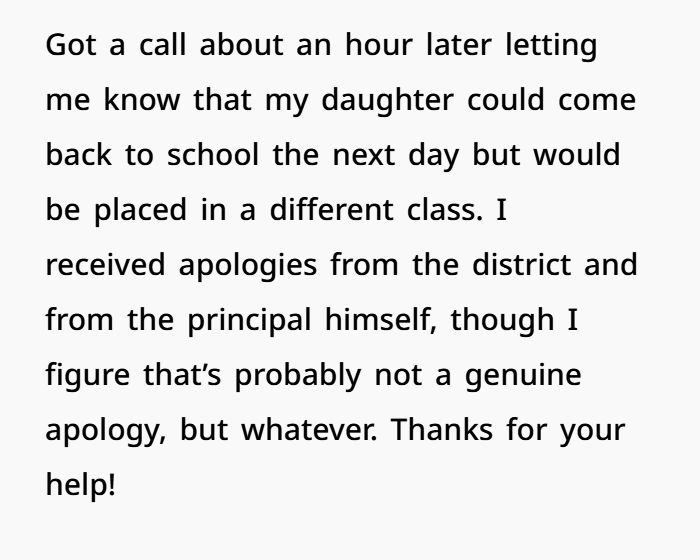
After reviewing the situation, the school reversed the suspension and the family received apologies from school officials.
The outcome showed the importance of parents communicating their concerns and working with school leaders when they believe their child’s needs are not being considered.
Understanding Parent Rights in Education
Schools have rules and policies to create a safe learning environment. At the same time, parents have the right to ask questions and understand decisions involving their children.
If parents have concerns about a suspension, classroom activity, or school decision, they can start by speaking with teachers, principals, or school administrators.
In some situations, families may also choose to seek advice from an education law professional to better understand school policies and their available options.
Creating a Positive Learning Environment for Children
Children learn best when they feel safe, encouraged, and respected.
Trying new activities can help students grow, but every child responds differently to new experiences. A supportive approach can help children build confidence without making them feel pressured.
Good communication between parents and schools can prevent misunderstandings and create a better experience for students.
What do you think about how this situation was handled? Should the school have taken a different approach? Sharing different perspectives can help create better conversations about child safety and education.
Readers’ Comments Speak Out