My Boss Ordered Me Back to the Office, So I Went to My Official Office
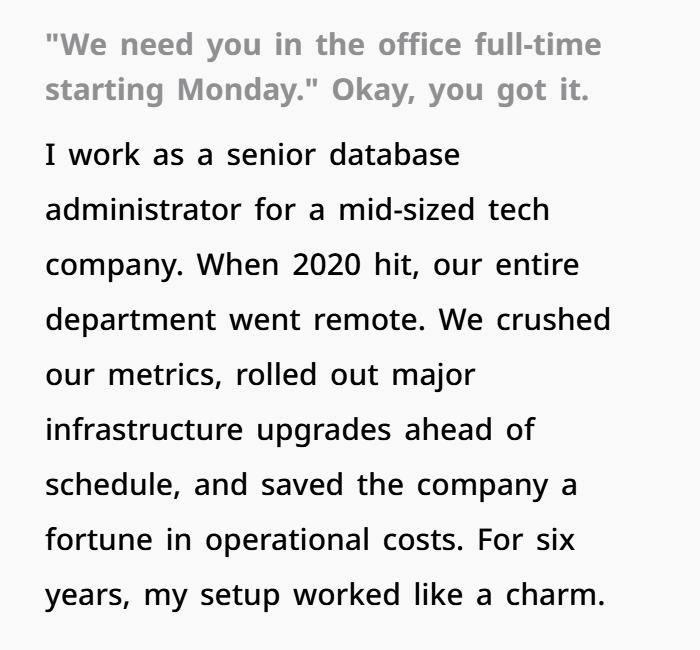
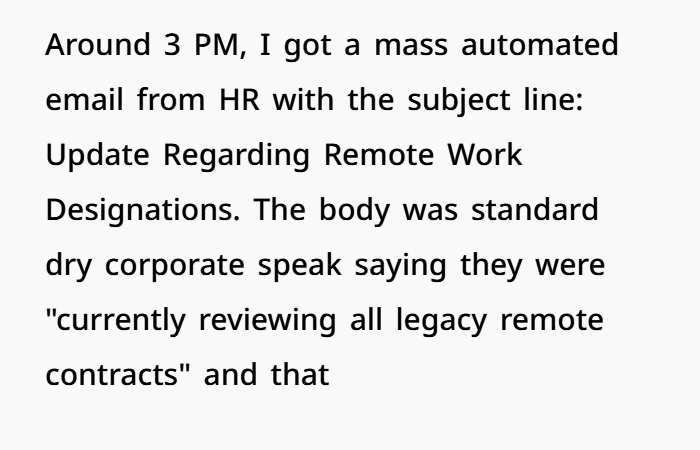
This story is about a senior database administrator who faces a workplace conflict after a new company leader introduces a strict return-to-office policy. For six years, he and his team had worked remotely and successfully completed important technology projects while helping the company save money. Their work performance remained strong even without being in the office every day.
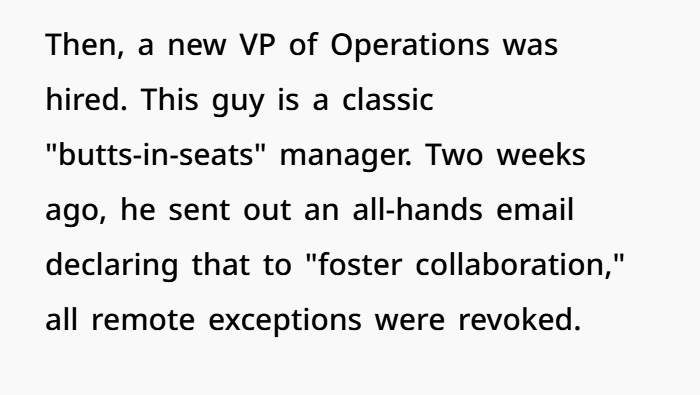
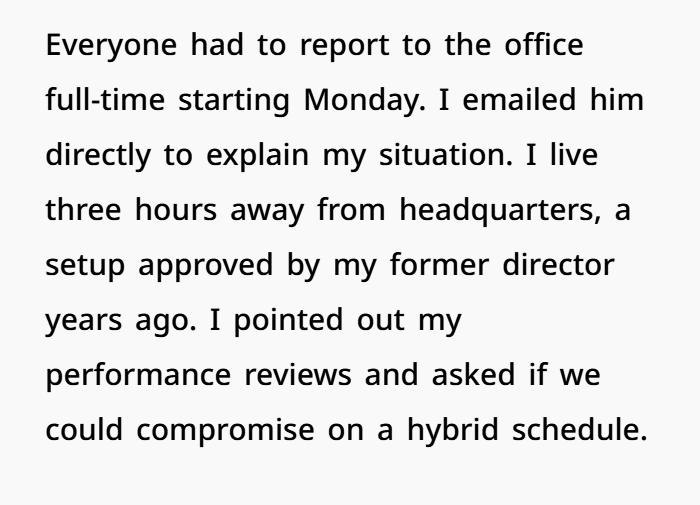
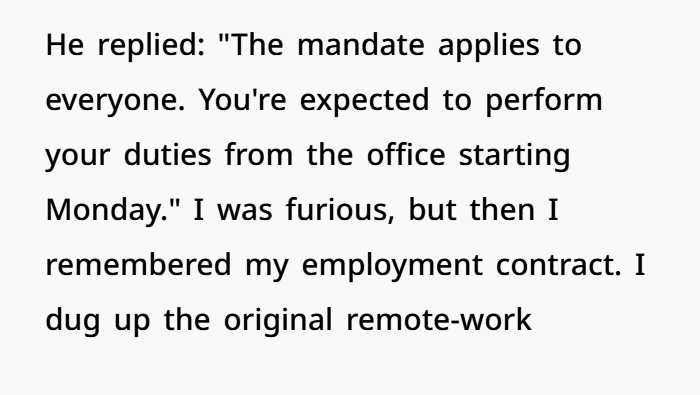
A newly hired VP of Operations decided that all employees should return to the company office full-time. The reason given was that working together in person would improve teamwork and communication. However, the employee had a problem with this change because he lived several hours away and already had official approval to work from home.
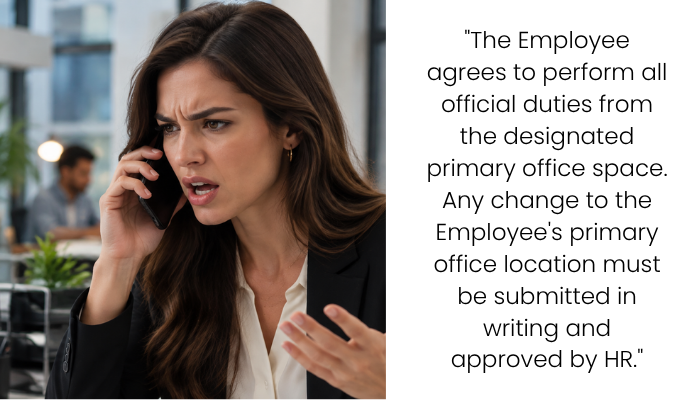
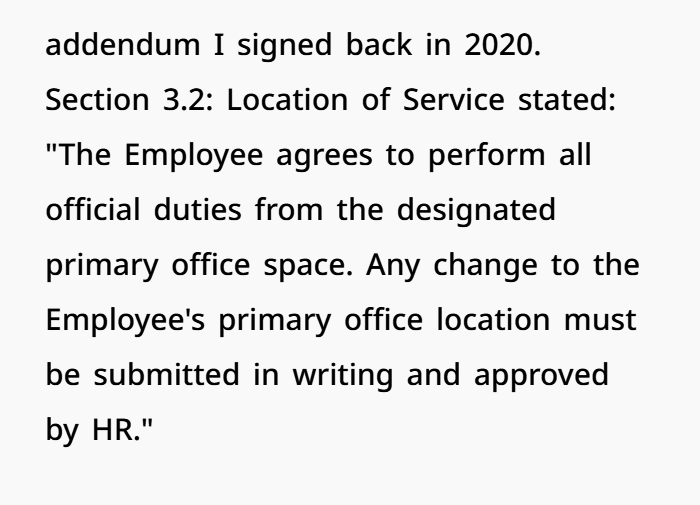
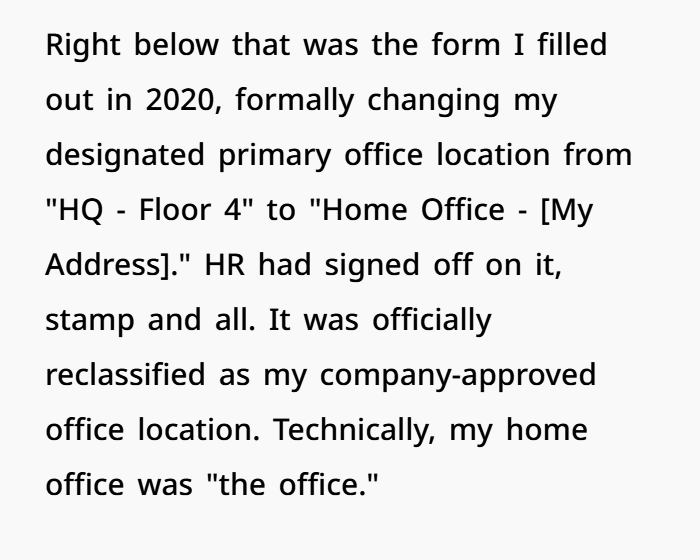
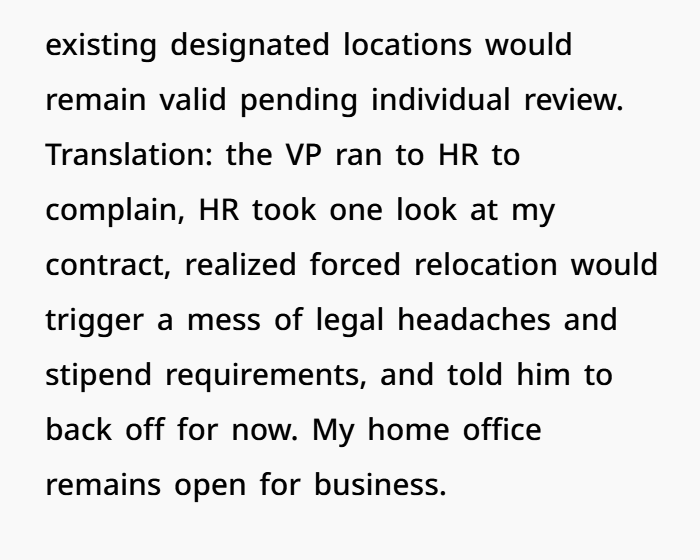
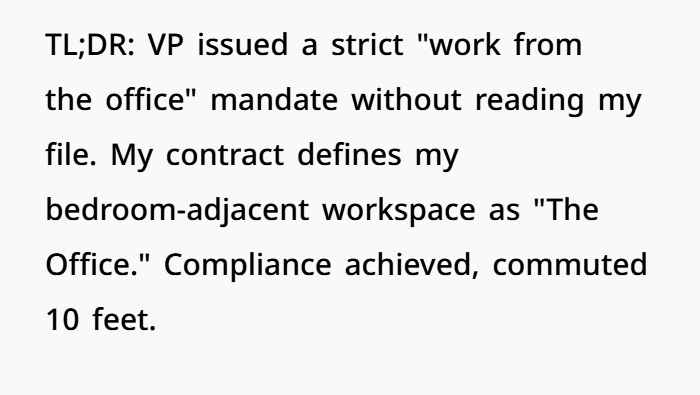
Instead of arguing, he reviewed his employment agreement and discovered that his remote work arrangement was officially documented. His home office was listed as his main work location through an approved HR agreement. This meant his remote setup was not just a casual benefit but part of his employment records.
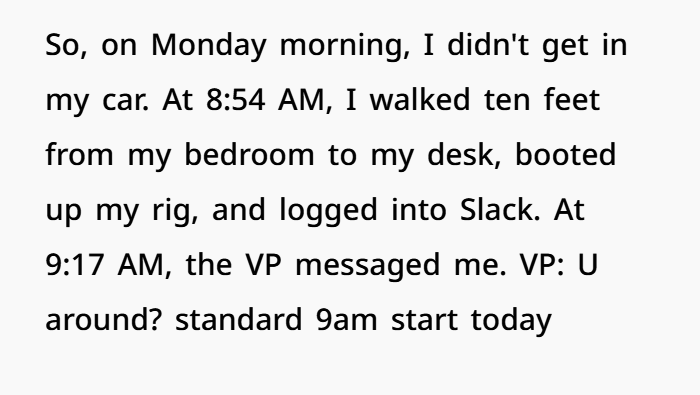
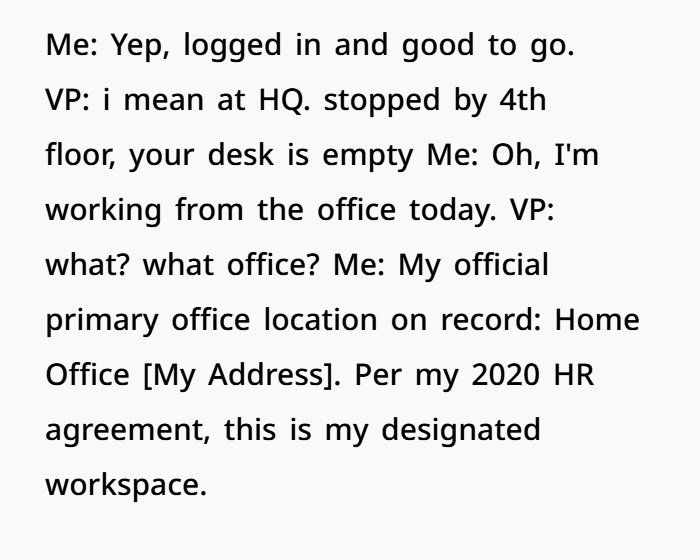
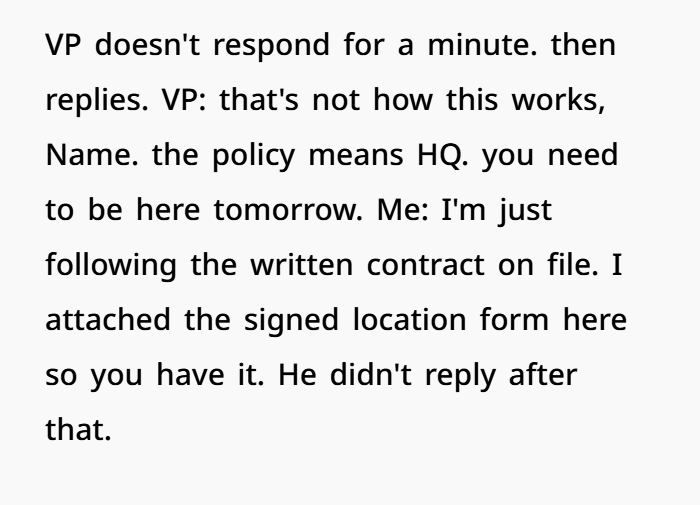
When the company asked him to report to his official workplace, he followed the instructions exactly. He continued working from his home office because that was the location officially listed. This story highlights workplace policies, remote work agreements, employee rights, and the importance of clear communication between companies and employees.

Return to Office Policies: Why Written Agreements Matter at Work
The workplace has changed a lot in recent years.
During the COVID-19 pandemic, many companies moved employees to remote work. Many workers learned how to do their jobs from home and created successful work routines outside the traditional office.
Later, many companies introduced return-to-office policies. Business leaders often explained these changes by saying that office work can improve teamwork, communication, company culture, and employee connection.
However, problems can happen when a new company policy affects employees who already have a different work arrangement.
The main issue is often simple:
What does the written employment agreement say?
A Remote Work Agreement Is Different From an Informal Arrangement
There is a big difference between a temporary work-from-home option and an officially approved remote work agreement.
For example:
- A manager allowing someone to work from home for a short time is one situation.
- A company changing an employee’s official work location in writing is another situation.
Written agreements are important because they create clear expectations for both the employer and the employee.
When a company officially approves a long-term remote work arrangement, that agreement may become part of the employee’s employment terms.
Why Workplace Documents Matter
Many workplace disagreements happen because people remember conversations differently.
One person may remember a promise or discussion one way, while another person remembers it differently.
This is why documentation is so important.
Written records can include:
- Remote work agreements
- Employment contracts
- Work location details
- Flexible work approvals
- Relocation agreements
- Workplace accommodation documents
- Contract updates
These records help both companies and employees understand what was actually agreed upon.
A simple workplace rule is:
Written agreements are usually clearer than verbal promises.
Company Policies Do Not Always Cover Every Situation
Large companies often create policies for thousands of employees.
A return-to-office policy may work for most workers, but some employees may already have different arrangements.
Different situations may exist because of:
- Previous remote work approval
- Distance from the office
- Special job responsibilities
- Hiring agreements
- Performance history
- Accessibility needs
A general company policy and an individual employee agreement may not always match.
When that happens, companies usually need to review existing documents before making major changes.
Why One Rule May Not Fit Everyone
A company-wide policy can make management easier, but employees do not all have the same needs.
Workers may have different:
- Job duties
- Locations
- Experience levels
- Employment agreements
- Work requirements
For example, many technology jobs can be performed successfully from different locations.
Jobs such as:
- Database administration
- Software engineering
- Cybersecurity
- IT infrastructure management
often rely on online systems and digital tools.
For these roles, companies may focus more on results, security, productivity, and performance.
The Real Debate About Remote Work
The return-to-office debate is about more than just location.
It is also about how companies measure successful work.
Some business leaders believe office work helps with:
- Team building
- Employee training
- Collaboration
- Company culture
Other leaders believe employees should be judged by:
- Quality of work
- Meeting goals
- Productivity
- Results
Both approaches are common.
The disagreement is often about workplace management style rather than only about working from home.
What Is Malicious Compliance?
Sometimes an employee follows a company rule exactly as written to point out a problem with the rule.
This is often called malicious compliance.
The employee is not always refusing to cooperate.
Instead, they may be showing that the company’s own wording creates a different result than leadership expected.
For example, an employee may follow a return-to-office policy while also following the exact terms of an existing employment agreement.
This can move the discussion away from personal opinions and toward the actual written rules.
How Employers Can Avoid Workplace Conflicts
Companies can reduce confusion by handling workplace changes carefully.
Helpful steps include:
- Reviewing existing employee agreements
- Keeping accurate HR records
- Training managers about employee arrangements
- Explaining policy changes clearly
- Speaking with affected employees before making changes
Good communication helps protect trust between employees and employers.
How Employees Can Protect Themselves
Employees should also understand their workplace agreements.
Helpful steps include:
- Reading employment documents carefully
- Saving important work communications
- Keeping copies of approved agreements
- Asking questions about policy changes
Understanding your employment terms can help you make better career decisions.
The Importance of Clear Workplace Communication
Workplaces will continue to change as companies adjust to new challenges and business needs.
However, successful changes require:
- Clear communication
- Fair processes
- Accurate records
- Respect for existing agreements
In this situation, the disagreement was not solved through an argument.
It was solved through documentation.
The employee did not ignore the company’s policy. Instead, the employee showed that an existing agreement had not been considered.
The biggest lesson is simple:
Clear written agreements help create better relationships between employers and employees.
Comments You Can’t Miss