
My Coworker Turned My Free Office Espresso Machine Into a Paid Coffee Shop
A workplace disagreement started after an employee brought an espresso machine into the office. The employee purchased the used machine and shared it with coworkers because they wanted everyone to have better coffee at work. At first, there were no payments or rules because it was simply a helpful gesture.
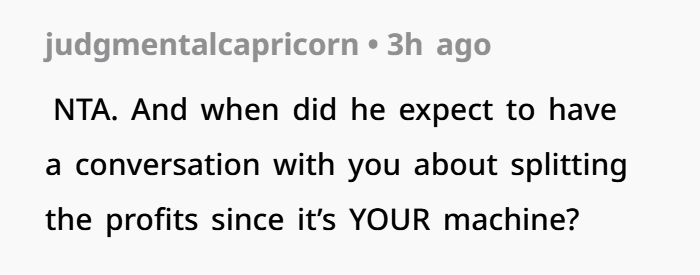
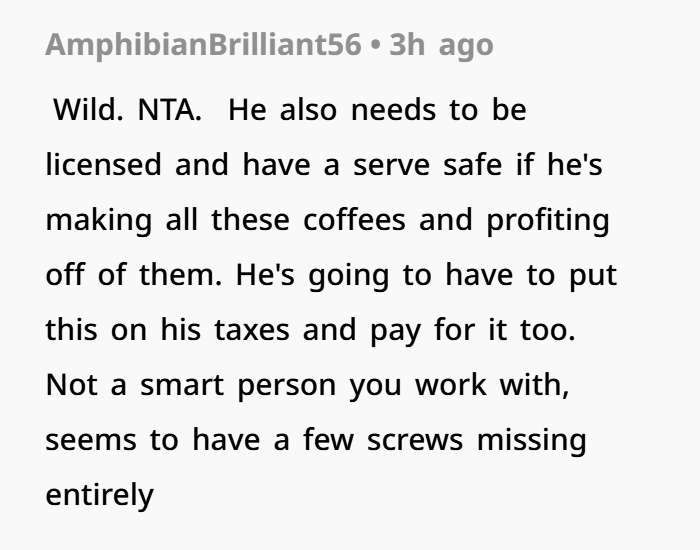
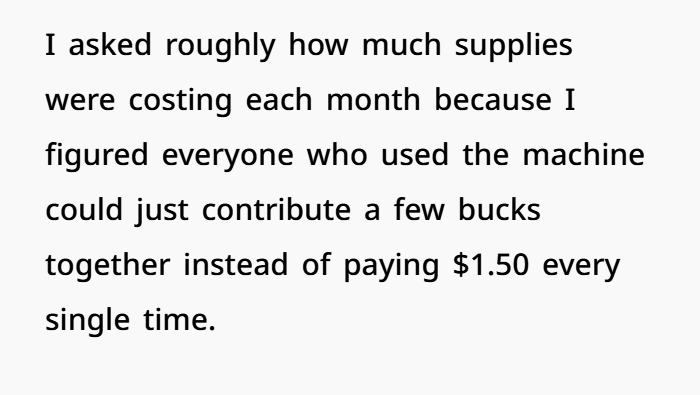
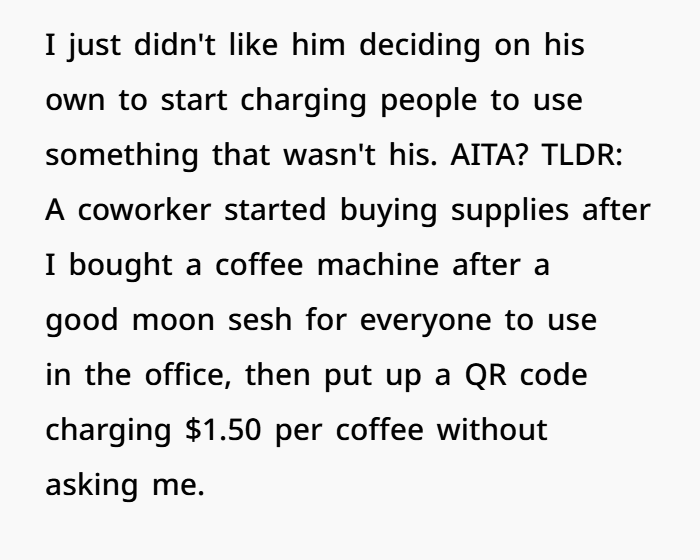
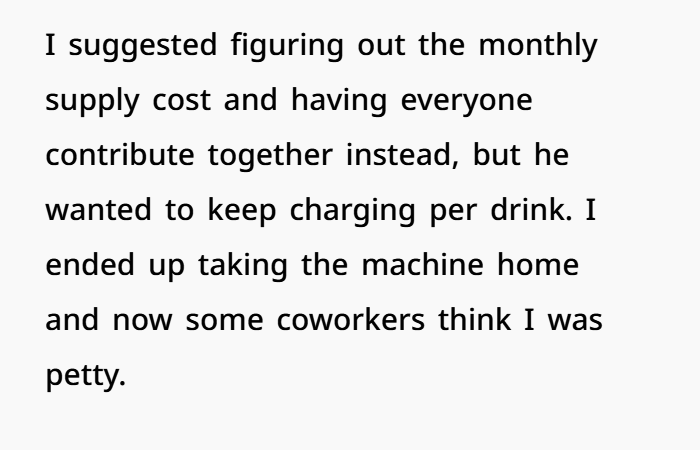
A coworker later helped improve the coffee setup by buying extra supplies like premium coffee beans, oat milk, and flavored syrups. The drinks became more enjoyable for many employees. The problem began when the coworker created a QR code payment system and started charging people for each coffee drink without getting approval from the machine owner.
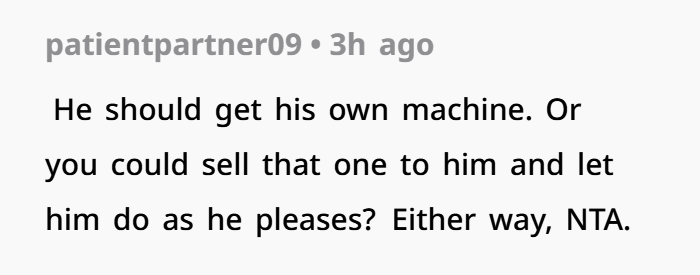
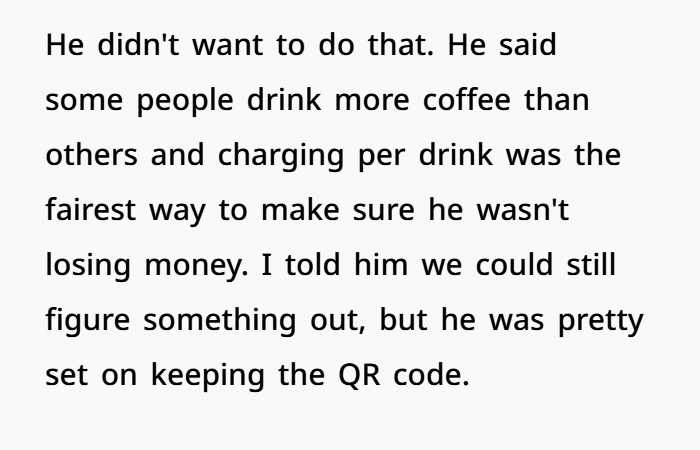
The machine owner said they did not mind helping pay for coffee supplies or other related costs. The disagreement was about creating a paid coffee service with someone else’s equipment. The coworker believed that a small fee per drink was a fair way to handle office coffee expenses, especially for employees who used the machine often.
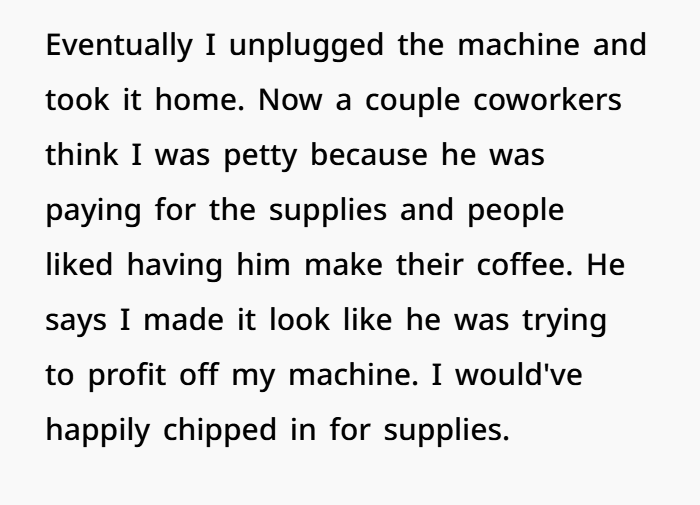
In the end, the two employees could not agree on a shared plan. The coworker had collected money from the coffee sales, while the owner decided to remove the espresso machine from the office. The event became a reminder that workplace sharing works best when everyone agrees on rules, costs, and responsibilities.

Workplace Shared Resources: Understanding Ownership, Costs, and Fair Rules
Small workplace arrangements often start with kindness and teamwork. Someone may bring a personal item to the office, share it with coworkers, and allow everyone to use it.
At the beginning, everything usually works well because people understand the basic rules. They know who owns the item and they agree to use it with care.
However, problems can happen when those rules are not clearly discussed. Over time, people may have different ideas about who is responsible, who can make decisions, and who should manage costs.
This type of situation can happen with many shared office items, such as coffee machines, kitchen supplies, office equipment, or other personal belongings.
When a Personal Item Becomes a Shared Resource
A common example is a coffee machine brought into the workplace by one employee.
The employee buys the machine and allows coworkers to use it. Everyone enjoys the convenience, and the arrangement feels simple and friendly.
Later, another coworker starts buying coffee beans, adding supplies, cleaning the machine, and helping manage the setup. Because they are putting in effort and spending money, they may start feeling responsible for the coffee system.
At the same time, the person who purchased the machine may still feel that they have control because it is their personal property.
This creates confusion because two people may feel connected to the same resource for different reasons.
One person provided the equipment. The other person provided time, money, and maintenance.
Both contributions matter, but they do not always create the same level of ownership.
Helping Maintain Something Does Not Always Mean Owning It
In workplaces, people often contribute to shared resources in different ways.
Someone may pay for supplies, repair an item, or spend time keeping it working. These actions are valuable, but they do not automatically transfer ownership.
For example, buying coffee supplies does not usually mean a person owns the coffee machine. Helping maintain office equipment does not always give someone the right to create new rules about how it should be used.
Personal property usually belongs to the person who purchased it unless there is a clear agreement that changes ownership.
This is why good workplace communication and clear office policies are important. Employees should understand who owns an item and who has the authority to make decisions.
Changing a Free Arrangement Into a Paid Service
Many workplace sharing arrangements begin informally. Employees may share food, drinks, tools, or equipment without creating official rules.
The problem starts when someone changes the arrangement without discussing it with others.
For example, a coworker may decide to charge people for each cup of coffee to cover supply costs. This may seem like a practical idea, especially if expenses are increasing.
However, charging money changes the original agreement.
A shared workplace benefit becomes a paid service, and that change should be discussed with everyone involved, especially the person who owns the equipment.
Different Ways to Handle Shared Costs
If a shared resource becomes expensive, there are several ways to manage costs fairly.
Voluntary Contributions
Employees can choose to contribute money when they want to help with expenses. This keeps the arrangement flexible.
Monthly Cost Sharing
A group can agree on a fixed monthly amount to cover regular costs such as supplies and maintenance.
Pay Per Use System
Employees can pay each time they use the resource. This can be useful when some people use it much more than others.
Each method can work, but the most important thing is having a clear agreement before making changes.
Why Clear Workplace Rules Matter
Many workplace disagreements happen because people have different expectations.
The person managing supplies may believe they are creating a fair system because they are paying for costs and doing extra work.
The person who owns the equipment may feel that decisions are being made about their property without their permission.
The disagreement is not always about money. Often, it is about trust, respect, and decision-making.
A healthy professional environment depends on employees discussing important details before making changes.
Simple questions can prevent many problems:
- Who owns the item?
- Who is responsible for maintenance?
- Who pays for supplies?
- Can users be charged?
- What happens if someone wants to stop sharing?
Understanding Ownership and Responsibility
Ownership and responsibility are two different things.
A person can help take care of something without becoming the owner.
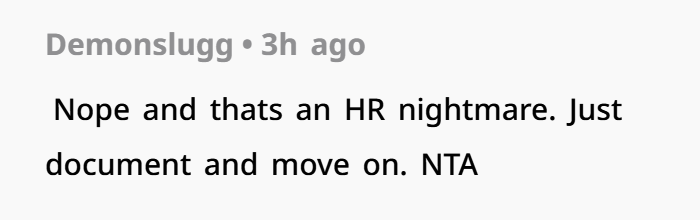
For example, if someone pays for cleaning products or repairs, they are supporting the resource. However, that does not automatically give them the right to control, rent, or create a business around someone else’s property.
Rules can vary depending on workplace agreements and local laws, but clear communication is always the best way to avoid confusion.
Finding a Fair Solution
The best way to handle shared workplace resources is to create simple rules from the start.
Possible solutions include:
- Setting up a shared contribution fund for supplies
- Agreeing on costs before collecting payments
- Allowing one person to manage supplies with the owner’s approval
- Asking the company to provide shared workplace benefits
- Creating guidelines for personal items used by multiple employees
Shared resources can bring people together when everyone understands the expectations.
The main lesson is simple: contributing to something does not always mean controlling it. Respecting ownership, discussing changes, and creating clear agreements can help build stronger employee relationships and a positive workplace culture.
Readers Shared Their Thoughts