I Kicked My Bridesmaid Out Two Weeks Before My Wedding—Then Found Out She Has Cancer
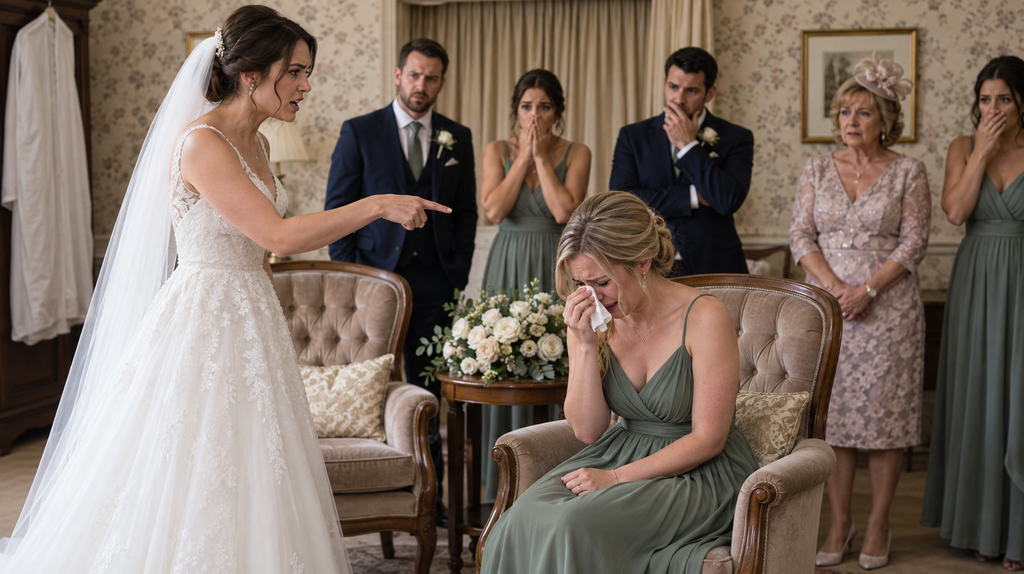
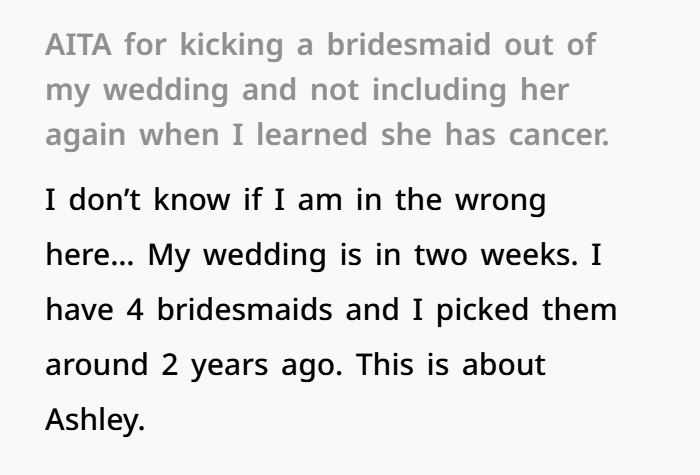
This wedding story starts with a bride who feels disappointed by one of her bridesmaids. Almost two years before the wedding, she chose four close friends for her wedding party, including Ashley. At first, the bride expected everyone to enjoy the wedding planning process together.
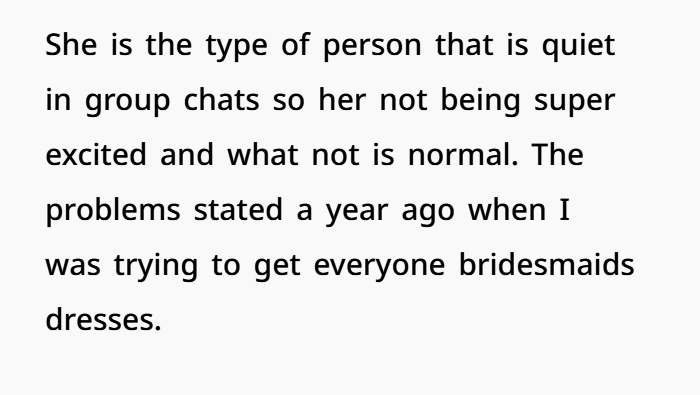
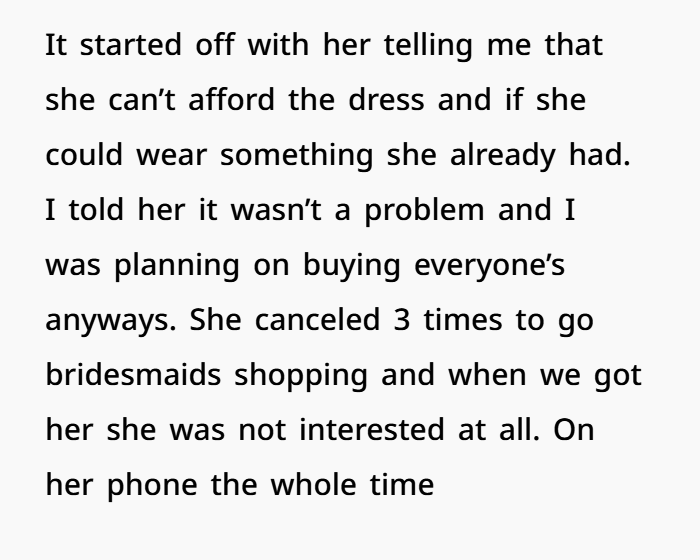
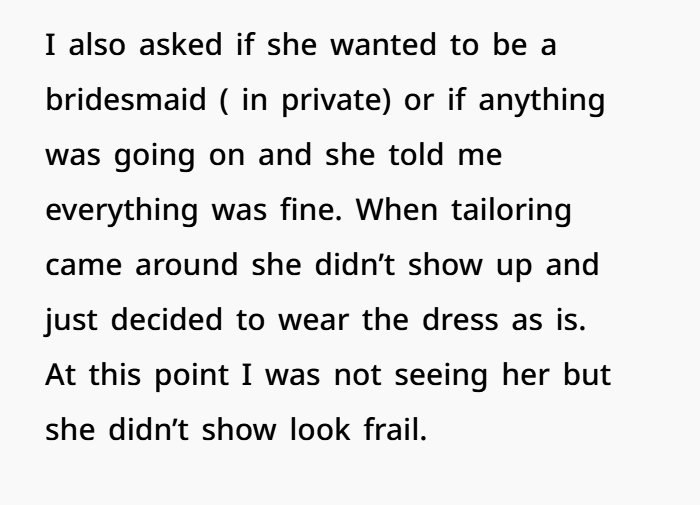
Over time, Ashley started missing important plans. She said she could not afford a bridesmaid dress, canceled several shopping trips, and missed her dress alterations. During one shopping trip, she also spent a lot of time on her phone. The bride asked Ashley more than once if something was wrong, but Ashley said everything was fine.
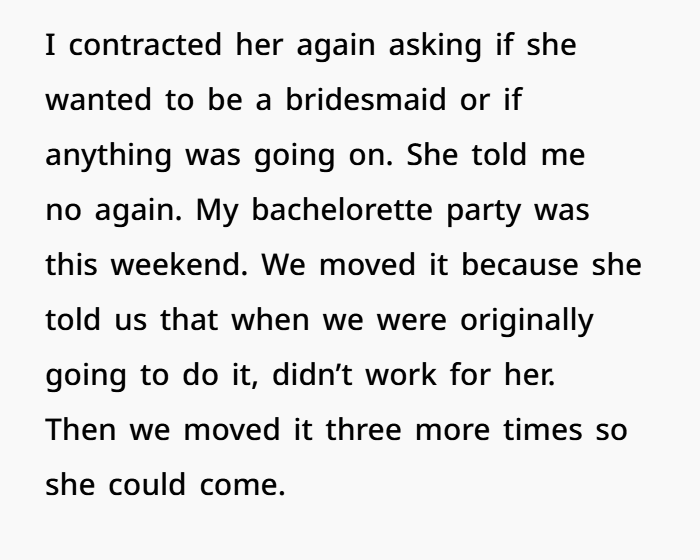
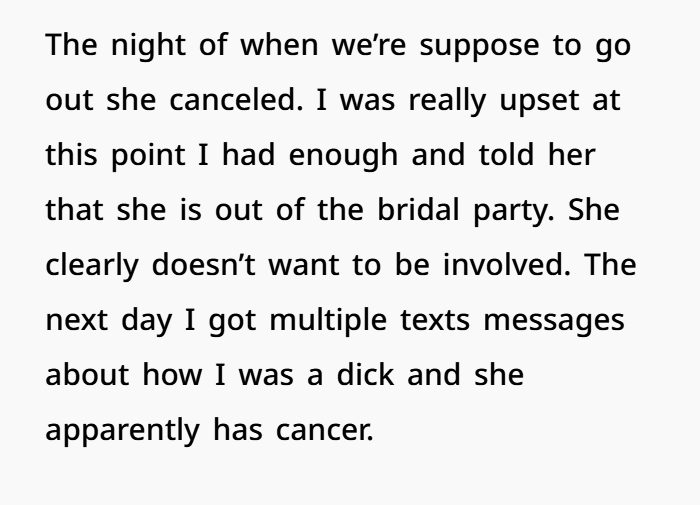
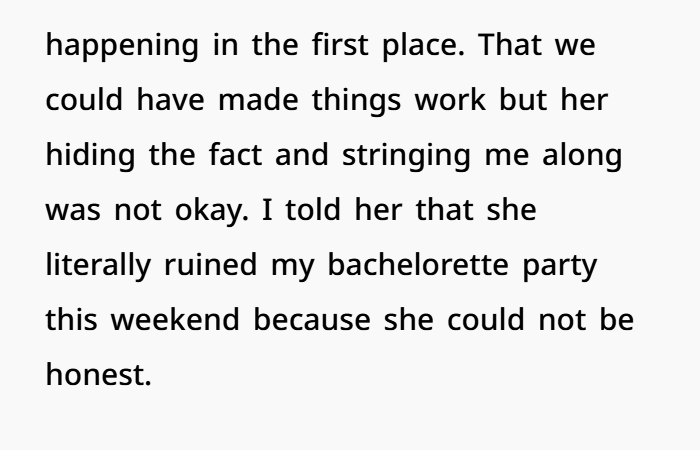
Things became more difficult while planning the bachelorette party. The group changed the date several times, partly to fit Ashley’s schedule, but she canceled again on the night of the event. After months of changing plans and dealing with unexpected cancellations, the bride decided to remove Ashley from the wedding party.
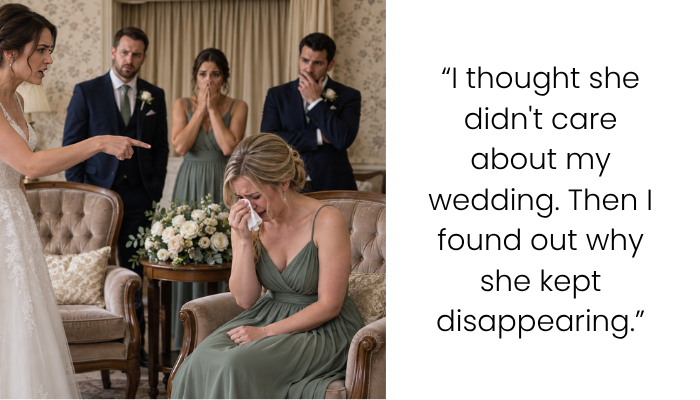
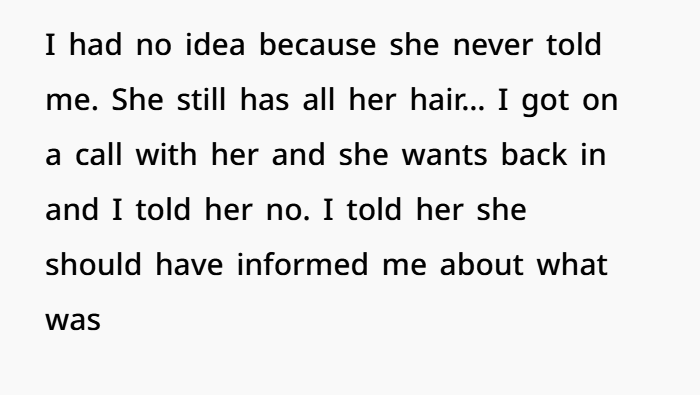
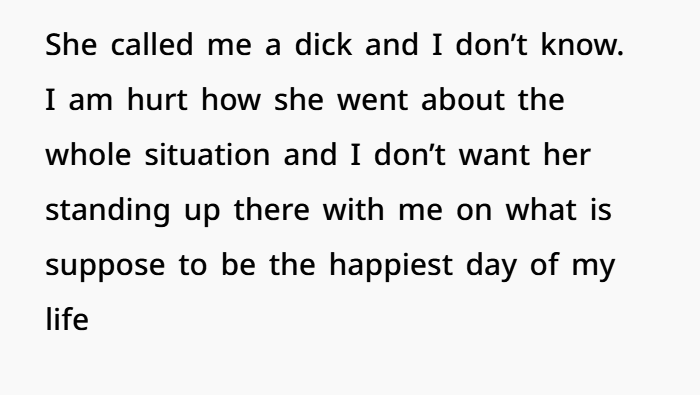
The next day, the bride learned that Ashley had cancer. This changed how she understood the situation. Ashley later asked to become a bridesmaid again, but the bride decided to keep her original decision. She said she would have gladly adjusted the wedding plans if she had known about Ashley’s health situation earlier. The story raises a sensitive question about friendship, privacy, communication, and setting reasonable boundaries during an already stressful wedding planning process.
Illness, Privacy, and the Importance of Clear Communication
Finding out that Ashley has cancer changes the way this whole situation looks.
Before anyone knew about her illness, it may have seemed like she simply did not care about the wedding. She canceled plans, missed events, and did not give the bride a clear reason.
Now there is more to the story.
Ashley may have been dealing with medical appointments, treatment, tiredness, healthcare costs, stress, or the emotional pressure that can come with a serious diagnosis.
A major health problem can affect work, relationships, finances, and everyday life. Someone may look fine on the outside while dealing with a lot in private.
That does not mean Ashley handled everything perfectly. But her illness gives important context to her behavior.
Looking Healthy Does Not Tell the Whole Story
The bride mentioned that Ashley still had her hair.
That does not tell us much about her medical treatment.
Cancer care can be different for every patient. Not everyone receives chemotherapy, and not every treatment causes complete hair loss.
Someone can also look healthy while going through medical care.
This is why it is important not to make assumptions about another person’s health based on appearance.
Private healthcare decisions are between a patient and their medical team.
Ashley Had a Right to Keep Her Diagnosis Private
Ashley did not have to tell her friends about her cancer before she was ready.
A medical diagnosis is personal information.
Some people share serious health news immediately. Others need more time to process what is happening.
There are many reasons someone may choose privacy.
They may not want people asking questions all the time. They may worry that private information will spread. They may also want to continue enjoying normal parts of life without every conversation becoming about their health.
There is nothing automatically wrong with wanting medical privacy.
Ashley had the right to decide who knew about her diagnosis and when she wanted to tell them.
Privacy and Communication Are Not the Same Thing
This is where the situation becomes more complicated.
Ashley had a right to keep the details of her diagnosis private. But she was also part of a wedding and had agreed to certain responsibilities.
She did not need to say, “I have cancer.”
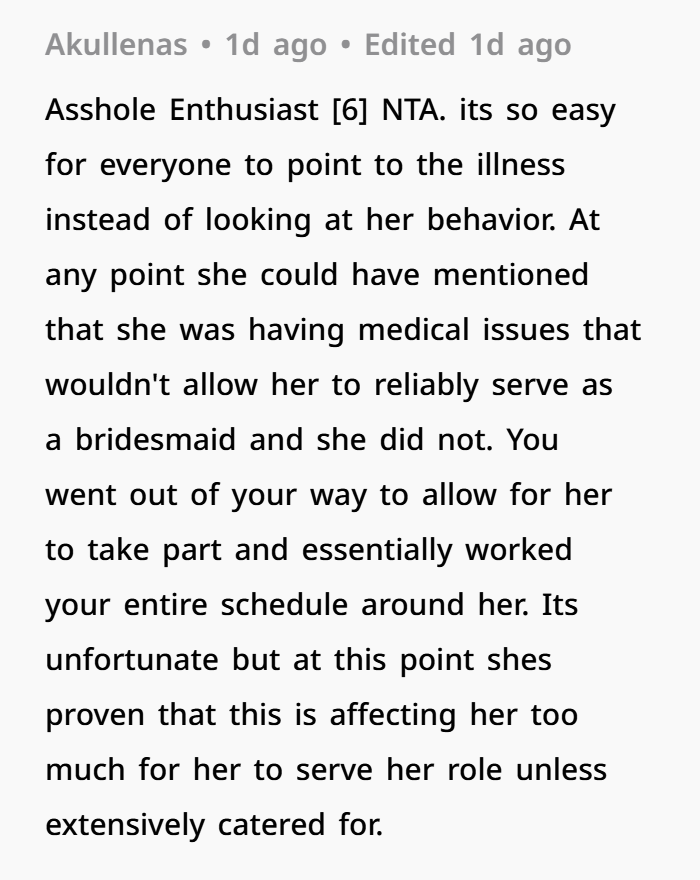
She could have simply told the bride that she was dealing with a serious personal health issue and could not promise to attend every event.
That would have protected her medical privacy.
At the same time, it would have given the bride enough information to understand why Ashley’s plans kept changing.
Good relationship communication does not always require sharing every personal detail. Sometimes people simply need enough information to understand what is happening.
The Bride Tried to Find Out What Was Wrong
The bride apparently asked Ashley more than once if everything was okay.
She also gave Ashley opportunities to step away from her bridesmaid role.
Ashley continued to say that everything was fine.
That left the bride with very little information.
From her point of view, Ashley was repeatedly missing events without a clear reason.
The bride could not make decisions based on information she did not have.
This is why her original frustration is understandable.
Changing Wedding Plans Can Affect Everyone
Wedding planning often involves more than the bride and groom.
Bridesmaids may need to arrange transportation, take time away from work, organize childcare, book hotels, change reservations, or spend money on other wedding expenses.
Moving a bachelorette party several times can therefore affect many people.
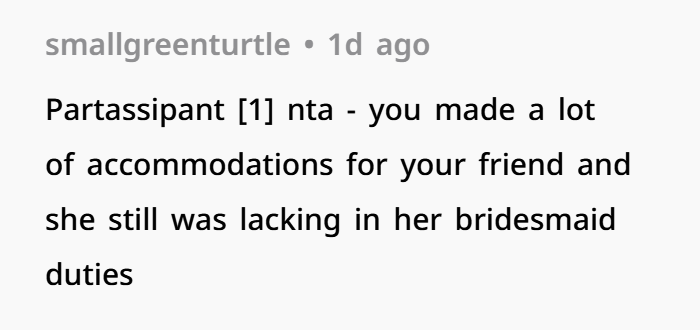
If everyone changes their schedule to help one person and that person still cannot attend, frustration is understandable.
At that time, the bride did not know Ashley had a serious illness.
That makes an important difference when judging the bride’s original decision.
Learning About the Cancer Should Change the Response
Once the bride learned about Ashley’s diagnosis, however, the situation changed.
She finally knew that Ashley’s behavior was connected to something serious.
The bride could still feel disappointed about the lack of communication. Finding out the reason does not magically remove all the problems caused by months of changing plans.
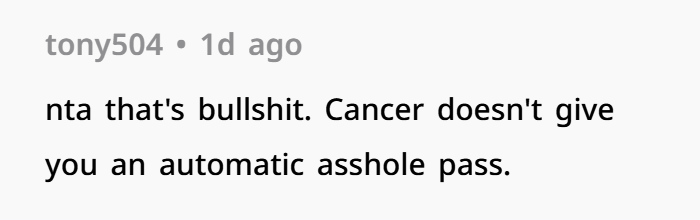
But compassion becomes especially important once a serious health condition is known.
Saying that Ashley “ruined” the bachelorette party places a lot of blame on someone who may already be dealing with major medical and emotional challenges.
There was room for a kinder response.
Being a Bridesmaid and Being a Friend Are Different
There are really two separate decisions here.
One question is whether Ashley should become a bridesmaid again.
The other is whether the bride should support Ashley as a friend.
The answer does not have to be the same for both.
The wedding is only two weeks away. The bridal party may already be finalized. Dresses, schedules, transportation, reservations, and other plans may already be arranged.
Changing everything again could create more stress.
Ashley may also have healthcare appointments or days when she needs additional rest.
Giving her the bridesmaid role back could even make her feel pressure to attend events when she does not feel well.
Keeping the wedding plans as they are can still be reasonable.
There Is a Kind Middle Ground
The bride does not have to choose between changing the whole wedding and being angry with Ashley.
There is another option.
She can tell Ashley that she respects her right to keep her diagnosis private. She can also explain that knowing she was dealing with a serious personal issue would have helped everyone understand the cancellations.
Then she can keep the current bridal party while continuing to support Ashley as a friend.
That approach respects both sides.
Ashley keeps control of her medical information.
The bride can also be honest about how difficult the changing plans were.
Serious Illness Can Affect Money and Daily Life Too
A major diagnosis can affect much more than physical health.
People may suddenly need to think about healthcare appointments, health insurance, medical expenses, work schedules, transportation, family responsibilities, and future financial planning.
There may also be emotional stress that friends cannot see.
This does not mean every canceled plan should be ignored.
It simply means that when someone’s behavior suddenly changes, there may be private reasons behind it.
A little patience can make a big difference.
Healthy Friendships Need Boundaries
Good friendships need both privacy and communication.
A friend should not have to share private medical records or explain every part of a diagnosis.
At the same time, if someone has accepted an important responsibility, it is fair to communicate when they can no longer reliably meet that commitment.
Ashley could have protected her privacy while still saying that a serious personal issue was affecting her availability.
The bride could have respected that boundary without needing more details.
That would likely have prevented much of the misunderstanding.
Verdict: Removing Her Was Understandable, but the Later Reaction Matters
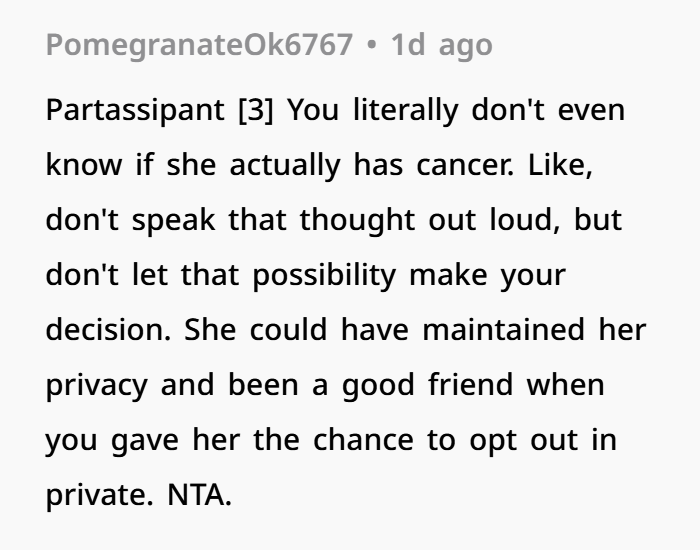
The bride was not necessarily wrong for originally removing Ashley from the bridal party.
When she made that choice, she did not know Ashley had cancer. She only knew that Ashley had repeatedly canceled plans while continuing to say everything was fine.
Ashley had every right to keep her exact diagnosis private.
However, some honest communication about her ability to participate would have helped. She could have said she was dealing with a private health matter without explaining what it was.
Once the bride learned the truth, compassion should have become a bigger part of the conversation.
She did not have to make Ashley a bridesmaid again, especially with the wedding only two weeks away. But Ashley also should not be treated badly because she was not ready to share her diagnosis.
The fairest conclusion is simple: Ashley did not owe the bride the details of her cancer diagnosis, but she did need to communicate honestly about what she could manage. The bride did not owe Ashley her bridesmaid role back, but her friend deserved kindness, privacy, and understanding during a very difficult time.
Sometimes both people can have a reasonable point. In situations involving serious illness, friendship, and medical privacy, clear communication and compassion usually matter more than deciding who won the argument.
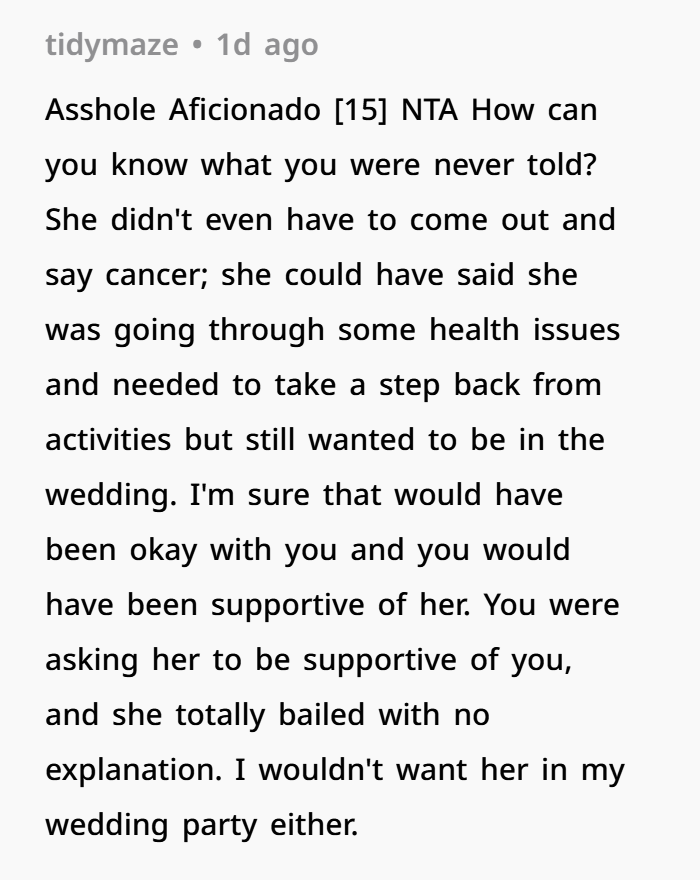
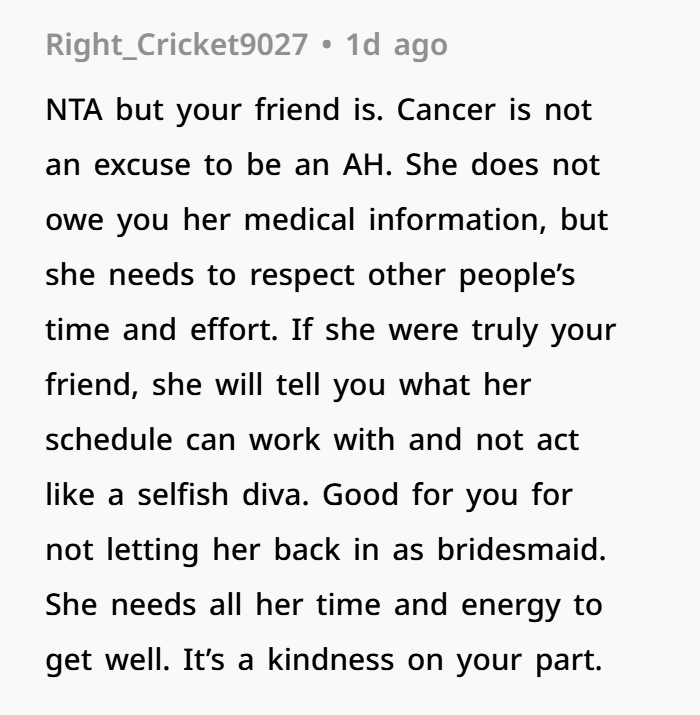
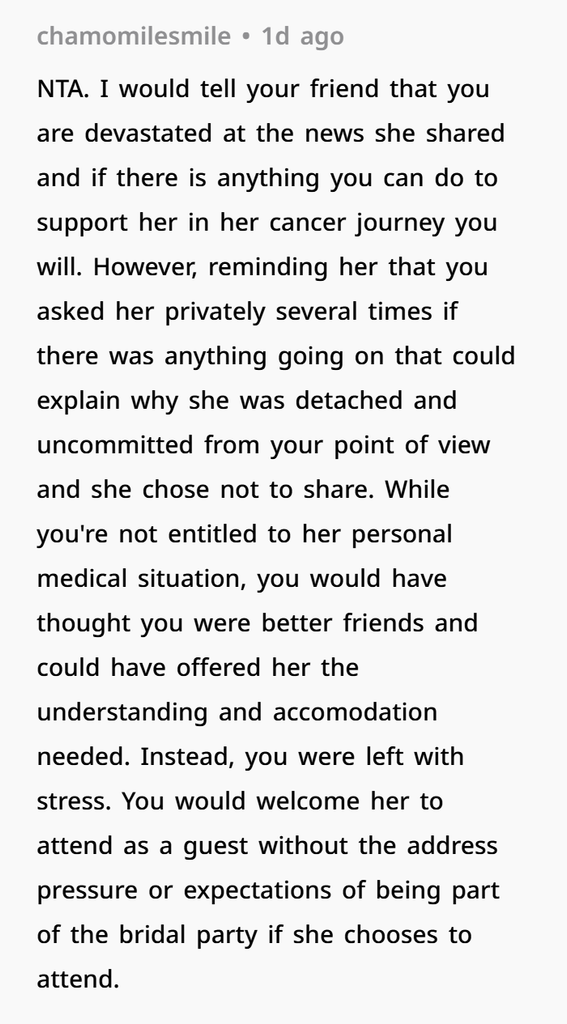
Readers Shared Their Thoughts