My Friend Promised Strangers a Ride in My Car Without Asking — AITA for Saying No?
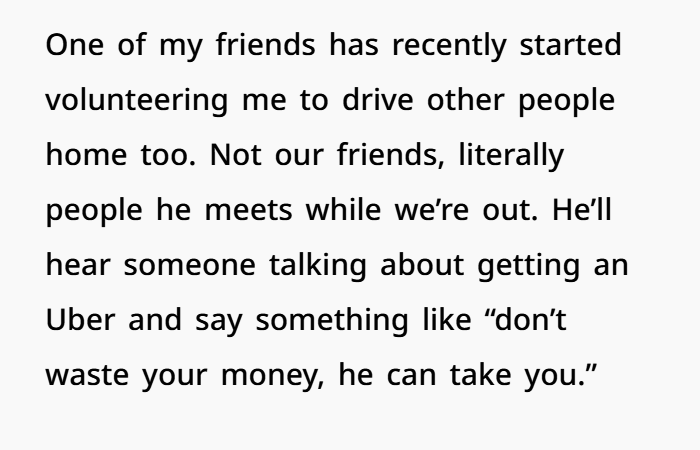
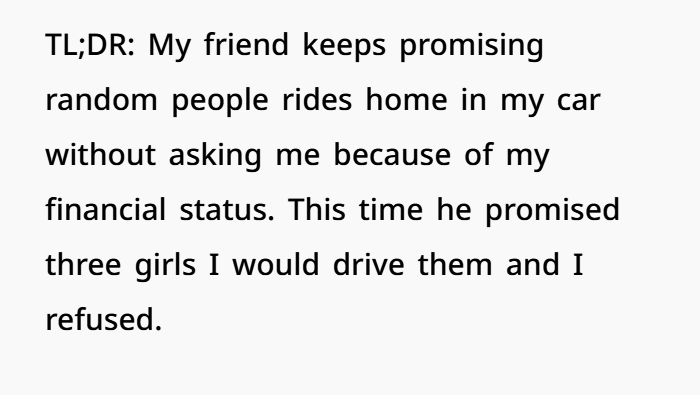
A person became the main driver in their friend group because they do not drink alcohol. They were happy to give rides to their own friends and saw it as a kind thing to do. The problem started when one friend began offering rides to people they met without asking first.
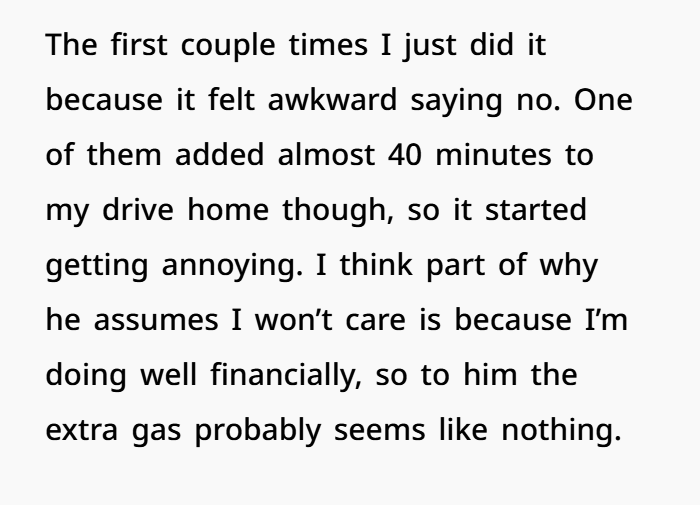
The friend would tell strangers that the person could drive them home, assuming they would agree. At first, the driver accepted these requests to avoid uncomfortable conversations. However, these extra rides started taking more time and making the trips home longer than expected.
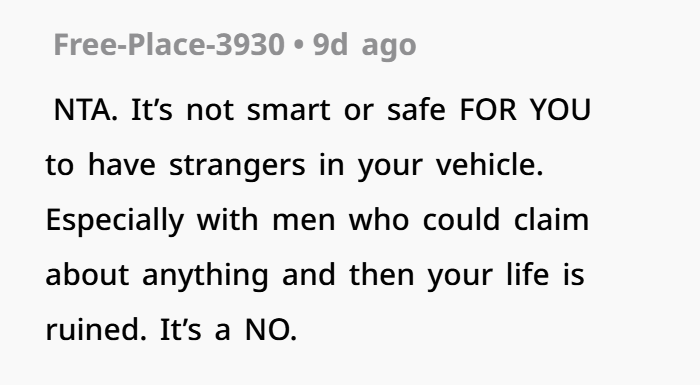
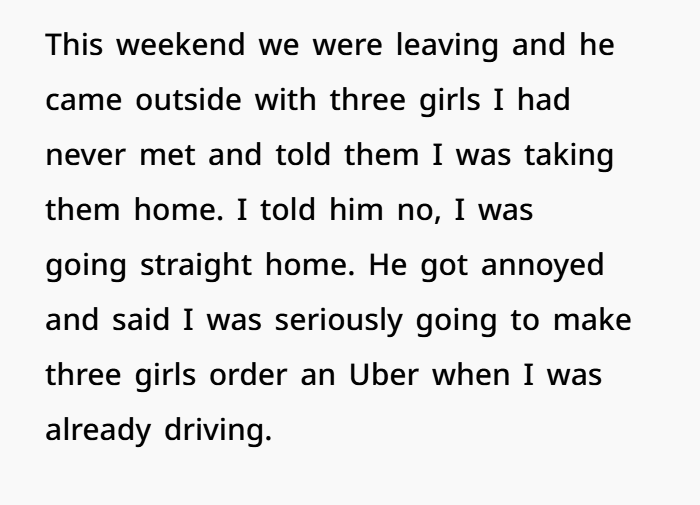
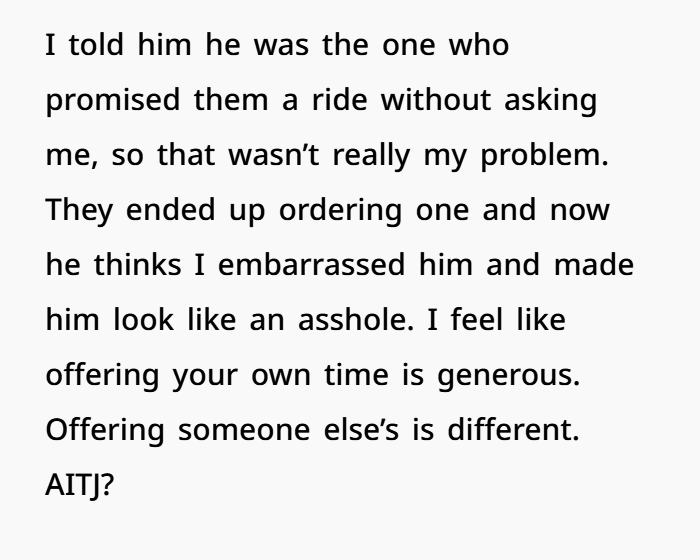
The situation became frustrating when the friend brought three strangers over and told them they already had a ride. The driver decided to say no because they had never agreed to give those rides. The friend became upset and felt embarrassed because the strangers needed to arrange another way home.
The driver explained that helping friends is different from having their time and transportation offered without permission. The situation became a discussion about personal boundaries, respect, and understanding that someone should not make promises using another person’s time or resources.


Consent and Personal Boundaries: When Helping Others Goes Too Far
Helping people is a kind and positive thing. Many friendships are built on trust, support, and doing favors for each other.
For example, one person in a friend group may often offer rides home after events. This person may become known as the reliable friend who helps others get home safely.
However, there is an important difference between offering your own help and offering someone else’s help without asking first.
Why Permission Matters
The main issue in situations like this is consent and personal boundaries.
A person who regularly drives friends home may be happy to help people they know. But that does not mean they have agreed to give rides whenever someone else decides.
They may have limits about:
- Driving people they do not know
- Taking extra trips
- Traveling longer distances
- Paying for extra fuel
- Staying out later than planned
- Feeling comfortable and safe
Being helpful does not mean someone’s time and resources are always available.
A Favor Does Not Become an Obligation
Sometimes people make assumptions because someone has helped before.
A friend may think:
“You are already going that way, so giving someone else a ride should not be a big deal.”
But favors involve more than money.
A person also gives their:
- Time
- Energy
- Privacy
- Attention
- Personal comfort
Even if someone can afford the cost, it does not mean they must provide the favor.
Everyone has the right to decide how they use their own time and resources.
When Kindness Creates Expectations
People who are generous often help because they care.
However, when someone says yes many times, others may start expecting that help without asking.
This can create unfair pressure.
A person who often gives rides is still allowed to say no. Previous kindness does not create a permanent responsibility.
Healthy relationships require respect for each person’s choices.
The Importance of Personal Boundaries
Personal boundaries are limits that help people feel comfortable and respected.
For example, a driver may be comfortable with:
- Taking close friends home
- Helping in certain situations
But they may not be comfortable with:
- Driving strangers
- Changing their plans
- Making extra stops
These limits are reasonable.
Saying no does not mean someone is selfish. It simply means they are being honest about their comfort level.
Safety Should Always Be Considered
Giving rides can involve personal safety decisions.
Many people have their own rules about who they allow in their vehicle, especially late at night or after social gatherings.
A driver may consider:
- Who they are driving
- Whether they feel comfortable
- How long the trip will take
- Whether they are tired
- Whether the situation feels safe
A friend may want to help others, but they are not the person responsible for managing the driver’s choices.
The Better Way to Ask
A simple question can prevent many problems.
Instead of promising someone a ride, a friend could ask:
“Would you be okay taking these people home, or are you ready to leave?”
This gives the driver a real choice.
They can agree if they feel comfortable or say no without feeling pressured.
Respecting Time and Effort
Friendships work best when people appreciate help without assuming it will always be available.
A favor should remain a choice.
Good friendships include:
- Respect
- Honest communication
- Understanding
- Support for personal choices
When people respect each other’s boundaries, relationships become healthier and stronger.
Final Thoughts
Helping others is a wonderful quality, but everyone has limits.
A person’s generosity should never be treated as something others can automatically claim.
Respecting consent, personal boundaries, communication skills, safety, and healthy relationships allows people to support each other while also respecting individual choices.
The Comments Are In