
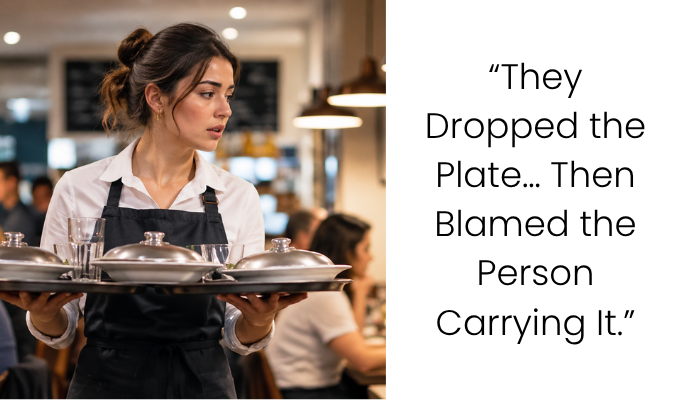
Customer Made Me Drop Plates Then Blamed Me for “Ruining Their Meal”
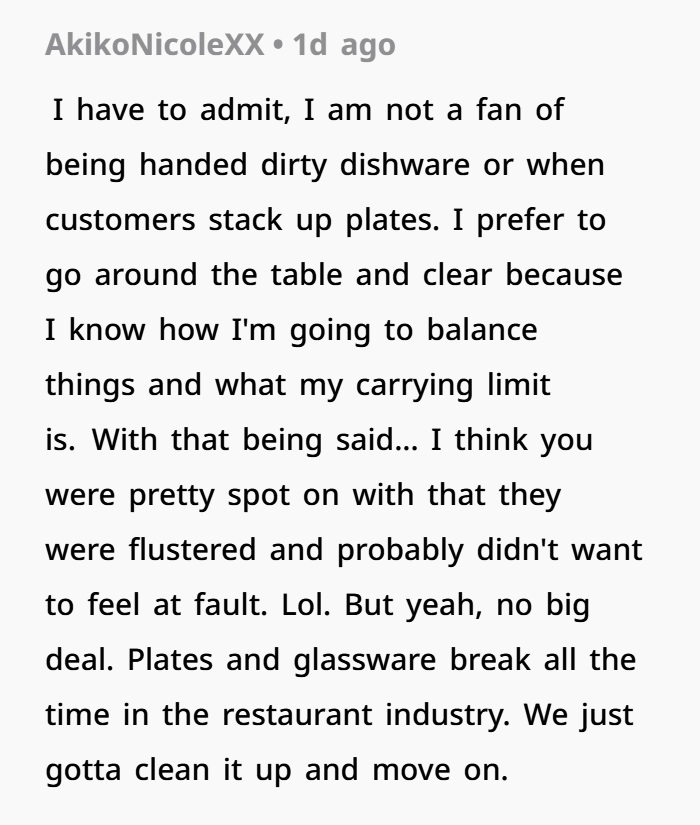
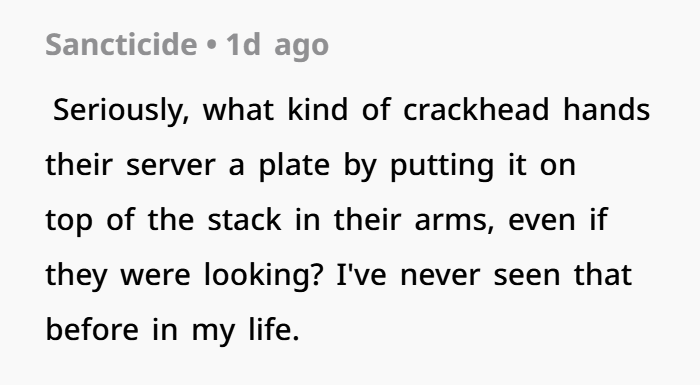
A restaurant server shared a frustrating experience with a customer during a busy shift. The server was carrying a stack of plates while helping another guest when a customer reached over and placed another plate on top. Because the stack was already difficult to balance, the extra plate caused everything to fall and break on the floor.
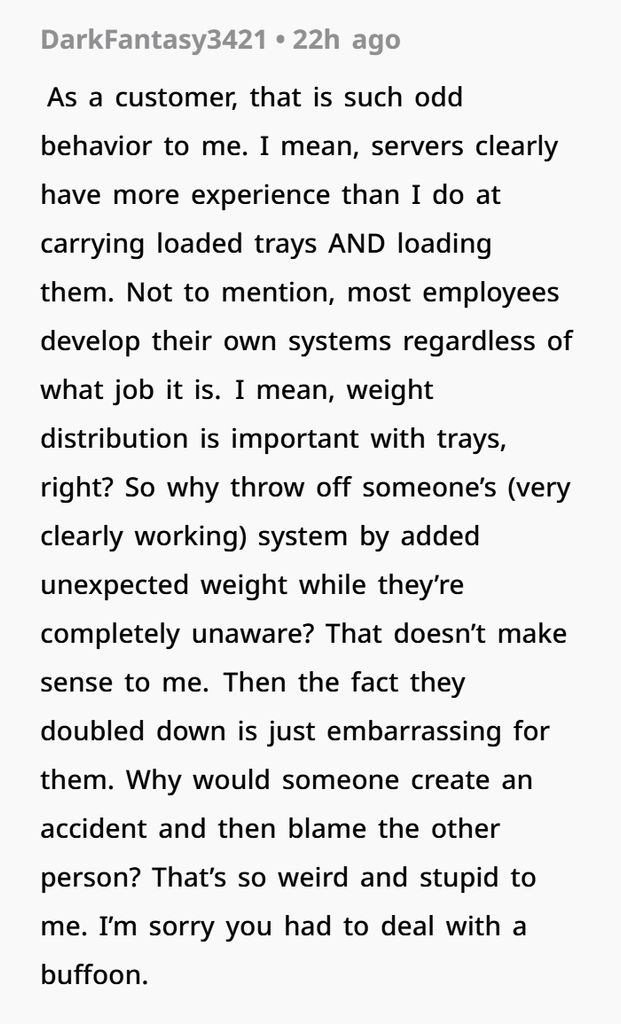
At first, the server thought the customer was embarrassed about the accident. The server quickly apologized for the noise, cleaned up the broken dishes, and tried to handle the situation professionally. However, instead of saying sorry, the customer blamed the server and said they were not being careful.
The server calmly explained that accidents can happen and asked customers to wait for assistance before adding dishes to a stack being carried. The customer was unhappy and later complained to the restaurant manager, saying the server had been rude and affected their dining experience.
Luckily, the manager checked the security video and saw what really happened. The server was not blamed for the accident. The experience was surprising because small mistakes in restaurants usually end with a simple apology and understanding from both sides. Good communication and respect between customers and staff help create a better dining experience.

Customer Service, Responsibility, and Why People Shift Blame
Accidents can happen in any workplace, especially in busy customer service environments like restaurants. Employees often deal with many challenges during the day, such as spilled drinks, broken dishes, wrong orders, and long waiting times.
Most small mistakes can be fixed easily when people stay calm and communicate respectfully. However, a simple accident can turn into a bigger problem when people become upset or start blaming each other.
Why People Sometimes Avoid Taking Responsibility
When something embarrassing happens, some people may try to protect themselves by blaming someone else.
Psychologists call this self-serving bias. It means people sometimes explain a situation in a way that makes them feel better or reduces their own responsibility.
For example, if someone accidentally causes a problem in front of others, they may feel embarrassed. Instead of accepting their part in what happened, they may focus on another person’s actions.
This type of reaction can make a small issue more difficult to solve.
The Importance of Safety in Restaurants
Restaurants are fast-moving workplaces where servers often carry trays, plates, and drinks while helping customers.
Restaurant employees are trained to handle food and dishes carefully. However, they also need enough space and focus to do their jobs safely.
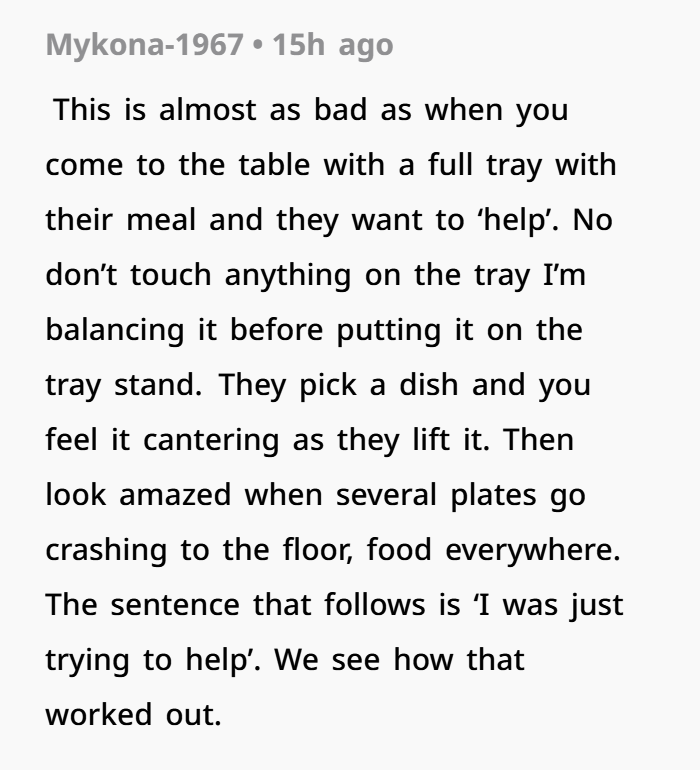
Adding extra items to a server’s tray or stack without informing them can create a safety risk. The employee may not expect the additional weight, which can affect balance and increase the chance of dishes falling.
Simple communication between customers and staff can help prevent these accidents.
Customer Service and Workplace Boundaries
Customer service workers are trained to help customers and provide a positive experience. They are expected to remain polite, patient, and professional.
However, good customer service does not mean employees must accept blame for every problem.
A professional employee can:
- Listen to customer concerns
- Stay calm during disagreements
- Explain what happened
- Help find a reasonable solution
Respectful communication allows employees to support customers while also maintaining healthy workplace boundaries.
How Conflicts Grow After Small Mistakes
Many workplace disagreements become bigger because emotions take over.
When an accident happens, it is often better to focus on solving the problem instead of deciding who to blame.
A helpful approach is to:
- Stay respectful
- Listen to both sides
- Understand that mistakes happen
- Look for a practical solution
A calm conversation can often prevent unnecessary stress.
Why Evidence Helps Resolve Disagreements
When there is a disagreement between a customer and an employee, it is important to understand the full situation.
Businesses may use different sources of information, such as employee reports, customer feedback, or security camera footage, to review what happened.
Having accurate information helps managers make fair decisions and improve workplace safety.
The Emotional Side of Customer Service Jobs
People who work in customer service often manage many emotions while working.
They may need to stay friendly and professional even when dealing with upset customers or stressful situations.
This requires patience, communication skills, and emotional control.
At the same time, service employees also deserve kindness and respect from customers.
Creating Positive Customer Experiences
A good customer experience depends on respect from both sides.
Customers want to feel valued and heard. Employees need a safe workplace where they can perform their jobs properly.
When everyone understands that mistakes can happen and focuses on solutions, problems are easier to resolve.
Opinions Flooded In
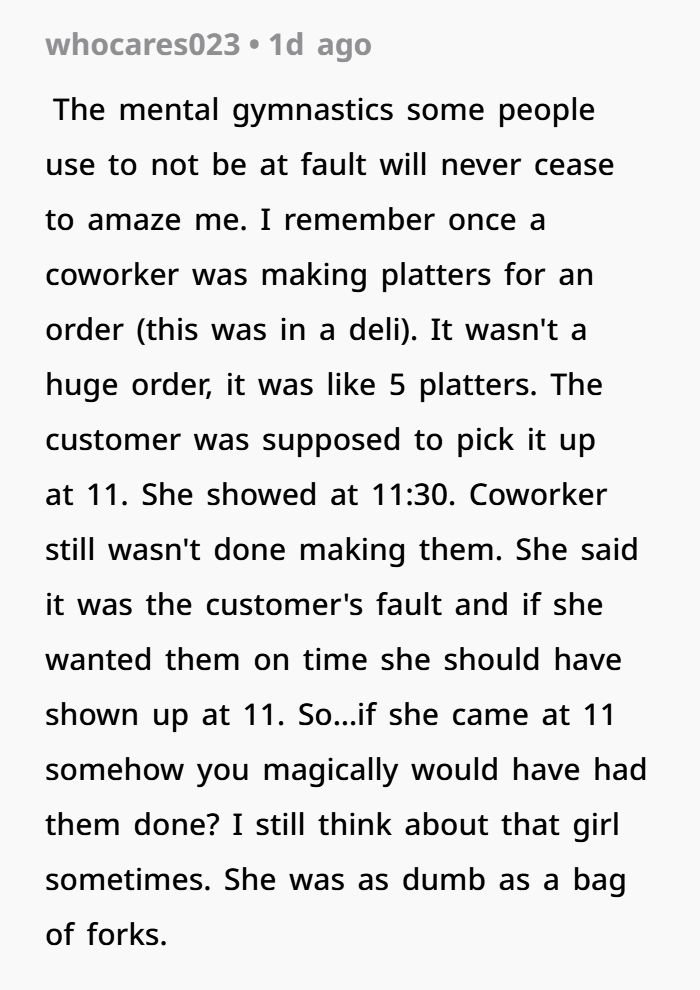
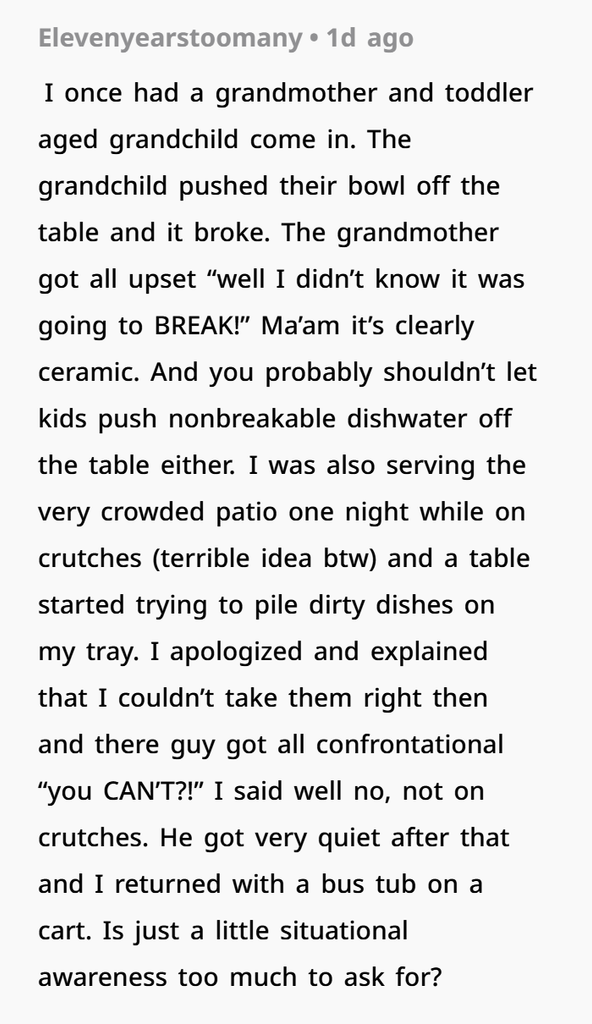
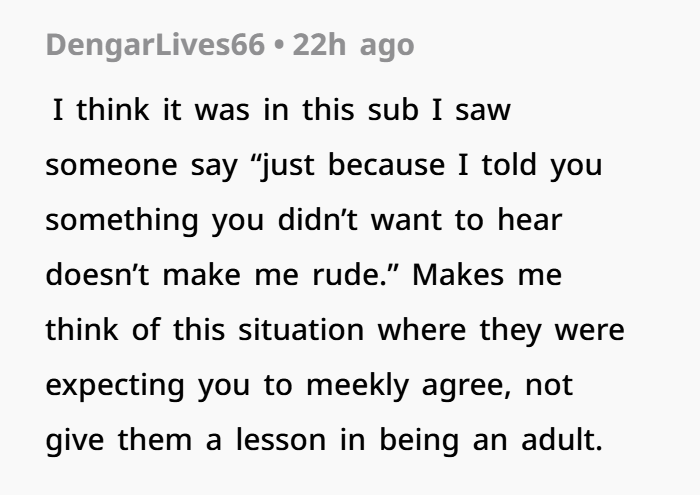
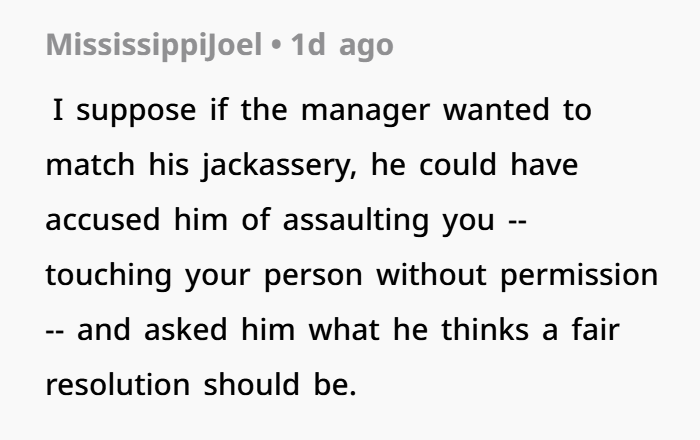
Workplace accidents are a normal part of busy environments. A broken plate or spilled drink does not have to become a serious conflict.
The most important thing is how people respond afterward.
Taking responsibility, communicating clearly, and treating others with respect can help solve problems faster and create better experiences for both customers and employees.