My Best Friend Chose a Birthday Party Over My Wedding—Then Made Me the Bad Guy
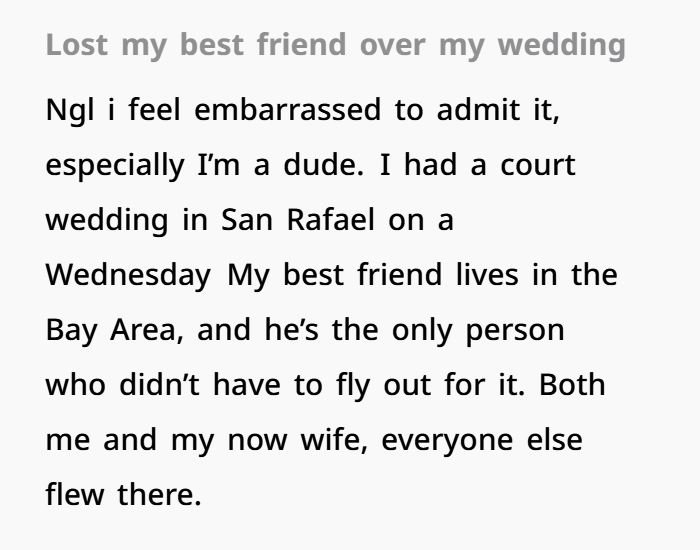
A groom was excited to celebrate his wedding day with his closest friends and family. He and his wife planned a small courthouse wedding in San Rafael, California, on a Wednesday. Most of their guests had to travel by plane, but his best friend already lived nearby in the Bay Area. The groom thought his friend would have no problem attending. However, things did not go as planned, and he soon felt that his special day was not important to his friend.
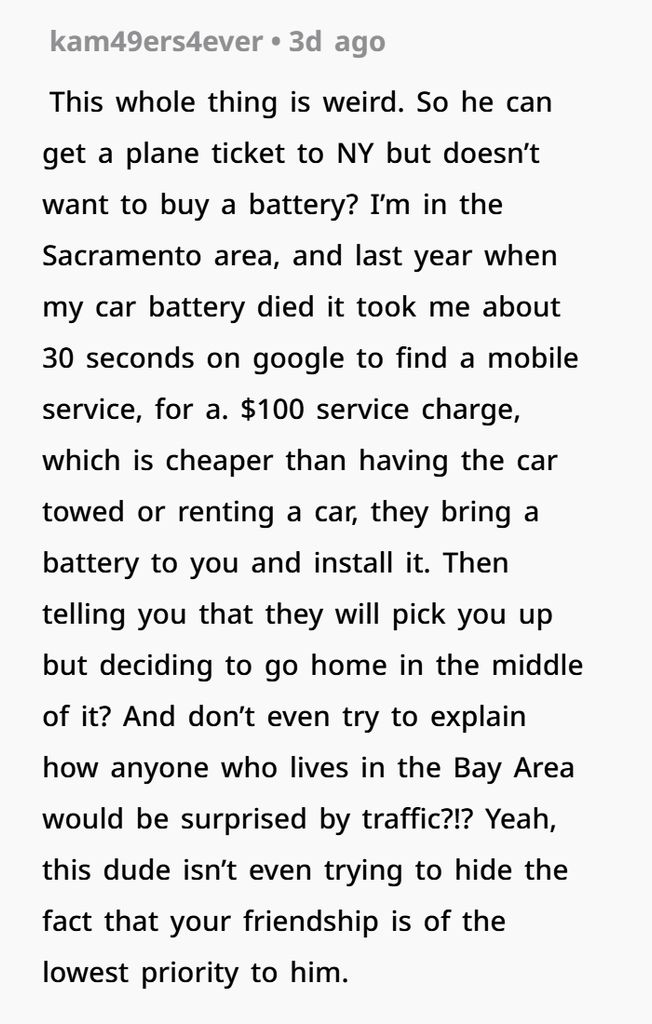
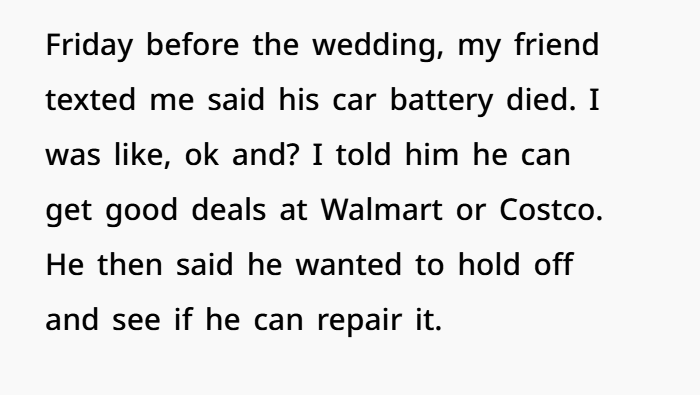
A few days before the wedding, his best friend said his car battery had stopped working. Instead of buying a new one, he wanted to try fixing it himself. The groom found this surprising because his friend had a good job as an engineer. Then, on Tuesday, the groom learned that his friend was in New York for another person’s birthday party. His return flight was planned for around midnight, leaving very little time before the wedding. On Wednesday morning, his friend was still trying to arrange a rental car. He even asked whether he could arrive late. Since a courthouse wedding ceremony can last only 15 minutes, the groom was worried he would miss everything. Luckily, his friend arrived just before the judge finished the ceremony.
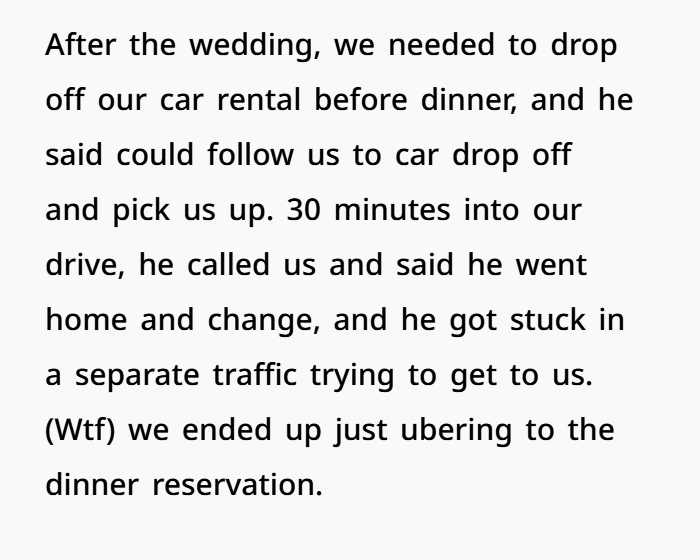
The problems continued after the wedding. His friend offered to help with transportation by following the couple to their rental car return location and driving them to dinner. But during the trip, he called and said he had gone home to change his clothes. He was now stuck in traffic and could not pick them up on time. The newlyweds had to book an Uber instead. After dealing with several wedding planning problems, the groom felt disappointed that his closest friend had not made more effort.
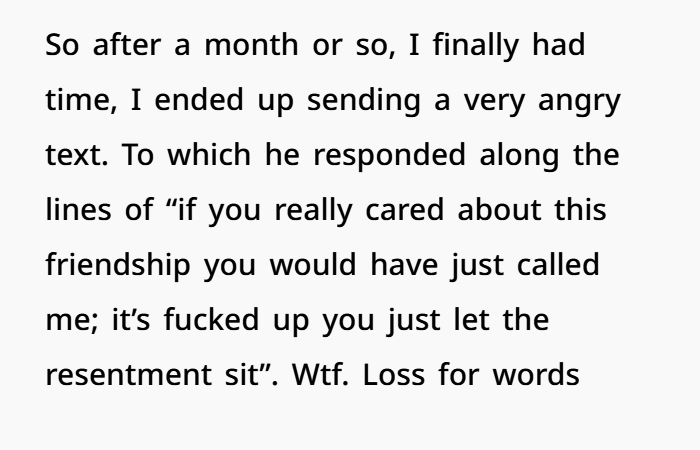
About a month later, the groom finally sent his friend a message explaining how upset he was. He hoped his friend would understand and apologize. Instead, his friend said he should have called and talked about the problem sooner. He also felt that keeping those feelings inside had made things worse. Now, the groom is unsure what to think. Was he expecting too much from his best friend, or should his friend have made better travel arrangements for such an important day?

When a Best Friend Fails to Show Up: Can a Friendship Ever Be the Same?
A wedding is one of the most important days in a person’s life. It’s a time when people want their closest friends and family by their side.
But what happens when your best friend doesn’t make your big day a priority?
That’s exactly what happened to one groom. His best friend’s poor planning and last-minute decisions left him feeling hurt and disappointed.
The problem wasn’t just about arriving late. It was about feeling like their friendship didn’t matter as much as he thought.
And sometimes, that feeling can hurt more than the mistake itself.
Why the Groom Felt So Hurt
The groom expected his best friend to make a little extra effort for his wedding.
He wasn’t asking for expensive gifts or special treatment. He simply wanted his friend to arrive on time and keep his promises.
But things started going wrong several days before the wedding.
His friend discovered that his car battery was dead five days before the ceremony. Instead of fixing the problem right away or arranging another ride, he left his travel plans uncertain.
Then came another surprise.
The friend traveled to New York for someone else’s birthday shortly before the wedding.
For the groom, this was especially upsetting.
His friend had managed to organize a trip for a birthday celebration but hadn’t made reliable transportation plans for his wedding.
It made the groom wonder where he stood in his friend’s life.
Why Small Actions Matter in Close Friendships
Strong friendships are built on trust, respect, and effort.
You don’t have to talk every day or spend money on expensive activities to show someone you care.
Sometimes, the smallest actions mean the most.
Remembering an important date, checking in during a difficult week, or keeping a simple promise can make someone feel valued.
Relationship expert Dr. John Gottman has studied how people respond to each other’s need for attention and support.
His work often discusses something called “bids for connection.”
In simple words, these are moments when someone reaches out and hopes the other person will respond with care.
Although much of this research focuses on couples, the idea can also help us understand close friendships.
When a friend makes an effort during an important moment, it builds trust.
When they repeatedly fail to follow through, that trust can slowly weaken.
The Problem Was Bigger Than a Missed Ride
The groom’s disappointment didn’t come from just one mistake.
Several things happened close together.
First, there was the dead car battery.
Then there was the trip to New York.
And finally, there was another transportation problem after the wedding.
The friend had offered to drive the newly married couple, but he made an unexpected stop at his own home without telling them beforehand.
After a long wedding day, the couple likely wanted a smooth ride without another delay.
Instead, they had to deal with one more inconvenience.
Each problem might have seemed small on its own.
But together, they left the groom feeling that his friend hadn’t taken the wedding seriously.
This is why reliability matters so much in healthy relationships.
People don’t expect their friends to be perfect. They just want to know they can count on them when it matters.
Could Better Wedding Planning Have Prevented the Problem?
Weddings require a lot of planning, from choosing a venue to arranging transportation and managing the guest list.
Many couples spend months working on their wedding budget, travel arrangements, and event schedule.
Even with careful wedding planning, unexpected problems can happen.
Cars break down. Flights get delayed. Plans change.
But having a backup plan can prevent a small problem from becoming a bigger one.
In this situation, the friend knew about his car trouble several days before the ceremony.
That gave him time to explore other transportation options, such as a rental car, rideshare service, or help from another guest.
The real issue wasn’t that something went wrong.
It was that the groom felt his friend hadn’t made enough effort to prevent it.
Why Waiting a Month Made Things Worse
The groom didn’t express his anger immediately.
Instead, he waited about a month before sending his friend an angry message.
By then, his disappointment had been building for weeks.
This is something that happens in many friendships.
A person feels hurt but doesn’t say anything at first.
They think about what happened, remember other disappointing moments, and become more upset.
By the time they finally speak, their feelings may be much stronger.
Relationship communication becomes harder when frustration has been building for a long time.
The friend may have been surprised by the message.
From his point of view, he had still made it to the wedding before the ceremony ended.
He might have believed everything was fine.
But the groom saw things differently.
For him, showing up at the last possible moment didn’t make up for all the stress leading up to it.
Both men were looking at the same situation from different sides.
Why the Friend Became Defensive
When the groom finally explained his feelings, his friend focused on one thing.
Why had he waited so long to complain?
That question wasn’t completely unfair.
Talking about a problem sooner can make it easier to solve.
But it also didn’t answer the groom’s main concern.
The groom wanted his friend to understand why his actions had been hurtful.
Instead, the conversation became about when the complaint was made.
This is a common problem in friendship conflicts.
One person shares their disappointment, and the other immediately tries to defend themselves.
Before long, both people are arguing about who handled things worse.
Neither feels heard.
A healthier approach would be to acknowledge the other person’s feelings before explaining your own side.
A simple response like, “I understand why that upset you, and I’m sorry I made things harder,” could have helped the conversation move forward.
Can Better Communication Save the Friendship?
One difficult experience doesn’t always mean a friendship is over.
Even close friends make mistakes.
What matters is how they handle those mistakes afterward.
Healthy communication starts with being willing to listen.
The groom could explain that he wasn’t angry about a single transportation problem.
He was hurt because several decisions made him feel unimportant.
He could also admit that waiting a month and sending an angry message wasn’t the best way to discuss the situation.
His friend could explain what happened without ignoring the impact of his choices.
Both would have a chance to understand each other better.
Sometimes, a sincere apology and an open conversation are enough to repair a friendship.
Other times, rebuilding trust takes longer.
It depends on whether both people are willing to make an effort.
When Should You Rethink a Friendship?
Every friendship has difficult moments.
People get busy with work, family responsibilities, financial commitments, and personal priorities.
It’s normal for friends to have different schedules and responsibilities.
But there is a difference between being busy and repeatedly making someone feel unimportant.
If a friend often breaks promises, cancels plans, or ignores your concerns, it may be time to think about the relationship.
Ask yourself whether the friendship still feels balanced.
Do both people make an effort?
Can you talk openly when something goes wrong?
Does your friend take your feelings seriously?
These questions can help you decide whether the problem was a one-time mistake or part of a bigger pattern.
Setting healthy boundaries doesn’t mean ending every friendship after a disagreement.
It means understanding what you need from the people closest to you.
Does Showing Up Late Still Count as Being There?
This is probably the biggest question in the entire situation.
The friend did make it to the wedding before the ceremony ended.
So, from one point of view, he showed up when it mattered.
But the groom wasn’t only thinking about the final result.
He was thinking about the effort that came before it.
There’s a difference between someone doing everything they can to be there and someone leaving important plans until the last minute.
Both people might arrive at the same event, but their actions can leave very different impressions.
Of course, nobody can know exactly what the friend was thinking.
He may have believed his travel plans would work out.
He may not have realized how much stress he was causing.
Still, good intentions don’t always erase the impact of poor decisions.
What This Story Teaches Us About Friendship
Friendship isn’t about being available every second of the day.
It’s about showing care in ways that matter.
A friend who has supported you for years shouldn’t automatically be judged by one difficult week.
At the same time, years of friendship don’t mean someone should ignore repeated disappointment.
Trust grows when people keep their promises, communicate clearly, and take responsibility when things go wrong.
In this case, both friends had something to learn.
The groom needed to express his feelings in a calmer and more timely way.
His friend needed to understand that arriving at the wedding wasn’t the only thing that mattered.
The planning, promises, and consideration mattered too.
Final Thoughts
The wedding may have lasted only one day, but the feelings it created could affect this friendship for much longer.
The groom wanted to feel important to someone he considered his best friend.
His friend may have thought that making it to the ceremony was enough.
Neither person can change what happened.
But they can decide what happens next.
If their friendship has a strong history of trust and support, an honest conversation could help them move forward.
If this was just another example of repeated broken promises, the groom may need to reconsider his expectations.
Because at the end of the day, a strong friendship isn’t just about being present. It’s about making the other person feel that being there matters.
And that leaves one question worth thinking about:
If your best friend arrived at your wedding at the last possible moment after several avoidable problems, would you be grateful they made it, or hurt that they didn’t try harder?
Readers’ Comments Speak Out