
AITA for Cutting Off My Cheating Dad… and Refusing to Accept His New Baby?
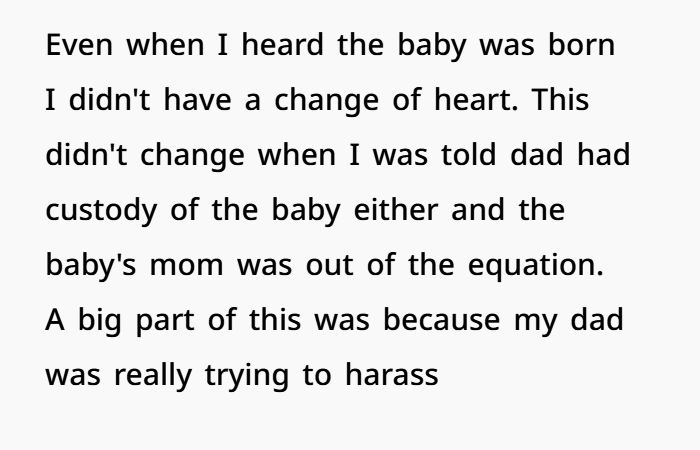
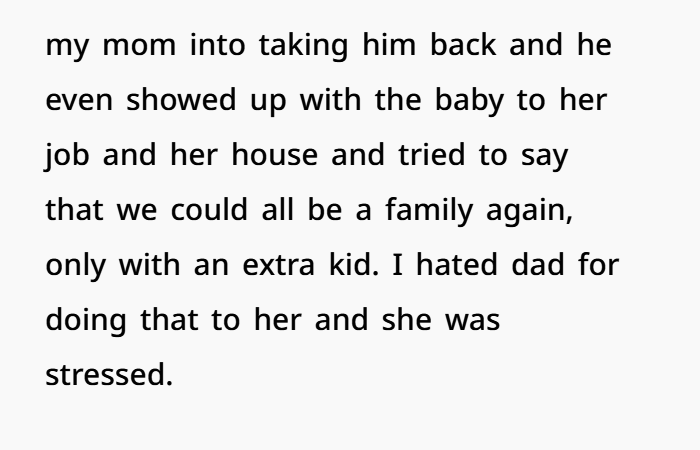
This situation hits hard because it’s not just about cheating—it’s about everything that came after. The OP, a 20-year-old college student, finds out his dad had an affair that resulted in a baby. By the time he learns the truth, his mom has already kicked the dad out and filed for divorce. Instead of accepting responsibility, the dad doubles down—refusing to let go, harassing the mom, and even showing up with the baby trying to “rebuild” the family like nothing happened. That alone pushes things from messy to outright painful.
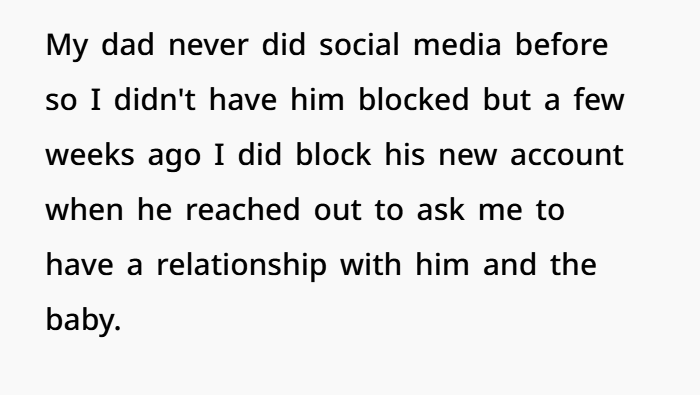
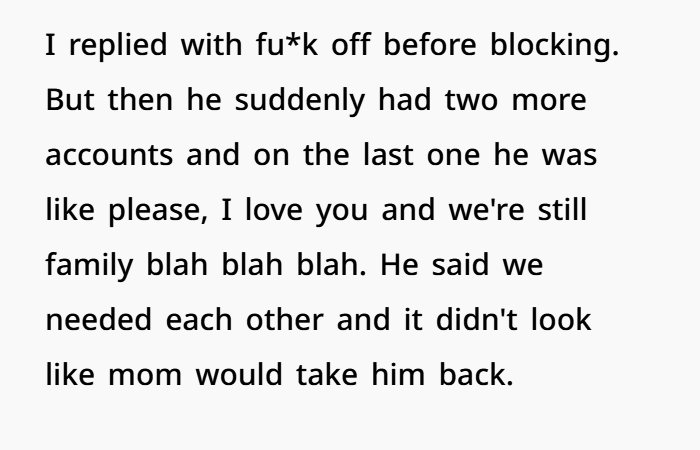
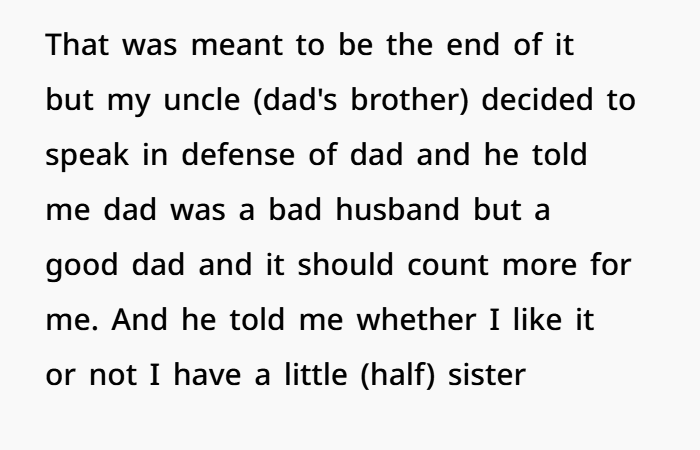
For OP, that was the breaking point. He cuts his dad off completely—blocks him, refuses contact, and mentally moves on. Even the existence of a half-sister doesn’t change anything for him. When his dad keeps trying to force communication, OP responds bluntly and shuts it down again. But the conflict doesn’t stop there—extended family steps in, especially an uncle who argues that the dad’s mistakes as a husband shouldn’t erase his role as a father. Now OP is stuck being painted as cold and immature… just for protecting his peace.

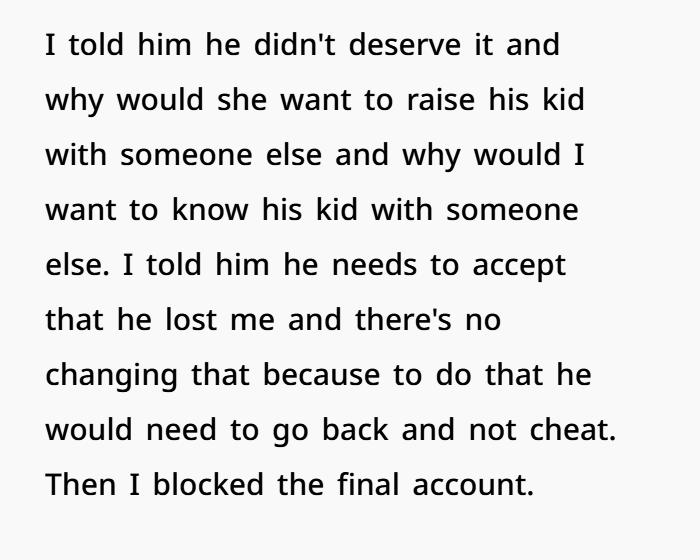
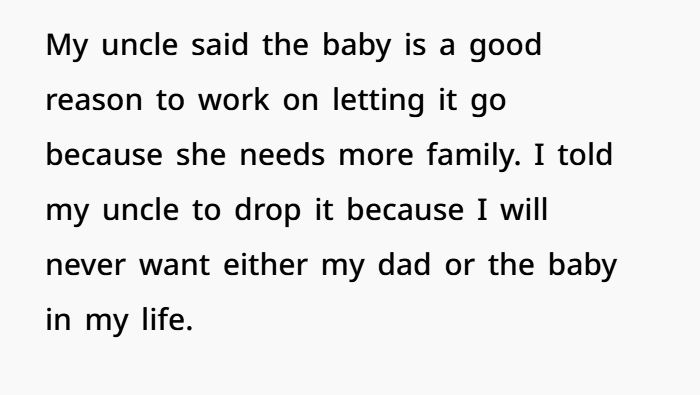
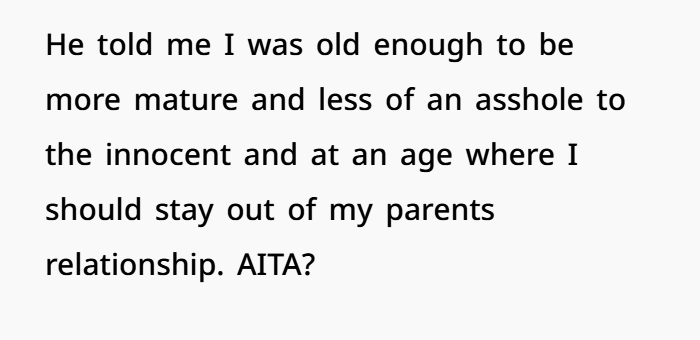
Let’s be real—this isn’t just a “family disagreement.” This is what happens when trust gets shattered at the core level, and then the person who broke it refuses to take accountability in a meaningful way.
First, we need to separate two things people keep mixing together: being a bad partner vs being a bad parent. The uncle’s main argument is that OP’s dad was a “bad husband but a good dad.” On paper, that sounds like a fair distinction. In real life? It’s not that simple.
Why? Because actions don’t exist in isolation. When a parent cheats, hides a second relationship, and creates another child outside the family—it doesn’t just hurt the spouse. It destabilizes the entire family unit. Kids, even adult kids, don’t experience that as “oh that’s just between mom and dad.” They experience it as betrayal, chaos, and emotional fallout. So no, you can’t neatly separate those roles like flipping a switch.
Then add the dad’s behavior after the truth came out. This part matters a lot. If he had owned up, respected boundaries, and tried to rebuild trust slowly, we’d be having a slightly different conversation. But instead, he harassed OP’s mom, showed up uninvited, and tried to force a fantasy where everyone just accepts the new reality—including the baby. That’s not remorse. That’s avoidance and denial.
From a psychological standpoint, this kind of behavior is often linked to entitlement and emotional immaturity. He’s not asking, “How do I repair what I broke?” He’s asking, “How do I get things back the way I want them?” And those are very different questions.
Now let’s talk about OP’s reaction—cutting him off completely.
A lot of people throw around the idea that “family is family” and that blood relationships should always be preserved. But modern psychology, especially in areas like family trauma and boundary-setting, doesn’t support that unconditional mindset anymore. There’s a growing recognition that sometimes the healthiest choice is no contact, especially when someone repeatedly violates boundaries or causes ongoing harm.
OP didn’t just react emotionally in the moment. He made a decision based on repeated behavior:
- The cheating itself
- The lack of accountability
- The harassment of his mom
- The refusal to respect boundaries
- The continued pressure to reconnect
That’s a pattern, not a one-time mistake.
Now, the most complicated part of this story: the baby.
This is where people tend to shift gears and say, “But the child is innocent.” And yes, that’s true. The half-sister didn’t do anything wrong. But here’s the uncomfortable truth—being innocent doesn’t automatically entitle someone to a relationship.
Relationships aren’t obligations, they’re connections. And right now, that child represents something deeply painful for OP: the affair, the betrayal, the destruction of his parents’ marriage, and the ongoing stress his mom is dealing with. Expecting him to just override all of that and step into a “big brother” role is unrealistic.
There’s also something important here about emotional readiness. OP is 20. He’s still processing what happened. People deal with betrayal differently, and healing isn’t linear. Forcing a relationship before someone is ready doesn’t create bonding—it creates resentment.
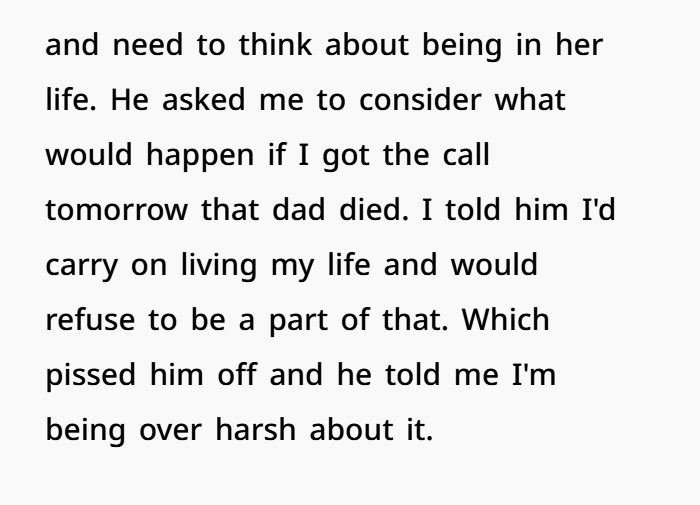
The uncle’s argument about “what if your dad died tomorrow” is also worth unpacking. This is a classic emotional pressure tactic. It tries to replace present-day reality with hypothetical guilt. But decisions about relationships should be based on current behavior and boundaries, not fear of future regret.
And OP’s answer—saying he’d carry on with his life—might sound harsh, but it’s also honest. People often expect “acceptable grief responses,” but the truth is, when a relationship is already emotionally dead, the physical loss doesn’t always change things.
Another angle here is the idea that OP should “stay out of his parents’ relationship.” That sounds reasonable at first, but it ignores the fact that the dad’s actions directly affected OP. This wasn’t a quiet affair that stayed hidden. It exploded into his life, changed his family structure, and continues to impact his mom’s well-being. He’s already involved, whether he wants to be or not.
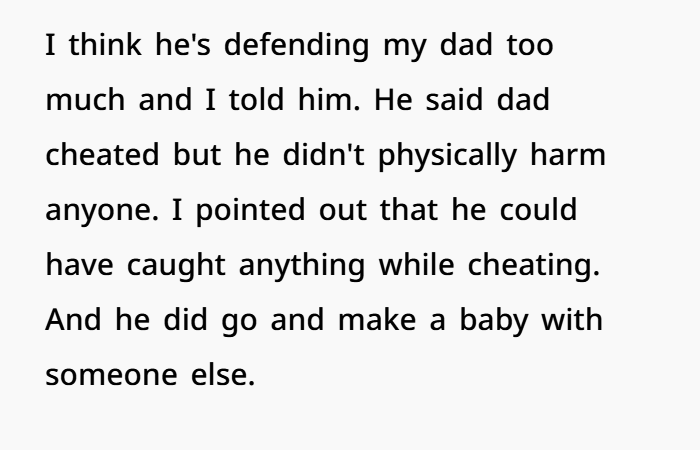
Also, the uncle saying “he didn’t physically harm anyone” is… honestly, a very narrow way of looking at harm. Emotional damage is real. Stress, betrayal, instability—these things have long-term effects. Just because there’s no physical injury doesn’t mean there’s no harm.
Let’s also touch on something people don’t say out loud: forgiveness is optional.
There’s this social pressure to forgive, especially within families. But forgiveness isn’t something you owe someone—it’s something you choose, if and when you’re ready. And even if OP does forgive someday, that doesn’t mean he has to rebuild a relationship. Forgiveness and reconciliation are two completely different things.
Right now, OP is choosing self-protection over forced connection. And given everything that’s happened, that’s not immaturity—that’s clarity.
Could things change in the future? Maybe. People grow, circumstances shift, emotions soften over time. It’s possible that years down the line, OP might feel differently about his dad or even about his half-sister. But that has to happen naturally. It can’t be forced through guilt, pressure, or family lectures.
At the end of the day, the core issue here isn’t whether OP is being “too harsh.” It’s whether he’s allowed to set boundaries after being hurt. And the answer to that is yes—absolutely.
Because if someone breaks your trust, disrespects your family, and refuses to take accountability… you’re not obligated to keep the door open just because you share DNA.
Readers’ Comments Speak Out
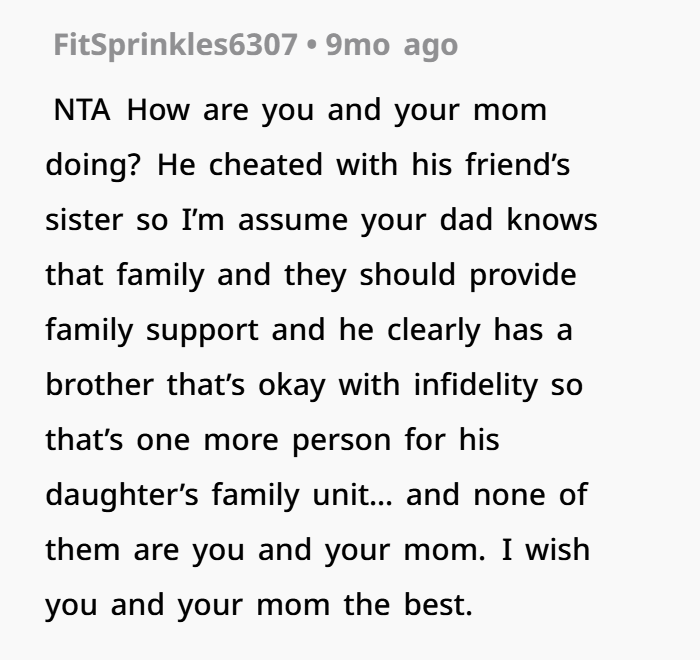
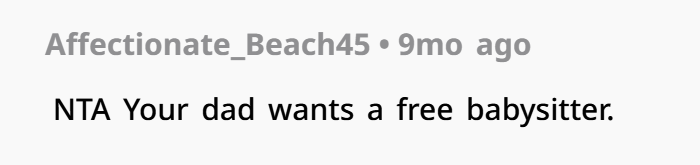
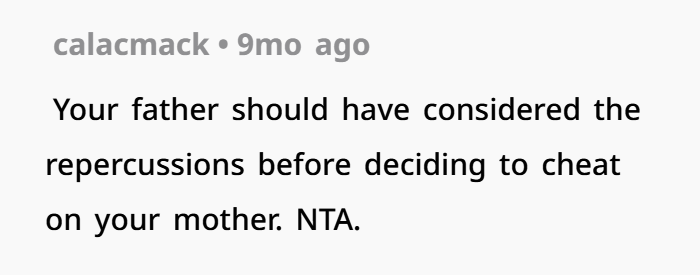
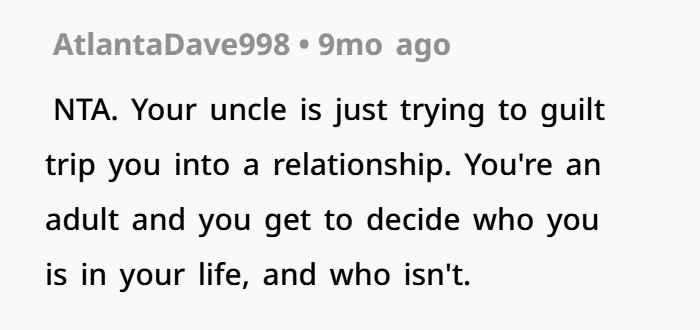
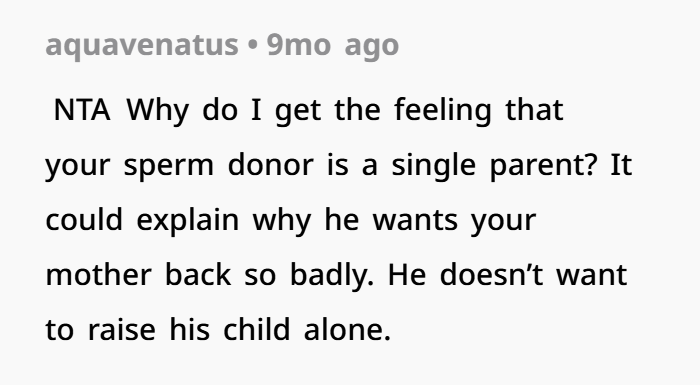
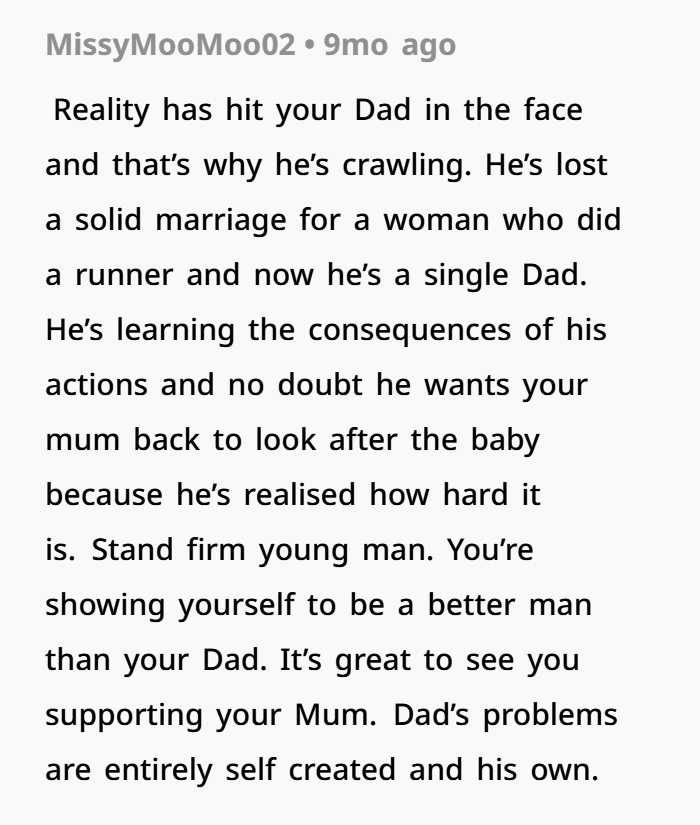
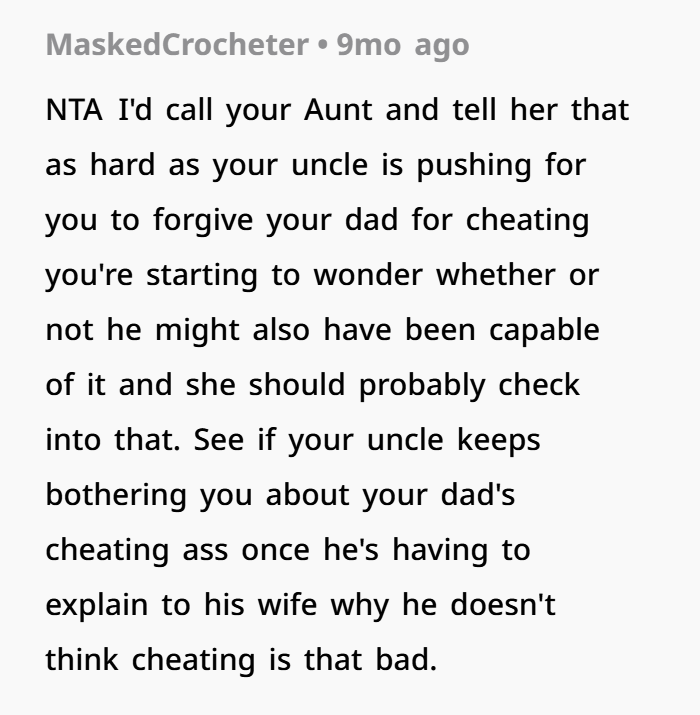
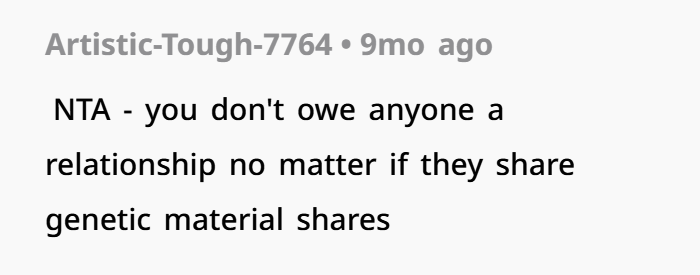
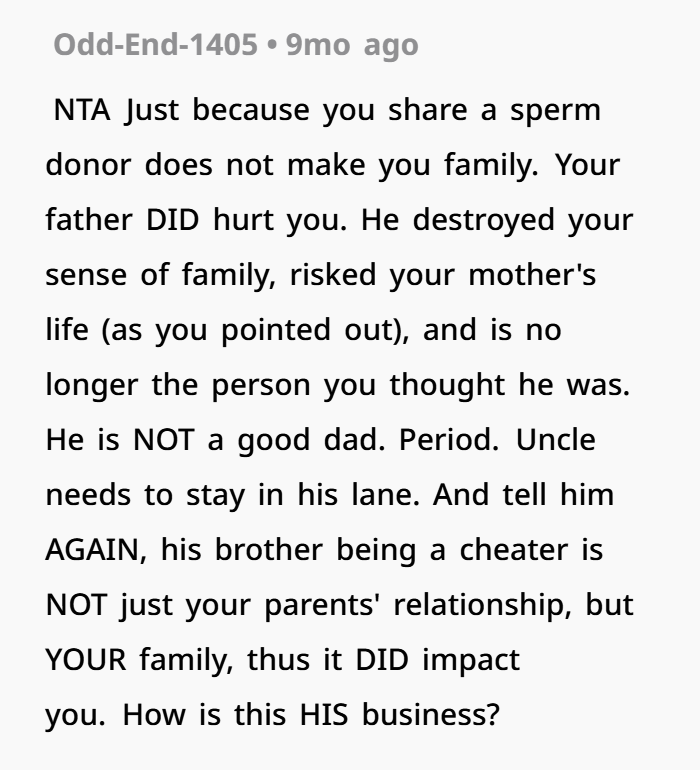
This leans strongly toward Not the A-hole.
You’re not punishing your dad—you’re responding to his choices. And you’re not rejecting the baby out of cruelty—you’re protecting yourself from what that situation represents right now.
People love to preach forgiveness when they’re not the ones dealing with the fallout. But boundaries? Those are yours to set.