Her Boss Tried to Kiss Her-Was I Wrong to Ask My Wife to Quit Her Job?
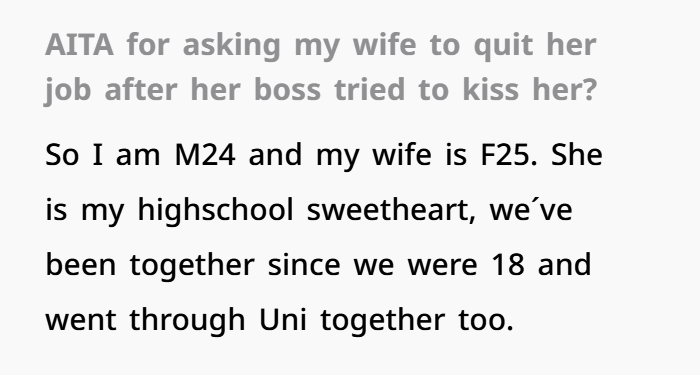
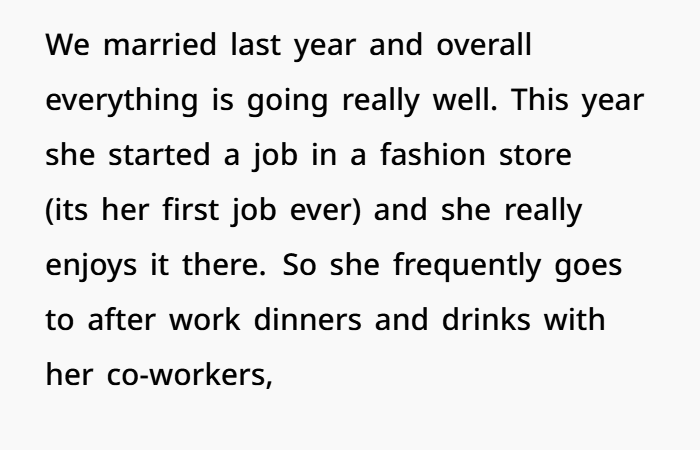
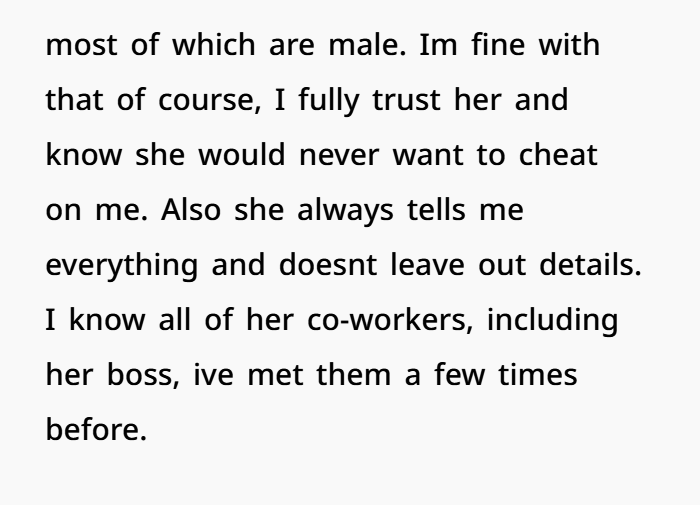
This story centers around a young married couple navigating an uncomfortable situation involving workplace boundaries. The husband, 24, and his wife, 25, have been together since high school and recently married. Their relationship appears strong, built on years of trust and shared experiences through university. Recently, the wife started her first job at a fashion retail store — a job she genuinely enjoys. It’s her first taste of financial independence, workplace friendships, and a new routine. Everything seemed normal until a late-night outing with coworkers changed things.
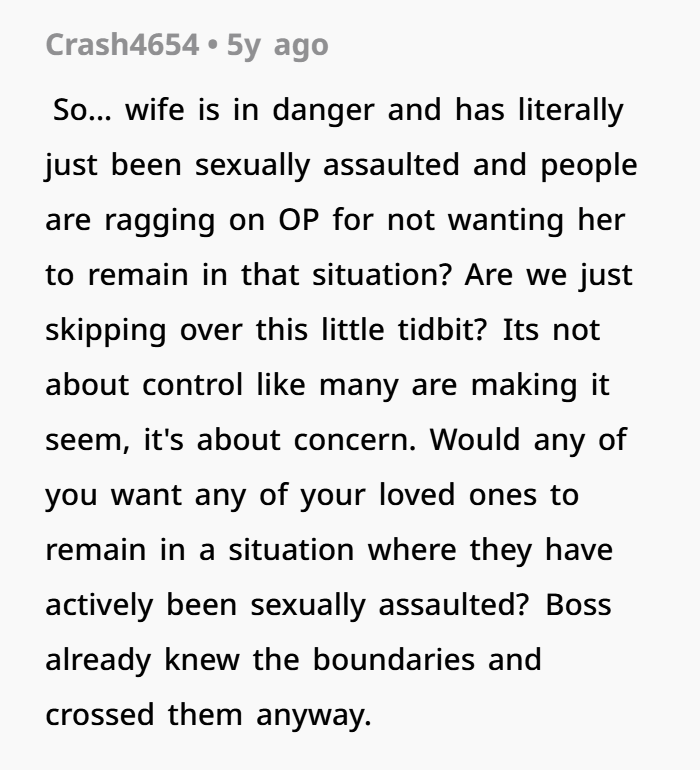
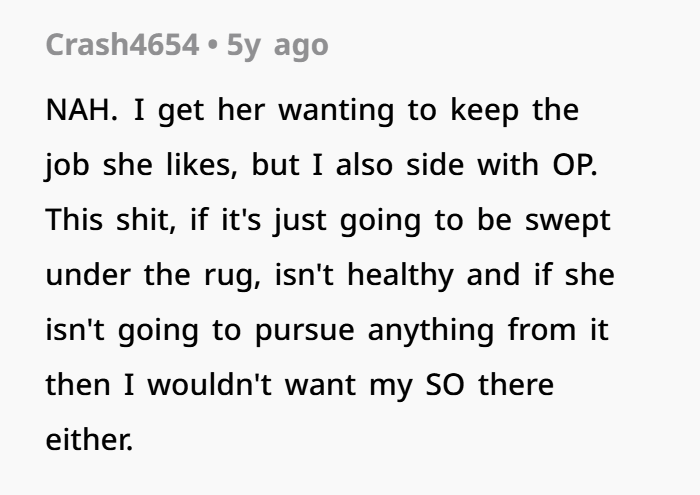
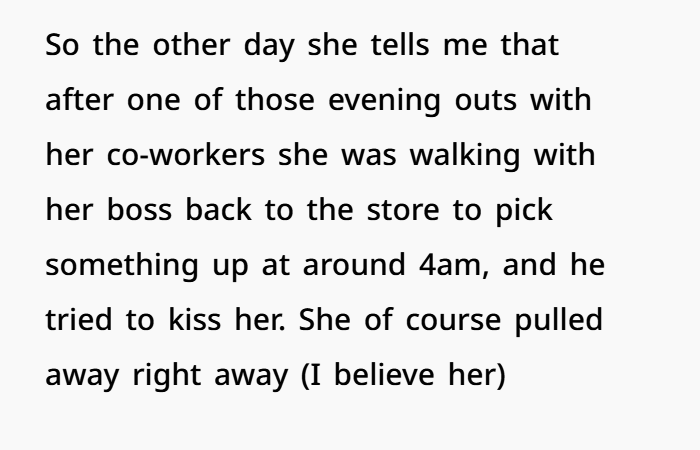
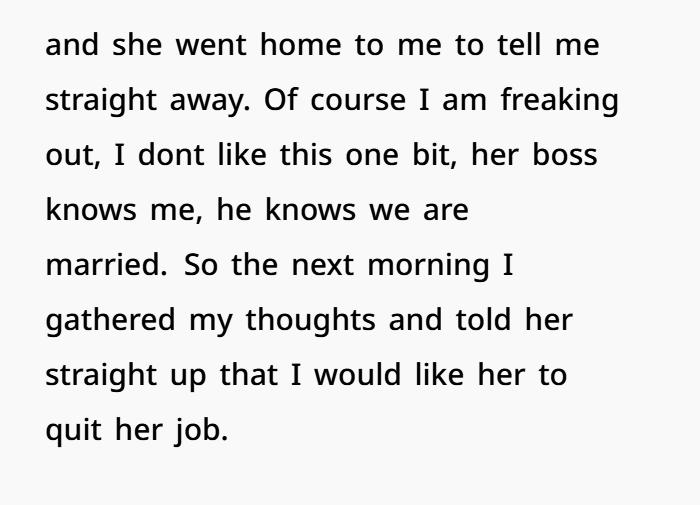
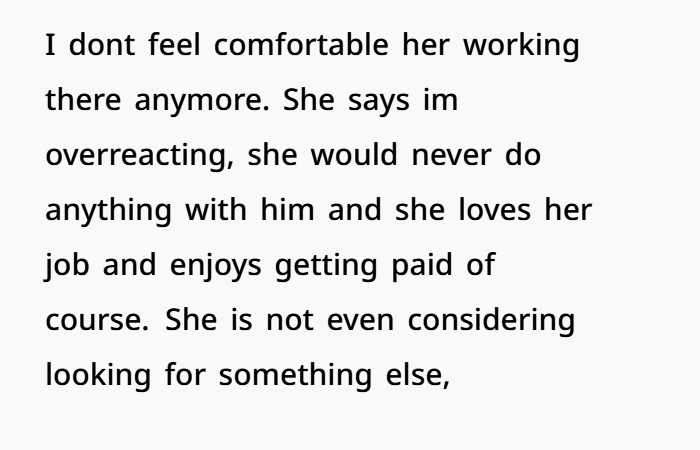
After drinks with colleagues, the wife walked back to the store with her boss around 4 a.m. to pick something up. During that moment, the boss attempted to kiss her. She immediately pulled away and went home to tell her husband everything. While she handled the situation directly and transparently, the husband felt deeply uncomfortable knowing she still works under someone who crossed that boundary. The next morning he asked her to quit the job entirely. She refused, saying she enjoys the job and believes the incident can be handled by simply avoiding situations alone with the boss. Now the couple is stuck in a tense disagreement: is the husband protecting his marriage, or is he crossing into controlling territory?

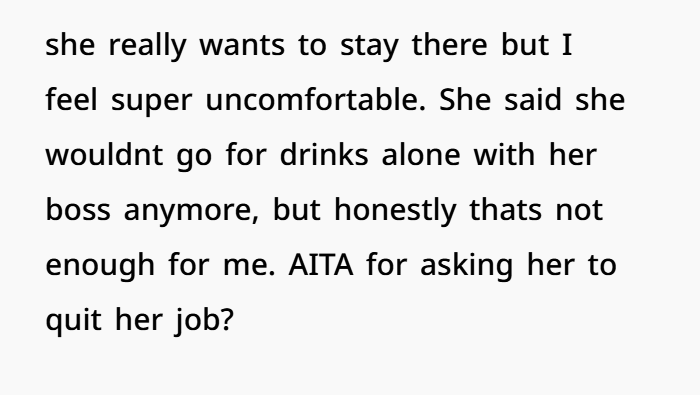
Situations like this hit multiple emotional and legal layers at once. On the surface, it feels like a simple marital disagreement. But once you unpack it, you see themes of workplace harassment, marriage trust issues, job security, relationship boundaries, and personal autonomy. These topics show up often in relationship forums and legal discussions because they sit right at the intersection of work life and private life.
First, let’s talk about the workplace angle. A boss attempting to kiss an employee is widely recognized under employment law as a potential form of workplace s*xual harassment. In many countries, this falls under unwanted s*xual advances from someone in a position of authority. That power imbalance matters. When a supervisor makes a move like that, it creates a situation where the employee may feel pressured, uncomfortable, or unsure about how their job could be affected if they reject the advance.
In corporate HR terms, this could be categorized under “quid pro quo harassment” or “hostile work environment harassment.” Quid pro quo happens when a boss implies job benefits in exchange for romantic or s*xual favors. A hostile work environment occurs when behavior makes the workplace feel unsafe or uncomfortable. Even if the boss didn’t repeat the behavior, a single incident like this can still qualify as misconduct depending on company policy and local labor laws.
According to employment law research frequently cited in HR training programs, around 30–40% of workplace harassment cases involve supervisors or managers. That statistic matters because employees often hesitate to report these incidents. Reporting could lead to awkward workplace dynamics, fear of retaliation, or even job loss in smaller companies where HR departments are weak or nonexistent.
Now let’s shift to the relationship side of the story.
The husband’s reaction is emotionally understandable. When someone outside the relationship crosses a boundary, it can trigger feelings of jealousy, protectiveness, anger, and fear. These emotions are natural psychological responses tied to relationship security. Studies in relationship psychology often describe this as “threat perception in romantic partnerships.” When an outside person makes a move toward a partner, the brain can interpret it as a potential threat to the stability of the relationship.
But here’s where the conflict becomes complicated.
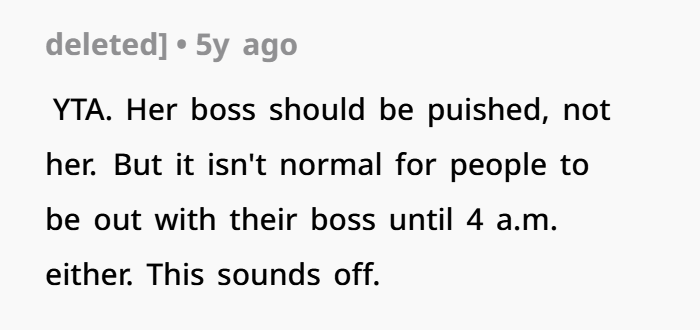
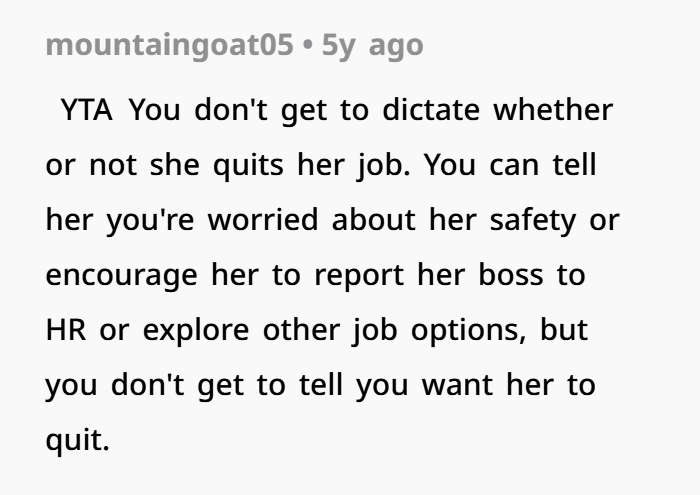
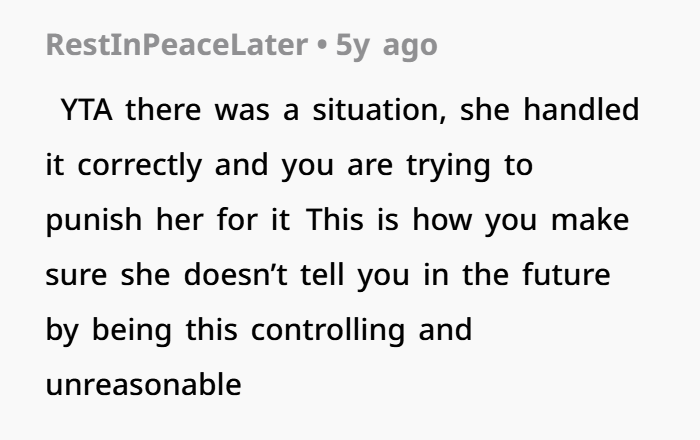
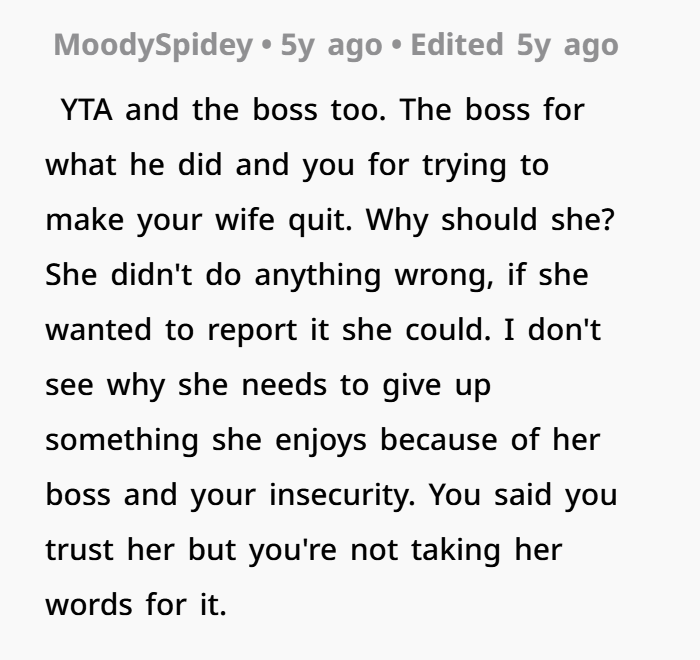
The husband is directing his solution toward his wife — asking her to quit — rather than toward the person who actually crossed the line: the boss. That shift is what often sparks debate in communities like relationship forums or AITA discussions. Critics might argue that asking someone to leave their job due to someone else’s bad behavior can feel unfair or controlling. Supporters, however, might say the husband is simply trying to protect both his wife and their marriage from a risky environment.
This is where marriage boundaries and autonomy collide.
Healthy relationships generally balance two important principles:
- Mutual respect and emotional safety
- Individual independence and decision-making
If one partner starts making career decisions for the other, it can create resentment over time. On the other hand, ignoring your partner’s emotional discomfort can also damage trust. Relationship therapists often describe this as the “security vs freedom dilemma.” One partner seeks reassurance and protection, while the other wants independence and trust.
Another factor worth mentioning is career identity. This is the wife’s first job. For many people, that first job carries a lot of meaning — it represents adulthood, independence, and financial stability. Quitting might feel like giving up something important that she worked hard to achieve. In psychological research on workplace satisfaction, early career experiences strongly influence long-term confidence and professional development.
From a practical standpoint, there are also several middle-ground solutions that couples in similar situations sometimes explore:
1. Reporting the behavior to HR or upper management
If the store is part of a larger company, there may be formal workplace harassment reporting policies. Filing a complaint can create documentation and prevent future incidents.
2. Setting professional boundaries
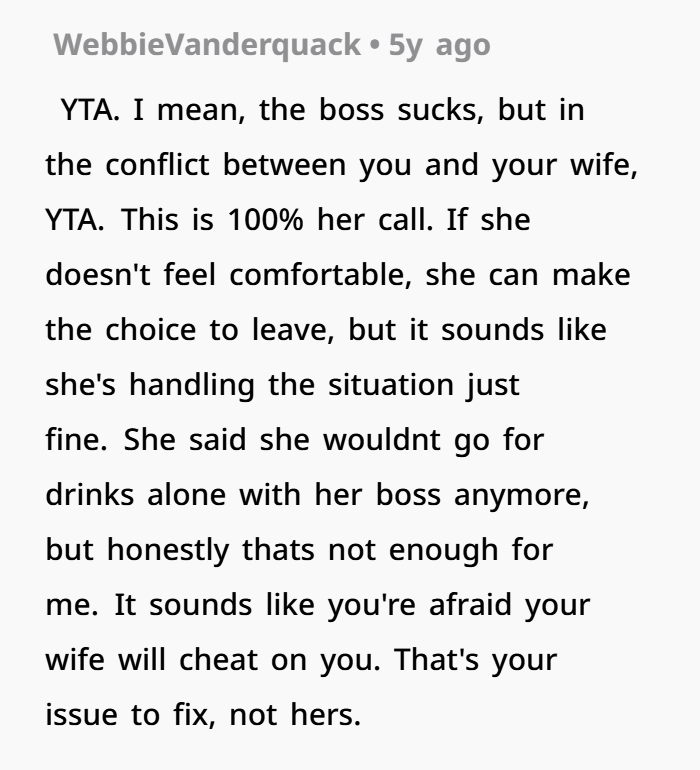
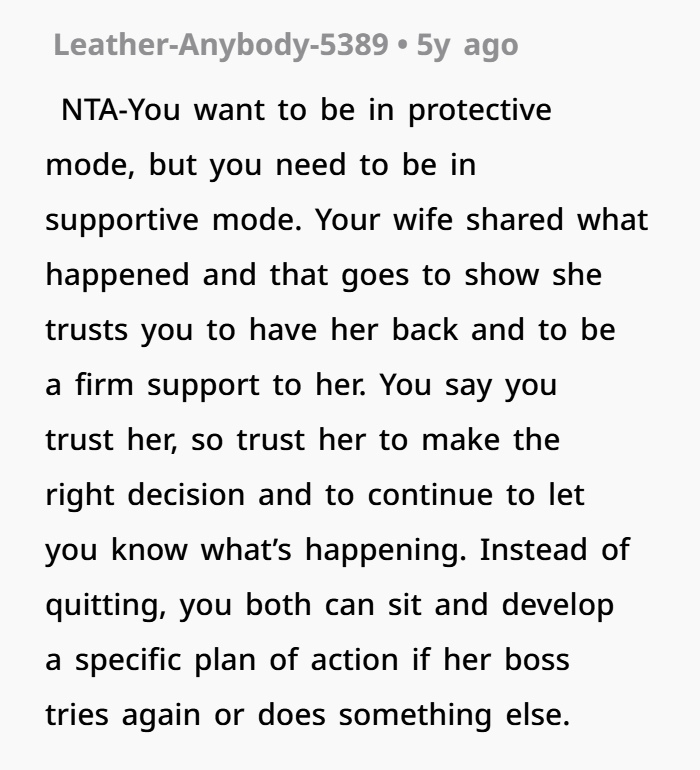
The wife already suggested avoiding situations where she’s alone with the boss outside of normal work hours. This reduces risk without sacrificing her job.
3. Transferring departments or shifts
In retail environments, sometimes employees can move to different locations or schedules to reduce contact with problematic supervisors.
4. Couples communication
Relationship counselors often emphasize structured conversations when trust or safety feels shaken. Instead of framing the issue as “quit your job,” the discussion can shift toward “how can we both feel safe and respected in this situation?”
Another psychological concept that applies here is intent vs impact. The husband’s intention may be protection, but the impact on his wife might feel like restriction. Meanwhile, the wife’s intention is independence, but the impact on the husband might feel like ignoring his emotional concerns. Recognizing this difference can help couples reframe arguments into collaborative problem solving.
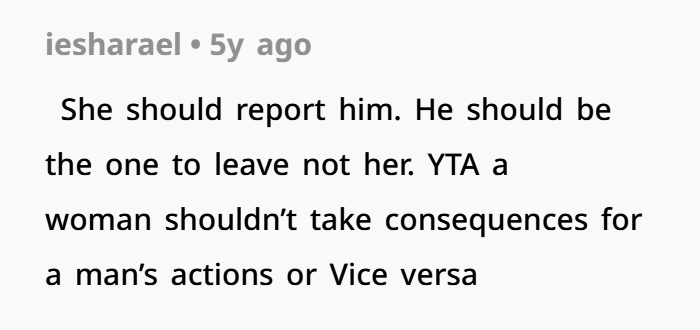
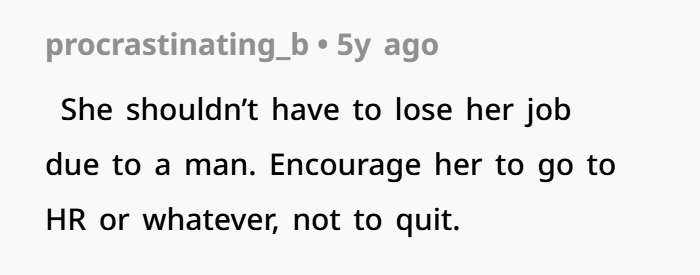
There’s also a broader social issue embedded in this story. When women experience inappropriate behavior at work, they’re often the ones expected to change their behavior — leave the job, avoid certain situations, or limit social interactions. Many workplace equality advocates argue that the real accountability should remain on the person who crossed the boundary, not the person who rejected it.
That said, relationships are not courtrooms or HR departments. Emotions are messy. Even if the wife did everything right — rejecting the kiss and telling her husband immediately — the husband may still feel uneasy knowing her boss is someone who already tried to cross a line.
So the real question isn’t just “who is right.” The deeper question is how couples balance protection, independence, and trust when outside people violate relationship boundaries.
And that’s why stories like this spark such heated debates online. Different people prioritize different values. Some emphasize personal autonomy and career rights, while others emphasize relationship safety and emotional reassurance.
In the end, the healthiest outcome usually isn’t a demand or an ultimatum. It’s a conversation where both partners acknowledge each other’s fears, values, and goals — and then find a solution that protects both the relationship and the individual.
Top Comments From Readers