AITA for Laughing When My Wife Clapped Back at My Mom?
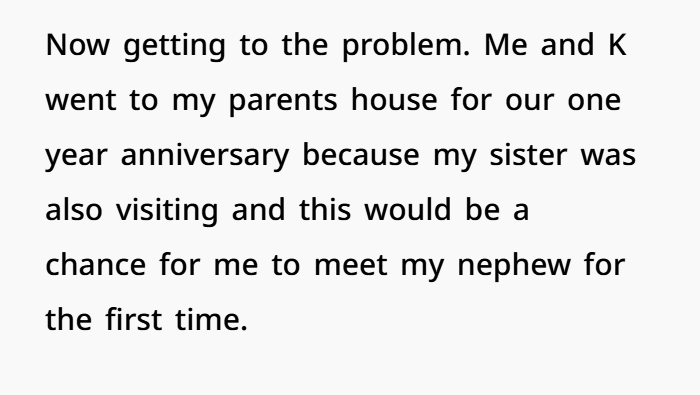
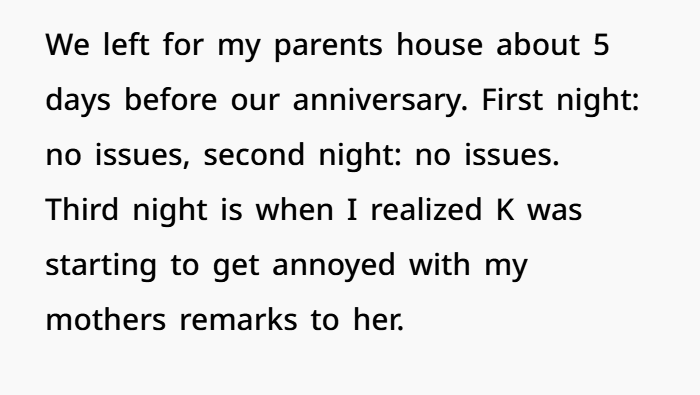
This story follows a young husband caught between his wife and his mother after a tense family gathering explodes into drama. He and his wife, high school sweethearts who recently celebrated their first anniversary, visit his parents’ home to reconnect with family—including meeting his nephew for the first time. While the first couple of days go smoothly, underlying tension between his wife and his mother begins to surface. Small remarks from his mom start to wear on his wife, building up to a breaking point.
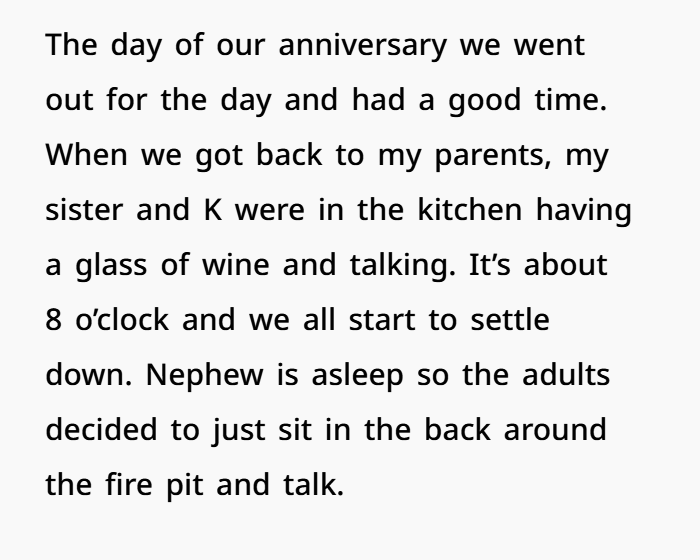
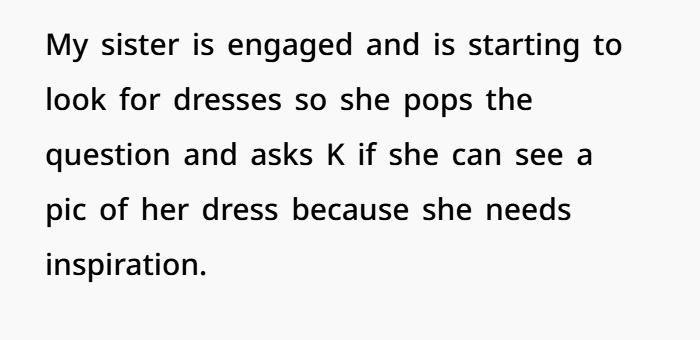
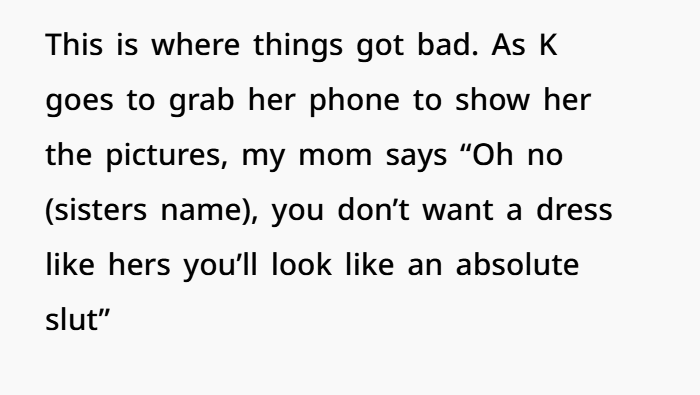
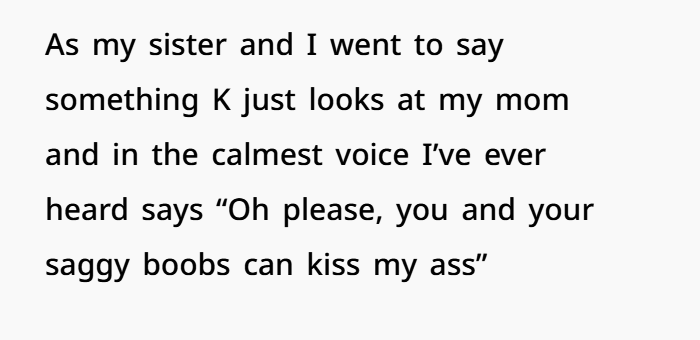
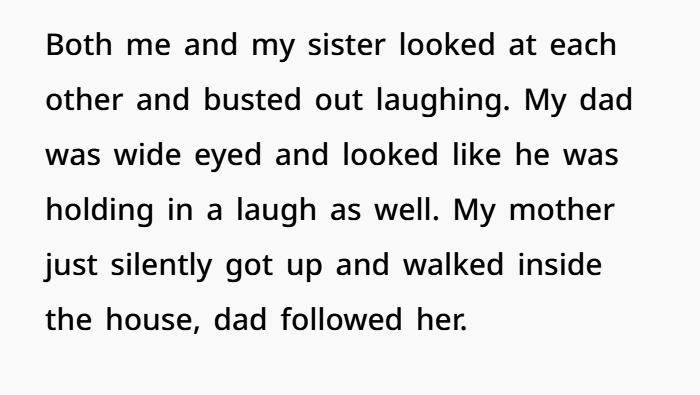
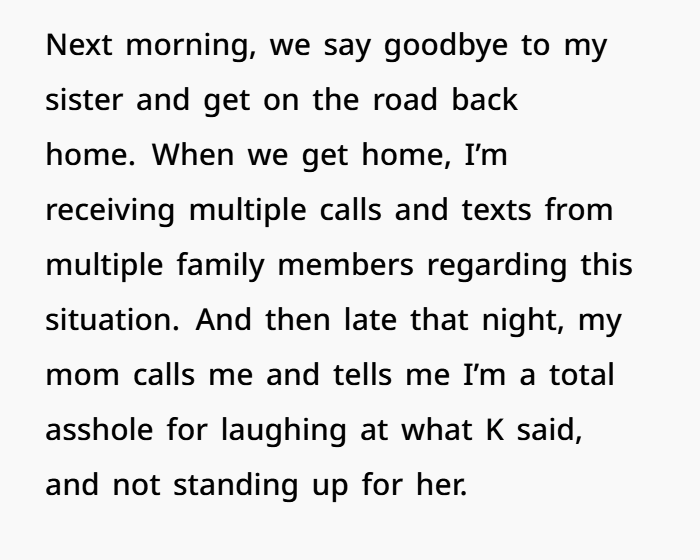
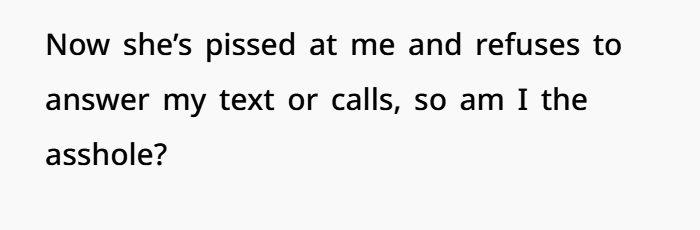
That breaking point hits hard during a seemingly harmless moment. When the wife is about to show her wedding dress photos, the mother-in-law makes a harsh, unprovoked insult—calling her dress inappropriate in a deeply offensive way. Instead of escalating emotionally, the wife fires back with a calm but cutting remark. The husband and his sister can’t help but laugh at the sheer bluntness of it, while the father awkwardly holds it in. The mom storms off, and what follows is fallout—angry calls, accusations, and the husband being labeled disrespectful for not defending his mother. Now, he’s stuck wondering if laughing made him the bad guy.

This situation might seem like just another messy family argument, but there’s actually a lot going on beneath the surface. It’s not just about one insult or one laugh—it’s about long-standing tension, respect boundaries, emotional triggers, and family power dynamics. And honestly, these kinds of conflicts are way more common than people admit, especially in young marriages.
Let’s start with the key moment: the insult. The mother’s comment wasn’t just a casual jab—it crossed into what many would consider verbal abuse or character shaming. Calling someone a “slut” (even indirectly through their clothing choice) is a strong, loaded statement. In family psychology, this kind of language falls under hostile communication patterns, which are known to damage relationships over time.
Now, context matters. You mentioned that your mom and your wife have never had a good relationship. That’s important. This wasn’t a one-off situation—it was more like the boiling point after repeated smaller incidents. Research into in-law relationship conflict shows that unresolved tension often builds through micro-aggressions—small comments, passive-aggressive remarks, or subtle digs—until one moment triggers an explosion.
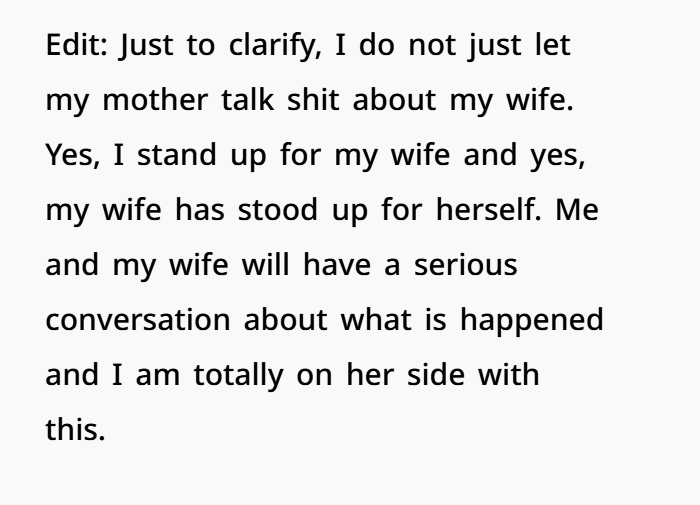
Your wife’s reaction? Honestly, it fits what psychologists call a defensive boundary response. Instead of staying silent or walking away, she pushed back—firmly, directly, and yes, a bit harshly. But here’s the thing: when someone feels repeatedly disrespected, they’re more likely to respond strongly the moment a line is crossed.
And let’s talk about how she responded. You pointed out she said it in the calmest voice ever. That’s actually significant. It suggests control, not chaos. She wasn’t yelling or spiraling—she made a deliberate choice to stand up for herself. In conflict resolution terms, this is less about losing control and more about assertive (though aggressive-toned) communication.
Now enter your role—the laugh.
This is where things get complicated. From your perspective, the laugh was probably instinctive. Sometimes when tension breaks in a shocking or unexpected way, laughter is just a reflex. It doesn’t always mean you’re endorsing the situation—it can be a release of built-up stress. Psychologists even call this nervous laughter, a common response in high-pressure or awkward social situations.
But from your mom’s perspective? That laugh likely felt like betrayal.
In family systems theory, there’s something called perceived alliance shifting. Basically, when a child (even an adult child) appears to side with their partner over their parent, it can trigger feelings of rejection or loss. Your mom may not just be upset about the insult—she may be reacting to the idea that you didn’t “have her back.”
Here’s the twist though: should you have?
Modern relationship research strongly supports the idea that in a marriage, your primary loyalty shifts to your spouse. That doesn’t mean you disrespect your parents—it just means your partner becomes your main team. Especially in situations involving direct disrespect, most relationship experts would argue that supporting your spouse is the healthier long-term move.
And let’s be real—the original insult came from your mom. That part can’t be ignored.
There’s also a concept called provocation-response balance. It basically asks: was the response proportional to the initial action? Your mom’s comment was pretty harsh and unprovoked. Your wife’s comeback was also harsh—but it didn’t come out of nowhere. It was reactive.
Now about the laughter again—timing matters. In that exact moment, laughing probably escalated things, even if unintentionally. It added fuel to the fire. But would staying silent have changed the outcome? Probably not much. The damage was already done when the insult landed.
Another angle here is family culture and expectations. Some families have an unspoken rule: “respect elders no matter what.” In those environments, even if a parent is wrong, pushing back—or laughing at them—can be seen as crossing a line. Your mom might be operating from that mindset.
But that kind of dynamic can become unhealthy if it allows one person to consistently disrespect others without consequences.
Now let’s talk about your update—because it’s actually the most important part of the whole story.
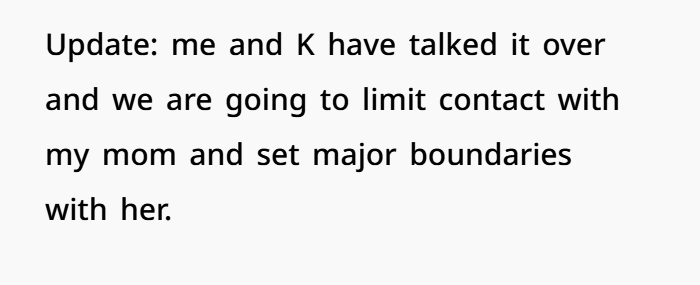
You and your wife deciding to set boundaries and limit contact? That’s a big deal, and honestly, it’s often recommended in situations involving repeated conflict or toxic behavior. Boundaries aren’t about punishment—they’re about protection. They create space for healthier interactions (or prevent harmful ones altogether).
In relationship counseling, this is known as boundary-setting in extended family systems, and it’s one of the key factors in maintaining a strong marriage. Couples who present a united front tend to have better long-term outcomes, especially when dealing with difficult in-laws.
One more thing worth mentioning: your dad’s reaction. You said he looked like he was holding in a laugh. That might seem minor, but it suggests that even within your family, your mom’s behavior might not be fully supported. Sometimes one dominant personality sets the tone, and others just go along with it to avoid conflict.
So where does this leave the “AITA” judgment?
Let’s break it down cleanly:
- Your mom made a harsh, unprovoked insult
- Your wife defended herself, firmly but not explosively
- You laughed—likely as an instinctive reaction
- Your mom expected loyalty and didn’t get it
- You and your wife are now setting boundaries
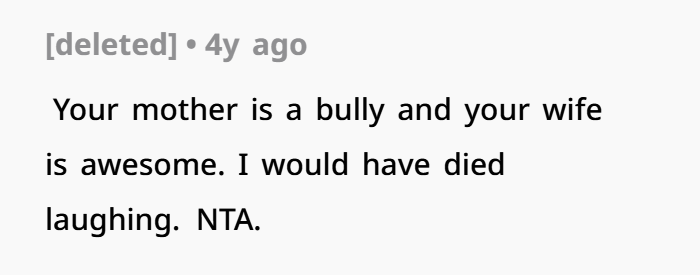
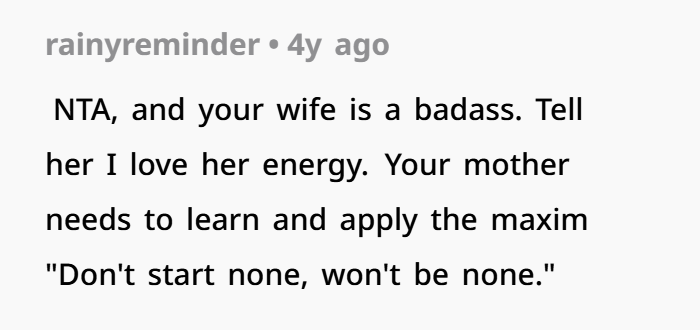
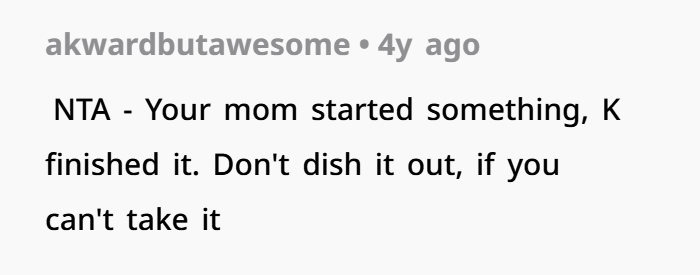
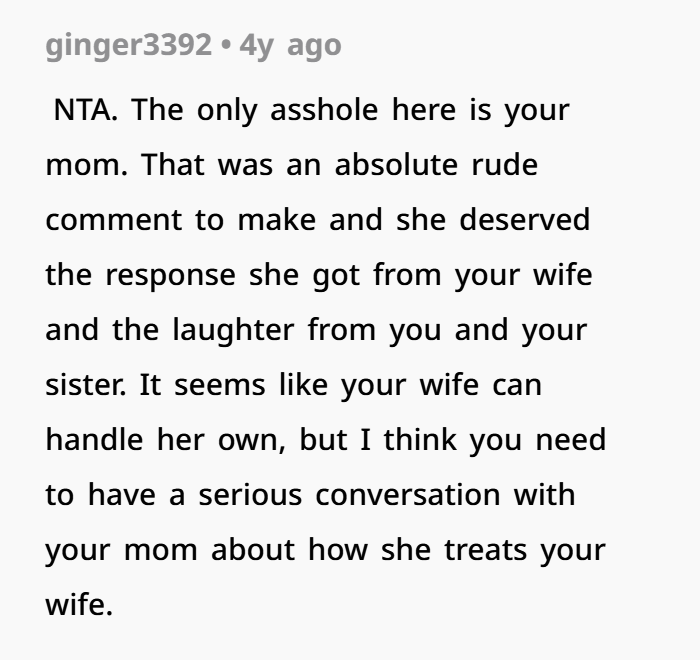
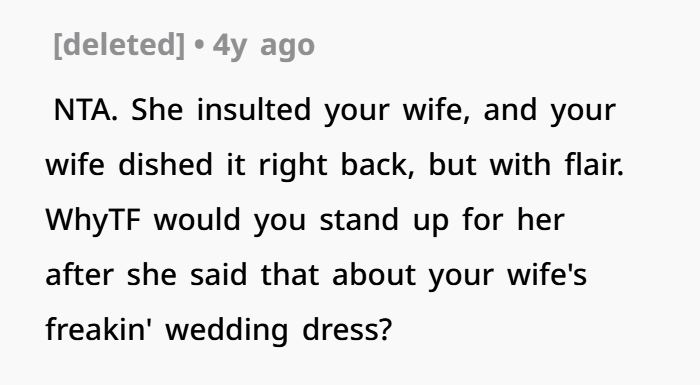
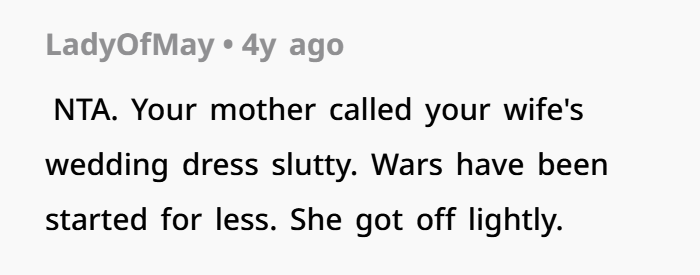
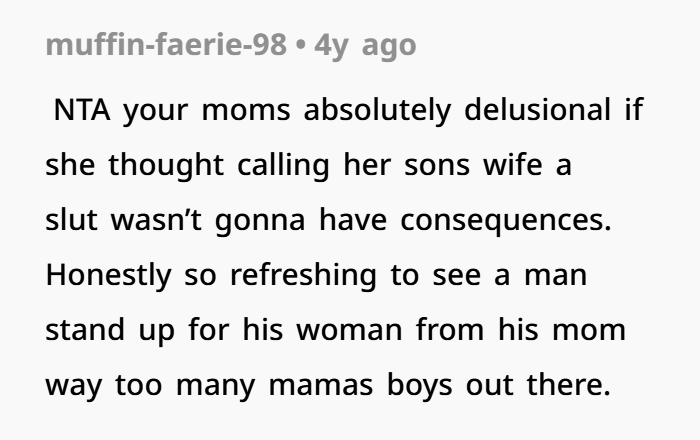
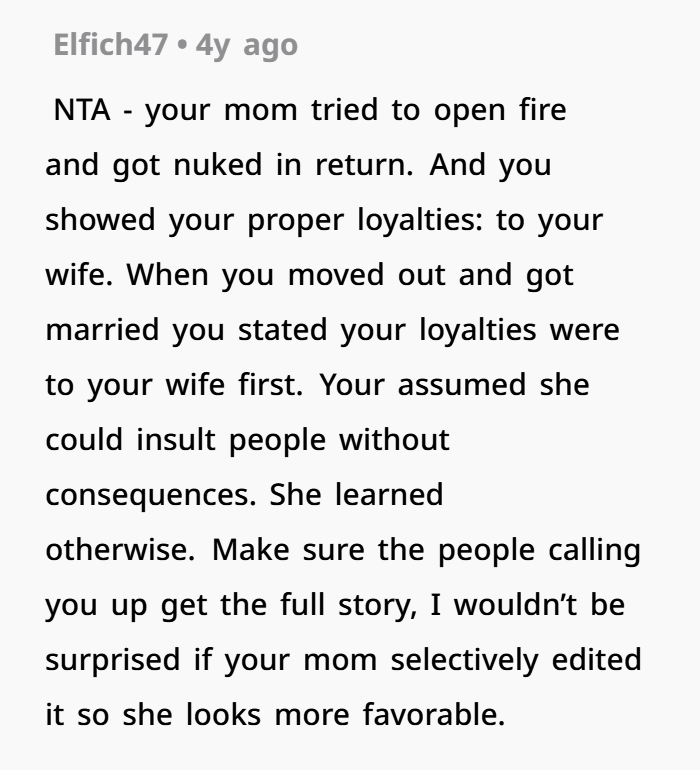
From an outside perspective, this leans heavily toward Not the A-hole.
Could you have handled the laugh better? Maybe. But that doesn’t make you the villain here. The root issue isn’t your reaction—it’s the ongoing disrespect that led to that moment.
If anything, this situation highlights a bigger truth: marriage often forces you to redefine where you stand when family conflict arises. And that’s not easy, especially when emotions, history, and loyalty are all tangled together.
At the end of the day, laughing didn’t create the problem—it just exposed it.
See The Comments Below