
AITAH for Helping My Ex After Seeing Her Boyfriend Abuse Her?
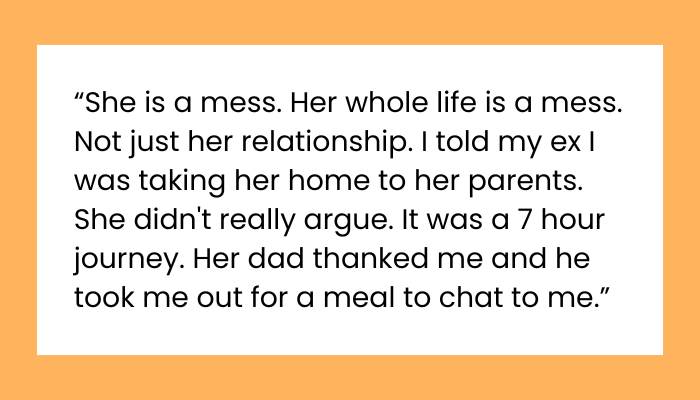
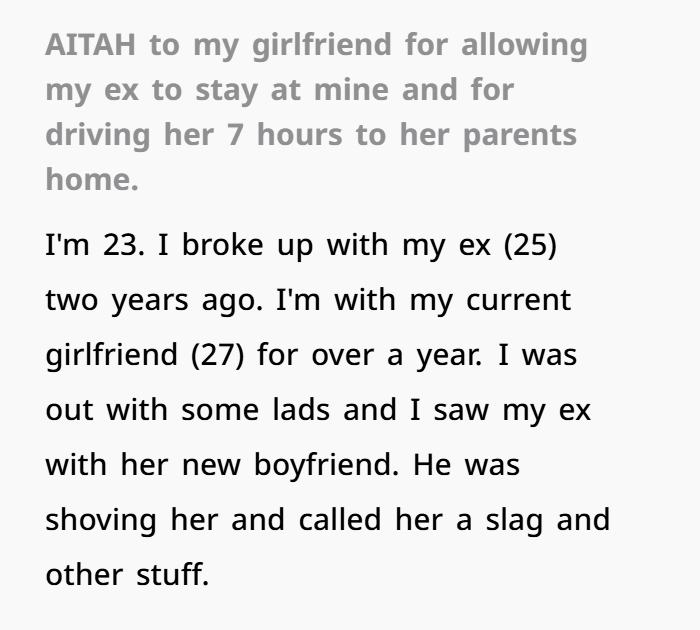
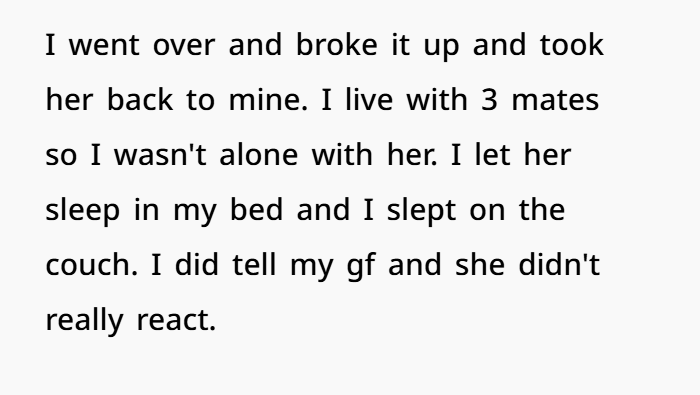
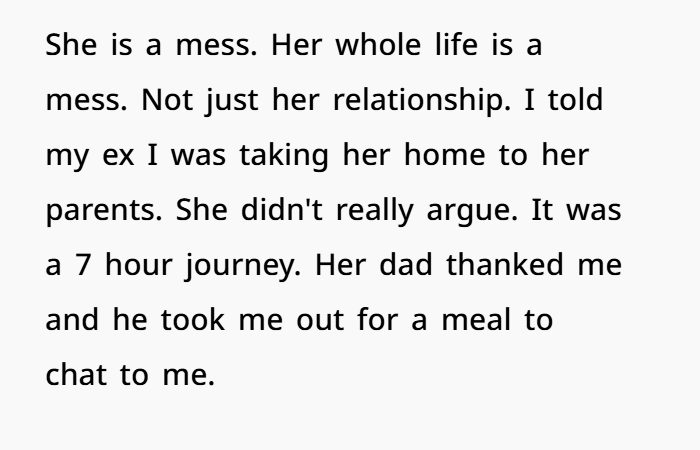
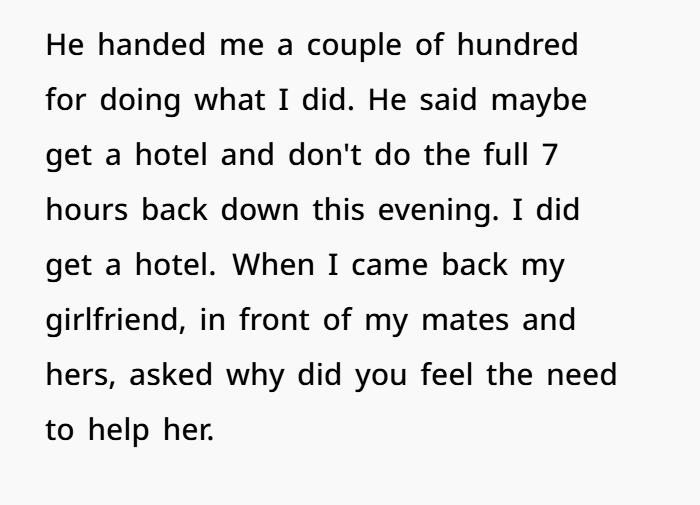
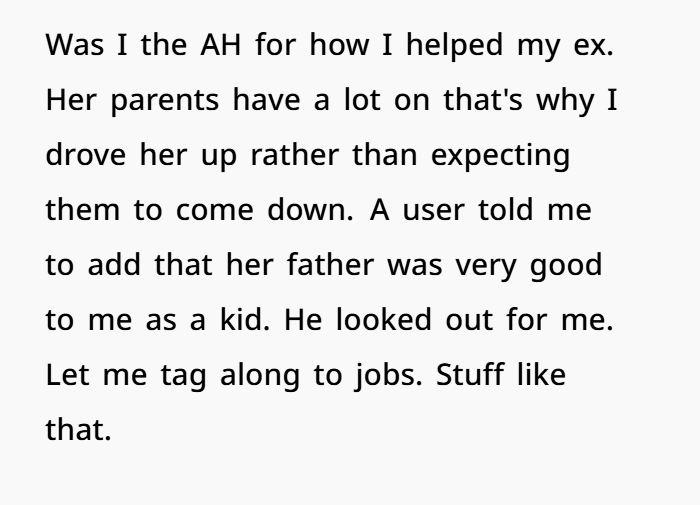
This AITA is a real emotional rollercoaster. You broke up with your ex two years ago. You’ve been with your current girlfriend for over a year. One night you saw your ex in a bad situation — her new boyfriend was pushing her around and verbally abusing her. You intervened, took her to your home, let her sleep in your bed while you took the couch, called it honest help, and then drove her 7 hours back to her parents’ place the next day.
Your girlfriend exploded. She’s been distant for days, accusing you of emotional cheating, dishonesty, and basically ignoring her feelings. You say you meant well — part of you feels like you’d want someone to help your own family. But now you’re wondering: Are you the asshole for helping her?
Let’s get into a detailed, honest mid‑view breakdown of why this situation messed everyone up emotionally. We’ll talk about relationship boundaries, trauma bonds with exes, trust and insecurity, and how good intentions can sometimes create conflict. We’ll do it in clear, human terms — no corporate grammar, just real talk.


This is one of those messy situations where emotion and logic collide. Let’s unpack it piece by piece.
💔 1. Your Intentions Were Good — But Motives Still Matter

You saw someone being physically and verbally abused. That’s instinctive to help. It’s a moral response. When we see someone getting hurt, our empathy network kicks in — we want to protect, support, and remove them from danger.
That’s not inherently wrong. It shows compassion, not toxicity. And especially since you weren’t alone — you had other people around — that made it less likely anything inappropriate would happen.
But here’s the twist: when an ex is involved, intentions alone don’t stop emotional repercussions. Even if you meant well, your current partner can feel threatened, insecure, or left out of the loop. That doesn’t mean she’s irrational — it means there were no clear boundaries established before the crisis.
🔥 2. Putting Your Partner’s Feelings First Isn’t Weak — It’s Maturity
You told your girlfriend what happened, but it sounds like it was more of an update than a real conversation. She “didn’t really react” at first — but later she exploded. That’s because emotions often simmer and then boil over when we feel bypassed, minimized, or sidelined.
Your girlfriend saw:
- You letting your ex sleep in your bed.
- You making decisions without real dialogue.
- A huge emotional, physical effort (7‑hour drive) after the fact.
Even though you didn’t do anything sexual or secretive, the symbolism matters. Sleep positions, rides home, big gestures — those are emotionally loaded for many people in relationships. This isn’t about logic — it’s about emotional perception.
🤝 3. Trauma Bonds Complicate Ex‑Relationships
Your ex was in an abusive setup. People in abusive relationships often develop trauma bonds. That means they associate danger and comfort weirdly. Someone rescuing them might mean more than it should logically.
Helping someone like that is kind — but it also requires emotional distance once the immediate danger has passed. Driving someone home is one thing. Getting personally involved in their aftermath is another.
And your partner is reacting not just to your actions, but to the fear of you still having emotional investment in your ex’s well‑being beyond the crisis.
🤯 4. Your Girlfriend’s Reaction Comes From Fear, Not Logic
She asked:
- Why did you feel the need to help?
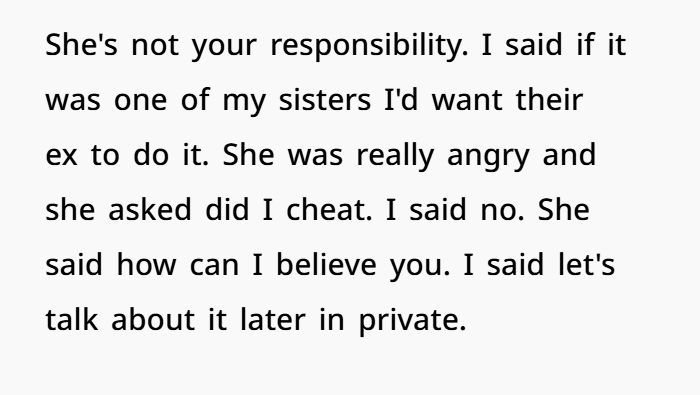
- Did you cheat?
- How can she trust you?
These questions aren’t about logic — they’re about insecurity and fear of loss. When people feel threatened, they go into attachment mode — they want explanations, reassurance, and proof of loyalty.
But you handled it like a logic problem:
“No I didn’t cheat. I slept on the couch.”
That’s the wrong tool for an emotional problem. She needed reassurance, empathy, and emotional safety. Without that, she spiraled to:
“Why break up with her if you’d still run to her?”
That’s not a rational accusation. That’s anxiety talking.
🤦♂️ 5. Communication Was Missing at Every Turn

This is where the real relationship issue lies.
You:
- Made decisions independently.
- Didn’t check in emotionally.
- Answered questions with logic, not feelings.
She:
- Felt excluded.
- Felt hurt.
- Felt insecure.
- Didn’t get reassurance.
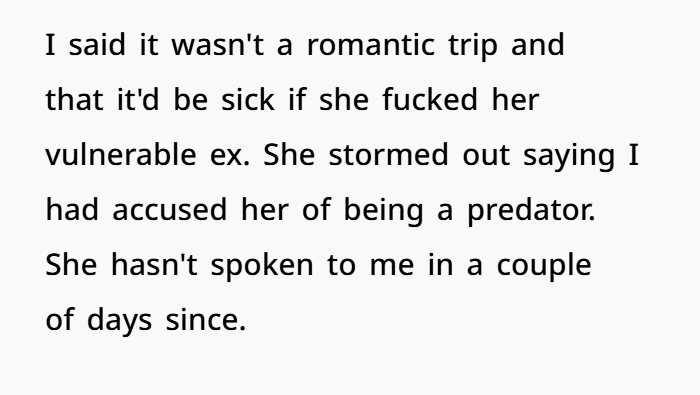
So when she asked if you thought she would go on a trip with her ex, you replied bluntly:
“It’d be sick if she fucked her vulnerable ex.”
That hit hard because it sounded like:
- You assumed she’d do something inappropriate.
- You compared emotional loyalty.
Nothing kills trust faster than dismissing someone’s feelings with a joke or a harsh comparison.
🌀 6. Current Partners Need Emotional Reassurance in These Scenarios
If I were coaching you, I’d tell you this:
When something big happens with someone from your past, your current partner needs emotional priority. That means:
- Detailed open communication.
- Reassurance of loyalty.
- A chance to express fear without judgment.
- Patience while emotions settle.
You jumped straight to facts:
- “No, I didn’t cheat.”
- “I slept on the couch.”
But what she needed was:
- “I understand why that made you feel uneasy.”
- “I want you to feel safe and loved.”
- “You matter most to me.”
Those aren’t logic lines — they’re relationship healing lines.
🛑 7. Helping People Isn’t Wrong — But You Still Have to Prioritize Your Relationship
Here’s the bottom line:
You weren’t an asshole for helping someone in danger. That’s human, kind, and brave.
But:
- You didn’t manage your girlfriend’s emotional response well.
- You didn’t set clear boundaries with your ex after the crisis.
- You didn’t give priority to your girlfriend’s feelings in explanation.
Those are communication failures — not moral failures.
Your girlfriend’s insecurity doesn’t make her wrong. Her response is rooted in:
- Fear of abandonment.
- Lack of reassurance.
- Shock at how it all unfolded without her involvement.
The human brain hates surprises — especially emotionally charged ones.
❤️ 8. What You Could Say to Fix It (If You Want to)

If you want to rebuild trust, here’s how:
1. Acknowledge her feelings without defending.
Instead of:
“I didn’t cheat.”
Try:
“I see this made you feel scared and overlooked. I never meant to make you feel that way, and I’m sorry you felt hurt.”
2. Explain your intentions clearly — emotionally, not just logically.
“I helped because I saw someone being hurt and I couldn’t just walk away. But you matter to me and I should have checked in with you more.”
3. Reassure her of commitment.
“You are my partner. I want you to feel valued and secure with me.”
4. Set boundaries.
“I will help people in danger, but I’ll always communicate with you first whenever possible.”
It’s not weak to apologize or reassure. It’s relationship growth.
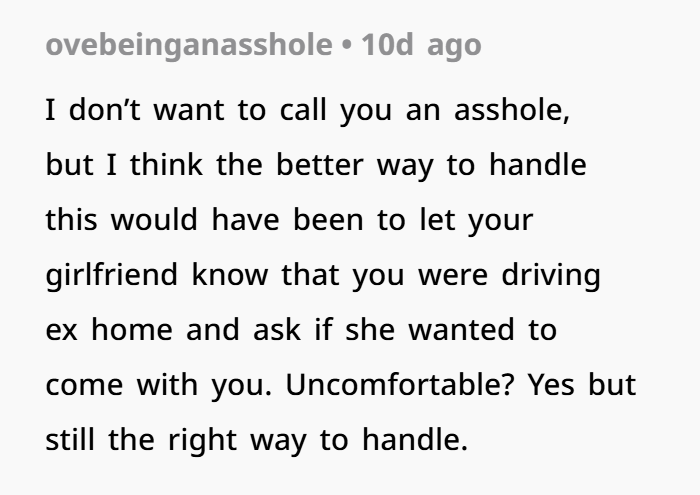
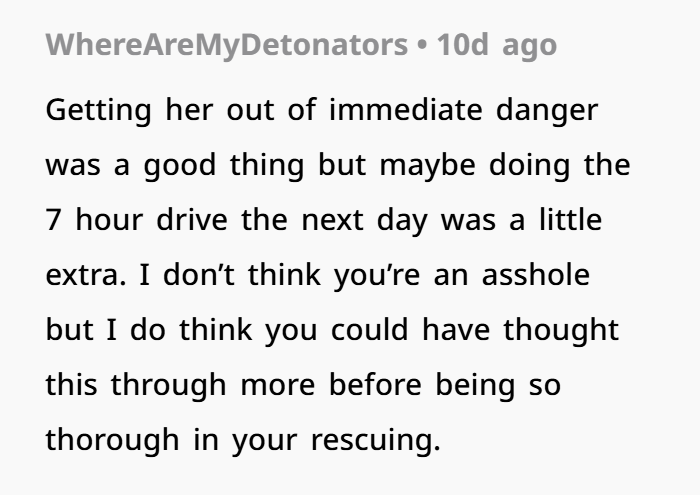
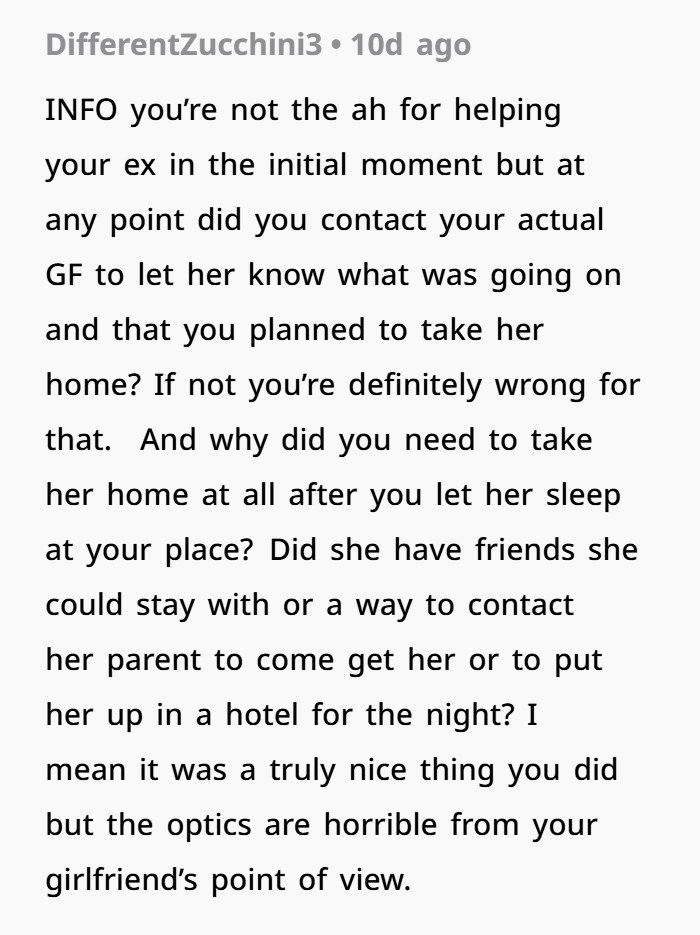

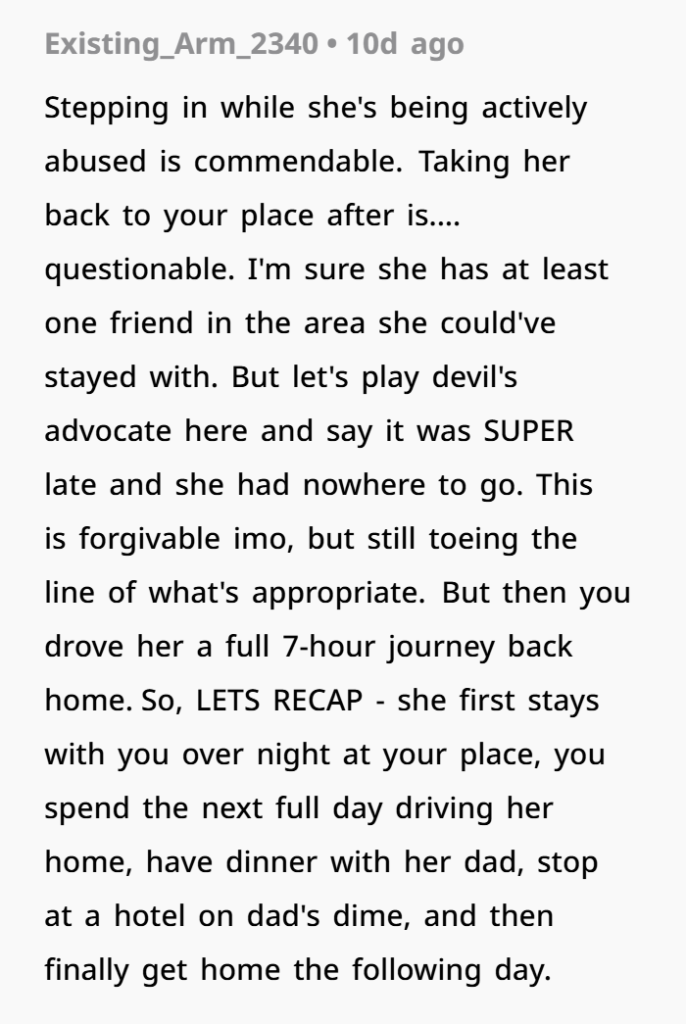
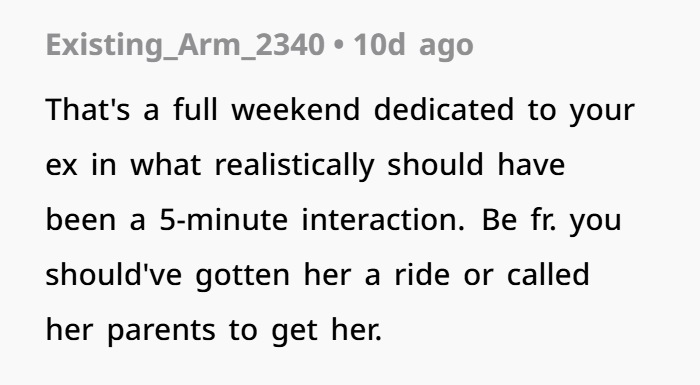
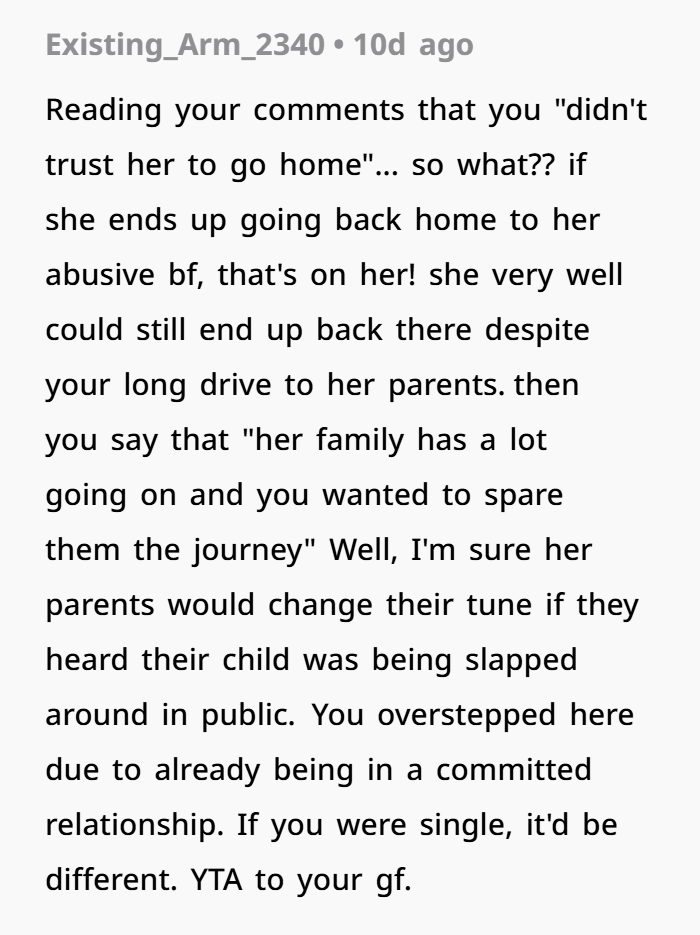
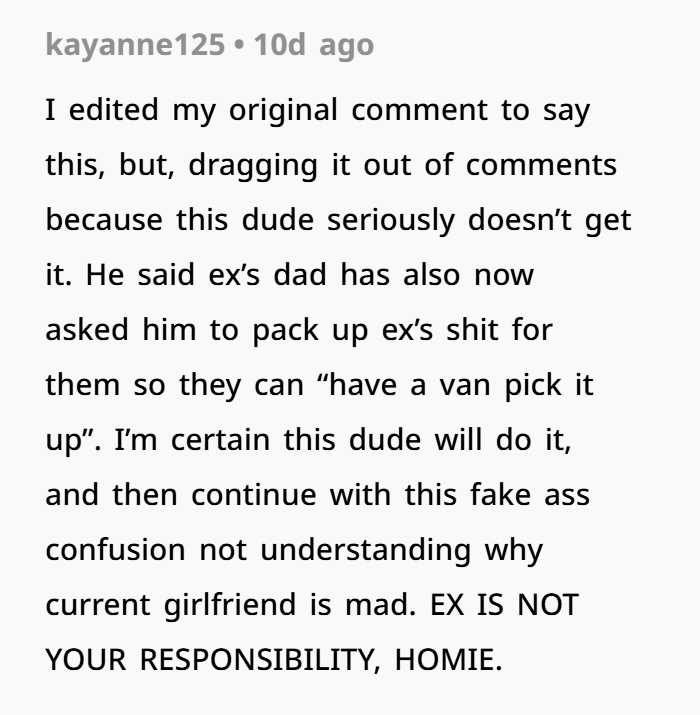
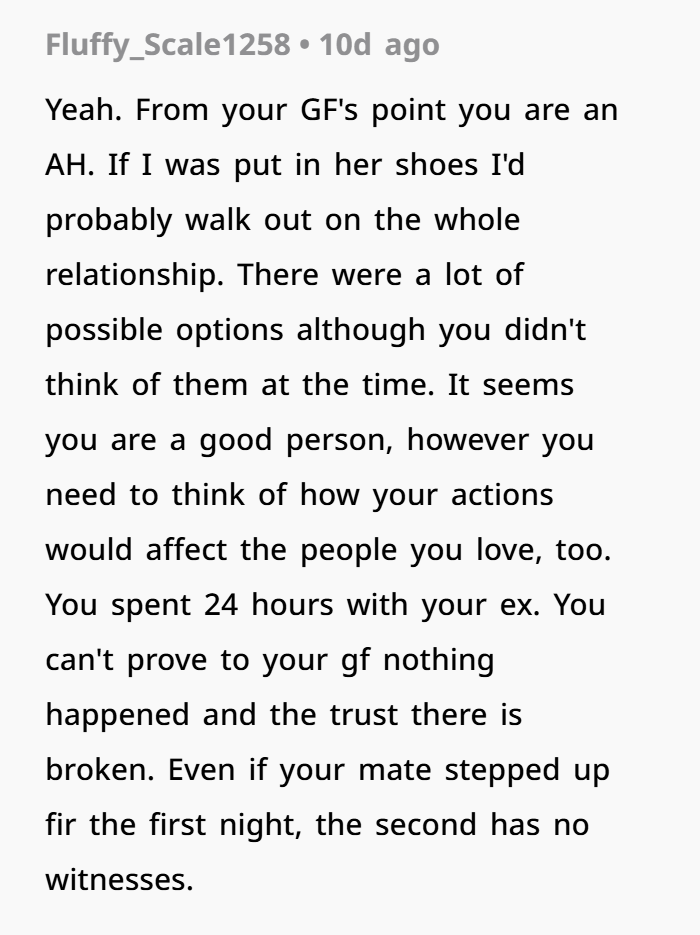
You’re not the asshole for helping someone in danger. You acted compassionately in a tough moment. But you did mishandle the emotional communication with your current girlfriend afterward.
This isn’t about right vs wrong — it’s about how relationships need emotional care, not just good intentions.
You can fix this — but it starts with listening first, reassuring second, and explaining last.
Love isn’t just about doing the right thing.
It’s about making sure the person you love feels safe and prioritized while you do it.
If you want help with a message to send her or how to talk to her, just ask.