
Am I Wrong for Telling My Parents I Hate Them? A Raw Look at Trauma, Family Violence, and Mental Health
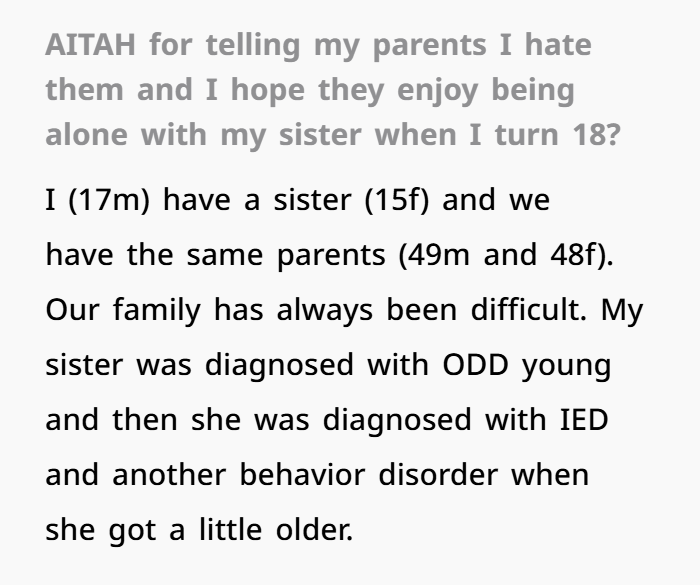
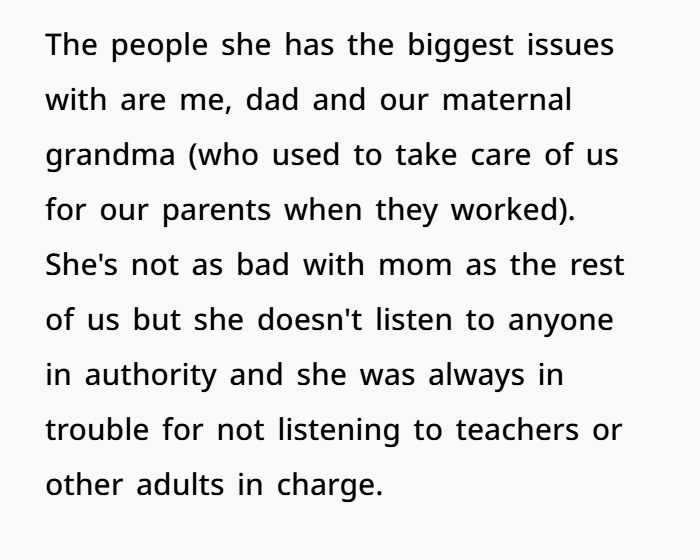
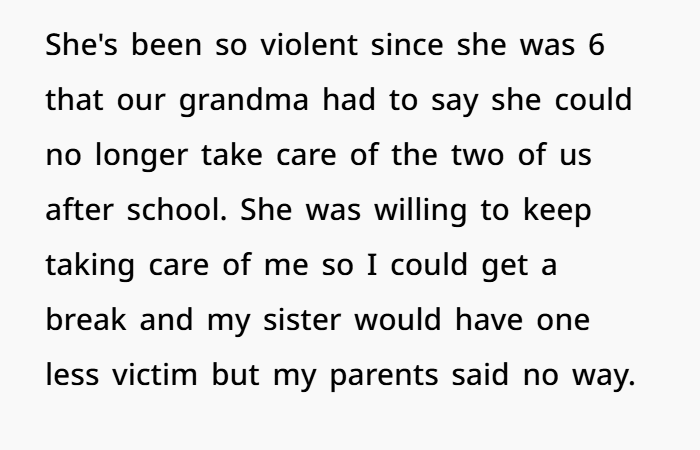
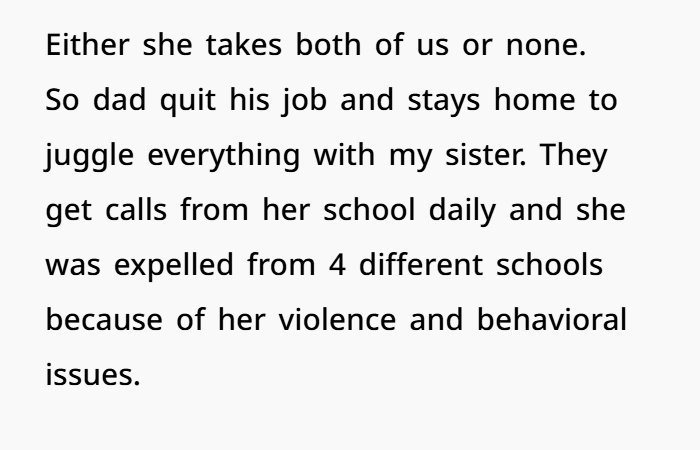
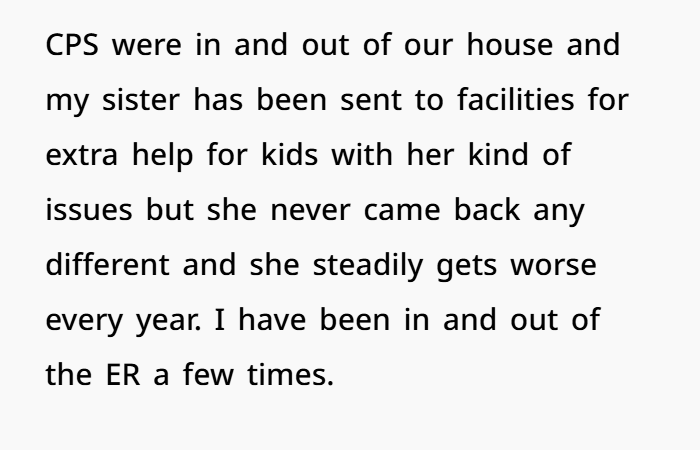
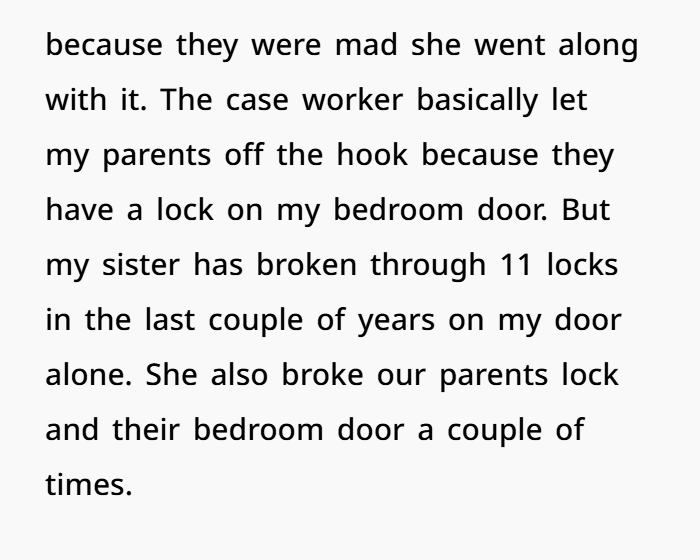
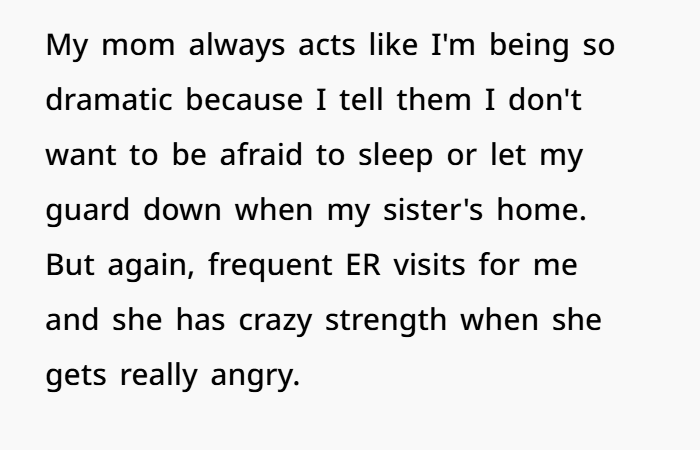
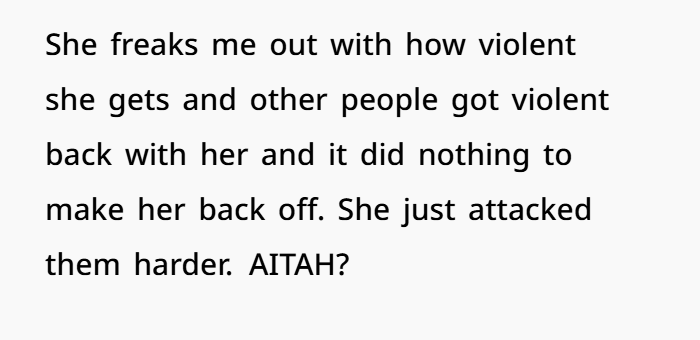
The original poster (OP), a 17-year-old male, recounts a harrowing upbringing in a household dominated by the behavioral challenges of his 15-year-old sister. Diagnosed early on with Oppositional Defiant Disorder (ODD), Intermittent Explosive Disorder (IED), and other unspecified behavior disorders, the sister has exhibited violent tendencies for over a decade. OP, along with their father and maternal grandmother, has been the primary target of her aggression. Despite multiple interventions—school expulsions, CPS investigations, and placements in behavioral facilities—the situation at home has not improved. In fact, it has worsened to the point where OP has suffered physical harm repeatedly, necessitating ER visits.
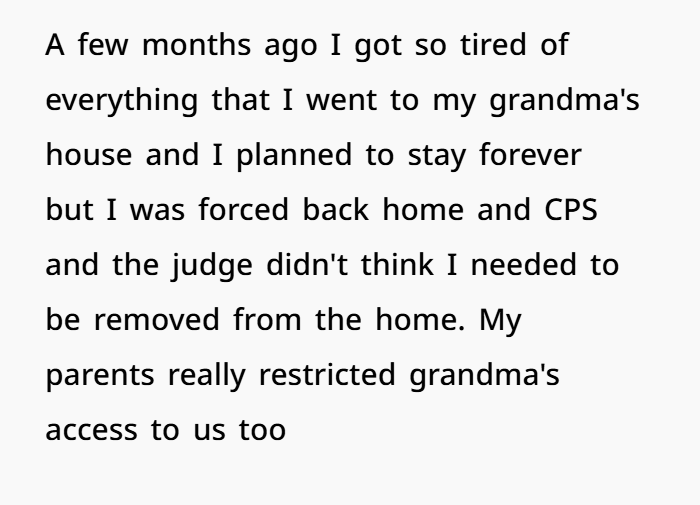
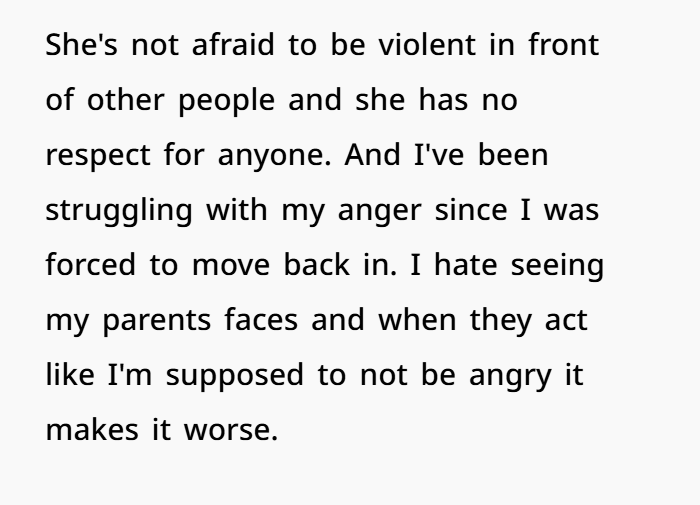
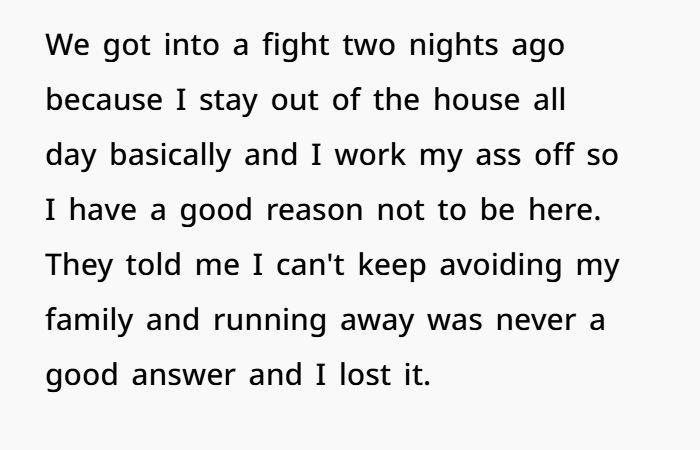
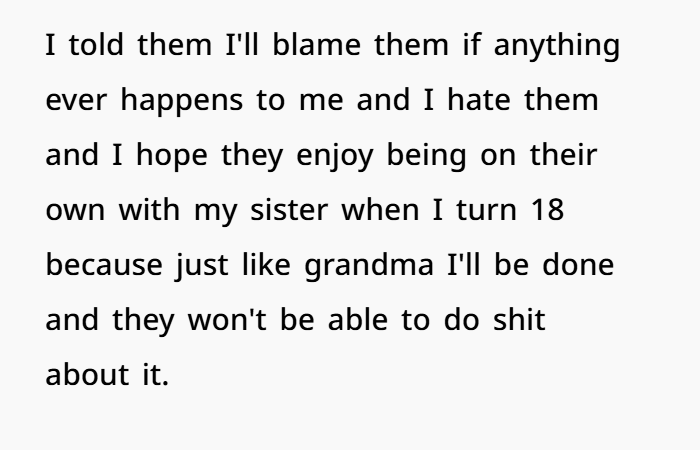
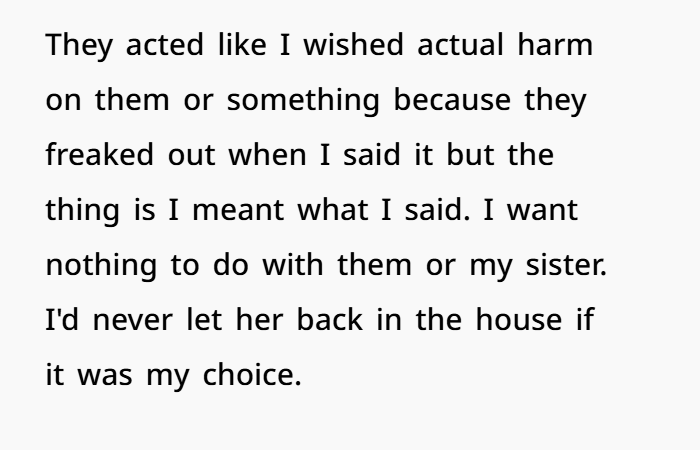
Frustrated and fearing for his safety, OP once sought refuge with his grandmother but was forced to return home under a legal system that deemed the home safe due to a bedroom lock—one that his sister has broken multiple times. A recent argument with his parents, centered on his avoidance of home and attempts to manage his mental health, culminated in a bitter confrontation. OP lashed out, expressing deep resentment, stating that he hates his parents and hopes they enjoy being left alone with their violent daughter once he turns 18 and cuts ties. His parents responded with shock, interpreting his words as a hostile wish against them.
He lives in fear of his violent sister and has even landed in hospital a few times because of her
But his parents don’t see the big issue and think he’s being dramatic for wanting to move out
Let’s start with this: your feelings are real. Not some dramatic teenager tantrum. Not just angsty words for clicks. You’re living in a situation that is scary, painful, and tiring. And those experiences are what shape how you feel right now.
A lot of people dismiss emotional responses from young adults. They say things like “you’re too young to know real pain” or “you’ll regret it later.” But emotional pain from repeated harm isn’t fake. It’s not temporary. And it isn’t something you can just “get over.” When someone lives with constant fear, that fear doesn’t just go away once they turn 18 or leave.

What Happens When Someone Lives With Violence Every Day
Growing up in a house where you’re physically threatened changes your nervous system. It’s not just emotional. It’s biological. Your brain is always scanning for danger. Your body gets wired to protect itself.
There’s a term for this in mental health circles: trauma response. But here’s the truth—words like that can feel clinical and distant. When you’re the one living it, it feels like this:
- Jumpiness when someone moves too fast.
- Sleepless nights because you never know when the next meltdown could happen.
- Always being on guard.
- Feeling like every break in the day is a threat.
That’s not just being dramatic. That’s a real, measurable psychological impact.
In clinical research, there’s something called complex trauma or PTSD from chronic stress. It’s the kind of trauma kids feel when danger isn’t once in a while—it’s routine. And your body doesn’t have time to reset. That’s the type of stress that can show up later as deep anger, emotional exhaustion, or shutting off emotionally just to cope.
The Messy Reality of CPS and “Support” Systems
Another big piece of your story: the system that’s supposed to protect kids didn’t help you. CPS stepped in. Maybe they checked boxes. Maybe they talked to your parents. Maybe they saw the lock on your bedroom door and said “Well, he’s safe now.”
But safety isn’t just something you lock behind a door.
Real safety means you feel safe. And that’s something you can’t force with a deadbolt. Especially when your sister actively breaks those locks when she’s in crisis.
This is a painful truth: child protective services are often underfunded, understaffed, and just not equipped for complex family violence. Especially when it’s not just parents hurting a kid, but a sibling hurting another. The law often focuses on physical neglect or abuse in a certain definition, and it misses emotional terror, ongoing fear, and daily stress.
This is why you were forced back home. Not because your situation wasn’t serious—but because the system didn’t recognize the severity the way you do.
Why You’re Angry at Your Parents (Not Just Your Sister)
Let’s break down why your anger isn’t misplaced.
Your sister’s behavior is intensely violent and unpredictable. That’s terrifying. But your parents chose to keep her in the house with you. They turned down grandma’s offer. They decided you should stay. They resisted removing her in a way that would actually protect you. And when you tried to stay with grandma, they forced you to come back.
So your anger isn’t just about how your sister acts.
Your anger is about how your parents handled it. And honestly? Their reaction to your anger makes sense in a certain emotional way, not in a rational one. They feel guilty. They want you to stay. They don’t want to be abandoned.
But that doesn’t mean they’re right.
They might think they’re doing their best. But intention and outcome are two different things. Your safety matters just as much as your sister’s behavior issues. And if your parents consistently downplay your fear, invalidate your experiences, or prioritize their own discomfort over your mental health, that is a real problem.
In psychology, there’s a concept called invalidating environments—situations where someone’s emotional experiences are dismissed, rejected, or negated. That can make emotional pain worse, not better. So when you say “I hate you, I can’t live like this,” the anger comes from not being heard or understood.
Saying “I Hate You” Isn’t Automatically Cruel
Here’s something most people don’t talk about openly:
People in traumatic households often use extreme language. They say things like “I hate you,” “I never want to see you again,” or “I’ll leave and never come back.” To outsiders, that sounds harsh. But to someone who has been hurt repeatedly, those words can be a cry for understanding.
It’s not the same as wishing harm on someone. It’s a statement of survival. It’s saying:
“I can’t deal with this anymore.”
“I don’t feel safe.”
“I need out.”
Sometimes when someone is emotionally overwhelmed, their words sound worse than their intent. And people outside that situation don’t always get that difference—but it matters.
Mental Health and Being Forced to Stay in a Harmful Environment
You mentioned working hard, staying out of the house, and trying to avoid conflict. That’s not “running away.” That’s coping. That’s survival. That’s trying to find any space where your brain can calm down.
And when your parents call it avoidance or childishness, that adds to your frustration. It ignores why you’re out all day. You’re not trying to escape them—you’re trying to escape fear.
Mental health professionals talk about emotional burnout and secondary traumatic stress. That’s when someone ends up exhausted and emotionally drained because they’re constantly dealing with stress that never lets up. That doesn’t go away overnight. It doesn’t disappear when you turn 18. It sticks with you unless it’s acknowledged and addressed.
It’s OK to Protect Your Boundaries
A boundary is a limit you place to protect your emotional well‑being. Your statement about not wanting anything to do with your family once you’re 18 is a form of boundary. It’s not about hate anymore. It’s self‑protection.
People confuse boundaries with being mean. But they’re not the same:
- A boundary is “I don’t want to be around violence.”
- A boundary is “I need safe space for my mental health.”
- A boundary is “I won’t tolerate being dismissed.”
These are healthy reactions to an unhealthy environment.
And honestly? Many adults never learn how to set boundaries. You’re learning something most people don’t realize until their 30s or 40s.
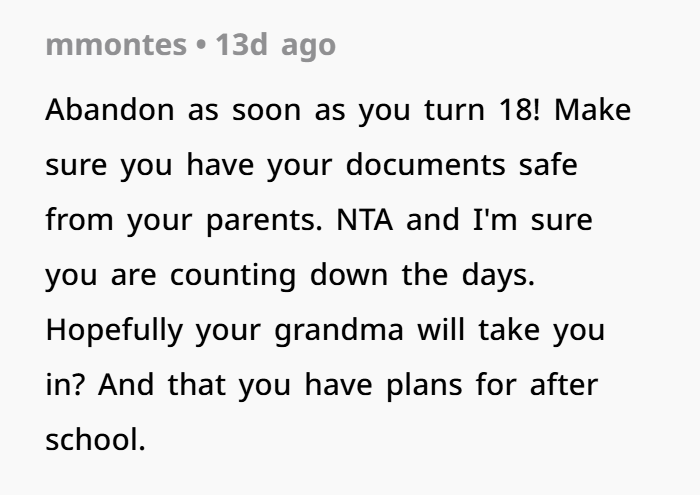
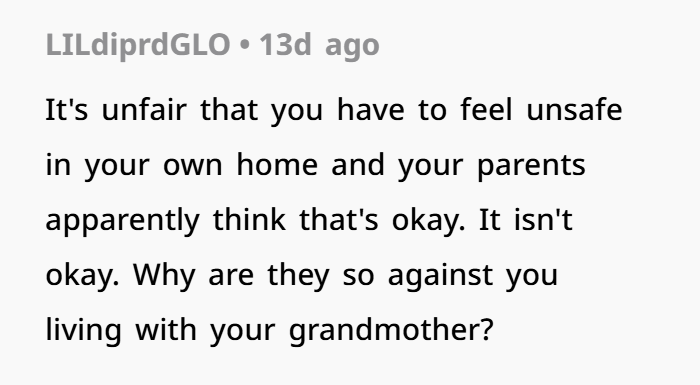
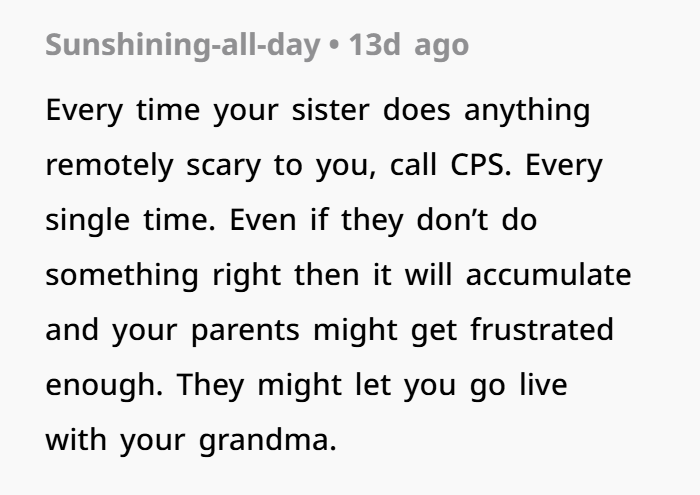
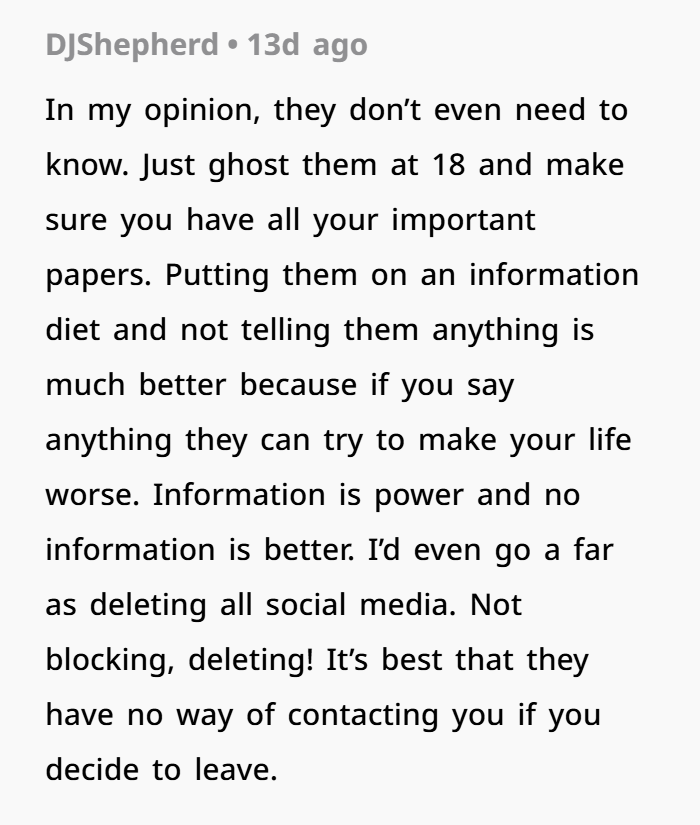
“Otherwise I could be safe…”: He gave a bit more info when prompted by netizens
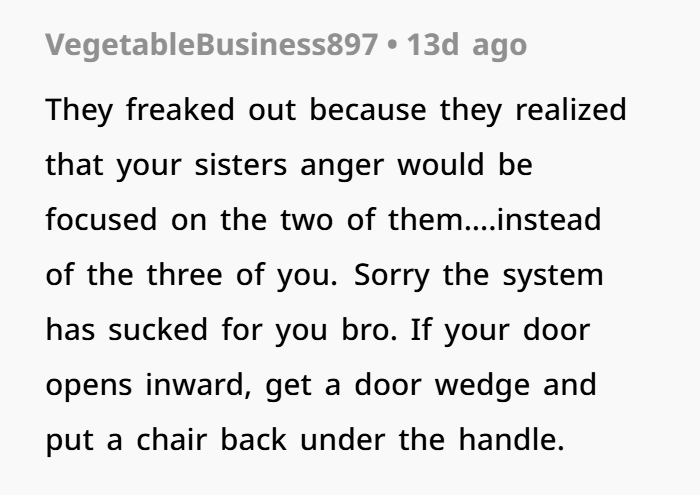
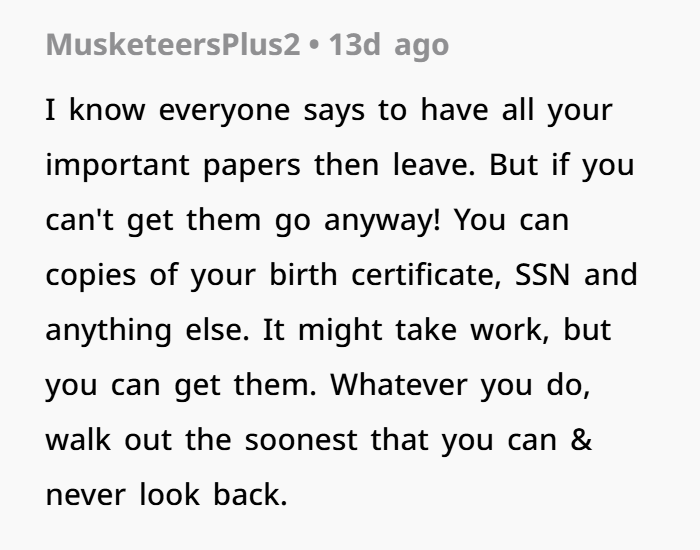
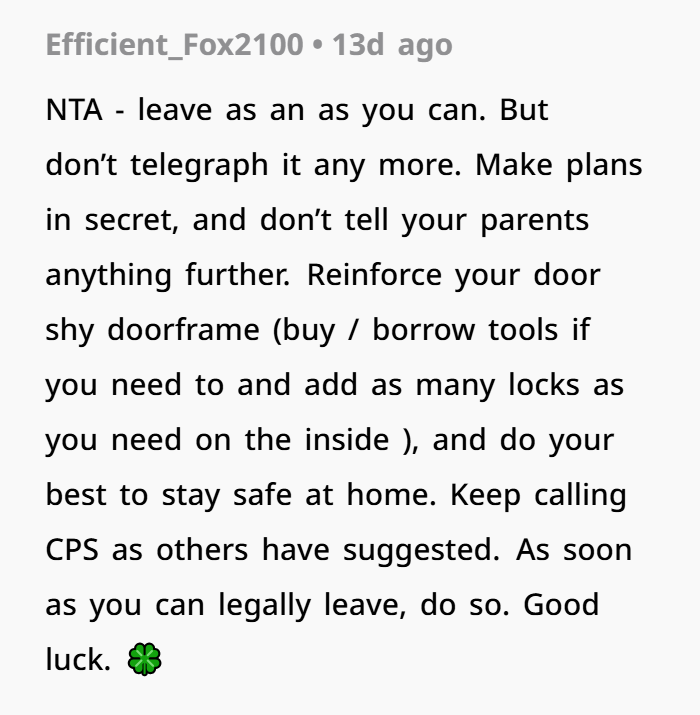
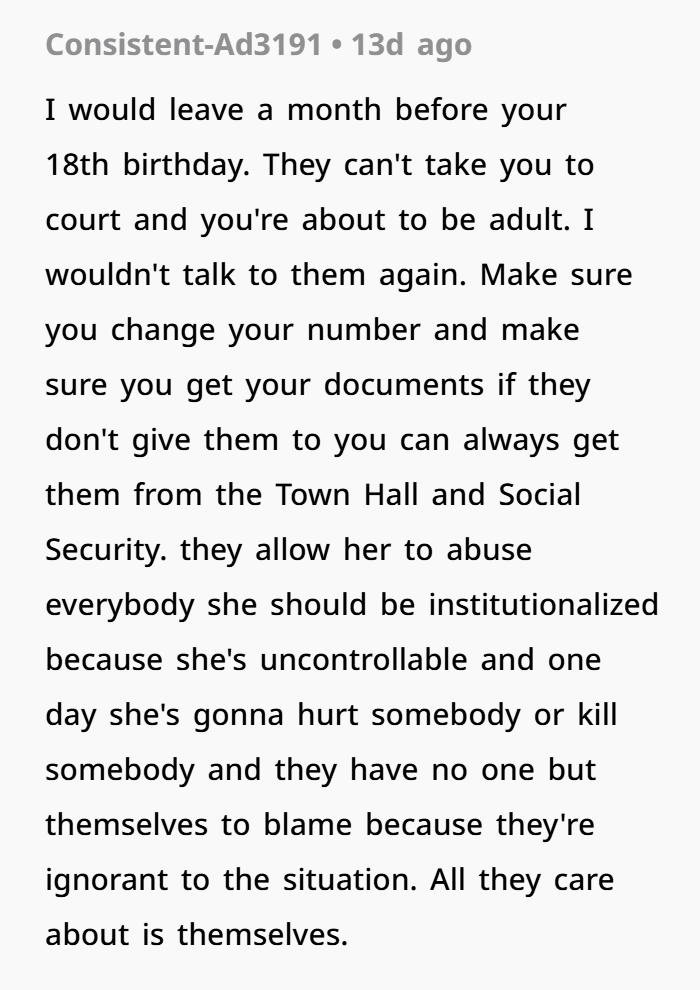
From a human, emotional, real‑world standpoint:
No, you’re not the asshole.
You’re someone reacting logically to repeated harm, fear, and emotional dismissal.
You’re angry. You’re hurt. You’re overwhelmed. That’s normal.
People will always tell you there’s a “better way” to say things. And maybe there is. But when you’re pushed to your limit, sometimes words come out raw and ugly. That’s not evil. That’s human.
Your safety, mental health, and emotional well‑being matter. You deserve support. You deserve to be taken seriously. And you deserve space where you are not constantly in fear.