
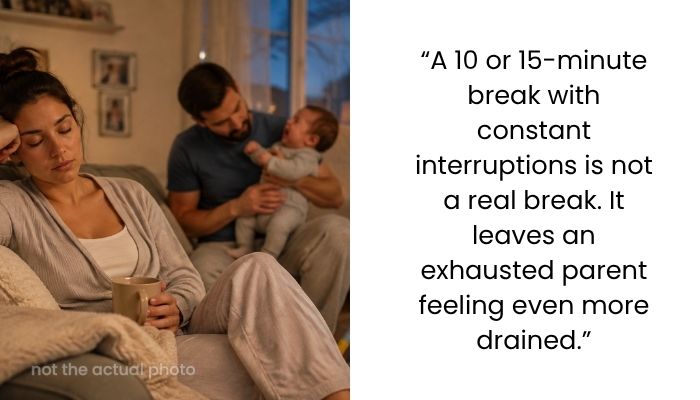
When a “Baby Break” Is Only 15 Minutes: Why New Parents Need Real Time to Recharge
Caring for a 3-month-old baby can feel like a full-time job with no clock-out time. When a baby struggles with daytime sleep and needs constant attention, even a short break can feel like a lifeline.
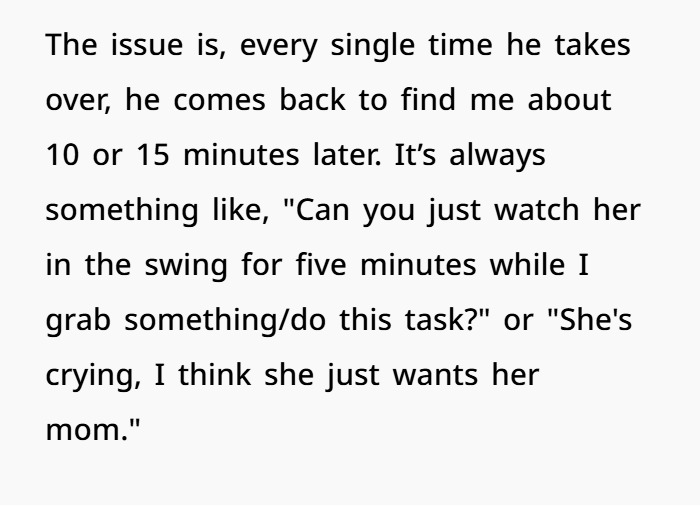
But many new parents face the same problem: one partner says they are taking over, but the other partner returns only minutes later because the baby is crying, needs something, or seems to want the other parent.
The problem is not always a lack of love or effort. Sometimes, it comes down to understanding what a real parenting break actually means. A few minutes alone while still being “on call” is not the same as getting time to rest, shower, or clear your mind.
Research on postpartum support shows that having reliable help and emotional support can play a major role in reducing stress for new parents.


For many parents, especially during the early months, the hardest part is not only taking care of the baby. It is feeling like there is never a true moment to stop.
A parent who has been handling feeding, soothing, diaper changes, and a fussy baby all day may not need just 10 minutes to “rest.” They may need enough time for their body and mind to finally relax.
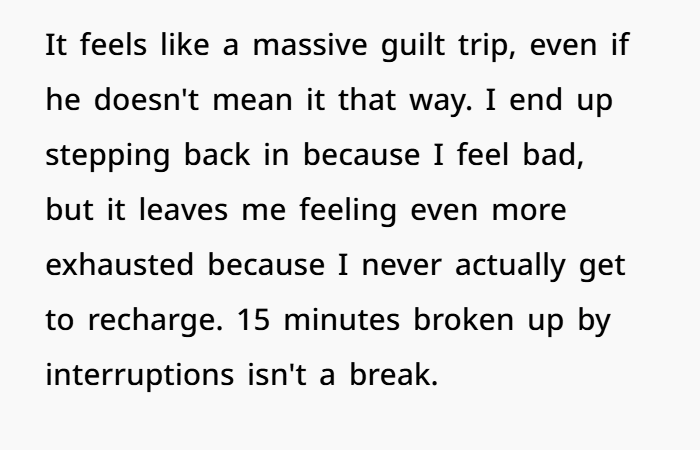
When a partner comes back after 10 or 15 minutes and says, “Can you just take her for a second?” it may seem like a small request. But for the exhausted parent, it can feel like the break never really started.
It can create feelings of frustration and disappointment because the responsibility quietly returns to the same person again.
A crying baby can be stressful for any caregiver. Experts explain that crying is a normal way babies communicate, but it can still create a lot of pressure and emotional stress for parents. Mayo Clinic guide on newborn crying
Why Some Partners Hand the Baby Back Too Quickly
Sometimes a parent gives the baby back because they truly believe they are helping.
They may think, “The baby wants mom,” or “I don’t know what she needs.” They may not realize that handing the baby back every time things become difficult prevents them from building confidence as a caregiver.
Newborns do not always calm down quickly. Sometimes they cry even when everything is being done correctly.
The other parent may need time to learn the baby’s signals, try different soothing methods, and become comfortable handling difficult moments alone. A baby crying does not automatically mean the other parent has failed.
The early months are challenging because babies are still developing routines, and many parents are learning through trial and error. NIH research on infant crying and parent support
How to Explain That a Break Means a Real Break
The best conversation usually happens when nobody is already upset.
Instead of starting with blame, the exhausted parent can explain the feeling behind the request.
A simple approach could be:
“I need you to understand that when I ask for a break, I need actual time away from being responsible for the baby. Ten minutes with interruptions doesn’t help me recharge. I need you to take over and try your best before asking me to step back in.”
This keeps the focus on the need instead of making the other person feel attacked.
The goal is not to say, “You are doing something wrong.” The goal is to say, “I need you to understand what support looks like for me.”
Setting Clear Expectations During Parenting Turns
Many couples find it easier when they create a simple rule.
For example, when one parent takes over, they handle the baby for a set amount of time unless there is a real emergency.
That might mean:
- The parent on break gets 30 minutes or an hour without interruptions.
- The parent taking over tries different calming methods before asking for help.
- Crying does not automatically mean the baby needs the other parent.
- Both parents get equal chances to rest.
This does not mean ignoring the baby’s needs. It means giving both caregivers a chance to grow confident.
Avoiding the “Only Mom Can Fix It” Cycle
A common pattern with newborns is that one parent becomes the default comfort person.
The baby cries, that parent steps in, and everyone learns the same lesson: “Only this person can solve the problem.”
Unfortunately, this can leave one parent completely exhausted while the other never gets the chance to develop their own parenting rhythm.
Sharing baby care is not just about dividing tasks. It is about making sure both parents feel capable and connected.
Support from a partner and family can make a meaningful difference during the postpartum period, especially when parents are dealing with stress, sleep problems, and emotional pressure. study on social support and postpartum mental health
A Small Change That Can Make a Big Difference
A 15-minute break may sound helpful, but for someone who has been caring for a baby all day, it may barely be enough time to sit down.
Real support means giving each other space to recover.
A parent who gets a proper break often comes back calmer, more patient, and more prepared to handle the next difficult moment.
The message is simple: taking over means taking over.
A baby’s cries, messy moments, and hard days are part of parenting. Both parents deserve the chance to learn, struggle, and succeed through them together.
See the comments to know what people said









Taking care of a newborn is exhausting, and every parent needs a chance to step away and recharge. A short break filled with interruptions does not give someone the rest they actually need.
The solution is not about blaming one partner or proving who works harder. It is about understanding that both parents need support, patience, and time to build confidence with the baby.
When one parent takes over, they need to truly take over — even during the crying, fussiness, and difficult moments. Those moments are how strong parenting skills are built.
A real break can help an exhausted parent feel calmer, healthier, and more supported. In the early months of raising a baby, small changes in teamwork can make a huge difference for the whole family.