

I Told My BF I Won’t Have Kids With Him Because He Said He’d Only Truly Love a Son
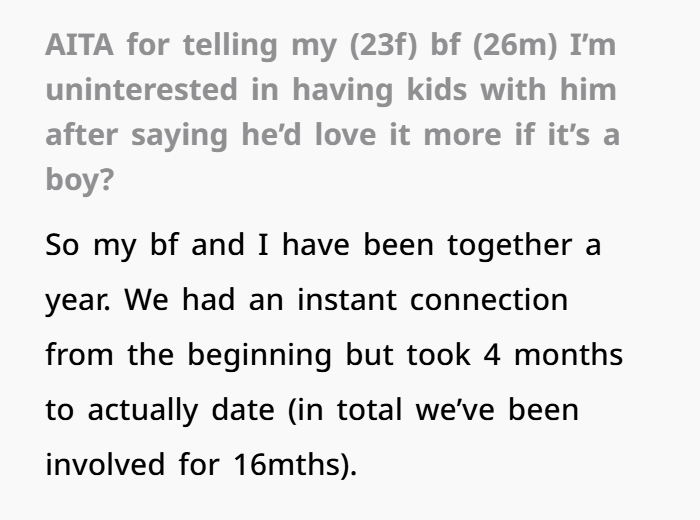
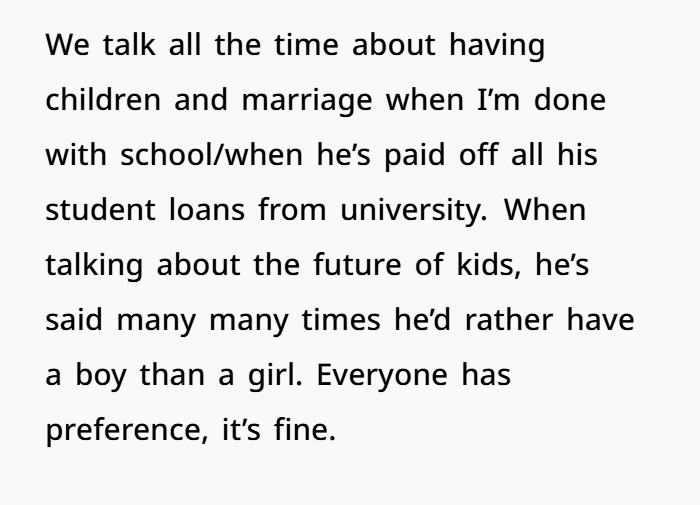
This one hits hard because it blends love, sexism, and what parenting should be all about. A 23-year-old woman thought she had it figured out: she was in love, they were planning a future, and kids were part of the dream. She and her boyfriend, 26, often talked about marriage and babies once life stabilized — her school done, his loans paid. They’d even daydreamed about names and joked around about parenting.
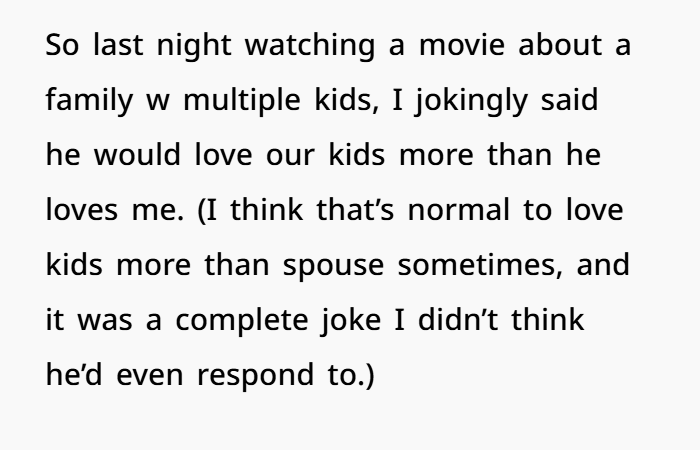
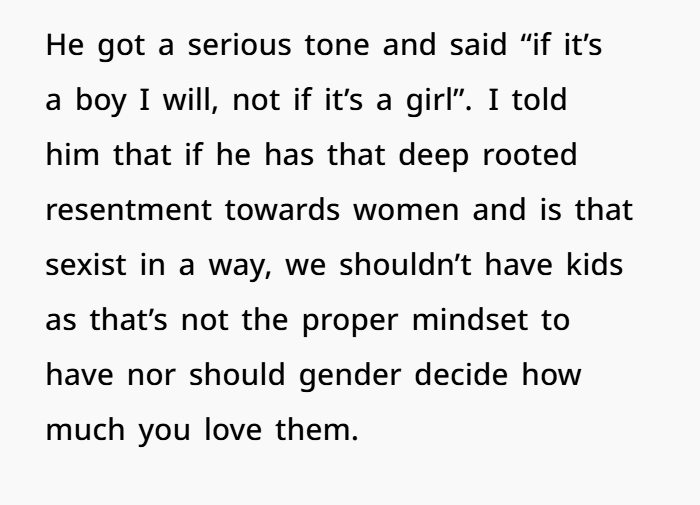
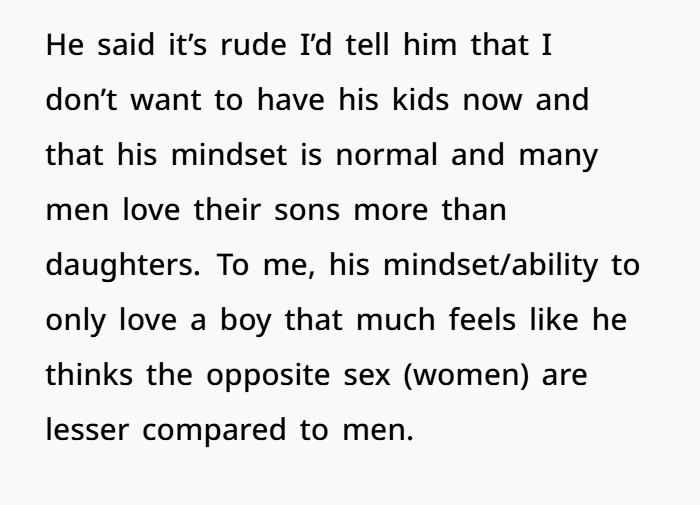
But the dream cracked when he dropped a heavy truth: he’d love their future kids more than her… but only if they’re boys. At first, it was just a weird comment. But when pressed, he doubled down, saying sons naturally get more love from dads and that’s “just how it is.” She felt stunned, not just at the comment, but the belief behind it. That girls — daughters — just aren’t worthy of the same love.
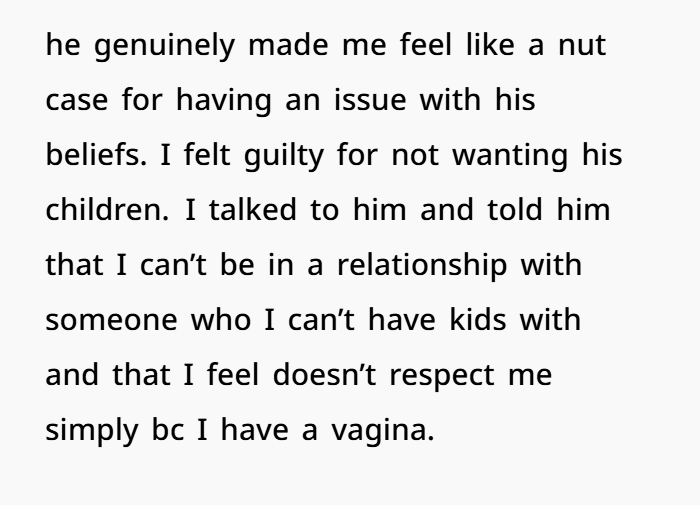
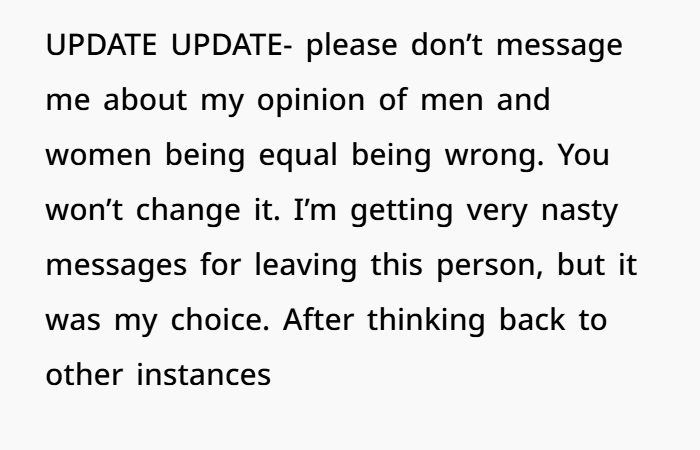
So she told him flat-out: she wouldn’t have kids with a man who felt that way. What followed was gaslighting, guilt-tripping, and eventually, a breakup. She walked away not because she didn’t love him, but because she realized loving someone doesn’t mean sacrificing your self-respect or future children’s worth.
A casual conversation about the future can sometimes reveal a shocking and deal-breaking truth

While joking about future kids, a woman’s boyfriend made a deeply sexist comment

Let’s just put it out there: if your boyfriend says he’d only love your son, not your daughter, more than you — that’s a HUGE red flag. This story is not about one bad joke. It’s about mindset. And that mindset? It’s sexist. It’s outdated. And it’s dangerous when we’re talking about raising actual human beings.
This post touches on so many real-world issues like gender bias in parenting, toxic masculinity, breaking generational cycles, and how much early beliefs shape us. So let’s unpack that.
1. Gender Bias in Parenting Is Real — And Messes Up Kids for Life
The idea that sons are more valuable than daughters? Yeah, it’s not new. Cultures around the world — and even modern Western households — still carry that mindset. Research shows boys are more likely to be seen as strong, capable, and future leaders. Girls? Often seen as emotional, delicate, or just not the same.
In fact, studies like the 2020 Pew Research survey found that more men (and even some women) subconsciously prefer sons, associating them with legacy, strength, and pride. This comes from generations of patriarchal thinking, where sons were expected to carry the family name, provide, and protect, while daughters were seen as caretakers or burdens.
This mindset leads to emotional neglect, favoritism, and deep psychological scars for children — especially daughters. If a child grows up feeling less loved just because of her gender, it can lead to long-term issues like anxiety, low self-worth, and poor relationship choices later on.
2. “I Was Joking” — The Favorite Excuse of the Emotionally Unavailable
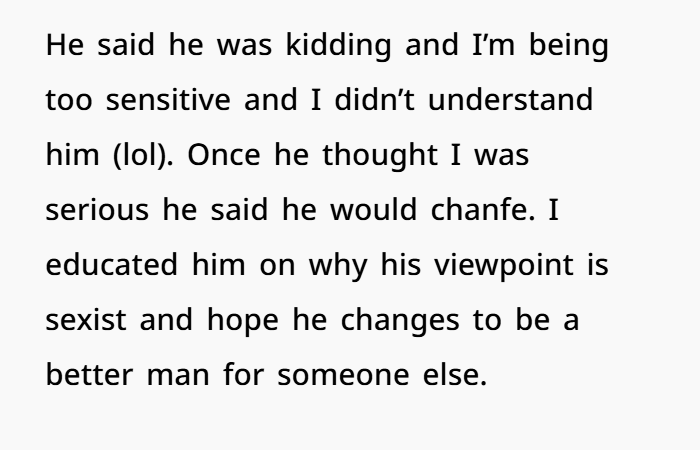
Now let’s talk about how this guy reacted when she called it out. Instead of owning it, he said she was “too sensitive” and “didn’t get the joke.” Sound familiar?
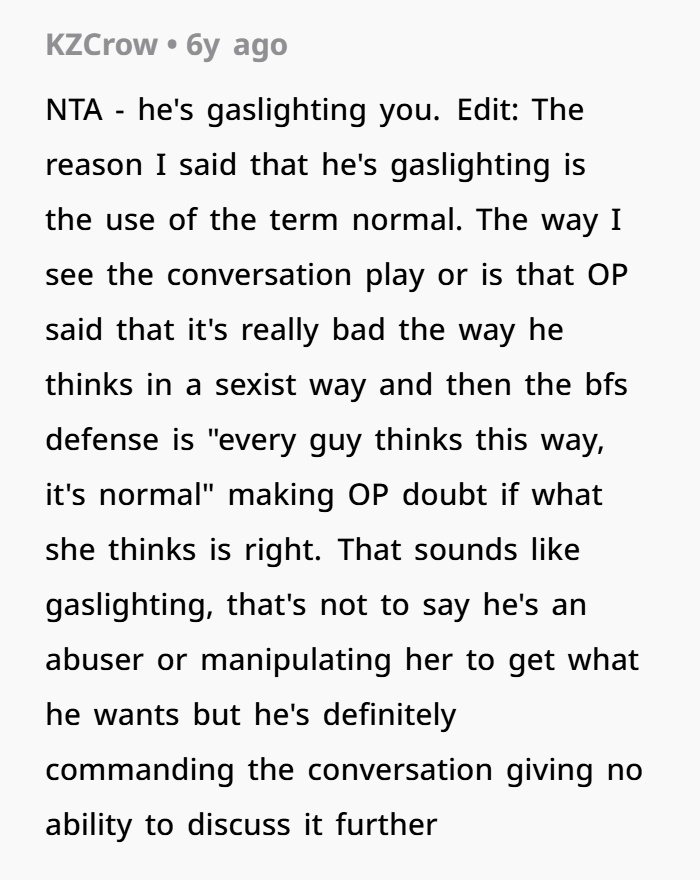
That’s classic gaslighting — a form of emotional manipulation where someone tries to make you doubt your feelings or reality. Saying something sexist, then blaming your reaction, is a power move. It’s a way to silence you, to make you question if you’re “overreacting.”
And no, not every joke deserves a breakup. But when your joke reveals a core belief — that you would only love your child based on their gender — that’s not funny. That’s a window into your values.

This Isn’t About One Comment — It’s About Deep-Rooted Sexism
Here’s the deal: sexist relationship red flags often start subtle. “Girls are too emotional.” “Women aren’t as good at [insert thing].” “If we have a daughter, she’s not gonna date until she’s 30.” Sounds funny, right? Until you realize these are beliefs rooted in control and misogyny.
What’s more alarming is when someone starts projecting that onto unborn children. It becomes gender discrimination in families before the kid’s even born.
That’s not a joke. That’s a predictor of how your child will grow up feeling in their own home.
4. Should You Have Kids With Someone Who Doesn’t See You (or Your Future Daughter) As Equal?
Let’s say she went through with it. Married this guy. Had kids. What happens if their first child is a girl?
Would he be disappointed?
Would he be emotionally distant?
Would he over-correct and be “protective” to the point of control — telling her what to wear, who to talk to, how to act “like a lady”?
And worst of all — would that girl grow up feeling like a disappointment for something she couldn’t control?
This is why choosing the right parenting partner is so critical. Your kid’s sense of self-worth starts at home. And if your co-parent sees women as “less,” your daughter will see herself that way. No matter how much you try to counter it.
5. The Breakup Wasn’t Over One Comment — It Was Over a Pattern
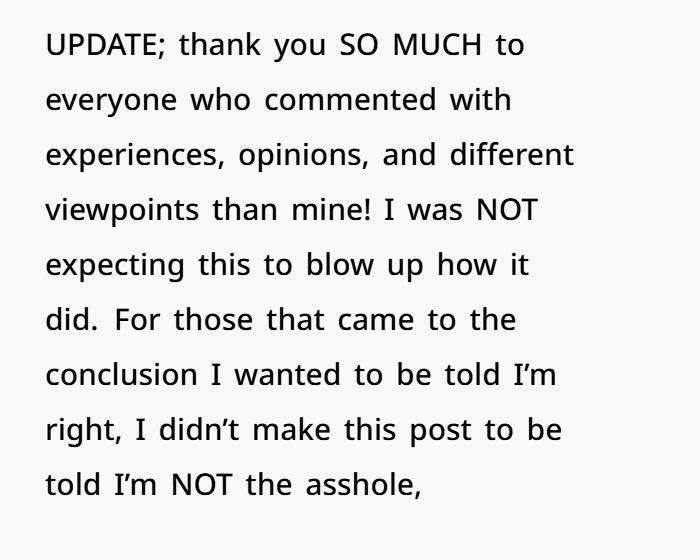
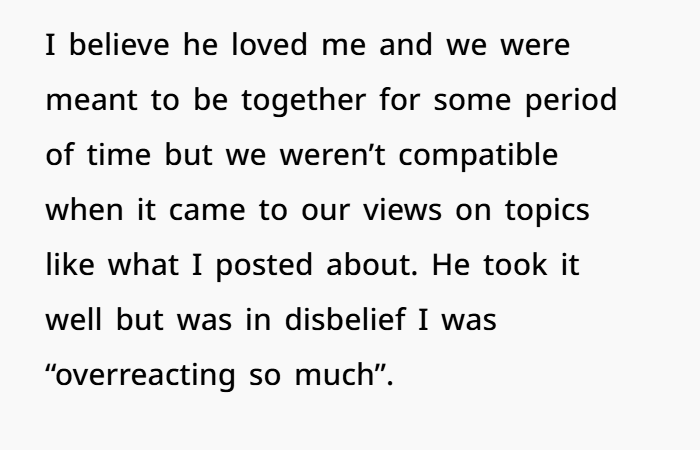
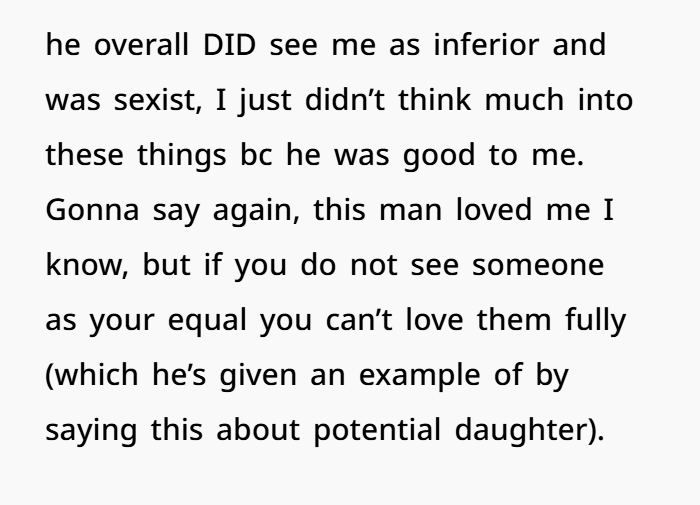
The OP’s update makes it clear: this wasn’t just a one-time moment. When she looked back, she saw a pattern. Little things. Sexist ideas. Moments where he made her feel “less.” She brushed it off because, like a lot of us, we give people grace when they’re good to us. When they love us.
But love without respect isn’t real love. You can’t say “I love you” and then also say “I won’t love our daughter like I would our son.” That’s not love. That’s conditional affection. Based on gender.
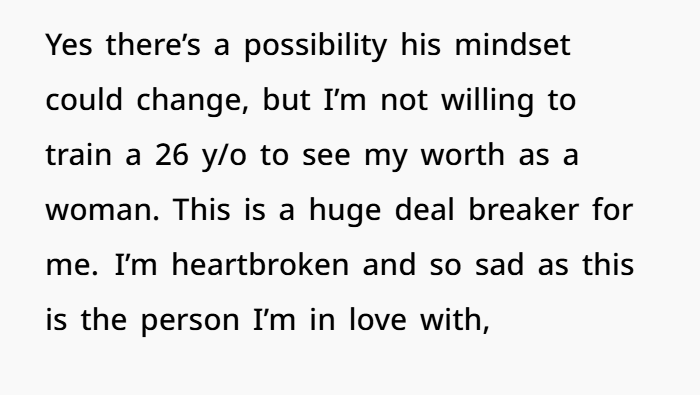
And let’s be real — if you have to “train” your partner to see you as equal, that’s not your soulmate. That’s emotional labor you shouldn’t have to do.
6. Breaking Up Was Brave — And Smart
She ended it. That was bold. That was painful. And that was the right call.
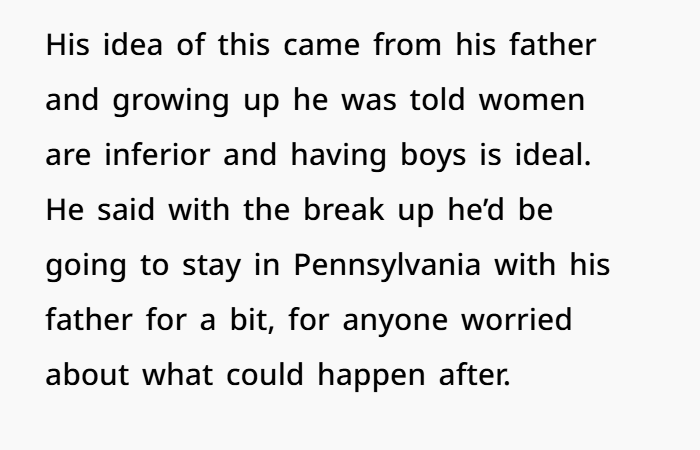
Too many people stay in relationships hoping someone will change. But she realized — it’s not her job to rewire a grown man’s worldview. Especially when it’s built on sexist beliefs passed down from his father.
His comment about going to stay with his dad? That kind of says it all. He’s going back to the place where these ideas were born. Not forward into change.
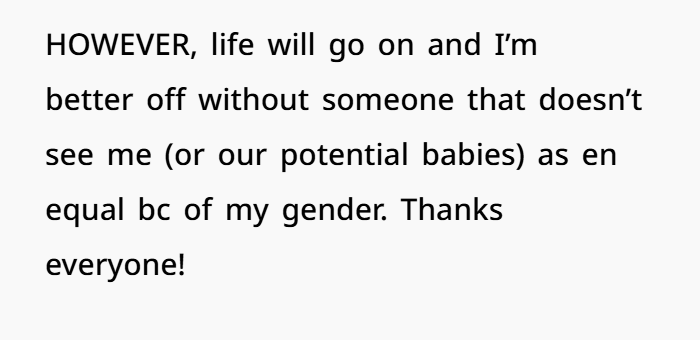
And her saying “life goes on” — that’s power. That’s choosing herself.
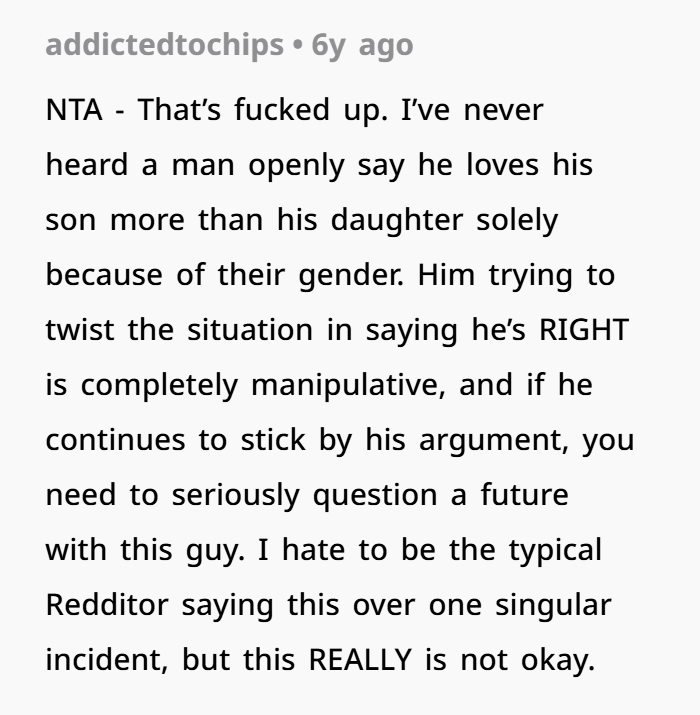
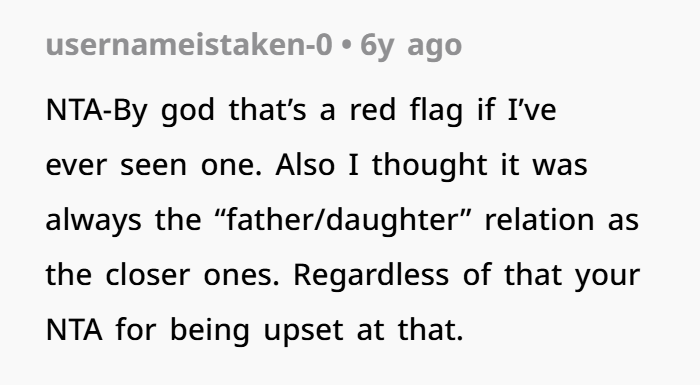
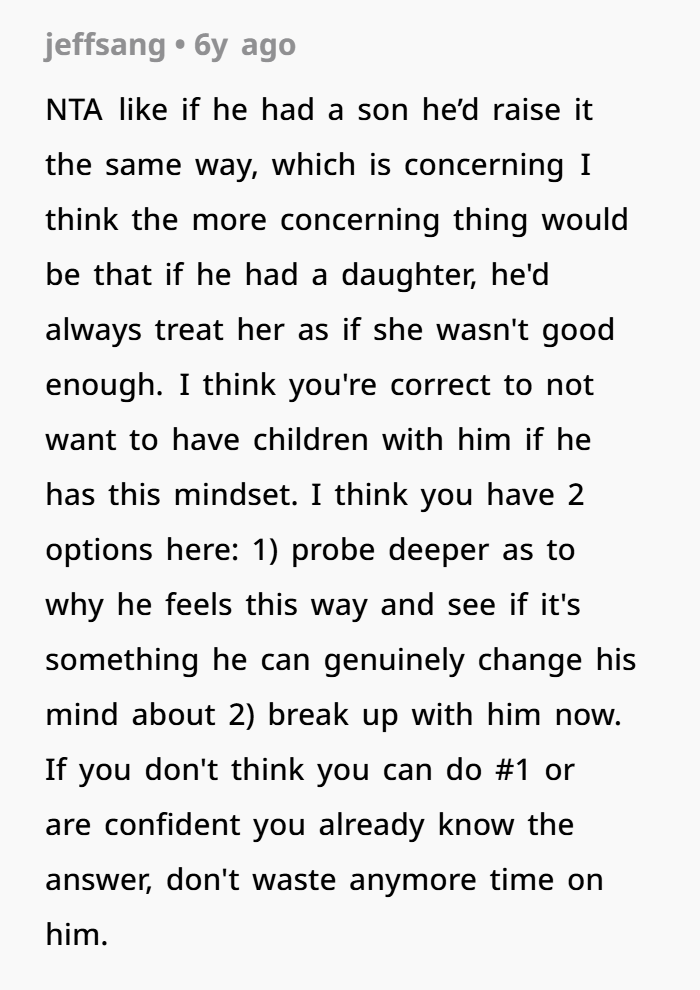
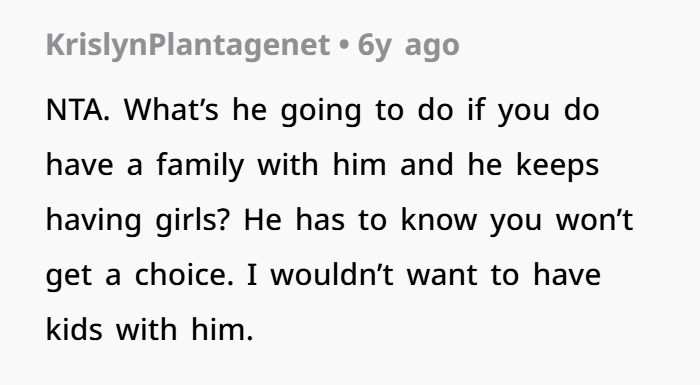
The internet praised her for refusing to train a 26-year-old to see her worth
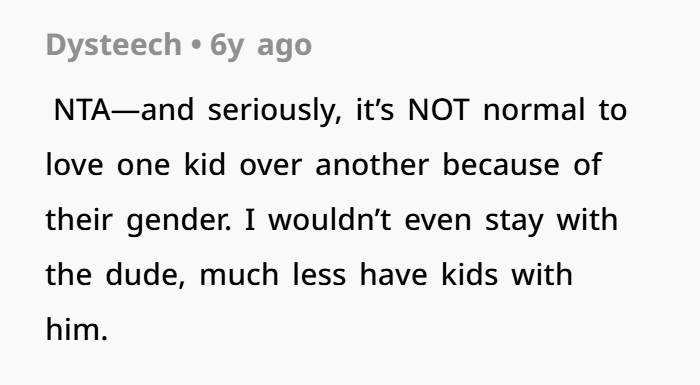
NTA. And Honestly? Good for Her.
This story isn’t just about a breakup. It’s a reminder that:
- It’s okay to end something even if there’s love
- It’s okay to walk away from someone who sees you as less
- It’s okay to say, “I won’t raise kids in a home like that”
Choosing your future kids’ emotional safety over a relationship? That’s not weakness. That’s strength.