I Skipped My Brother’s Italy Wedding After Months of Chaos — Now I’m the Villain
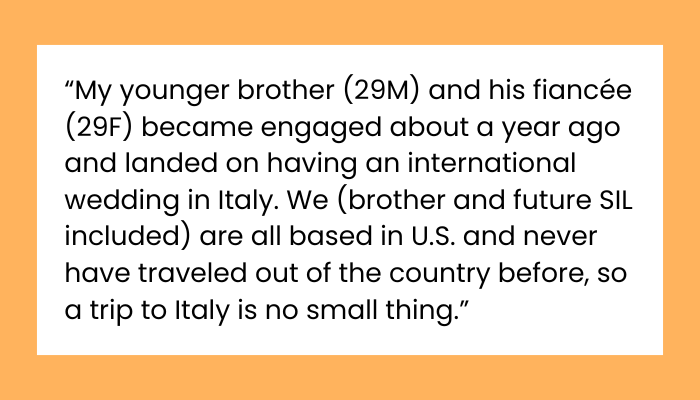
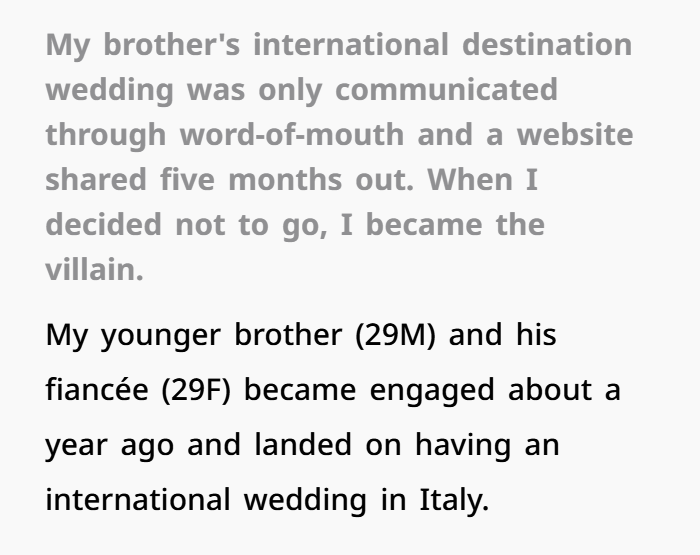
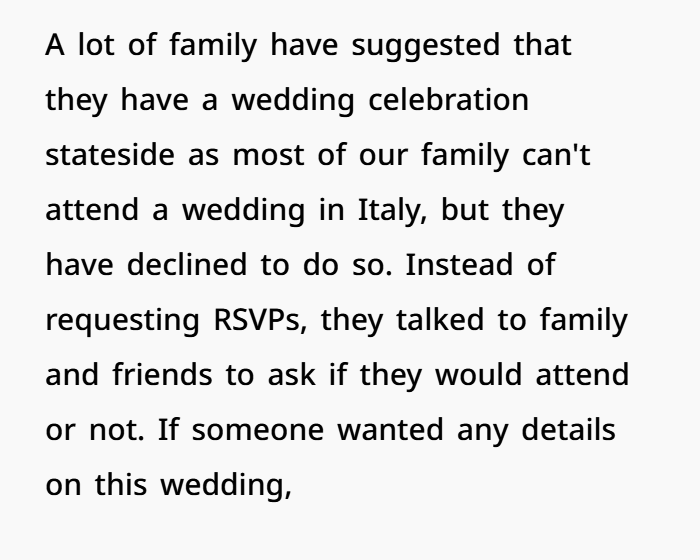
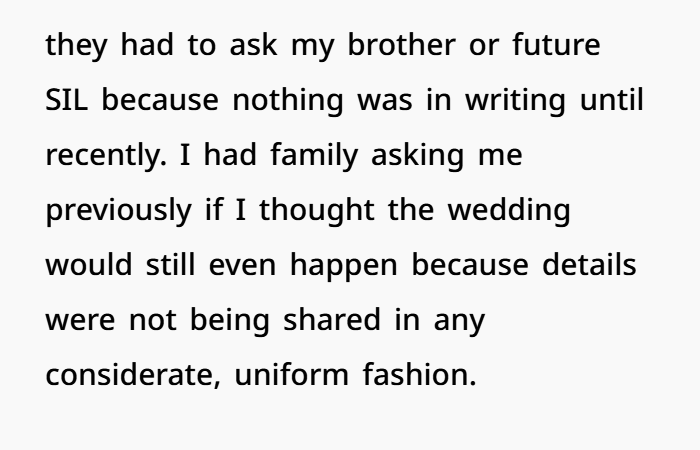
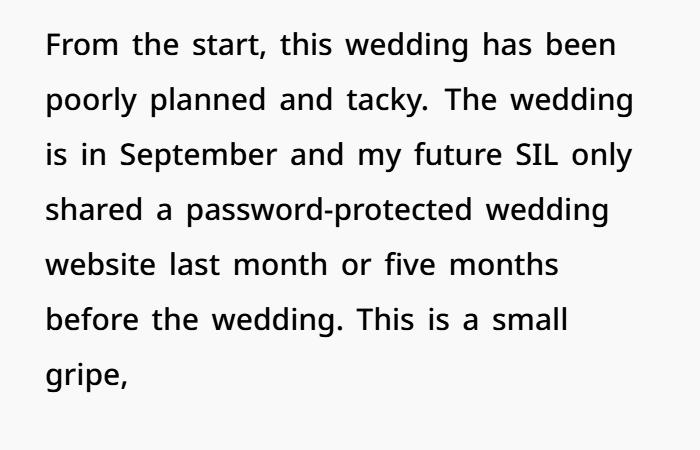
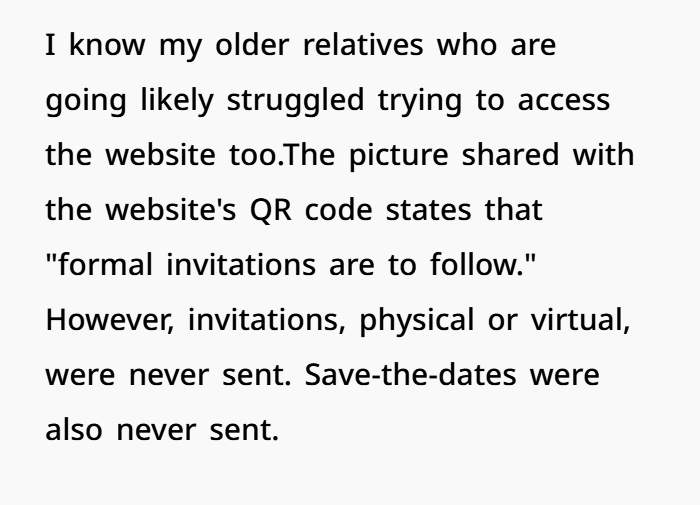
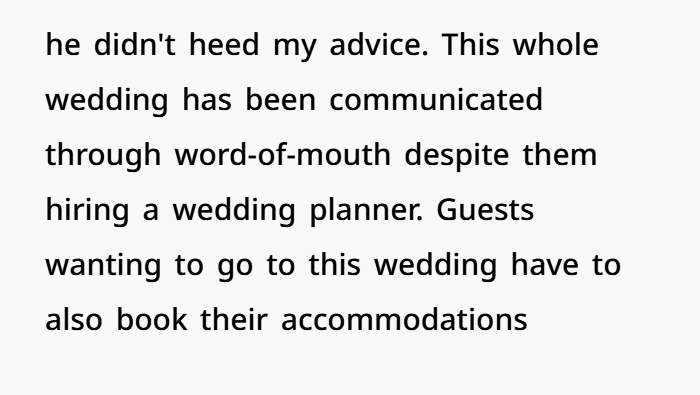
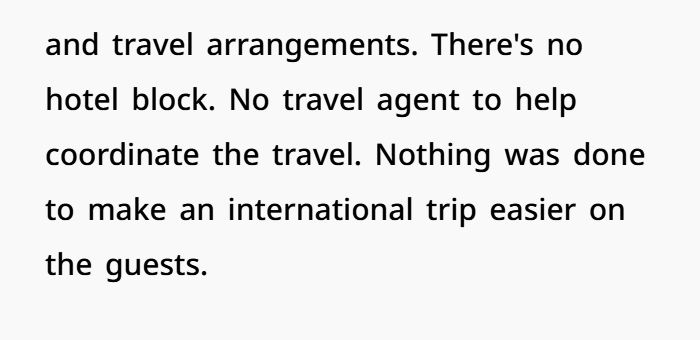
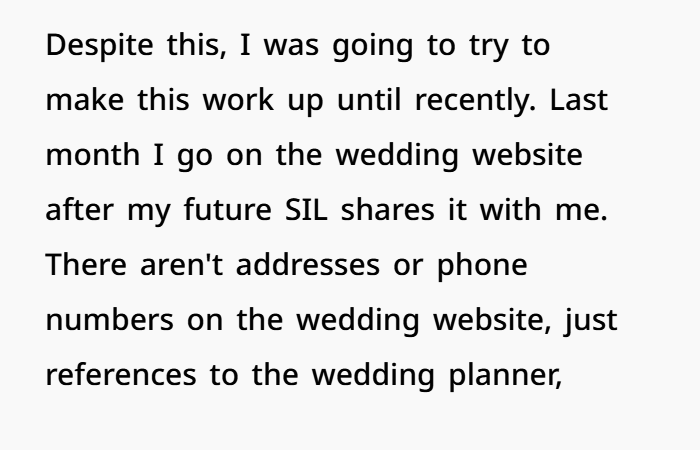
Destination weddings can be exciting, but they often require careful travel planning, clear communication, and extra expenses for guests. In this story, a woman shared how her younger brother’s wedding in Italy became a source of stress and disappointment for several family members. According to her, important information about the destination wedding was not shared clearly. Guests did not receive traditional save-the-date notices or detailed invitations, and many travel details were only available through a wedding website that was shared a few months before the event. For relatives who had little experience with international travel, the lack of information made planning much more difficult.
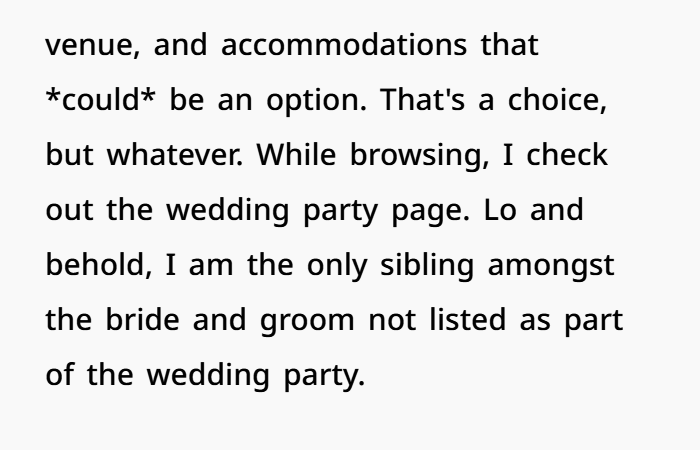
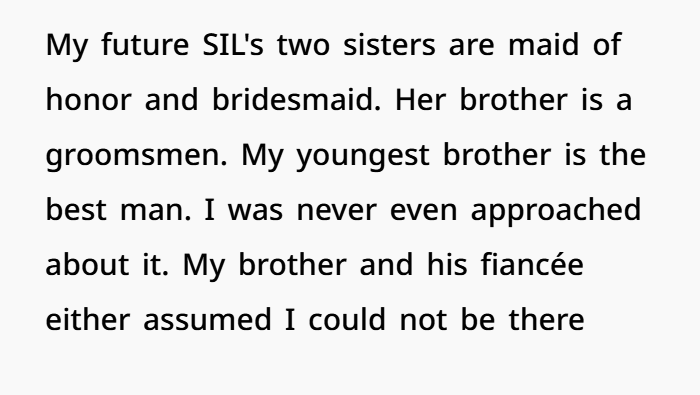
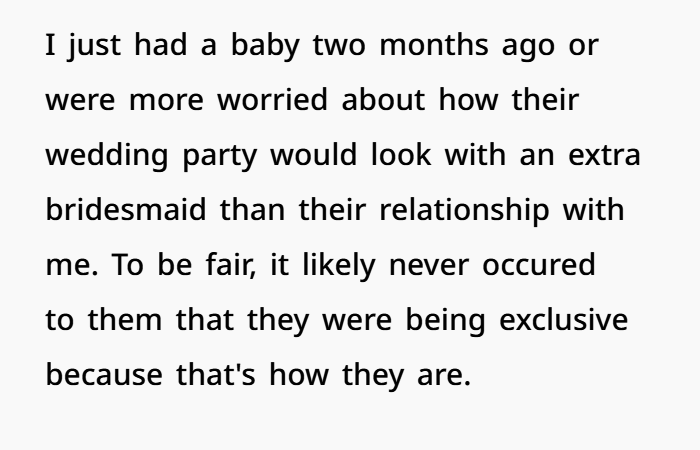
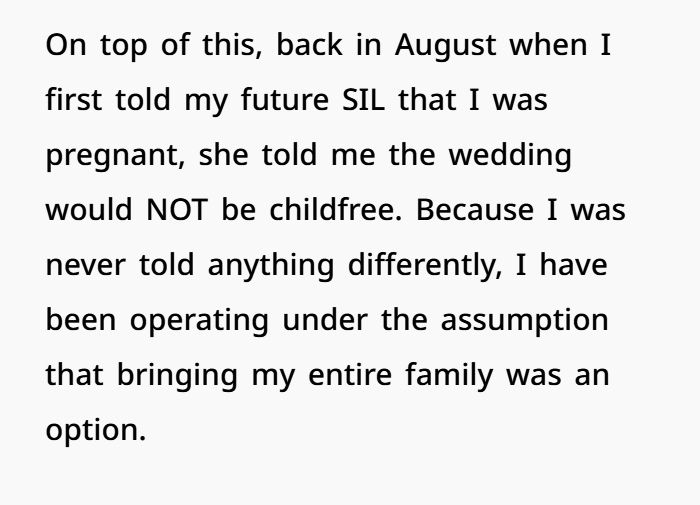
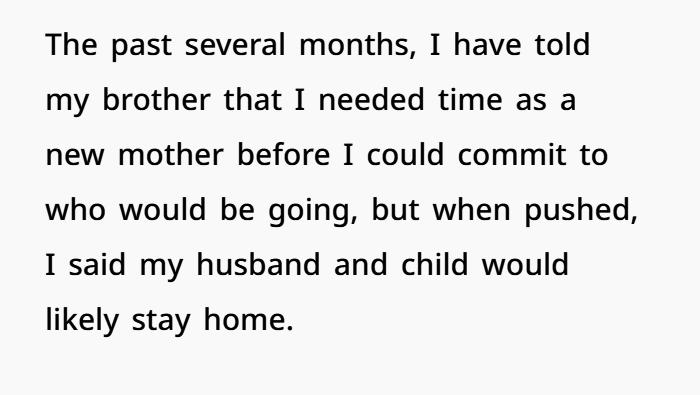
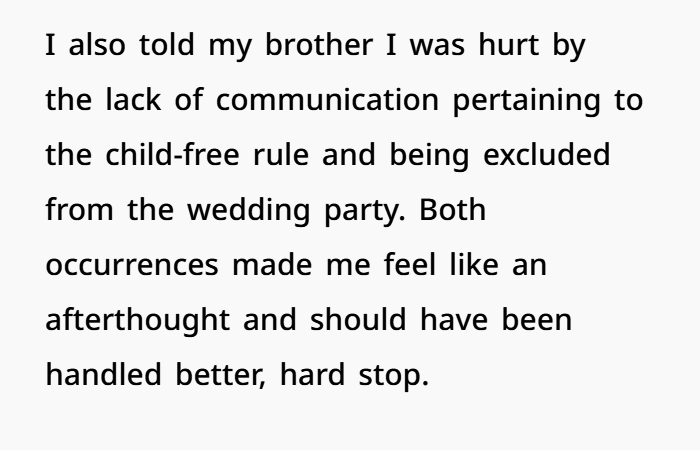
As the wedding date got closer, the situation became even more challenging. The woman learned that she was the only sibling who was not included in the wedding party. Around the same time, she was also informed that her six-month-old baby would no longer be allowed to attend the wedding, despite earlier conversations that suggested otherwise. This created significant childcare concerns and made attending the event much more complicated. After trying to discuss the situation calmly and explain the difficulties involved, she felt that her concerns were dismissed. The conversation with her brother became increasingly emotional, and both sides left feeling hurt and misunderstood.
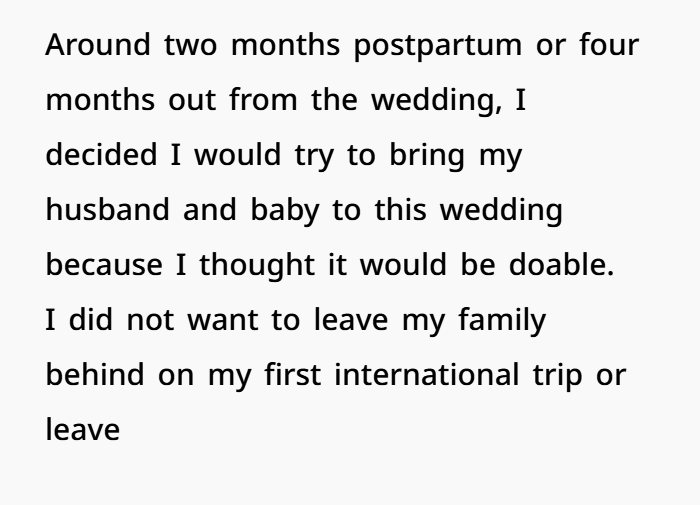
Eventually, she decided that attending the wedding was no longer the right choice for her family. Considering the costs of international travel, childcare arrangements, and the overall wedding budget, she felt uncomfortable spending thousands of dollars on an event where she no longer felt welcome. As a result, she chose not to attend the wedding and later reduced contact with her brother. The story has sparked discussions online about family relationships, wedding planning, travel expenses, communication, and the importance of setting clear expectations when organizing a destination wedding.


Many people connected with this story because it highlights a common problem with destination weddings. While these events can be beautiful and memorable, they can also create stress when guests are expected to spend large amounts of money and manage complicated travel plans.
In this situation, the challenges started long before the wedding day.
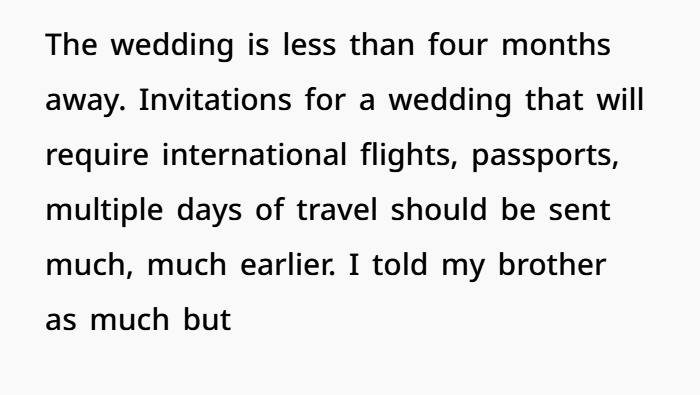
Planning international travel often requires months of preparation. Guests may need passports, flights, hotel reservations, transportation arrangements, childcare plans, and time away from work. Because of this, wedding planning experts usually recommend sharing important information as early as possible.
According to the story, that did not happen here.
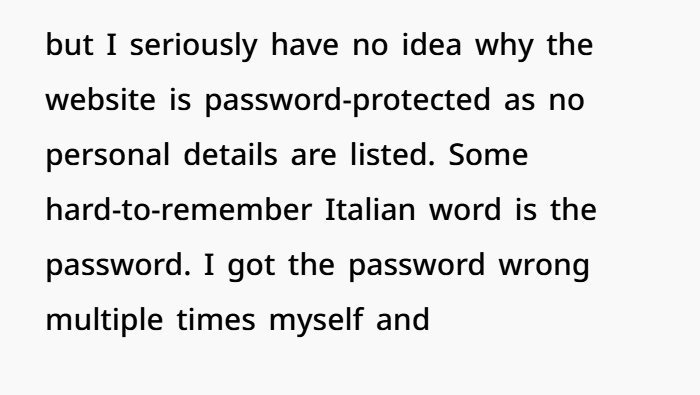
Many guests reportedly struggled to get clear information about the destination wedding. Important details were shared through conversations and a password-protected website that became available only a few months before the event.
For some family members, especially those with limited international travel experience, this created confusion and uncertainty.
Many readers felt that the website became a symbol of the larger communication problems surrounding the wedding.
The concern was not about privacy. Instead, people felt that important travel planning details should have been easier to access and understand. Guests needed clear information in order to make informed decisions about costs, schedules, and accommodations.
Destination weddings often require a significant financial commitment.
Airfare, hotels, transportation, meals, wedding attire, passports, and other travel expenses can add up quickly. For many families, attending an overseas wedding can cost as much as a major vacation.
That is why communication is so important.
Guests need enough time to budget, save money, coordinate childcare, and decide whether attending is realistic for their situation.
Beyond the travel concerns, many readers felt the emotional side of the story was even more important.
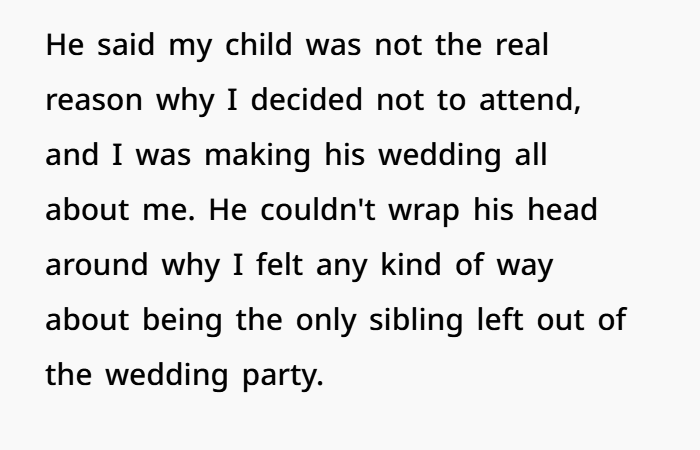
The woman learned that she was the only sibling who was not included in the wedding party.
While every couple has the right to choose who participates in their wedding, family members can still feel hurt when they are left out of important roles.
Many readers understood why this was upsetting.
What made the situation more difficult was that she reportedly learned about it on her own rather than through a direct conversation. There was no explanation or discussion beforehand, which made the experience feel more personal.
Even when exclusion is unintentional, the emotional impact can still be significant.
Another major issue involved her six-month-old baby.
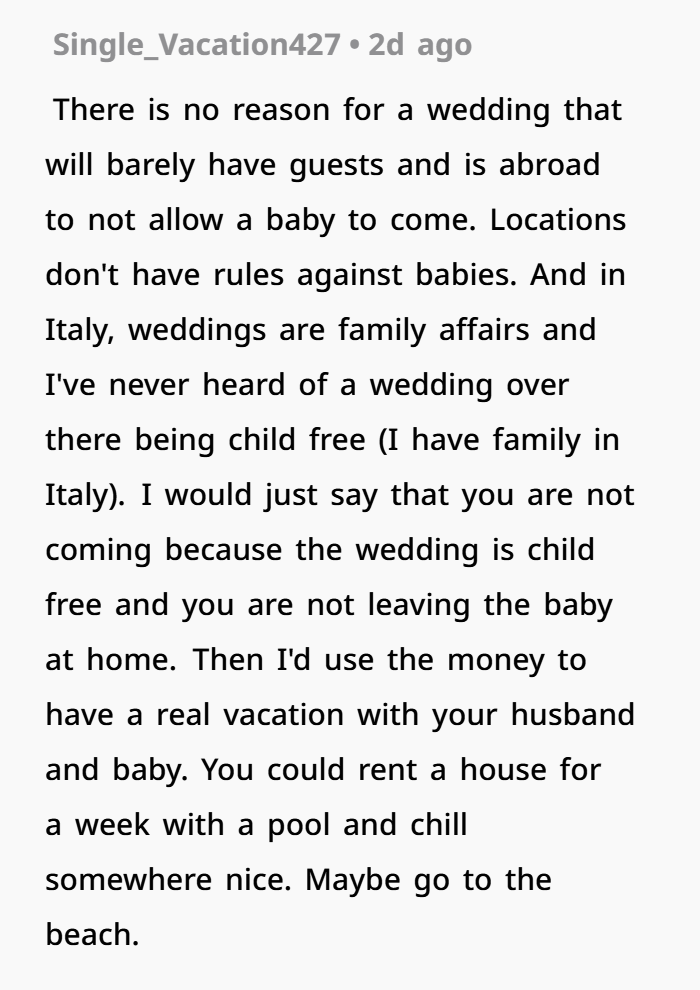
Child-free weddings have become increasingly common, and many couples choose that option for personal reasons. Most readers agreed that there is nothing wrong with setting those boundaries.
However, the timing of the communication became the real problem.
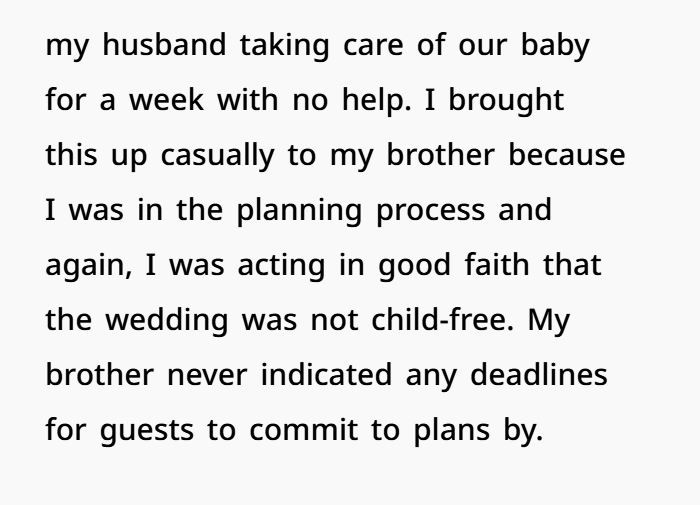
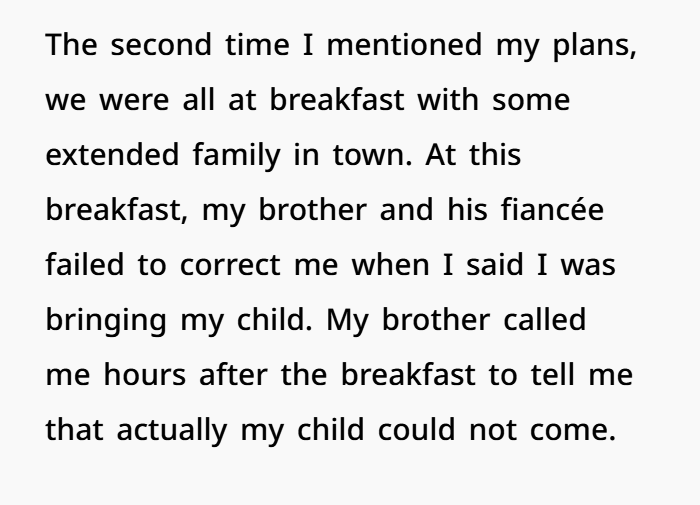
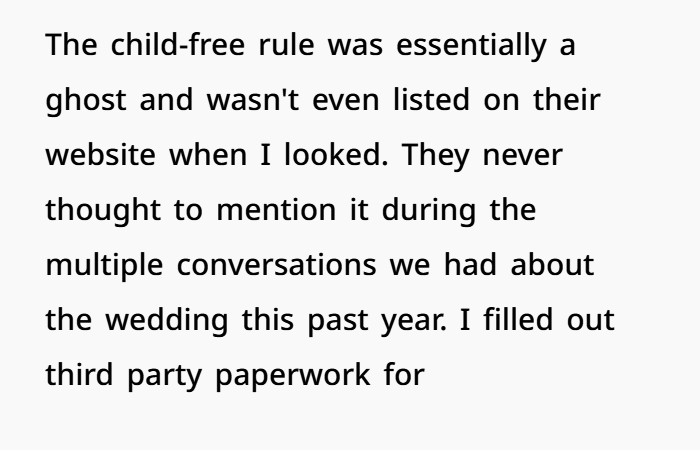
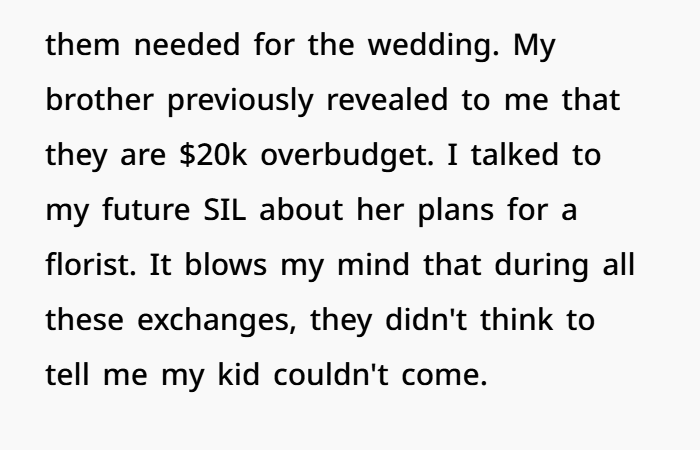
According to the story, the woman initially believed that children would be allowed at the wedding. She planned her travel arrangements based on that understanding and continued discussing the trip without anyone correcting the information.
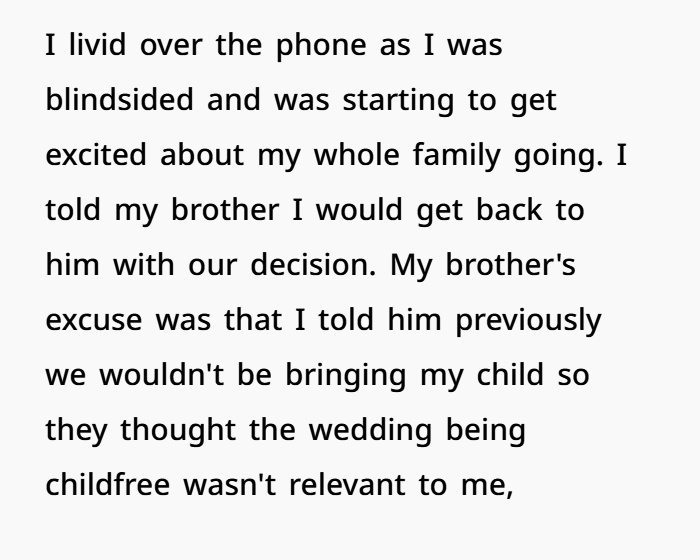
Later, she learned that her baby would not be able to attend after all.
For parents of young infants, that kind of change can create serious challenges.
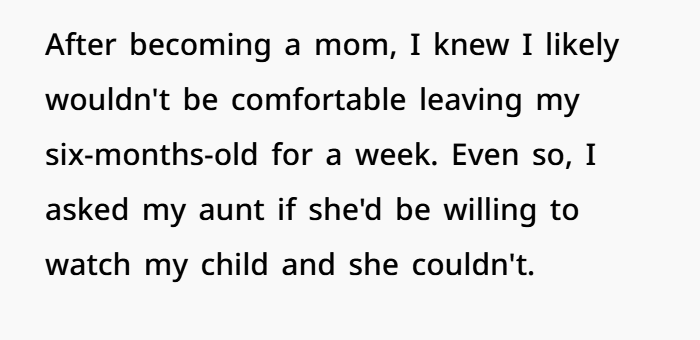
Arranging childcare for a baby often requires careful planning and trusted caregivers. Some parents are comfortable traveling without an infant, while others are not ready for that separation. Every family handles these decisions differently.
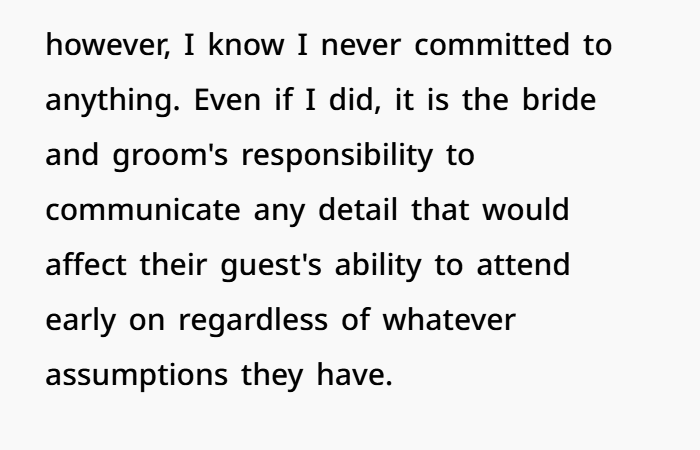
Many readers felt that if childcare restrictions would affect attendance, those details should have been communicated much earlier in the wedding planning process.
By that point, expectations had already been built and travel discussions were well underway.
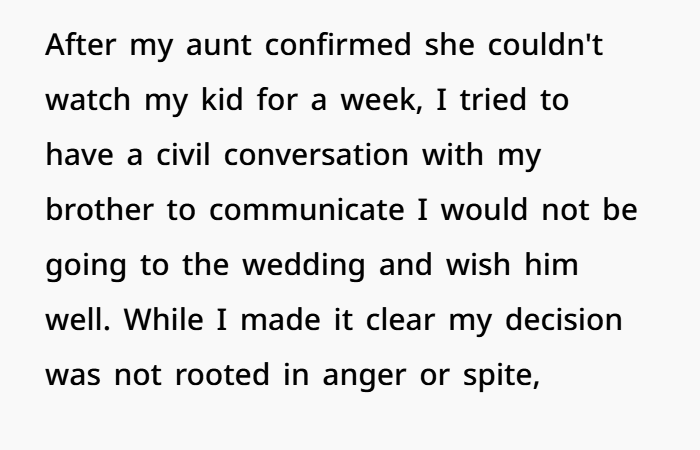
As the situation became more stressful, the woman tried to explain her concerns and discuss possible solutions.
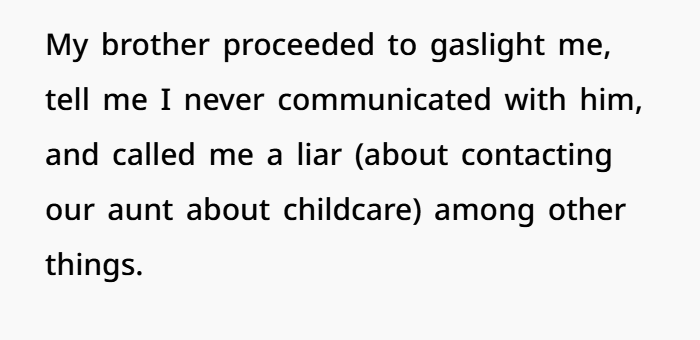
Unfortunately, the conversation with her brother did not go well.
According to her account, both sides became frustrated, and the discussion quickly shifted away from problem-solving. Instead of focusing on the practical challenges surrounding international travel, childcare, and wedding expenses, the conversation became centered on hurt feelings and misunderstandings.
That appears to be the moment when the relationship suffered the most damage.
Many readers felt the conflict was not really about the destination wedding itself.
Instead, it reflected larger issues involving family communication, expectations, and feeling valued within important family events.
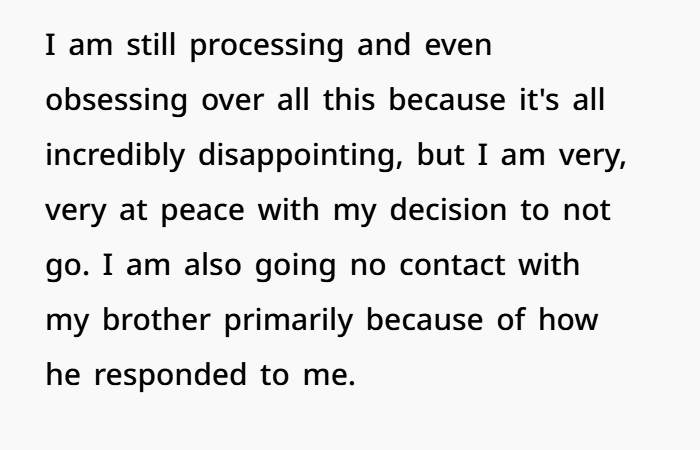
In the end, the woman decided that attending the wedding no longer made sense for her family. Between the cost of international travel, childcare concerns, and the emotional stress surrounding the situation, she chose not to spend thousands of dollars on a trip that no longer felt right for her.
The story has sparked conversations about destination wedding etiquette, family finances, travel planning, childcare challenges, and the importance of clear communication.
Many readers agreed on one point: when family members are being asked to invest significant time, money, and effort into attending a wedding, clear communication and mutual understanding are just as important as the event itself.
That’s the moment a lot of readers stopped seeing this as “just wedding stress” and started seeing a deeper family dynamic problem. Because healthy conflict resolution usually involves some empathy on both sides. Even if he disagreed with her decision not to attend, acknowledging why she felt blindsided could’ve gone a long way. Instead, it became about proving she was wrong.
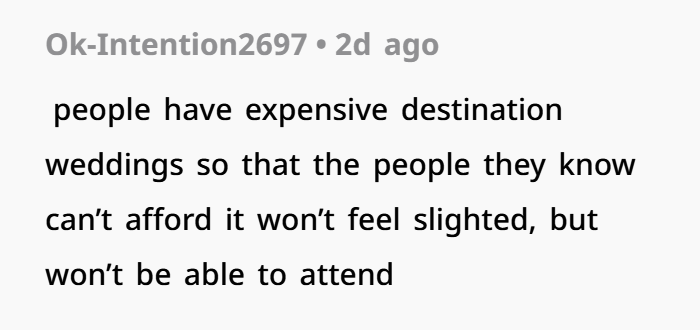
The financial side of destination weddings became a major topic of discussion online. Many people pointed out that modern weddings can be very expensive, especially when international travel is involved. Between airfare, hotels, transportation, meals, wedding attire, and time away from work, attending a destination wedding can cost a significant amount of money.
Many readers felt that some couples become so focused on creating their dream wedding that they forget how much effort and expense is required from their guests.
Most people agree that couples have every right to plan the wedding they want. At the same time, guests also have the right to decide whether attending fits their budget, schedule, childcare needs, and personal circumstances.
One point that came up repeatedly was that a wedding invitation is an invitation, not an obligation.
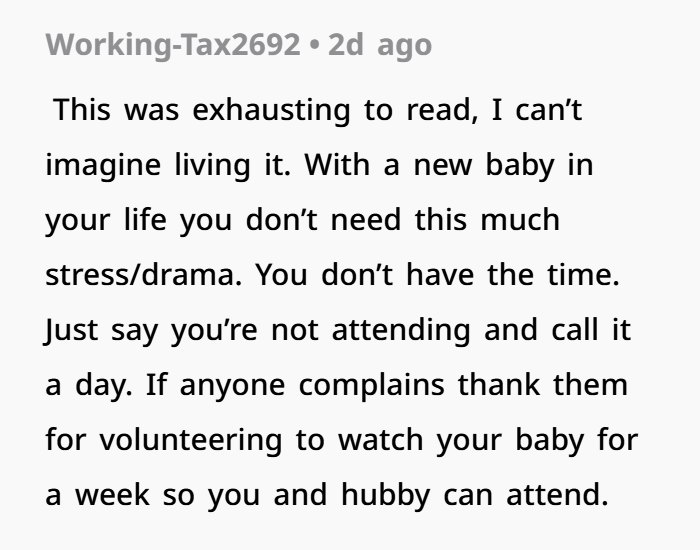
No one is required to attend a destination wedding if doing so creates financial stress, travel difficulties, or family challenges. Many readers felt that having a young baby alone was a completely understandable reason to decline an overseas trip.
The communication problems only made the situation more difficult.
Some readers suggested that the bride and groom may have been overwhelmed by the challenges of planning an international wedding. Organizing a ceremony in another country can be complicated, and it is possible that some decisions were made without fully considering how they would affect family members.
However, many people also pointed out that assumptions often create misunderstandings.
For example, some believed the couple may have assumed that a new mother would not want wedding party responsibilities. Others felt they may have assumed childcare arrangements would be easy to manage.
The problem is that assumptions are not the same as conversations.
Many readers felt that a simple and honest discussion could have prevented much of the disappointment and confusion that followed.
Another detail that stood out was the woman’s statement that she felt at peace with her decision not to attend.
For many readers, that was one of the most telling parts of the story.
When someone feels peaceful after making a difficult choice, it often means they have spent a long time thinking about the situation and have finally accepted what is best for them and their family.
Rather than feeling angry, she seemed to feel relief.
Many people believed that this showed the issue was larger than the wedding itself.
Family relationships can sometimes become strained during major life events because weddings often bring long-standing emotions to the surface. Feelings of exclusion, disappointment, and miscommunication that have existed for years can become much more visible during important family milestones.
Because of that, many readers felt the conflict was never really about Italy, wedding invitations, or travel arrangements.
Those issues may have been the final trigger, but the deeper concern appeared to be feeling overlooked and unimportant within the family.
As the situation continued, the focus shifted away from travel planning and wedding logistics.
Instead, it became about communication, understanding, and mutual respect.
Many readers said they did not believe the woman skipped the wedding out of anger or spite. Rather, they felt she reached a point where she no longer wanted to spend significant money, time, and emotional energy on an event where she did not feel valued.
Once the conversations became hurtful and her concerns were dismissed, the wedding itself seemed to become a secondary issue.
At that point, the real question was no longer about attending an international destination wedding.
It was about whether family members were willing to listen to one another, communicate openly, and treat each other with respect.
That is why this story resonated with so many people online. While the details involved wedding planning, childcare, family finances, and international travel, the deeper lesson was much simpler.
Healthy family relationships are built on communication, appreciation, and respect. When those things are missing, even a joyful event like a wedding can become a source of lasting hurt.
For many readers, that was the real issue at the center of this story.
The Comments Are In