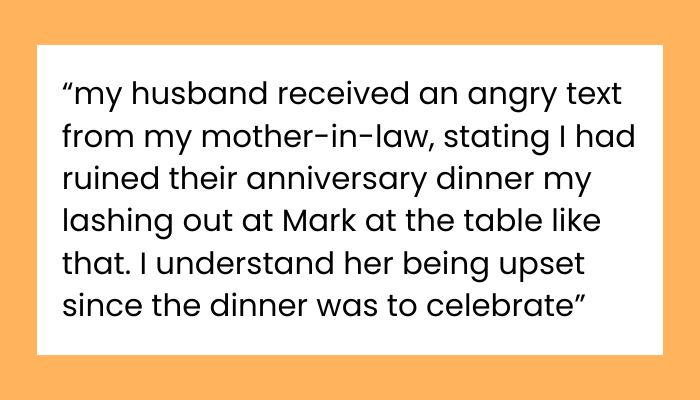
Wife Snaps At Brother-In-Law For Dropping Racist Slurs At Dinner Mother-In-Law Says She’s The One Who Ruined The Night
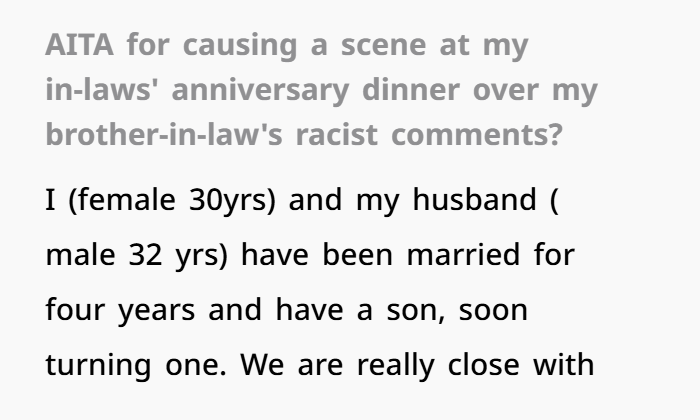
A woman attended her in-laws’ anniversary dinner with her husband and their young son. The evening started as a family celebration, with relatives gathering together to enjoy a special occasion. However, during the dinner, her brother-in-law began making several inappropriate and offensive comments that made people uncomfortable.
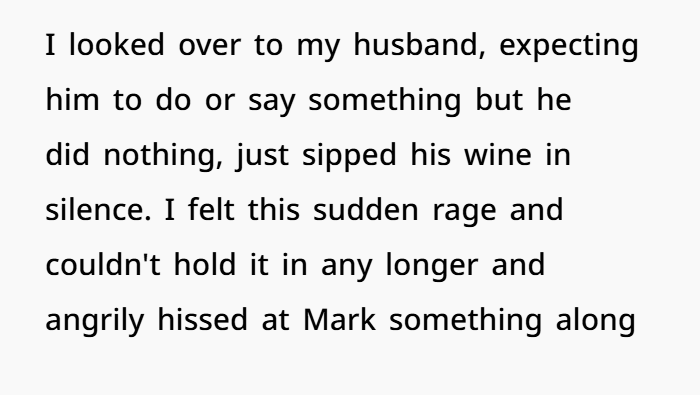
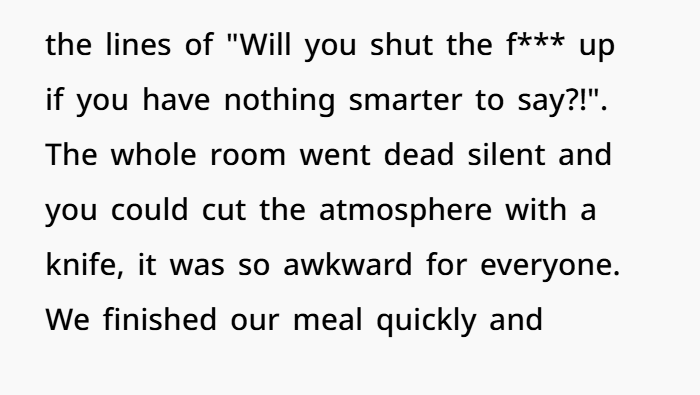
As the comments continued, she looked to her husband, expecting him to address the situation. When he chose not to say anything, she became frustrated. Eventually, she spoke up and told her brother-in-law to stop making negative remarks and contribute something more respectful to the conversation. Her response immediately changed the mood in the room, and the gathering became tense.
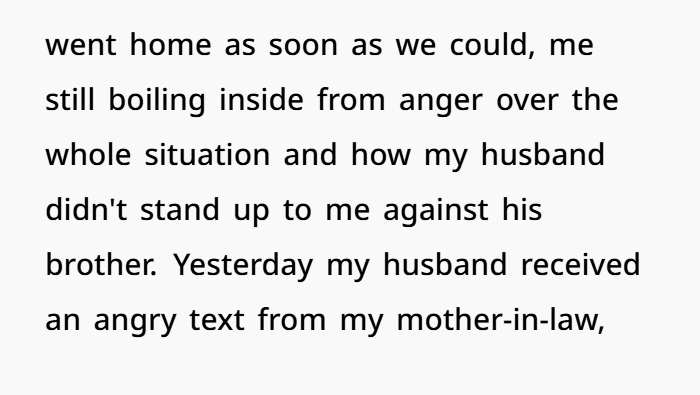
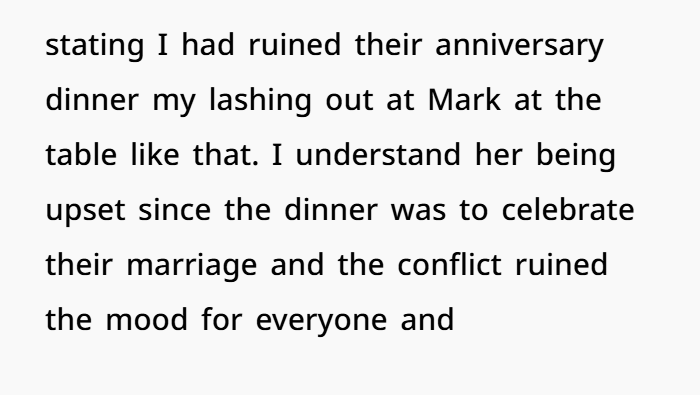
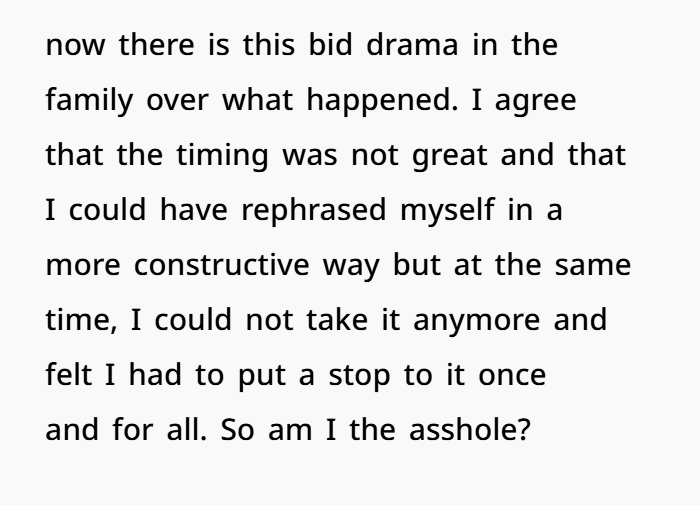
The dinner ended earlier than expected, and family members later argued about what had happened. Her mother-in-law felt that the disagreement overshadowed the anniversary celebration. At the same time, the woman believed it was important to speak up when someone was creating an uncomfortable environment for others.
Now, the situation has sparked a debate about family relationships, communication skills, conflict resolution, and respectful behavior during family events. Some people feel that difficult conversations should be handled differently during important celebrations, while others believe it is important to address inappropriate comments when they happen. The story highlights the challenges of balancing family harmony, emotional intelligence, and personal values in social situations.
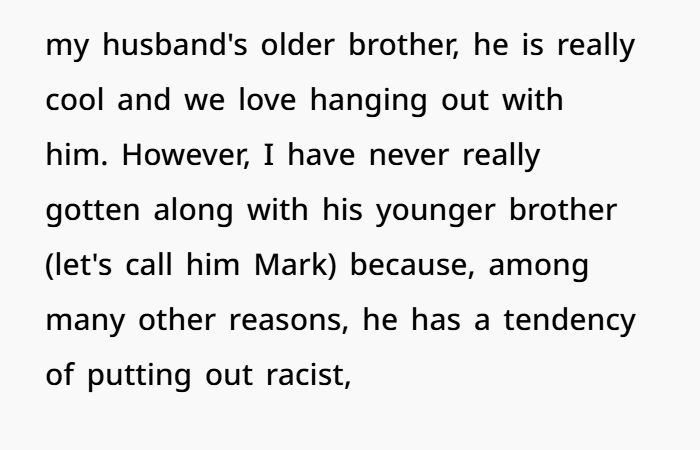
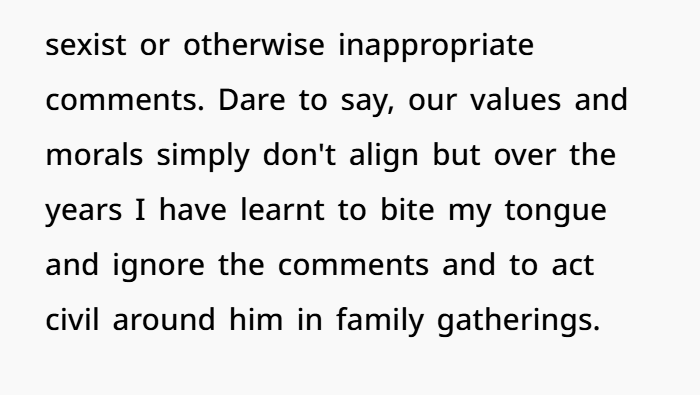
The author, a mother of an almost-one-year-old, had long tolerated her brother-in-law’s racist and inappropriate comments at family events

1. Speaking Up vs Staying Silent
One important point is that staying silent can sometimes be seen as accepting bad behavior. When someone repeatedly makes disrespectful comments, especially around children, it is understandable to feel the need to speak up.
You wanted your child to grow up in a positive environment that values respect, kindness, and inclusion. Since this issue had happened before and you had already discussed it with your husband, it makes sense that your frustration grew over time.
Wanting to protect your child and your family values is a reasonable concern. Many parenting experts and child development professionals agree that children learn from the behavior they see around them.
2. Why Family Gatherings Make Conflict Harder
Family events such as anniversaries, birthdays, and holiday celebrations often come with expectations of peace and togetherness.
Because of that, disagreements during these events can feel more upsetting than they would in other situations. People may focus more on the argument itself than on what caused it.
Alcohol can also make situations more difficult. People may speak more freely, react more emotionally, or have less self-control than usual.
That can make an already uncomfortable situation feel even bigger.
3. The Role of Your Husband
You mentioned that your husband had previously agreed to address the issue but did not step in when it happened again.
That likely left you feeling unsupported and alone in the moment.
There may be reasons why he stayed quiet. He may have felt uncomfortable, unsure how to respond, or worried about creating more conflict. However, his silence placed more pressure on you to react.
In many healthy relationships, partners work together to handle difficult family situations. This is why open communication and relationship counseling can be helpful when couples face ongoing family conflicts.
4. Could the Situation Have Been Handled Differently?
Even when someone’s frustration is understandable, it is still worth looking at how the situation unfolded.
The words used were strong and emotional, which made the conflict more noticeable.
Addressing the issue privately may have reduced embarrassment for everyone involved. However, many people also understand why emotions can take over during stressful moments.
You have already recognized that you might have chosen different words if you had more time to think. That kind of self-awareness is a positive sign.
The family gathering was affected by the disagreement, and some relatives may have felt uncomfortable. That does not mean your concerns were invalid, but it helps explain why some people reacted strongly.
5. Finding a Balance Between Values and Relationships
Family relationships can be complicated, especially when personal values and family traditions clash.
Your concern was not about a small disagreement. You were trying to address behavior that you felt was inappropriate around your child.
At the same time, the way concerns are expressed can influence how people respond to them.
The responsibility for the situation does not fall on one person alone. The person making the comments is responsible for their own behavior, and your husband also had a role in addressing the issue sooner.
Because of that, many people would likely understand your concerns while also recognizing that the situation became more difficult because emotions were running high.
6. Moving Forward with Healthy Boundaries
The next step may be focusing on healthy communication and conflict resolution rather than continuing the argument.
A private conversation with your husband could help both of you discuss expectations for future family gatherings and how you want to handle difficult situations together.
It may also help to speak with family members calmly and explain that your goal was never to ruin a special event. You simply wanted to protect the kind of environment you want for your child.
If future problems arise, setting clear boundaries can be helpful. Simple and respectful statements often work well, such as explaining that certain topics or comments are not appropriate around your family.
Over time, your child will learn important lessons from how you handle difficult situations. Modeling respectful communication, healthy boundaries, and emotional control can have a positive impact on their development.
Family tension may take time to settle. Some relatives may agree with you, while others may not. What matters most is staying respectful, standing by your values, and focusing on healthy family relationships moving forward.
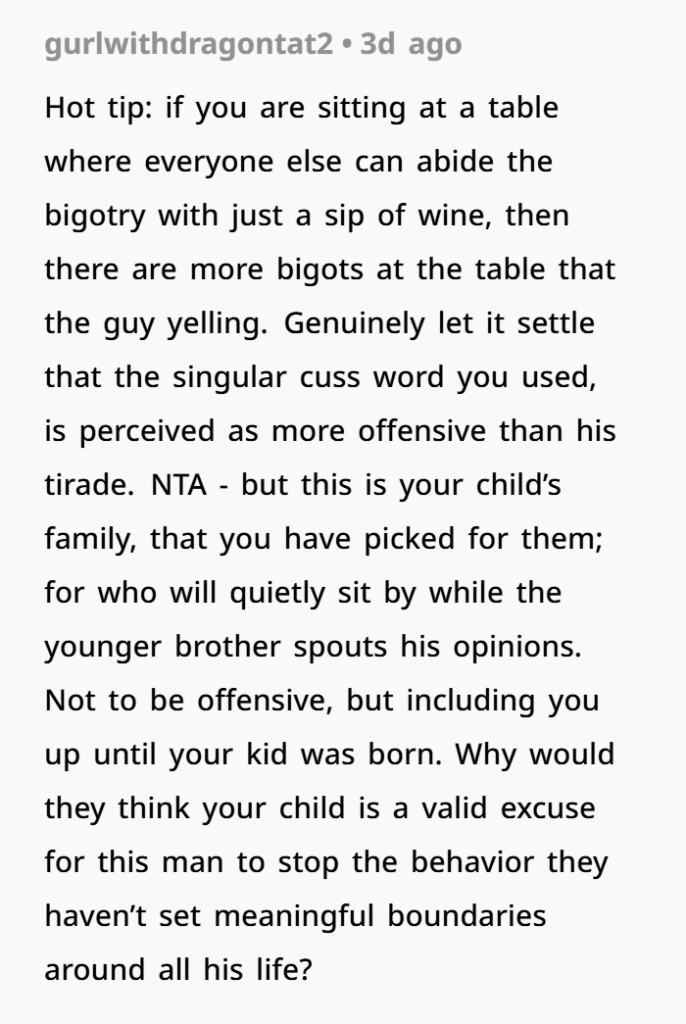
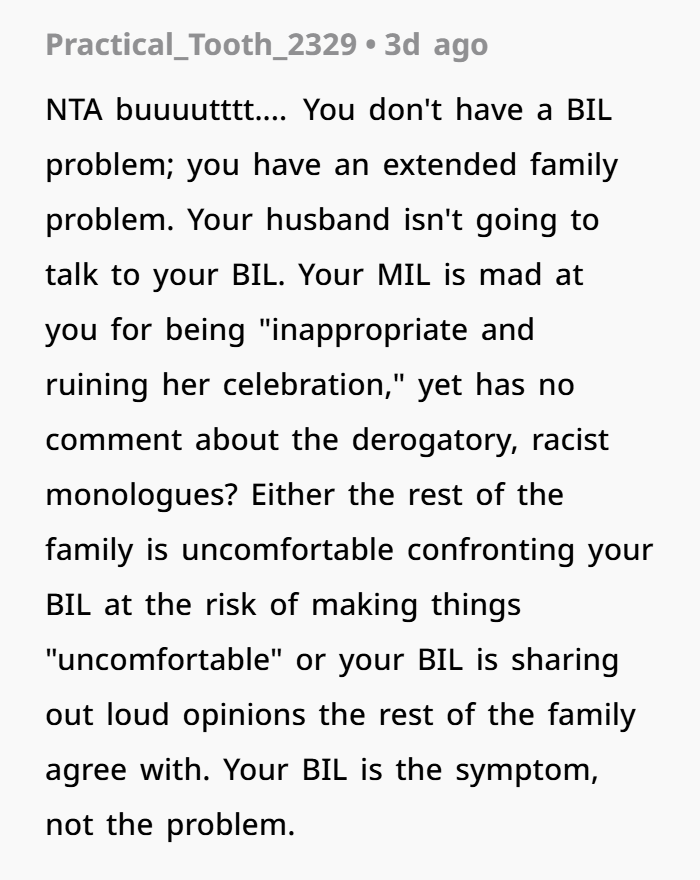
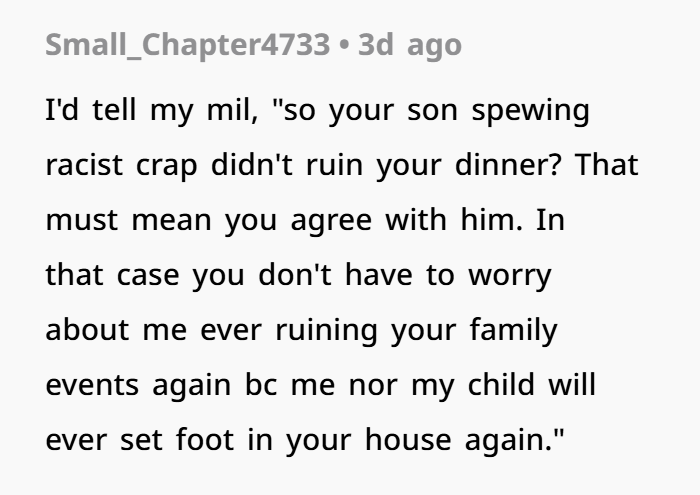
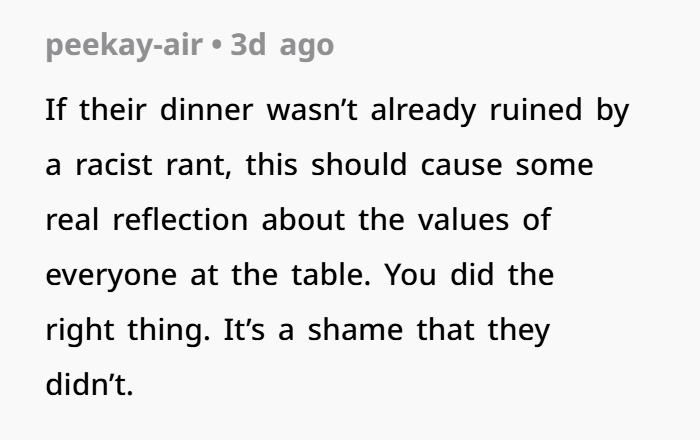
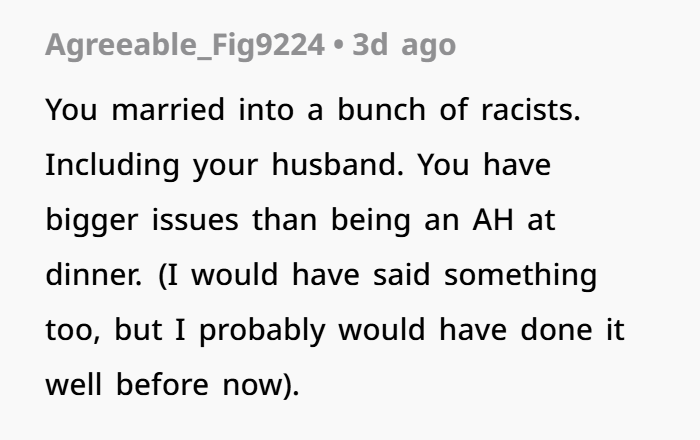
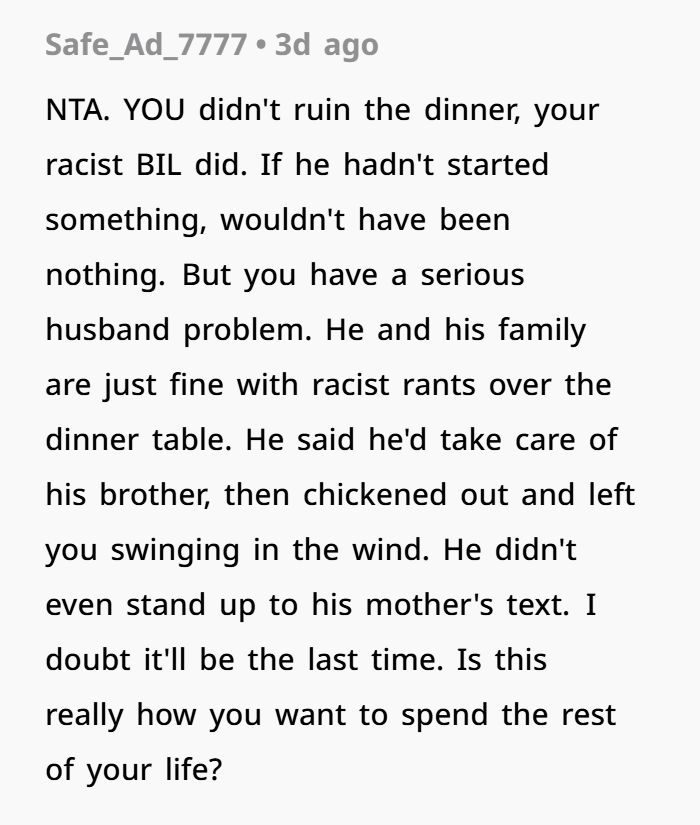
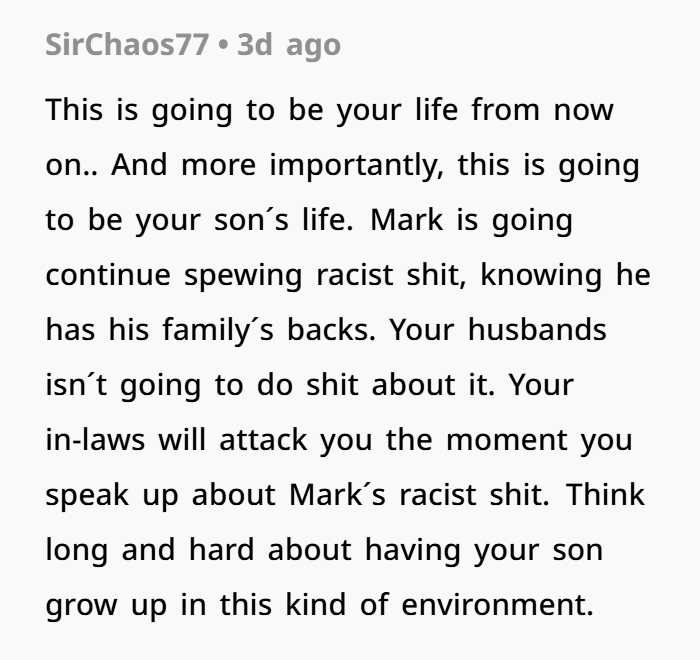
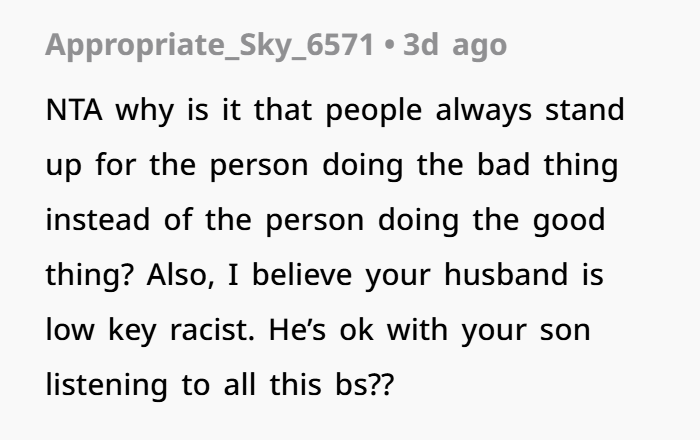
Netizens were focused on the long-term risk to the author’s child and urged her to consider setting firmer boundaries or distancing herself if nothing changes