

She Cheated… Now Wants Me to Fund Her Dreams? AITA
This story is one of those messy, emotional situations where betrayal, guilt, and expectations all get tangled together. A 27-year-old guy finds out his girlfriend of two years cheated on him with a coworker. That alone already hits hard. Trust is gone, emotions are everywhere, and honestly, most people would’ve walked away right there. But instead, he stayed. Not because everything was fine—but because she begged, cried, and convinced him it was just a “one-time mistake.” Against his better judgment, he agreed to try couples therapy, hoping maybe things could still be fixed.
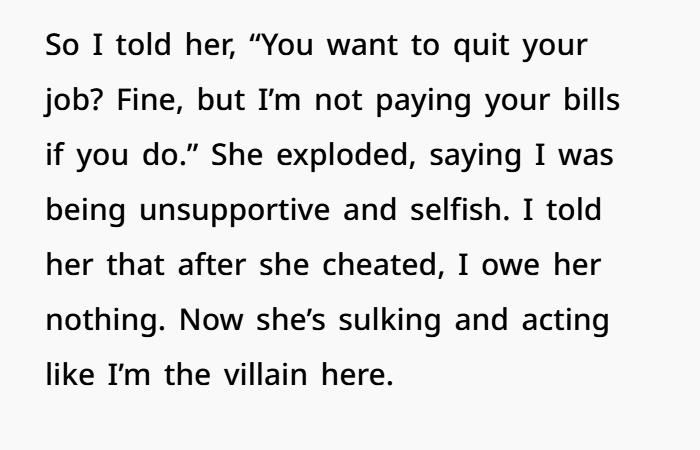
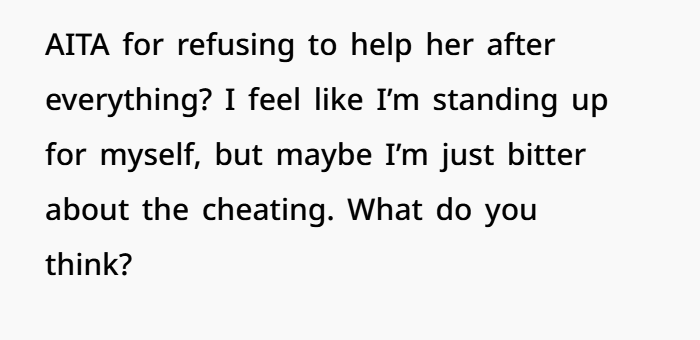
But instead of rebuilding trust, the sessions turned into something else. She started pointing fingers—saying he needed to communicate better, be more romantic, basically improve himself. And that just didn’t sit right with him. In his mind, she broke the relationship, so why is he the one being told to change? Then things escalated even more. Out of nowhere, she says she wants to quit her job and chase a vague dream of becoming an artist. And here’s the kicker—she expected him to support her financially. That’s where he drew a hard line. He told her clearly: do what you want, but don’t expect me to pay your bills. Now she’s upset, calling him selfish, and he’s left wondering—is he wrong, or just finally standing up for himself?


Alright, let’s really unpack this, because there’s a lot going on here—emotionally, psychologically, and even financially. And honestly, situations like this aren’t rare. If you look into relationship advice forums or even studies on trust after infidelity, this exact pattern pops up more often than people admit.
First, let’s talk about the cheating itself. Infidelity—whether emotional or physical—is one of the biggest trust breakers in any relationship. According to research in behavioral psychology, once trust is broken, rebuilding it requires consistent accountability, transparency, and effort from the person who cheated. Not blame shifting. Not deflecting. Not turning the spotlight back on the partner who got hurt.
And that’s where things start to feel off in this story.
Instead of focusing on repairing the damage she caused, the girlfriend begins highlighting his flaws—communication, romance, effort. Now, don’t get it twisted, no one is perfect in relationships. There’s always room for growth. But timing matters. When someone cheats, the priority isn’t “how can my partner improve?” It’s “how do I rebuild what I broke?”
This shift in focus is actually something psychologists sometimes link to defensive projection. It’s when someone redirects blame to avoid fully confronting their own actions. In simple terms, it’s easier to say “you weren’t attentive enough” than to sit with the guilt of betrayal.
Now let’s bring couples therapy into this.
Couples therapy can be super helpful—but only when both people are genuinely committed to honesty and accountability. Otherwise, it can feel like a battleground where one person tries to justify their behavior while the other feels invalidated. And honestly, therapy isn’t cheap either. The average couples therapy cost can range anywhere from $100 to $250 per session depending on location and therapist experience. So imagine paying for sessions where you feel like the villain, even though you were the one cheated on. That builds resentment fast.
And resentment? That’s relationship poison.
Now here’s where things take a sharper turn—the financial angle.
She wants to quit her job and pursue art. On its own, that’s not wrong. People change careers all the time. Following creative passions isn’t a bad thing. But context matters—a lot.
She’s asking for financial support right after breaking trust. That changes everything.
Money in relationships is already a sensitive topic. There’s a whole field of discussion around financial support in relationships and how it ties into power dynamics, trust, and long-term stability. When one partner becomes financially dependent on the other, it requires a strong foundation of trust and mutual respect. Without that, it can feel less like partnership and more like obligation—or worse, manipulation.
And that’s probably why this hits a nerve.
From his perspective, it’s not just about money. It’s about what that money represents. Supporting her financially would mean investing in someone who just betrayed him. It would mean taking on risk—emotional and financial—without any guarantee things are stable again.
And let’s be real here—pursuing art without a clear plan isn’t exactly financially secure. That doesn’t mean she can’t succeed, but it does mean there’s uncertainty. And expecting someone else to carry that uncertainty, especially after cheating, is… a big ask.
Now, let’s talk about his reaction.
He says no. Plain and simple.
“You can quit if you want, but I’m not paying your bills.”
That’s not cruel. That’s a boundary.
And boundaries are something a lot of people struggle with, especially after betrayal. Some people overcompensate—they try to “fix” things by being more giving, more forgiving, more supportive than they actually feel comfortable with. But that usually backfires. Because deep down, resentment keeps building.
What he’s doing instead is drawing a line. And honestly, that’s something relationship experts often recommend after infidelity—reestablishing personal boundaries.
Now, is he bitter? Yeah, probably.
And that’s normal.
Betrayal doesn’t just disappear after a few therapy sessions. It lingers. It changes how you see the person. It changes how safe you feel with them. Even small things—like her asking for support—can feel bigger because of what already happened.
But here’s the key difference: bitterness would be lashing out, insulting her, trying to control her decisions. That’s not what’s happening.
He’s not stopping her from quitting her job. He’s not telling her she can’t pursue art. He’s just saying, “I’m not funding it.”
That’s not control. That’s autonomy.
Now let’s look at her reaction.
She calls him selfish and unsupportive.
And again—context matters.
In a healthy, stable relationship, supporting your partner’s dreams is a beautiful thing. But support isn’t unconditional, especially when trust has been broken. Emotional support? Maybe. Encouragement? Sure. But financial support? That’s a different level of commitment.
It’s not something you’re entitled to.
And that’s where her argument weakens.
Because she’s framing his boundary as selfishness, instead of recognizing it as a consequence of her actions.
Actions have consequences. Not always immediate, not always obvious—but they’re there.
Cheating doesn’t just hurt feelings. It affects trust, security, and future decisions. Including financial ones.
Now zooming out a bit—this situation also raises a bigger question: should they even still be together?
Because honestly, everything here points to unresolved issues.
He doesn’t trust her.
He feels blamed.
She feels unsupported.
She wants a lifestyle change that depends on him.
That’s not a stable foundation. That’s tension waiting to explode.
And this is where a lot of people get stuck—they try to fix a relationship that’s already emotionally fractured instead of asking whether it should continue at all.
Because sometimes, the real answer isn’t “who’s right?”
It’s “why are we still doing this?”
The Comments Are In

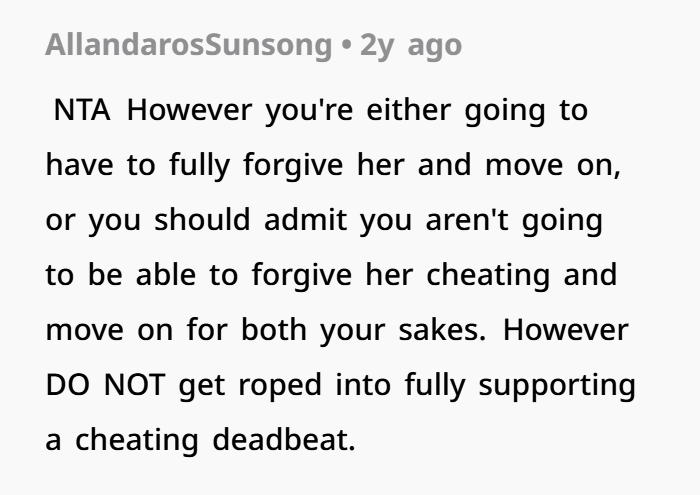


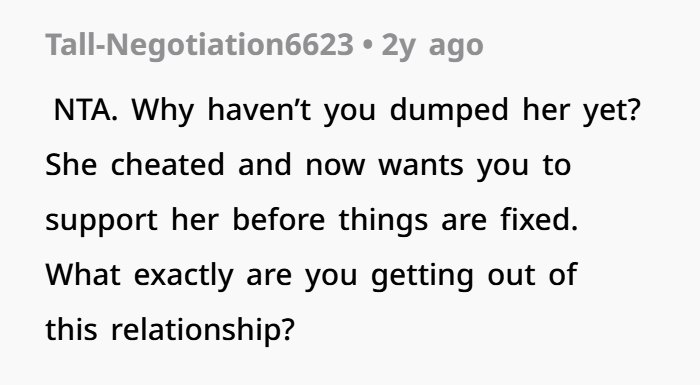

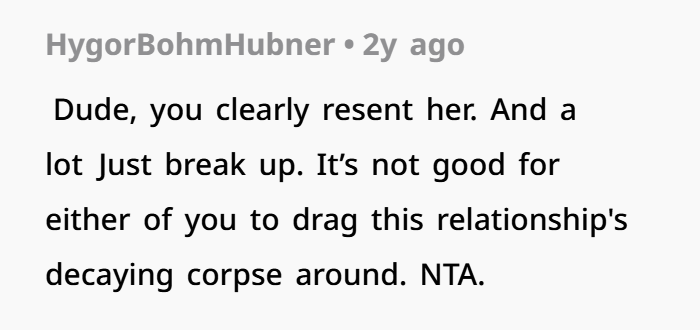
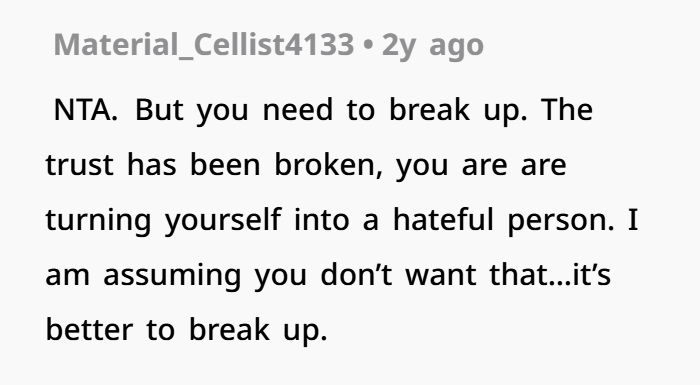

You’re not the asshole for refusing to support her financially.
You set a boundary after being betrayed. That’s fair.
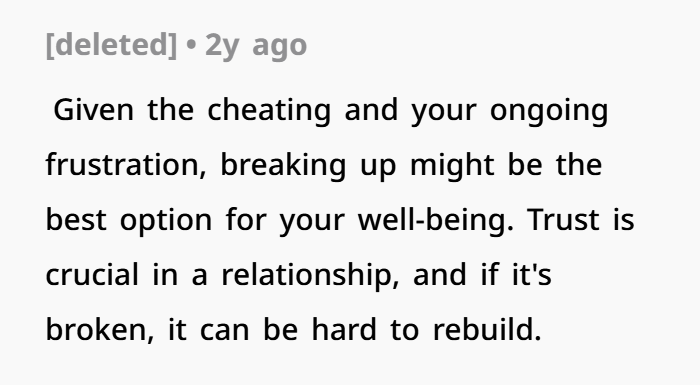
But… the bigger issue? This relationship sounds like it’s already running on fumes. And no amount of therapy or compromise will fix it unless both sides are actually taking responsibility—and right now, that doesn’t seem to be happening.