
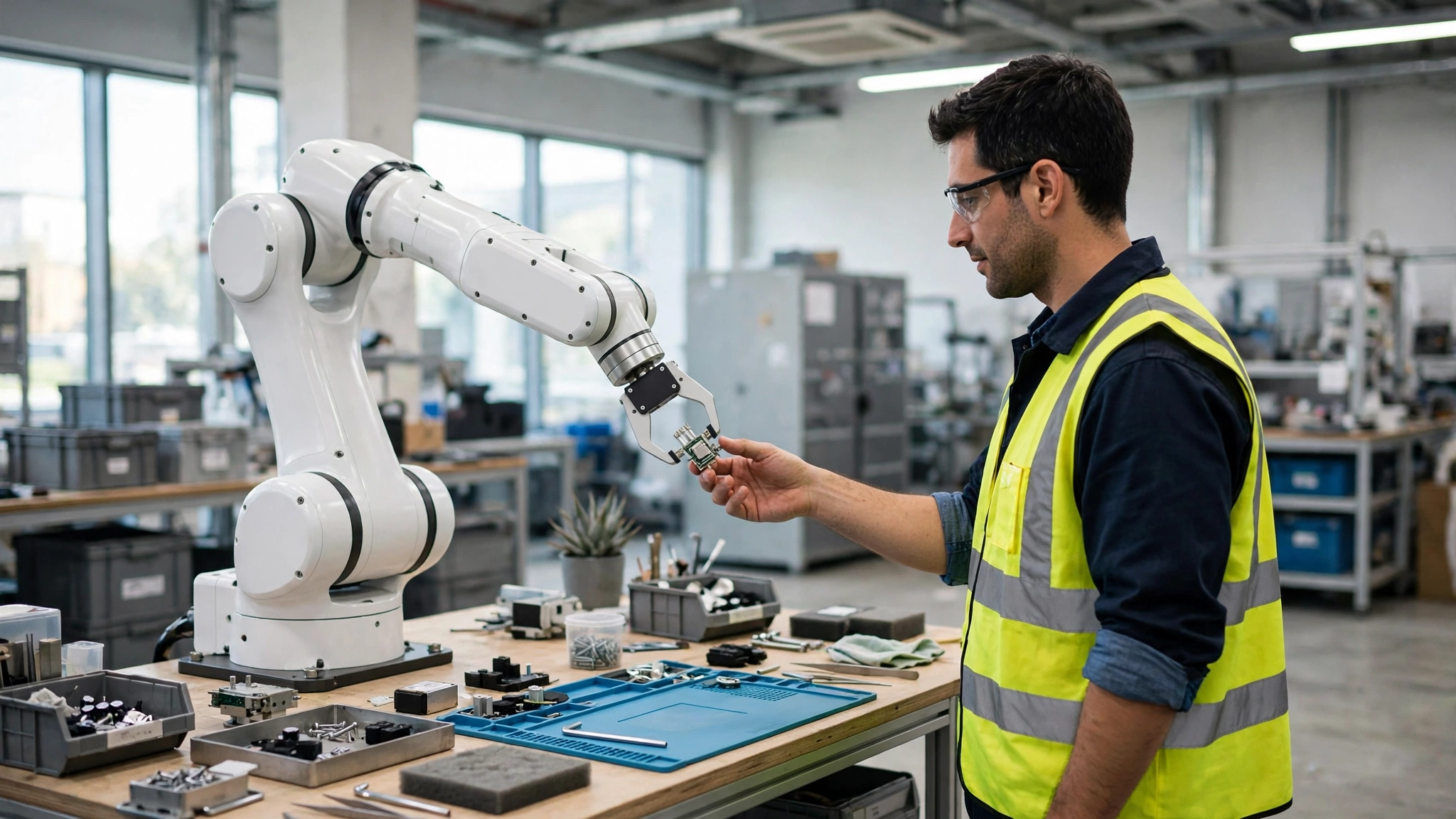
What Are Collaborative Robots and How Do They Work Alongside Humans?
For decades, industrial robots worked behind fences. They were fast, strong, and dangerous, so people stayed out of their reach and the robots stayed in their cages. Collaborative robots, usually called cobots, were designed to break that pattern. They work in the same space as people, sharing tasks instead of taking over the whole job.
A cobot might hold a heavy part steady while a worker fastens it, or take over the repetitive lifting while the person handles the skilled finishing work. The idea has spread from car plants to small workshops, labs, and even hospitals. This article explains what collaborative robots are, how they stay safe around people, where they are used in 2024, and what to consider before bringing one into a workplace.
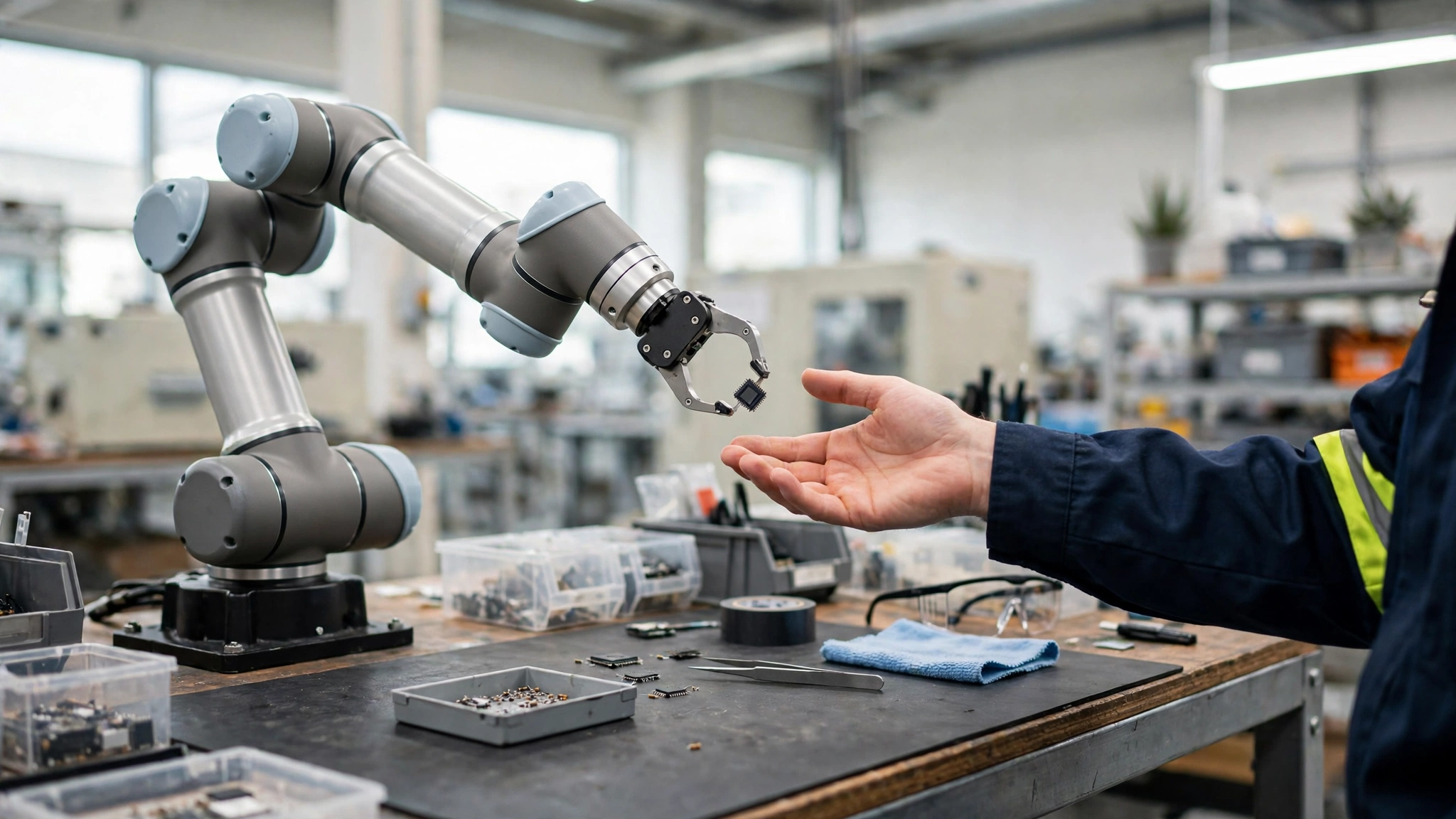
What Makes a Robot Collaborative
A collaborative robot is an industrial robot designed to share a workspace with people. The definition is less about the shape of the machine and more about how it behaves. A cobot is built to detect contact with a person and stop, or to move slowly and with limited force when someone is nearby, so that an accidental bump is harmless rather than dangerous.
Most cobots look like a slim robotic arm mounted on a bench, a stand, or a mobile base. They typically have six joints, giving them the flexibility to reach around objects, and a payload of a few kilograms — enough for assembly, packing, and inspection, but far less than a large industrial robot. Their speed is lower too, because speed and force are the two things that matter most when a person is close.
The word “collaborative” can mislead. A cobot does not understand collaboration the way a person does. It follows a program and reacts to its sensors. The collaboration comes from the way the work is organised: the robot does the repetitive, tiring, or precise part, and the person does the part that needs judgment, dexterity, or experience.
How Cobots Stay Safe Around People
Safety is the core engineering problem. A cobot uses several layers of protection at once. Force and torque sensors in its joints detect unexpected resistance — if the arm touches a person, it stops within a fraction of a second. Speed and separation monitoring slows the robot as a person approaches and stops it if the distance gets too small.
Power and force limiting is the simplest approach and the one most small cobots rely on. The robot is designed so that even at full speed it cannot exert enough force to hurt someone. Rounded edges, smooth surfaces, and the absence of sharp pinch points help as well. Larger installations add external safety scanners or cameras that watch the workspace and slow the robot when a person enters a defined zone, a technique that draws on the same vision technology covered in our guide to AI vision systems.
The international standard ISO/TS 15066 sets out the safety requirements for collaborative operation, including the maximum force and pressure allowed on different parts of the body. Meeting the standard is not a one-time test: every application has to be assessed as a whole, because a safe robot arm can become unsafe if it is fitted with a sharp gripper or asked to carry a heavy, pointed part.
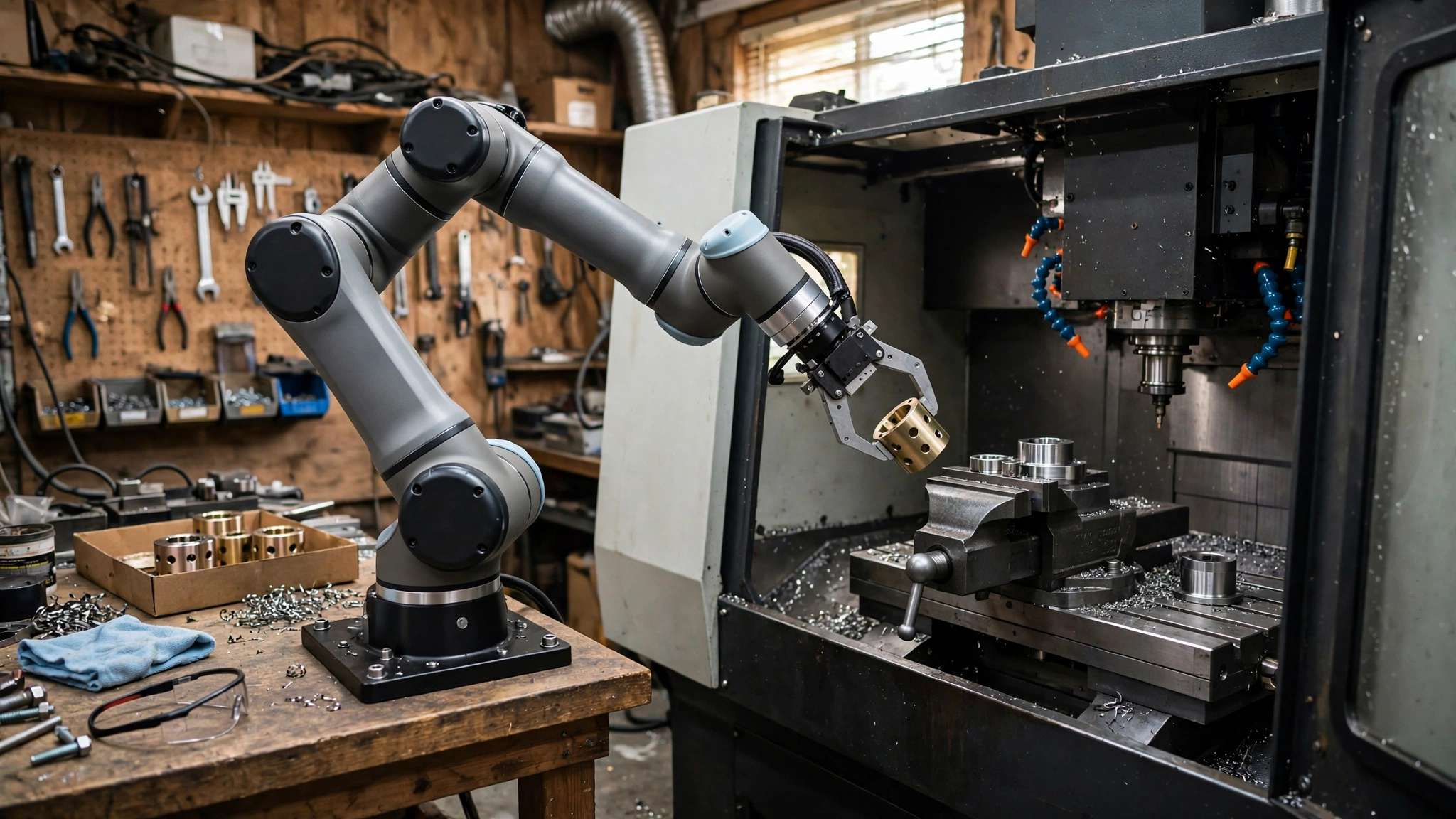
Where Cobots Are Used in 2024
Machine tending is one of the most common jobs. A cobot loads raw parts into a CNC machine or a press and unloads finished parts, working through a shift without breaks. The operator is freed to run several machines, check quality, and handle exceptions instead of standing at one machine all day.
Assembly work is another strong fit. Cobots screw, glue, press, and place components with steady precision, while a person handles the fiddly steps that need human hands. Small and medium-sized businesses have been the fastest adopters here, because a cobot costs far less than a traditional automation cell and can be moved between jobs.
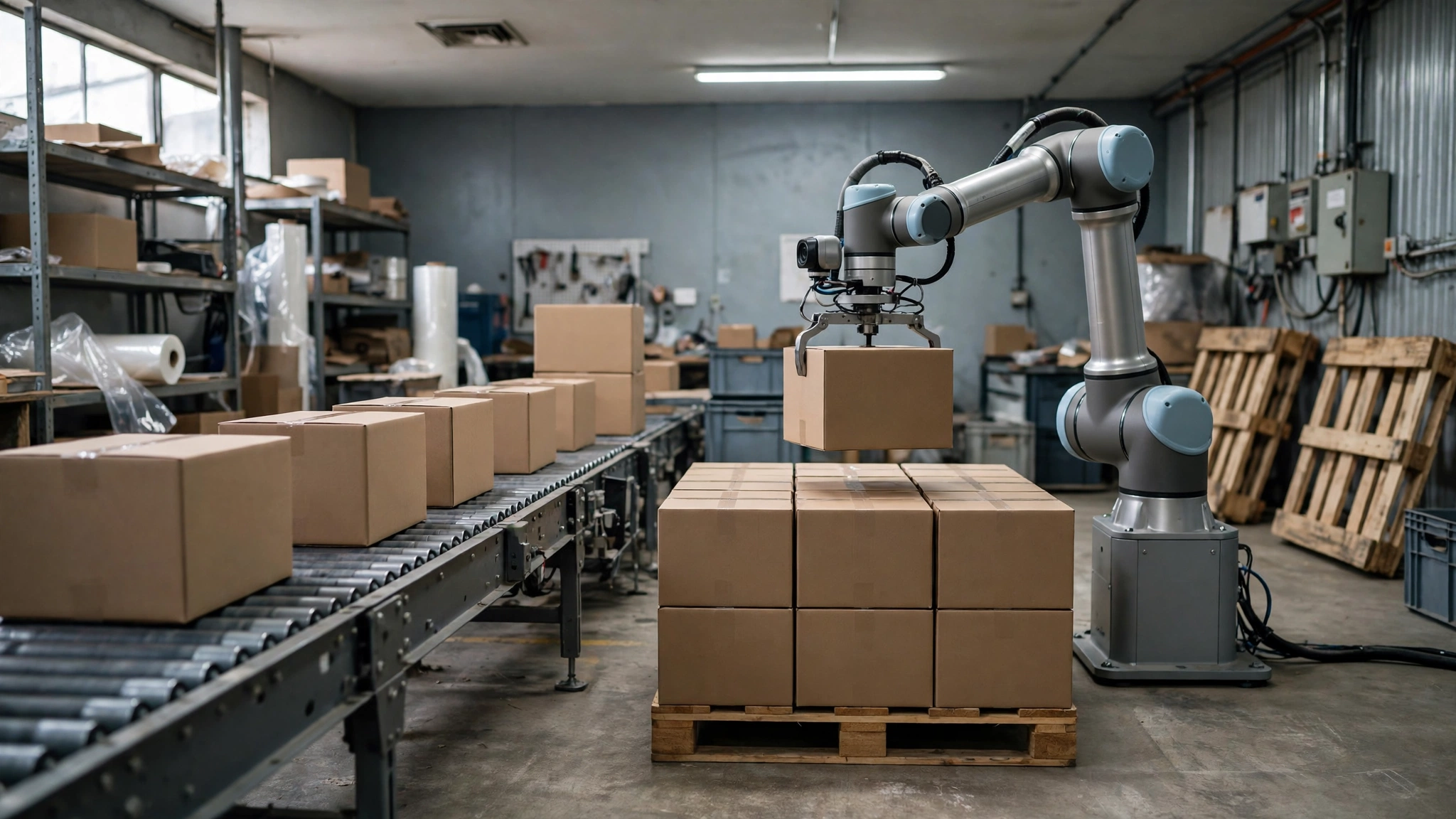
Packing and palletising follow the same logic. A cobot can stack boxes at the end of a line for hours without tiring, and it can be reprogrammed for a different box size in minutes. Quality inspection uses cameras mounted on the arm to check parts as they pass, combining the robot’s positioning with vision-based defect detection.
Outside factories, cobots appear in laboratories, where they handle samples and run repetitive tests, and in some healthcare settings, where they assist with moving materials or holding instruments. The pattern is the same everywhere: the robot takes the repetitive load and the person keeps the judgment.
Education and research labs have become a quieter growth area. Universities use cobots to teach automation and to run experiments that need precise, repeatable movement — pipetting samples, moving plates between instruments, or testing materials through the night. Because a cobot can be reprogrammed quickly, a single arm can serve several research groups, each with a different task. The same flexibility appeals to small food producers and craft workshops, where a cobot might pack products in the morning and help with labelling in the afternoon.
Programming a Cobot
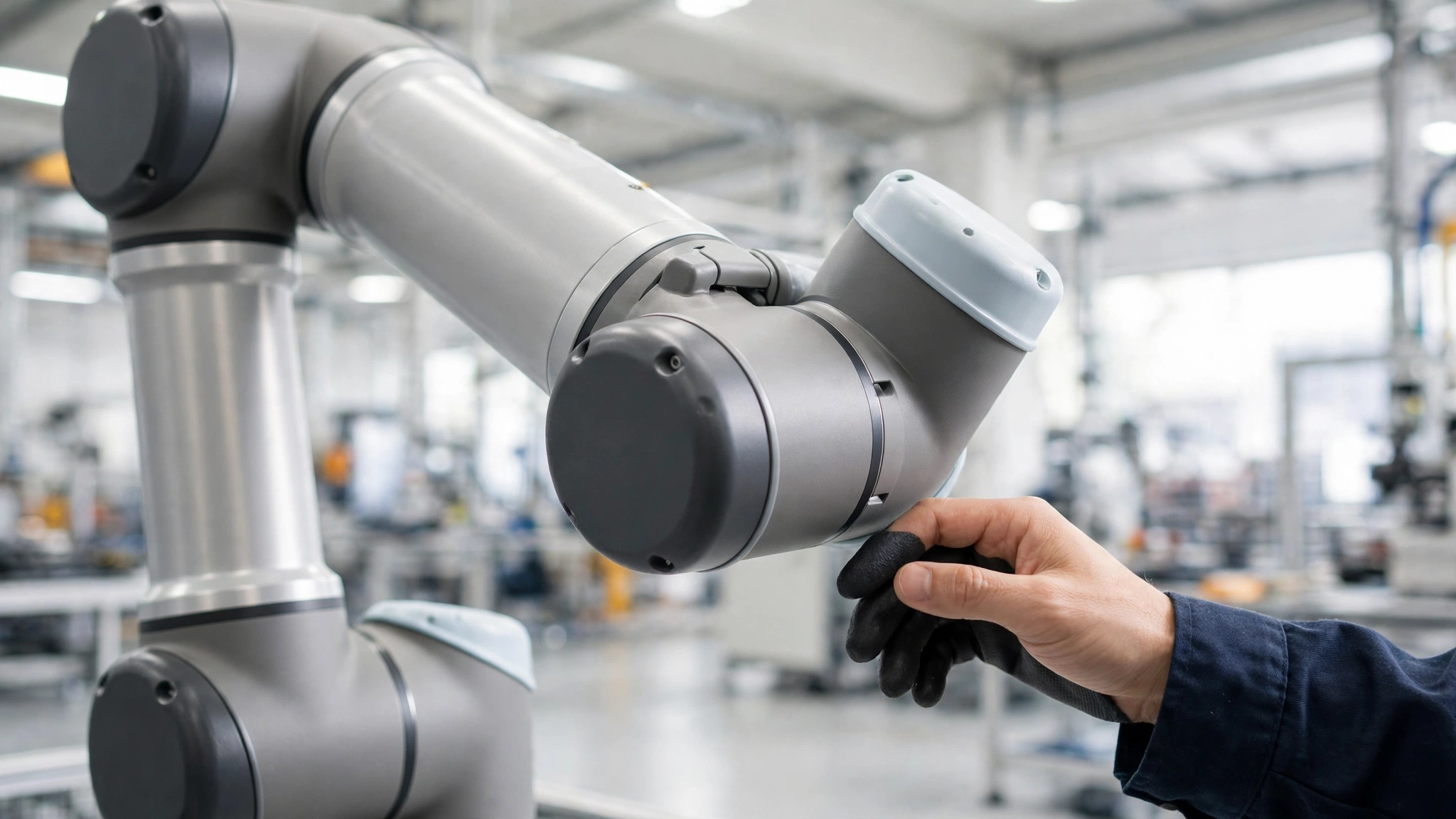
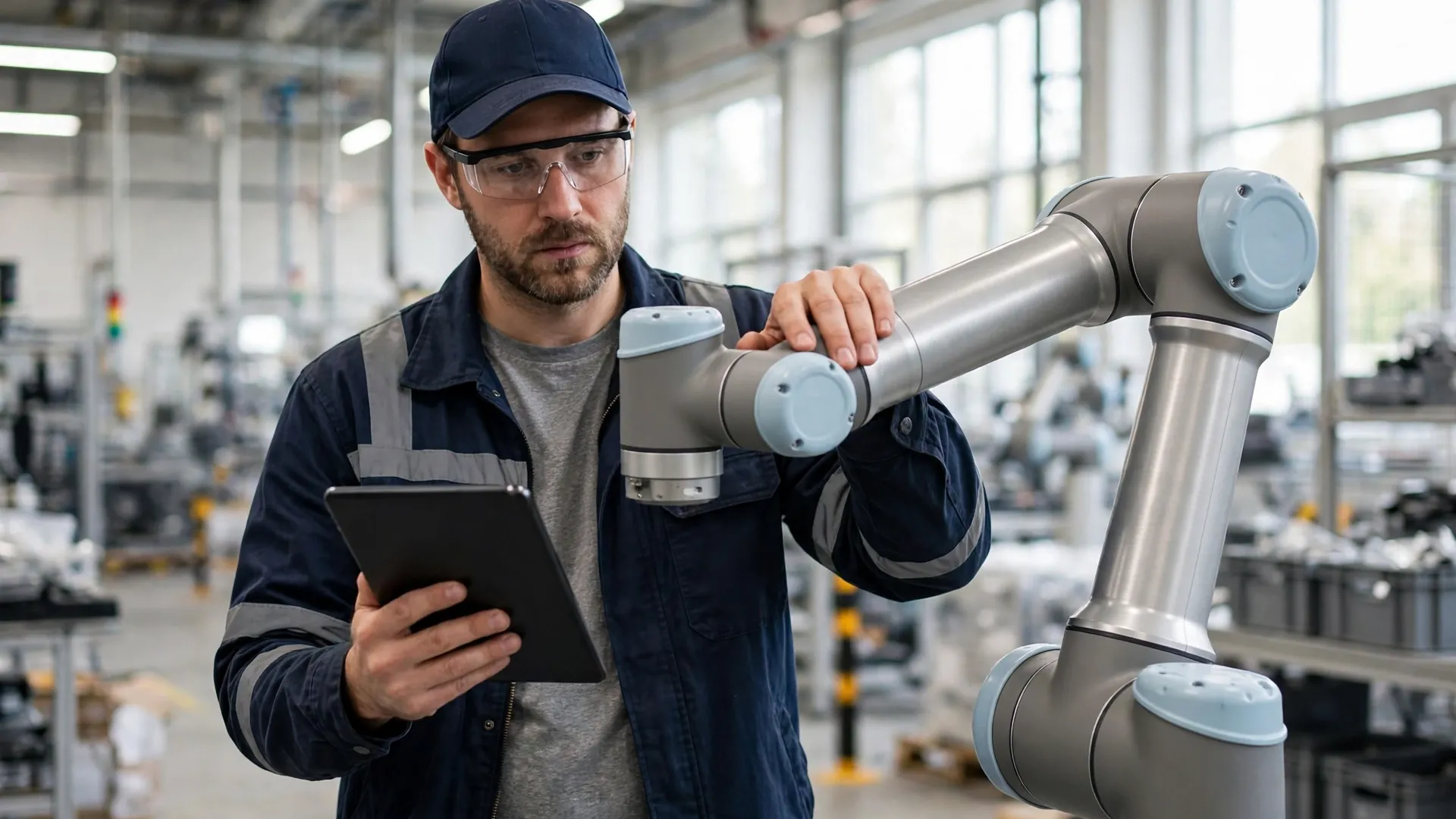
One reason cobots have spread so quickly is that they are easier to program than traditional robots. Many can be taught by hand guiding: a worker physically moves the arm through the task once, and the robot records the path. A tablet interface then lets the worker adjust speeds, add pauses, and set simple conditions such as “wait for the sensor, then pick up the part.”
This matters because small businesses rarely have a robotics specialist on staff. A cobot that a production worker can reprogram in an afternoon is a very different purchase from a traditional robot that needs a specialist integrator and weeks of setup. The trade-off is that hand guiding and simple interfaces suit simple tasks. Complex work with many variations still needs careful programming and testing.
The Business Case for Small Companies
Cost is the usual starting point. A small cobot arm costs a fraction of a full industrial automation cell, and it does not need safety fencing, which saves floor space and installation time. The payback question is about labour: a cobot that takes over a boring, repetitive job lets a worker do more valuable work, and in tight labour markets it can fill a role that is hard to hire for.
Flexibility is the second part of the case. A traditional robot cell is built for one product and is expensive to change. A cobot can be wheeled to a different station, taught a new task, and running the same day. For companies that make small batches of many products, that flexibility is worth more than raw speed.
There are limits, and honest suppliers say so. Cobots are slower than industrial robots and carry lighter loads. A job that needs high speed or heavy lifting is not a cobot job. The safety assessment also takes time and must be redone when the task changes. A cobot is a tool for the right jobs, not a universal answer.
Measuring the return is worth doing properly. The simplest measure is hours saved on the task the cobot takes over, but that misses the secondary gains: fewer repetitive-strain injuries, more consistent quality, and workers freed for tasks that need judgment. A fair payback calculation includes the gripper, the safety assessment, training time, and maintenance, not just the price of the arm. Companies that track these numbers usually find the payback comes faster than expected — provided the first job was chosen well.
Practical Tips / Examples / Things to Know
- Start with one clear job. Pick a repetitive, well-defined task — machine tending, packing, a simple assembly step — and prove the cobot there before expanding.
- Do the safety assessment properly. The robot arm is only part of the system. The gripper, the parts it carries, and the workspace all matter, and the assessment must cover the whole application.
- Involve the workers who will use it. The people sharing the workspace know the task best, and they are the ones who will spot problems. A cobot imposed from above tends to sit unused.
- Plan for reprogramming time. The value of a cobot is flexibility, but flexibility only pays off if someone on the team can re-teach it when the job changes.
- Check the payload and reach carefully. Payload includes the gripper and the part, not just the part. A robot that is slightly too small for the job will struggle and wear out early.
- Keep the workspace tidy. A cobot relies on its sensors and its programmed positions. Clutter, stray parts, and unexpected obstacles cause stops and errors.
Common Mistakes / Considerations / What to Avoid
- Assuming a cobot is safe by itself. The arm may be safe, but a sharp tool or a heavy part can make the whole application dangerous. Always assess the complete setup.
- Choosing the cheapest option. A low price can hide weak support, poor software, or a gripper that does not fit the job. Total cost includes integration, training, and maintenance.
- Expecting industrial robot speed. Cobots are deliberately slower. If the business case depends on matching a traditional robot’s cycle time, it is the wrong tool.
- Skipping training. A cobot is easier to program than a traditional robot, but “easier” is not “no training.” Untrained operators make mistakes that cause downtime and safety problems.
- Ignoring the human reaction. Some workers find sharing space with a moving arm unsettling at first. Give people time, show them how the safety stops work, and let them test it.
- Forgetting maintenance. Joints, grippers, and sensors wear out. A cobot that stops mid-shift because of a neglected gripper is no better than an absent worker.
Final Thoughts
Collaborative robots work because they solve a practical problem rather than chasing a vision of full automation. Most workplaces do not need a robot that does everything. They need a machine that takes the repetitive, tiring parts of a job and leaves the skilled, judgment-based parts to people. Cobots do that, at a price and with a setup effort that small businesses can manage.
The technology will keep improving — better sensors, smarter software, and easier programming — but the core idea is already proven. If you are considering a cobot, start with one real job, involve the people who will work beside it, and judge it on whether it makes their day better. A cobot that earns the trust of its human colleagues is one that will actually get used.