
My Cousin Thinks I Should Keep Babysitting Her Kid Instead of Attending My Own School
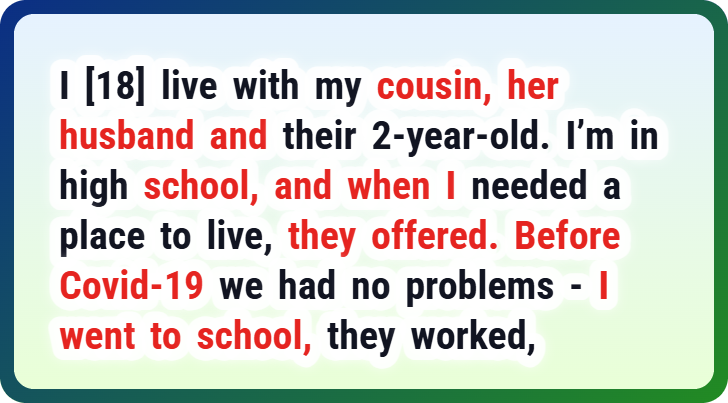
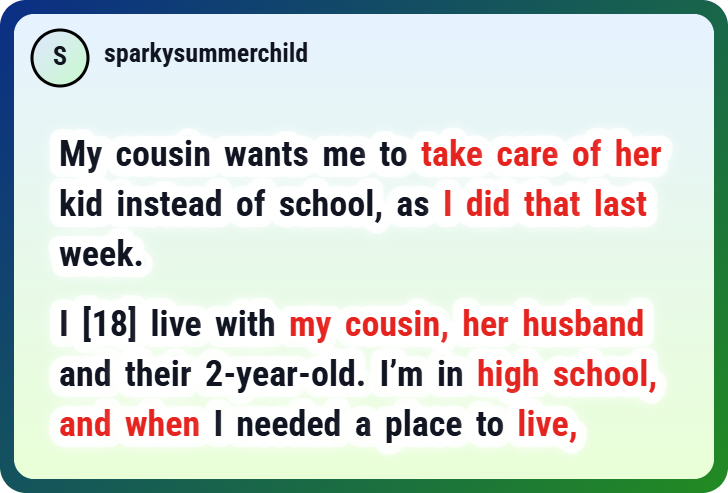
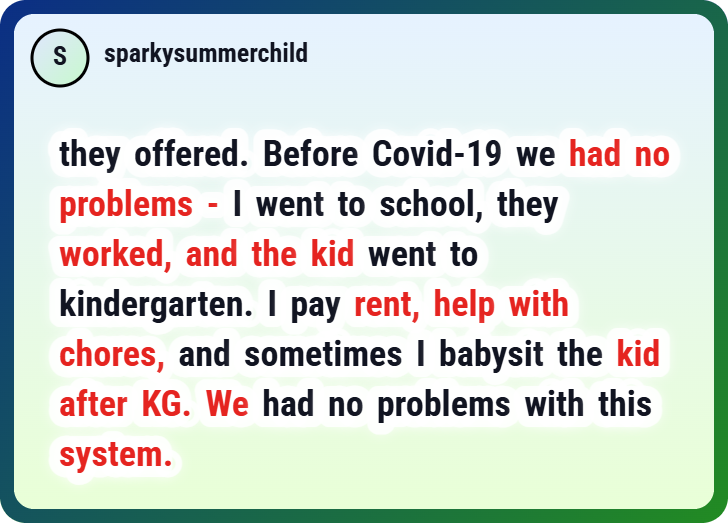
You are 18 years old and currently living with your cousin’s family while finishing high school. Before the Covid lockdown, the arrangement was simple and worked well. You paid rent, helped with daily chores, and sometimes babysat their young child after kindergarten. It felt balanced and fair for everyone.
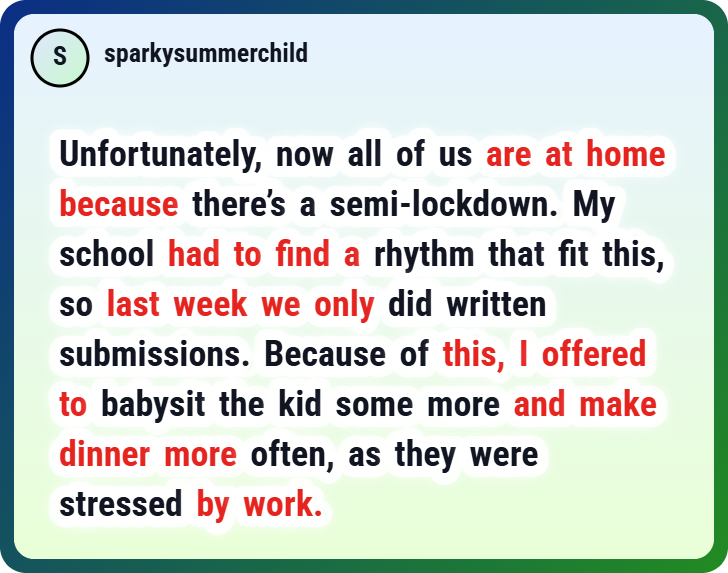
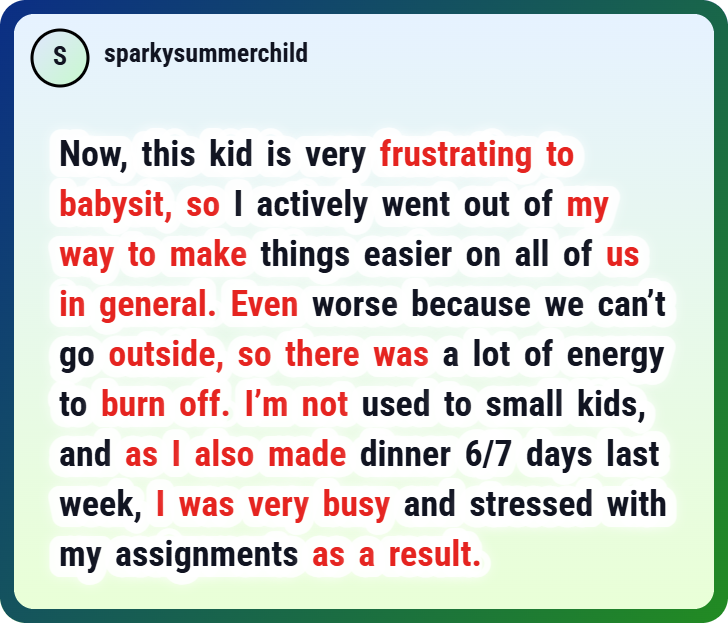
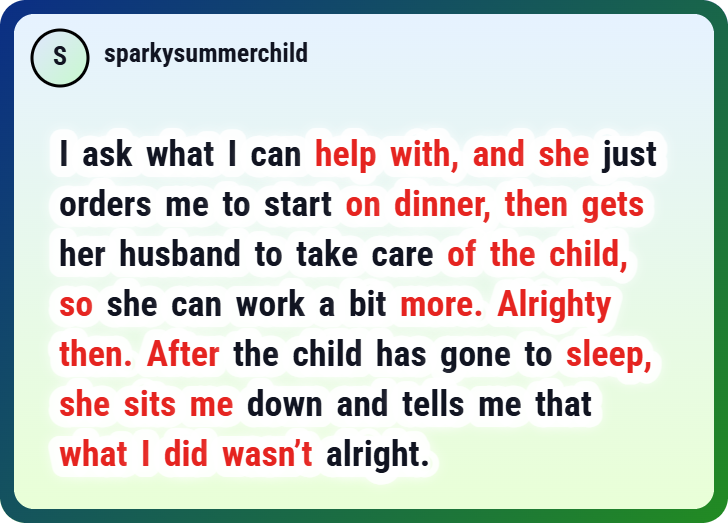
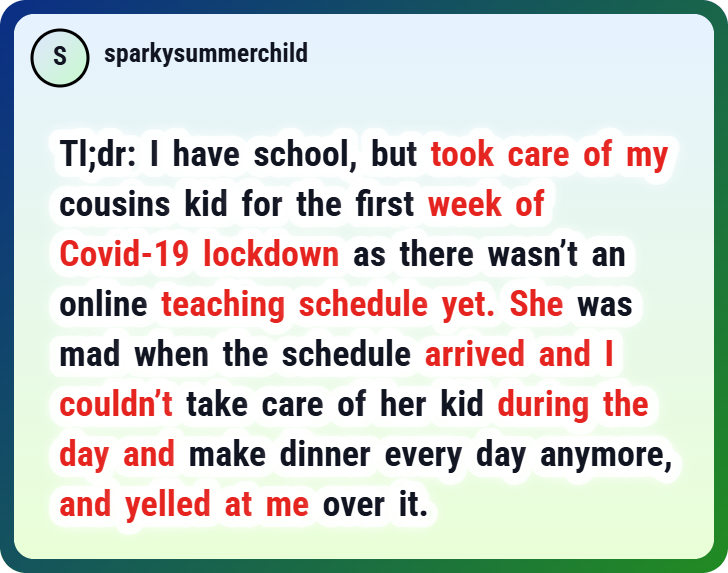
During the lockdown period, things changed a lot. Because everyone stayed at home, you started helping more around the house. You cooked most meals and looked after their 2-year-old while also trying to manage your schoolwork through online classes. This added extra responsibility and pressure on you at a young age.
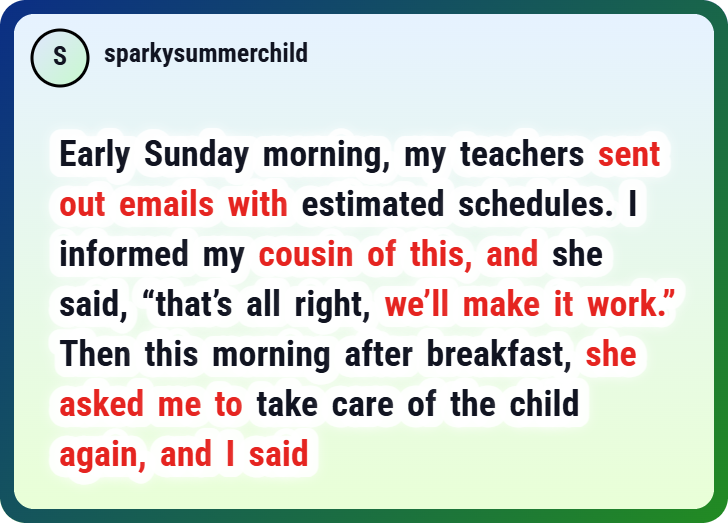
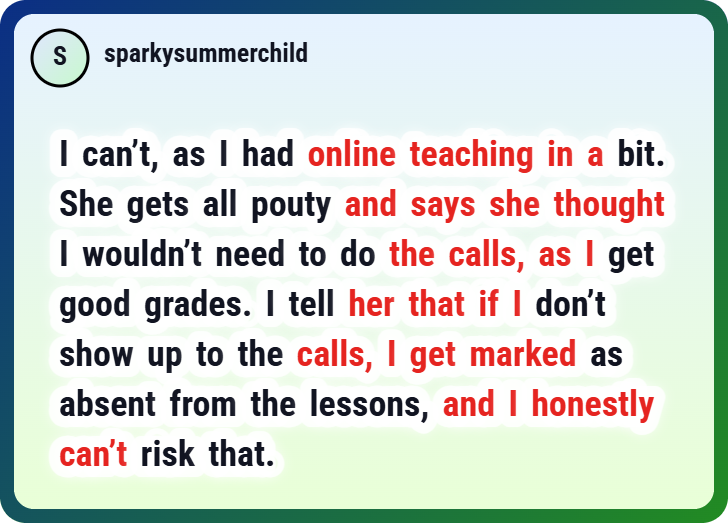
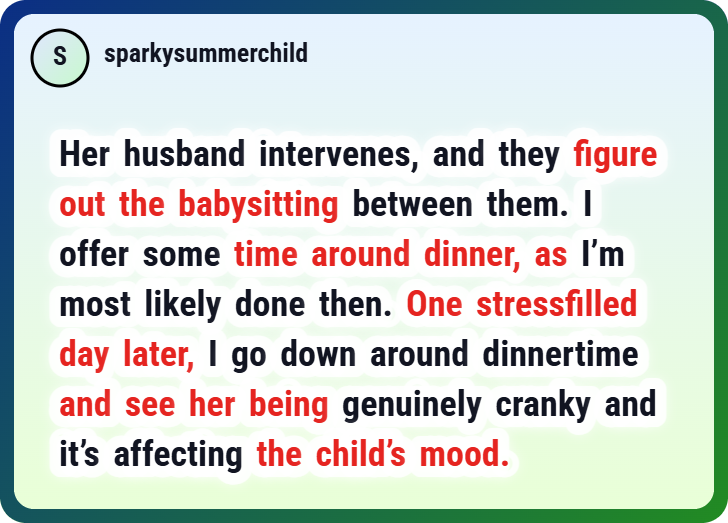
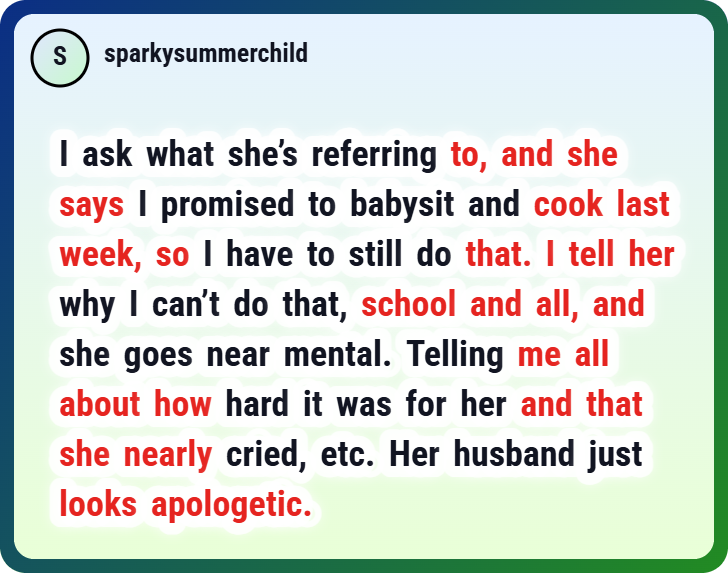
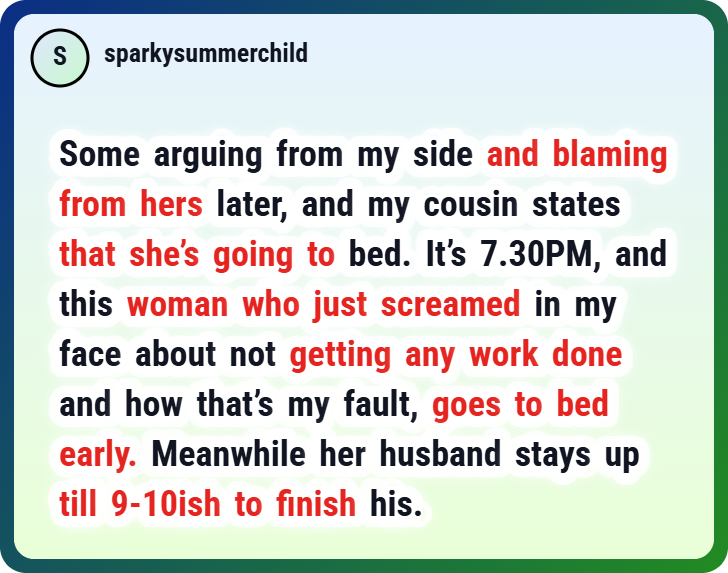
Now that school is back to normal, you told your cousin that you need to reduce your household duties and focus more on your studies. You still offered to help in the evenings when you are free. However, your cousin did not agree and became very emotional. She said you should continue helping full-time and ended up yelling, which made the situation tense and uncomfortable.
You are now feeling confused and overwhelmed because you are trying to balance family support with your education. Situations like this often involve household boundaries, student life pressure, and family responsibility. Clear communication, fair expectations, and mutual understanding are important to avoid conflict and help maintain a healthy living arrangement.
When one mom demanded that her cousin skip school to babysit for her every day, it didn’t go down well
When You Are a Student and Also a Caregiver at Home (Simple Guide)
Many students today are not only focused on school. They are also helping at home by taking care of siblings or family members. This is called being a student caregiver, and it is more common than people think.
This situation can affect school performance, mental health, and daily stress levels.
1. Student Caregiving and School Pressure
Research shows that many high school students take care of family members while still studying.
These students often face:
- Lower focus in class
- Missed homework or assignments
- Higher stress levels
- Emotional tiredness
This is a real issue in student mental health and academic pressure, not a personal weakness.
If you feel tired or behind in school, it does not mean you are lazy. It means you are handling too much at once.
2. Why Boundaries Are Important for Students
A healthy boundary means knowing your limits and protecting your time.
For students, this is very important because school requires:
- Focus
- Time for study
- Regular attendance in classes
You can still care about your family, but you also need time for your education.
Simple boundary example:
- “I can help, but I need to attend my online classes first.”
This is not rude. It is a responsible way to manage time management and student responsibility.
3. Home Stress Can Increase During Busy or Unstable Times
When families are under stress or spending more time at home, conflicts can increase.
Without a proper routine, it becomes harder to balance:
- School work
- Household duties
- Family care
This is why having a clear schedule is important for stress management and emotional balance.
A routine helps reduce confusion and makes life more organized for everyone.
4. It Is Okay to Say No Sometimes
Saying “no” does not mean you do not care.
It means you are protecting your:
- Education
- Mental health
- Future goals
A simple and respectful way to say it:
- “I want to help, but I also need to focus on school. I can help after my classes.”
This type of communication is part of healthy family communication skills.
5. Burnout Is Real for Student Caregivers
When a student does too many tasks at once—schoolwork, cleaning, caregiving—they can feel burnout.
Signs of burnout include:
- Feeling tired all the time
- Losing focus
- Stress or frustration
- Falling behind in school
Taking care of yourself is not selfish. It is important for student wellness and mental health support.
Even adults need breaks to stay productive. Students are no different.
6. How to Set Boundaries in a Kind Way
You can set limits without creating conflict. Try simple, calm sentences like:
- “I have online classes right now.”
- “I will help after school.”
- “Can we plan a schedule so I can manage both?”
This makes your boundary clear but respectful. It also helps improve family cooperation and communication.
7. Why People May React Strongly
Sometimes, when you set boundaries, others may feel upset or emotional.
This does not always mean you did something wrong. It often means:
- They are used to you always helping
- The routine is changing
- They need time to adjust
Change can feel uncomfortable, but it is part of building healthier balance in the home.
8. Finding a Better Balance Between School and Family
You are not ignoring your responsibilities. You are trying to balance both school and home life.
To improve balance, try:
- Making a daily schedule
- Setting study hours
- Agreeing on caregiving times
- Talking openly about school needs
This helps improve academic success, time management, and home stability.
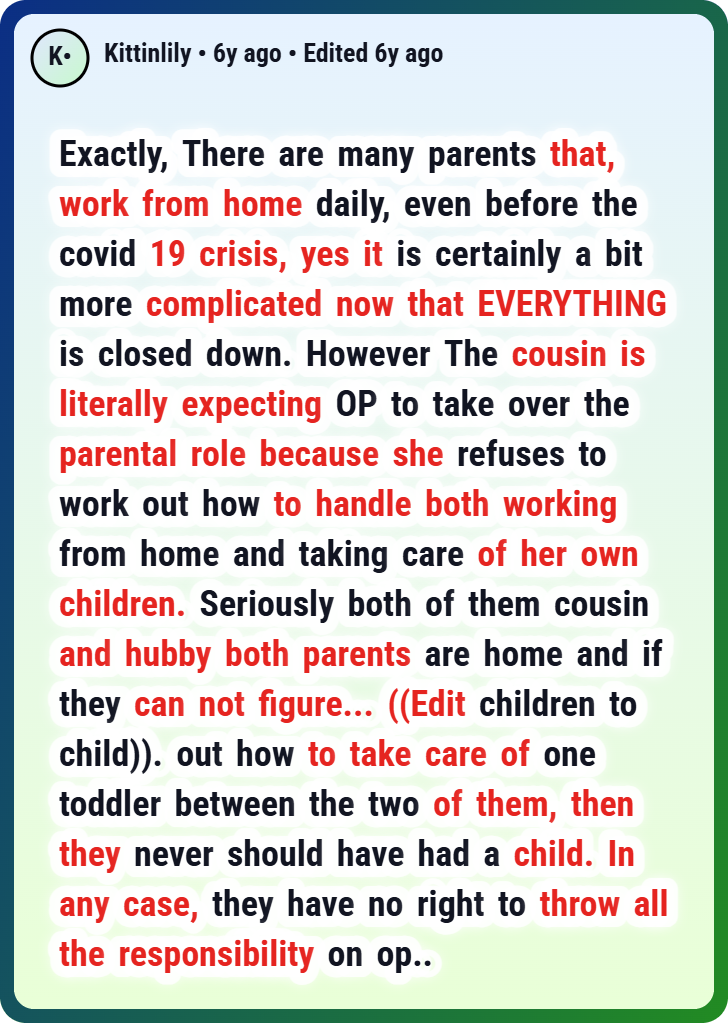
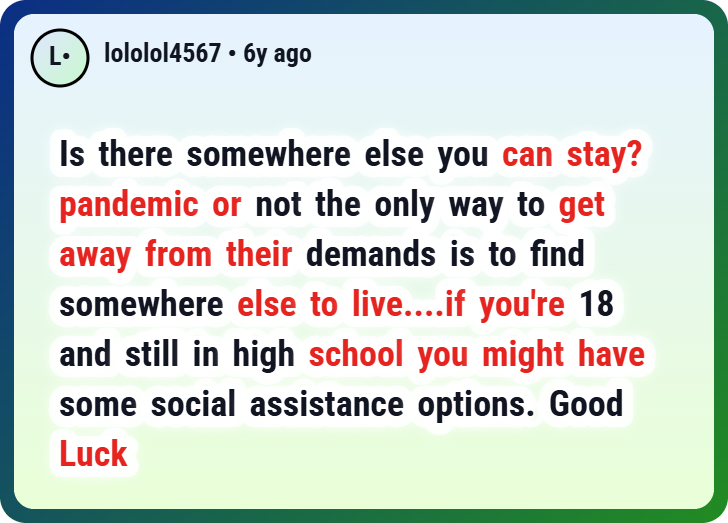
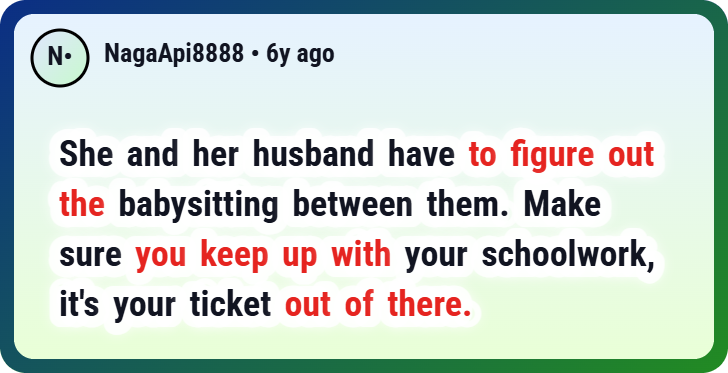
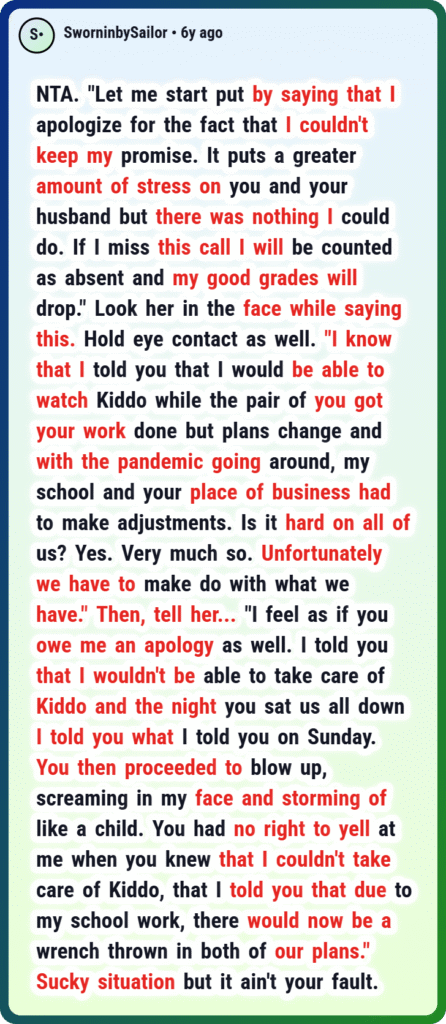
The teen provided quite a bit more info when prompted
Final Thoughts
Being a student caregiver is not easy. You are managing school, family responsibilities, and emotional stress at the same time.
But remember:
- Your education matters
- Your mental health matters
- Your time matters
Setting boundaries is not selfish. It is a healthy way to protect your future and stay on track in school while still supporting your family in a realistic way.