

AITAH for Destroying Embryos After a “Friend” Couple Turned Toxic?
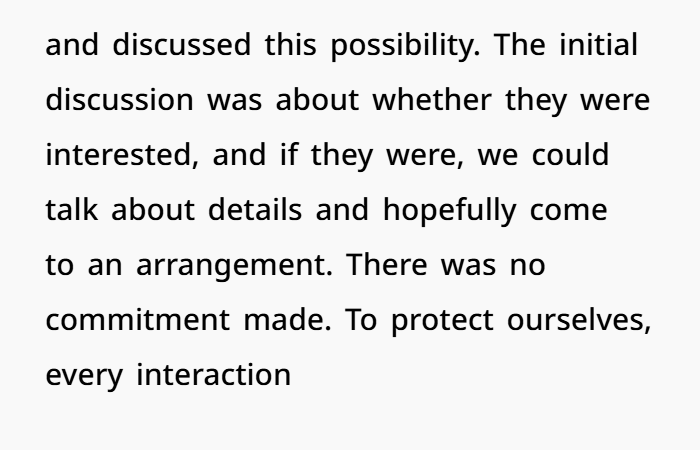
What started as a deeply heartfelt gesture ended in a storm of betrayal, legal threats, and emotional fallout. A couple, blessed with a child through a smooth surrogacy journey, found themselves with five top-grade embryos they no longer needed. Rather than discard them, they thought about paying it forward—gifting these embryos to another couple struggling with infertility. That couple? Casual acquaintances-turned-“friends” Greg and Karen.
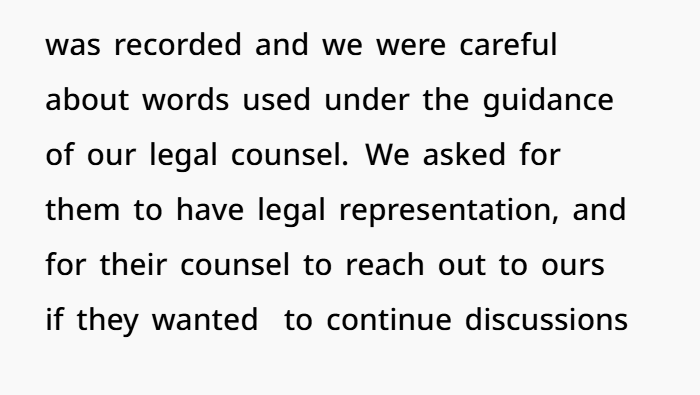
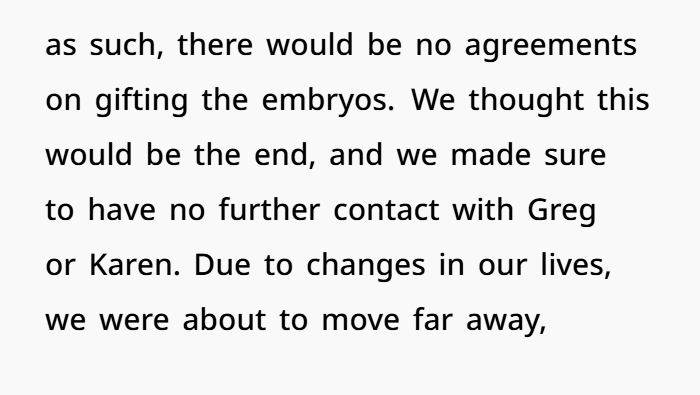
It all started with the best intentions. Nothing was signed, no formal agreement made—just discussions about possibilities. But soon after, Greg and Karen began claiming the embryos as their own, spreading harmful rumors, and trash-talking the very people trying to help them. When friends reported that Karen even joked about calling CPS out of spite, the original couple decided to destroy the embryos. They didn’t want people like that raising a child created with their DNA.
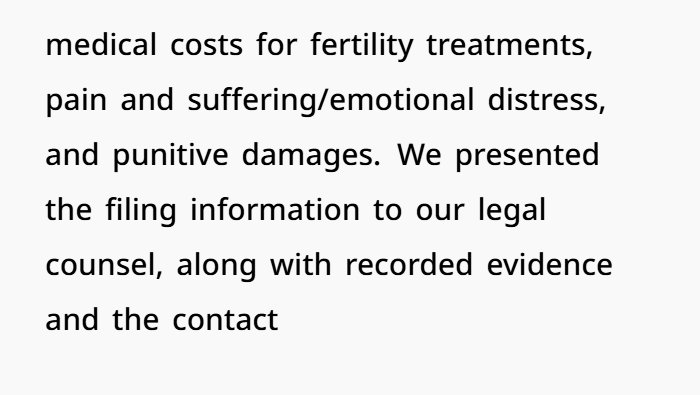
But just when they thought it was over, a court summons arrived. Greg and Karen are now suing for breach of contract, theft of property, and emotional damages. So now the question is… were they the AH for cutting ties and destroying the embryos? Or was it the only logical move when trust was shattered?
The couple planned to gift their embryos to friends who needed them and were truly excited to help

But after learning what those friends were saying behind their backs, they decided to have the embryos destroyed
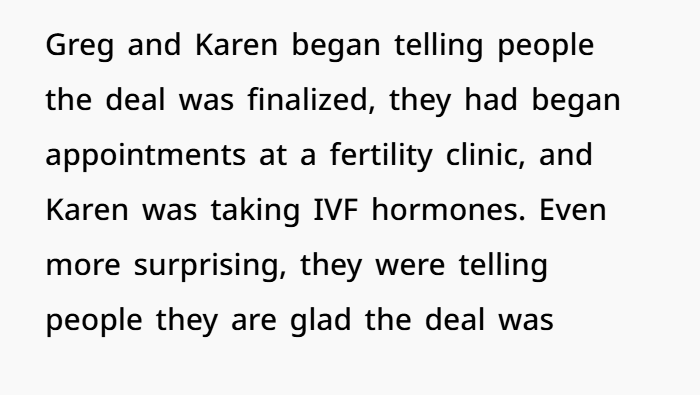
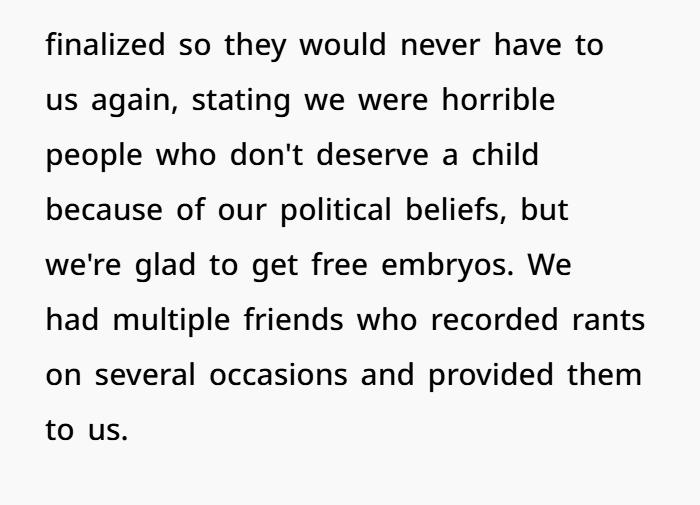
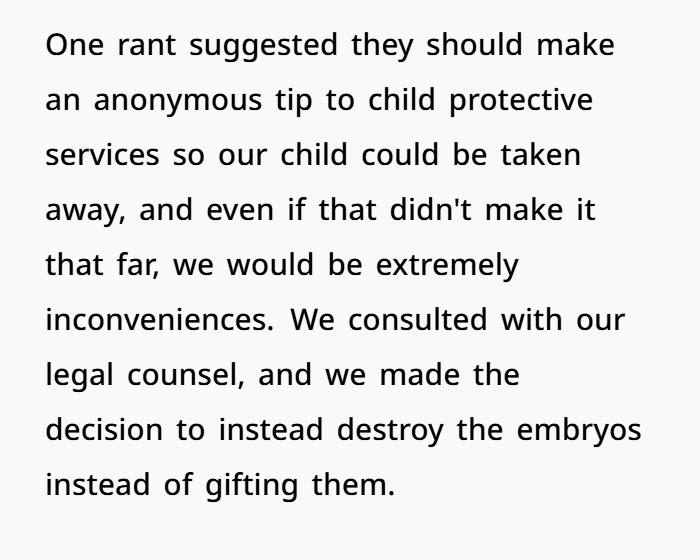
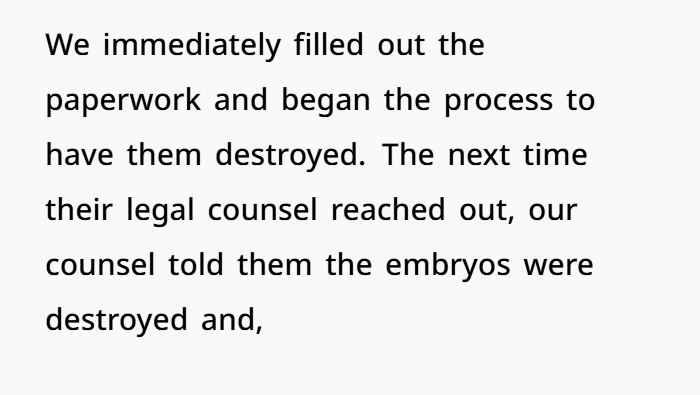



Alright, let’s really get into the thick of this.
First off—embryo donation, or what some casually call “gifting embryos,” is actually a growing thing in the fertility world. It’s especially helpful for couples facing infertility issues, LGBTQ+ families, or women who can’t produce viable eggs. And while the concept feels simple—“We have extra embryos, you want them?”—the reality is way more complex legally and emotionally.

Embryos Aren’t Property… But They’re Not People Either
One of the first legal gray zones here is: What are embryos, legally speaking? Are they people? Property? Something in-between?
Well, the courts don’t totally agree. In the U.S., different states have different takes. Some treat embryos as “property” with special considerations, while others see them more like potential life with certain rights. For example, in the famous case Davis v. Davis (1992), the Tennessee Supreme Court ruled that embryos should be considered “occupying an interim category that entitles them to special respect because of their potential for human life.”
So in your case, the couple (Greg and Karen) claiming “theft/destruction of property” would only stick if there was a signed contract giving them ownership. But since that doesn’t exist, and all your interactions were verbal (and legally recorded with no promise made), they’ve got no legal leg to stand on.
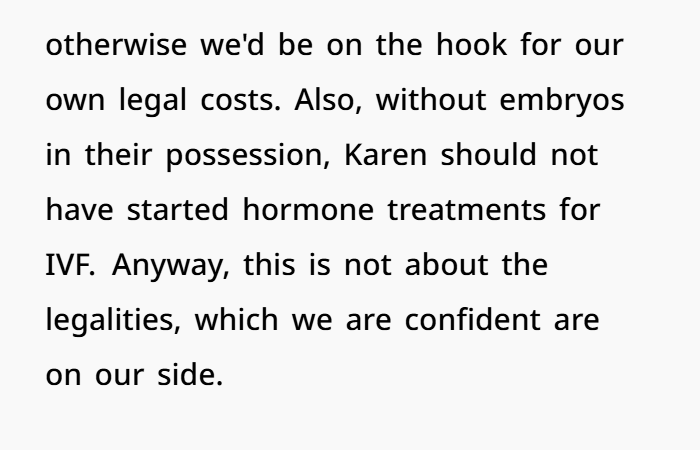
Also worth noting: clinics won’t release embryos unless all parties sign off. So the idea that Karen was already doing hormone treatments assuming it was all locked in? Wildly irresponsible—and her fertility doc likely dropped the ball if that was really happening.
Verbal Agreements in Fertility Law = Slippery Slope
Here’s the thing—verbal agreements in IVF and embryo transfer cases don’t hold up well. These are considered assisted reproductive technologies (ART), and every step is usually protected by written contracts, fertility clinic policies, and medical protocols.
In fact, the American Society for Reproductive Medicine (ASRM) strongly recommends all embryo donation be covered by comprehensive contracts to avoid exactly this kind of mess. Without that? It’s basically hearsay.
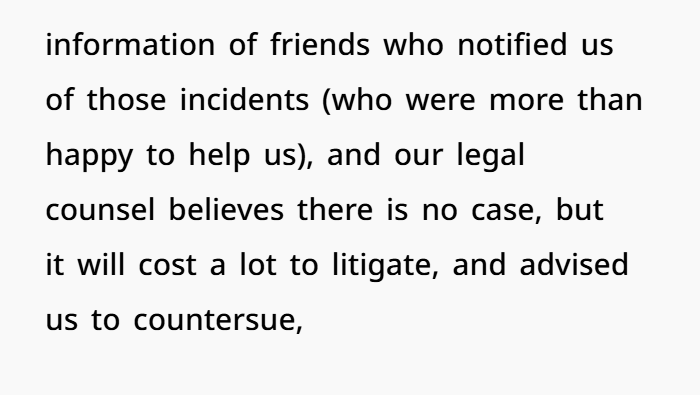
So if Greg and Karen try to argue there was some “oral agreement,” that’s going to be a tough sell. Especially when your legal team has recordings of you specifically saying things like “we are considering gifting, but nothing is final.”
Emotional Distress and Pain & Suffering – Do They Have a Case?
People throw around the words “emotional damage” or “pain and suffering” in lawsuits like candy, but they’re really hard to prove in civil cases unless there’s actual malicious intent or severe negligence.
In this case, YOU weren’t negligent. You protected yourselves legally, followed all protocols, and made a personal decision based on new, alarming info. Destroying embryos that legally belong to you isn’t malicious—it’s precautionary. And in fact, Greg and Karen’s recorded rants and the CPS threat may actually be used to show that YOU were the ones emotionally distressed and justified in taking action.
The Political Bombshell
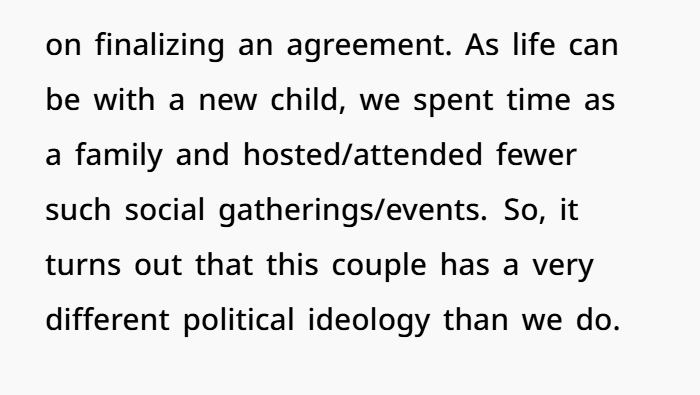
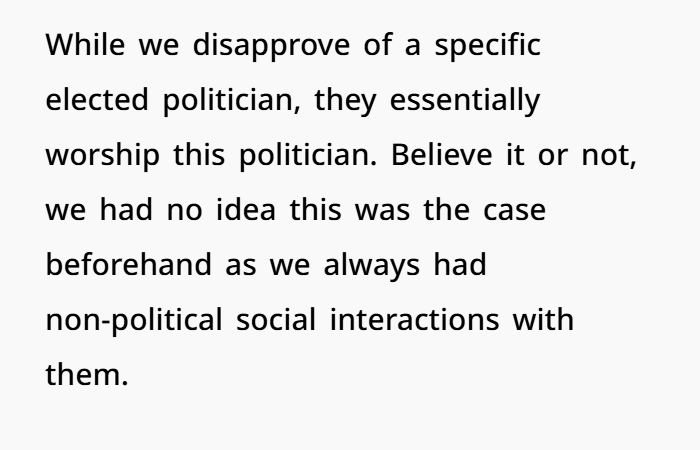
It’s wild how quickly things can spiral when politics gets involved, right?
What’s really sad here is that a completely non-political, private act of kindness got caught up in ideology. But once they started telling others they were “glad to never see you again” and trashing you publicly—then yeah, lines were crossed.
This wasn’t just a difference in opinion. This was targeted, vindictive behavior. And you weren’t just thinking about yourselves—you were thinking about the child that could come from that embryo. That’s a huge responsibility. If you feel like the couple no longer shares your values and could be unfit parents based on their behavior? It’s not just your right—it’s kind of your duty to reconsider.

Destroying Embryos: Legal & Ethical
Ethically, destroying viable embryos might feel heavy. But this isn’t like tossing away food—you weren’t trying to be spiteful. You were cutting ties from a potentially toxic future. You’d already made peace with not having more kids, and you were being generous by offering them at all.
Also, according to fertility clinic policies, you always maintain the right to destroy, donate, or preserve your embryos. Even embryo adoption agencies require full legal releases. So the law, again, is on your side.
High Stakes, High Emotions… But No Contract = No Case
Honestly, this feels like a case of entitlement gone rogue. Greg and Karen felt like they had a “right” to something that was never legally theirs. And when things didn’t go their way, they lashed out—both emotionally and now legally.
Yes, the lawsuit sucks. Yes, it’s going to be stressful. But courts don’t like it when people weaponize the legal system to get revenge. And since you have legal counsel, documented recordings, and no signed agreement, chances are very high this case gets thrown out—or at least ruled in your favor.
Oh, and your lawyer’s advice to countersue? Totally reasonable. Because without that, you might get stuck with court fees even if you win.
The author shared more details in the comments
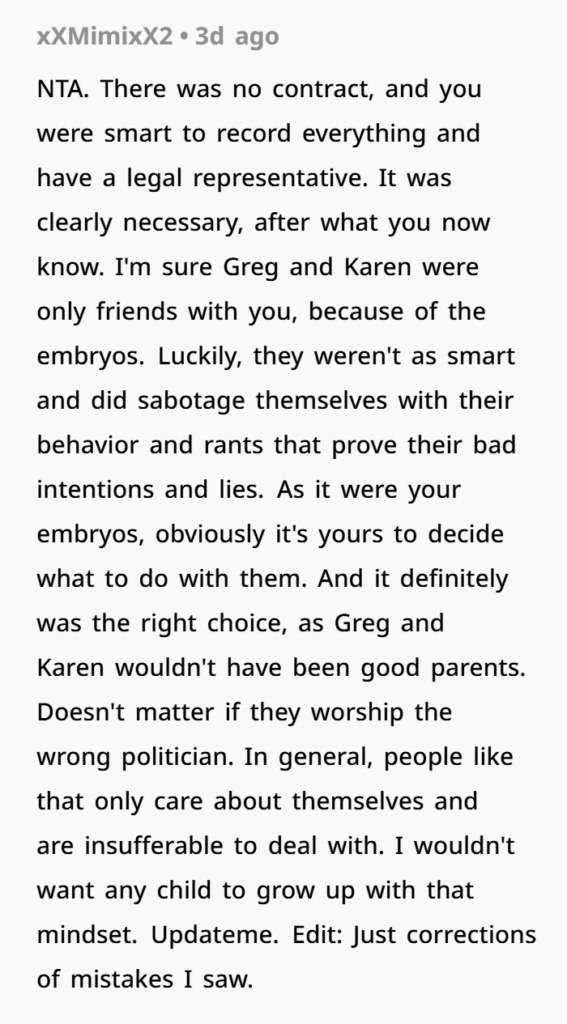
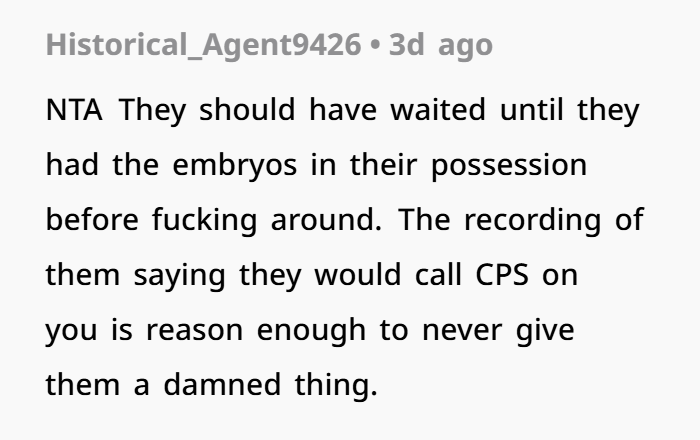
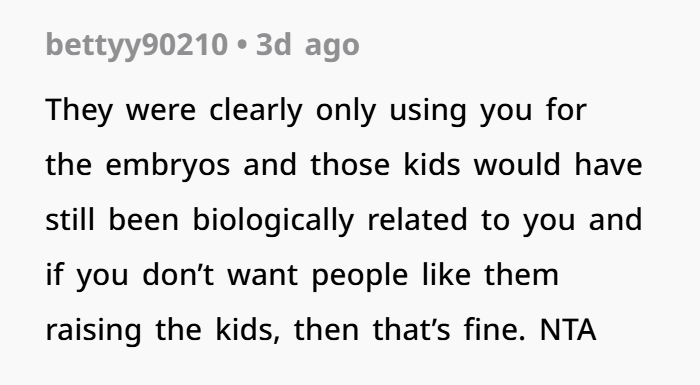

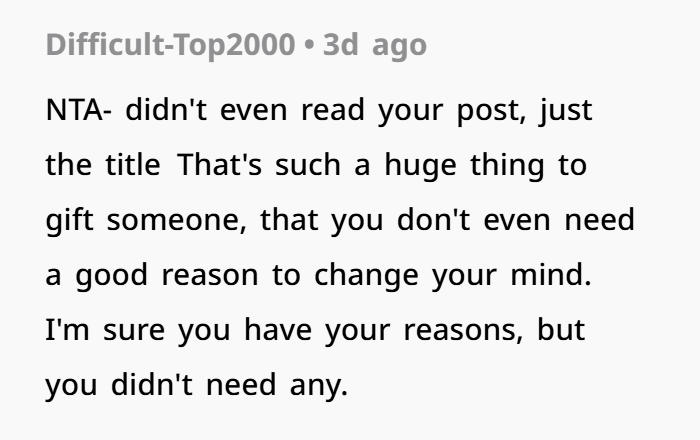
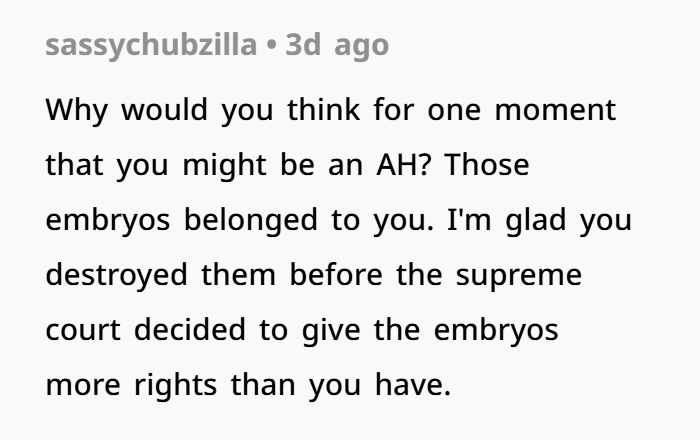

So, are you the AH for destroying the embryos? Honestly? No. You were trying to do something incredibly kind. And when things turned ugly, you protected yourself, your family, and any potential child that might’ve come from this. Sometimes doing the right thing looks harsh from the outside. But protecting your DNA, your family’s peace, and your integrity? That’s not being an AH—that’s being wise.
And Karen starting hormones without anything signed? That’s on her, not you.
Let’s be real—sometimes protecting your boundaries is more important than being liked. You don’t owe anyone your embryos, especially people who openly wished harm on your family.