Wife Pushes Husband to Take DNA Ancestry Test, What It Reveals Changes Everything
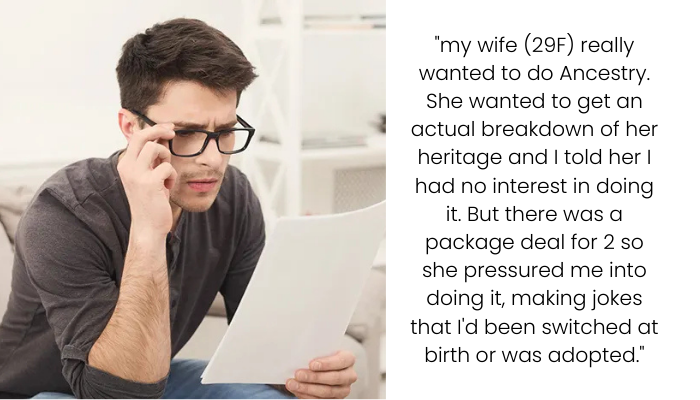
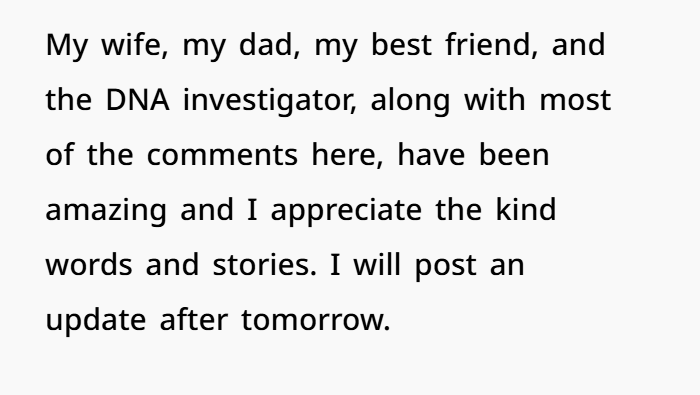
When a man and his wife casually submitted their DNA to Ancestry, he never expected the results would unravel the very foundation of his identity. Raised believing he was French, Dutch, Portuguese, and Swedish, he had brushed off years of people joking he looked “too brown” compared to his siblings. His wife, curious about their ethnic backgrounds, nudged him into the test—and what came back wasn’t just surprising, it was life-altering. There was no French or Dutch in sight. Instead, his paternal side came up Spanish and Puerto Rican, along with a DNA match to a half-brother he never knew existed.
That was just the start. After confronting both parents, he discovered his father wasn’t his biological dad and that his mother couldn’t (or wouldn’t) clearly explain what happened. The emotional rollercoaster led him to connect with his newfound brother and eventually his bio father—each layer of the story more surreal than the last. With support from his wife, close friends, and a DNA investigator, he’s trying to piece together not just the puzzle of his heritage but also the fractured emotional landscape left behind by a truth hidden for decades.
A man took an Ancestry DNA test at his wife’s suggestion thinking nothing would really come out of it

But when the results came back, his world was forever changed
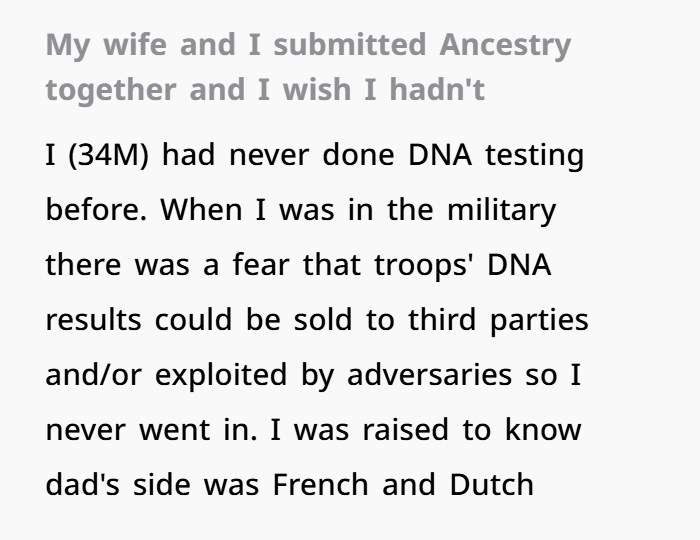

The popularity of consumer DNA tests like Ancestry and 23andMe has exploded over the last decade. They’re marketed as fun ways to discover where your ancestors came from or if you might be part Viking or 10% Irish. But the emotional fallout from uncovering hidden family secrets is something these services don’t advertise.
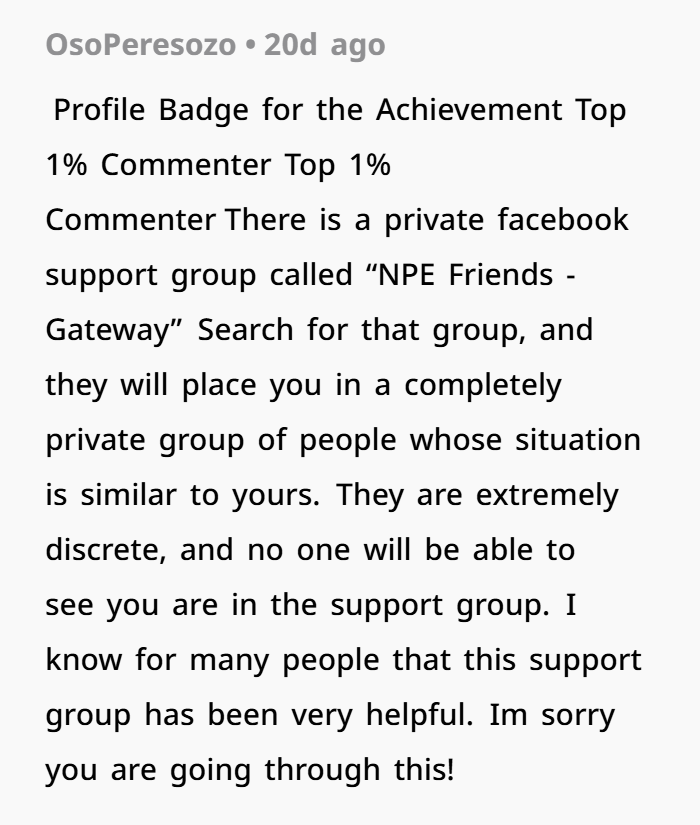
Stories like this one—where a man finds out his biological father isn’t who he thought—are actually becoming more common. There’s even a term for it: NPE, or “Not Parent Expected.” It’s a phenomenon that’s gained so much attention that entire support groups and podcasts are dedicated to it. Facebook groups like “DNA Surprise Support” have thousands of members, and therapists are now specializing in genetic identity confusion.
In this case, the man had no reason to question his identity. Sure, he looked a little different than his siblings, but it was easy to explain away through his Portuguese side. Many families carry generations of lore about where they’re “from,” but oral histories are often flawed. DNA, on the other hand, doesn’t lie—but it can shake you to your core.
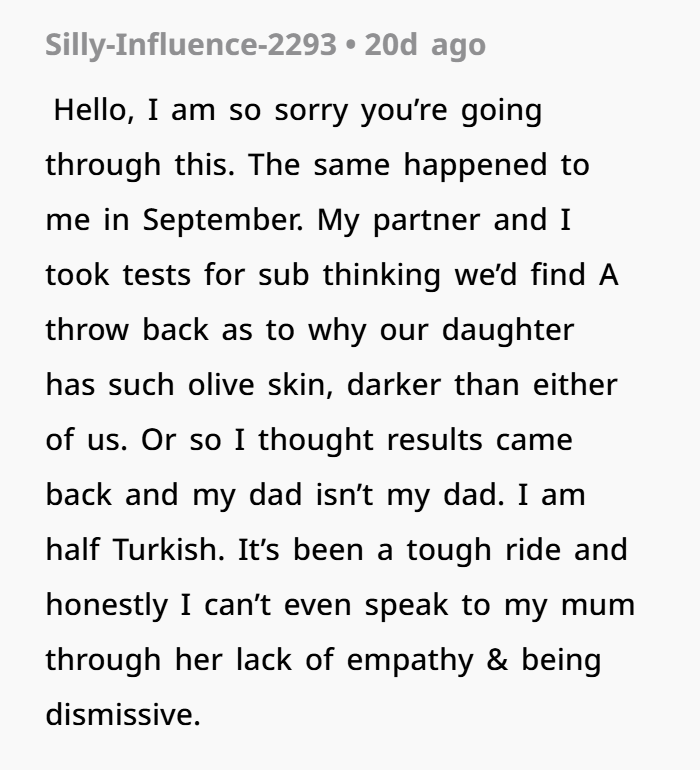
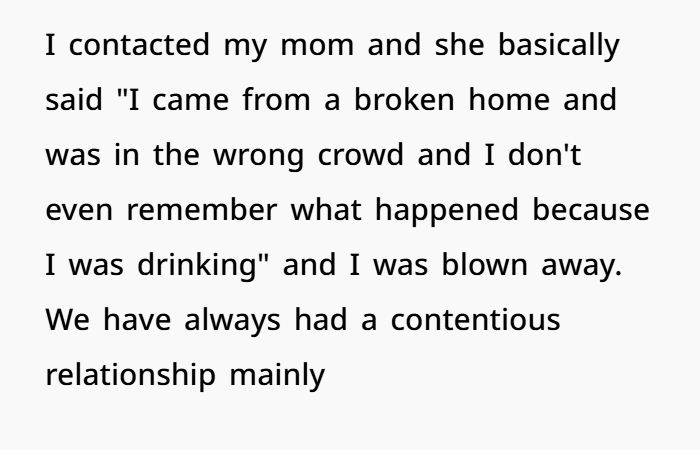
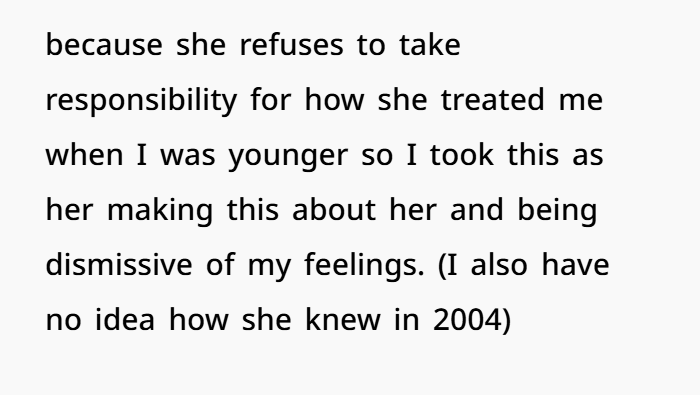
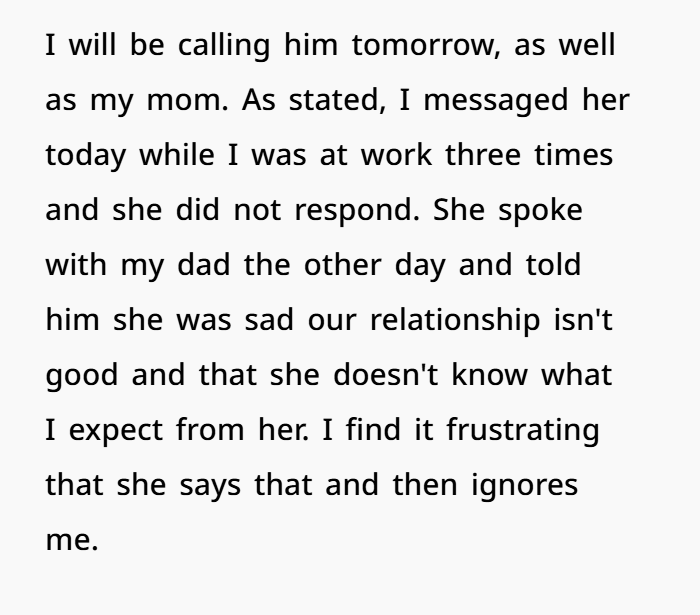
What’s really heartbreaking is how it changes your relationship with your parents. Finding out that the man who raised you isn’t your biological father is a kind of grief that doesn’t have a name. You don’t just lose a version of your past—you lose trust. His dad, in this story, only found out the truth in 2004 and kept it to himself. That’s over 15 years of silence. Imagine the emotional toll of holding that in. And the mom? Her reaction was more of a shrug and avoidance. She couldn’t—or wouldn’t—talk about it.
This kind of emotional stonewalling is common, sadly. According to a 2022 study published in Family Process, individuals who discover unexpected paternity often feel more betrayed by the secrecy than the act itself. It’s not just the biological truth—it’s the fact that no one told them sooner, or respected their right to know.
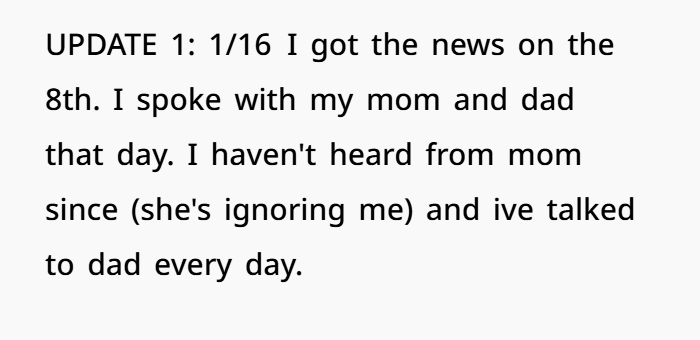
Legally, things get messy too. In some states, if a man is listed on your birth certificate—even if he’s not biologically related—he’s still considered your legal father. That can matter for inheritance, medical history, and even things like veteran benefits. Luckily, in this story, the man’s father still wanted to be in his life. They talked every day after the reveal, which is beautiful. Not everyone gets that kind of loyalty.
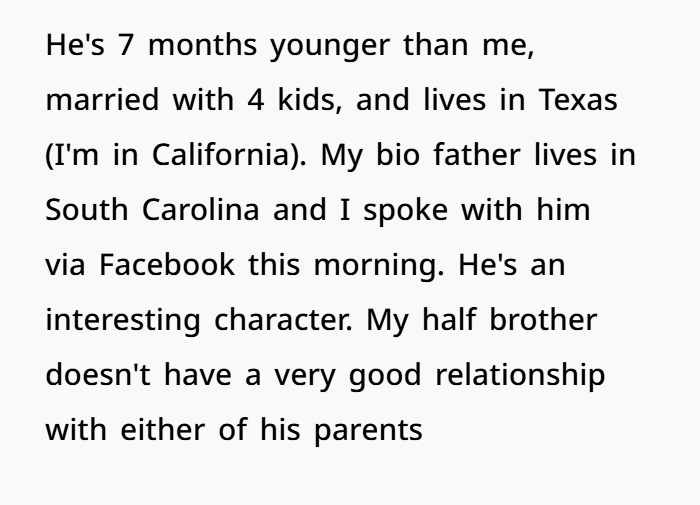
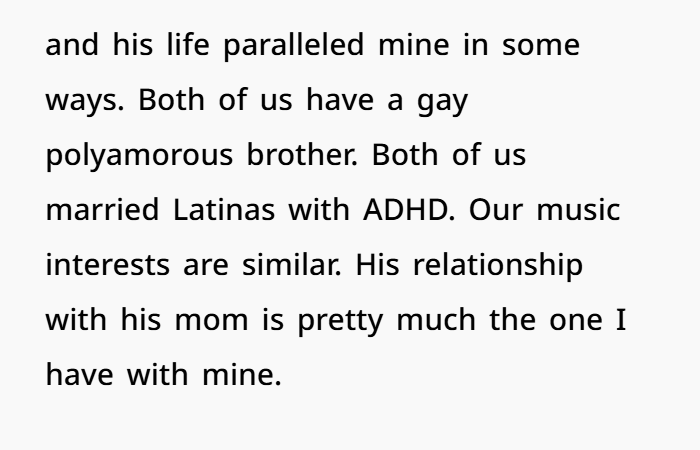
Then comes the new family. The half-brother, only 7 months younger, lived in Texas and shared eerie similarities. Both had rocky relationships with their moms, gay polyamorous brothers, and even similar music tastes. That’s the kind of weird, goosebumps stuff DNA testing can dig up. Sometimes you find people who mirror your own life—even if they were strangers until last week.
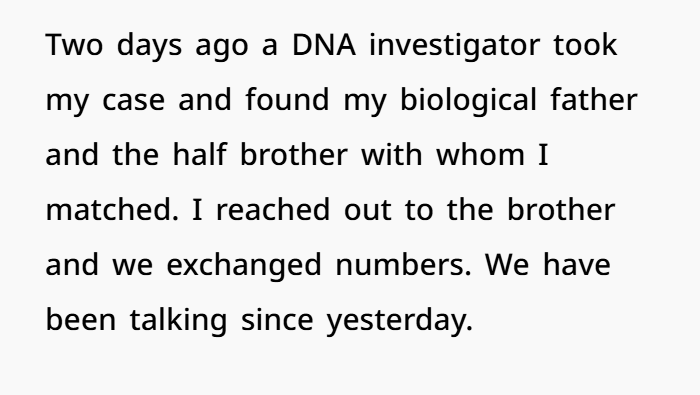
And then there’s the bio father, living in South Carolina, found through a DNA investigator. These investigators have been booming in recent years, helping people find missing relatives, adopted parents, or donor-conceived siblings. A few of them were instrumental in helping law enforcement solve cold cases too, like the Golden State Killer. In this story, the investigator bridged decades of silence in under a week.
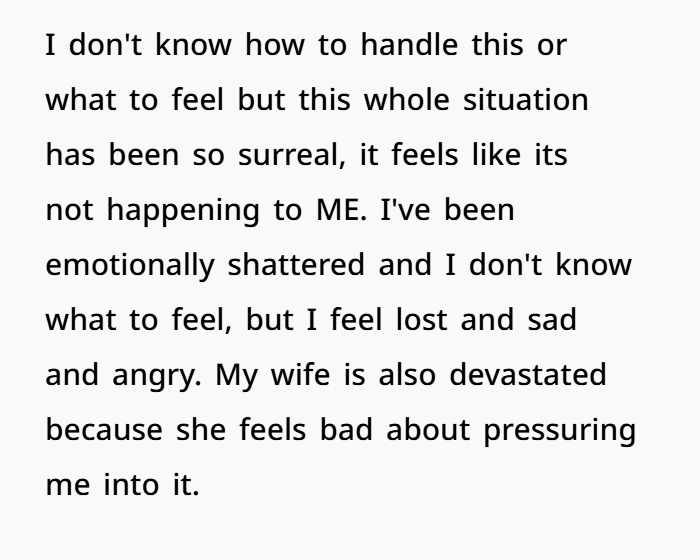
But what about the emotional wreckage? The wife, who originally joked about getting DNA kits, now feels guilty for pushing him into it. That’s understandable, but also not her fault. This was a truth waiting to be uncovered. And the husband? He’s grieving. He said it himself—it feels surreal, like it’s happening to someone else. That’s disassociation, a common trauma response.
Therapists recommend taking a few key steps if you find yourself in a similar DNA surprise:
- Validate your feelings. It’s okay to be angry, lost, or numb. These emotions are real.
- Talk to a therapist, preferably one experienced in identity trauma. It helps.
- Connect with others who’ve had NPE experiences. You’re not alone.
- Take control of your narrative. Journal, talk, or even write your story online—like this guy did.
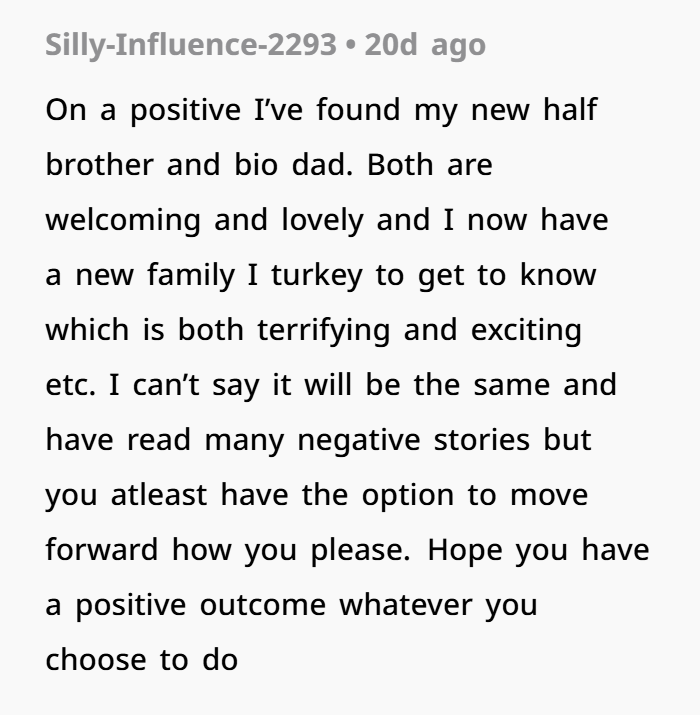
Family is more than blood—but blood can still matter. It connects us to medical history, cultural identity, and sometimes, parts of ourselves we didn’t know were missing. For the man in this story, connecting with his half-brother and bio dad is just the beginning. It doesn’t replace the years lost or erase the pain, but it’s a path forward.
As more and more people submit their spit to science, these stories will keep popping up. They’re bittersweet, sometimes tragic, but also full of unexpected beauty. Because sometimes, the truth—while painful—is what finally sets us free.
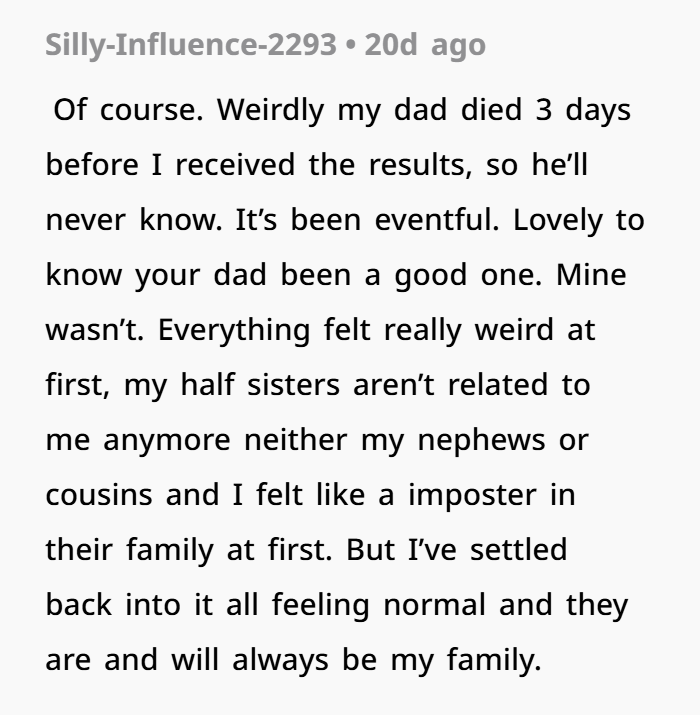
Even if his “dad” wasn’t his father, they still remain close: “He’s my dad. That won’t change for me”