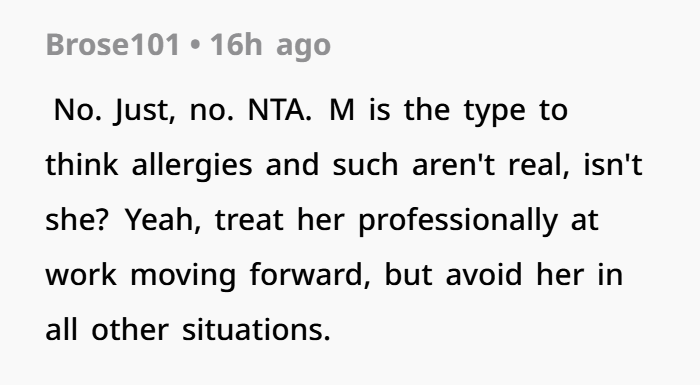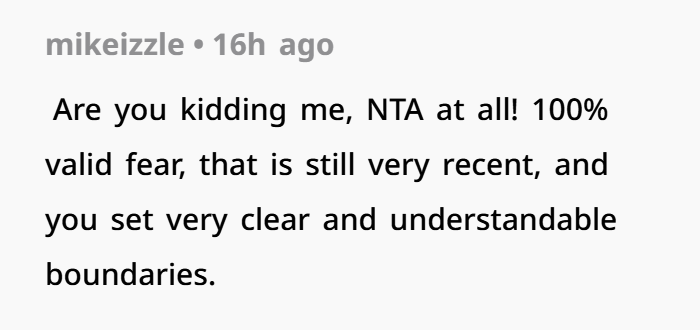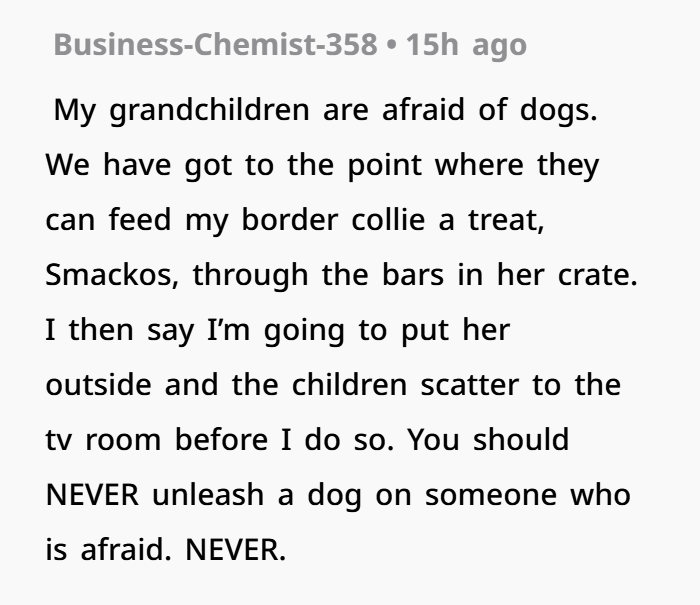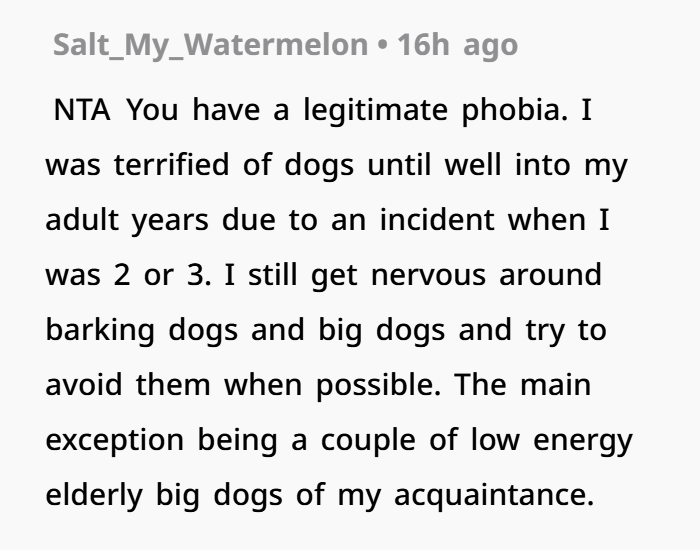
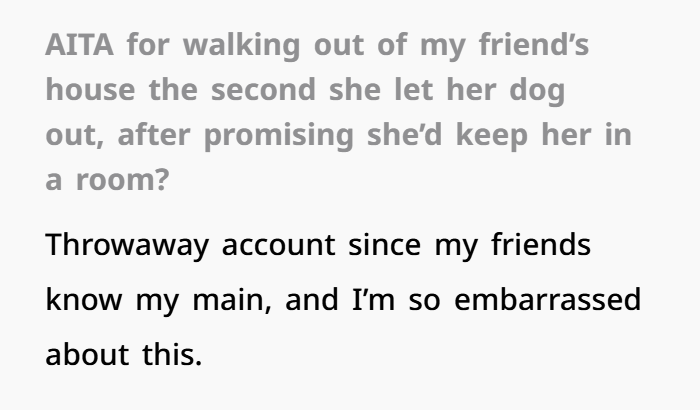
AITA for Immediately Walking Out After My Friend Let Her Huge Dog Out Despite Promising She Wouldn’t?
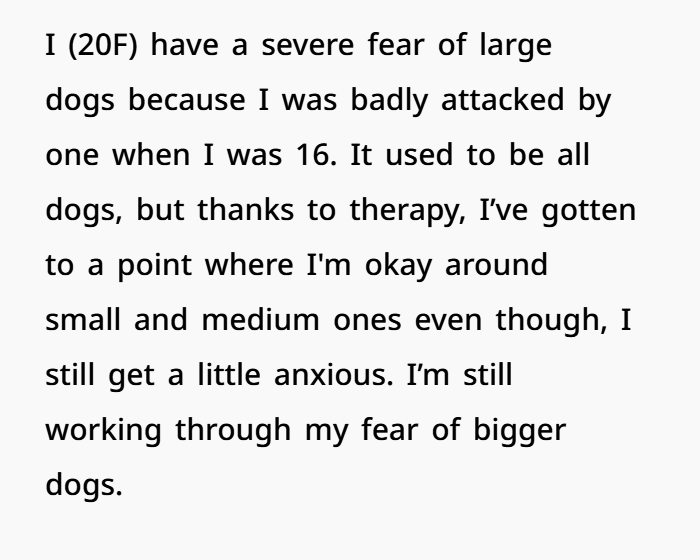
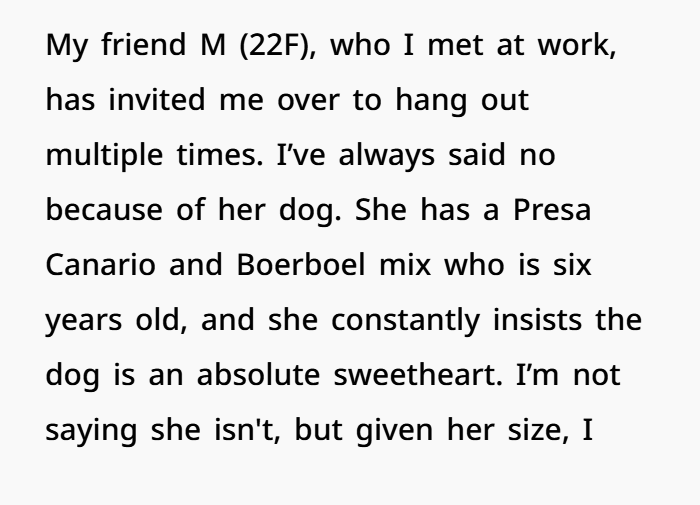
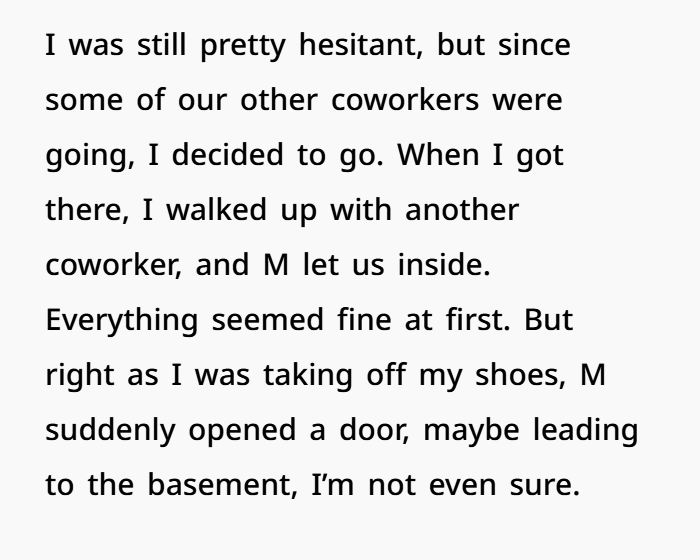
What was supposed to be a casual hangout between coworkers turned into a frightening confrontation with a trauma response that one friend apparently thought she could “fix” through forced exposure. The 20-year-old narrator has had a severe fear of large dogs since being badly attacked at 16. Therapy has helped considerably: she can now tolerate small and medium-sized dogs, although some anxiety remains, while large dogs are still beyond what she feels capable of handling. Her coworker and friend, M, knows this history but has repeatedly invited her over despite owning a large Presa Canario–Boerboel mix.
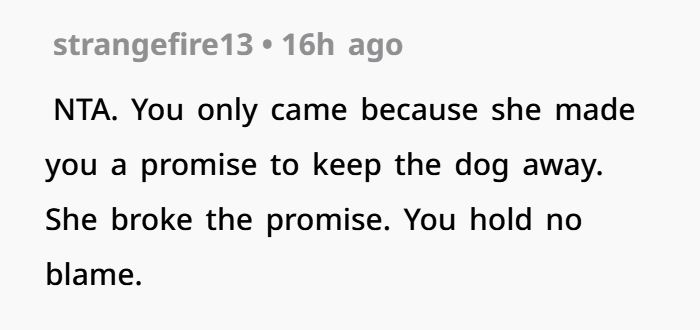
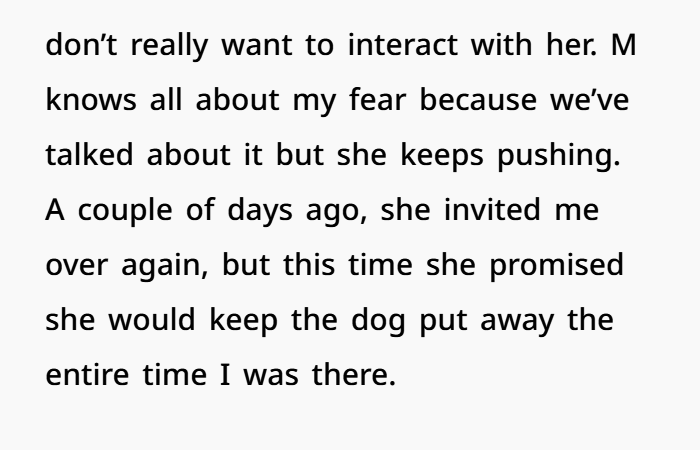
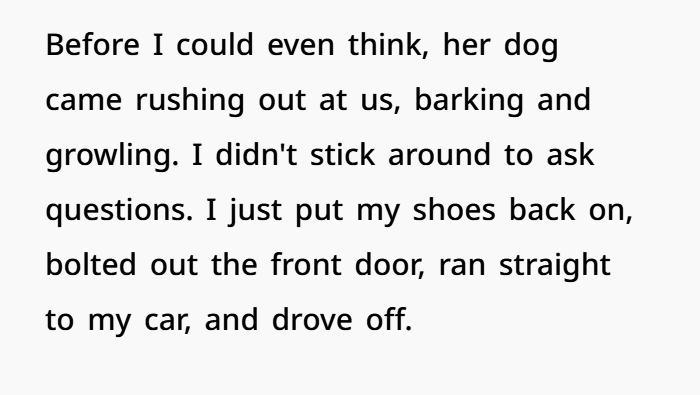
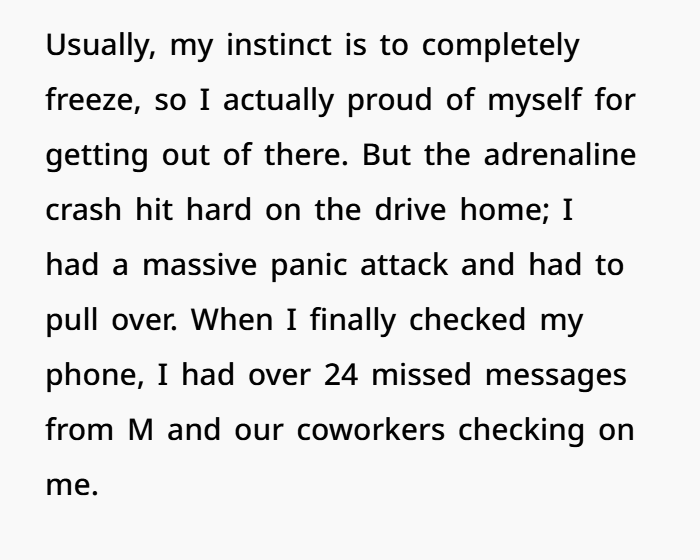
The narrator had consistently declined those invitations until M made an explicit promise: the dog would remain put away for the entire visit. With that assurance, and knowing other coworkers would be there, she finally agreed. But almost immediately after she arrived, M opened a door and the dog rushed toward the guests while barking and growling. The narrator didn’t wait to determine whether the dog was actually aggressive. She put her shoes back on, ran to her car, and left. Given that her usual trauma response is to freeze, she initially felt proud of herself for managing to escape, although the adrenaline crash later triggered such a severe panic attack that she had to pull over while driving.
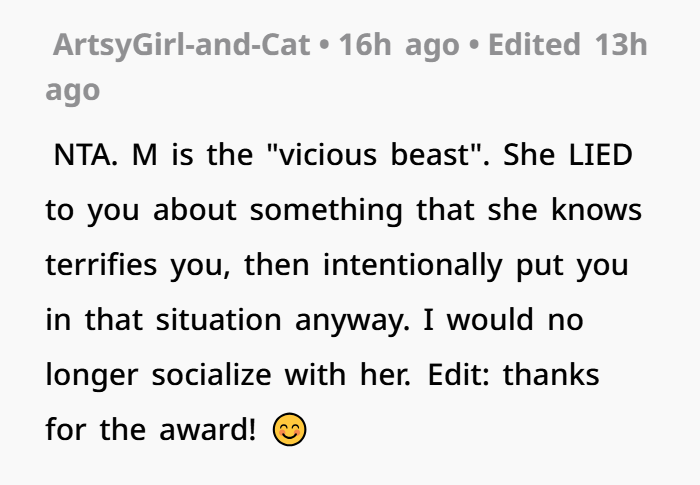
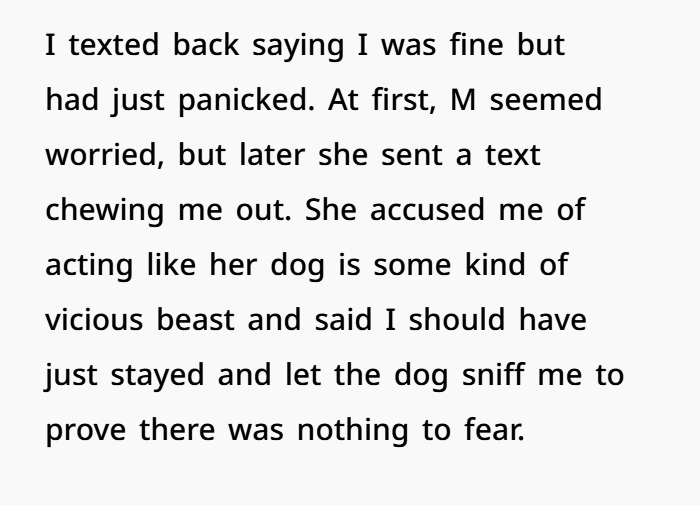
M initially appeared concerned after sending numerous messages, but her reaction eventually turned accusatory. She complained that the narrator had treated her beloved pet like a “vicious beast” and argued that she should have stayed and allowed the dog to sniff her so she could discover there was nothing to fear. That transforms the disagreement from a simple misunderstanding about a dog into a much more serious question: Can someone knowingly violate a boundary connected to another person’s trauma because they believe confronting the fear will ultimately help them?

Exposure Therapy Is Not the Same as Surprising Someone With Their Fear
The biggest issue here is actually very simple.
M promised to keep her dog away from her friend.
Her friend had already explained that she was afraid of large dogs because of a previous bad experience. She had also made it clear that she would only visit M’s home if the dog stayed in another area.
M agreed.
So when the dog suddenly appeared, the problem was not simply that a large dog was in the house.
The problem was that an important boundary had been broken.
A Promise Made the Visit Possible
The narrator had avoided visiting M’s home for months.
She was not asking M to give up her dog. She was not telling her how to manage her own home. She was simply choosing not to enter a place where she did not feel comfortable.
That is a reasonable personal boundary.
M wanted her friend to visit, so she offered a solution: the dog would be kept away.
The narrator agreed to visit because of that promise.
Once the agreement was made, she had a reasonable expectation that M would follow it.
Exposure Therapy Doesn’t Work Like This
M later suggested that her friend should have stayed and allowed the dog to sniff her.
The idea seemed to be that once the narrator saw the dog was friendly, her fear would disappear.
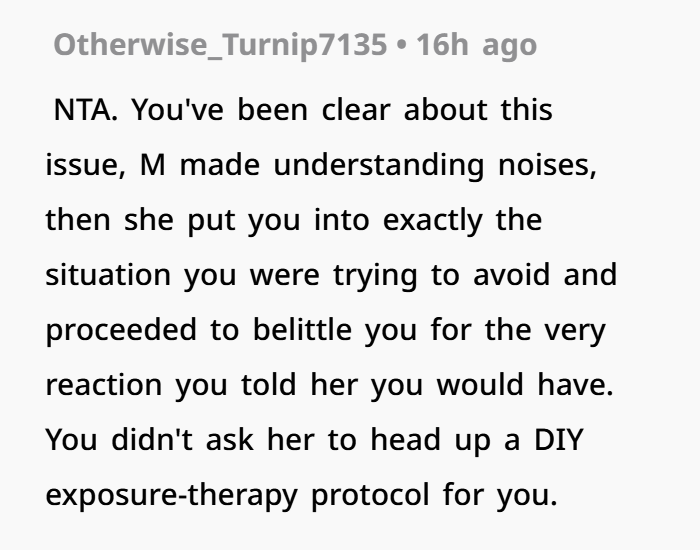
But that is not the same thing as professional exposure therapy.
Exposure therapy is a recognized form of psychological treatment that can be used for certain anxiety disorders and specific phobias. It generally involves facing fears in a planned and structured way.
An important part of the process is creating an appropriate setting and working toward treatment goals carefully.
Simply surprising someone with something they fear is not the same thing.
Opening a door and allowing a large dog to approach a person who is already afraid of large dogs should not be confused with professional mental health treatment.
M Is Her Friend, Not Her Therapist
This is another important point.
M is not responsible for deciding how quickly her friend should overcome her fear.
The narrator is already working on the issue in therapy.
She has also made progress.
According to the story, she once struggled with dogs more generally. Now she can tolerate being around some small and medium-sized dogs.
That suggests she is already taking steps to manage her fear and improve her emotional well-being.
Progress with anxiety does not always happen quickly.
People may need time, professional guidance, and coping strategies that work for their individual situation.
A friend can offer support.
A friend should not secretly create a therapy exercise.
Fear Can Feel Very Real in the Moment
M may know her dog extremely well.
She may honestly believe the dog would never hurt anyone.
But the narrator does not have that same history with the animal.
After a frightening past experience, suddenly seeing a large dog running toward you can create an immediate fear response.
That reaction can happen very quickly.
A person may experience a racing heart, shaking, sweating, fast breathing, or a strong need to leave the situation.
This is why telling someone to “just relax” or “let the dog sniff you” may not help.
The person experiencing the fear may need distance and time before they feel calm again.
Supporting someone’s mental health sometimes means accepting that their comfort level is different from your own.
The Dog’s Breed Is Not the Main Issue
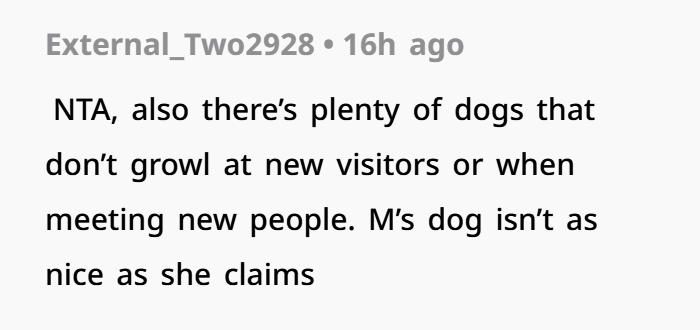
The dog is described as a Presa Canario–Boerboel mix.
These are large dogs, so their size may naturally make the situation feel more intense for someone who is already afraid of large dogs.
But the breed does not need to become the main argument.
The dog could be calm, well-trained, and affectionate.
M still promised to keep the dog separated.
That promise is what matters most.
Turning the discussion into a debate about dog breeds would distract from the much simpler issue of trust and personal boundaries.
She Wasn’t Trying to Control M’s Home
The narrator’s earlier behavior is also important.
She did not demand that M remove the dog from her home.
She did not tell M that she should not own a large dog.
She simply declined invitations to the house.
That is an important difference.
There is a difference between controlling someone else’s choices and setting a boundary for yourself.
The narrator was basically saying, “You can have your dog, but I am not comfortable being around her.”
Both choices can exist at the same time.
Responsible pet ownership also includes understanding that not every guest will feel comfortable around every animal, regardless of how friendly or well-trained the pet may be.
Was It an Accident?
There is one detail that is not completely clear.
Did M intentionally let the dog out?
If she accidentally opened the wrong door or forgot where the dog was, that would be different from planning the encounter.
It would still be a serious mistake because she had promised to keep the dog away.
But intention matters when deciding what happened between the two friends.
M’s response afterward makes the situation more complicated.
Instead of simply apologizing, she reportedly said that her friend should have stayed and allowed the dog to sniff her.
That could suggest that M believed meeting the dog would help.
If the encounter was intentionally arranged for that reason, then M made a poor decision.
Mental health treatment should not be turned into a surprise experiment by a friend.
Walking Away Was a Reasonable Response
The narrator left the house.
She did not demand that M remove the dog permanently.
She did not stay and continue an argument.
She simply removed herself from a situation she felt unable to handle.
Sometimes leaving is the simplest way to protect a personal boundary without creating a bigger conflict.
There was, however, another safety issue afterward.
The narrator became very upset while driving.
Driving requires attention and clear thinking, so pulling over when she realized she could not safely continue was the responsible choice.
Personal safety should always come before getting somewhere quickly.
Pet Owners and Guests Can Both Have Boundaries
M is allowed to love her dog.
She is also allowed to believe that her dog is friendly and safe.
The narrator is allowed to feel differently.
She does not have to interact with an animal simply because its owner believes there is nothing to fear.
This is where clear communication matters.
Pet owners can tell guests what to expect before they arrive. Guests can explain what they are comfortable with. If an accommodation is agreed upon, both people should be able to rely on that agreement.
These simple steps can prevent a lot of stress.
Trust Is the Bigger Issue
At this point, the biggest problem may not even be the dog.
It may be trust.
The narrator agreed to visit because M promised that the dog would be kept away.
If M intentionally broke that promise because she believed she knew what was best for her friend, the narrator may now be less likely to trust similar promises in the future.
That can affect a friendship long after the original event is over.
Healthy relationships need people to respect each other’s boundaries, even when they do not completely understand them.
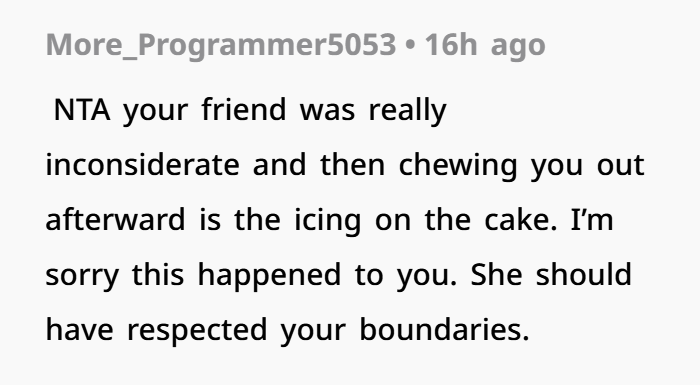
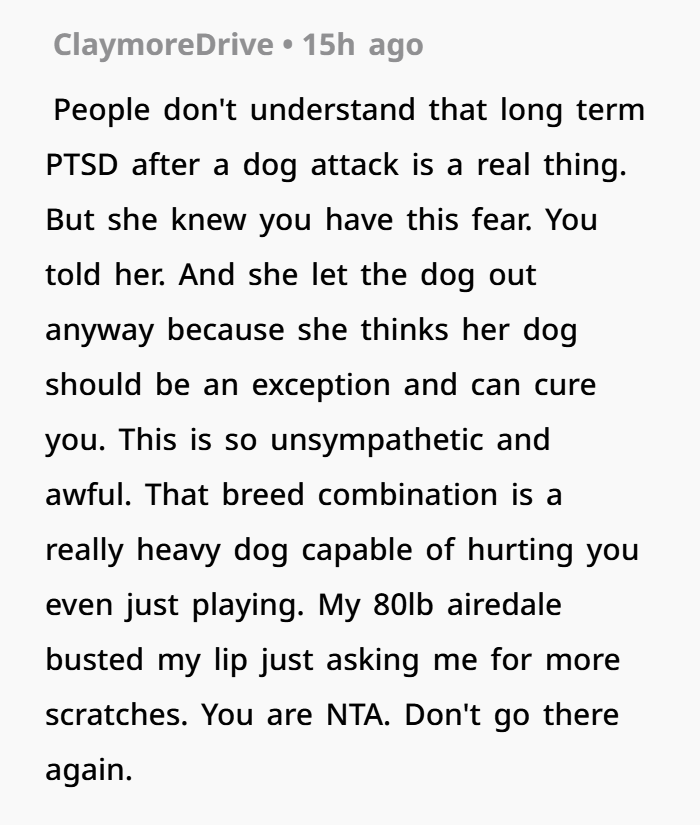
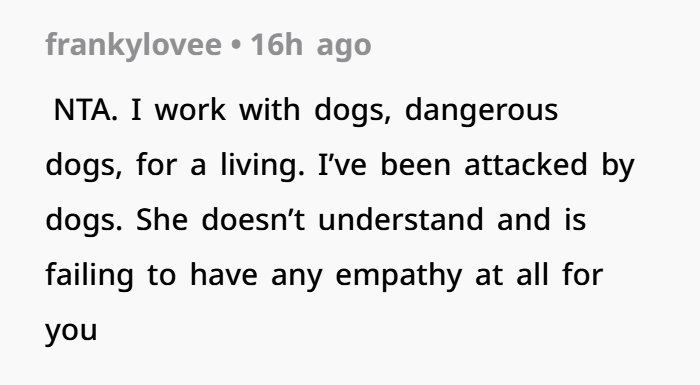
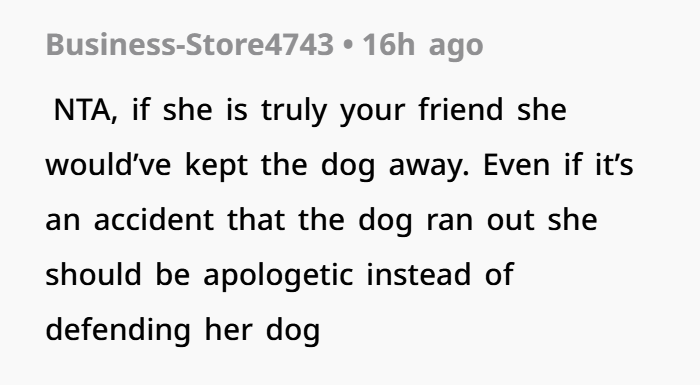
Final Verdict: NTA
The narrator was not wrong for leaving.
She had clearly explained her fear before visiting. She had avoided M’s house in the past rather than asking M to change her life as a dog owner.
She only agreed to visit after M promised that the dog would remain separated.
When that arrangement was no longer being followed, she left.
The situation could have been handled differently if the dog appeared by accident and M immediately apologized. But if M deliberately arranged the encounter because she thought it would work like exposure therapy, that crossed an important boundary.
Professional therapy and anxiety treatment are not the same as surprising someone with something they fear.
M can love her dog.
The narrator can choose not to be around that dog.
A healthy friendship should have enough room for both of those choices.
Comments You Can’t Miss