
My MIL Complained She Couldn’t See My NICU Baby Enough—Now I Never Want to See Her Again
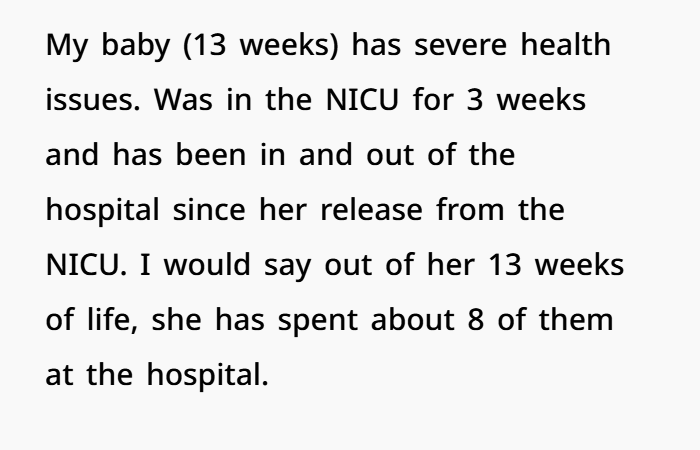
A new mom is having a very hard time after giving birth to her baby girl. Her delivery came with serious health problems, and she needed blood transfusions to recover. Her 13-week-old daughter has also spent around eight weeks in the hospital, including three weeks in the NICU. Between hospital visits, newborn care, and her own postpartum recovery, the mom has been under a lot of stress. She hoped her family would understand what she was going through, but her mother-in-law has made things even harder.
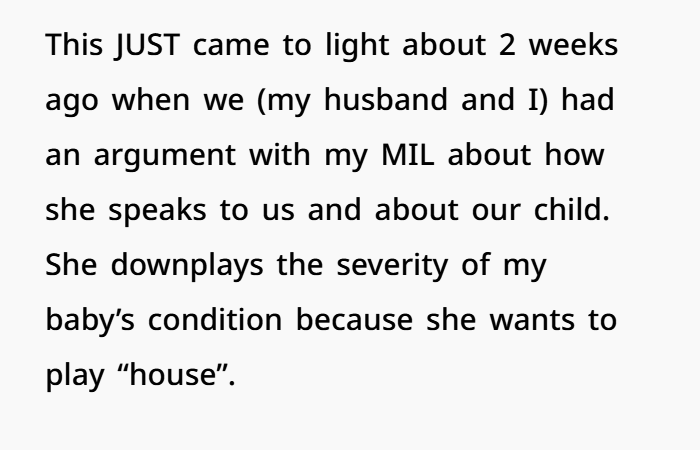
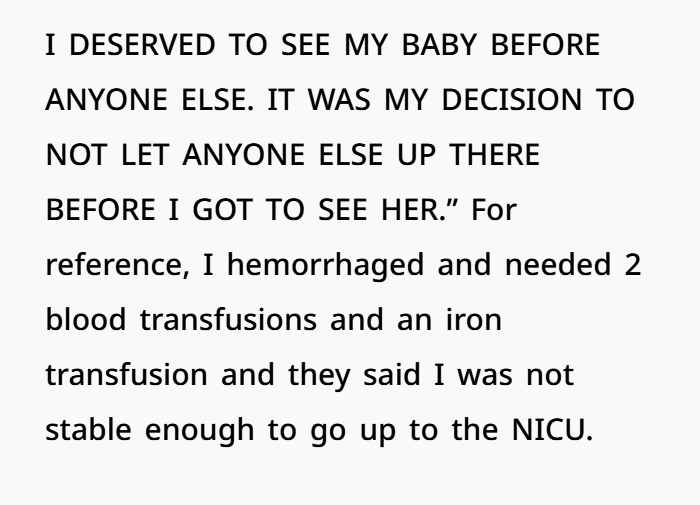
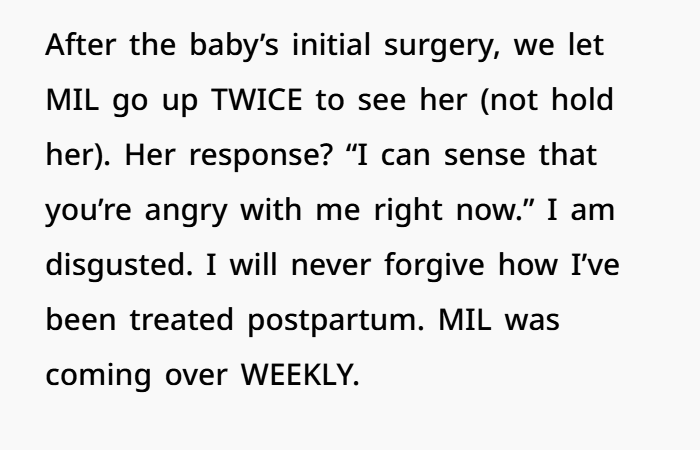
Her mother-in-law keeps saying she does not get enough time with the baby. She even claimed she had only seen her granddaughter three or four times. But when the mom checked her photos, she found that the grandmother had actually visited 14 times. The mother-in-law also complained that she was not allowed into the NICU before the mom could see her own baby. This was especially upsetting because the mom was still recovering from childbirth and could not visit her daughter right away.
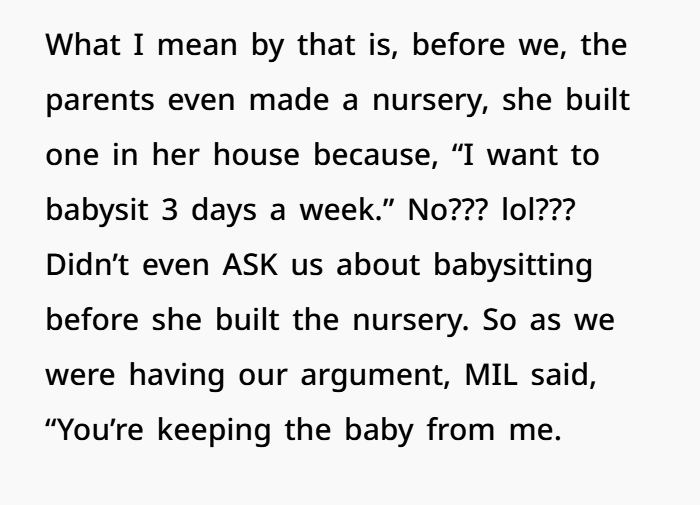
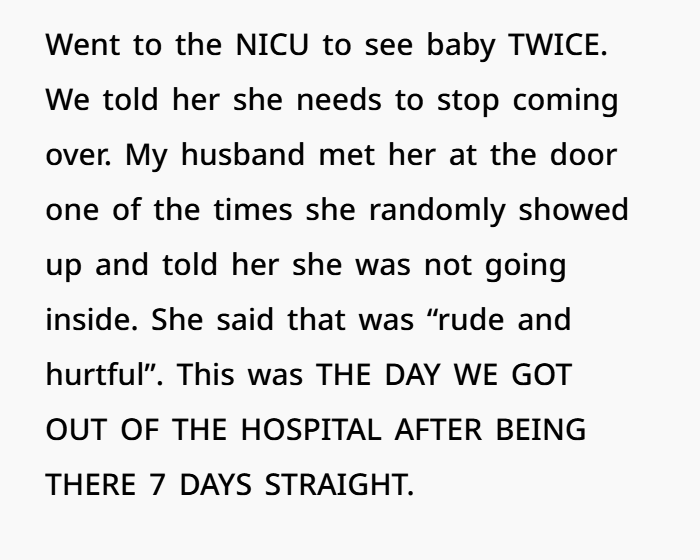
Things became more uncomfortable when the mother-in-law set up a complete baby nursery in her own house without asking the parents. She also said she planned to babysit three days a week, even though the parents had never agreed to this childcare arrangement. On top of that, she made unexpected visits after the family returned from the hospital. The mom feels that her mother-in-law is not respecting their parenting decisions, family boundaries, or need for privacy.
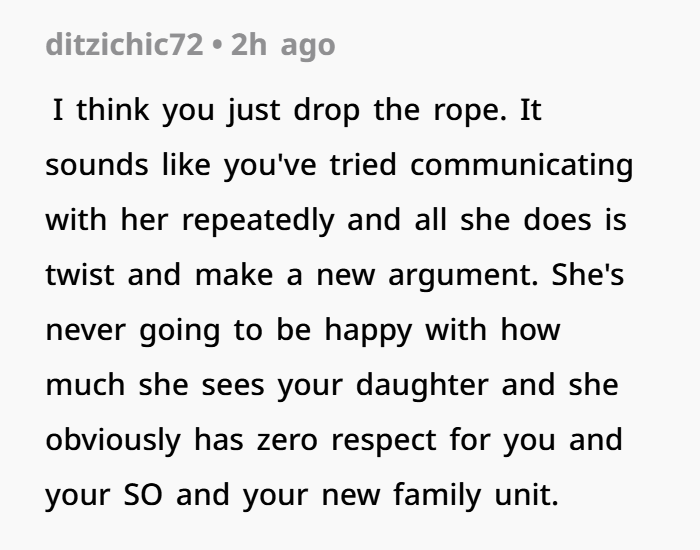
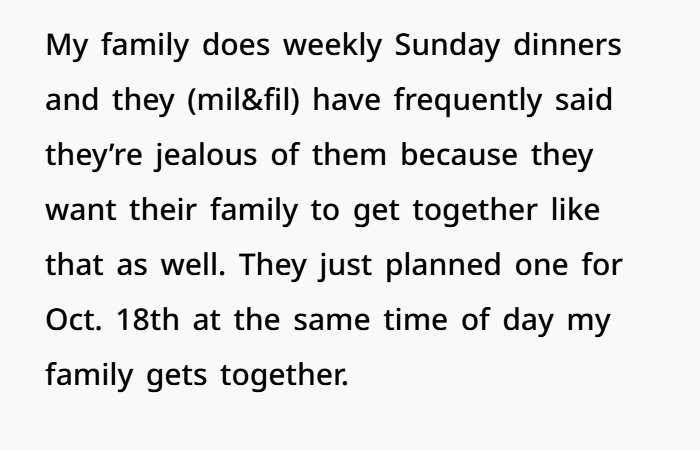
Now, the mom has decided she needs some distance. Her mother-in-law has planned a family gathering for October 18, which appears to fall at the same time as the mom’s regular Sunday family dinner. She has decided that she and her baby will not attend. After everything that has happened, she feels that protecting her peace and focusing on her baby’s health are more important. She is now wondering whether she should send one final message to her mother-in-law or let her husband explain their decision.











When Grandparents Don’t Respect Parents’ Boundaries
Having a new baby is a special time for any family. Grandparents are often excited to meet their grandchild and spend time together. But things can become stressful when grandparents expect more than the parents are comfortable with.
This situation shows how family relationships can become difficult when a grandmother’s wishes come before the needs of a new mother and her baby.
A New Mother Needed Support, Not More Stress
The mother was already going through a very difficult time. Her newborn baby needed care in the Neonatal Intensive Care Unit (NICU), and she was also dealing with serious health problems after giving birth.
Having a baby in the NICU can be scary and exhausting. Parents often worry about their baby’s health while trying to recover physically and emotionally.
During this time, the mother decided to limit visitors until she could see her own baby.
It was a simple and understandable decision. She wanted to be there for her child before other family members came to visit.
However, the grandmother was unhappy about this rule.
Instead of understanding what the mother was going through, she complained about not being allowed to visit.
This added more stress to an already difficult situation.
According to the American Academy of Pediatrics, family-centered newborn care encourages parents to take an active role in their baby’s treatment. Parents also need clear communication, emotional support, and respect for their decisions.
Being a Grandparent Doesn’t Mean Making the Rules
Grandparents can play a wonderful role in a child’s life. They can offer love, support, and help with childcare.
But there is a difference between offering help and making decisions without asking the parents.
In this case, the grandmother had already prepared a nursery in her home. She also expected to babysit the baby three days a week.
The problem was that the parents had never agreed to this plan.
Setting up a nursery may have been her way of showing excitement. Still, it did not mean the parents had to leave their baby with her.
Parents have the right to decide who cares for their child, how often visits happen, and what arrangements work best for their family.
This is especially important when a baby has medical needs and requires extra care.
Family law also recognizes the importance of parental decisions. In the United States, grandparent visitation laws are different in each state.
The Supreme Court case Troxel v. Granville (2000) recognized that courts must give special importance to the decisions of fit parents.
This does not mean every family disagreement is a legal issue. It simply shows why parental choices matter.
Family Visits Shouldn’t Become a Competition
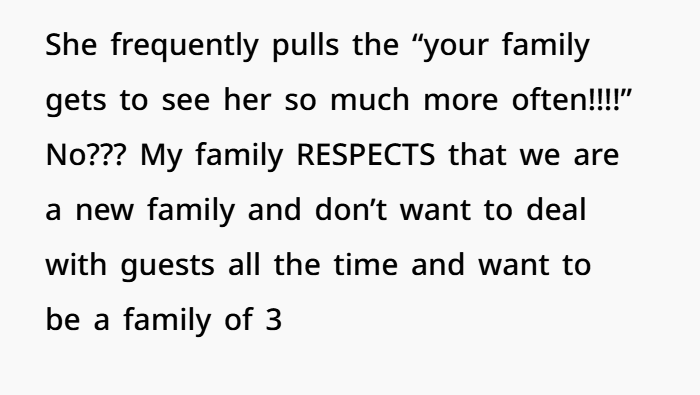
Another problem was the grandmother’s habit of comparing herself to the baby’s other grandparents.
She seemed upset that the mother’s parents had a different relationship with the baby.
But family time does not always need to be divided equally.
Some relatives may visit more often because they live closer, help with daily tasks, or have built a stronger level of trust.
Others may have less time with the baby because of work, distance, or personal circumstances.
What matters most is whether everyone respects the parents’ wishes.
In this situation, the mother explained that her own family understood when she needed privacy.
Her in-laws, however, often saw those same boundaries as a personal rejection.
This created unnecessary tension.
Healthy family relationships are not about counting visits or comparing who gets more time with a child.
They are about kindness, trust, and understanding.
Real Family Support Means Offering Help
Taking care of a newborn is already a full-time responsibility. When a baby has ongoing medical needs, everyday life can become even more demanding.
Parents may have to manage hospital appointments, medical care, household tasks, and their own emotional well-being.
This is when family support can make a real difference.
Grandparents who want to help can offer to prepare meals, pick up groceries, clean the house, or take care of small daily tasks.
These simple acts can give parents more time to rest and focus on their baby.
In this story, the mother felt frustrated because her in-laws wanted to visit and hold the baby but rarely offered practical help.
She needed understanding and support, not more responsibilities.
Family counseling often focuses on healthy communication and clear personal boundaries. These skills can help relatives understand each other’s needs without turning every disagreement into an argument.
Even small changes in behavior can improve family relationships over time.
Why Setting Boundaries Is Important for New Parents
Setting boundaries does not mean parents want to keep their children away from loving family members.
It means they are making choices that protect their family’s comfort, health, and daily routine.
For parents caring for a medically fragile baby, a peaceful home environment can be especially important.
Regular medical appointments, feeding schedules, rest, and recovery may leave little room for frequent visitors.
Grandparents may feel disappointed when plans change. Those feelings are understandable.
But disappointment should not turn into pressure on the parents.
A healthier response is to ask what the family needs and respect the answer.
Parents should also be able to explain their decisions without feeling guilty every time they say no.
When both sides communicate calmly, it becomes easier to build trust and avoid future misunderstandings.
Sometimes Taking Space Is the Healthiest Choice
Over time, the mother’s frustration continued to grow.
The disagreement was no longer about one hospital visit or one babysitting plan.
It was about several situations in which she felt that her decisions were not being respected.
Eventually, she decided to create some distance between herself and her in-laws.
That does not necessarily mean the relationship is over forever.
Sometimes family members need time apart to think about their behavior and understand each other’s feelings.
Family counseling or a calm conversation may help if everyone is willing to listen and make changes.
However, rebuilding trust takes time. It cannot happen through pressure or demands.
The Bigger Lesson About Grandparents and Parents
This story is a reminder that becoming a grandparent is exciting, but the baby’s parents still make the important decisions.
Grandparents can be a valuable part of a child’s life, especially when they offer patience, love, and practical support.
At the same time, parents need space to adjust to their new responsibilities, manage their child’s healthcare needs, and make decisions without constant family pressure.
The grandmother may have wanted a close relationship with her granddaughter. But a close relationship grows through trust, not through demands for more visits.
In the end, the most important question is not how often grandparents get to see the baby.
It is whether the family can build a relationship based on respect, kindness, and understanding.
A healthy family relationship begins when everyone remembers that supporting the parents is also a way of loving the child.
Comments From The Community